If you need help at home, live in care, or rarely leave the house, you may still qualify for a higher VA pension. There is no age limit and no deadline on a first claim.
If you are in your 40s, 50s, 60s, 70s, or beyond and thinking, “I waited too long,” you are not alone. Many veterans were never told these benefits existed, and many quietly assume they are out of the game. You are not out of the game.
For some older veterans and surviving spouses, Aid & Attendance or Housebound may increase a VA pension when daily life has become harder. There is no age limit on filing a first claim, and becoming aware of what you may qualify for now can help protect your health, your family, and your benefits.
What Aid & Attendance and Housebound are
These are pension increases, not separate stand-alone checks by themselves. They add to a Veterans Pension or Survivors Pension when a person needs more support because of disability or limited mobility.
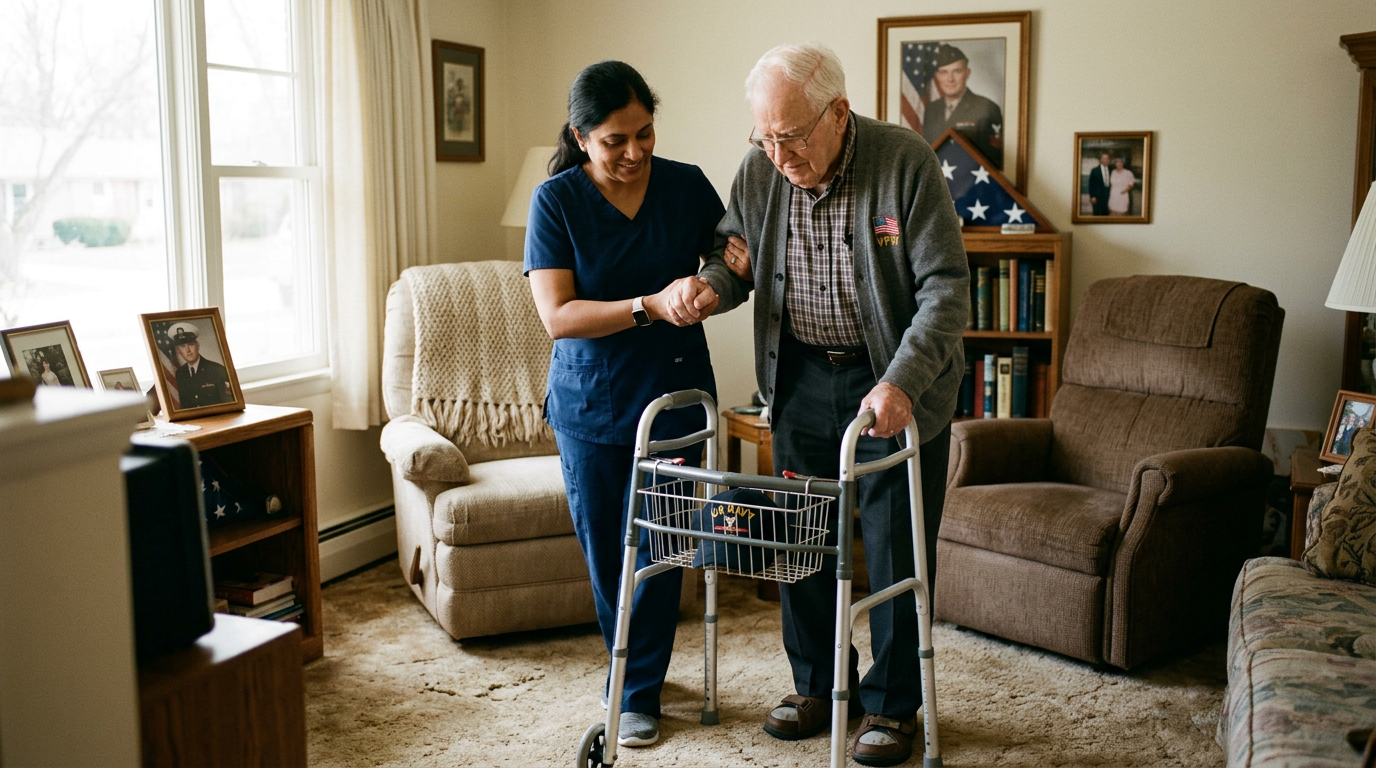
Aid & Attendance is for people who need help with daily activities, live in a care facility, are bedridden, or have very limited eyesight. Housebound is a smaller add-on for someone whose disability keeps them mostly at home.
- Aid & Attendance may help if you need help bathing, dressing, eating, or managing medications.
- It may also help with in-home care, assisted living, or nursing-home costs, depending on your situation and the VA’s decision.
- Housebound may apply if a disability leaves you mostly at home.
A surviving spouse may also qualify for a higher pension with Aid & Attendance. Surviving spouses may qualify too.
What many older veterans get wrong
It is not too late to look. Some veterans believe they are too old, waited too long, or must have missed their chance because nobody explained any of this years ago. Those beliefs stop people from even asking basic questions.
For a first claim, there is no deadline just because time has passed. If you now need help with daily living, live in a care setting, or are largely confined to your home, this is exactly the kind of moment when learning what you may be entitled to can matter.
That matters because waiting can make the process harder on you and your family. Filing while you can still gather records and get a doctor’s statement is often easier than putting it off until a health crisis forces the issue.
What the payment may look like
Amounts are estimates and depend on your situation and the VA’s final decision. But knowing the rough range can help you understand why this benefit is worth looking at if you already have, or may qualify for, pension.
- For 2026, the maximum annual pension rate, or MAPR, with Aid & Attendance is about $29,093 a year for a single veteran.
- For a veteran with one dependent, it may be about $34,488 a year.
- Housebound is lower, at about $21,313 a year for a single veteran.
These figures are not guarantees. The VA decides the final amount based on the individual claim.
One important rule to know: you cannot receive both Housebound and Aid & Attendance at the same time. If Aid & Attendance applies, it is generally the larger increase.
Who may want to take a closer look
This benefit is about daily needs. If ordinary tasks are becoming difficult, or if care costs are becoming part of your life, this is one of the clearest times to ask whether a pension increase may be available.
- You need help with bathing, dressing, eating, or medications.
- You live in a nursing home or another care facility.
- You are bedridden or have very limited eyesight.
- Your disability keeps you largely confined to home.
- You are a surviving spouse receiving, or seeking, Survivors Pension and now need regular help.
Even if nobody told you about this before, that does not mean the door is closed. Not being told is not the same as not qualifying.
What you need to start
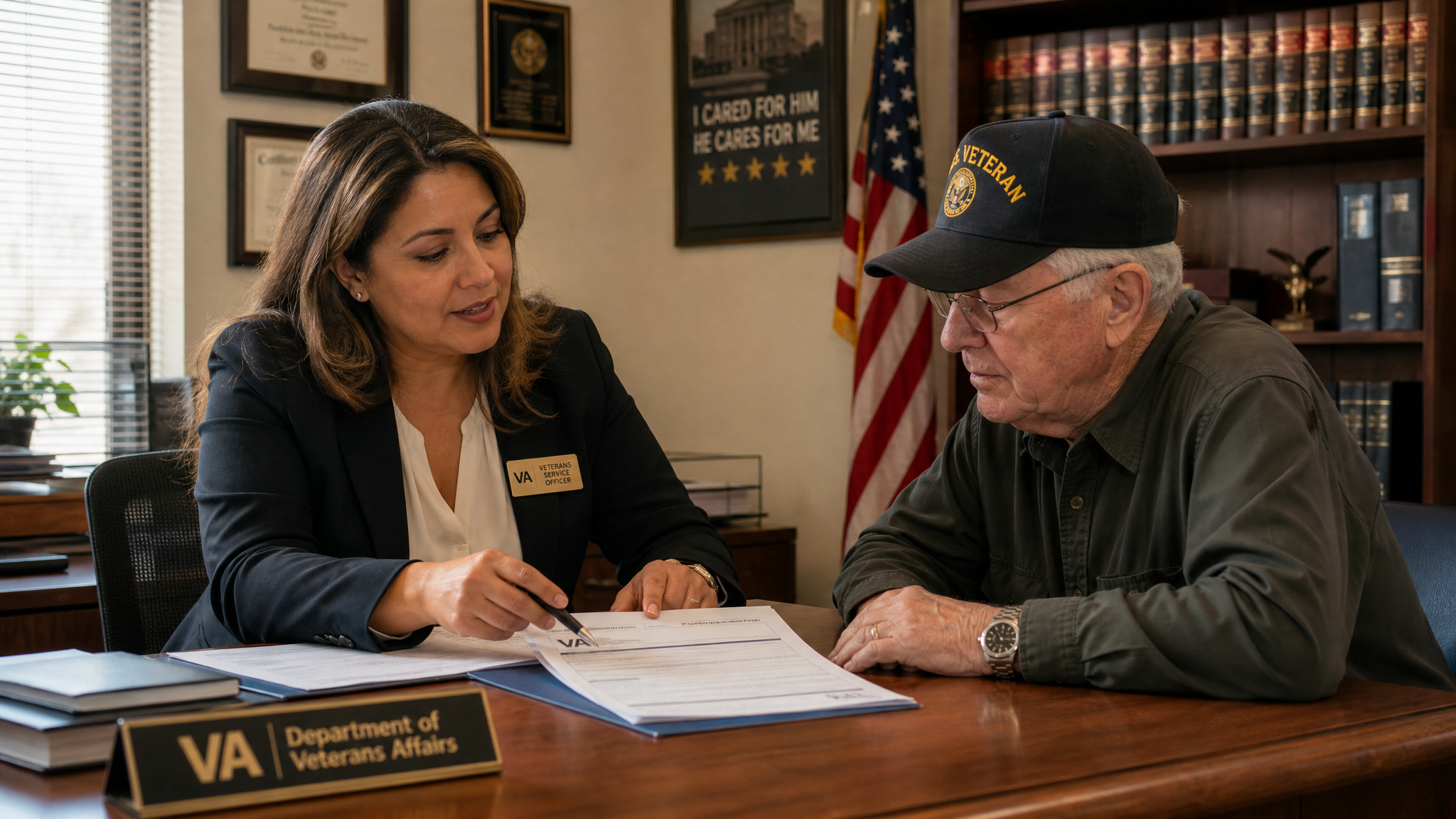
The key document is a doctor’s statement. To add Aid & Attendance to a pension claim, the VA uses a physician’s statement on VA Form 21-2680 describing the care you need.
That statement should show whether you need help with daily activities, are bedridden, live in a nursing home, or have very limited eyesight. VA Form 21-2680 matters because it gives the VA medical information about how your condition affects everyday life.
- Talk with your doctor about the help you need each day.
- Ask for the physician’s statement on VA Form 21-2680.
- Add Aid & Attendance to a pension claim with that completed statement.
If Housebound is the better fit, the same general idea applies: the VA needs clear information showing that your disability keeps you mostly at home. Clear medical detail helps.
Why this matters right now
Awareness protects your family. When a veteran needs more help at home, or a surviving spouse is struggling with daily care, extra pension may ease some of the pressure around caregiving and living costs, depending on the claim.
This is also about protecting your own health. Do not talk yourself out of it just because years have passed or because you have managed this long without help. Many older veterans delay until things are much worse, when gathering paperwork and attending appointments can be harder.
You do not need to know everything before you begin. You only need to start learning what may be available to you today.
Where to learn more and get free help
Free help is available when you are ready. For full details on this benefit, visit our page at /benefits/aid-and-attendance.
The Aging Veteran is not the U.S. Department of Veterans Affairs and is not part of the federal government. This article is general educational information only and is not legal, medical, or financial advice.
If you want one-on-one help, Albert L. Thombs Jr. is a VA-accredited claims agent with accreditation #45147, and free help is available at 702-992-4883. There is no pressure, and no one can charge a veteran to file an initial claim.
A quick, honest note
This article is general information, not legal advice, and every rate or example is an estimate. Your own claim depends on your records and the facts the VA finds. Albert L. Thombs Jr. is a VA-accredited claims agent (accreditation #45147). If you would like a real person to look at your situation, you are always welcome to reach out - there is no cost to ask.