

You Earned It.
Now Protect It.
You gave this country years of your life. Here is the part nobody tells you: the disability, pension, and survivor benefits you earned do not expire, and the VA is not going to chase you down to hand them over. Everything on this site is free to read, no forms, no pressure. And if you ever want an accredited agent in your corner, we will tell you exactly what it costs before you commit to a thing.
What your service actually earned you
Let me be straight with you. The check you may be owed is not a reward for getting hurt, it is validation that your service mattered. You raised your hand, you did the job, and something you carried home from that service, whether it is your knees, your hearing, your lungs, or the weight you cannot put down at night, is tied to what you gave. The benefits waiting on you exist because of that, and a mountain of them goes unclaimed every single year for one reason: nobody ever sat you down and explained them in plain English.
So watch the short audit below. In about two minutes I walk you through the benefits most aging veterans leave sitting on the table, monthly tax-free disability compensation, pension, survivor benefits, health care, and caregiver support, and I show you why it is never too late to go claim what you already earned. A denial is not the end, and neither is your age. The VA is not going to chase you down and hand you what is yours. That part is on you to go get, and this is where you start.
The Unclaimed & Earned Audit
5 benefits left on the table
The most underused VA benefits that aging veterans need to know about - and that nobody told you.
Aid & Attendance
An extra monthly payment for veterans who need help with daily activities like bathing, dressing, or cooking. Most aging veterans never file for it.
TDIU (Individual Unemployability)
Pays you at the 100% rate when service-connected conditions keep you from working - even if your rating is lower. Being retired or on Social Security does not disqualify you.
PACT Act presumptives
Toxic exposure during service - burn pits, Agent Orange, radiation - now qualifies you under the PACT Act without the burden of proving a direct link.
Survivor DIC & pension
Your spouse or dependents may be owed Dependency and Indemnity Compensation or a Survivors Pension. Many families never know to file.
Caregiver stipend programs
The VA pays a monthly stipend to qualifying family caregivers through PCAFC and provides respite, training, and health coverage through CHAMPVA.
Welcome. It is me, Albert Thombs, and I want to start with the thing nobody said to you on the way out the door: what you earned through your service is still yours, and it does not expire. You showed up, you served, you came home, and the benefits tied to that service have been sitting there this whole time waiting on you to claim them. This is not charity and it is not a handout. It is validation that your service mattered, and no veteran should ever feel like what they gave was in vain. So take a breath, and let me walk you through it the way I wish somebody had walked me through it.
Here is the part the system tends to mumble. Disability compensation, pension, survivor benefits, caregiver support, and dozens of other programs exist because of what you did, and a mountain of them goes unclaimed every single year. Not because veterans did not qualify, but because nobody ever bothered to explain them in plain English. The VA is not going to chase you down and hand you what you are owed. That part is on you to go get, and that is exactly why I built this place.
So here is how to use this site, and all of it is free to read, with no login and no catch. Start anywhere that fits your situation. If you are a veteran sorting out what your rating should really be, follow the benefits path. If you are a surviving spouse who just lost your veteran and has no idea where to begin, we have a path built just for you. If you are the adult son or daughter trying to help mom or dad go a round with the VA, you are in the right place too. Use the free tools to run your own numbers, watch the short videos, and read as much as you want. Nobody is standing over your shoulder.
When you are ready to talk to a real person, you have two doors and both of them are free. You can ask a question and get a straight answer at no cost, or you can register with us and let an accredited agent carry the paperwork for you. Registering means Albert Thombs, VA Accredited Claims Agent #45147, and his team go to work on your claim. The education stays free either way, and I will always be straight with you about what anything costs before you ever commit to a thing. Fair enough? Then let's get to work.

Find the path that fits your situation
Every veteran is different. Every family is different. This site is built so you can get straight to what matters for your situation without wading through everything else. Tap the door that fits you.

I Am the Veteran
You served. That service may have earned you monthly tax-free disability compensation, a pension, free VA health care, dental care, housing grants, education benefits, and more. Here is the catch: the VA does not just hand it over. You have to file, file it correctly, and in plenty of cases fight for it. This site walks through every major benefit in plain language, what it is, who qualifies, how to apply, and what to do when the VA says no.
New to this? Start with the basics. Already know what you are after? Browse the knowledge base below by topic.

I Lost My Veteran
First, we are sorry for your loss. What comes next can feel like too much, especially while you are grieving. The VA has survivor benefits built specifically for spouses, dependent children, and in some cases dependent parents, and with some of them the clock actually matters. Dependency and Indemnity Compensation (DIC), Survivors Pension, CHAMPVA health coverage, burial benefits, and more may all be on the table for you. This site walks you through each one, gently and clearly, at whatever pace you need.

I Care for a Veteran
Caregiving is its own kind of service. The VA's Program of Comprehensive Assistance for Family Caregivers (PCAFC) can give eligible caregivers a monthly stipend, health insurance, mental health services, respite care, and caregiver training. But the eligibility rules are specific and the application is the real deal. This site explains what you may qualify for, what the VA looks for, and how to get started.
Answer a few questions - get a real starting point
No login, nothing stored, no obligation. Pick a tool below and get plain-language guidance in under two minutes. These give general guidance only - not a legal determination.
Benefit Path Quiz
Two quick questions to point you to the right place.
First - who are you?
What your family may still be owed after he is gone
Nobody from the VA calls the house to explain this. So we put the whole survivor picture right here - the rates, the rules, and the two deadlines that quietly cost families the most money.
When a veteran dies, the paperwork does not stop - and neither do the benefits the family may be owed. Most surviving spouses we talk to were never told any of this. They were handed a folded flag and left to figure out the rest alone.
So here it is, in plain language, on this page. You do not have to leave to read it.

His service did not end at the graveside. Neither did what it earned your family.
The tax-free monthly check: DIC
Dependency and Indemnity Compensation (DIC) is a tax-free monthly check paid to the surviving spouse, children, and in some cases the parents of a veteran whose death was connected to service.
It is not need-based. Your savings, your house, and your job do not disqualify you. It is not taxed as income, either.
2026 DIC rates - surviving spouse
- Basic monthly rate$1,699.36$1,699.36Paid to an eligible surviving spouse, tax-free, adjusted each year with the COLA.
- Each dependent child+$421.00+$421.00Added for every child under 18 on the award.
- Aid & Attendance+$421.00+$421.00If you need the regular help of another person, or you are in a nursing home.
- Housebound+$197.22+$197.22If you are permanently housebound but do not need daily hands-on care.
- The 8-year add-on+$360.85+$360.85If the veteran was rated totally disabled for the 8 continuous years before death and you were married throughout those 8 years.
- Transitional benefit+$359.00+$359.00Added for two years when there is at least one child under 18 on the award.
A surviving spouse generally qualifies if the marriage meets one of these - not all of them:
- You were married for one year or more before the veteran died.
- A child was born of the marriage - the one-year rule does not apply.
- You married within 15 years of the discharge from the period of service in which the fatal condition began.
- You were married to the veteran at the time of death and living together, or living apart for a reason that was not your fault.
The 10-year rule almost nobody explains
Under 38 U.S.C. 1318, a surviving spouse can be paid DIC even when the death had nothing to do with service.
The test is the rating, not the cause of death: the veteran must have been continuously rated totally disabled for the 10 years right before death. Shorter windows also count - totally disabled from the date of discharge and for at least the 5 years before death, or at least one year for a former prisoner of war.
If the death certificate says heart attack, stroke, or cancer that nobody ever connected to service, do not assume you are out. Look at the rating history first.
Remarriage does not automatically end it
If you remarry at 57 or older, your DIC continues. For remarriages on or after January 5, 2021, the protected age drops to 55 or older.
If the VA stopped your DIC after a remarriage that should have been protected, you can ask for it to be reinstated. That happens more often than it should.
CHAMPVA follows a similar logic - remarrying after age 55 does not end your CHAMPVA coverage.
The Widow's Tax is dead - collect both
For decades, a military Survivor Benefit Plan (SBP) annuity was reduced dollar-for-dollar by VA DIC. Families lost thousands a year to it.
That offset was fully phased out in 2023. You can now receive SBP and DIC in full, at the same time.
If your SBP is still being reduced, that is a paperwork problem, not the law. It needs to be fixed.
If the death was not service-connected: the Survivors Pension
If the death was not connected to service, there is a second door: the Survivors Pension. It is means-tested, and it is built for a surviving spouse living on a fixed income.
The veteran needs 90 days or more of active service (or 24 months of continuous active duty if they entered service on or after September 8, 1980) with at least one day during a wartime period, and a discharge under conditions other than dishonorable. You must not have remarried.
2026 Survivors Pension maximum annual rates
- Surviving spouse$11,699$11,699Maximum annual rate. With a dependent child: $15,311.
- Permanently housebound$14,298$14,298Maximum annual rate. With a dependent child: $17,902.
- Needs Aid & Attendance$18,697$18,697Maximum annual rate. With a dependent child: $22,304.
- Each additional child+$2,984+$2,984Added to the annual rate for every additional dependent child.
The pension pays the difference between your countable income and the rate above, divided into monthly payments - so Social Security and other income reduce it.
Your net worth must be at or below $163,699, and the VA looks back three years at asset transfers. Unreimbursed medical expenses can be deducted from countable income, which often matters more than families expect.
Time-sensitive
Two deadlines that quietly cost families money
- 1
File DIC within one year of the death and it pays back to the date of death. Under 38 CFR 3.400, a claim received within that first year takes an effective date of the day the veteran died. File on day 366 and the money generally starts the day the VA receives your claim - the months in between are simply gone.
- 2
You have one year to step into the veteran's open claim. If the veteran died with a claim or appeal still pending, 38 U.S.C. 5121A lets an eligible survivor substitute themselves and keep that claim alive, with its original effective date. The request must be filed within one year of the death. Miss it and the claim generally dies with the veteran, along with every retroactive dollar behind it.
If you are anywhere near either of those one-year marks, that is the reason to call today instead of next month.
Every survivor benefit, explained in full on this site



Every figure on this page is a 2026 rate, not a promise. What your family actually receives depends on the veteran's rating history, the cause of death, your income, and the VA's decision. This is general information - not legal or medical advice - and we are not the VA.
Survivor benefits, walked through on video
Here is the truth nobody tells a military family, and I am going to tell it to you plain: when a veteran passes, his service does not stop paying. What he earned can keep right on providing for the people he loved, but only if somebody knows to go claim it. Every year widows and children walk away from money that was theirs, not because they did not qualify, but because no one ever told them the benefit existed or that the clock was ticking.
So let me walk your family through what may still be owed. There is DIC, a monthly tax-free payment to a surviving spouse or dependent, along with Survivors Pension, CHAMPVA health coverage, education benefits, and help with burial costs. Watch the short video below, then know this: you never have to figure the paperwork out alone. The VA simplified the survivor claim onto one form (21P-534EZ), and an accredited agent can file it for you at no cost to your family. If you just lost your veteran and have no idea where to begin, start right here.
Overview of VA Benefits for Spouses, Dependents and SurvivorsOfficial video - U.S. Department of Veterans Affairs
Official video published by the U.S. Department of Veterans Affairs. We are not the VA — this is free education, not legal advice.
5 misconceptions about survivor benefits
These myths stop families from filing. Every one of them is wrong.
You have to file right away or lose everything
There is no hard deadline on most survivor claims. Filing sooner protects your effective date, but the benefit itself does not expire if you wait.
Remarriage disqualifies you from DIC
If you remarry after age 55, you keep your DIC. Even if you remarried younger, a later divorce or widowhood can restore it.
The veteran had to be service-connected to qualify
That is true for DIC, but Survivors Pension is for wartime veterans regardless of service connection. Many families qualify for one or both.
CHAMPVA and Medicare cannot work together
CHAMPVA can act as a secondary payer alongside Medicare, covering copays and services Medicare does not. You do not have to choose one.
Filing a survivor claim is too complicated to do alone
The VA simplified the combined form (21P-534EZ) for DIC, pension, and accrued benefits. An accredited agent files it for you at no cost.
The VA will pay a family caregiver. Almost nobody is told.
A stipend paid straight to the caregiver, health coverage of her own, and at least 30 days a year of relief. Here is who qualifies, how the money is calculated, and the one number to call.
Somebody is already doing this work. Driving him to appointments. Sorting the pills. Getting him up in the night. Usually a spouse, sometimes a daughter, sometimes a neighbor who never signed up for any of it.
The VA has programs that pay for that work, cover the caregiver's own health care, and give her a break. Most families never hear about a single one of them. So here they are, on this page.

The work you already do every day has a name at the VA, and in many cases a paycheck.
The stipend program: PCAFC
The Program of Comprehensive Assistance for Family Caregivers (PCAFC) is the big one. It pays a monthly stipend directly to the caregiver - not to the veteran - and that stipend is not taxed as income.
It used to be closed to older veterans. That changed on October 1, 2022 - PCAFC is now open to caregivers of veterans from every service era, Vietnam and Korea included. If someone told your family you were too old for this program, that answer is out of date.
A 70% rating or higher
A single OR combined service-connected rating of 70% or more, from an injury or illness incurred or aggravated in the line of duty.
Real, in-person care
The veteran needs hands-on help with daily activities - bathing, dressing, eating, moving - or supervision and protection for a cognitive or mental-health condition, for at least six continuous months.
Care given at home
The veteran is enrolled in VA health care, gets ongoing care from a VA primary care team, and lives at home (or will, once a caregiver is approved).
The caregiver is 18 or older
A family member, or someone who lives with the veteran full-time or is willing to. One primary caregiver, plus up to two secondary caregivers as backup.
How the stipend is actually calculated
There is no single national dollar amount, and anyone who quotes you one is guessing. The VA starts with the federal GS-4, Step 1 annual pay rate for the veteran's own locality (set by the Office of Personnel Management), then divides it by 12. That is the monthly stipend rate for where you live.
A VA team then assigns a level. Level 1 pays 62.5% of that rate. Level 2 pays 100% - that level is for a veteran who cannot be left to self-sustain in the community and needs continuous supervision or hands-on help with three or more daily activities.
The stipend is reassessed, usually once a year or sooner if his condition changes. It can go up. It can also come down, which is exactly why the application needs to describe the care honestly and completely the first time.
Three different ways a family member can be paid

The PCAFC stipend
Money goes straight to the caregiver, monthly, tax-free. A spouse can be the paid caregiver under this program.
Requires the 70% rating and the six-month care standard. This is the largest and most reliable of the three - and the hardest to get approved.

Veteran-Directed Care
The veteran gets a flexible monthly budget and decides who to spend it on - including a spouse, an adult child, or a neighbor.
No disability rating is required - he needs to be enrolled in VA health care and need help with daily activities. The catch: it is not offered at every VA medical center, so you have to ask yours directly.
Aid & Attendance
A pension add-on paid to the veteran, who can then pay an adult child or grandchild for care. A spouse cannot be paid this way, because a spouse's income already counts against the pension.
2026 maximum annual rates: $29,093 for a veteran needing Aid & Attendance alone, $34,488 with one dependent. What you actually pay a caregiver often counts as a medical expense that lowers countable income - which can raise the check.
Turned down for the stipend? You are still not on your own
PCAFC is strict, and plenty of families do not clear the 70% bar. A different program with far fewer requirements is open to almost every caregiver of a veteran enrolled in VA health care.
General Caregiver Support Services (PGCSS)
No rating requirement. Any service era. Skills training, self-care education, counseling, and peer mentoring from caregivers who have already been through it. No stipend - but no long application either, and it is completely free.
Respite care - at least 30 days a year
A caregiver approved under PCAFC is entitled to at least 30 days of respite a year - someone else covers, so you can sleep, see your own doctor, or leave the house. It can happen at home with a trained aide, as a short stay at a VA or community facility, or through an adult day health program. Arrange it through the VA care team or your Caregiver Support Coordinator.
CHAMPVA health coverage for the caregiver
A primary family caregiver approved under PCAFC who has no other health insurance can get health coverage of her own through CHAMPVA. Caregivers routinely put off their own care until something breaks - this exists so that does not happen.
Counseling, and travel that gets paid
Mental-health services and counseling for the caregiver, plus travel, lodging, and per diem when you accompany the veteran to appointments under PCAFC. Caregiver burnout is a medical problem, and the VA treats it as one.
One phone call starts all of it
The VA Caregiver Support Line is free, confidential, and staffed by licensed professionals - not a call center reading a script. They will tell you which programs the veteran may qualify for, connect you to the Caregiver Support Coordinator at his VA medical center, and talk you through the stress if that is what the call turns into.
There is no application to fill out before you call. Ten minutes on the phone can tell you more than a month of searching.
VA Caregiver Support Line
1-855-260-3274Monday through Friday, 8:00 a.m. to 8:00 p.m. Eastern
Free and confidential. Ask for your local Caregiver Support Coordinator.
Ready to apply for the stipend program? It is VA Form 10-10CG, and the veteran and caregiver sign it together. We will help you prepare it at no cost - there is never a fee for an initial claim.
Every caregiver benefit, explained in full on this site





Stipend amounts vary by where you live and by the level the VA assigns - the figures here are 2026 rates and formulas, not a promise of what your family will receive. This is general information, not legal or medical advice, and we are not the VA.
How VA caregiver support actually works
Let me say something to the husbands, wives, and grown children doing the caring: the VA will pay for family care, and the work you are already doing may be worth a monthly check. If you are the one helping a veteran bathe, dress, take his medicine, or just get through the day, you are a caregiver whether anybody handed you the title or not, and there are programs built to stand behind you.
There are two of them. PCAFC, the Program of Comprehensive Assistance for Family Caregivers, pays a tax-free monthly stipend straight to an approved family caregiver, and it can even cover the caregiver's own health insurance through CHAMPVA. The General Caregiver Support Program adds training, counseling, respite so you can rest, and a support line staffed by real professionals. Watch the video below to see who qualifies for each, and remember: most families never apply, so the money just sits there. Do not let that be your family.
VA Caregiver Support Program (PGCSS & PCAFC)Official video - U.S. Department of Veterans Affairs - theSITREP
Official video published by the U.S. Department of Veterans Affairs. We are not the VA — this is free education, not legal advice.
5 caregiver benefits families miss
Support the VA offers family caregivers that almost nobody applies for.
PCAFC pays the caregiver a monthly stipend
The Program of Comprehensive Assistance for Family Caregivers pays a tax-free monthly stipend directly to an approved family caregiver - not the veteran. Most families never apply.
The caregiver can get their own health coverage
A primary family caregiver who has no other health insurance may qualify for CHAMPVA coverage of their own medical care through the program.
Respite care gives you a break
The VA covers respite care - someone steps in so you can rest, run errands, or handle your own appointments - and many caregivers never ask for it.
Training, counseling and a support line come with it
Caregiver support includes skills training, mental-health counseling, and the Caregiver Support Line (1-855-260-3274) staffed by licensed professionals.
Travel to appointments can be reimbursed
Beneficiary Travel can reimburse mileage and, in some cases, lodging when you take the veteran to VA medical appointments. It adds up fast.
Answer one question and we will point you
Tap the answer that fits. In one tap, we will point you to what matters most for your situation - no forms, no sign-up.
 The Sit-Down Together worksheet
The one conversation every veteran and spouse needs to have
Here is a hard truth: when a veteran passes, the family left behind often has no idea what benefits exist, where the DD-214 is, or what the VA already knows. Benefits worth tens of thousands of dollars go unclaimed, not because the family did not qualify, but because no one ever wrote it down. The Sit-Down Together Worksheet is a free, private, plain-language tool that walks you and your spouse, or an adult child, through everything that matters before that moment comes. Six plain-language steps, no VA jargon, skip anything you are not sure about yet. Fill it out together, keep it private, then share it with whoever needs it.What the worksheet covers:
- Your service history, branch, dates, discharge status, and DD-214 location
- Your current VA status, rating, claims in progress, and any open appeals
- Survivor benefits your spouse may be entitled to and how to claim them
- Key contacts, phone numbers, and account information
- Where your important documents are stored
- Your final wishes, on your terms, in your words
Print a copy. Keep one with your important documents. The people you love should never be left guessing.
Free & private - saved to your account and shared only with people you choose.
What happens to a veteran's benefits when the veteran passes
An official VA explainer on survivor benefits - Dependency and Indemnity Compensation (DIC) and Survivors Pension. Three minutes here is why the worksheet above matters.
Does VA Disability Pass On to a Spouse? (DIC & Survivors Pension)Official video - U.S. Department of Veterans Affairs - theSITREP
Video published by the U.S. Department of Veterans Affairs. We are not the VA — this is free education, not legal advice.
5 things families don't know about survivor benefits
What a surviving spouse or child may be owed - and almost never hears about in time.
DIC is a flat monthly payment, not a guess
Dependency and Indemnity Compensation pays surviving spouses a set tax-free monthly amount, with add-ons for dependent children and for housebound or aid-and-attendance needs.
Filing within a year can back-date your benefit
If you file within one year of the veteran's death, DIC can be paid back to the first of the month of death. Waiting can cost you months of benefits.
Survivors Pension does not need service connection
A low-income surviving spouse or child of a wartime veteran may qualify for Survivors Pension even if the veteran was never rated for a disability.
Accrued benefits may still be owed to you
Money the VA owed the veteran but had not yet paid can be released to the survivor. It is claimed on the same combined form (21P-534EZ).
CHAMPVA, education and burial can come too
Eligible survivors may also receive CHAMPVA health coverage, the DEA/Fry education benefits, and burial allowances - benefits many families never file for.
New to all this? Start with the basics
If you're new to VA benefits, or if you're a family member helping a veteran and you've never dealt with the VA before, start here. Three terms you need to understand before anything else makes sense.

Nobody is born knowing this language. Three words, and the rest of the site opens up.
What is a "veteran" for VA purposes?
Under 38 U.S.C. § 101, a veteran is generally a person who served in the active military, naval, air, or space service and was discharged or released under conditions other than dishonorable. That covers active duty, but also many Guard and Reserve members who were activated under federal orders. Discharge status matters enormously. An honorable or general under honorable conditions discharge typically opens the door to most VA benefits. Other than honorable (OTH), bad conduct, and dishonorable discharges can limit or eliminate eligibility, though in some cases a discharge upgrade is possible.
What is "service connection"?
This is the legal foundation of nearly every VA disability claim. To receive disability compensation, a veteran must establish that a current diagnosed condition is connected to their military service. That connection can be direct (the condition started in service), secondary (a service-connected condition caused or worsened another condition), or presumptive (the law presumes the connection based on where or when you served, what you were exposed to, or a specific diagnosis). Understanding service connection is the first step to understanding whether you have a claim worth pursuing.
What is a "rating"?
The VA assigns a combined disability rating from 0% to 100% in increments of 10. That rating drives your monthly compensation amount. A 0% rating means the VA acknowledges the condition is service-connected but doesn't yet pay compensation. A 100% rating is the maximum and pays the highest monthly amount. The math the VA uses to combine multiple ratings is not simple addition, it uses a formula called the "whole person" method, which is why two 50% ratings don't equal 100%.
Your benefits, explained in plain English
If you served, this section is for you. No jargon, no run-around - just what a rating is, whether you qualify, how a claim moves, and the money most veterans never learn to ask for.
What a disability rating really is
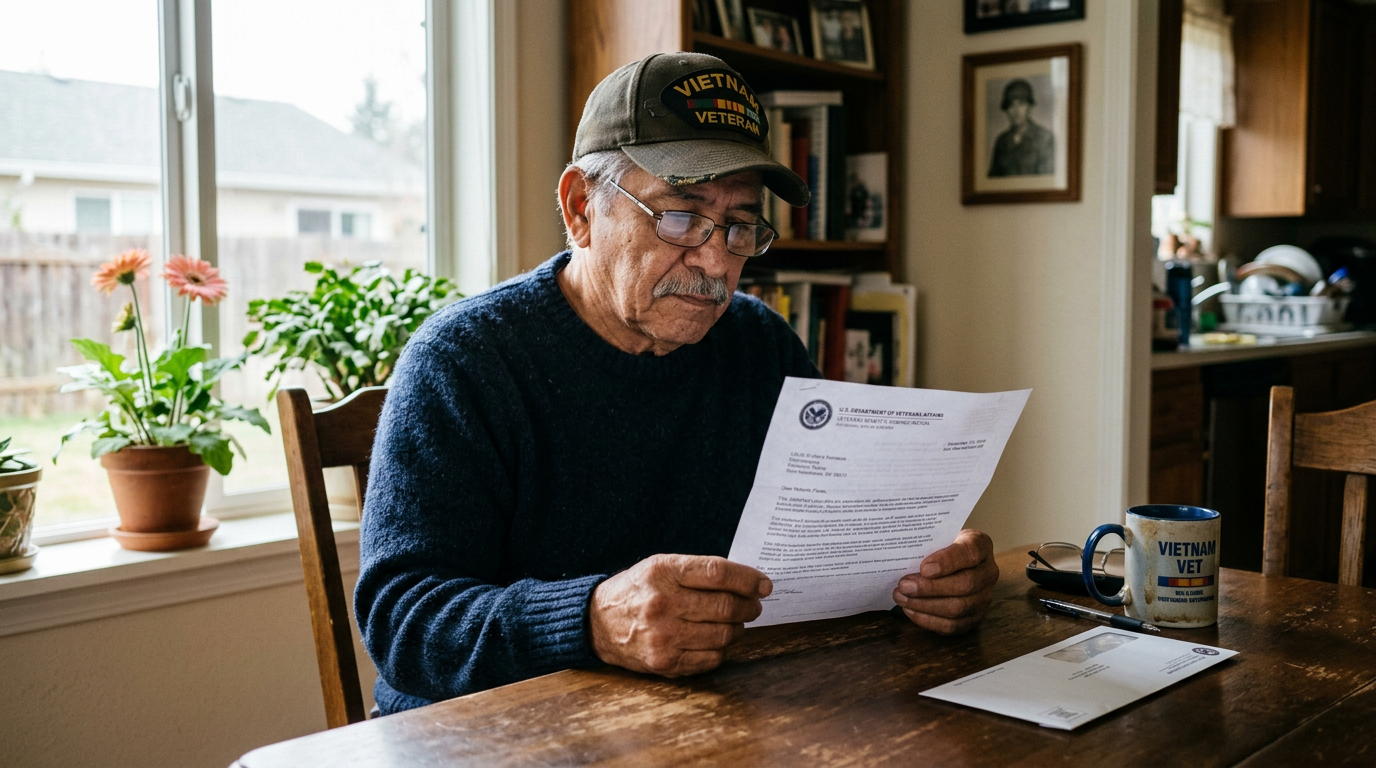
The VA assigns a service-connected disability rating from 0% to 100%, in steps of 10. That number is not a medical score - it is a measure of how much your service-connected conditions reduce your ability to earn a living, and it decides your monthly tax-free payment. A 0% rating still matters: it means the VA agrees the condition is connected to your service, which can open the door to health care and to a higher rating later if the condition worsens.
Here is the part that costs veterans money: the VA does not add your ratings together. Two 50% conditions do not make 100%. The VA uses "whole person" math - it rates your worst condition first, then applies each additional rating only to the *remaining* healthy percentage. That is why a 50% and a 30% combine to 65%, which rounds to 70%, not 80%. Understanding this is the difference between accepting a lowball combined rating and knowing when to push back.
Do you even qualify? The three gates
Every disability claim rests on three things. One: a current, diagnosed condition - you have to actually be diagnosed, today, with the problem. Two: an in-service event, injury, or exposure - something that happened during your service. Three: a nexus - a link between the two, ideally stated by a doctor as "at least as likely as not" related to service.
You do not need to have deployed, seen combat, or been wounded. There is no Purple Heart requirement. Knees worn out by years of rucking, hearing destroyed on a flight line, a back injured loading cargo stateside, sleep apnea, tinnitus, PTSD - all of it can be service-connected. And connection can be direct (started in service), secondary (a service-connected condition caused another), or presumptive (the law assumes the link based on where and when you served, including many PACT Act conditions).
How the claim actually moves
The process has a shape, and knowing it removes most of the fear. It starts with an Intent to File (VA Form 21-0966), which locks in your effective date and gives you a year to gather evidence. Then you file the claim itself on VA Form 21-526EZ - ideally as a Fully Developed Claim with all your evidence attached. The VA usually schedules a C&P exam, issues a rating decision, and if that decision is wrong, you have one year to appeal through a Supplemental Claim, a Higher-Level Review, or the Board.
The two places veterans lose money are at the start and the end: not filing an Intent to File (which erases back pay), and not appealing a bad decision inside the one-year window. The dated month-by-month plan on this page walks the whole thing, including how to pull your medical records and request your service records from the National Archives.
The benefits at higher ratings almost no one claims
A rating is a gate, not a ceiling. At 60% or a combined 70% (with one condition at 40%+), you may qualify for TDIU - paid at the full 100% rate of $3,938.58 a month if service-connected conditions keep you from steady work, even without a 100% schedular rating. Special Monthly Compensation (SMC) pays *above* the 100% rate for things like loss of use of a limb, needing daily aid and attendance, or being housebound. And a 100% Permanent & Total rating unlocks a whole tier - Chapter 35 education benefits for your dependents, priority VA health care, often state property-tax exemptions, and more.
Nothing in a VA decision letter tells you these exist. That is exactly why they go unclaimed for years - and why it is worth having someone read your file who knows to look for them.
Rates shown are 2026 figures and adjust each year with the COLA - always confirm current amounts before you file. This is free education, not legal advice.
Free tool
See your real combined VA rating
You just read how the VA combines ratings. Now try it with your own numbers. Add each condition, mark anything on an arm or a leg for the bilateral factor, and watch the combined rating update as you go. Same formula the VA uses — 38 CFR 4.25.
How to use this
- If a condition affects an arm or leg, first pick that limb below. Otherwise leave it on Other condition.
- Tap the rating (10%–100%) the VA assigned that condition to add it to your list.
- Add every service-connected condition. When you have disabilities on both arms or both legs, the calculator automatically adds the VA’s 10% bilateral factor.
Step 1 · Where is the condition?
Adding to: Other condition
Upper extremities
Lower extremities
Everything else
Step 2 · Tap the rating to add it
Your disabilities (0)
Your combined VA rating
Add your ratings to see your combined VA rating.
Estimate only. The VA rounds combined ratings to the nearest 10%. Always confirm your official rating on va.gov.
What the VA actually pays, in dollars
The whole rate table on one page - plus the combined-rating math that trips up almost every veteran who tries to work out his own number.
VA disability compensation is paid every month, and it is not taxed - not by the IRS, not by any state. It does not count as income for most needs-based programs either.
These are the rates that took effect December 1, 2025, after a 2.8% cost-of-living increase. They are what the VA pays for 2026, and they change again every December.

Your rating is a dollar figure. Here is the table the VA pays from, and the math behind it.
| Combined rating | Veteran alone | With spouse | Spouse + 1 child | Per year, alone |
|---|---|---|---|---|
| 10% | $180.42 | same | same | $2,165 |
| 20% | $356.66 | same | same | $4,280 |
| 30% | $552.47 | $617.47 | $666.47 | $6,630 |
| 40% | $795.84 | $882.84 | $947.84 | $9,550 |
| 50% | $1,132.90 | $1,241.90 | $1,322.90 | $13,595 |
| 60% | $1,435.02 | $1,566.02 | $1,663.02 | $17,220 |
| 70% | $1,808.45 | $1,961.45 | $2,074.45 | $21,701 |
| 80% | $2,102.15 | $2,277.15 | $2,406.15 | $25,226 |
| 90% | $2,362.30 | $2,559.30 | $2,704.30 | $28,348 |
| 100% | $3,938.58 | $4,158.17 | $4,318.99 | $47,263 |
Dependents do not count until 30%. At 10% and 20% the VA pays the same amount whether you live alone or support a spouse, three children, and a dependent parent. Crossing from 20% to 30% is the point where your family starts to matter to the check.
The columns above stop at a spouse and one child. The VA also pays for additional children, children over 18 in school, dependent parents, and a spouse who needs Aid & Attendance - each is its own add-on at 30% and above.
SMC-K adds $139.87 a month on top of any of these for loss, or loss of use, of certain body parts or senses - and it is payable at any rating, including alongside 100%.
Why 50% plus 30% is not 80%
This is the single most misunderstood thing in the whole system, and it costs veterans real money because they budget for a check that was never coming.
VA ratings do not add up. The VA uses what it calls the whole-person method: it treats you as 100% whole to start, and each disability takes a bite out of what is left, not out of the original 100.
Start with the most disabling condition
You are 100% whole. A 50% rating comes off first - the VA always works from the largest rating down. That leaves 50% of you un-disabled.
The next rating only bites what is left
The 30% rating is applied to that remaining 50%, not to the whole person. 30% of 50 is 15. Add it to the 50 you already have and you are at 65.
Round to the nearest ten
The VA rounds the final number to the nearest 10%. 65 rounds to 70% - and 70% is the rating you actually get paid on. Not 80%.
In 2026 dollars, that rounding is the difference between $1,808.45 a month at 70% and the $2,102.15 a veteran expects when he does the arithmetic in his head. $293.70 a month of disappointment, every month, from a math rule nobody explained.
It gets harsher the higher you climb. A veteran already at 70% who wins a new 10% condition combines to 73, which rounds straight back down to 70%. His check does not move by a dollar. This is why chasing small ratings at the top of the scale is usually the wrong strategy - and why the conditions you claim, and the order they get rated in, matter more than how many you claim.
One exception worth knowing: the bilateral factor under 38 CFR 4.26. When compensable disabilities affect both arms or both legs, those paired ratings are combined first and then an extra 10% of that combined value is added before everything else is folded in. It is small, but it is free, and the VA does not always apply it correctly.
Try it yourself
Run your own combined rating
Add each service-connected rating and watch the VA's whole-person math work in real time - including the 10% bilateral factor when both arms or both legs are involved. Nothing is saved and nothing leaves your device.
How to use this
- If a condition affects an arm or leg, first pick that limb below. Otherwise leave it on Other condition.
- Tap the rating (10%–100%) the VA assigned that condition to add it to your list.
- Add every service-connected condition. When you have disabilities on both arms or both legs, the calculator automatically adds the VA’s 10% bilateral factor.
Step 1 · Where is the condition?
Adding to: Other condition
Upper extremities
Lower extremities
Everything else
Step 2 · Tap the rating to add it
Your disabilities (0)
Your combined VA rating
Add your ratings to see your combined VA rating.
Estimate only. The VA rounds combined ratings to the nearest 10%. Always confirm your official rating on va.gov.
The jump from 90% to 100% is the biggest in the schedule
Look at the table again. Every step up the ladder adds a few hundred dollars - until the last one. 90% pays $2,362.30 a month. 100% pays $3,938.58. That is $1,576.28 more every month - about $18,915 a year - for a single ten-point step, and it opens doors that the 90% rating does not.
That gap is exactly why TDIU exists and why it is worth fighting for. If your service-connected conditions keep you from holding substantially gainful employment, the VA can pay you at the full 100% rate while your combined rating is still 70%, or even 60% for a single condition. For a veteran sitting at 70%, that is $2,130.13 a month he is not receiving. That gap figure is for a veteran with no dependents - with a spouse or children the 70% and 100% rates each rise by different amounts, so the exact gap changes with your household.
Keep going - there are more free tools than most veterans ever find
The VA will not point you to any of this. Each tool below runs the real numbers or spells out a benefit you may already be owed - open the ones that fit your situation.
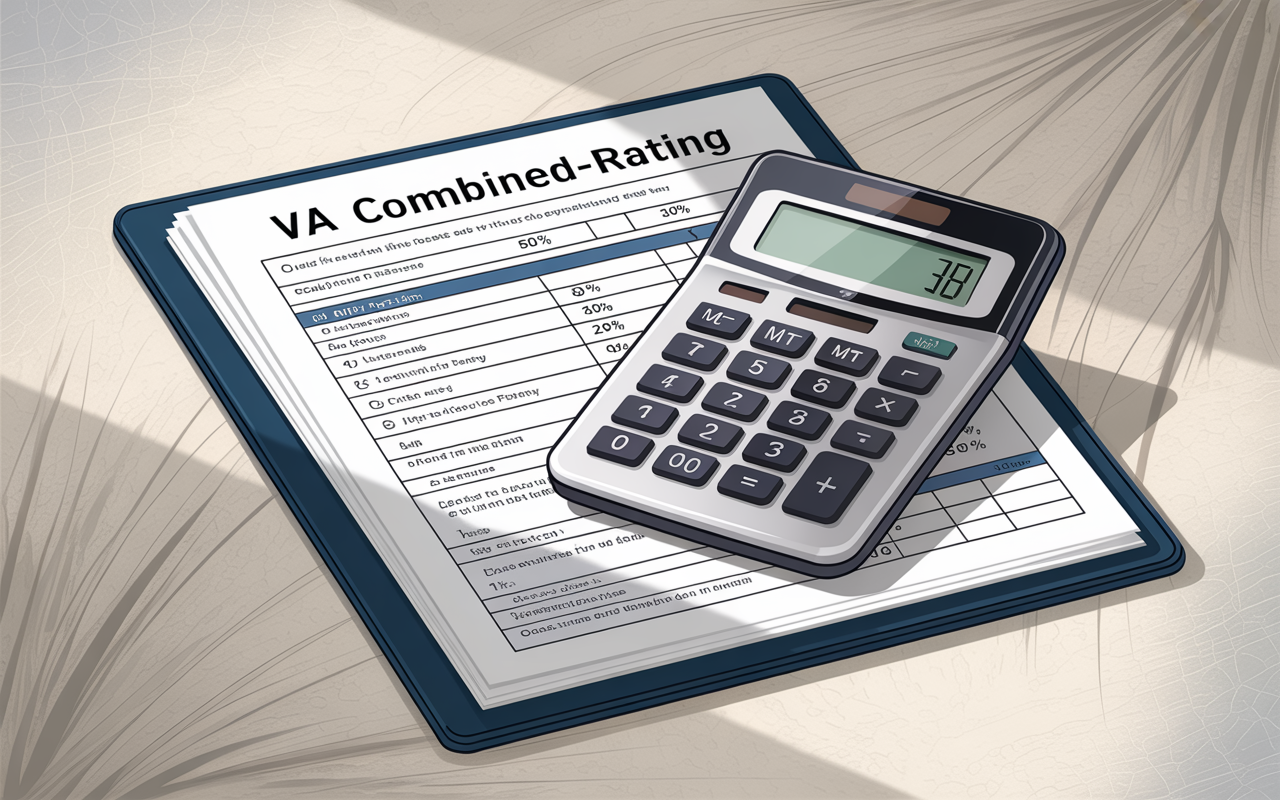


These are the published 2026 rates for the most common household situations - they are an estimate of your payment, not a determination. Your actual check depends on your rating, your dependents, and any special monthly compensation. Rates change every December with the COLA. Always confirm current figures on va.gov.
Rates verified for 2026, effective December 1, 2025 (2.8% COLA). Last verified: December 2025 - always confirm current figures on va.gov.
What happens to your rating as you age - and the rules that protect it
Service-connected conditions rarely stay the same. This is the part almost no one explains: your right to ask for more when things get worse, and the federal rules that stop the VA from quietly taking a rating back once you have held it for years.

You can file for a higher rating at any time
Conditions get worse with age - that is normal, and the VA expects it. If a service-connected condition has worsened, you have the right to file for an increased rating at any time, with no deadline. You file on VA Form 21-526EZ (the same claim form) and submit current medical evidence showing the worsening. If the increase is granted, your effective date generally goes back to when the worsening began, as long as you file within a year of that date - which is why new symptoms are worth acting on quickly.
A stabilized rating is protected after 5 years
Under 38 CFR 3.344, once a rating has been in place and stable for 5 years, the VA cannot reduce it based on a single exam or a temporary dip. It must show sustained improvement in your ability to function under the ordinary conditions of life and work - not one good day in an exam room. This is one of the most misunderstood protections: many veterans accept a proposed reduction they had the right to fight.
Service connection is protected after 10 years
Under 38 CFR 3.957, once a condition has been service-connected for 10 years, the VA can no longer sever that service connection - the link between your condition and your service - except in cases of proven fraud. The rating percentage can still change if the condition genuinely improves, but the fundamental fact that it is connected to your service is locked in.
A continuously held rating becomes protected after 20 years
Under 38 CFR 3.951(b), a rating that has been continuously in place for 20 years is protected at or above that level for the rest of your life - it cannot be reduced except for proven fraud, even if your condition improves. For an aging veteran, this is the strongest protection in the system: two decades of a rating means that income is yours to keep.
How long until your rating is protected?
Enter the effective date on your rating decision and your age, and this tool shows exactly how much time is left before each protection rule locks in - the 5-year, 10-year, and 20-year rules above - plus the age-55 re-exam exemption. Every result is an estimate; an accredited review confirms it against your actual record.
When did your rating take effect?
This is the effective date on your rating decision - the month the VA says your service-connected rating began. It is printed near the top of your decision letter.
You have held this rating for about 3 yrs.
How old are you?
Age matters for one extra protection: once you turn 55, the VA generally stops scheduling routine re-examinations.
Your protection timeline
Where your rating stands against the three federal protection rules.
5-year rule
2 yrs to go
About 2 yrs (around October 2028) until your rating is stabilized against reduction on a single exam.
38 CFR 3.344
10-year rule
7 yrs to go
About 7 yrs (around October 2033) until your service connection can no longer be severed (except for fraud).
38 CFR 3.957
20-year rule
17 yrs to go
About 17 yrs (around October 2043) until your rating percentage is protected for life at or above its current level.
38 CFR 3.951(b)
Age-55 re-exam rule
Routine re-exams generally stop for you
Because you are 55 or older, the VA generally will not schedule a routine future exam to re-check your condition - the most common trigger for a proposed reduction.
38 CFR 3.327(b)(2)
Estimate only. Protection rules have exceptions, and the clock runs from your actual effective date on file. An accredited review confirms exactly where you stand.
Once you turn 55, the VA generally stops calling you back for re-examinations
Under 38 CFR 3.327(b)(2), the VA generally will not schedule a routine future exam to re-check a service-connected condition once the veteran is age 55 or older, except in unusual circumstances or when required by a specific regulation. A routine re-exam is the most common way a rating gets put up for reduction, so for an older veteran this rule quietly removes the single biggest threat to a rating that is not yet protected by the 5, 10, or 20-year rules above. It is a policy, not an absolute bar - but if the VA proposes a re-exam after you have passed 55, that is worth questioning, and worth an accredited review before you simply comply.
If the VA proposes a reduction, you can fight it
A proposed reduction is not final. This official walkthrough explains the three appeal lanes - Higher-Level Review, Supplemental Claim, and the Board of Veterans' Appeals - so you can pick the right path and protect your effective date.
VA Appeals: Higher-Level Review, Supplemental Claim & Board of AppealsOfficial video - Veterans Law Attorneys
Educational video from Veterans Law Attorneys. We are not the VA - this is free education, not legal advice.
5 rating-protection facts veterans aren't aware of
The rules that quietly keep the VA from cutting a rating you already earned.
After age 55, routine re-exams generally stop
Under 38 CFR 3.327(b)(2), the VA usually will not schedule a routine future exam once you are 55 or older - removing the most common way a rating gets reduced.
The 5-year rule protects a stabilized rating
A rating in place and stable for 5 years cannot be cut on the strength of a single exam - the VA must show sustained improvement in your ability to function.
The 10-year rule protects service connection
Once a condition has been service-connected for 10 years, the VA generally cannot sever that service connection - only fraud can undo it.
The 20-year rule locks in your level
A rating continuously held for 20 years cannot be reduced below its lowest level during that span, short of proven fraud - it is effectively protected for life.
A proposed reduction is not final - you can fight it
You have the right to respond, submit evidence, and request a hearing before any reduction takes effect. Many proposed reductions never happen.
Not sure whether to file for an increase - or fighting a proposed reduction?
A free, accredited records review is the fastest way to know where you stand. We will tell you honestly whether the evidence supports a higher rating, whether a protection rule applies to you, and what to do next. No obligation, and no fee to look.
General education, not legal advice. Protection rules have exceptions - the CFR citations above are the governing rules, and we will confirm how they apply to your specific record.

Albert L. Thombs Jr.
VA Accredited Claims Agent #45147
U.S. Army veteran, 100% service-connected disabled, and founder of The VA Disability Advocate, LLC. He spent a decade fighting the VA for his own benefits - now he and a team of 10 advocates do it for veterans and families nationwide.
20+ years helping veterans
Why families trust this help
Real credentials. Real accountability. No sales pitch.
There is a lot of noise out there - unaccredited "consultants" who charge illegal fees and disappear. Here is the difference, in facts you can verify yourself.
VA-accredited, and you can check
Albert L. Thombs Jr. is a VA Accredited Claims Agent, accreditation #45147 - a number you can look up yourself in the VA Office of General Counsel database. Accreditation is not a marketing badge; it is federal authorization to represent veterans.
Federally accountable
Accredited agents answer to the VA General Counsel and are bound by 38 CFR standards of conduct. That is a level of oversight the "claim sharks" who cold-call veterans simply do not have.
No upfront fees, ever
By law, no one may charge you to file an initial claim - and we never do. Optional representation on an appeal is contingency-based under 38 CFR 14.636: you pay nothing unless you win, and every fee is disclosed in writing first.
Free tools, no sign-up wall
Every calculator, worksheet, and benefit guide on this site is free and open - no account, no email harvesting, no paywall. The information belongs to you because you earned it.
The benefits veterans earn and almost never claim
A rating is a door, not a destination. Each of these is already owed to veterans who qualify, and each one is missed for the same reason: the VA has no duty to tell you it exists. Read what applies to you, then go claim it.




Why these get missed, every single time
The VA decides the claim in front of it. It does not go looking for the other four benefits your rating just unlocked, and your decision letter will never list them. That is not a conspiracy - it is how the system is built, and it is exactly why so much of this money sits unclaimed for years. Reading this page is free, and so is asking. If any of the eight above sounds like your situation, say so and we will tell you straight whether it applies.
Dollar figures above (clothing allowance, Chapter 35 DEA, and the rest) are verified against VA published rate tables, effective December 1, 2025. DEA and education rates are set annually - confirm today's figure on va.gov before you file.
Special Monthly Compensation, every rate spelled out
SMC is the most under-claimed benefit on this page. Here is the full lettered ladder with the 2026 monthly rate for a veteran with no dependents, and a plain-language description of what each level is for. It is authorized by 38 U.S.C. 1114 and set out in 38 CFR 3.350.
| Level | What it is for | 2026 monthly rate |
|---|---|---|
| SMC-KAdd-on | Loss or loss of use of one body part (add-on) Loss, or loss of use, of a hand, a foot, an eye, a reproductive organ, or complete loss of use of a creative organ. Paid ON TOP of your regular compensation - you can receive more than one SMC-K award at the same time. | +$139.87 |
| SMC-S | Housebound You are substantially confined to your home because of service-connected disability, OR you have a single disability rated 100% plus other disabilities that add to 60% or more. | $4,408.53 |
| SMC-L | Aid & Attendance / loss of use of both feet, etc. You need the regular Aid & Attendance of another person, OR you have anatomical loss/loss of use of both feet, one hand and one foot, blindness in both eyes, or you are permanently bedridden. | $4,900.83 |
| SMC-L 1/2 | Between L and M An intermediate step the VA assigns when your disabilities fall between the SMC-L and SMC-M criteria. | $5,154.00 |
| SMC-M | Loss of use of both hands, etc. Anatomical loss/loss of use of both hands, both legs above the knee, one arm and one leg, blindness with only light perception, or similar combinations. | $5,408.55 |
| SMC-M 1/2 | Between M and N An intermediate step the VA assigns when your disabilities fall between the SMC-M and SMC-N criteria. | $5,780.00 |
| SMC-N | Loss of use of both arms, etc. Anatomical loss of both arms at a level preventing use of prosthetics, loss of both legs at the hip, blindness in both eyes with loss of use, or similar. | $6,152.64 |
| SMC-N 1/2 | Between N and O An intermediate step the VA assigns when your disabilities fall between the SMC-N and SMC-O criteria. | $6,514.00 |
| SMC-O / P | Highest scheduled combinations The most severe combinations - for example, deafness in both ears with blindness, or two or more disabilities that would each independently qualify at the SMC-N level. | $6,877.12 |
| SMC-R.1 | Highest level + Aid & Attendance You qualify at SMC-O and also need the regular Aid & Attendance of another person. | $9,826.88 |
| SMC-R.2 / T | Highest level + higher-level A&A You need a higher level of Aid & Attendance - daily personal care by someone with medical or nursing training to stay out of a nursing home. (SMC-T applies to certain traumatic brain injury cases.) | $11,271.67 |
SMC-K is an add-on paid on top of your regular compensation, and you can hold more than one at once. Levels L through T replace your standard rate with the higher statutory amount. The figures above are for a veteran with no dependents - a spouse, children, or dependent parents raise them.
Common amounts added on top (2026)
+$201.41
Spouse who needs Aid & Attendance
Added when your spouse also needs the regular aid and attendance of another person.
+$109.11
Each dependent child under 18
Added for each qualifying child under age 18.
+$352.45
Each child 18-23 in an approved school
Added for each child between 18 and 23 who is enrolled in a VA-approved school program.
Accuracy safeguard
These are verified 2026 VA rates for a veteran alone, effective December 1, 2025 (2.8% COLA). SMC is intentionally complex and your exact level depends on your specific disabilities and combinations. Last verified: December 2025. Confirm every figure on va.gov, and have an accredited review map your case before you file.
Read the full SMC guidePick your exposure - then open its page to see exactly what is presumptive
Start here. Choose the exposure that matches your service and open its own page for the exact locations that qualify and the full list of presumptive conditions. Peacetime, never deployed, or your exposure is not on a list? The TERA card is your path. Below the cards we spell out the two ways the VA handles toxic exposure - and why TERA is not a presumptive.




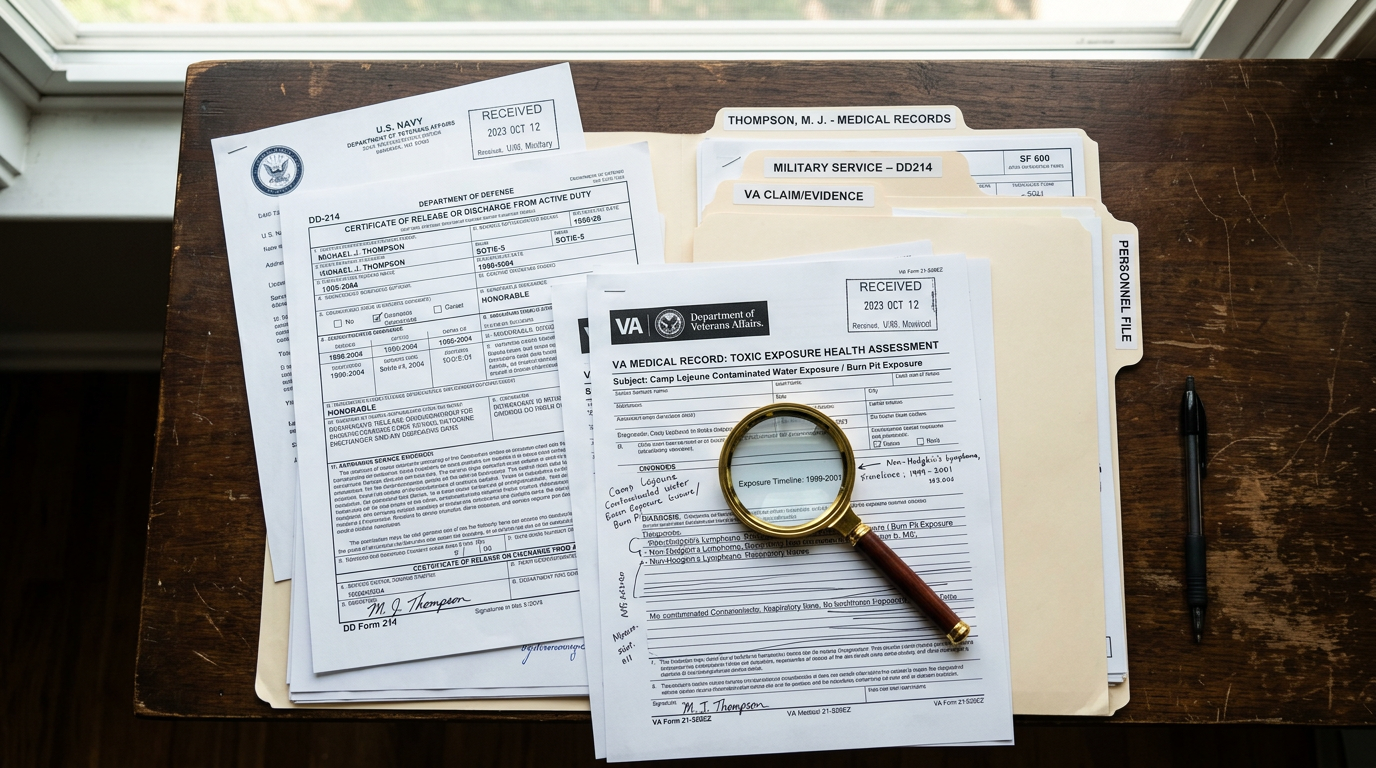

The one term that trips veterans up
What is TERA? Toxic Exposure Risk Activity, spelled out
TERA stands for Toxic Exposure Risk Activity. It is a finding by the VA that you took part in an activity during service that carried a risk of toxic exposure - even if your condition is not on the presumptive list, and even if your base or job is not named in any law. TERA is NOT a presumptive. It does not automatically connect your condition - it opens the door to expanded VA health care and a direct, "facts-found" claim, which you still have to prove with records and a medical nexus.
Path 1 - the automatic path
PACT Act presumptive conditions - start with your wartime era
A presumptive condition is one the VA already agrees is caused by toxic exposure. If you have a listed condition and you served in a qualifying place and time, the VA presumes the link - you do not have to prove the exposure caused it. The 2022 PACT Act added more than 20 new presumptive conditions, and across every war era the full list now runs to 59+. To know if you qualify, pick your wartime era in the cards above and open its page for the exact locations that qualify and every condition that is presumptive for you.
Path 2 - the earned path
TERA - Toxic Exposure Risk Activity (not a presumptive)
If your exposure is not on a presumptive list - or you served in peacetime or never deployed - this is your path. A TERA determination opens the door, but you still connect the dots with your exposure records (the ILER), a TERA memo, and a medical nexus. This is where an accredited agent earns their keep.
Open the TERA path - 7 common exposuresWhat toxic exposure actually means for a wartime veteran
Toxic exposure is any harmful substance you were around during service - burn pits and airborne hazards in Iraq and Afghanistan, Agent Orange in Vietnam, Korea, and Thailand, radiation, contaminated water like Camp Lejeune, and fuels, solvents, PFAS firefighting foam, asbestos, and lead on bases and ships. It even reaches the Blue Water Navy veterans who served aboard ships in the coastal waters off Vietnam - once shut out, they are now covered for Agent Orange the same as anyone who was ashore. For a wartime veteran it is rarely one clean event - it is months or years of breathing, touching, and living in it.
Here is the part the VA will not volunteer: your exposure is not limited to your job title (MOS). It follows your unit, every place you were stationed or deployed, and every job you actually did. An infantryman pulled to office work still carries the field exposure. A clerk attached to an EOD team shares that team's exposure. That is why two veterans with the same MOS can have completely different claims.
If you were denied before, that denial is not the end
Thousands of veterans were turned down before August 2022 for a condition the PACT Act now makes presumptive - denied only because they could not prove the link at the time. That link is now written into law. If that is you or a loved one, the claim can be reopened, and a new grant may be backdated. A past "no" does not mean today's answer is no.
How toxic-exposure claims work, step by step
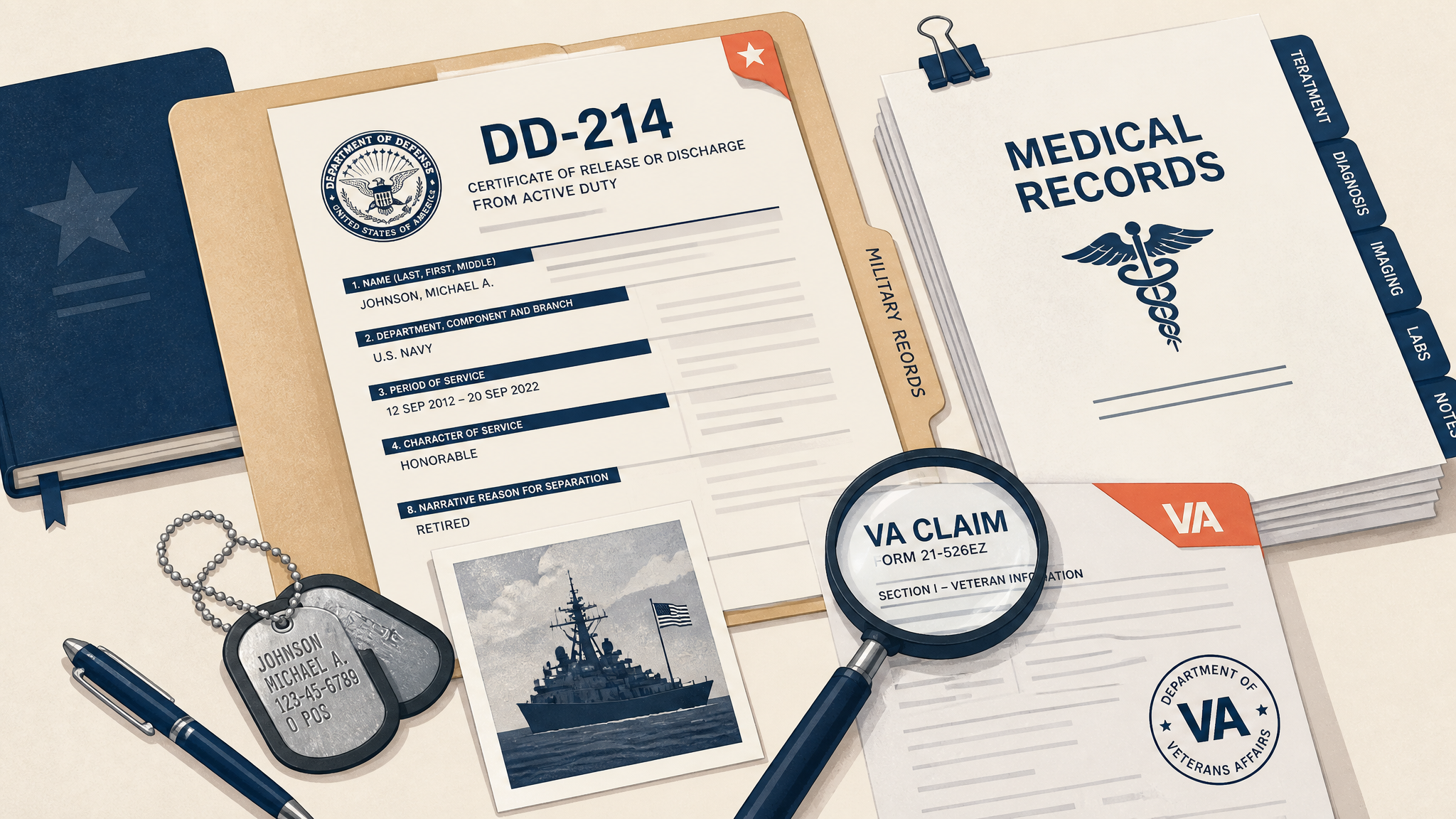
FIG. 01 - Gather your paperwork 1Match your service to an exposure
Every unit, every base, every deployment, and every job you actually did - not just your MOS. This is where most veterans undercount what they are owed.
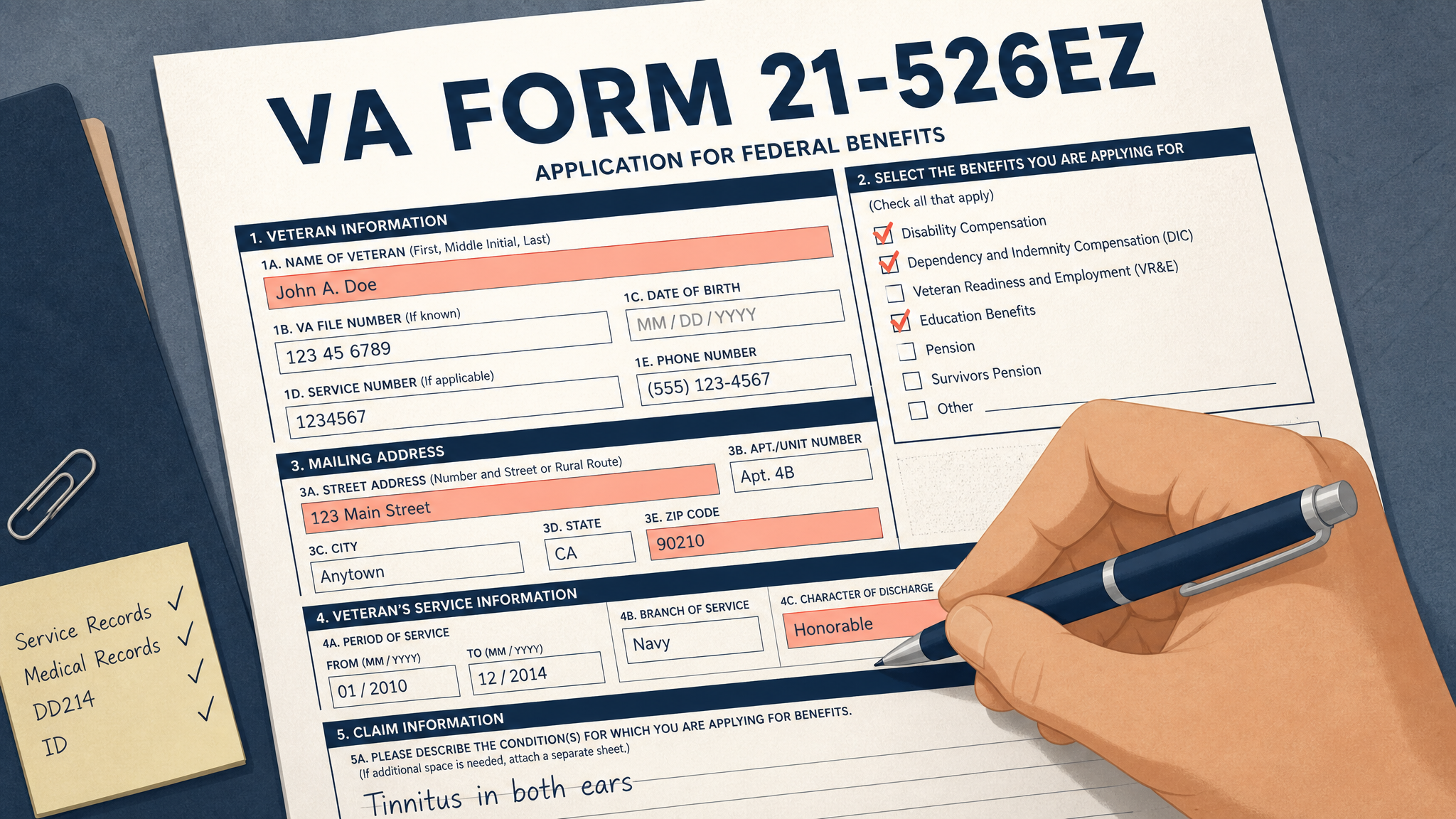
FIG. 02 - Fill out the form 2Check the presumptive lists first
If your condition is presumptive for your era and location, the VA presumes the link and you skip the hardest part of the claim.
FIG. 03 - File the claim 3If it is not presumptive, build the TERA case
Pull the exposure records (the ILER), establish the Toxic Exposure Risk Activity, and line up a medical nexus for a direct, facts-found claim.
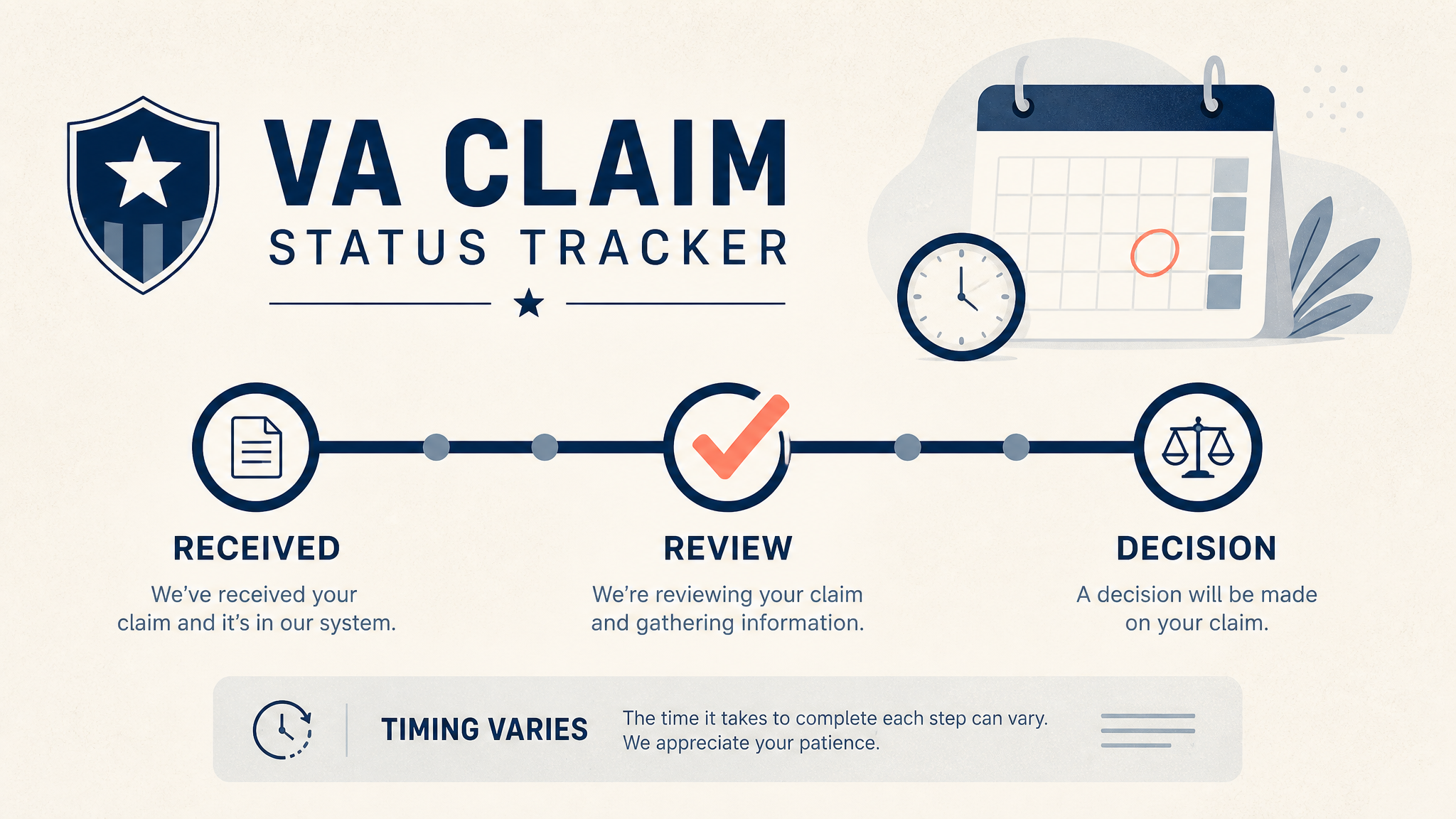
FIG. 04 - After you file 4File - or reopen a past denial
File the claim with the evidence attached, or reopen an older claim now covered by the PACT Act. We do this part with you, at no upfront cost.
Not sure which path is yours? That is exactly what we check - free.
Whether your condition is presumptive or needs a TERA determination and a nexus, we will look at your real service - every unit, every location, every job - and tell you honestly what you may be owed. No forms and no obligation to ask.
This is free education, not legal advice. The Aging Veteran is operated by a VA-accredited representative and is not the U.S. Department of Veterans Affairs.
The major eligibility gates, in plain language
Eligibility for VA benefits depends on several factors working together. No single answer fits everyone, but here is an honest overview of the major eligibility gates.

Eligibility is not one door. It is several, and you can be standing in front of more than one without knowing it.
For Disability Compensation (38 CFR Part 4)
- You served on active duty, active duty for training, or inactive duty training
- You were discharged under conditions other than dishonorable
- You have a current diagnosed medical condition
- That condition is connected to your service (directly, secondarily, or presumptively)
For Veterans Pension
- You served at least 90 days of active duty, with at least one day during a wartime period (as defined by the VA, this includes WWII, Korea, Vietnam, and Gulf War)
- You were discharged under conditions other than dishonorable
- Your income and net worth fall within the VA's limits (the net worth limit is $163,699 for December 1, 2025 through November 30, 2026, adjusted annually)
- You are age 65 or older, OR you are permanently and totally disabled, OR you are a patient in a nursing home for long-term care
For VA Health Care
- Most veterans who served at least 24 continuous months of active duty and were discharged under other than dishonorable conditions are eligible
- Veterans with service-connected disabilities, Purple Heart recipients, former POWs, and certain low-income veterans may qualify regardless of the 24-month rule
- PACT Act (Public Law 117-168, signed August 10, 2022) expanded eligibility significantly for veterans exposed to toxic substances, including burn pits, Agent Orange, and radiation
Accuracy Safeguard: Eligibility determinations depend on your specific service dates, discharge characterization, medical history, income, and in some cases your unit, duty station, and deployment locations. The information above is general education. An accredited review of your actual records is the only way to get an accurate eligibility read for your situation.
Figures and limits above — Last verified: July 2026
A dated plan you can actually follow
Most veterans stall because no one ever laid out the order. Here it is - start to finish, with the two steps almost everyone skips (pulling your medical records, and requesting your service records from the National Archives) given their own place. Timing is measured from the day you start, so the plan is true no matter when you begin.

Week 1
File an Intent to File - this one step protects your money
Before you have a single piece of evidence, file an Intent to File (VA Form 21-0966). It does nothing except lock in today as your effective date and give you up to one year to finish the real claim. If the VA later approves you, your back pay is calculated from this date - not the date you finally submit everything. Skipping this step is the most expensive mistake a veteran makes.
VA Form 21-0966 - file online at VA.gov, by phone, or by mail
Weeks 1-2
Find your DD-214 and write down every condition
Locate your DD-214 (your discharge document) - it proves your service and character of discharge. Then make a plain list of every physical and mental condition you believe traces to service, no matter how old or how minor it feels. Knees, back, hearing, tinnitus, sleep apnea, anxiety, exposure conditions - all of it. You are not deciding what qualifies yet; you are building the map.
Month 2 - Records Step A
Collect your medical records
Your claim lives or dies on evidence. Request records from every place you have been treated: the VA health system, and every private doctor, hospital, and clinic. Ask each provider for your complete file in writing (a signed medical-records release), and keep copies of everything. Look specifically for a current diagnosis and any note tying the condition to your service or to a service-connected condition. If a private doctor is willing, a short nexus letter - "it is at least as likely as not that this condition is related to service" - is worth its weight in gold.
Request VA records through My HealtheVet; private records by signed release
Month 2 - Records Step B
Request your service records from the National Archives
Your Service Treatment Records and Official Military Personnel File are usually held at the National Personnel Records Center (NPRC), part of the National Archives. These records show the in-service injury, complaint, or exposure that connects your condition to your service. Request them for free one of three ways: eVetRecs online at vetrecs.archives.gov, Standard Form 180 (SF-180) by mail or fax, or milConnect if you have a DS Logon. Records for recently separated veterans may still be with your branch - request there if the Archives does not have them yet.
eVetRecs (vetrecs.archives.gov), SF-180, or milConnect - all free
Month 3
File the claim as a Fully Developed Claim
With your evidence in hand, file VA Form 21-526EZ. Whenever you can, file it as a Fully Developed Claim - meaning you submit all your evidence up front and certify there is nothing else outstanding. FDCs are generally decided faster because the VA is not waiting on records. Attach your diagnosis, your service evidence, and any nexus letter. File inside the one-year window your Intent to File opened.
VA Form 21-526EZ (disability compensation)
Month 4
Prepare for the C&P exam
The VA will usually schedule a Compensation & Pension (C&P) exam. Go to it - a missed exam can sink the claim. Be honest and specific about your worst days, not your average day; the VA rates severity, and understating your symptoms costs you. Bring a short written summary of how the condition limits your daily life and work. This exam often carries more weight in the decision than anything else in the file.
Months 5-7
Respond fast while the VA reviews
The VA gathers evidence, reviews the exam, and may send letters asking for more. Open every letter the day it arrives and answer by the deadline - unanswered requests are a common reason good claims get denied. Check your status at VA.gov. This is the waiting stretch; processing times vary widely, so treat any published estimate as a guess, not a promise.
Months 8-10
Read the rating decision carefully
You will receive a rating decision letter with a percentage for each condition and your combined rating. Read it line by line. Check that every condition you claimed was addressed, that the effective date matches your Intent to File, and that the severity matches your evidence. Approvals are often lower than they should be, and effective dates are frequently wrong - both are fixable.
Months 11-12
If the decision is wrong, appeal - the clock is one year
A denial or a lowball rating is not the end. You have one year from the decision to choose a lane: a Supplemental Claim (add new and relevant evidence), a Higher-Level Review (a senior reviewer takes a fresh look, no new evidence), or an appeal to the Board of Veterans' Appeals. Missing the one-year window forces you to start over and can cost you your effective date. This is the point where accredited help matters most - and where you may want a representative on VA Form 21-22 / 21-22a.
What a nexus letter is - and when you actually need one
A nexus letter is a signed opinion from a medical provider stating that your condition is "at least as likely as not" (a 50 percent or better probability) connected to your service. That exact phrase matters - it is the legal standard the VA uses, and a strong letter states it plainly, explains the reasoning, and cites your records.
You do not need one for a presumptive condition, where the VA already accepts the link. You do often need one for a direct claim, a secondary condition (one caused by another service-connected condition, under 38 CFR 3.310), or when a past claim was denied for "no nexus." A private doctor who knows your history, or a qualified independent provider, can write it. This is one of the places an accredited agent earns their keep - knowing when a nexus letter will move your claim, and when it is money you do not need to spend.
VA processing times change constantly, so treat every month here as a planning estimate, not a promise. The deadlines that are fixed in law - the one-year Intent-to-File window and the one-year window to appeal a decision - are the ones worth setting a reminder for. This is free education, not legal advice.
How to prepare for your C&P exam - condition by condition
The Compensation & Pension exam is the appointment that decides most claims, and it is not a treatment visit. For a veteran in your 50s, 60s, or 70s, it is usually the single biggest factor in your rating - so walk in knowing exactly what the examiner is measuring and how to show it honestly.

What happens in the room
A VA or contract examiner reviews your file, asks how your condition affects you, and runs any tests it needs (range of motion, an audiogram, a questionnaire). It is usually short. They are not there to treat you - they are there to document you, and their report often outweighs everything else in the file.
Describe your worst day
The VA rates severity, and it rates it at your worst, not your average. If a bad day means you cannot get out of bed or cannot grip a coffee cup, say exactly that. Never exaggerate - but the reflex to answer "I'm fine" is what quietly sinks honest claims.
What is actually rated
Not your diagnosis - your functional loss. Two veterans with the same condition can rate very differently based on how much it limits work and daily life. The exam exists to capture that loss, so your job is to make the real impact visible and specific.
Condition-by-condition: what the examiner measures, and how to be ready
These are the conditions that fill C&P exams for older veterans. Each one is scored differently, so prepare for your exam, not a generic one.
Hearing loss & tinnitus
What is measured
For hearing loss the examiner runs an audiogram (puretone thresholds) plus the Maryland CNC word-recognition test in a sound booth. Tinnitus is subjective - there is no machine for it, so your description is the evidence.
How to prepare
Name your noise exposure by job and event - artillery, flight line, engine rooms, small-arms, IED blasts. For tinnitus, say how constant the ringing is and how it wrecks sleep and concentration. Do not answer questions before the tone actually ends.
Sleep apnea
What is measured
The rating turns on your sleep study and, above all, whether you require a CPAP or breathing device. Use of a breathing machine is what drives the 50 percent level.
How to prepare
Bring the sleep study report and your CPAP prescription or compliance data. If a spouse witnessed you stop breathing or gasp at night, a short statement from them helps. Tie the onset to service where you can.
Back, knees & joints
What is measured
The examiner measures range of motion with a goniometer and looks for painful motion, weakness, and loss after repetitive use under 38 CFR 4.40, 4.45, and 4.59. Pain that begins during motion counts.
How to prepare
Do not tough it out - stop when it truly hurts and say so, because pushing through hides the loss. Describe your flare-ups even if today is a good day, and how many bad days a week you have. The examiner must consider flares, not just the moment in the room.
PTSD, depression & anxiety
What is measured
Mental-health exams rate occupational and social impairment - how the condition hits work, relationships, memory, mood, and daily function - not just the diagnosis.
How to prepare
Describe your worst weeks: panic, isolation, anger, nightmares, missed work, avoiding people. The instinct to say "I hold it together" costs veterans dearly here. Honesty about the hard days is what the rating is built on.
Presumptive & toxic exposure
What is measured
For PACT Act presumptives - burn pits, Agent Orange, radiation, Gulf War illness - the VA already presumes the service connection, so the exam focuses on diagnosis and severity, not proving the link.
How to prepare
Come with your exposure locations and dates written down (bases, deployments, duty near burn pits or defoliants). Push severity, since the link is assumed. Ask whether every presumptive you may qualify for is being examined.
Heart & hypertension
What is measured
Cardiac ratings often use a METs measure - how much exertion you can tolerate before symptoms - plus ejection fraction and whether you need continuous medication.
How to prepare
Be honest about what stops you: stairs, walking a block, yard work. Bring your medication list and any cardiology records. For hypertension, bring your home blood-pressure log so the readings are not a single lucky number.
Diabetes & neuropathy
What is measured
Diabetes ratings look at whether you need insulin, oral medication, and a regulated activity level, plus complications. Peripheral neuropathy is rated separately by the affected nerve and limb.
How to prepare
List every complication - numbness, burning feet, vision changes, kidney issues. Each can be its own secondary rating. Bring your medication regimen and any note that you must limit activity to manage blood sugar.
GERD & secondary conditions
What is measured
Many aging-veteran conditions are secondary - caused or worsened by a service-connected one under 38 CFR 3.310 (for example GERD from PTSD medication, or a bad hip from a service-connected knee).
How to prepare
Name the chain: which service-connected condition caused or aggravated the new one. Describe the symptoms plainly - reflux, sleep disruption, altered diet. Ask that each secondary be examined, not folded into the primary.
The mistakes that quietly cost a fair rating
Missing or rescheduling the appointment
A no-show can get a claim denied outright. If you truly cannot make it, reschedule before the date - never just skip it.
Describing an average day
The VA rates severity at its worst. Talk about your bad days and flare-ups, not the good morning you happen to be having in the chair.
The "I'm fine" reflex
A lifetime of toughing it out makes veterans minimize. Saying you are "okay" when you are not is read as no impairment.
Bringing no documentation
A short written symptom log, your medication list, and key records keep nerves from making you leave out what matters.
Pushing through the pain
Powering through range-of-motion testing to look strong hides the loss the exam is meant to measure. Stop when it hurts and say so.
Forgetting secondary conditions
Conditions caused by another service-connected one are their own ratings. If you do not raise them, the examiner may never document them.
What to do when the C&P exam was inadequate
A bad exam is not the final word. Examiners run late, skip the flare-up questions, test the wrong joint, or write a report that contradicts your records. When the rating that follows does not match your reality, the exam is usually why - and an inadequate exam can be challenged.
- Get the exam report. Request your claims file (C-file) so you can read exactly what the examiner wrote and pinpoint what is wrong or missing.
- Name the inadequacy. Point to the specific gap - flare-ups never addressed, range of motion not measured, a condition ignored, or findings that clash with your medical records.
- Ask for a new exam, or bring your own. You can request a supplemental C&P exam, and you can submit a private opinion or completed DBQ from your own provider to stand against a weak VA exam.
- Use the right lane. Within one year of the decision, a Supplemental Claim (new evidence) or a Higher-Level Review (a senior reviewer, often the move when the exam was flawed) can fix it. This is exactly where accredited help earns its keep.
Rating criteria and rate levels are set by the VA under Title 38 and can change - treat the thresholds here as a guide to prepare, and confirm the current standard against your own decision and records. This is free education, not legal or medical advice.
What working with an accredited agent actually looks like
Most veterans have never been told the difference between an agent, a VSO, and an attorney - or how fees really work. Here it is, in plain language, with nothing hidden.

What "accredited" actually means
A VA-accredited claims agent is an individual the VA has vetted, tested, and authorized to represent veterans and families before the VA. Accreditation is public and accountable - our founder, Albert Thombs, is VA Accredited Claims Agent #45147. An agent is different from a VSO (a free service-officer at a veterans organization, often handling high volume) and from a VA-accredited attorney (a lawyer who may also take related litigation). All three can represent you; the right fit depends on your situation.
How you formally appoint us
You are always in control. Representation only begins when you sign a power of attorney - VA Form 21-22a to appoint an accredited agent (or 21-22 for a VSO). Until that form is signed, no one can act on your claim. Signing it lets us see your file, talk to the VA on your behalf, and make sure nothing is missed - and you can revoke it at any time.
How fees work - the honest version
By federal law, no one can charge you a fee to prepare and file your initial claim. That first claim help is free. An accredited agent may only charge a fee for appeals work after an initial decision, that fee must be reasonable and is reviewed by the VA, and it is typically a percentage of past-due (retroactive) benefits you win - not your ongoing monthly check, and not money out of pocket up front. If we cannot help, we tell you.
What working with us looks like
It starts with a free, no-pressure conversation. We listen, we tell you honestly whether you have something worth pursuing, and we explain your options in plain language. There is never an obligation, and we will never invent a claim that is not there. Our job is to make sure the VA sees the strongest, most complete version of your case - so you get every dollar you actually earned.
Two easy ways to start - both free
Ask a question with no obligation, or set up a free consultation. You decide when, and whether, to go further.
The Aging Veteran is operated by an accredited representative. We are not the U.S. Department of Veterans Affairs. Nothing here is legal advice.
The “Widow’s Tax,” phased out year by year
For years, receiving DIC quietly cut a spouse's SBP annuity. Congress ended that in three steps. Here is exactly how the phase-out ran - and what to do if your SBP is still being reduced.

Through 2020
Full offset - the "Widow's Tax"
For decades, a surviving spouse entitled to both SBP (the Survivor Benefit Plan annuity the veteran paid into) and DIC (the VA's tax-free survivor payment) had their SBP reduced dollar-for-dollar by the full DIC amount. Many spouses lost their entire SBP annuity. The Special Survivor Indemnity Allowance (SSIA) softened the blow but did not erase it.
2021
Phase-in year one - one-third restored
Starting January 1, 2021, the offset dropped: SBP was reduced by only two-thirds of the DIC amount, so one-third of the previously withheld SBP came back. SSIA continued alongside it.
2022
Phase-in year two - two-thirds restored
On January 1, 2022, the offset dropped again: SBP was reduced by only one-third of the DIC amount, restoring two-thirds of the withheld SBP. Survivors saw their monthly annuity climb a second time.
2023 and after
Offset fully eliminated
As of January 1, 2023, the SBP/DIC offset is gone entirely. An eligible surviving spouse now receives their full SBP annuity AND their full DIC, with no reduction between them. Because the offset no longer exists, the interim SSIA payment ended - it was replaced by the full SBP it was designed to bridge.
If your SBP is still being reduced
The elimination is automatic in theory, but processing errors happen. SBP is paid by DFAS (the Defense Finance and Accounting Service), not the VA. If your annuity still looks reduced by DIC after January 2023, contact DFAS at 1-800-321-1080 and ask them to review your account for the offset elimination. Bring your award letters. If you are owed a correction, it can include past-due amounts.
This is a plain-language summary of a federal phase-out and is free education, not legal advice. Confirm your own SBP and DIC amounts with DFAS and the VA.
Benefits by topic
Read it here, on this page. No sign-up, no forms, and nothing hidden behind a phone call. Every topic links to a longer plain-language guide if you want to go deeper.
Benefits for Veterans
The money and rating benefits earned by service itself.
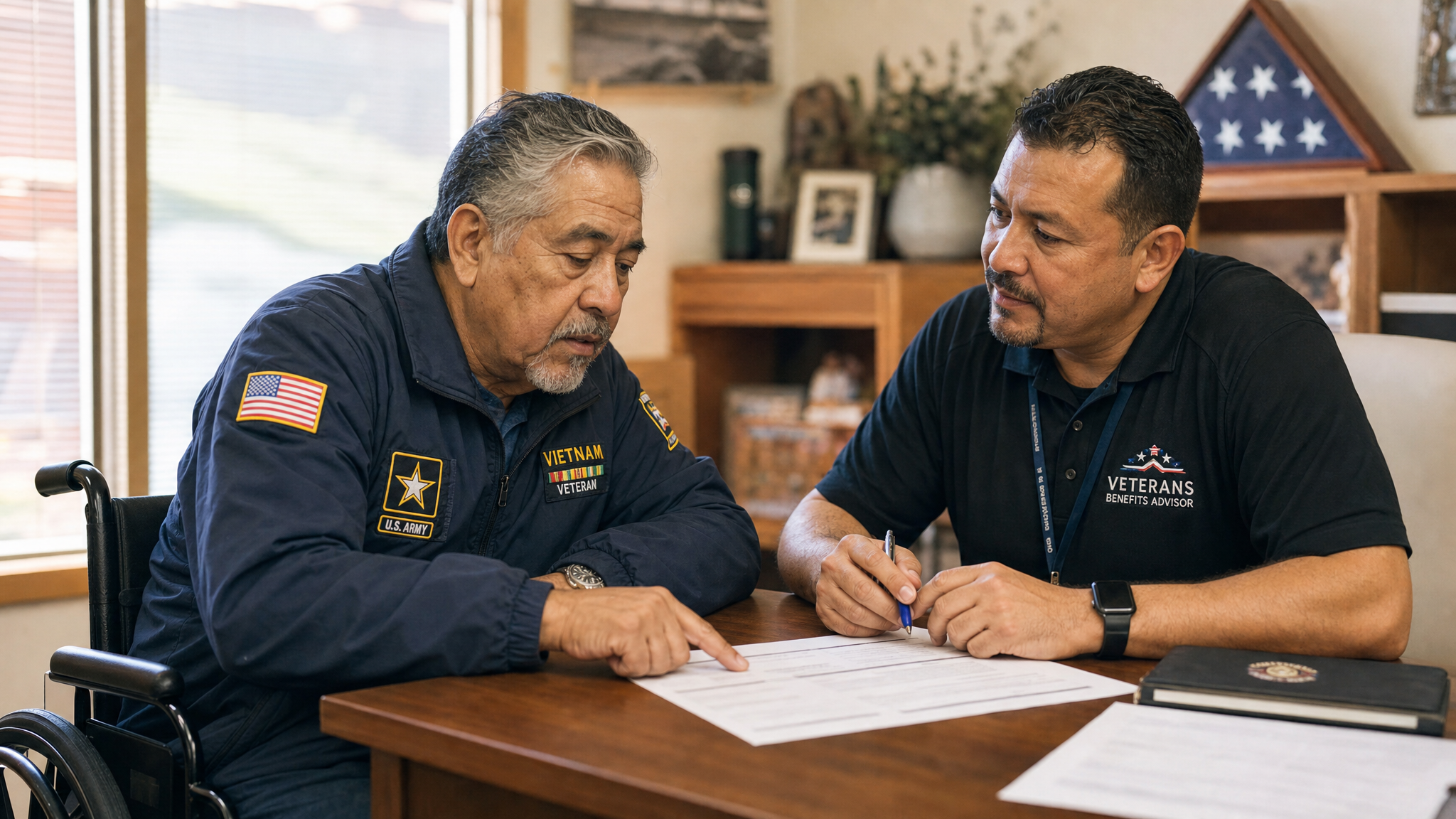
Disability Compensation
VA disability compensation is a monthly, tax-free payment to veterans whose current health conditions are connected to their military service. The amount is determined by your combined disability rating, which ranges from 0% to 100%. As of December 1, 2025, the VA applied a 2.8% cost-of-living adjustment (COLA). For 2026, the monthly rate for a single veteran with no dependents ranges from approximately $180.42 at 10% to $3,938.58 at 100% (these are estimates, your exact amount depends on your rating, dependent status, and any special monthly compensation). Rates are adjusted annually.
The VA rates conditions using the Schedule for Rating Disabilities (38 CFR Part 4). Each condition has a diagnostic code with criteria for each rating level. Understanding how your condition is rated, and whether the VA rated it correctly, is one of the most important things an accredited claims agent can do for you.
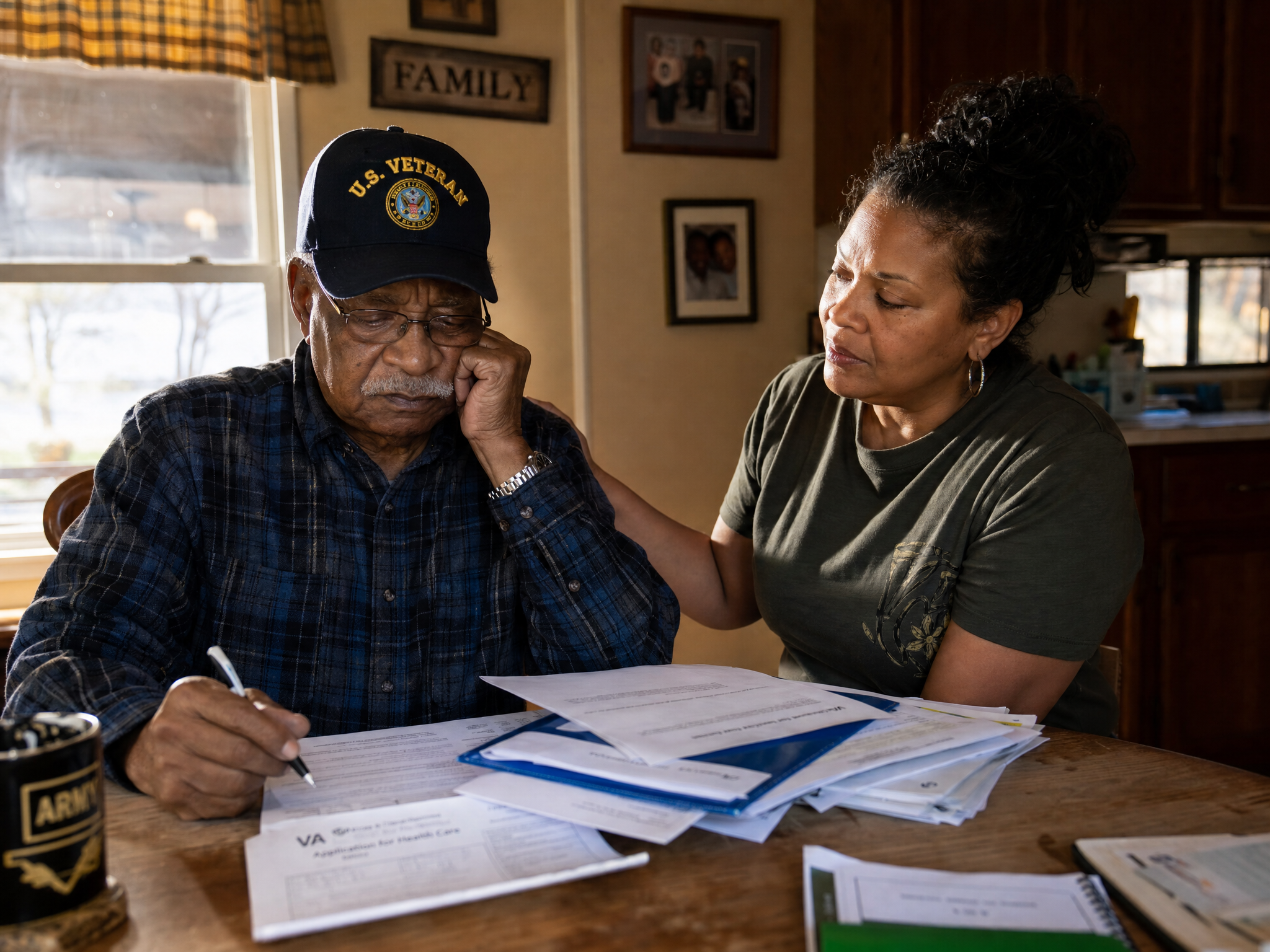
TDIU: Individual Unemployability
Total Disability based on Individual Unemployability (TDIU) allows a veteran to be compensated at the 100% rate even if their combined rating is below 100%, if their service-connected disabilities prevent them from maintaining substantially gainful employment. Under 38 CFR § 4.16, there are two paths: schedular TDIU (you have one condition rated at 60% or higher, or two or more conditions with a combined rating of 70% or higher with at least one at 40%), and extraschedular TDIU for veterans who don't meet those thresholds but can still show unemployability. In 2026, TDIU can be the difference between a $1,808.45/month payment (at 70%) and $3,938.58/month (at 100%). These are estimates, exact amounts require an accredited review.
Special Monthly Compensation (SMC)
Special Monthly Compensation (SMC) is an additional tax-free benefit paid on top of regular disability compensation to veterans with severe disabilities, including loss of use of a limb, blindness, deafness, the need for regular aid and attendance, or being housebound. SMC is governed by 38 U.S.C. § 1114 and rated on a lettered scale from SMC(k) through SMC(t). The amounts can be substantial: SMC(k) adds $139.87 a month on top of your regular rate, and the highest level, SMC-R.2 / T for veterans needing a higher level of aid and attendance, pays $11,271.67 a month for a veteran with no dependents in 2026. Many veterans who qualify for SMC are never told about it. This is one of the most underclaimed benefits in the VA system.

PACT Act & Toxic Exposure
The PACT Act (Public Law 117-168), signed into law on August 10, 2022, is the largest expansion of VA benefits in decades. It extended presumptive service connection to veterans exposed to burn pits, Agent Orange, radiation, and other toxic substances, meaning the VA now presumes the connection between service and certain diagnoses without requiring the veteran to prove it individually.
Key PACT Act provisions in plain language:
- Veterans who served in Southwest Asia on or after August 2, 1990 (Gulf War), or in Afghanistan, Syria, Djibouti, Egypt, Jordan, Kosovo, Somalia, Uzbekistan, or Yemen after September 11, 2001, are now presumed to have been exposed to burn pits and airborne hazards
- Over 20 specific cancers are now presumptively service-connected for veterans with qualifying service and burn pit exposure
- Agent Orange presumptive locations were expanded to include Thailand (at certain bases), Laos, Cambodia, Guam, American Samoa, and Johnston Atoll, in addition to Vietnam
- Veterans who previously filed and were denied based on lack of nexus for a condition now covered by the PACT Act may be eligible to reopen their claim
- The VA is required to conduct an automatic review of certain previously denied claims
If you were denied before August 2022 for a condition now covered by the PACT Act, that denial is not final. This is exactly the kind of case an accredited claims agent can dig into.
Accuracy Safeguard: PACT Act eligibility depends on your specific deployment locations, dates of service, and diagnosis. Unit records and deployment orders matter. An accredited review of your records is the only way to know for certain whether a PACT Act presumption applies to you.

Veterans Pension & Aid and Attendance
Veterans Pension is a needs-based monthly benefit for wartime veterans with limited income and net worth who are 65 or older, or permanently and totally disabled. It is separate from disability compensation and does not require a service-connected condition. The 2026 maximum annual pension rate (MAPR) for a veteran with no dependents is $17,441 (about $1,453/month). With one dependent, it rises to $22,839/year.
Aid and Attendance (A&A) and Housebound are enhanced pension rates for veterans who need help with daily activities or are substantially confined to their home. For a veteran with no dependents, Housebound raises the MAPR to $21,313 and Aid and Attendance raises it to $29,093 - roughly $3,900 to $11,700 more per year than the basic rate. These benefits are specifically designed for aging veterans who need in-home care, assisted living, or nursing home care, and they are dramatically underutilized.
These figures are estimates based on verified 2026 VA rates, effective December 1, 2025. Exact amounts depend on income, net worth, dependent status, and medical need. The VA pays the gap between your countable income and the MAPR, so almost no one receives the full figure. An accredited review will give you an accurate picture.

Secondary Service Connection
A secondary service-connected condition is a new health problem caused or made worse by a disability the VA already pays you for - and under 38 CFR § 3.310 it can be rated and paid just like the original. You do not have to prove it started in service; only that your service-connected condition led to it or aggravated it. Classic chains: diabetes causing neuropathy, kidney disease, or eye damage; a bad knee changing your gait and wearing out a hip or your back; PTSD medication driving weight gain, sleep apnea, or GERD.
The link is proven with a medical nexus opinion - a doctor stating it is at least as likely as not that one condition caused the other. For aging veterans whose conditions have branched and worsened over decades, this is one of the most common ratings left on the table.
Medical Benefits for Veterans
Care, coverage, and how to get seen without a fight.

VA Health Care Enrollment
VA health care covers a wide range of services including primary care, specialty care, mental health, surgery, prescriptions, and preventive care, generally at no cost or low cost for eligible veterans. Enrollment is based on a Priority Group system (1 through 8), with Priority Group 1 being veterans with service-connected disabilities rated 50% or higher and Priority Group 8 being higher-income veterans with no service-connected conditions. Your Priority Group determines your copay level, if any.
Under the PACT Act, veterans who served in a toxic exposure area and have not yet enrolled in VA health care now have a 10-year enrollment window from the date of their last qualifying discharge, or until October 1, 2032, whichever is later. This is a significant expansion and many veterans who previously thought they were ineligible are now eligible.
Community Care (Care Outside the VA)
VA Community Care allows eligible veterans to receive care from non-VA providers when the VA cannot provide timely or geographically accessible care. Under the VA MISSION Act of 2018, the eligibility criteria were expanded. You may be eligible for community care if: the VA cannot provide the service, the wait time exceeds 20 days for primary or mental health care or 28 days for specialty care, you live more than 30 minutes from a VA facility for primary or mental health care or 60 minutes for specialty care, or the VA determines it is in your best medical interest. Community care does not mean you pay out of pocket. Approved community care is billed directly to the VA.
Survivors, Family & Caregivers
What the family may be owed, and the support a caregiver has earned.
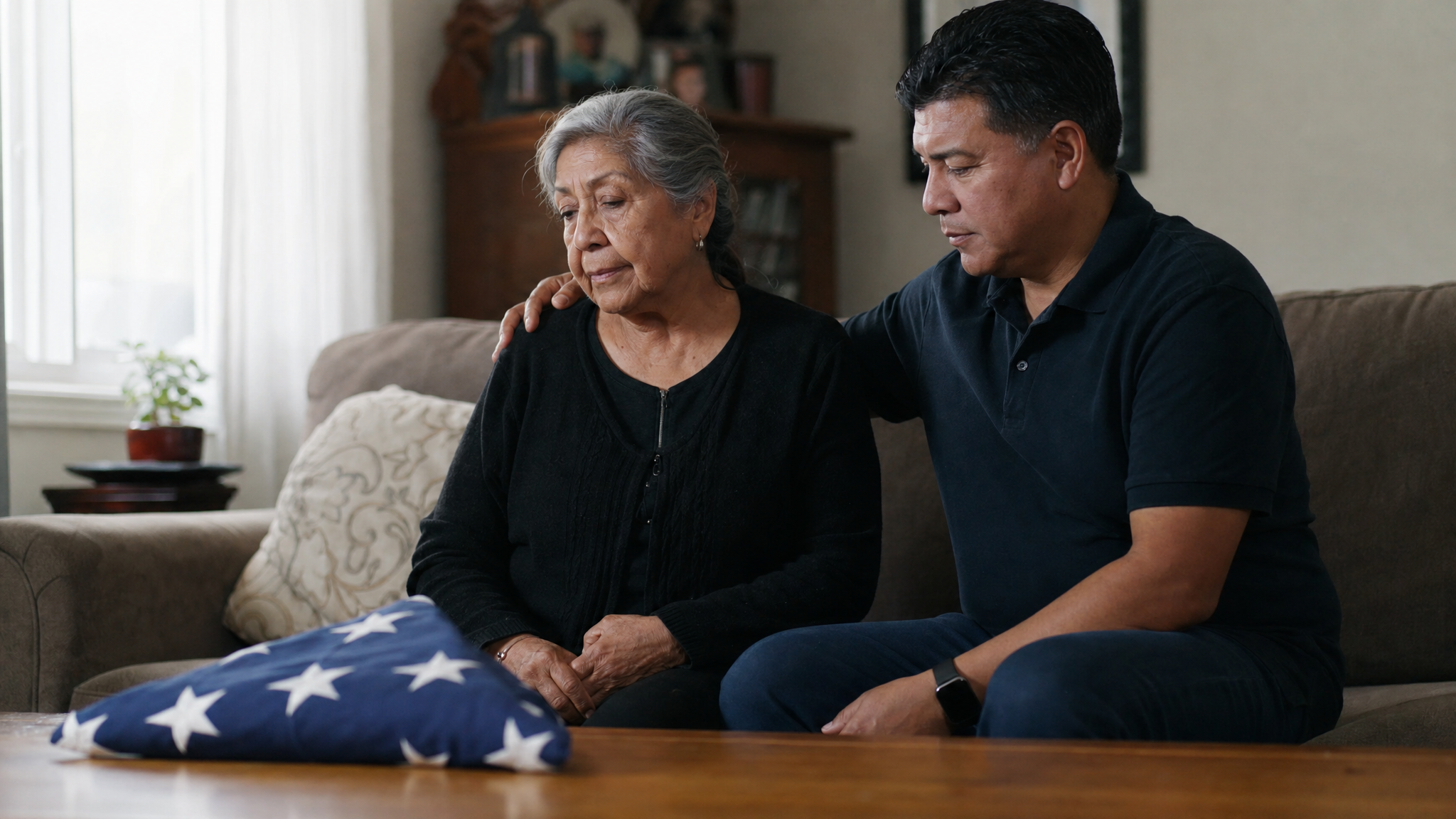
Dependency & Indemnity Compensation (DIC)
Dependency and Indemnity Compensation (DIC) is a monthly, tax-free benefit paid to the surviving spouse, dependent children, or in some cases dependent parents of a veteran who died from a service-connected condition, or who was rated totally disabled (100% or TDIU) for a continuous period of 10 or more years before death. The 2026 base DIC rate for a surviving spouse is $1,699.36 per month. Additional amounts may apply if the surviving spouse has dependent children, needs aid and attendance, or the veteran had a 100% rating for 8 or more years before death.
Under 38 U.S.C. § 1311(f), a surviving spouse may also be eligible for a transitional benefit added for two years if there are children under 18 in the home. DIC is not means-tested, it is not based on income, it is based on the veteran's service and disability history.
One important but little-known rule: if a surviving spouse remarries before age 57 (or before age 55 for remarriages on or after January 5, 2021), they may lose DIC eligibility. Remarriage at or above that age does not affect DIC.

CHAMPVA Health Coverage
CHAMPVA (Civilian Health and Medical Program of the Department of Veterans Affairs) provides health coverage to the spouse or surviving spouse and children of veterans who are permanently and totally disabled due to a service-connected condition, or who died from a service-connected condition. It covers inpatient and outpatient care, mental health services, prescriptions, and more. CHAMPVA is not Medicare and it is not Medicaid. It is a VA program, and it is available to family members who are not eligible for TRICARE (generally, not the spouse of an active duty service member or retiree).

Comprehensive Assistance for Family Caregivers (PCAFC)
The Program of Comprehensive Assistance for Family Caregivers (PCAFC) provides support to caregivers of post-9/11 veterans (and as of October 1, 2022, veterans of all eras following a phased expansion) who have a serious injury or illness incurred or aggravated in the line of duty and need personal care services. Eligible caregivers receive:
- A monthly stipend based on the federal GS-4, Step 1 annual pay rate for the veteran's locality, divided by 12 (Level 1 pays 62.5%, Level 2 pays 100%)
- CHAMPVA health coverage if the caregiver has no other health insurance
- Mental health counseling and services
- Respite care (at least 30 days per year of temporary relief)
- Caregiver training and education
The application is filed through the VA using VA Form 10-10CG. Eligibility is not automatic, the VA evaluates both the veteran's medical needs and the caregiver's relationship to the veteran.
Accuracy Safeguard: PCAFC eligibility depends on the veteran's specific diagnosis, level of care needed, and the caregiver's relationship and living situation. The phased expansion to pre-9/11 veterans has had implementation challenges. An accredited review can help determine whether your situation qualifies.

Survivors Pension & Aid and Attendance
Survivors Pension is a tax-free monthly benefit for an unmarried surviving spouse or dependent child of a wartime veteran with limited income - and it does not depend on the cause of death. The 2026 maximum annual rates are $11,699 for a surviving spouse, $14,298 with Housebound, and $18,697 with Aid and Attendance (higher with a dependent child). The VA pays the difference between your countable income and that rate.
Here is the part most survivors miss: unreimbursed medical expenses - including in-home care and assisted living - come off your countable income. A spouse paying $3,500 a month for assisted living can look over the limit on paper and still qualify. The net worth limit is $163,699, and your home and vehicle do not count.
Accuracy Safeguard: These are verified 2026 rates effective December 1, 2025. Exact amounts depend on income, net worth, and unreimbursed medical expenses. An accredited review is the only way to know your real number.
Every topic on this site, in one place
The cards above cover what families ask about most. This is everything else - every benefit we explain, grouped so you can scan it. All free to read.
Topics with this icon include a free calculator to estimate your benefit amount

Benefits for Veterans
Monthly compensation, pension, and income you may have earned.
- Disability Compensation
- TDIU: Individual Unemployability
- Special Monthly Compensation (SMC)
- Concurrent Receipt (CRDP & CRSC)
- Secondary Service Connection
- Temporary 100% Ratings
- Veterans Pension
- Aid & Attendance / Housebound
- Annual Clothing Allowance
- PACT Act & Toxic Exposure
- Blue Water Navy Veterans (Agent Orange Offshore)
Medical Benefits for Veterans
Health care, dental, mental health, and everyday medical care.

Additional Benefits for Veterans
Housing, education, records, insurance, and more earned through service.
- Housing Assistance
- Adaptive Housing Grants (SAH, SHA & HISA)
- Automobile Allowance & Adaptive Equipment
- Life Insurance
- Veterans' Mortgage Life Insurance (VMLI)
- Veteran Readiness & Employment (VR&E, Chapter 31)
- GI Bill Education Benefits (Post-9/11, Montgomery & Transfer to Family)
- Veterans' Preference in Federal Hiring
- Discharge Upgrades & Character-of-Discharge Review
- Correcting Your Military Records (BCMR / DD Form 149)
- State & Local Veterans Benefits (Property Tax & More)
- VA Disability & Social Security (SSDI/SSI) Together
- Housing Help for Homeless & At-Risk Veterans
- Veteran ID Card & Commissary, Exchange & MWR Access
- Spina Bifida & Birth-Defect Benefits for Children
- Presidential Memorial Certificate & Military Funeral Honors
- VA Claims Myths vs. Facts - What Veterans Get Wrong
- How to Talk to Your Doctor About Your VA Claim
- Mental Health VA Claims - Rating Ladder, C&P Exams & MST
- Disability Benefits Questionnaires (DBQs): The VA Forms That Define Your Rating
- Family Benefits, Direct Deposit, VA Life Insurance & Debt Management
- How to File a VA Claim
- The VA Appeals Process
- Veterans' Group Life Insurance (VGLI)
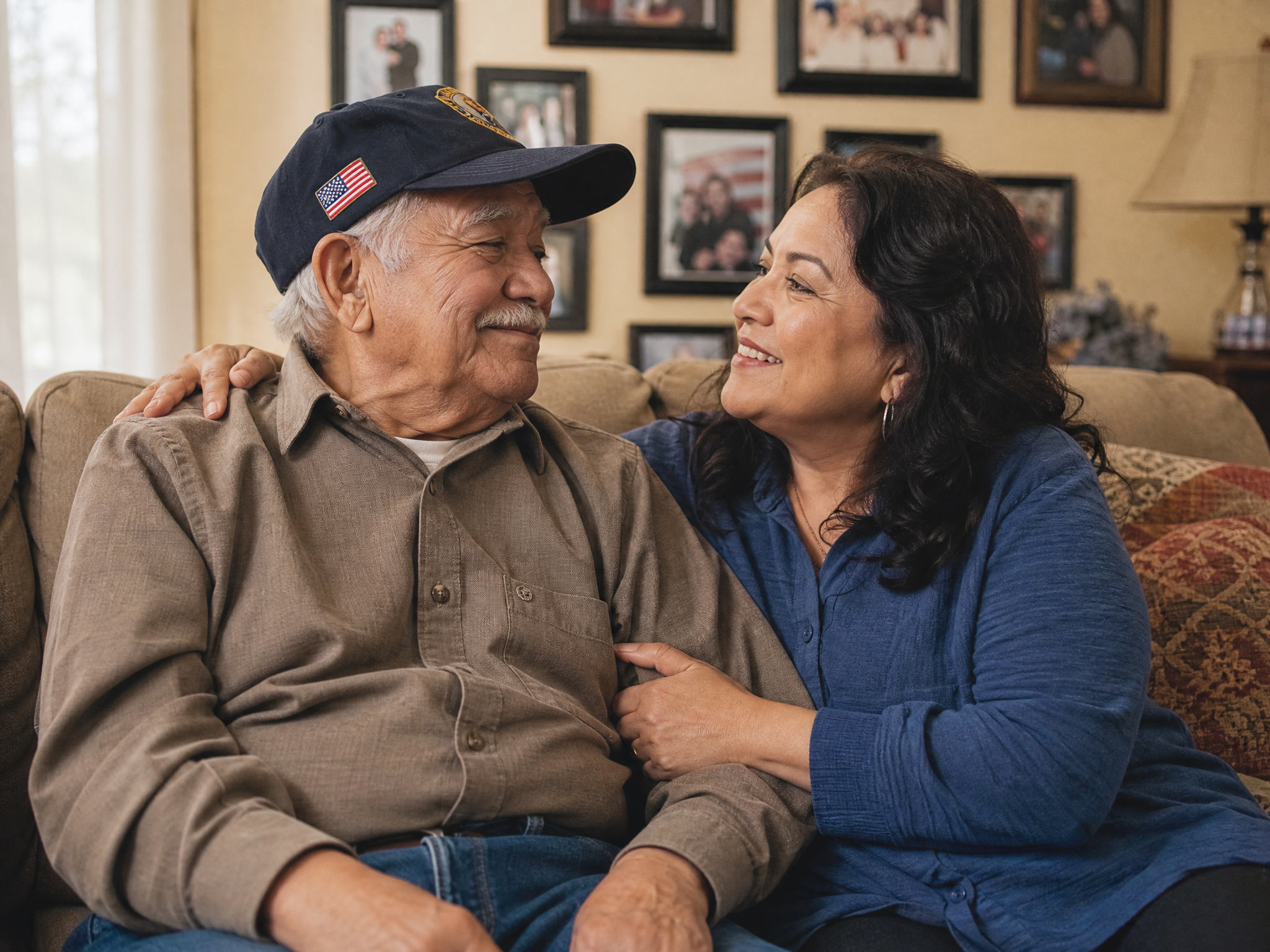
Survivors, Family & Caregivers
Support for spouses, children, and the people who care for a veteran.
- Dependency & Indemnity Compensation (DIC)
- Survivors Pension
- Accrued Benefits & Substitution
- Education & Career Benefits
- Housing Assistance for Surviving Spouses
- Health Care (CHAMPVA)
- Life Insurance for Family Members
- Burial & Memorial Benefits
- Comprehensive Assistance for Family Caregivers (PCAFC)
- General Caregiver Support Services (PGCSS)
- Respite Care
- Health Coverage & Counseling for Caregivers
Answers, in plain language
The questions families ask us most
These are the real questions veterans and surviving spouses type into a search bar at two in the morning. Every answer is here on this page, in full. You should never have to hunt across a dozen websites to find out what your family is owed.

Twelve questions we get asked over and over. Every answer is right here, in full.
Does VA disability pay stop when a veteran dies?
Yes. VA disability compensation is paid to the veteran and stops the month the veteran dies - it does not roll over to the spouse and it is not inheritable. But that is not the end of the money. If the VA still owed the veteran anything on a claim that was open at the time of death, an eligible survivor can claim it as accrued benefits. And separately, a surviving spouse may qualify for DIC or Survivors Pension in their own right, which are entirely different benefits with their own rules. The mistake families make is assuming that because the check stopped, nothing is left. Often a great deal is.
Can a spouse keep the veteran's VA rating after death?
No - a disability rating belongs to the veteran and ends at death. There is no way to transfer a 70% or 100% rating to a spouse. What the rating can do, though, is unlock a survivor benefit. If the veteran was rated totally disabled for the 10 years right before death, a surviving spouse can receive DIC even when the death itself was not service-connected. That is the 10-year rule under 38 U.S.C. 1318, and it is one of the most commonly missed survivor benefits there is. So the rating matters enormously after death - just not in the way most families expect.
What is the difference between DIC and Survivors Pension?
They are often confused, and they are not the same thing. DIC is about cause of death - it is paid when the veteran died from a service-connected condition, and it does not look at your income at all. The 2026 base rate for a surviving spouse is $1,699.36 a month, tax-free. Survivors Pension is about need - it is paid to an unmarried surviving spouse or dependent child of a wartime veteran whose income and net worth are low, and the amount fills the gap up to a guaranteed minimum. DIC pays more and is not means-tested. You cannot receive both at once, so it is worth knowing which one fits before you file. These are estimates - your actual amount depends on your situation and the VA's decision.
Can I file a VA claim for my deceased husband?
Yes, in two different ways, and the difference matters. If he had a claim or appeal still pending when he died, you may be able to substitute yourself into that case and continue it - which keeps his original effective date and therefore his back pay. If there was no pending claim but the VA owed him money it had not paid yet, you can file for accrued benefits. Both have a strict 1-year deadline from the date of death. Substitution is the stronger route when it is available, because inheriting his earlier effective date can be worth years of retroactive pay rather than months.
Does the VA pay for a veteran's funeral?
It helps, though it rarely covers everything. For a service-connected death, the VA burial allowance is $2,000, and there is no time limit to file. For a non-service-connected death, it is $1,002 for burial plus a $1,002 plot allowance for deaths on or after October 1, 2025 (verified against the VA's published burial allowance rates for that effective date), and you generally must file within 2 years of burial. Separately - and at no cost - an eligible veteran is entitled to burial in a national cemetery, a government headstone or marker, a burial flag, a Presidential Memorial Certificate, and military funeral honors. Those honors are free and stack on top of the allowance.
What happens to VA benefits if the veteran had no will?
A will has almost nothing to do with VA survivor benefits, which surprises most families. VA benefits are not part of the estate and are not distributed by a will. Congress already decided the order: surviving spouse first, then children, then dependent parents. So a surviving spouse does not need to be named in a will, or wait on probate, to claim DIC, Survivors Pension, or accrued benefits. Dying without a will can create real problems with the house, the bank accounts, and personal property - but it does not block the VA claim. File it on its own track.
Can adult children receive VA survivor benefits?
Sometimes, but the rules are narrow. A child can generally qualify for DIC if they are under 18, or under 23 and still in school, or were permanently unable to support themselves before turning 18 - the VA calls that a helpless child, and there is no age cap on it. A healthy 45-year-old son does not qualify for DIC. However, an adult child may still be able to file for accrued benefits if the veteran had money owed at death and there is no surviving spouse, and adult children of a disabled or deceased veteran may qualify for education benefits under Chapter 35. The helpless-child route in particular gets overlooked for decades.
How long does a surviving spouse have to file for DIC?
There is no absolute deadline to file for DIC - you can file years later and still be approved. But the timing changes what you get paid. File within one year of the veteran's death and your benefits can be paid back to the date of death. File after that window and the VA generally pays from the date it received your claim, and every month in between is gone for good. So the honest answer is that late is far better than never, but the first year is worth real money. If you are inside that year, do not wait on paperwork you are missing - get the claim in.
What is the net worth limit for Veterans Pension in 2026?
The net worth limit is $163,699 for the period December 1, 2025 through November 30, 2026, and the same figure applies to Survivors Pension. Net worth means your assets plus your annual income, and the house you live in and your vehicle generally do not count. Be careful about giving assets away to get under the line: the VA applies a 3-year look-back on transferred assets and can impose a penalty period. This limit adjusts every year with the COLA, so confirm the current figure before you file - and remember the limit is only one gate, not the whole test.
Can a caregiver get paid by the VA?
Yes. Under the Program of Comprehensive Assistance for Family Caregivers (PCAFC), a designated primary family caregiver can receive a monthly stipend paid directly to them, plus training, a support coordinator, respite care, and - if they have no other health insurance - CHAMPVA coverage. The stipend is tied to the local wage rate and the veteran's level of care, so it varies by geography. The veteran generally needs a single or combined service-connected rating of 70% or higher and to need in-person help with daily activities, or supervision for a cognitive or mental-health condition. You apply together on VA Form 10-10CG. Caregivers who do not meet the PCAFC bar can still use the General Caregiver Support Program, which offers training and respite but no stipend.
Can I get VA benefits if I never deployed or was never in combat?
Yes, and this is probably the single most damaging myth in the VA system. Disability compensation is based on whether a condition was caused or made worse by your service - not on whether you deployed, saw combat, or were wounded. Knees wrecked by years of ruck marches, hearing destroyed on a flight line, a back injured loading cargo stateside, sleep apnea, tinnitus - all of it can be service-connected. There is no combat requirement and no Purple Heart requirement. Plenty of veterans go thirty or forty years assuming they were not "hurt enough" to qualify, and that assumption costs them everything they were owed.
Is it too late to file if I got out decades ago?
No. There is no time limit on filing a VA disability claim - not 10 years, not 20, not 50. A Vietnam-era veteran can file today. What the delay costs you is back pay, not eligibility, because your effective date is generally tied to when the VA receives your claim rather than when the condition began. And if you were denied years ago, that is not final either: a Supplemental Claim can reopen the case with new evidence, and conditions that are now presumptive under the PACT Act may be approved today on facts that were rejected before. A denial is not the end. It is where the real work starts.
Does remarrying end my DIC?
It depends entirely on your age when you remarry. If you remarry at or after age 57, your DIC continues - the remarriage does not touch it. (For some related benefits the line is age 55, so confirm which applies to you.) If you remarry before that age, DIC is generally suspended while that marriage is intact - but here is what families miss: if the later marriage ends by divorce or death, DIC can be restored. So do not assume remarrying erased your benefit forever. Ask before you close the door on it.
What is TDIU and how is it different from a 100% rating?
TDIU - Total Disability based on Individual Unemployability - pays you at the full 100% rate ($3,938.58 a month in 2026) even if your combined schedular rating is lower. The trigger is not a specific percentage of impairment; it is that your service-connected conditions keep you from holding steady, gainful work. You can qualify with one condition at 60%, or a combined 70% with at least one condition at 40% or higher. A regular 100% rating, by contrast, comes from the rating schedule adding up to 100%. The money is the same - the door in is different, and most veterans are never told TDIU exists.
The VA denied my caregiver application years ago - should I reapply?
Very possibly, yes. The Program of Comprehensive Assistance for Family Caregivers (PCAFC) expanded in phases, and as of October 1, 2022 it opened to caregivers of veterans from all service eras - including Vietnam and Korea-era veterans who were shut out under the old rules that only covered post-9/11 service. If you were turned away before that date because of when the veteran served, that reason no longer applies. Reapply on VA Form 10-10CG. A denial under the old rules is not a permanent no.
Do not see your question here?
Ask it directly. Our free assistant answers plain questions about your situation, and a real accredited agent can look at your file if you want that. No sign-up, no cost to ask.
General information, not legal or medical advice. We are not the VA. Every figure on this page is an estimate that depends on your situation and the VA's decision.

Every Veteran. Every Family.
From World War II veterans and Korean War veterans to Vietnam veterans, Gulf War veterans, and post-9/11 veterans, from every branch, every era, and every walk of life, the benefits you earned belong to you. The VA system is complicated on purpose, it seems, and far too many veterans and families give up after a first denial or a confusing letter. A denial is not the end. It is the beginning of the real work.
- Plain-language explanations of every major VA benefit
- A friendly assistant to answer your questions any time
- Free resources you can read, print, and share with family
Simple, honest, and at your pace
No paperwork ambushes and no pressure. Just three gentle steps whenever you feel ready.
 1
1Ask a question
Start a free chat or call us. Tell us a little about your service and situation - there is no wrong way to begin.
Call 702-992-4883
 2
2Learn what you may be owed
We explain, in plain language, the benefits you and your family may qualify for - with free tools and resources to guide you.
 3
3Choose your next step
Pursue your claim yourself for free, or choose optional accredited representation. Either way, any fees are disclosed clearly up front.
Built on Trust & Transparency
We answer to veterans and their families - no one else. That means straight answers, clear costs, and no pressure, every single day.

Free information & resources
Everything you read, learn, and organize here is free - and the VA process itself is always free to pursue on your own.

Honest about fees
Optional accredited representation is a paid service, always disclosed up front. No one may charge an upfront fee for an initial VA claim - that is the law.

Your privacy, protected
Your records stay encrypted and are never sold. You stay in control of your information.
We are going to be straight with you about a few things, because you deserve straight answers.
The VA process is always free to pursue on your own. You can file a claim, appeal a decision, and request a higher-level review without paying anyone anything. The VA's own website, the eBenefits portal, and VA regional offices are free resources. We will never pretend otherwise.
Accredited representation is optional and is a paid service. If you choose to work with Albert Thombs, VA Accredited Claims Agent #45147, or any member of his team at The VA Disability Advocate, LLC, the fee is contingent, meaning you pay nothing upfront and nothing unless they win. The fee structure is governed by 38 CFR § 14.636 and is disclosed clearly before you sign anything. No one may legally charge an upfront fee for an initial VA claim. That is federal law.
Your privacy is protected. Your records are encrypted and never sold. SMS consent and phone numbers are never shared with third parties for marketing. You can opt out of SMS at any time by replying STOP to any message. Information shared with this site is used solely to facilitate communication.
This site is for informational purposes only and should not be construed as legal advice. Transmission of information does not create an attorney-client relationship. If you want accredited representation, that starts with a signed VA Form 21-22a, which formally authorizes Albert to access your VA claims file.

Two ways to move forward — both free
Ready when you are
Two ways to move forward, and both are free. Ask a question and get free information from an accredited claims agent, or register to hire us to work your claim. There is no obligation either way.
Have a question? Get free information
Ask a question, learn what you may be owed, or find out where you stand. Confidential, free, and no obligation to go any further.
Ready to hire us? Register
Decided you want us to work your claim? Registering is free — we match you with an accredited advocate and get you started. We cannot begin until you sign VA Form 21-22a, and fees, if any, are always disclosed up front.