
Veteran Benefits
PACT Act & Toxic Exposure
The 2022 PACT Act is the largest expansion of VA benefits in decades. It makes it far easier for veterans exposed to burn pits, Agent Orange, and other toxins to get health care and disability compensation.

There’s a free calculator on this page - screen your service for toxic exposure. No sign-up, no cost.
Who this is for
If you were around burn pits, Agent Orange, or other toxic exposures - wherever and however you served - the law changed in your favor. Many illnesses are now presumed connected to your service, which can mean you do not have to prove that link yourself.
In plain language
What PACT Act & Toxic Exposure covers
- Adds 20+ presumptive conditions, many cancers and respiratory illnesses, so you no longer have to prove the link to service
- Expands Agent Orange coverage and adds new exposure locations and eras
- Opens VA health care to more toxic-exposure veterans, with a free toxic-exposure screening
- Survivors of a veteran who died from a covered condition may now qualify for DIC, pension, or CHAMPVA

The PACT Act: A Message from the Secretaries of Defense and VAOfficial video - U.S. Department of Veterans Affairs
5 things most veterans aren't aware of
These apply to nearly every VA claim - and they change how much you get and when.
Your filing date sets your back pay
Benefits are generally paid back to the day you file - not the day you are approved. Filing an intent to file today can protect months, even years, of retroactive pay.
One condition can trigger others (secondary claims)
A service-connected condition that causes another - like sleep apnea from PTSD, or a bad knee from a bad hip - can be rated on its own. Each secondary condition adds to your rating.
A medical nexus is what wins the claim
The VA needs a documented link between your condition and your service. A clear nexus opinion is often the difference between an approval and a denial.
Accredited help is free to file an initial claim
By law, an accredited agent cannot charge a fee to prepare and file your original claim. If someone asks for money up front to file, that is a red flag.
A denial is not the end of the road
You have three appeal lanes - Higher-Level Review, a Supplemental Claim with new evidence, and the Board of Veterans Appeals. Many denials are overturned on review.
20+ conditions
New presumptive illnesses added by the 2022 PACT Act
No deadline
There is no time limit to file a PACT Act claim
No proof of cause
Presumptive means the VA assumes your service caused it
The full picture
Everything you need to know
Nothing hidden behind a click, and nothing you have to go looking for on another website. Here is the whole story in plain language - the facts and the figures first - so you can decide what fits your situation.
Key facts & current figures
- "Presumptive" means the VA assumes the condition is service-connected, so you do not have to prove causation.
- Presumptive cancers include brain, gastrointestinal, kidney, lymphoma, melanoma, pancreatic, reproductive, and respiratory cancers.
- Presumptive respiratory illnesses include asthma, COPD, chronic bronchitis, sinusitis, rhinitis, emphysema, and pulmonary fibrosis.
- Agent Orange coverage now adds hypertension and MGUS, plus new locations such as Thailand, Laos, Cambodia, and Guam.
- Previously denied? A Supplemental Claim with the new presumptive status can reopen your case.
General figures, current as of December 2025 and reviewed each year. Your exact amount depends on your situation - always confirm on va.gov.

What the PACT Act changed
- The PACT Act became law in August 2022. It is the biggest expansion of VA health care and benefits in more than 30 years.
- Before this law, many veterans had to prove that an illness was caused by their service. The PACT Act makes many illnesses "presumptive," which means the VA now assumes your service caused them.
- Because a condition is presumptive, you no longer have to track down old records or medical opinions to prove the link. This is a big help for older veterans whose records may be incomplete.
- The law also gives every eligible veteran a free toxic-exposure screening at the VA, and it opened VA health care to more veterans sooner.
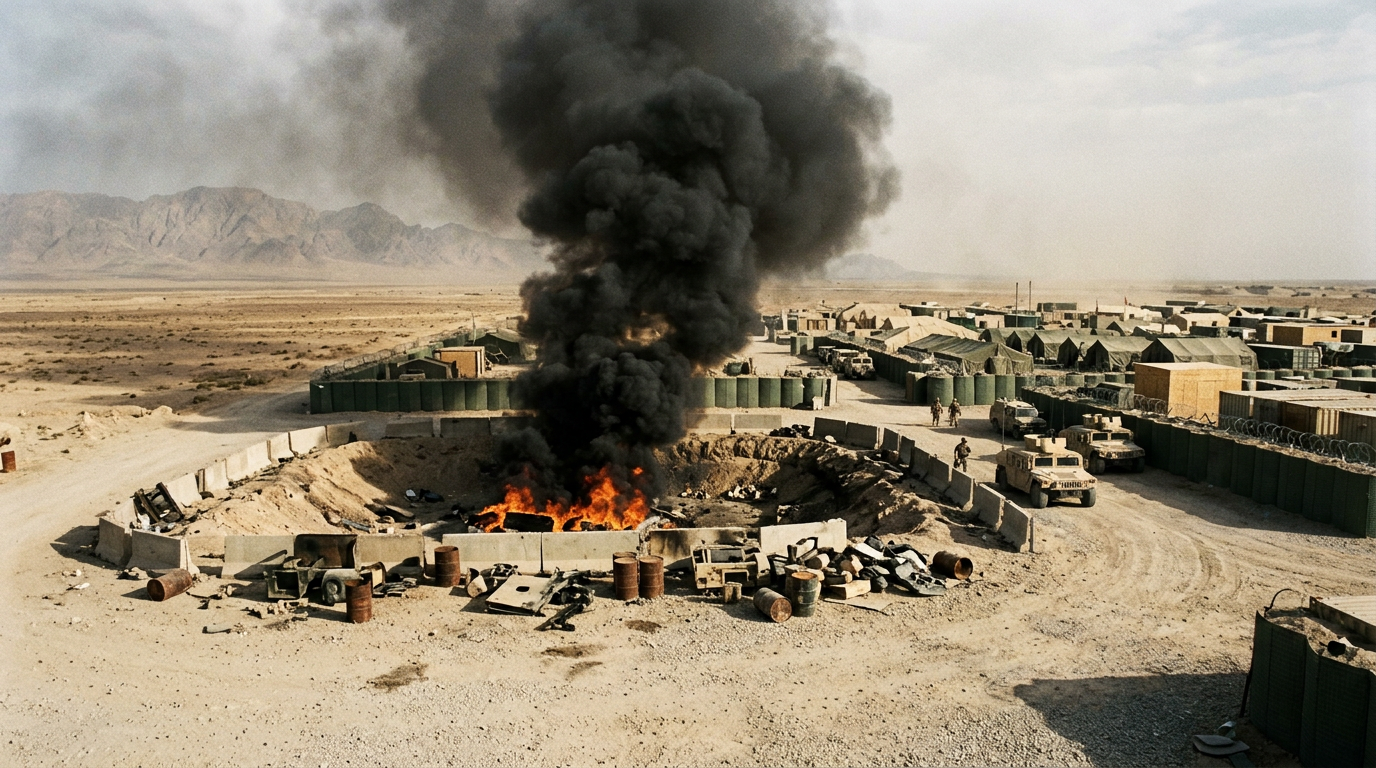
Burn pits and the Gulf War / post-9/11 era: who is covered
- Burn pits were large open fires used to get rid of trash, chemicals, and waste at bases overseas. The smoke exposed many troops to harmful toxins.
- If you served in the Gulf War (starting August 2, 1990) or any time after September 11, 2001, in places such as Iraq, Afghanistan, Kuwait, Saudi Arabia, Qatar, Bahrain, Djibouti, Syria, Jordan, Egypt, Yemen, Somalia, or Uzbekistan, the VA considers you exposed.
- You do not have to prove you stood near a burn pit. If you served in a covered location during a covered time, the VA presumes the exposure.

Agent Orange and the Vietnam era: what is new
- Agent Orange was a chemical weed-killer used during the Vietnam War. It has been linked to many serious illnesses.
- The PACT Act added two new presumptive conditions tied to Agent Orange: high blood pressure (hypertension) and a blood condition called MGUS (monoclonal gammopathy of undetermined significance).
- It also added new locations and dates. Veterans who served in Thailand, Laos, Cambodia, Guam, American Samoa, or Johnston Atoll during set periods may now be covered.

Blue Water Navy veterans: ships and coastal waters count
- For decades the VA told Navy veterans who served offshore during Vietnam that they were not "boots on the ground," so Agent Orange did not apply to them. That is no longer the law.
- The Blue Water Navy Vietnam Veterans Act of 2019 restored the Agent Orange presumption to veterans who served aboard a ship operating in the offshore waters of Vietnam - out to 12 nautical miles from shore - between January 9, 1962 and May 7, 1975. Service on the inland rivers ("Brown Water") was already covered.
- If you qualify, the same Agent Orange presumptive conditions apply to you - the cancers, heart disease, diabetes, Parkinson's, and the PACT Act additions like hypertension and MGUS. You do not have to prove the herbicide reached your ship; the law presumes it.
- The proof is usually in the ship's deck logs and your service records showing where the vessel operated and when. If you were denied years ago for being "blue water," that denial was under the old rule - it can be reopened now with a Supplemental Claim.

Presumptive conditions: the full picture
- Presumptive cancers now include brain cancer, gastrointestinal cancers, kidney cancer, lymphoma, melanoma, pancreatic cancer, reproductive cancers, and respiratory (breathing-related) cancers, among others.
- Presumptive breathing illnesses now include asthma diagnosed after service, chronic bronchitis, COPD, emphysema, chronic sinusitis, chronic rhinitis, and pulmonary fibrosis.
- Presumptive means the VA assumes the illness is connected to your service, so the claim is usually faster and easier to win.

TERA - the facts-found path (this is NOT a presumptive)
- TERA stands for Toxic Exposure Risk Activity. It is the VA's other toxic-exposure path, and it is completely separate from the PACT Act presumptive lists - one is not the other.
- A presumptive claim means the VA already assumes your illness is service-connected. A TERA finding does not do that. It only confirms you took part in an activity that carried a risk of toxic exposure - it opens the door to expanded VA health care and a direct, "facts-found" claim.
- Use this path when your exposure is real but not on any presumptive list, or when you served in peacetime or never deployed. You still connect the dots with your exposure records (the ILER), a TERA memo, and a medical nexus - and this is exactly the part we handle with you.
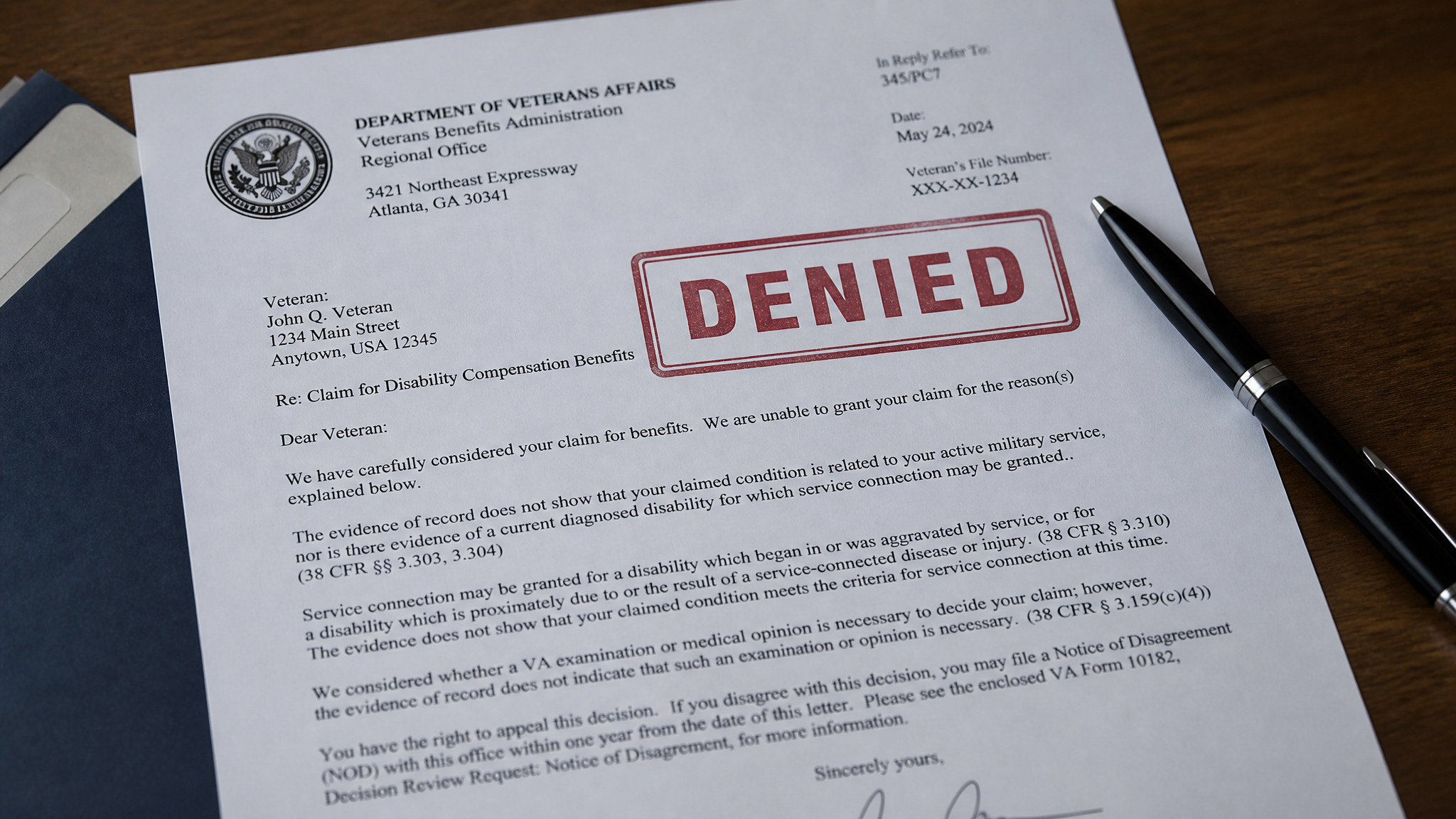
If you were denied before
- If the VA turned you down in the past for a condition that is now presumptive, a denial is not the end of the road - the PACT Act gives you a clean, legal reason to have that decision reopened and looked at again under the new rules.
- File a Supplemental Claim (VA Form 20-0995) and point to the PACT Act. Because the law changed what the VA presumes is service-connected, that change itself counts as new and relevant evidence - which is exactly what a Supplemental Claim needs to succeed. In many cases the VA no longer requires you to prove the link at all; the presumption does that work for you.
- If you disagree with how a recent decision was decided, you also have two other appeal lanes: a Higher-Level Review (VA Form 20-0996), where a senior reviewer takes a fresh look at the same evidence, and a Board appeal (VA Form 10182) before a Veterans Law Judge. Picking the right lane matters, and it is easy to pick the wrong one - this is one of the most common places veterans lose time and money.
- There is no deadline to file a PACT Act claim, but filing sooner can protect your back pay, and reopening a denial can sometimes preserve an earlier effective date worth months or years of retroactive benefits. If you were denied before, do not assume nothing has changed - a great deal has.

For survivors and family
- If a veteran died from a condition now covered by the PACT Act, the surviving spouse, dependent children, or in some cases dependent parents may qualify for real, ongoing benefits - and the PACT Act opened these up to many families who were turned down before.
- Dependency and Indemnity Compensation (DIC) is a tax-free monthly payment to survivors when the veteran's death is linked to a service-connected condition. A now-presumptive PACT Act illness can be that link, even if the veteran was never rated for it while living. You claim it with VA Form 21P-534EZ.
- Survivors Pension is a separate, needs-based monthly benefit for the low-income surviving spouse or children of a wartime veteran - different from DIC, with its own income and net-worth rules. CHAMPVA provides health-care coverage to a survivor and dependents who are not eligible for TRICARE. A family can sometimes qualify for more than one of these, so it is worth checking all three.
- Survivors can also file for accrued benefits - money the VA owed the veteran but had not yet paid at the time of death. There is an important one-year window to file for accrued benefits after the veteran passes, so do not wait. If a claim was already pending when the veteran died, a survivor may be able to step in and continue it.
- These amounts change every year, so treat any figure you see as an estimate and confirm the current rate on va.gov. Our Survivors page explains each of these in plain language, and our assistant can walk you through which ones fit your situation.
Screen your service for toxic exposure
Toxic exposure & location screener
Check every place you served and every job you actually did - even short stints and side duties. We'll show where the VA presumes your exposure automatically, and where the exposure is real but has to be documented with your records. Exposure follows your unit, your locations, and your work, never just your listed job title.
Check every place you served and every job you actually did - even for a short time, even if it was not your main assignment. Exposure follows your unit, your locations, and the work you did, not just your job title.
Where and when did you serve?
Agent Orange / herbicide locations
Herbicide exposure is presumed - you do not have to prove you touched it.
Burn pit & airborne hazard locations
PACT Act presumes airborne-hazard exposure for this service.
Camp Lejeune contaminated water
Presumptive conditions apply, plus a separate Camp Lejeune Justice Act claim path.
Radiation-risk activities
Certain radiogenic diseases are presumptive for these activities.
Jobs and bases that can carry exposure
Contaminated stateside or overseas bases
Real contamination, but not on the automatic presumptive list - it must be documented.
Jobs that carry exposure - even if it was not your main MOS
Your exposure follows the work you actually did, not just your listed job title.
Your exposure screen
Check the places you served and the jobs you did on the left, and your likely exposure picture will appear here.
See the official VA exposure listsThis calculator is free. No sign-up, no catch.
Most people in this business hide tools like this behind a paywall or a sign-up form. We don’t. Use it as much as you need. And if you want a real accredited agent to look at your actual claim, we’re one call away — it’s free to talk, and free to file your claim.
Albert L. Thombs Jr. — VA-accredited claims agent (#45147), a disabled veteran with a team of advocates who do this every day.
Common reasons PACT Act claims still get denied
The PACT Act made these claims easier to win, but it did not make them automatic. Veterans still get denied every day, and almost always for reasons that were completely avoidable. Knowing the traps ahead of time is half the battle, and it is a battle you can win. Read the common denial reasons below so you can build your claim right the first time.

No current diagnosis on record
A presumption connects your illness to your service, but you still need a doctor to say you have the illness now. A claim for a condition that was never formally diagnosed is the most common quick denial. Get the diagnosis into your medical record first - then file.
Your dates or location do not line up
Presumptives depend on serving in a qualifying place during a qualifying time. If your DD-214, orders, or deployment records do not clearly put you there, the VA cannot connect the dots. A missing document or the wrong base name stalls more solid claims than anything else.
Assuming you do not qualify
Many veterans talk themselves out of filing because they were not "in combat" or never deployed. If your exposure was real but is not on a presumptive list, the TERA (facts-found) path may still work. Do not self-deny - that is the VA's job, not yours.
Giving up after the first "no"
A denial is a decision, not the final word. Most of the claims we win are won after the record is corrected and the right appeal lane is chosen. If you were denied, that is a reason to look again - not a reason to stop.
Every one of these is avoidable. Have us check your claim before you file - or take a second look at a denial - so a fixable mistake does not cost you months of back pay.
Pick your exposure - then open its page to see exactly what is presumptive
Start here. Choose the exposure that matches your service and open its own page for the exact locations that qualify and the full list of presumptive conditions. Peacetime, never deployed, or your exposure is not on a list? The TERA card is your path. Below the cards we spell out the two ways the VA handles toxic exposure - and why TERA is not a presumptive.



The one term that trips veterans up
What is TERA? Toxic Exposure Risk Activity, spelled out
TERA stands for Toxic Exposure Risk Activity. It is a finding by the VA that you took part in an activity during service that carried a risk of toxic exposure - even if your condition is not on the presumptive list, and even if your base or job is not named in any law. TERA is NOT a presumptive. It does not automatically connect your condition - it opens the door to expanded VA health care and a direct, "facts-found" claim, which you still have to prove with records and a medical nexus.
Path 1 - the automatic path
PACT Act presumptive conditions - start with your wartime era
A presumptive condition is one the VA already agrees is caused by toxic exposure. If you have a listed condition and you served in a qualifying place and time, the VA presumes the link - you do not have to prove the exposure caused it. The 2022 PACT Act added more than 20 new presumptive conditions, and across every war era the full list now runs to 59+. To know if you qualify, pick your wartime era in the cards above and open its page for the exact locations that qualify and every condition that is presumptive for you.
Path 2 - the earned path
TERA - Toxic Exposure Risk Activity (not a presumptive)
If your exposure is not on a presumptive list - or you served in peacetime or never deployed - this is your path. A TERA determination opens the door, but you still connect the dots with your exposure records (the ILER), a TERA memo, and a medical nexus. This is where an accredited agent earns their keep.
Open the TERA path - 7 common exposuresWhat toxic exposure actually means for a wartime veteran
Toxic exposure is any harmful substance you were around during service - burn pits and airborne hazards in Iraq and Afghanistan, Agent Orange in Vietnam, Korea, and Thailand, radiation, contaminated water like Camp Lejeune, and fuels, solvents, PFAS firefighting foam, asbestos, and lead on bases and ships. It even reaches the Blue Water Navy veterans who served aboard ships in the coastal waters off Vietnam - once shut out, they are now covered for Agent Orange the same as anyone who was ashore. For a wartime veteran it is rarely one clean event - it is months or years of breathing, touching, and living in it.
Here is the part the VA will not volunteer: your exposure is not limited to your job title (MOS). It follows your unit, every place you were stationed or deployed, and every job you actually did. An infantryman pulled to office work still carries the field exposure. A clerk attached to an EOD team shares that team's exposure. That is why two veterans with the same MOS can have completely different claims.
If you were denied before, that denial is not the end
Thousands of veterans were turned down before August 2022 for a condition the PACT Act now makes presumptive - denied only because they could not prove the link at the time. That link is now written into law. If that is you or a loved one, the claim can be reopened, and a new grant may be backdated. A past "no" does not mean today's answer is no.
How toxic-exposure claims work, step by step
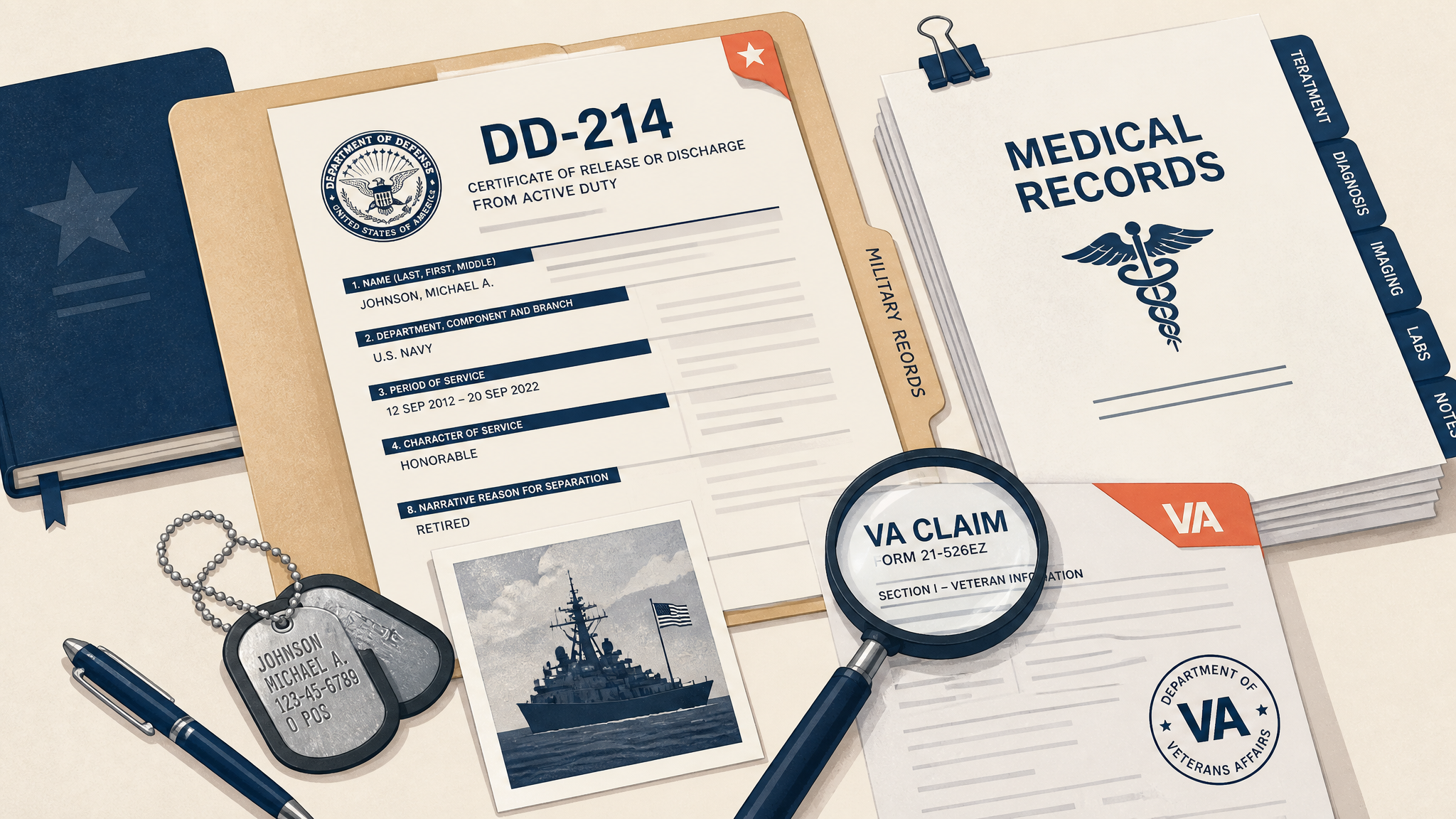
FIG. 01 - Gather your paperwork 1Match your service to an exposure
Every unit, every base, every deployment, and every job you actually did - not just your MOS. This is where most veterans undercount what they are owed.
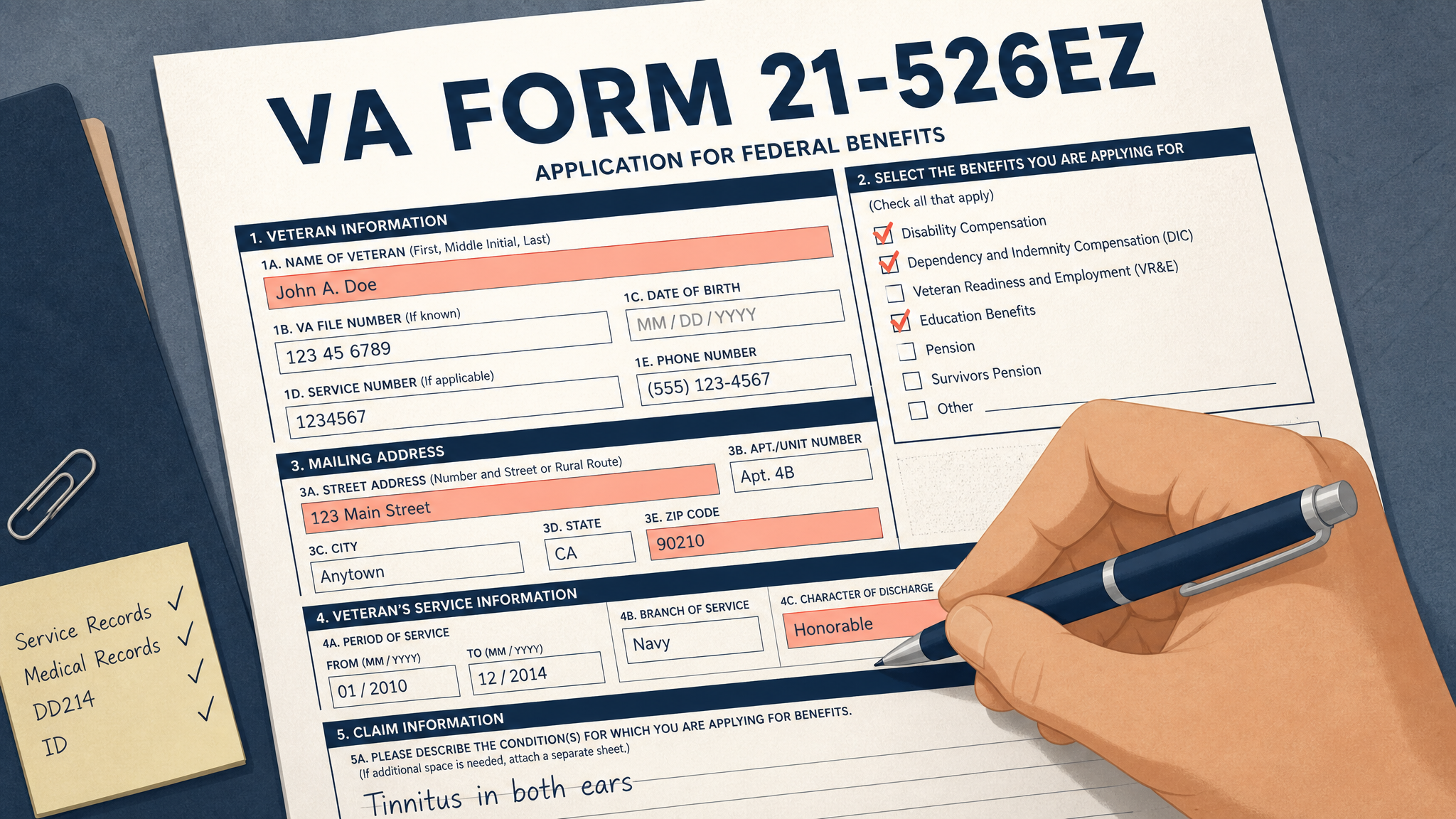
FIG. 02 - Fill out the form 2Check the presumptive lists first
If your condition is presumptive for your era and location, the VA presumes the link and you skip the hardest part of the claim.

FIG. 03 - File the claim 3If it is not presumptive, build the TERA case
Pull the exposure records (the ILER), establish the Toxic Exposure Risk Activity, and line up a medical nexus for a direct, facts-found claim.
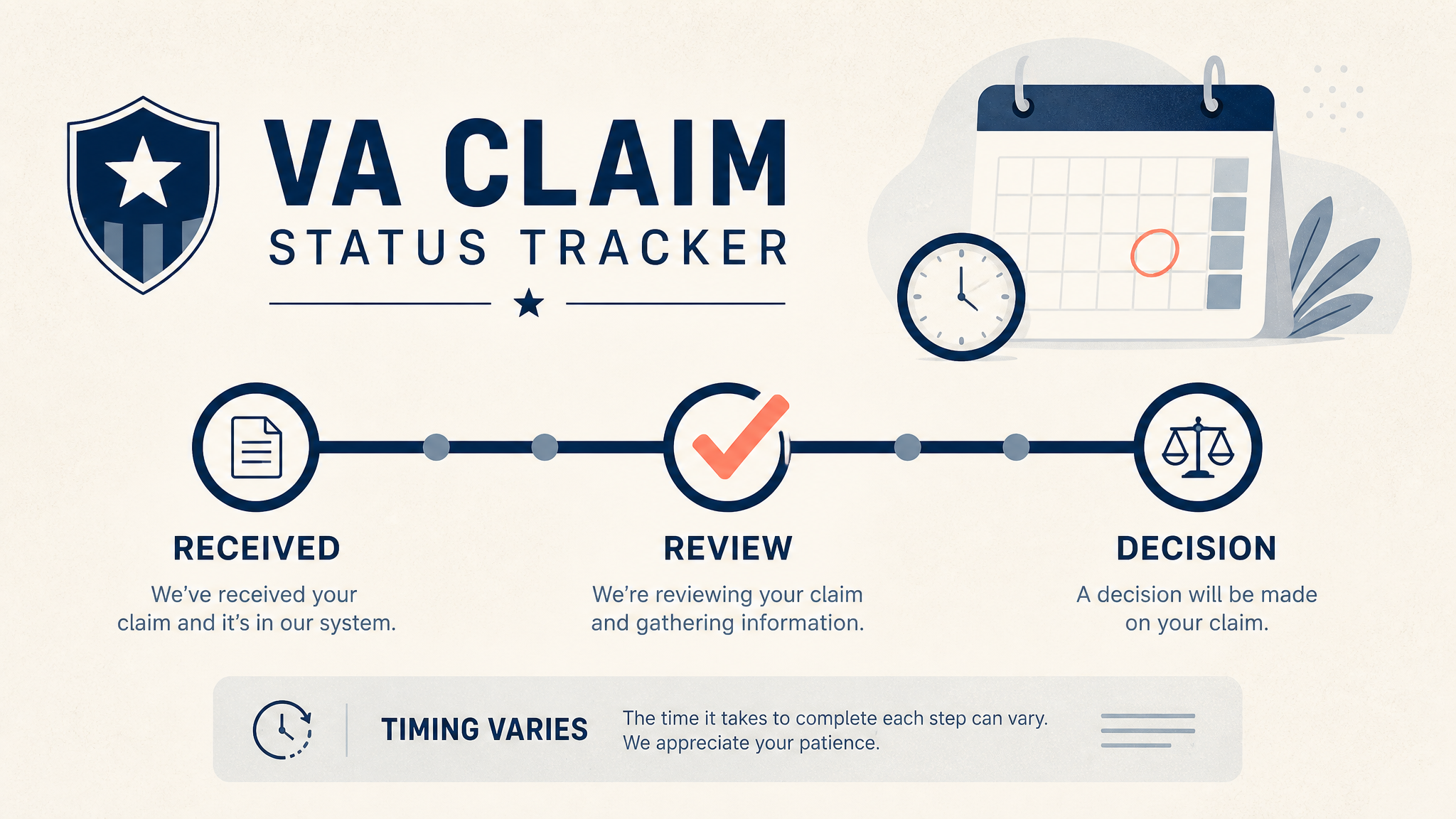
FIG. 04 - After you file 4File - or reopen a past denial
File the claim with the evidence attached, or reopen an older claim now covered by the PACT Act. We do this part with you, at no upfront cost.
Not sure which path is yours? That is exactly what we check - free.
Whether your condition is presumptive or needs a TERA determination and a nexus, we will look at your real service - every unit, every location, every job - and tell you honestly what you may be owed. No forms and no obligation to ask.
This is free education, not legal advice. The Aging Veteran is operated by a VA-accredited representative and is not the U.S. Department of Veterans Affairs.
The filing plan
A dated plan you can actually follow to file
Here is the order to file in - with a realistic timeframe on each step. Follow it top to bottom and you will not leave money, dates, or evidence on the table.

FIG. 01 - FILE YOUR INTENT TO FILE
01Lock in your date - file an Intent to File first
DAY 1VA Form 21-0966
Before you gather a single record, put the VA on notice. An Intent to File freezes your effective date for up to one year.
The Intent to File (VA Form 21-0966) does one powerful thing: it sets your effective date today, then gives you up to one year to actually submit the claim. Back pay is calculated from your effective date - so filing the Intent to File on Day 1, before you have every document, can be worth months of retroactive benefits. File it online at va.gov, by phone, or on paper. Do this first, even if the rest of your evidence is weeks away.

FIG. 02 - PULL YOUR SERVICE RECORDS
02Prove where and when you served
WEEK 1The claim rises or falls on placing you in the exposure. Pull the paper that puts your boots on that ground.
For a presumptive exposure, the VA only needs to see that you served in a qualifying location during a qualifying time - so gather your DD-214, orders, and deployment records that name the place and the dates. Your service treatment records and personnel file matter too. If your exposure is not presumptive, this is also where you start building the TERA (facts-found) record - the documents that show the activity that carried the risk. Missing dates or the wrong base name is the most common reason a solid claim stalls, so get this right early.

FIG. 03 - GET A CURRENT DIAGNOSIS
03Get a current, written diagnosis
WEEKS 1-2A presumption connects an exposure to a condition - but you still have to show you actually have the condition, in writing, now.
The VA cannot rate a condition it cannot see. Get a current diagnosis from a doctor - VA or private - that names the condition exactly as it appears on the presumptive list. If you are already in VA health care, your records may already carry it; if not, get seen and get it documented. For a facts-found (TERA) claim, this diagnosis is one leg of the case and the medical nexus is the other. A claim with an exposure and a service history but no current diagnosis has a hole the rater will use to deny it.

FIG. 04 - FILE THE CLAIM
04File the claim itself
WEEKS 2-3VA Form 21-526EZ
This is the actual claim. File it inside your Intent-to-File year and attach everything you gathered.
The Application for Disability Compensation (VA Form 21-526EZ) is the claim. List every condition you are claiming - do not leave one off because you are unsure; an underclaimed condition is a benefit you walk away from. Attach your service records and your diagnosis, and file it within the one-year window your Intent to File opened. Filing a Fully Developed Claim - where you submit all your evidence up front - is usually the fastest lane to a decision.

FIG. 05 - ADD STATEMENTS & NEXUS
05Add buddy statements and a nexus where you need them
WEEKS 2-3VA Form 21-4138
For a presumptive claim you may not need a nexus at all. For a facts-found claim, this step is the whole ballgame.
If your condition and service are presumptive, the VA presumes the link - you do not have to prove causation, so a nexus is not required. Where records are thin, a buddy statement (VA Form 21-4138) from someone who served with you can place you at the exposure. For a TERA / facts-found claim, you do need a medical nexus - a doctor stating your condition is at least as likely as not caused by the exposure. Know which path you are on so you spend your effort where it actually counts.

FIG. 06 - ATTEND YOUR C&P EXAM
06Attend your C&P exam - and be ready
MONTH 2-4The VA will usually schedule a Compensation & Pension exam. This appointment can decide your rating - do not treat it as routine.
When the VA schedules a C&P exam, go - a missed exam can sink a claim. Describe your symptoms on your worst days, not your best, and be specific about how the condition limits your work and daily life. Bring a short written summary so nothing gets left out under pressure. If the examiner does not measure or ask about something the rating requires, say so on the record. An inadequate exam is one of the most common reasons a deserving claim comes back low - and it is a reason you can name in an appeal.

FIG. 07 - READ THE DECISION, PROTECT YOUR APPEAL
07Read the decision - and protect your one-year appeal window
DECISIONWhen the decision letter arrives, read the rating and the reasons closely. If it is wrong or too low, the clock starts now.
Your rating decision letter states what was granted, at what percentage, and why. If a condition was denied or rated too low, you generally have one year from the date of that decision to appeal - through a Higher-Level Review, a Supplemental Claim (with new evidence), or a Board appeal. Do not let that year lapse; a missed deadline can cost you the earlier effective date. A denial is not the end - many strong claims are won on appeal once the record is corrected. This is exactly the point where getting help pays for itself.
This is a general roadmap - your exact timeframes depend on the VA's workload and how complete your evidence is when you file. It is not legal advice. When you want a second set of eyes on any step, that is what we are here for.
Your complete benefit picture
You do not have to sort this out alone
There is no deadline to file a PACT Act claim, and you can apply yourself for free. Filing sooner can protect your effective date for back pay.

Two ways to move forward — both free
Not sure if this applies to you?
Ask our free assistant a few plain questions and get an honest read on what you and your family may qualify for, at no cost. It takes just a few minutes, and there is no sign-up and no obligation of any kind. You will get a clear, plain-language picture of where you stand and what might be worth filing. And if you would rather talk to a real person, an accredited agent is only a message away.
Have a question? Get free information
Ask a question, learn what you may be owed, or find out where you stand. Confidential, free, and no obligation to go any further.
Ready to hire us? Register
Decided you want us to work your claim? Registering is free — we match you with an accredited advocate and get you started. We cannot begin until you sign VA Form 21-22a, and fees, if any, are always disclosed up front.
If you were denied before
A past denial can be reopened
If the VA turned you down for a condition that is now presumptive, you do not have to start over. File a Supplemental Claim (VA Form 20-0995) and the VA will review it under the new PACT Act rules.
There is no deadline, but filing sooner can protect your effective date for back pay.
Burn pits
Service in covered Gulf War / post-9/11 locations presumes exposure - you do not have to prove you stood near a pit.
Agent Orange
New conditions (hypertension, MGUS) and new locations (Thailand, Laos, Guam) are now covered.
A clear path forward
Your step-by-step action plan
No rush and no pressure - but a little order helps. Applying is always free.
FIG. 01 - Gather your paperwork
First
Get a free toxic-exposure screening
Ask at your VA health facility or call MyVA411 at 1-800-698-2411.
FIG. 02 - Fill out the form
Lock in your date
File an Intent to File
VA Form 21-0966 sets your start date so back pay can reach back to that day while you gather records.
FIG. 03 - File the claim
Gather
Pull your service and medical records
Your DD-214, a list of where and when you served, and any diagnoses.
FIG. 04 - After you file
File the claim
Submit VA Form 21-526EZ
File online at va.gov, by mail, or with free accredited help. Never pay an upfront fee for an initial claim.
Who to call & where to go
These are free, official VA lines. Have your Social Security number handy when you call.
VA Benefits Hotline
Compensation, pension, and general claim questions.
Rather have us handle it?
No phone tag, no hold music. Call our office and a real, VA-accredited person walks you through it - start to finish.
702-992-4883Download the forms
Not sure where to start?
File a disability claim (VA Form 21-526EZ). If you were denied before for a condition that is now presumptive, file a Supplemental Claim so the VA reviews it under the new rules.
More benefits for veterans
These often go hand in hand - tap any card to learn more.


































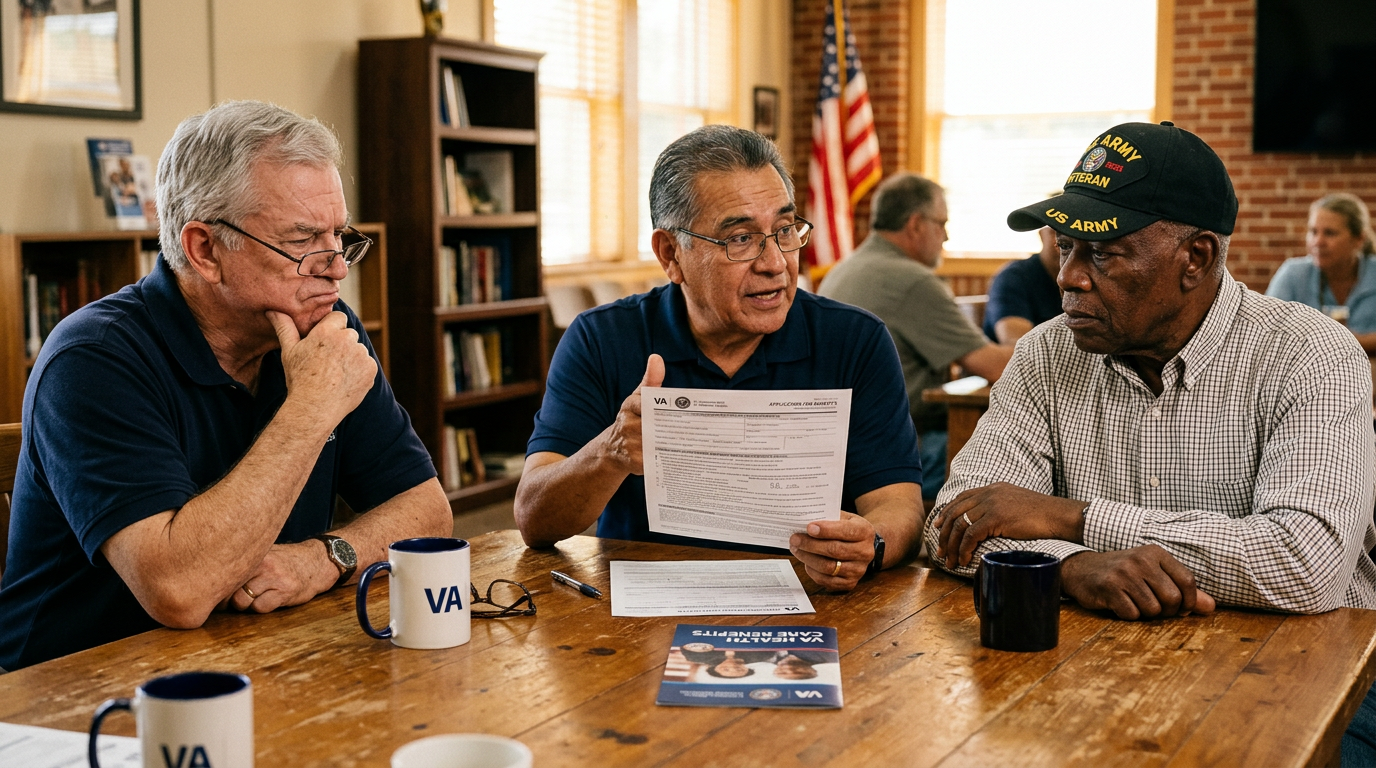







Free information — get a free benefit review
Tell us how to reach you and an accredited team member will help you understand this benefit and claim everything you have earned. No cost, no obligation.
Ready to hire us? Register with us
For veterans who’ve decided they want us on their claim — registering is free too, and it does not make you our client or obligate you to anything. Here is exactly how it works:
- You register. This simply starts the conversation — you are not our client yet, and you owe us nothing.
- You sign and return VA Form 21-22a. It appoints us as your accredited representative and gives us access to your VA file.
- Once we have your signed 21-22a and access to your case, we verify everything is in order.
It involves the registration form and signing VA Form 21-22a — by law we can’t accept your claim, work on it, or contact the VA for you until that power of attorney is signed. You decide whether to move forward.
Answers, in plain language
Common questions about PACT Act & Toxic Exposure
What is PACT Act & Toxic Exposure?
The 2022 PACT Act is the largest expansion of VA benefits in decades. It makes it far easier for veterans exposed to burn pits, Agent Orange, and other toxins to get health care and disability compensation.
Who qualifies for PACT Act & Toxic Exposure?
Burn pits were large open fires used to get rid of trash, chemicals, and waste at bases overseas. The smoke exposed many troops to harmful toxins. If you served in the Gulf War (starting August 2, 1990) or any time after September 11, 2001, in places such as Iraq, Afghanistan, Kuwait, Saudi Arabia, Qatar, Bahrain, Djibouti, Syria, Jordan, Egypt, Yemen, Somalia, or Uzbekistan, the VA considers you exposed. You do not have to prove you stood near a burn pit. If you served in a covered location during a covered time, the VA presumes the exposure.
How do I apply for PACT Act & Toxic Exposure?
File a disability claim (VA Form 21-526EZ). If you were denied before for a condition that is now presumptive, file a Supplemental Claim so the VA reviews it under the new rules.
What does it cost to get help with PACT Act & Toxic Exposure, and are you VA-accredited?
There is no deadline to file a PACT Act claim, and you can apply yourself for free. Filing sooner can protect your effective date for back pay. It is free to talk with us, and no one may charge you to file a first-time VA claim. The Aging Veteran is led by Albert L. Thombs Jr., a VA-accredited claims agent (accreditation #45147) and disabled veteran; any appeal work is handled on a no-fee-unless-you-win basis. We are an independent accredited practice and are not affiliated with, or endorsed by, the U.S. Department of Veterans Affairs.