
Veteran Benefits
Automobile Allowance & Adaptive Equipment
The VA can help you get back on the road. If a service-connected disability makes it impossible to drive a normal vehicle, a one-time allowance helps pay for the car itself, and a separate grant pays for the equipment that makes it drivable - hand controls, lifts, and more. For many older veterans this is the difference between independence and being stuck at home.
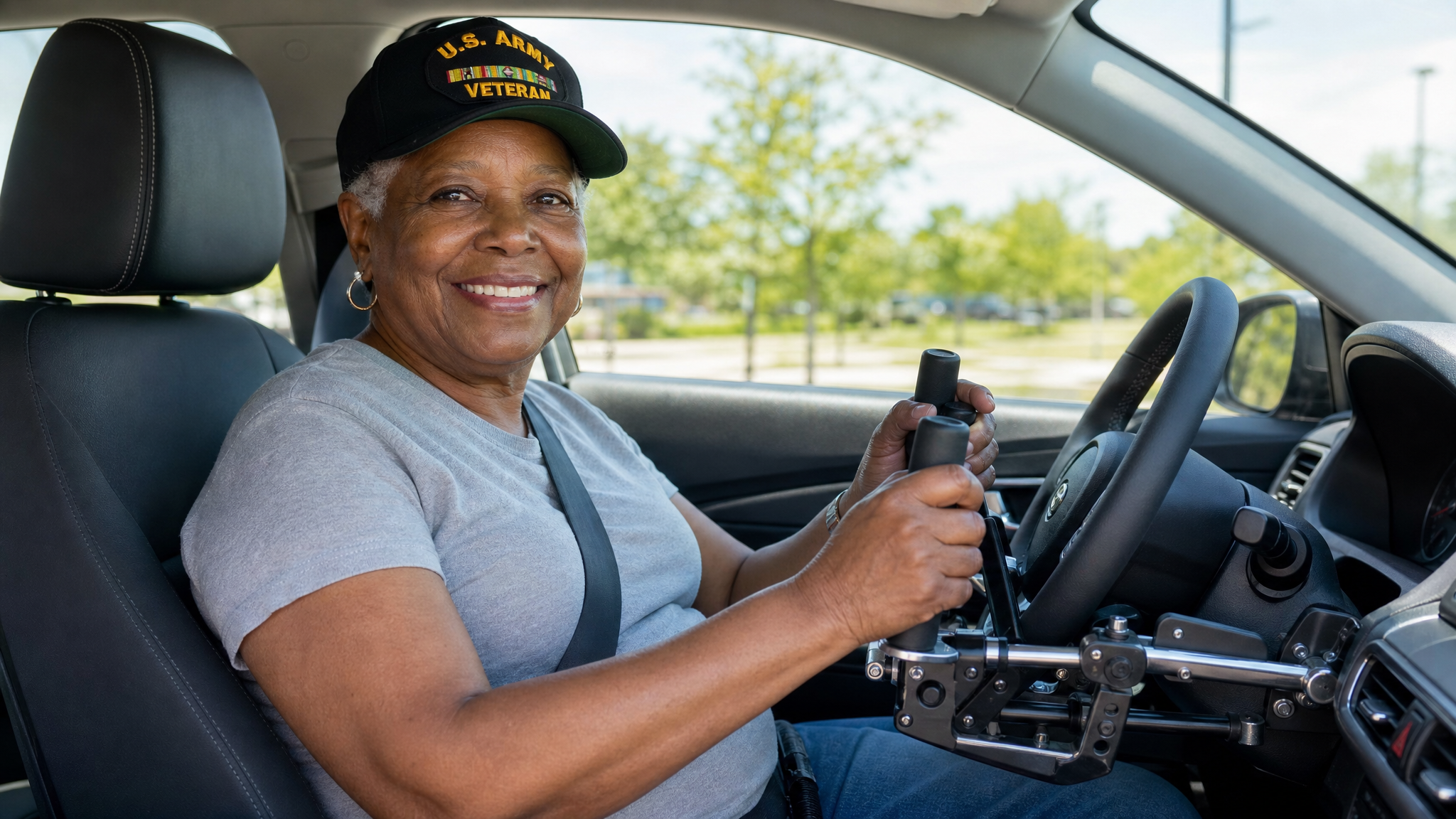
Who this is for
Losing the ability to drive can feel like losing your freedom. If a service-connected condition has taken that from you, the VA can help pay for a vehicle you can actually use - and for the hand controls, lift, or special seat that gets you back behind the wheel.
In plain language
What Automobile Allowance & Adaptive Equipment covers
- A one-time grant toward the purchase of a car or van (paid to the seller)
- A separate, renewable grant for adaptive equipment and vehicle modifications
- Installation, repair, and replacement of that equipment
- Training on how to use the adaptive equipment safely
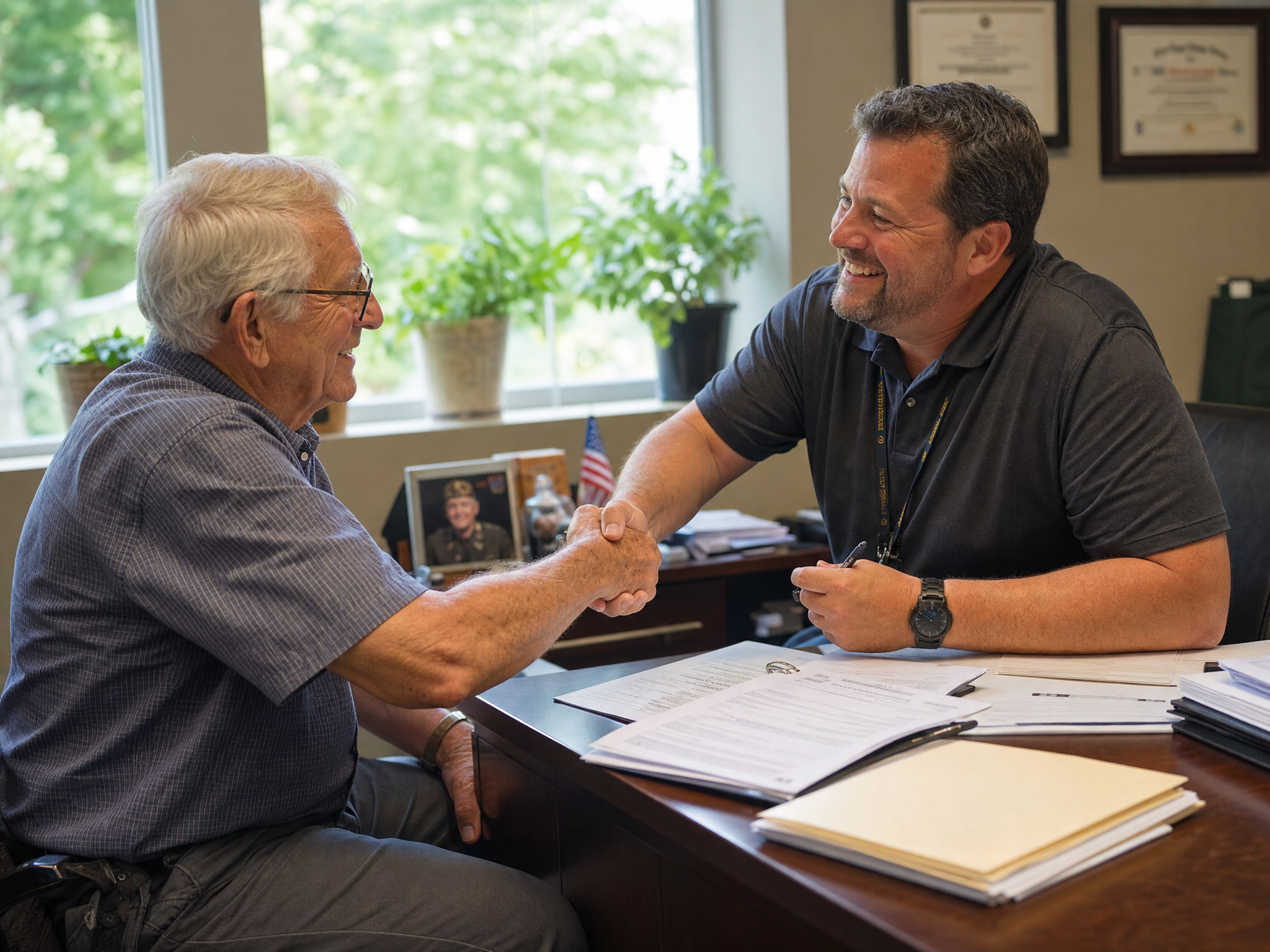
VA's Specially Adapted Housing Grant in Action (Part 2)Official video - Veterans Benefits Administration
5 things most veterans aren't aware of
These apply to nearly every VA claim - and they change how much you get and when.
Your filing date sets your back pay
Benefits are generally paid back to the day you file - not the day you are approved. Filing an intent to file today can protect months, even years, of retroactive pay.
One condition can trigger others (secondary claims)
A service-connected condition that causes another - like sleep apnea from PTSD, or a bad knee from a bad hip - can be rated on its own. Each secondary condition adds to your rating.
A medical nexus is what wins the claim
The VA needs a documented link between your condition and your service. A clear nexus opinion is often the difference between an approval and a denial.
Accredited help is free to file an initial claim
By law, an accredited agent cannot charge a fee to prepare and file your original claim. If someone asks for money up front to file, that is a red flag.
A denial is not the end of the road
You have three appeal lanes - Higher-Level Review, a Supplemental Claim with new evidence, and the Board of Veterans Appeals. Many denials are overturned on review.
$27,074.99
One-time automobile allowance maximum (Oct 2025; confirm on va.gov)
Paid to seller
The grant goes straight to the vehicle seller, tax-free
2 vehicles / 4 yrs
Adaptive-equipment grant can be used across up to two vehicles every four years
The full picture
Everything you need to know
Nothing hidden behind a click, and nothing you have to go looking for on another website. Here is the whole story in plain language - the facts and the figures first - so you can decide what fits your situation.
Key facts & current figures
- A one-time automobile allowance of up to $27,074.99 (effective Oct 1, 2025; confirm the current figure on va.gov) helps you buy a vehicle if a service-connected disability keeps you from driving a standard one (38 CFR 3.808).
- The money is paid straight to the seller, not to you, and it is tax-free. In most cases it is a once-in-a-lifetime grant.
- A separate adaptive-equipment grant pays for modifications - hand controls, wheelchair lifts, power steering, special seating - and it can be used again as your needs change.
- Qualifying conditions include loss or loss of use of a hand or foot, permanent vision loss, severe burns, or ALS.
General figures, current as of December 2025 and reviewed each year. Your exact amount depends on your situation - always confirm on va.gov.
Two separate benefits, often confused
- The automobile allowance is a one-time cash grant toward buying a vehicle - up to $27,074.99 as of October 2025, paid directly to the seller.
- The adaptive-equipment grant is different: it pays to install the controls and modifications that make a vehicle usable, and it can be used more than once over time.
- You can qualify for one, the other, or both, depending on your service-connected condition.
Who qualifies
- Loss, or permanent loss of use, of one or both hands or feet.
- Permanent vision loss in both eyes to a set degree (generally 20/200 or worse in the better eye, or a severely narrowed field).
- A severe burn injury that limits motion, or amyotrophic lateral sclerosis (ALS).
- Ankylosis (frozen joints) of the knees or hips qualifies for the adaptive-equipment grant only, not the one-time car allowance.
What the equipment grant covers
- Hand controls, left-foot gas pedals, and steering aids for those who cannot use standard controls.
- Wheelchair and scooter lifts, ramps, raised roofs or doors, and power transfer seats.
- Power steering, power brakes, and special seating or restraint systems.
- Repair, replacement, and reinstallation as equipment wears out or your needs change - up to two vehicles within a four-year period.
Getting the order right
- Apply and get approval before buying, so the allowance is not lost - the VA will not reimburse a purchase you already made without authorization.
- Use VA Form 21-4502 for the automobile allowance and VA Form 10-1394 for adaptive equipment.
- Keep your medical evidence current; the whole benefit rests on documenting the service-connected condition that limits your driving.
Your complete benefit picture
$27,074.99
the one-time automobile allowance (as of October 2025) toward a vehicle you can actually drive - with a separate, renewable grant for the hand controls and lifts that make it work. Confirm current figures on va.gov.

Two ways to move forward — both free
Not sure if this applies to you?
Ask our free assistant a few plain questions and get an honest read on what you and your family may qualify for, at no cost. It takes just a few minutes, and there is no sign-up and no obligation of any kind. You will get a clear, plain-language picture of where you stand and what might be worth filing. And if you would rather talk to a real person, an accredited agent is only a message away.
Have a question? Get free information
Ask a question, learn what you may be owed, or find out where you stand. Confidential, free, and no obligation to go any further.
Ready to hire us? Register
Decided you want us to work your claim? Registering is free — we match you with an accredited advocate and get you started. We cannot begin until you sign VA Form 21-22a, and fees, if any, are always disclosed up front.
Do not miss this
Get approved before you buy
The automobile allowance is generally a once-in-a-lifetime benefit, and the VA will not reimburse a vehicle you already bought without authorization.
The adaptive-equipment grant is more forgiving - it can be renewed and used again as your needs change.
Two different grants
One helps buy the vehicle; the other pays for the equipment that makes it drivable. You can qualify for one or both.
Loss of use, not just amputation
A hand or foot that no longer works can qualify the same as one that is gone.
A clear path forward
Your step-by-step action plan
No rush and no pressure - but a little order helps. Applying is always free.
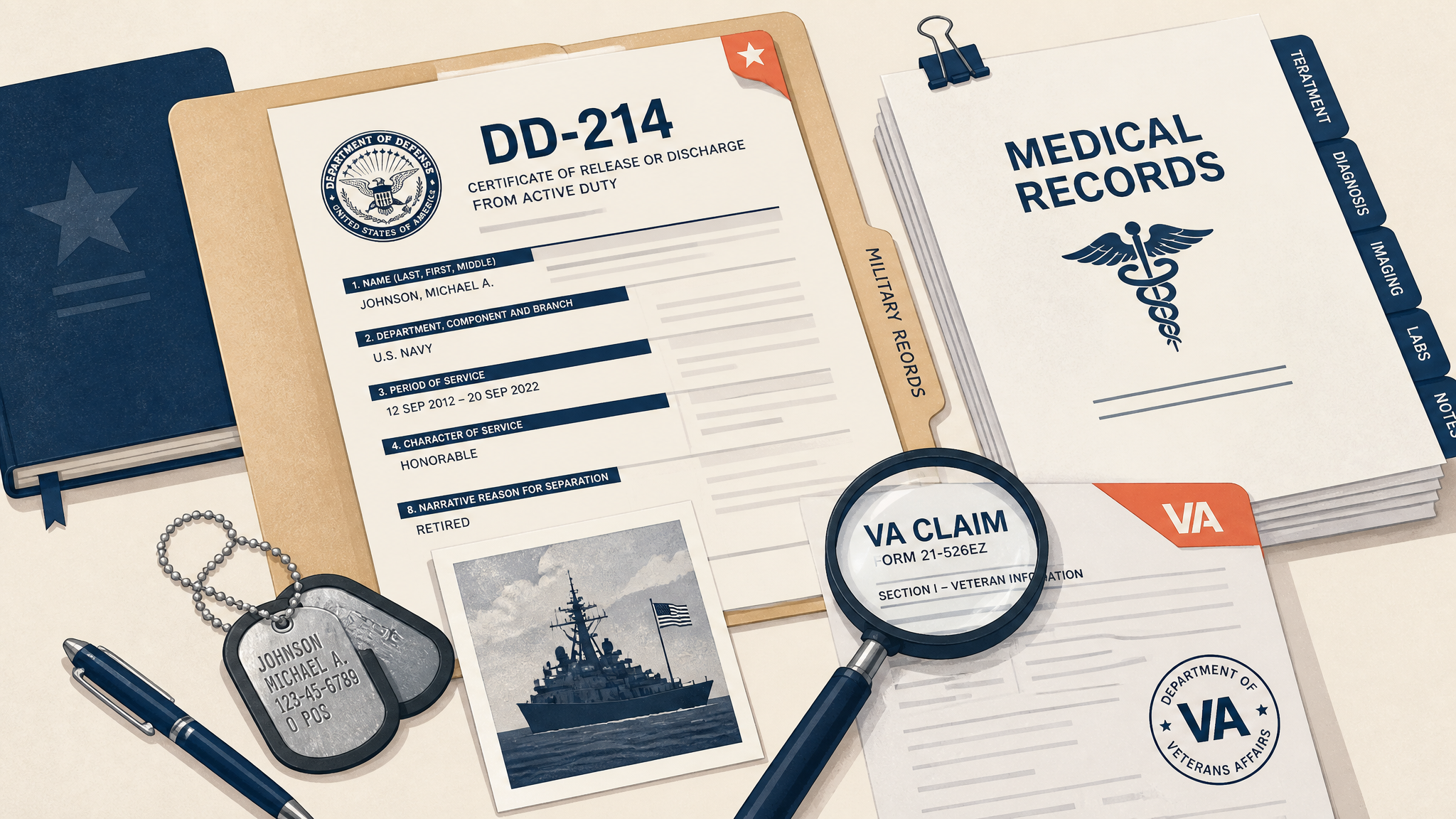
FIG. 01 - Gather your paperwork
First
Confirm your eligibility
Loss or loss of use of a hand or foot, serious vision loss, severe burns, or ALS are the main qualifying conditions.
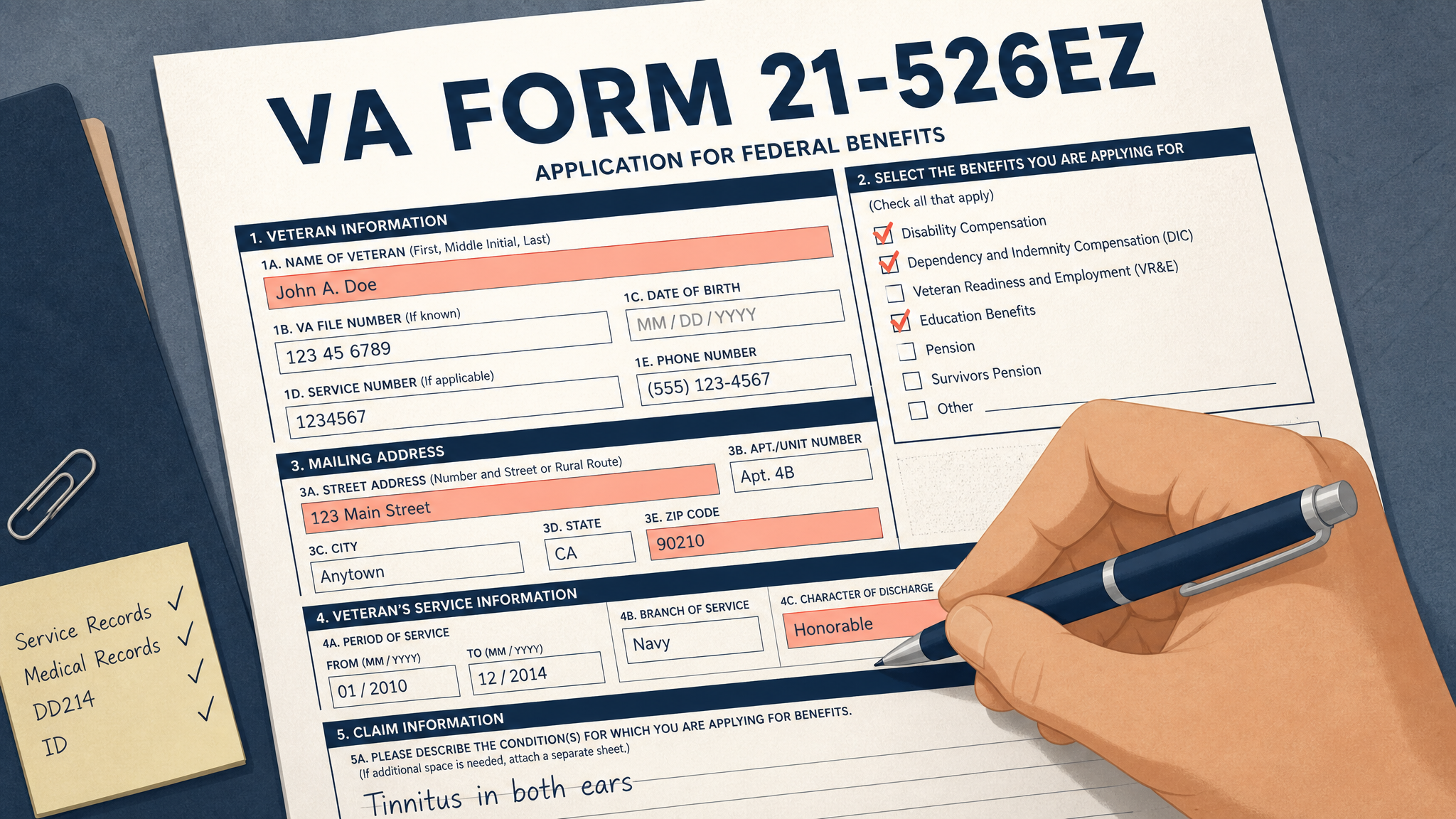
FIG. 02 - Fill out the form
Before buying
Apply with VA Form 21-4502
Get the automobile allowance approved before you purchase, so the grant is not lost.
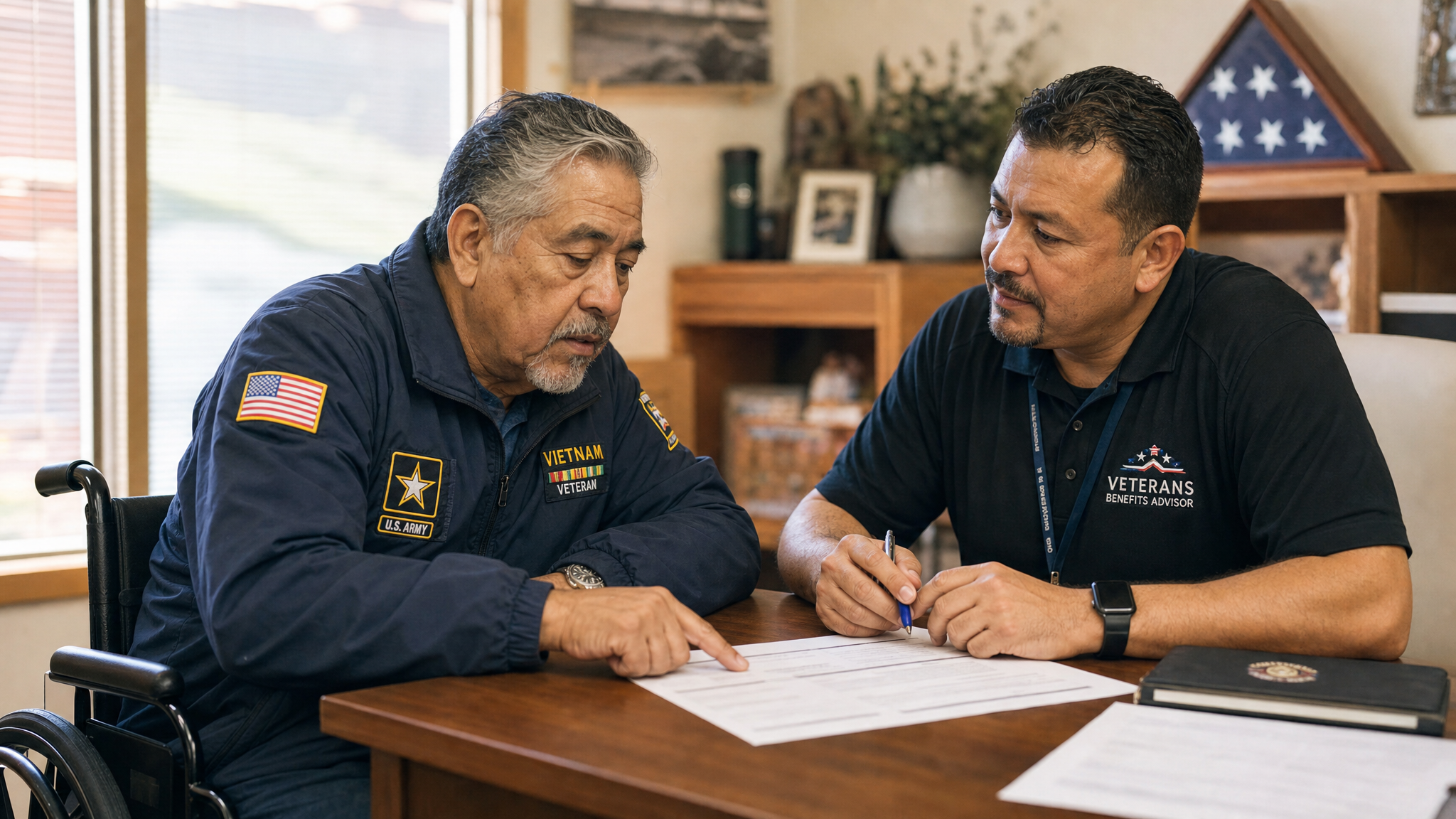
FIG. 03 - File the claim
For equipment
Apply with VA Form 10-1394
Request the adaptive equipment - hand controls, lifts, special seating - your vehicle needs.
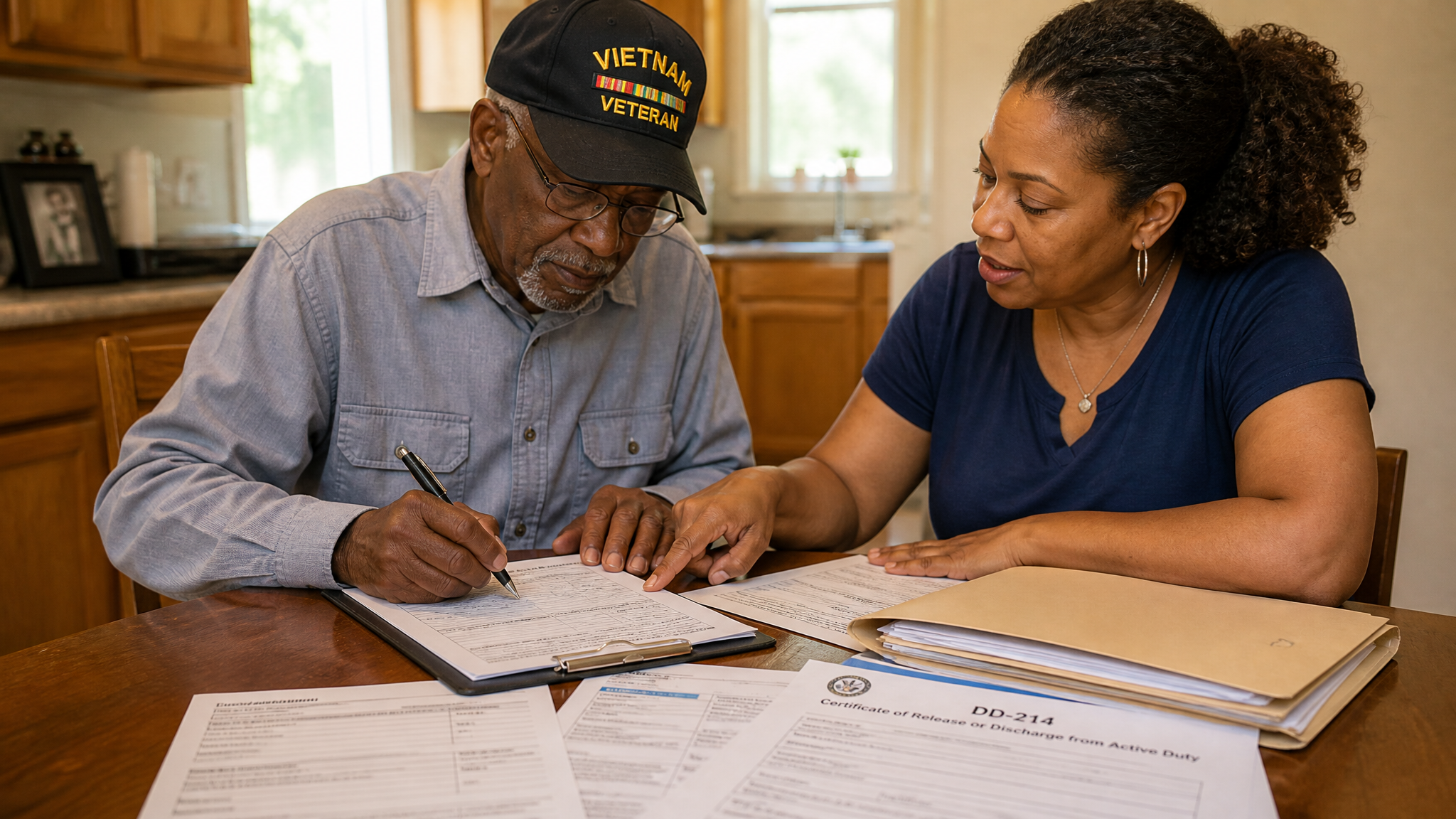
FIG. 04 - After you file
Keep it current
Renew equipment as needs change
The equipment grant can be reused across up to two vehicles every four years.
Who to call & where to go
These are free, official VA lines. Have your Social Security number handy when you call.
VA Benefits Hotline
Compensation, pension, and general claim questions.
Rather have us handle it?
No phone tag, no hold music. Call our office and a real, VA-accredited person walks you through it - start to finish.
702-992-4883Not sure where to start?
Apply for the automobile allowance with VA Form 21-4502 and get approval before you buy the vehicle. For the equipment itself, use VA Form 10-1394. Your eligibility is based on specific service-connected conditions, so a doctor's documentation of your disability is central to the claim.
More benefits for veterans
These often go hand in hand - tap any card to learn more.




























Free information — get a free benefit review
Tell us how to reach you and an accredited team member will help you understand this benefit and claim everything you have earned. No cost, no obligation.
Ready to hire us? Register with us
For veterans who’ve decided they want us on their claim — registering is free too, and it does not make you our client or obligate you to anything. Here is exactly how it works:
- You register. This simply starts the conversation — you are not our client yet, and you owe us nothing.
- You sign and return VA Form 21-22a. It appoints us as your accredited representative and gives us access to your VA file.
- Once we have your signed 21-22a and access to your case, we verify everything is in order.
It involves the registration form and signing VA Form 21-22a — by law we can’t accept your claim, work on it, or contact the VA for you until that power of attorney is signed. You decide whether to move forward.
Answers, in plain language
Common questions about Automobile Allowance & Adaptive Equipment
What is Automobile Allowance & Adaptive Equipment?
The VA can help you get back on the road. If a service-connected disability makes it impossible to drive a normal vehicle, a one-time allowance helps pay for the car itself, and a separate grant pays for the equipment that makes it drivable - hand controls, lifts, and more. For many older veterans this is the difference between independence and being stuck at home.
Who qualifies for Automobile Allowance & Adaptive Equipment?
Loss, or permanent loss of use, of one or both hands or feet. Permanent vision loss in both eyes to a set degree (generally 20/200 or worse in the better eye, or a severely narrowed field). A severe burn injury that limits motion, or amyotrophic lateral sclerosis (ALS).
How much does Automobile Allowance & Adaptive Equipment pay?
The automobile allowance is a one-time cash grant toward buying a vehicle - up to $27,074.99 as of October 2025, paid directly to the seller. The adaptive-equipment grant is different: it pays to install the controls and modifications that make a vehicle usable, and it can be used more than once over time. You can qualify for one, the other, or both, depending on your service-connected condition.
How do I apply for Automobile Allowance & Adaptive Equipment?
Apply for the automobile allowance with VA Form 21-4502 and get approval before you buy the vehicle. For the equipment itself, use VA Form 10-1394. Your eligibility is based on specific service-connected conditions, so a doctor's documentation of your disability is central to the claim.
What does it cost to get help with Automobile Allowance & Adaptive Equipment, and are you VA-accredited?
Timing matters: the automobile allowance must be approved before you purchase the vehicle, and it is generally a one-time benefit - so it is worth getting the paperwork right the first time. The adaptive-equipment grant is more flexible and can be renewed as your condition changes. It is free to talk with us, and no one may charge you to file a first-time VA claim. The Aging Veteran is led by Albert L. Thombs Jr., a VA-accredited claims agent (accreditation #45147) and disabled veteran; any appeal work is handled on a no-fee-unless-you-win basis. We are an independent accredited practice and are not affiliated with, or endorsed by, the U.S. Department of Veterans Affairs.