
Veteran Benefits
Veterans' Preference in Federal Hiring
Veterans' preference is a legal advantage in hiring for federal government jobs. Depending on your service and disability, you receive 5 or 10 extra points on a rated exam - or top placement in the "best qualified" group - and disabled veterans get real protection against being passed over. It is one of the clearest paths for veterans into a stable second career.

Who this is for
A federal job is one of the most reliable second careers for a veteran - and veterans' preference tilts the hiring in your favor. Five or ten extra points, top placement in the "best qualified" group, and real protection against being passed over if you are 30% or more disabled. You just have to claim it and attach the right paperwork.
In plain language
What Veterans' Preference in Federal Hiring covers
- The 5-point and 10-point preference categories
- How preference works in points vs. category-rating systems
- "Pass-over" protection for disabled veterans
- What documents to submit (DD-214, SF-15, VA rating letter)

Veterans' Preference in Federal HiringOfficial video - U.S. Dept of Veterans Affairs
5 things most veterans aren't aware of
These apply to nearly every VA claim - and they change how much you get and when.
Your filing date sets your back pay
Benefits are generally paid back to the day you file - not the day you are approved. Filing an intent to file today can protect months, even years, of retroactive pay.
One condition can trigger others (secondary claims)
A service-connected condition that causes another - like sleep apnea from PTSD, or a bad knee from a bad hip - can be rated on its own. Each secondary condition adds to your rating.
A medical nexus is what wins the claim
The VA needs a documented link between your condition and your service. A clear nexus opinion is often the difference between an approval and a denial.
Accredited help is free to file an initial claim
By law, an accredited agent cannot charge a fee to prepare and file your original claim. If someone asks for money up front to file, that is a red flag.
A denial is not the end of the road
You have three appeal lanes - Higher-Level Review, a Supplemental Claim with new evidence, and the Board of Veterans Appeals. Many denials are overturned on review.
5 or 10 pts
Added to a passing federal civil-service exam or rating score
30%+ = CPS
The strongest preference category, with pass-over protection
DD-214 + SF-15
The documents that prove your preference category
The full picture
Everything you need to know
Nothing hidden behind a click, and nothing you have to go looking for on another website. Here is the whole story in plain language - the facts and the figures first - so you can decide what fits your situation.
Key facts & current figures
- Veterans' preference gives eligible veterans an edge in federal government hiring - extra points or top placement on the list of candidates - for competitive and many excepted-service jobs.
- 5-point preference (TP) goes to veterans who served during a war, campaign, or expedition or other qualifying period; 10-point preference goes to those with a service-connected disability or a Purple Heart.
- Among 10-point veterans, CP covers a compensable rating of 10% to under 30%, CPS covers 30% or more, and XP covers a disability under 10% or a Purple Heart.
- Preference does not guarantee a job and does not override the minimum qualifications - and it generally does not apply to internal promotions, transfers, or reassignments.
- To claim it you submit your DD-214, and for 10-point claims an SF-15 plus your VA disability rating letter; veterans rated 30%+ (CPS) get the strongest "pass-over" protection, requiring OPM sign-off before an agency can skip them.
General figures, current as of December 2025 and reviewed each year. Your exact amount depends on your situation - always confirm on va.gov.
The preference categories
- 5-point (TP): veterans who served on active duty during a war, campaign, or expedition for which a campaign badge was authorized, or during other qualifying date ranges.
- 10-point disability (XP): veterans with a service-connected disability rated below 10%, or who received a Purple Heart. 10-point compensable (CP): a compensable rating of 10% to less than 30%.
- 10-point 30%+ (CPS): a compensable service-connected rating of 30% or more - this group gets the strongest hiring protections. A 0-point sole-survivorship (SSP) category also exists for certain discharges after Aug 29, 2008.
How preference is applied
- In older numerical-rating systems, 5 or 10 points are added to a veteran's passing score, moving them up the list.
- Most agencies now use category rating (for example "Best Qualified"). Preference-eligible veterans are placed above non-preference candidates in the same category, and CP/CPS veterans usually float to the top of the highest category (except certain scientific and professional jobs at GS-9 and above).
- Preference applies to new appointments in the competitive service and many excepted-service jobs - but not to internal actions like promotions, transfers, or reassignments.
Pass-over protection for disabled veterans
- If a hiring official wants to select a non-preference candidate over a higher-listed preference eligible, they must document a valid reason in writing.
- For CP and CPS veterans (30% or more disabled), that "pass-over" request must be submitted to OPM for adjudication - a strong deterrent against skipping a disabled veteran.
- This protection is one of the most concrete advantages in the entire federal hiring system, and it is easy to lose simply by not claiming preference or not attaching the SF-15.
Documents and derived preference
- Always attach your DD-214 (Member 4 copy) showing character of discharge (must be honorable or general). For 10-point claims add SF-15 plus your VA rating letter or Purple Heart citation.
- Derived preference may let a spouse, surviving spouse, or mother claim a veteran's 10-point preference when the veteran is unable to work due to a service-connected disability or has died - useful for surviving family members.
- Special hiring paths such as the Veterans' Recruitment Appointment (VRA) and the Veterans Employment Opportunities Act (VEOA) let agencies hire eligible veterans more directly - ask about them by name when you apply.
Your complete benefit picture
10 extra points
A service-connected veteran adds 10 points to a passing federal job score, floats to the top of the candidate list, and cannot be passed over without a formal ruling. It is one of the most concrete civilian payoffs of your service. Confirm the rules on opm.gov.

Two ways to move forward — both free
Not sure if this applies to you?
Ask our free assistant a few plain questions and get an honest read on what you and your family may qualify for, at no cost. It takes just a few minutes, and there is no sign-up and no obligation of any kind. You will get a clear, plain-language picture of where you stand and what might be worth filing. And if you would rather talk to a real person, an accredited agent is only a message away.
Have a question? Get free information
Ask a question, learn what you may be owed, or find out where you stand. Confidential, free, and no obligation to go any further.
Ready to hire us? Register
Decided you want us to work your claim? Registering is free — we match you with an accredited advocate and get you started. We cannot begin until you sign VA Form 21-22a, and fees, if any, are always disclosed up front.
Know your category
A 30% rating gives you the strongest hiring protection there is
Veterans rated 30% or more service-connected fall into the CPS category - the highest preference - and an agency cannot pass them over for a non-veteran without OPM's written approval.
Preference does not guarantee a job, but it moves you up the list and, under category rating, puts you at the top of the best-qualified group.
Prove your claim
Attach your DD-214 (Member 4 copy), VA Form SF-15, and your VA rating decision letter to your USAJOBS application.
Other hiring paths
The VRA and VEOA authorities let agencies appoint eligible veterans outside the normal competitive process.
A clear path forward
Your step-by-step action plan
No rush and no pressure - but a little order helps. Applying is always free.
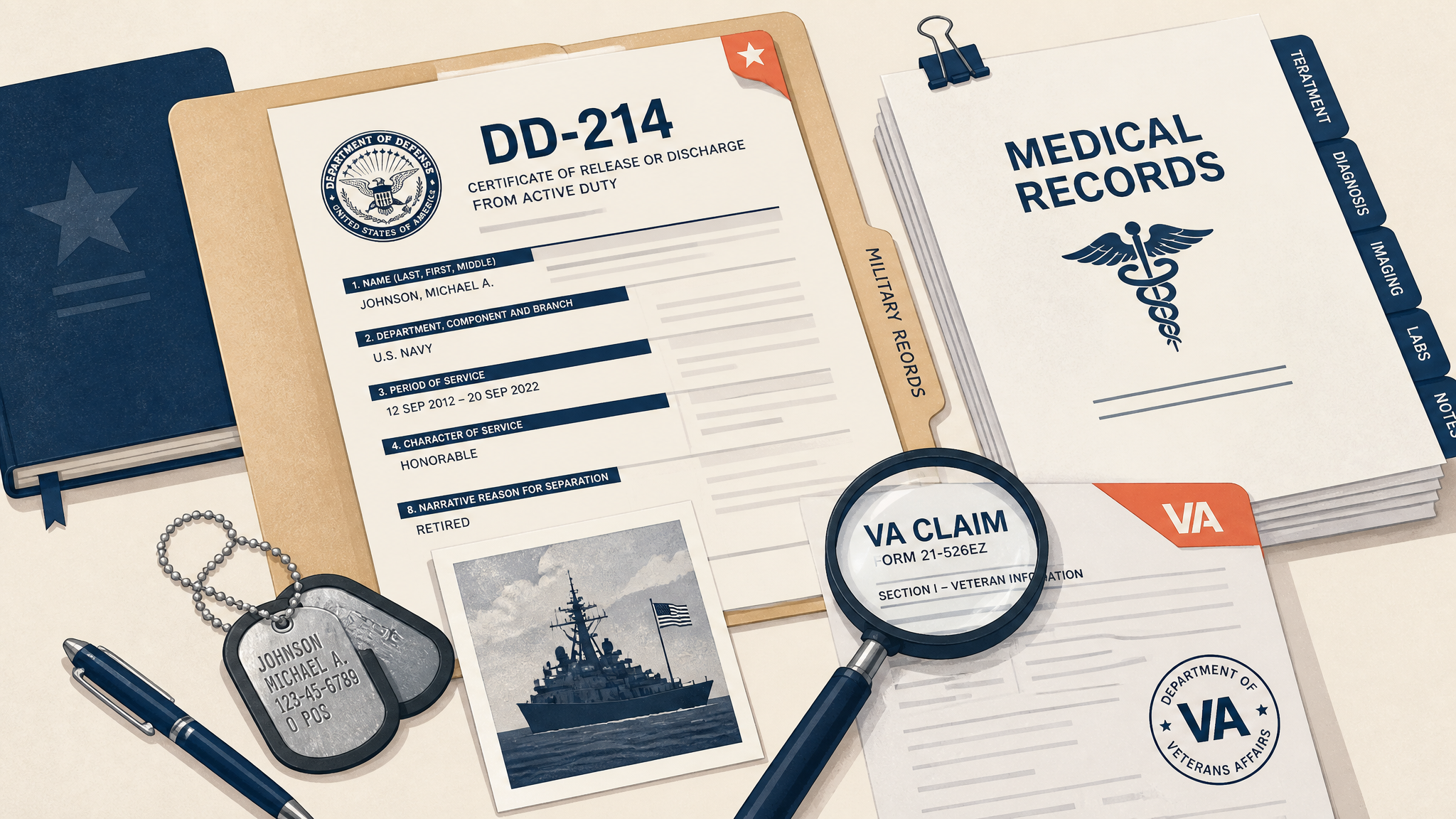
FIG. 01 - Gather your paperwork
First
Find your category
Determine whether you are TP (5-point), XP, CP, or CPS (10-point) based on service dates and your disability rating.
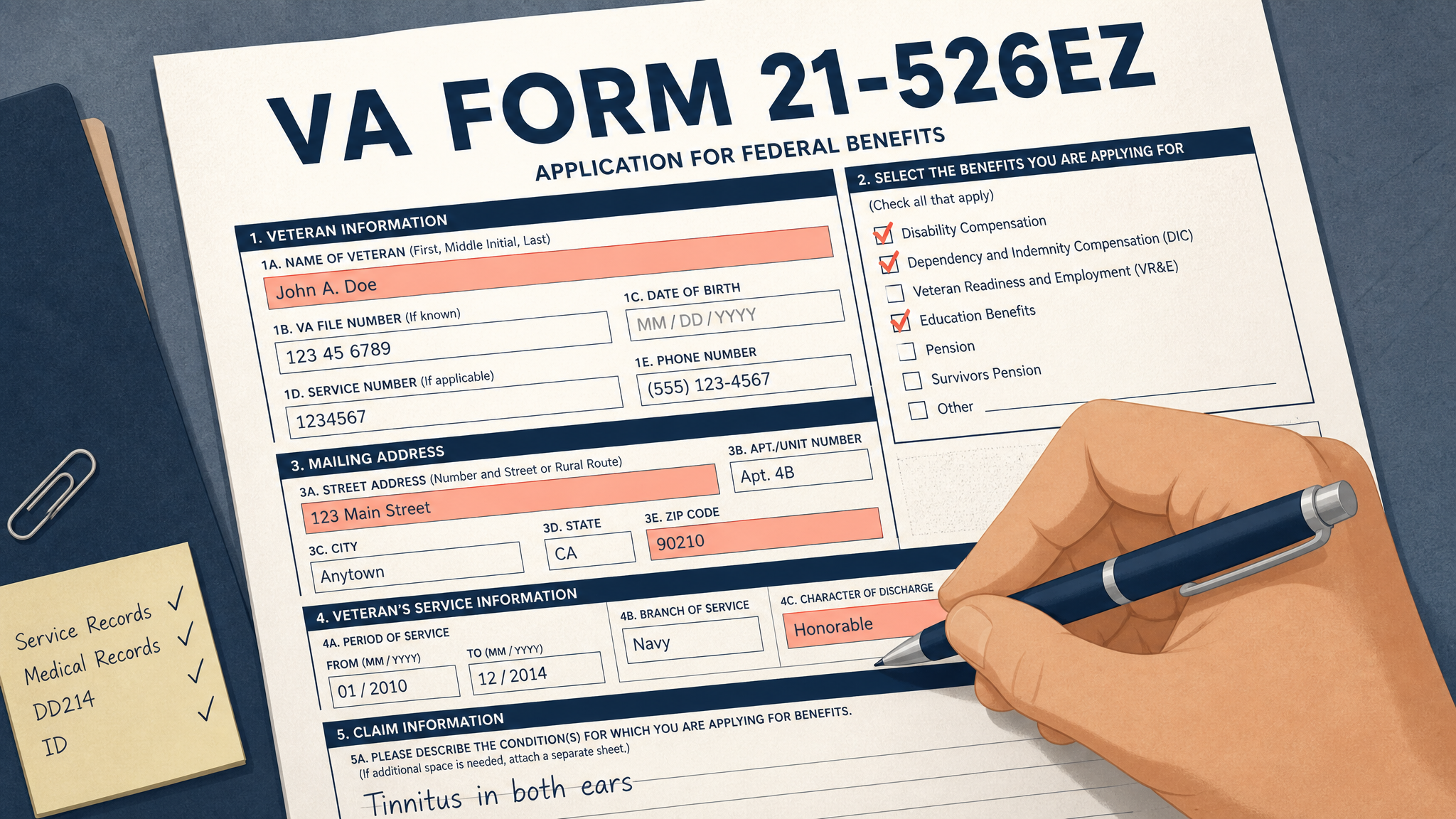
FIG. 02 - Fill out the form
Gather
Pull your documents
Collect your DD-214 Member 4 copy, VA rating letter, and complete VA Form SF-15 for 10-point preference.
FIG. 03 - File the claim
Apply
Claim it on USAJOBS
Select your preference and upload proof when you apply - unclaimed preference is not counted.
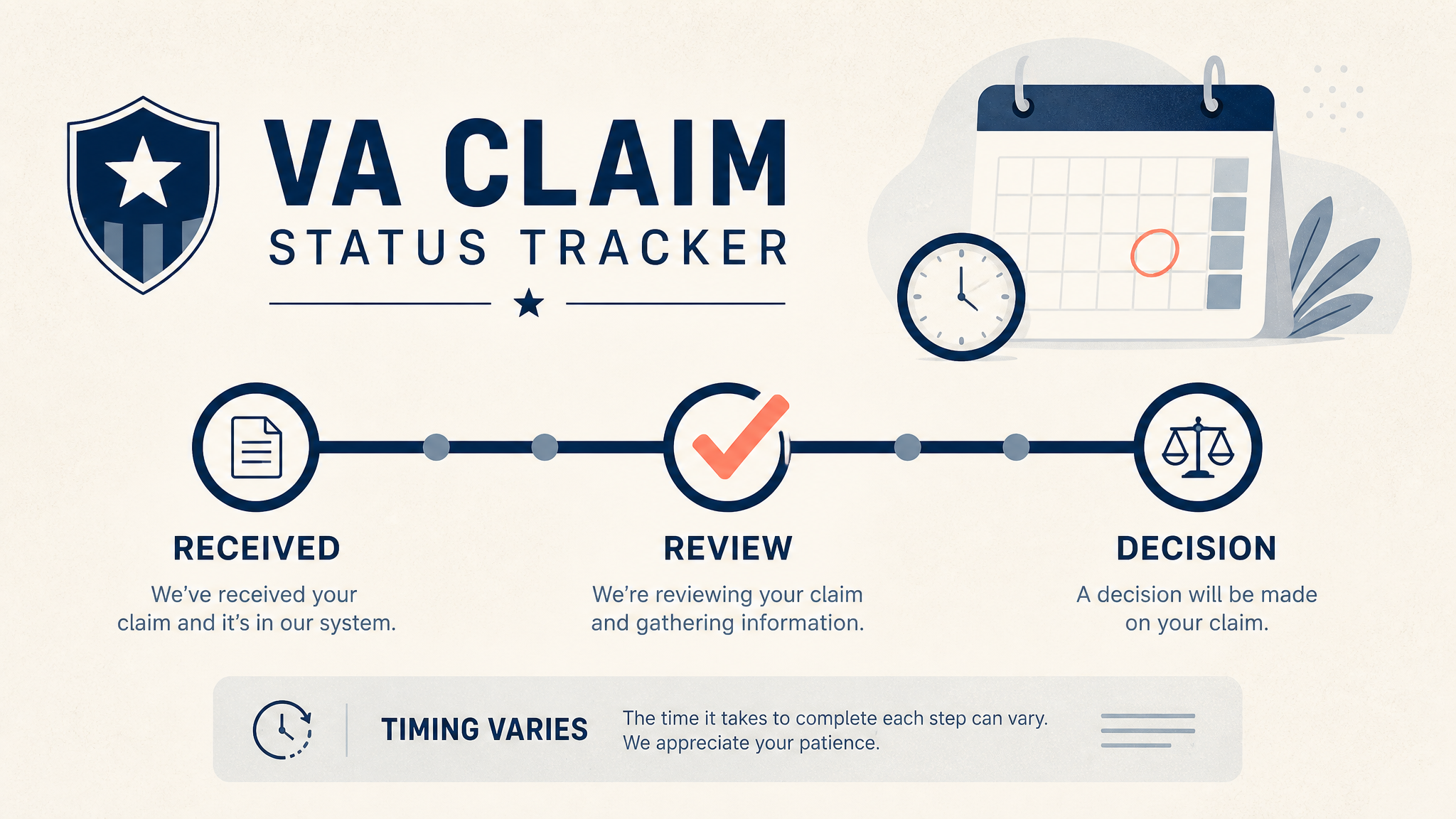
FIG. 04 - After you file
If passed over
Know your appeal
CP and CPS veterans passed over for a non-veteran can require the agency to justify it to OPM.
Who to call & where to go
These are free, official VA lines. Have your Social Security number handy when you call.
MyVA411 - Main VA Line
Not sure who to call? Start here. One number for anything VA - they route you to the right office.
VA Benefits Hotline
Compensation, pension, and general claim questions.
Rather have us handle it?
No phone tag, no hold music. Call our office and a real, VA-accredited person walks you through it - start to finish.
702-992-4883Download the forms
Not sure where to start?
You claim preference when you apply for a federal job, usually on USAJOBS. Attach your DD-214 (Member 4 copy) to prove your service and discharge. For any 10-point claim, also complete Standard Form 15 (SF-15) and attach your VA disability rating letter (or Purple Heart citation). Answer the preference questions honestly on the application - the hiring agency verifies your documents before applying the points.
More benefits for veterans
These often go hand in hand - tap any card to learn more.

























Free information — get a free benefit review
Tell us how to reach you and an accredited team member will help you understand this benefit and claim everything you have earned. No cost, no obligation.
Ready to hire us? Register with us
For veterans who’ve decided they want us on their claim — registering is free too, and it does not make you our client or obligate you to anything. Here is exactly how it works:
- You register. This simply starts the conversation — you are not our client yet, and you owe us nothing.
- You sign and return VA Form 21-22a. It appoints us as your accredited representative and gives us access to your VA file.
- Once we have your signed 21-22a and access to your case, we verify everything is in order.
It involves the registration form and signing VA Form 21-22a — by law we can’t accept your claim, work on it, or contact the VA for you until that power of attorney is signed. You decide whether to move forward.
Answers, in plain language
Common questions about Veterans' Preference in Federal Hiring
What is Veterans' Preference in Federal Hiring?
Veterans' preference is a legal advantage in hiring for federal government jobs. Depending on your service and disability, you receive 5 or 10 extra points on a rated exam - or top placement in the "best qualified" group - and disabled veterans get real protection against being passed over. It is one of the clearest paths for veterans into a stable second career.
Who qualifies for Veterans' Preference in Federal Hiring?
This benefit is generally for: Veteran seeking a federal job, Disabled veteran, Surviving spouse or parent (derived preference). The 5-point and 10-point preference categories How preference works in points vs. category-rating systems
How do I apply for Veterans' Preference in Federal Hiring?
You claim preference when you apply for a federal job, usually on USAJOBS. Attach your DD-214 (Member 4 copy) to prove your service and discharge. For any 10-point claim, also complete Standard Form 15 (SF-15) and attach your VA disability rating letter (or Purple Heart citation). Answer the preference questions honestly on the application - the hiring agency verifies your documents before applying the points.
What does it cost to get help with Veterans' Preference in Federal Hiring, and are you VA-accredited?
Preference is powerful but often misunderstood. It never lowers the bar - you still have to be qualified - and it does not apply to promotions once you are already a federal employee. But for getting in the door it is very real: for a veteran rated 30% or more (CPS), an agency cannot simply skip you for a non-veteran without a written justification approved by OPM. Always claim it, and always attach the right paperwork. It is free to talk with us, and no one may charge you to file a first-time VA claim. The Aging Veteran is led by Albert L. Thombs Jr., a VA-accredited claims agent (accreditation #45147) and disabled veteran; any appeal work is handled on a no-fee-unless-you-win basis.