
Veteran Benefits
Special Monthly Compensation (SMC)
Special Monthly Compensation is higher-rate, tax-free money for severe service-connected losses - the loss or loss of use of a limb, blindness or deafness, the need for daily aid and attendance, or being housebound. The VA is supposed to grant it automatically, but often does not - so it is one of the biggest sources of money veterans are owed and never receive.
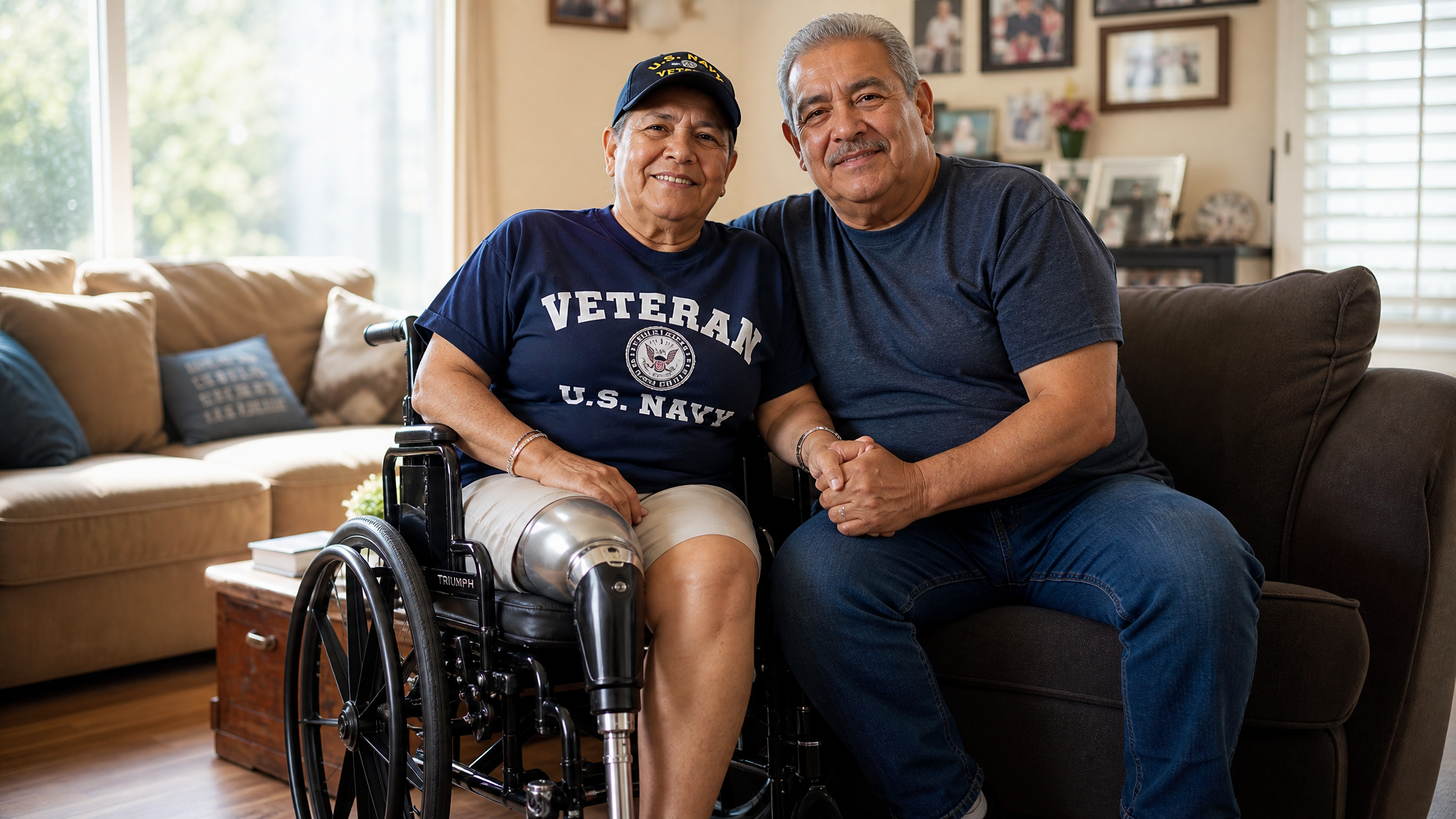
There’s a free calculator on this page - see which SMC level fits and its monthly rate. No sign-up, no cost.
Who this is for
If you already receive disability compensation but now need help getting through the day - bathing, dressing, getting around - or you have lost the real use of a limb, hand, or foot, there may be a higher, tax-free payment you are owed and simply have not been given.
In plain language
What Special Monthly Compensation (SMC) covers
- Extra monthly money on top of your regular disability compensation
- Loss or loss of use of a hand, foot, or reproductive organ (SMC-K add-on)
- The need for regular Aid & Attendance from another person (SMC-L and up)
- Being permanently housebound (SMC-S)
- Blindness, deafness, or loss of use of multiple limbs at the higher lettered levels
Special Monthly Compensation (SMC)Official video - VA Claims Insider
5 things most veterans aren't aware of
These apply to nearly every VA claim - and they change how much you get and when.
Your filing date sets your back pay
Benefits are generally paid back to the day you file - not the day you are approved. Filing an intent to file today can protect months, even years, of retroactive pay.
One condition can trigger others (secondary claims)
A service-connected condition that causes another - like sleep apnea from PTSD, or a bad knee from a bad hip - can be rated on its own. Each secondary condition adds to your rating.
A medical nexus is what wins the claim
The VA needs a documented link between your condition and your service. A clear nexus opinion is often the difference between an approval and a denial.
Accredited help is free to file an initial claim
By law, an accredited agent cannot charge a fee to prepare and file your original claim. If someone asks for money up front to file, that is a red flag.
A denial is not the end of the road
You have three appeal lanes - Higher-Level Review, a Supplemental Claim with new evidence, and the Board of Veterans Appeals. Many denials are overturned on review.
~$140/mo
Smallest SMC-K add-on, paid on top of your regular check (2026 rate)
K to T
The lettered SMC levels - a small add-on up to the highest rate
100% + 60%
One path to SMC-S housebound: a 100% disability plus a separate 60%
The full picture
Everything you need to know
Nothing hidden behind a click, and nothing you have to go looking for on another website. Here is the whole story in plain language - the facts and the figures first - so you can decide what fits your situation.
Key facts & current figures
- SMC is extra tax-free money paid on top of your regular disability compensation - it is not a separate claim you always have to file, but the VA very often fails to grant it on its own.
- The lowest level, SMC-K, adds roughly $139.87 a month (2026 rate; confirm the current figure on va.gov) for each qualifying loss - and you can receive more than one SMC-K at the same time.
- The higher levels (SMC-L through SMC-O) replace your regular rate with a much larger monthly amount for things like needing daily Aid & Attendance or the loss of use of limbs.
- SMC-S (housebound) applies if you have a single 100% disability plus another separate disability rated 60% or more, or you are largely confined to your home.
General figures, current as of December 2025 and reviewed each year. Your exact amount depends on your situation - always confirm on va.gov.
What SMC actually is
- SMC is an additional, tax-free payment the VA makes for especially serious disabilities - it recognizes losses that the normal 0-100% rating scale does not fully capture.
- It is authorized by law at 38 USC 1114 and spelled out in 38 CFR 3.350. The levels are lettered K through T, and each stands for a different type or severity of loss.
- Some levels are add-ons (paid on top of your regular check) and some replace your regular rate with a higher one. The higher the letter, generally the more serious the situation and the larger the payment.
The levels, in plain language
- SMC-K - an add-on for the loss or loss of use of a reproductive organ, one hand, one foot, or for certain other specific losses. You can stack more than one SMC-K, and it is paid on top of everything else.
- SMC-L - for the loss of use of both feet or a hand and a foot, being permanently bedridden, or needing the regular Aid & Attendance of another person. This is the level many aging veterans qualify for and never claim.
- SMC-M, N, and O - for more severe combinations, such as blindness, loss of use of multiple limbs, or deafness combined with other losses.
- SMC-S (housebound) - for a veteran with a single disability rated 100% plus a separate disability rated 60% or more, or who is substantially confined to the home. This is different from Aid & Attendance and is frequently missed.
"Loss of use" does not mean amputation
- You do not have to have lost a limb. Under 38 CFR 4.63, "loss of use" means the part works so poorly that you would be about as well off with an amputation and a prosthetic - for example, a leg or hand that can no longer do meaningful work.
- Conditions like severe stroke, advanced neuropathy, or paralysis can meet the "loss of use" standard even though the limb is still attached.
- This is exactly the kind of thing the VA overlooks, because it requires reading the medical evidence carefully rather than just totaling up percentages.
Why so many veterans miss it
- SMC is supposed to be granted automatically when the evidence supports it - but automation is not the VA’s strong suit, and no one files a "SMC claim" by name.
- A veteran can be rated 100% for years, plainly need help bathing and dressing, and still never be paid Aid & Attendance at the compensation level because no one flagged it.
- If you already receive disability compensation and your health has worsened - or you need help with daily activities - ask for a review specifically for SMC. There is real money at stake.
See what SMC could add each month
Special Monthly Compensation rate finder
SMC is the higher-rate, tax-free pay the VA most often overlooks. Pick the situation closest to yours to see which SMC level likely fits and the real 2026 monthly rate that comes with it - then let us check whether the VA already owes you a higher payment.
Which situation is closest to yours?
Pick the one that best matches. SMC levels rise with the severity and combination of service-connected losses - the VA is supposed to grant them automatically, but often does not.
SMC-L - veteran alone
$4,900.83/mo
Tax-free monthly payment that replaces the standard rate
You need the regular Aid & Attendance of another person, OR you have anatomical loss/loss of use of both feet, one hand and one foot, blindness in both eyes, or you are permanently bedridden.
2026 rates, effective Dec 1, 2025, for a veteran with no dependents. SMC eligibility is decided on your specific medical evidence - always confirm on va.gov.
This calculator is free. No sign-up, no catch.
Most people in this business hide tools like this behind a paywall or a sign-up form. We don’t. Use it as much as you need. And if you want a real accredited agent to look at your actual claim, we’re one call away — it’s free to talk, and free to file your claim.
Albert L. Thombs Jr. — VA-accredited claims agent (#45147), a disabled veteran with a team of advocates who do this every day.
Your complete benefit picture
~$140/mo+
the smallest SMC add-on (SMC-K, 2026) - and you can receive more than one at once, stacked on top of your regular compensation, while the higher levels pay far more. Confirm current rates on va.gov.
Two ways to move forward — both free
Not sure if this applies to you?
Ask our free assistant a few plain questions and get an honest read on what you and your family may qualify for, at no cost. It takes just a few minutes, and there is no sign-up and no obligation of any kind. You will get a clear, plain-language picture of where you stand and what might be worth filing. And if you would rather talk to a real person, an accredited agent is only a message away.
Have a question? Get free information
Ask a question, learn what you may be owed, or find out where you stand. Confidential, free, and no obligation to go any further.
Ready to hire us? Register
Decided you want us to work your claim? Registering is free — we match you with an accredited advocate and get you started. We cannot begin until you sign VA Form 21-22a, and fees, if any, are always disclosed up front.
Do not miss this
The VA often does not grant SMC on its own
SMC is supposed to be awarded automatically whenever your record supports it. In practice it is one of the most overlooked payments in the whole system - veterans go years rated 100%, plainly needing daily help, and are never paid for it.
If you already receive compensation and now need help with daily activities, or you have lost the real use of a limb, ask the VA to review your file specifically for SMC. You do not need a brand-new claim to raise it.
Aid & Attendance at the compensation level
Needing help to bathe, dress, or get around can qualify you for SMC-L - separate from the pension version of Aid & Attendance.
"Loss of use" is not amputation
Under 38 CFR 4.63 a limb that no longer works can count the same as losing it. Severe stroke or neuropathy can qualify.
A clear path forward
Your step-by-step action plan
No rush and no pressure - but a little order helps. Applying is always free.
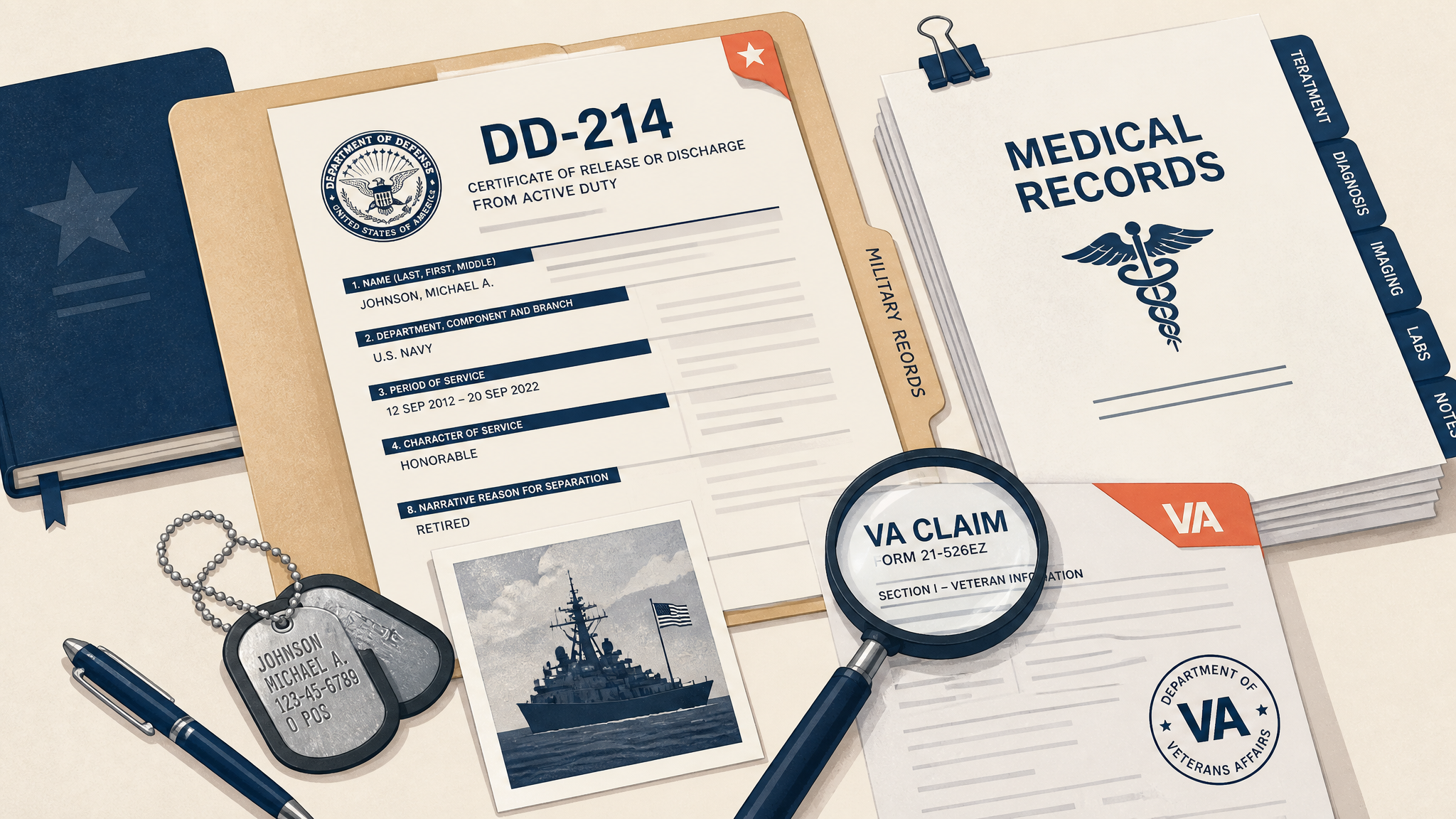
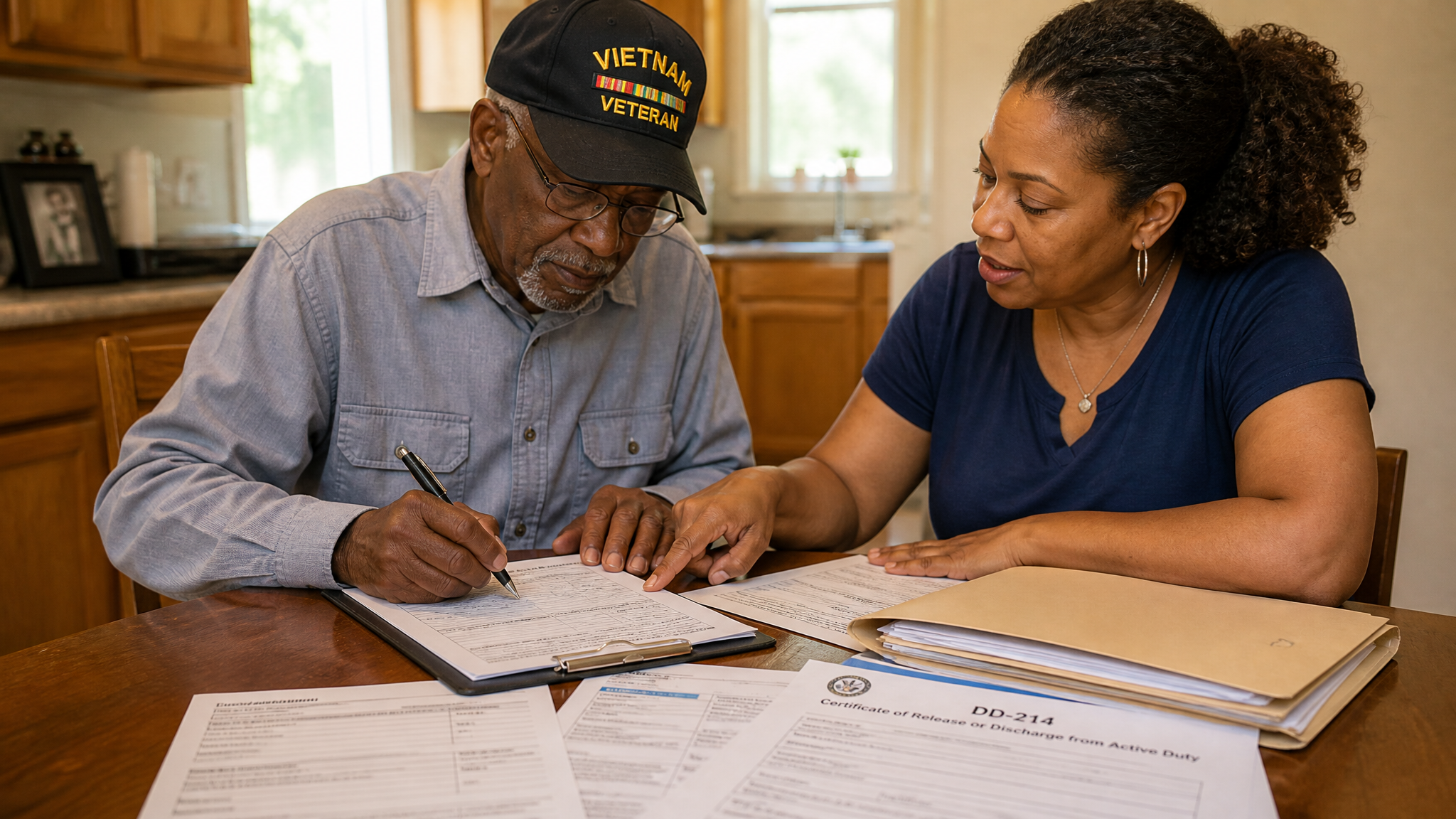
FIG. 01 - Gather your paperwork
First
Look at what you already have
List your current ratings and the help you now need day to day - that is the raw material for an SMC review.
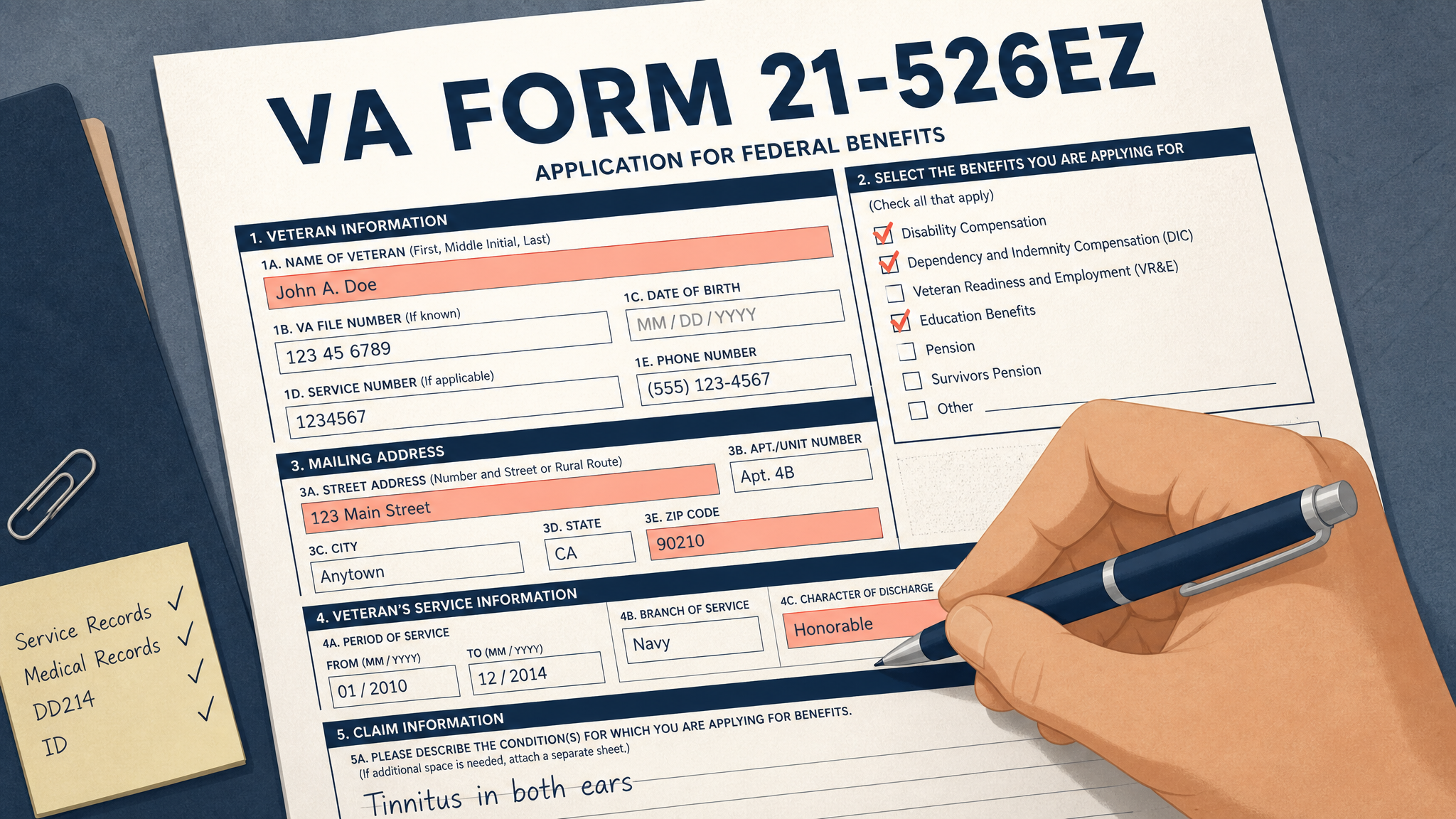
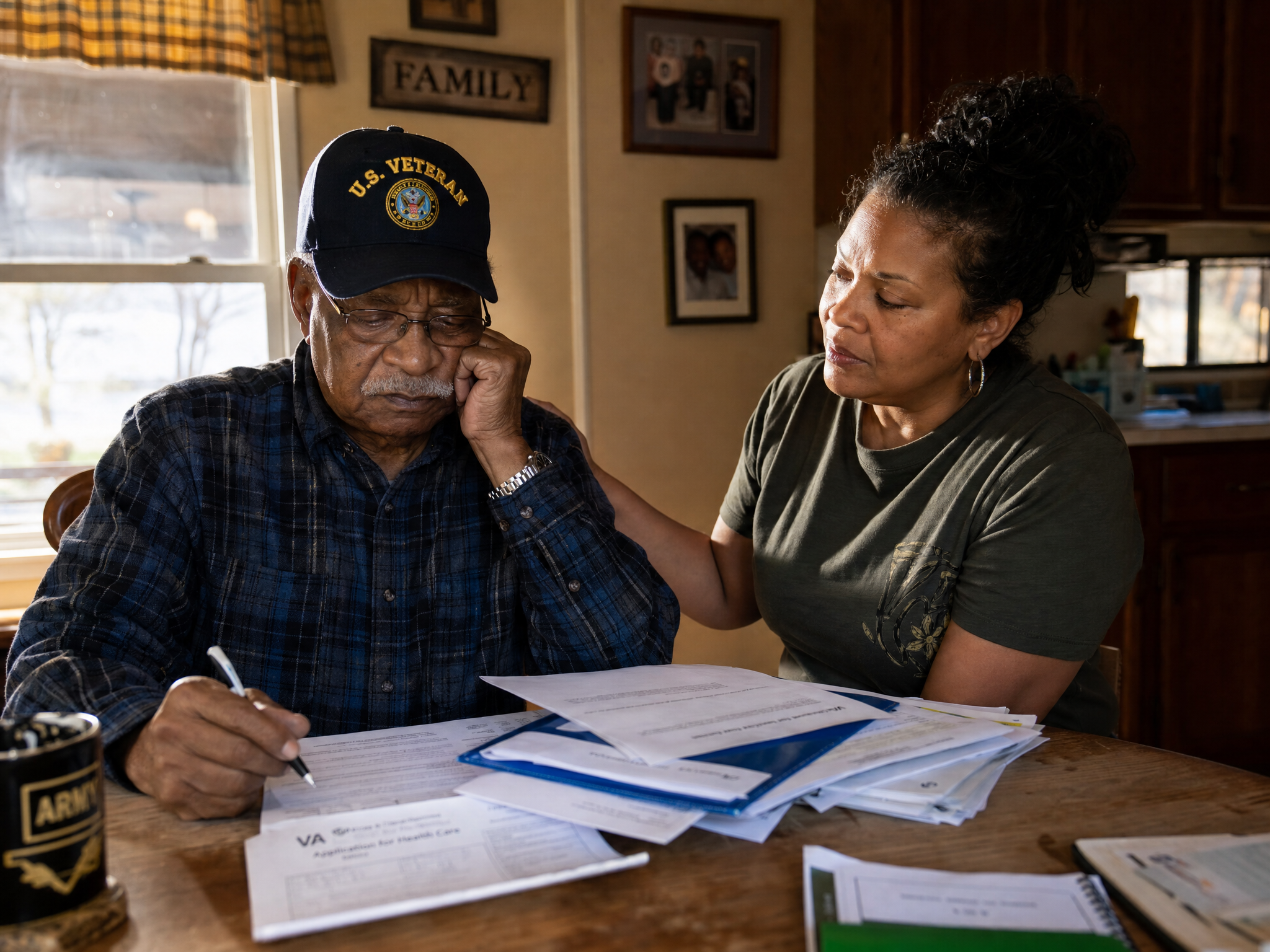
FIG. 02 - Fill out the form
Get it in writing
Have your doctor document the need
Use VA Form 21-2680 for Aid & Attendance or housebound status, and get clear medical statements about any loss of use.
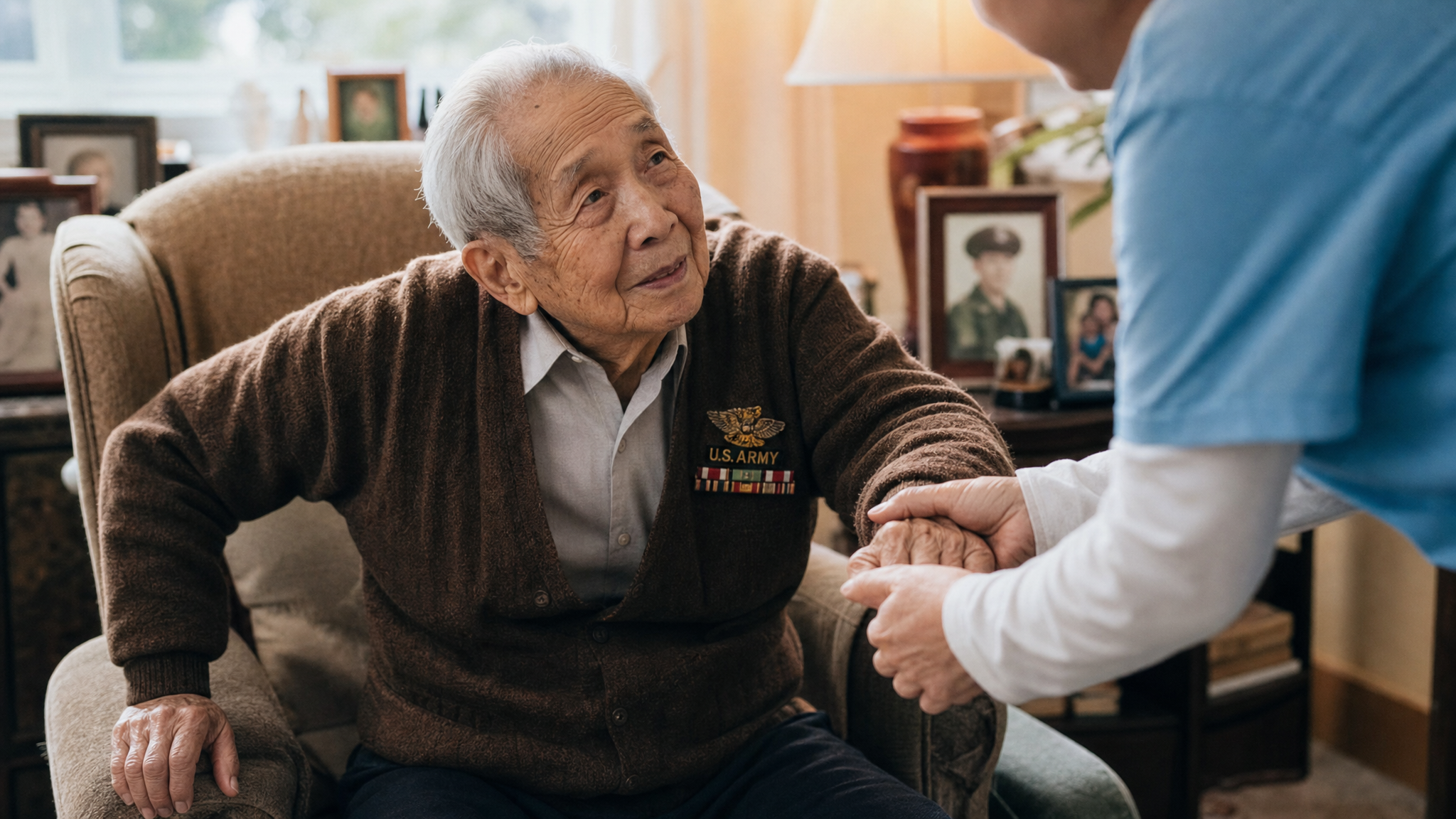
FIG. 03 - File the claim
Ask by name
Request an SMC review
Tell the VA you are seeking Special Monthly Compensation under 38 CFR 3.350 - do not assume it will be considered on its own.
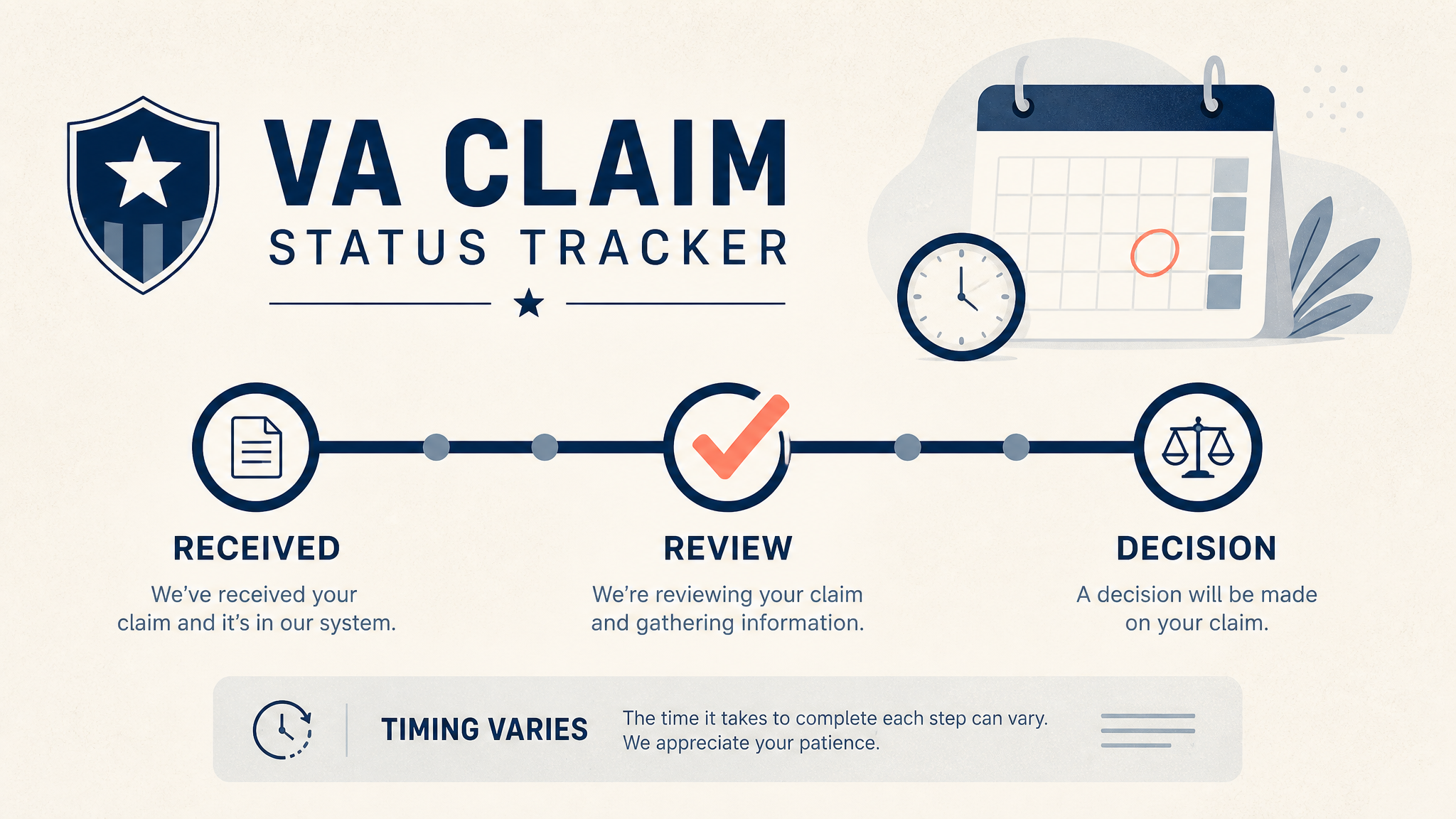
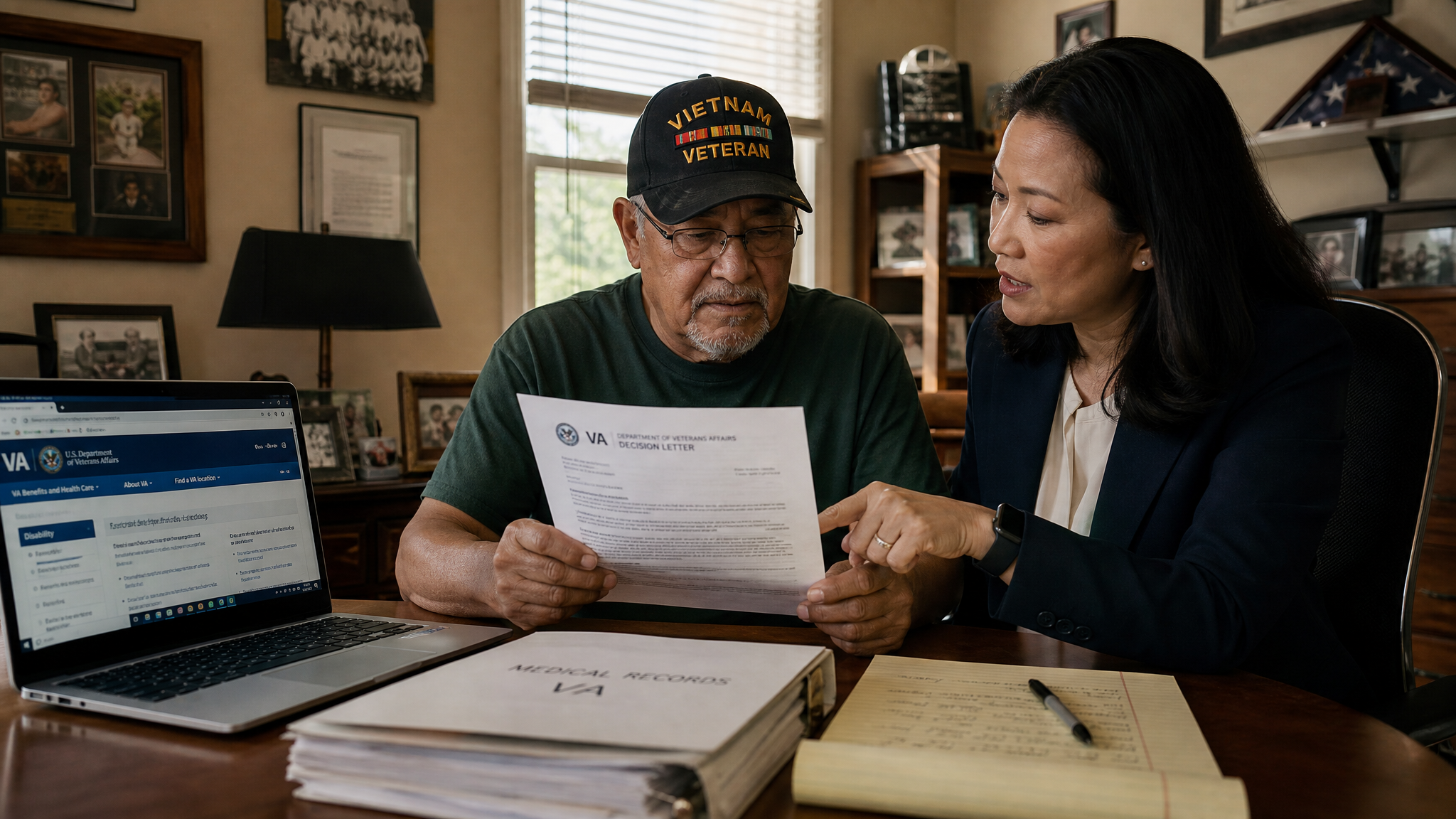
FIG. 04 - After you file
Get a second look
Have your file reviewed
Because the rules are dense, a knowledgeable review often finds SMC that was sitting there unpaid.
Who to call & where to go
These are free, official VA lines. Have your Social Security number handy when you call.
VA Benefits Hotline
Compensation, pension, and general claim questions.
MyVA411 - Main VA Line
Not sure who to call? Start here. One number for anything VA - they route you to the right office.
Rather have us handle it?
No phone tag, no hold music. Call our office and a real, VA-accredited person walks you through it - start to finish.
702-992-4883Not sure where to start?
You do not need a special form - SMC should be considered as part of any disability claim. In practice, spell it out: file or add to a claim (VA Form 21-526EZ) and submit medical evidence, and use VA Form 21-2680 when Aid & Attendance or housebound status is involved. If you already have the underlying ratings, ask the VA to review your file for SMC - it is often sitting there unclaimed.
More benefits for veterans
These often go hand in hand - tap any card to learn more.

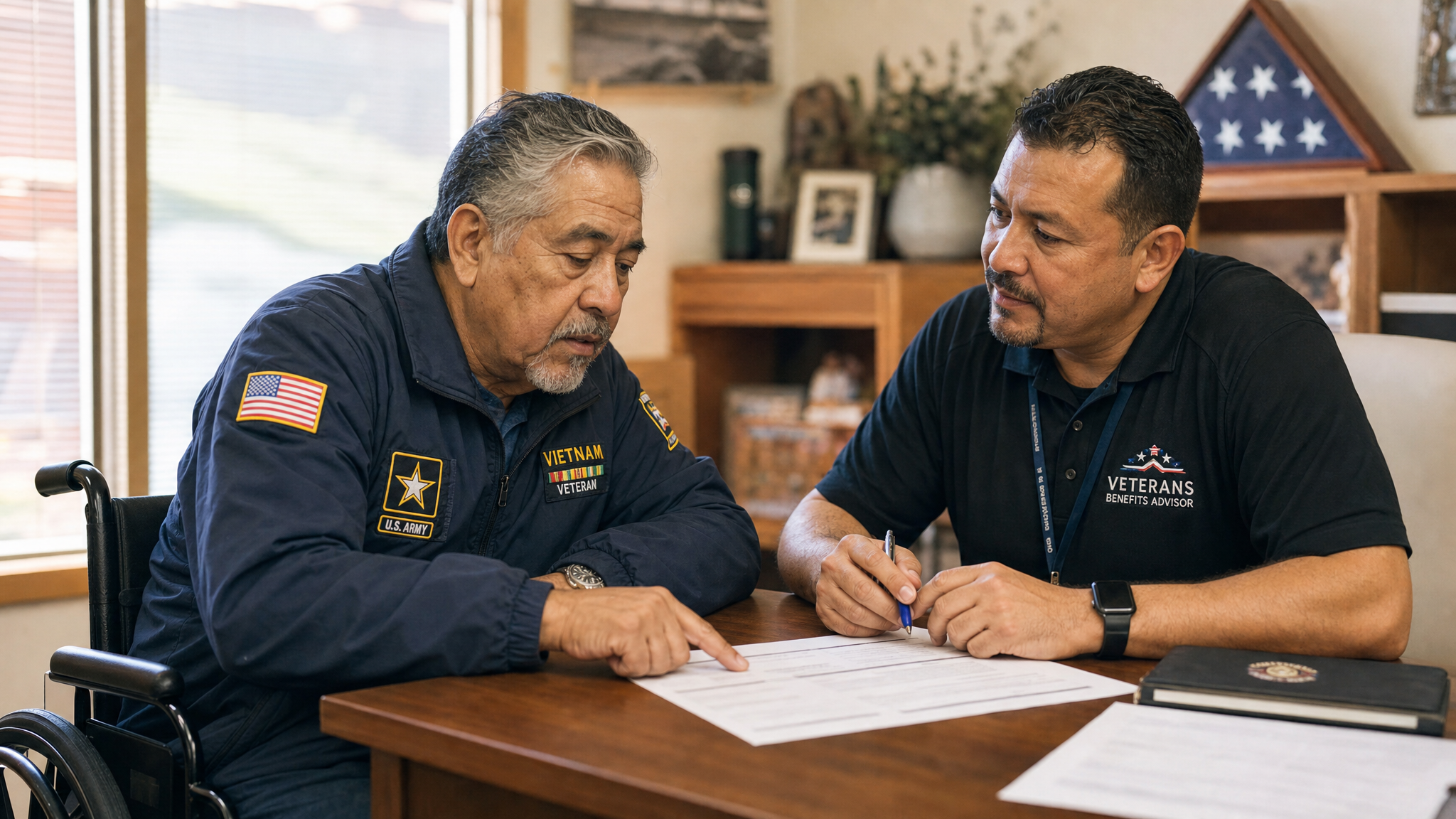






















Free information — get a free benefit review
Tell us how to reach you and an accredited team member will help you understand this benefit and claim everything you have earned. No cost, no obligation.
Ready to hire us? Register with us
For veterans who’ve decided they want us on their claim — registering is free too, and it does not make you our client or obligate you to anything. Here is exactly how it works:
- You register. This simply starts the conversation — you are not our client yet, and you owe us nothing.
- You sign and return VA Form 21-22a. It appoints us as your accredited representative and gives us access to your VA file.
- Once we have your signed 21-22a and access to your case, we verify everything is in order.
It involves the registration form and signing VA Form 21-22a — by law we can’t accept your claim, work on it, or contact the VA for you until that power of attorney is signed. You decide whether to move forward.
Answers, in plain language
Common questions about Special Monthly Compensation (SMC)
What is Special Monthly Compensation (SMC)?
Special Monthly Compensation is higher-rate, tax-free money for severe service-connected losses - the loss or loss of use of a limb, blindness or deafness, the need for daily aid and attendance, or being housebound. The VA is supposed to grant it automatically, but often does not - so it is one of the biggest sources of money veterans are owed and never receive.
Who qualifies for Special Monthly Compensation (SMC)?
This benefit is generally for: Veteran. Extra monthly money on top of your regular disability compensation Loss or loss of use of a hand, foot, or reproductive organ (SMC-K add-on)
How do I apply for Special Monthly Compensation (SMC)?
You do not need a special form - SMC should be considered as part of any disability claim. In practice, spell it out: file or add to a claim (VA Form 21-526EZ) and submit medical evidence, and use VA Form 21-2680 when Aid & Attendance or housebound status is involved. If you already have the underlying ratings, ask the VA to review your file for SMC - it is often sitting there unclaimed.
What does it cost to get help with Special Monthly Compensation (SMC), and are you VA-accredited?
This is the single most overlooked benefit we see. The VA does not always award SMC even when a veteran’s own records clearly support it, and the rules (38 CFR 3.350) are dense. It is worth having a knowledgeable set of eyes review your ratings. It is free to talk with us, and no one may charge you to file a first-time VA claim. The Aging Veteran is led by Albert L. Thombs Jr., a VA-accredited claims agent (accreditation #45147) and disabled veteran; any appeal work is handled on a no-fee-unless-you-win basis. We are an independent accredited practice and are not affiliated with, or endorsed by, the U.S. Department of Veterans Affairs.