
Veteran Benefits
Secondary Service Connection
A secondary service-connected condition is a health problem that grew out of a disability the VA already pays you for. Because the original condition is service-connected, the new one can be too - even though it did not begin in the military. For aging veterans whose conditions have branched and worsened over decades, this is one of the most common ways to raise a rating that is being left on the table.

Who this is for
If you have carried a service-connected condition for years, chances are it has not stayed still. The bad knee that wore out your hip, the diabetes that dulled the feeling in your feet, the medication that stole your sleep - these downstream problems can be service-connected too, and paid on top of what you already receive.
In plain language
What Secondary Service Connection covers
- New conditions caused by an existing service-connected disability
- Conditions your service-connected disability made worse (aggravation)
- Side effects of medication you take for a service-connected condition
- Mental-health conditions that grow out of chronic service-connected pain or illness

Secondary Service Connection ExplainedOfficial video - VA Claims Insider
5 things most veterans aren't aware of
These apply to nearly every VA claim - and they change how much you get and when.
Your filing date sets your back pay
Benefits are generally paid back to the day you file - not the day you are approved. Filing an intent to file today can protect months, even years, of retroactive pay.
One condition can trigger others (secondary claims)
A service-connected condition that causes another - like sleep apnea from PTSD, or a bad knee from a bad hip - can be rated on its own. Each secondary condition adds to your rating.
A medical nexus is what wins the claim
The VA needs a documented link between your condition and your service. A clear nexus opinion is often the difference between an approval and a denial.
Accredited help is free to file an initial claim
By law, an accredited agent cannot charge a fee to prepare and file your original claim. If someone asks for money up front to file, that is a red flag.
A denial is not the end of the road
You have three appeal lanes - Higher-Level Review, a Supplemental Claim with new evidence, and the Board of Veterans Appeals. Many denials are overturned on review.
38 CFR 3.310
The rule that lets one service-connected condition make another one service-connected
Cause OR worsen
You can claim a condition your disability caused - or one it made permanently worse
1 nexus letter
A doctor's opinion linking the two is what wins or loses the claim
The full picture
Everything you need to know
Nothing hidden behind a click, and nothing you have to go looking for on another website. Here is the whole story in plain language - the facts and the figures first - so you can decide what fits your situation.
Key facts & current figures
- A secondary condition is a new problem caused or made worse by a disability the VA already recognizes - and it can be rated and paid just like the original (38 CFR 3.310).
- You do not have to prove the secondary condition started in service - only that your service-connected condition led to it or aggravated it.
- Classic chains: diabetes leading to neuropathy, kidney disease, or eye damage; a bad knee changing your gait and wearing out your hip, back, or other knee; PTSD medication causing weight gain, sleep apnea, or GERD.
- The link is proven with a medical "nexus" opinion - a doctor stating it is *at least as likely as not* that condition A caused condition B.
General figures, current as of December 2025 and reviewed each year. Your exact amount depends on your situation - always confirm on va.gov.
What "secondary" really means
- Your body does not keep conditions in tidy boxes. A disability the VA already recognizes can set off a chain reaction - and the law lets those downstream problems be service-connected too.
- Under 38 CFR 3.310, a condition is secondary when it is "proximately due to or the result of" a service-connected disability, or when a service-connected disability makes a separate condition permanently worse.
- You do not have to show the secondary condition started in service. That is what makes it different from - and often easier than - a brand-new direct claim.
Common chains we see in older veterans
- Diabetes (service-connected, often from Agent Orange) leading to peripheral neuropathy, chronic kidney disease, retinopathy, or heart disease.
- A service-connected knee, ankle, or foot injury that changes how you walk and slowly wears out the other knee, a hip, or your lower back.
- PTSD or depression driving high blood pressure, sleep apnea, or GERD - sometimes from the condition itself, sometimes from the medication used to treat it.
- Amputations or loss of use causing overuse injuries in the limbs that carry the extra load.
Aggravation counts too
- You can be paid even if your service-connected condition did not *cause* the new problem, as long as it made an existing one measurably worse.
- In an aggravation claim the VA rates the amount of additional disability - the extra harm on top of the condition's normal baseline.
- This matters for older veterans whose non-service conditions (like arthritis) are being pushed along faster by a service-connected injury.
Why the nexus letter is everything
- A secondary claim stands on one sentence: a medical professional stating it is "at least as likely as not" that your service-connected condition caused or aggravated the new one.
- Without that opinion, the VA treats the two conditions as unrelated and denies the link - even when the connection is obvious to any physician.
- A strong nexus letter explains the medical *reasoning*, not just the conclusion. Getting it right before you file saves months of appeals.
Your complete benefit picture
Paid on top
A secondary condition is rated and paid just like the original - stacking onto the compensation you already receive and often raising your combined rating. Confirm details on va.gov.
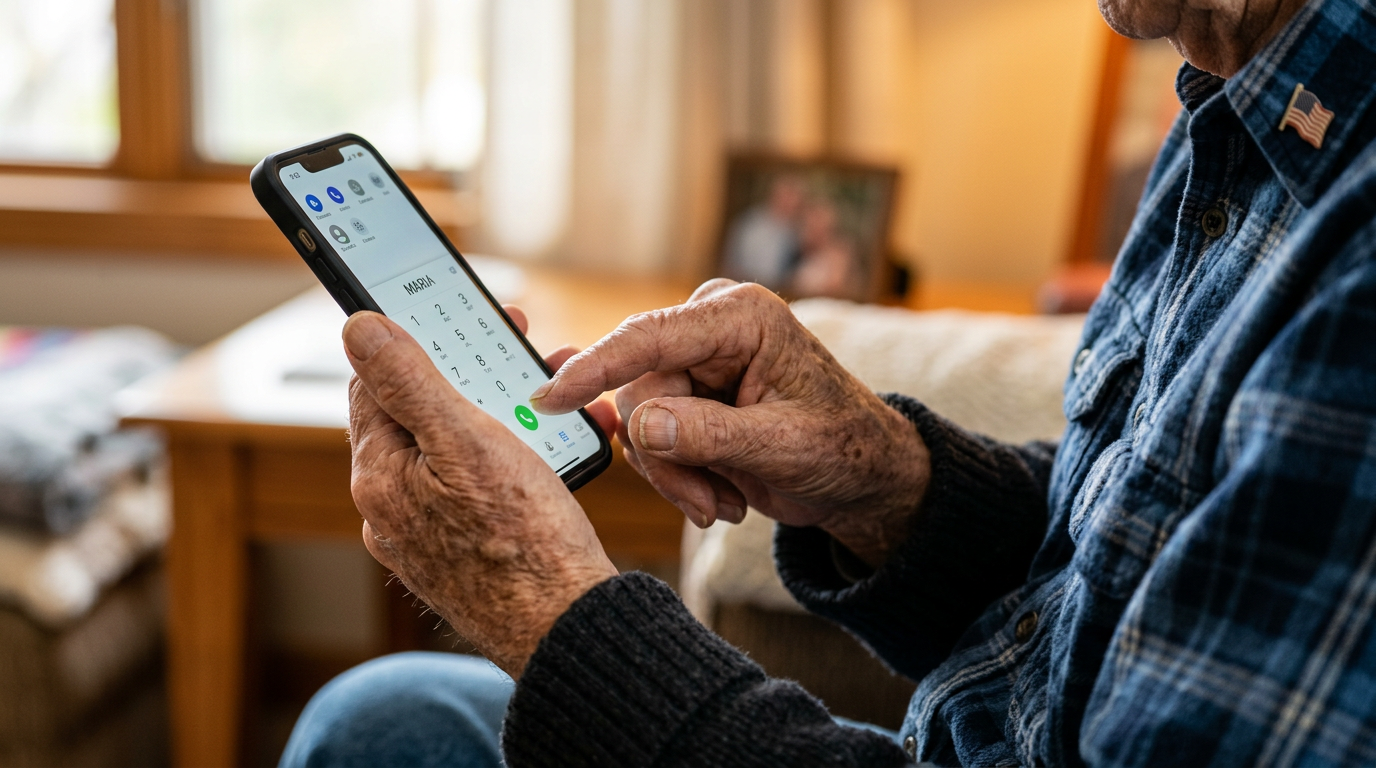
Two ways to move forward — both free
Not sure if this applies to you?
Ask our free assistant a few plain questions and get an honest read on what you and your family may qualify for, at no cost. It takes just a few minutes, and there is no sign-up and no obligation of any kind. You will get a clear, plain-language picture of where you stand and what might be worth filing. And if you would rather talk to a real person, an accredited agent is only a message away.
Have a question? Get free information
Ask a question, learn what you may be owed, or find out where you stand. Confidential, free, and no obligation to go any further.
Ready to hire us? Register
Decided you want us to work your claim? Registering is free — we match you with an accredited advocate and get you started. We cannot begin until you sign VA Form 21-22a, and fees, if any, are always disclosed up front.
Do not miss this
The VA will not connect the dots for you
Secondary claims are among the most common ways aging veterans raise a rating - and among the most commonly missed, because no one automatically links a new problem back to an old service-connected one.
If a condition you are already paid for has led to something new, say so plainly and back it with a medical opinion.
Follow the chain
Diabetes to neuropathy, a bad knee to a worn-out hip, PTSD medication to sleep apnea - map how one led to the next.
Aggravation counts
Even if your condition did not cause the new problem, you can be paid if it made it measurably worse.
A clear path forward
Your step-by-step action plan
No rush and no pressure - but a little order helps. Applying is always free.
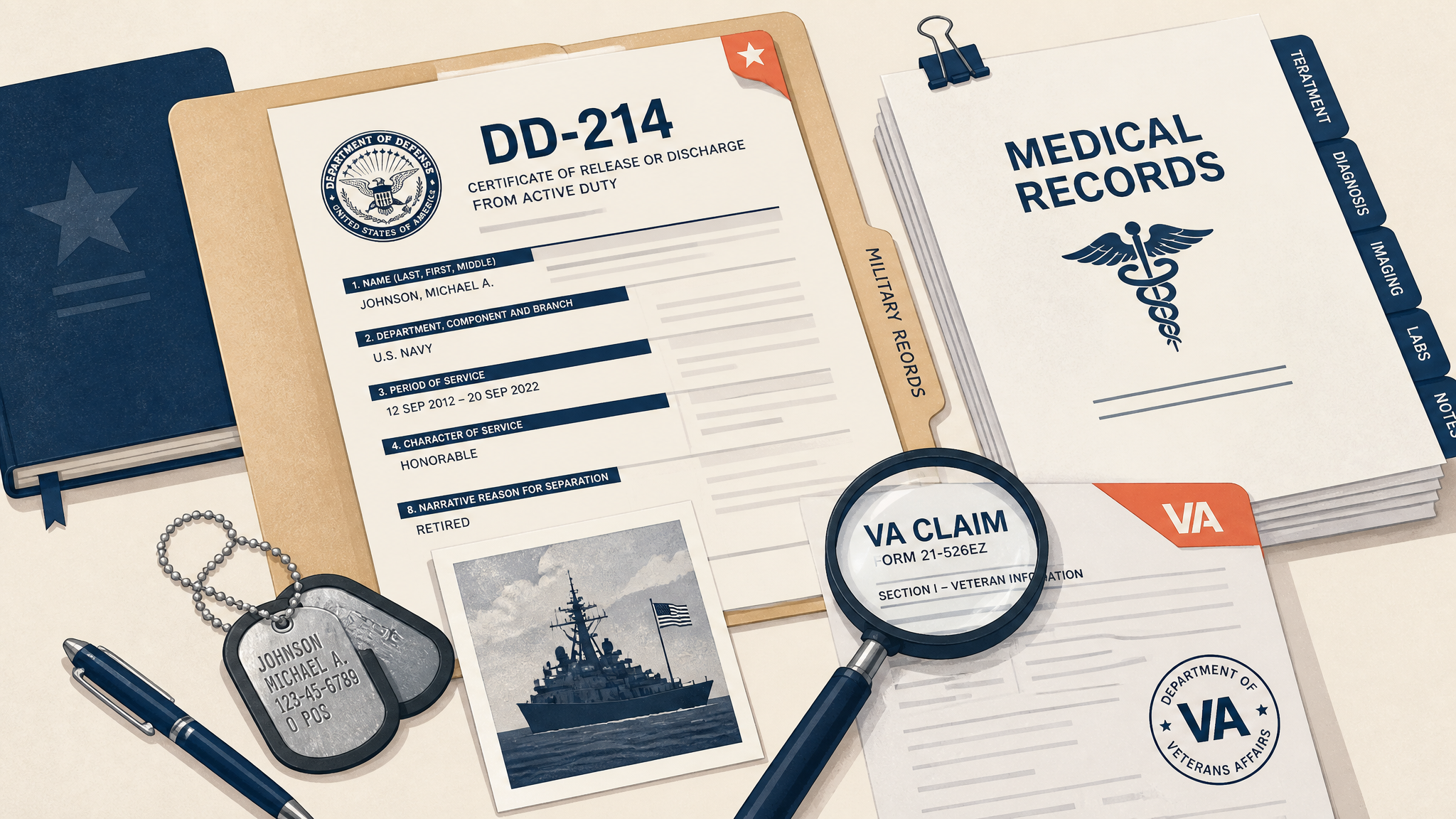
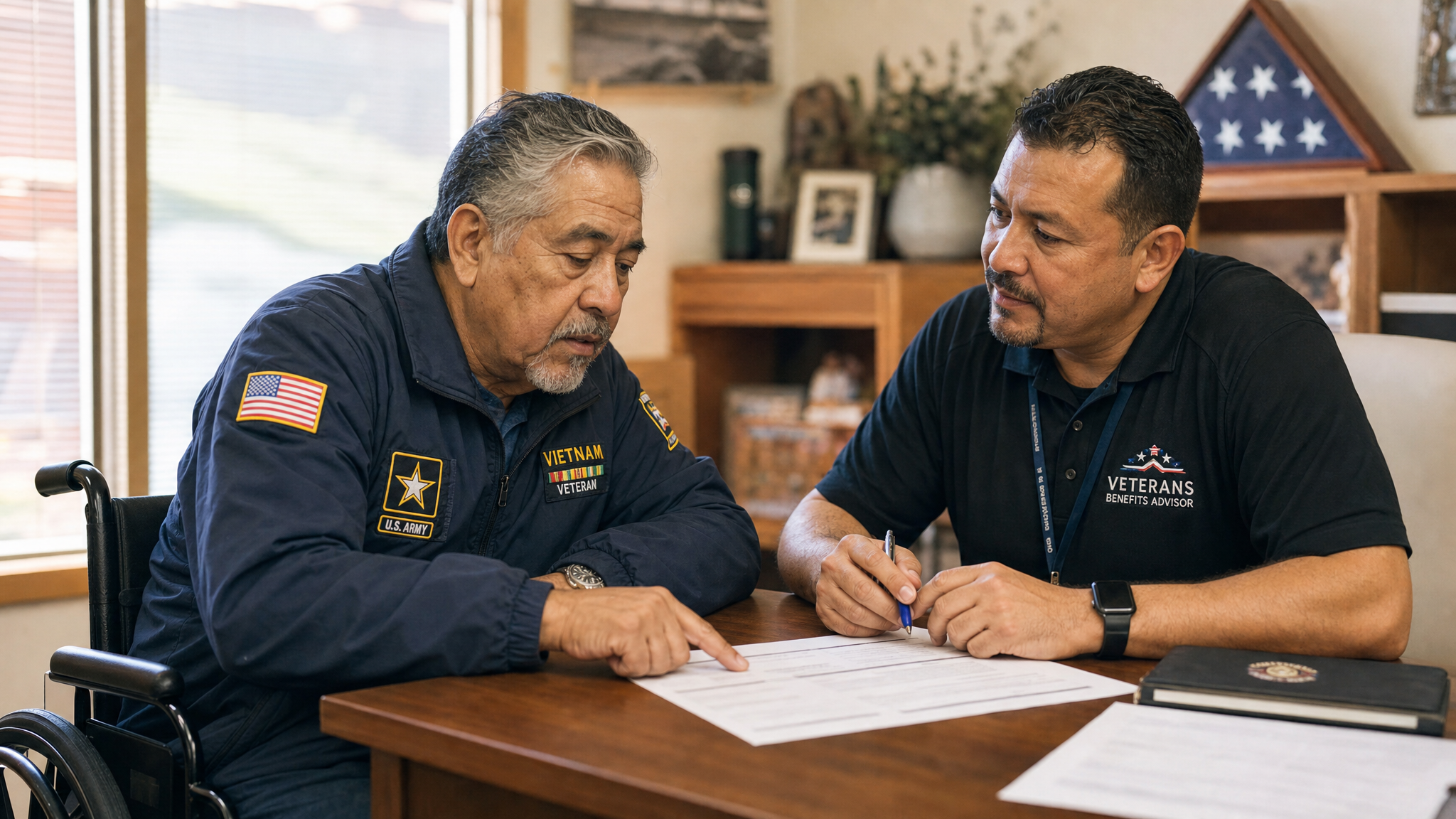
FIG. 01 - Gather your paperwork
First
List the chain
Write down each service-connected condition and the newer problems you believe grew out of it.
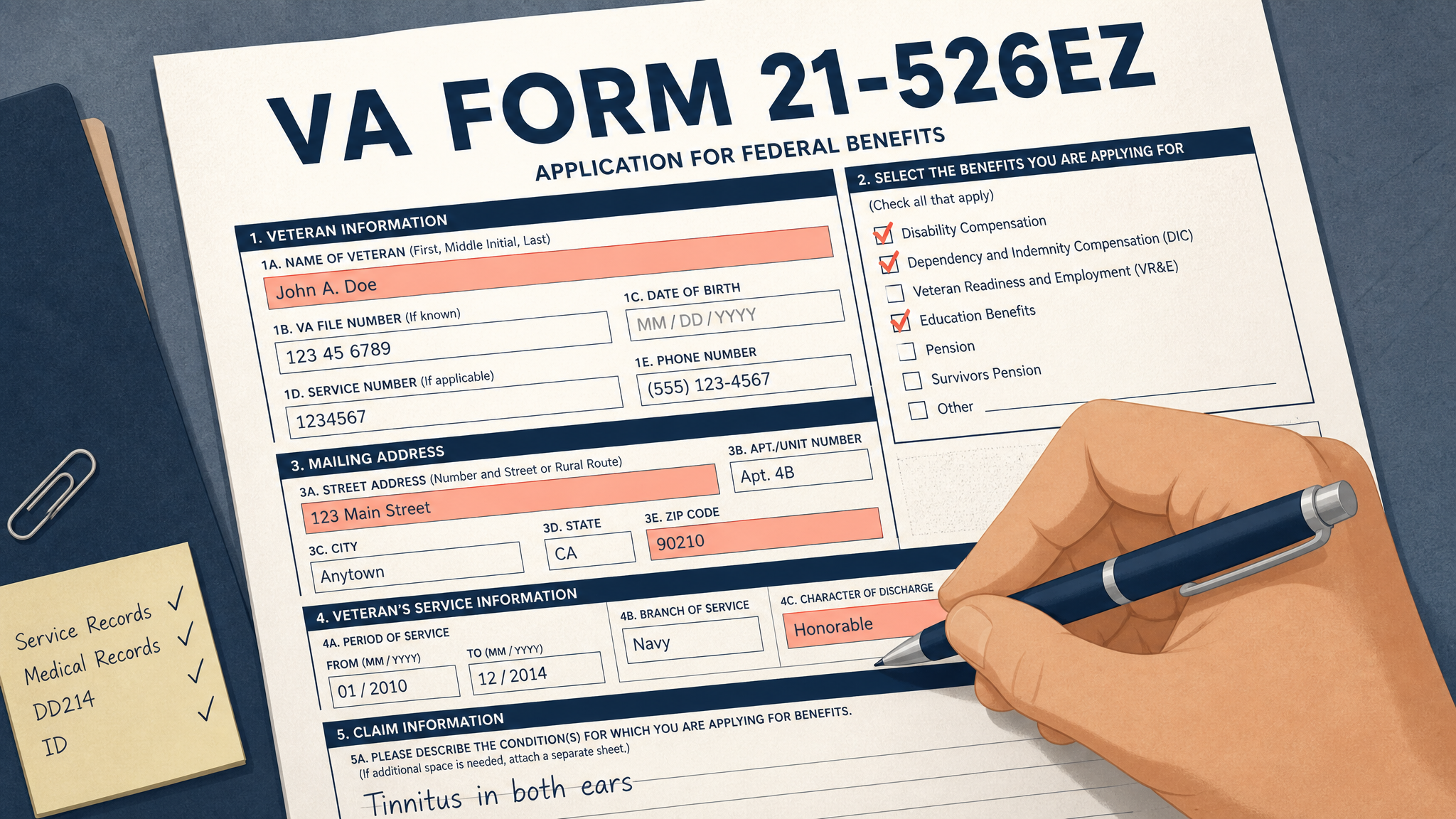
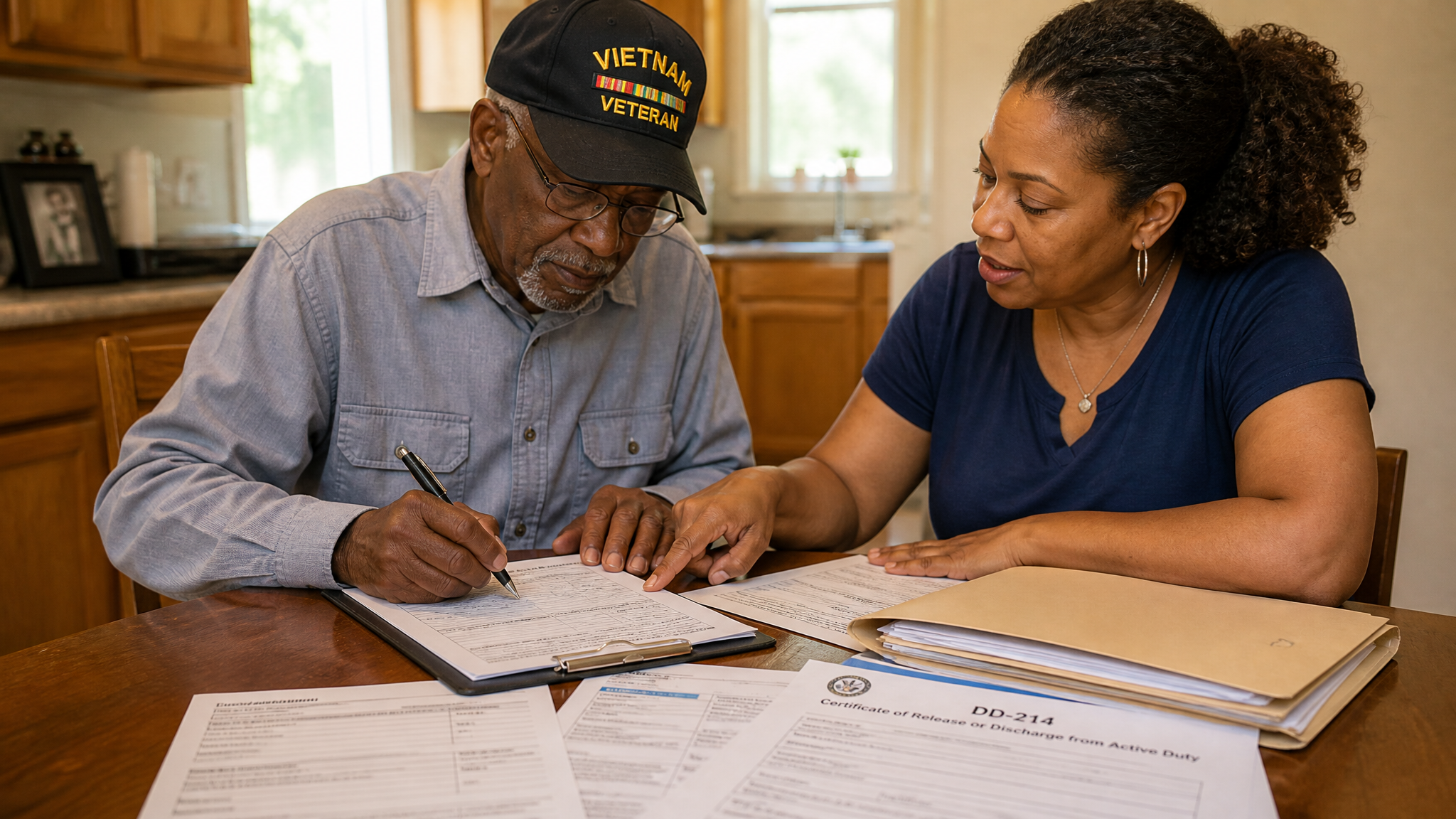
FIG. 02 - Fill out the form
Get the opinion
Ask a doctor for a nexus letter
You need a statement that it is at least as likely as not that condition A caused or worsened condition B.

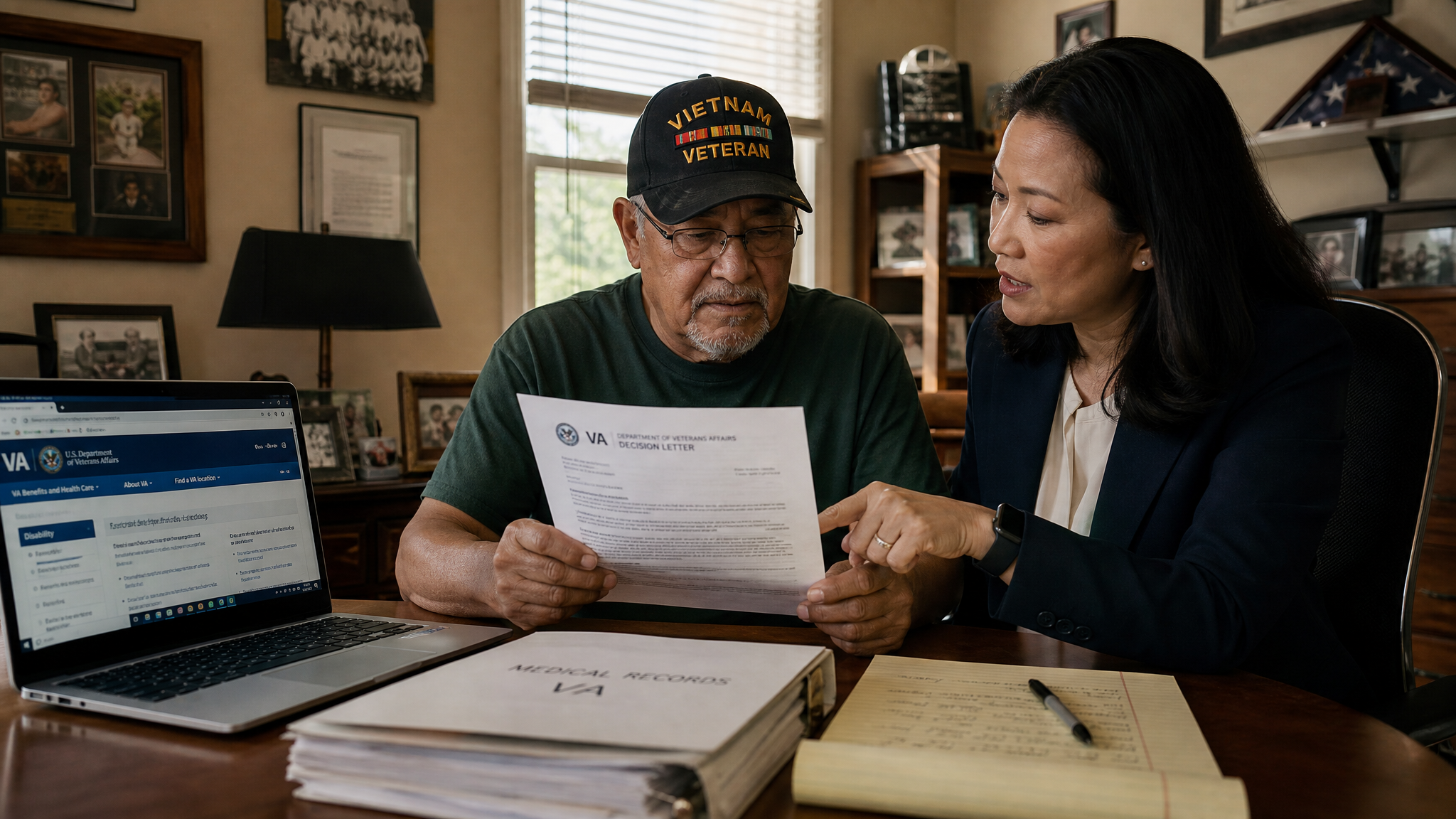
FIG. 03 - File the claim
File it
Add it on VA Form 21-526EZ
Name each secondary condition and attach the medical evidence linking it to your service-connected disability.
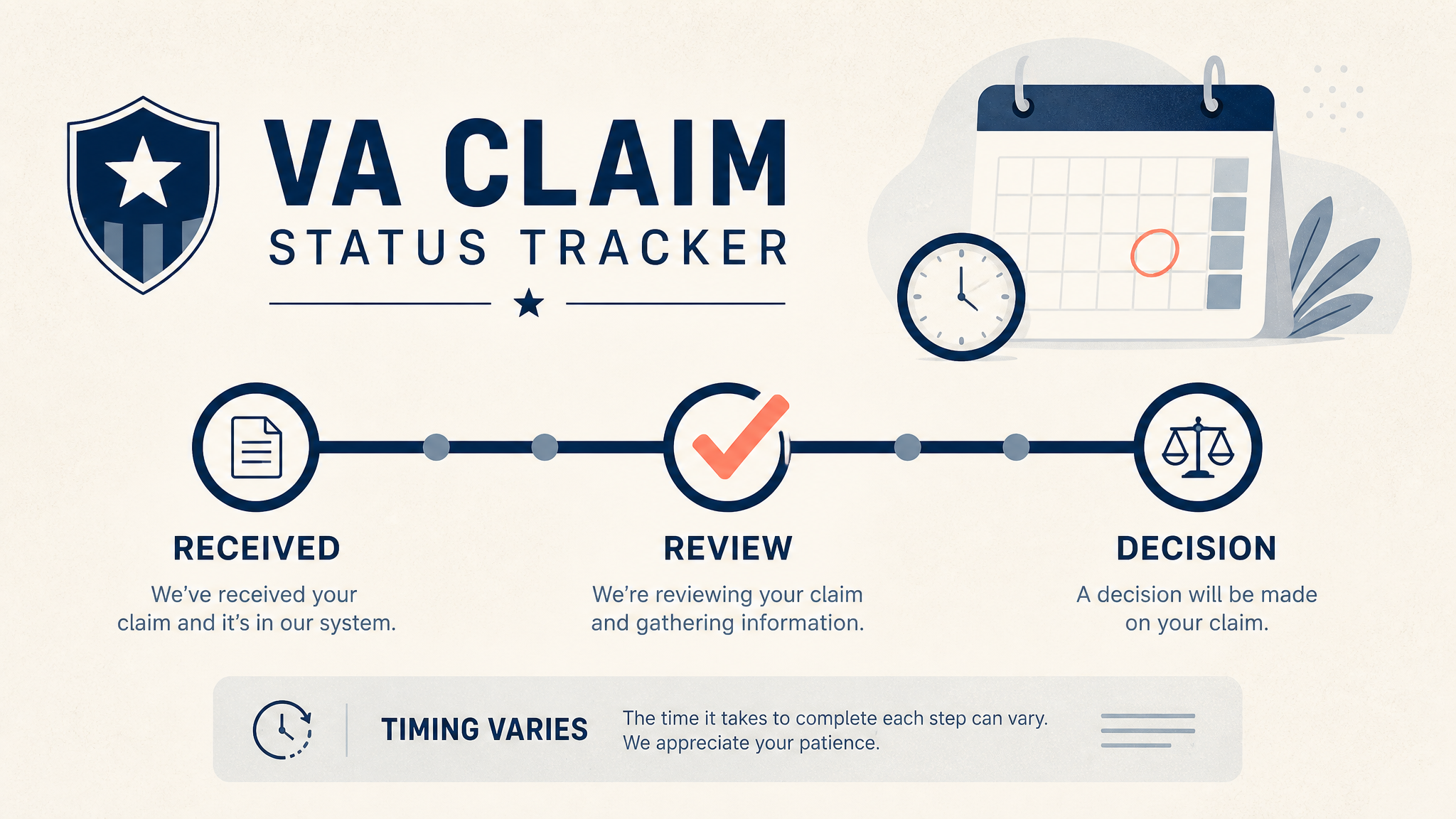
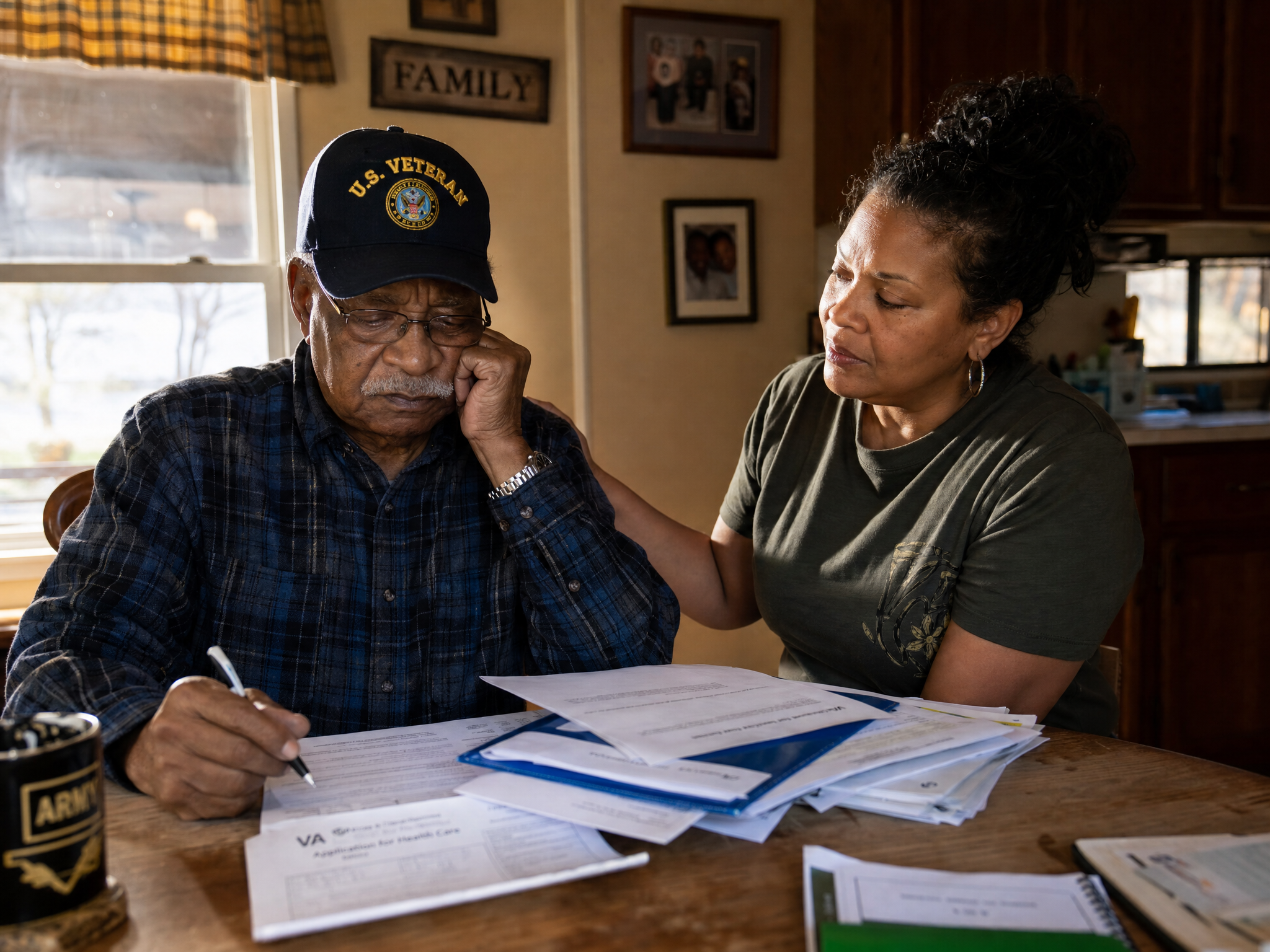
FIG. 04 - After you file
Get a review
Have the links checked
A knowledgeable review often spots secondary conditions a veteran did not realize were claimable.
Who to call & where to go
These are free, official VA lines. Have your Social Security number handy when you call.
VA Benefits Hotline
Compensation, pension, and general claim questions.
MyVA411 - Main VA Line
Not sure who to call? Start here. One number for anything VA - they route you to the right office.
Rather have us handle it?
No phone tag, no hold music. Call our office and a real, VA-accredited person walks you through it - start to finish.
702-992-4883Not sure where to start?
File it as part of a disability claim on VA Form 21-526EZ and name the secondary condition plainly. The key piece is medical evidence connecting the two - a "nexus" letter from a doctor explaining that your service-connected condition caused or worsened the new one. List every condition you believe is connected; do not assume the VA will spot the link on its own.
More benefits for veterans
These often go hand in hand - tap any card to learn more.



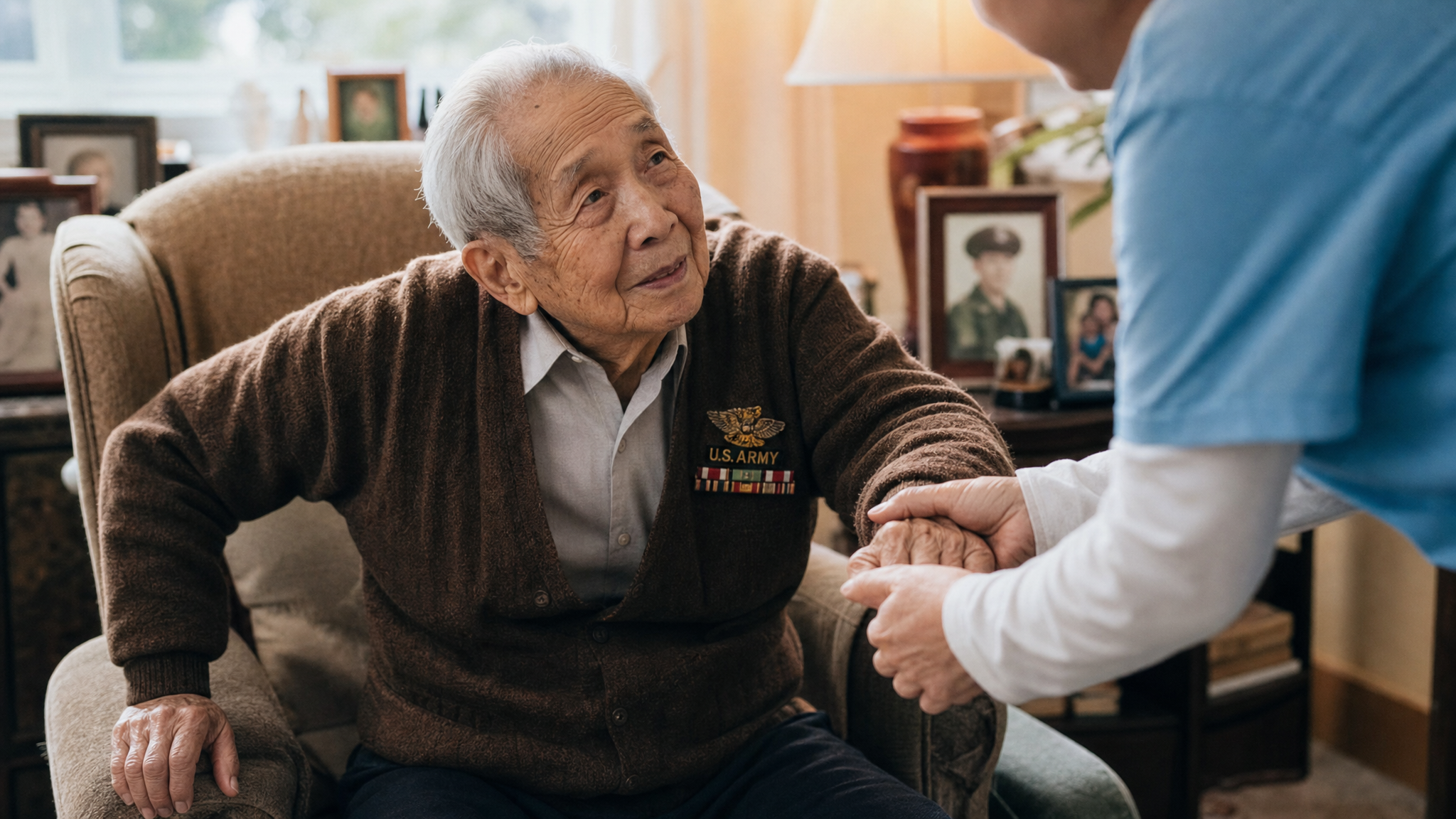
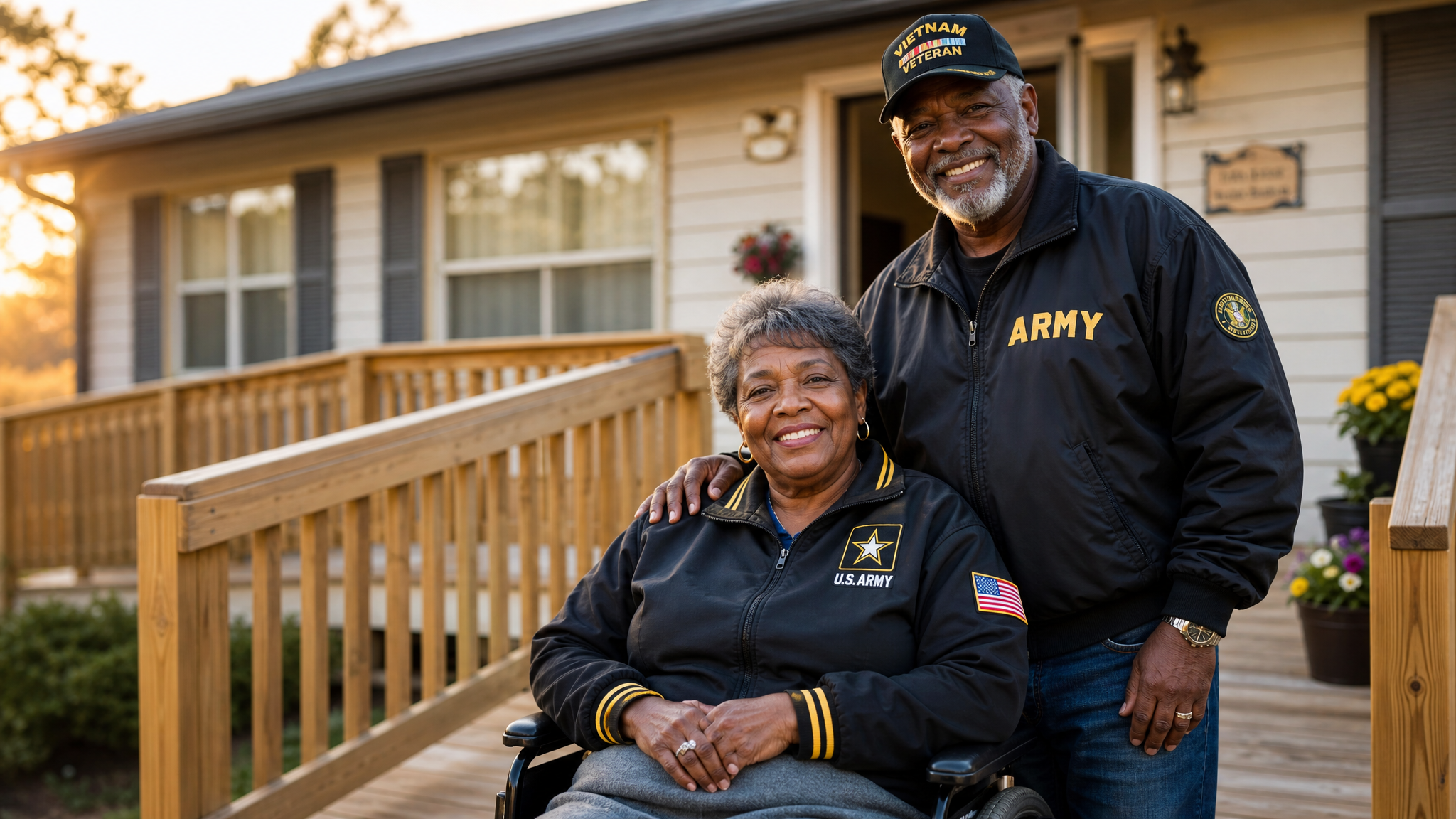


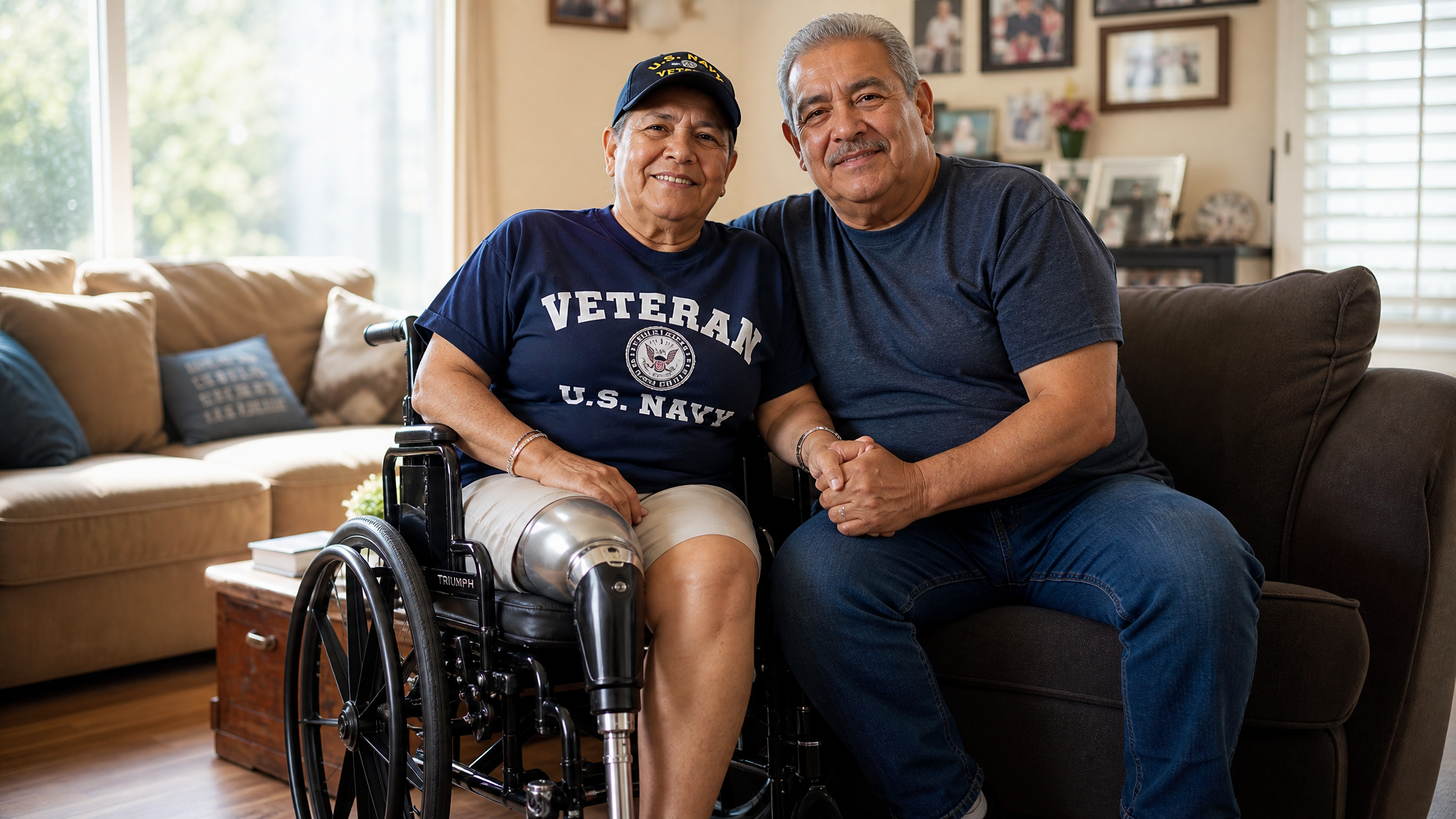


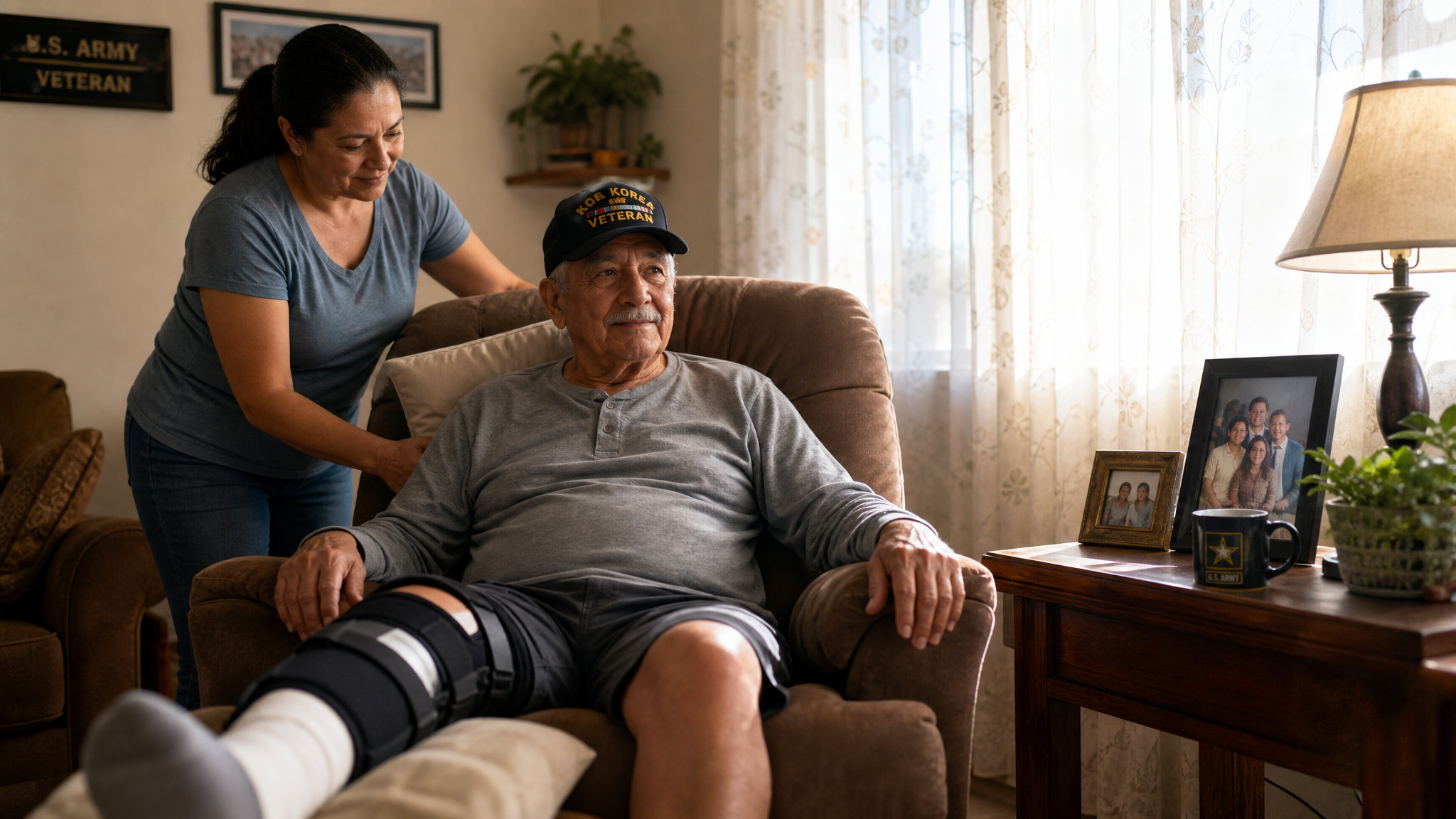











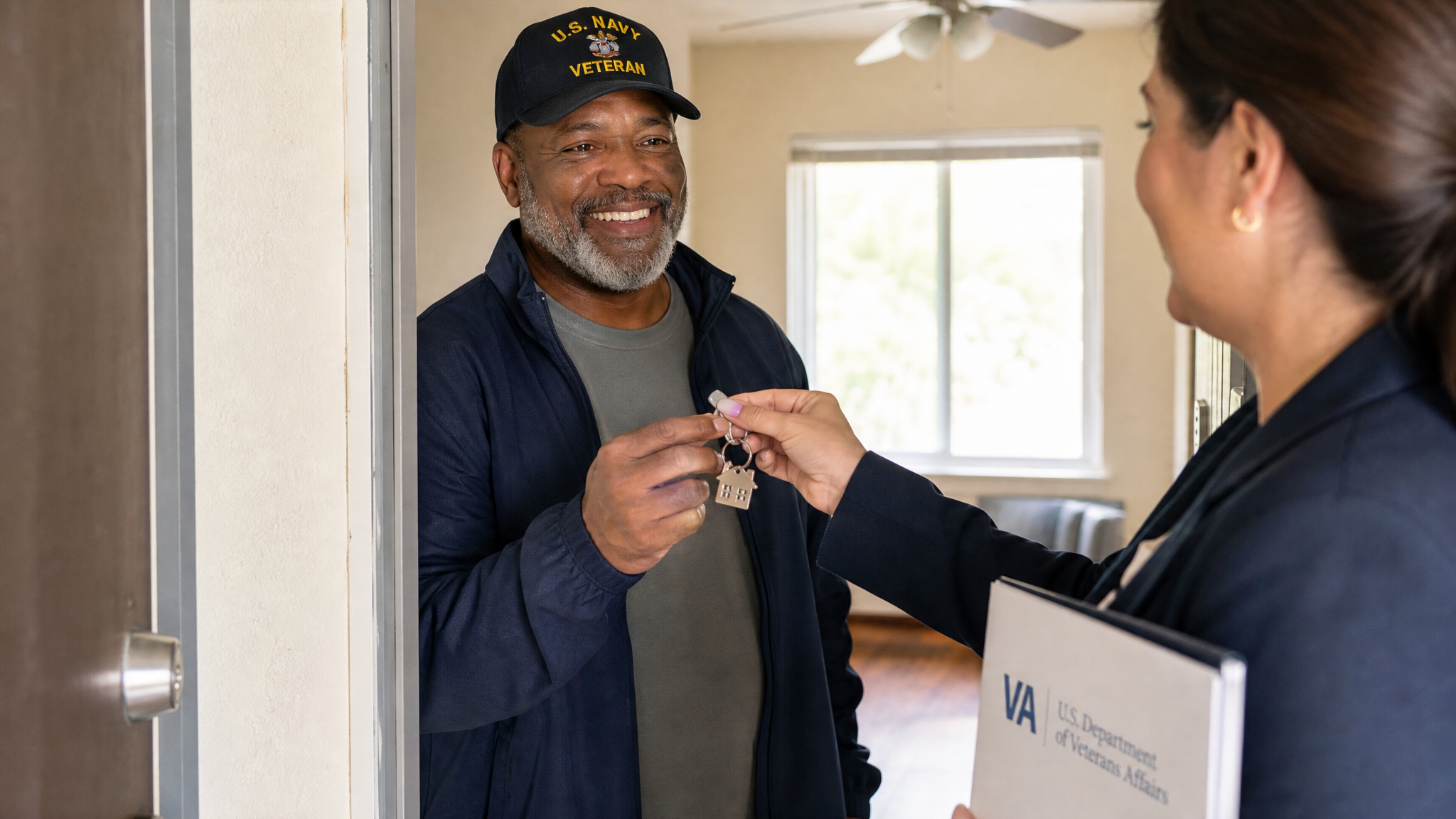





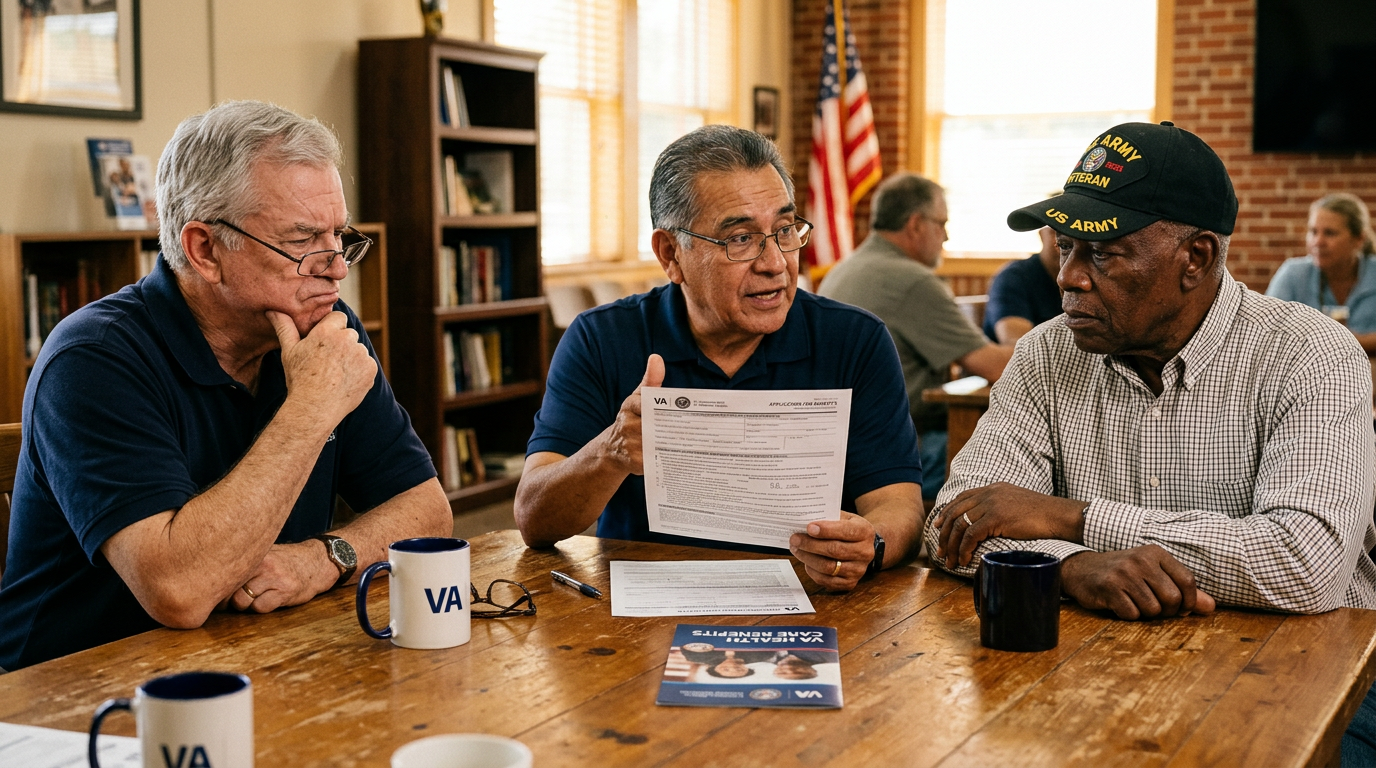



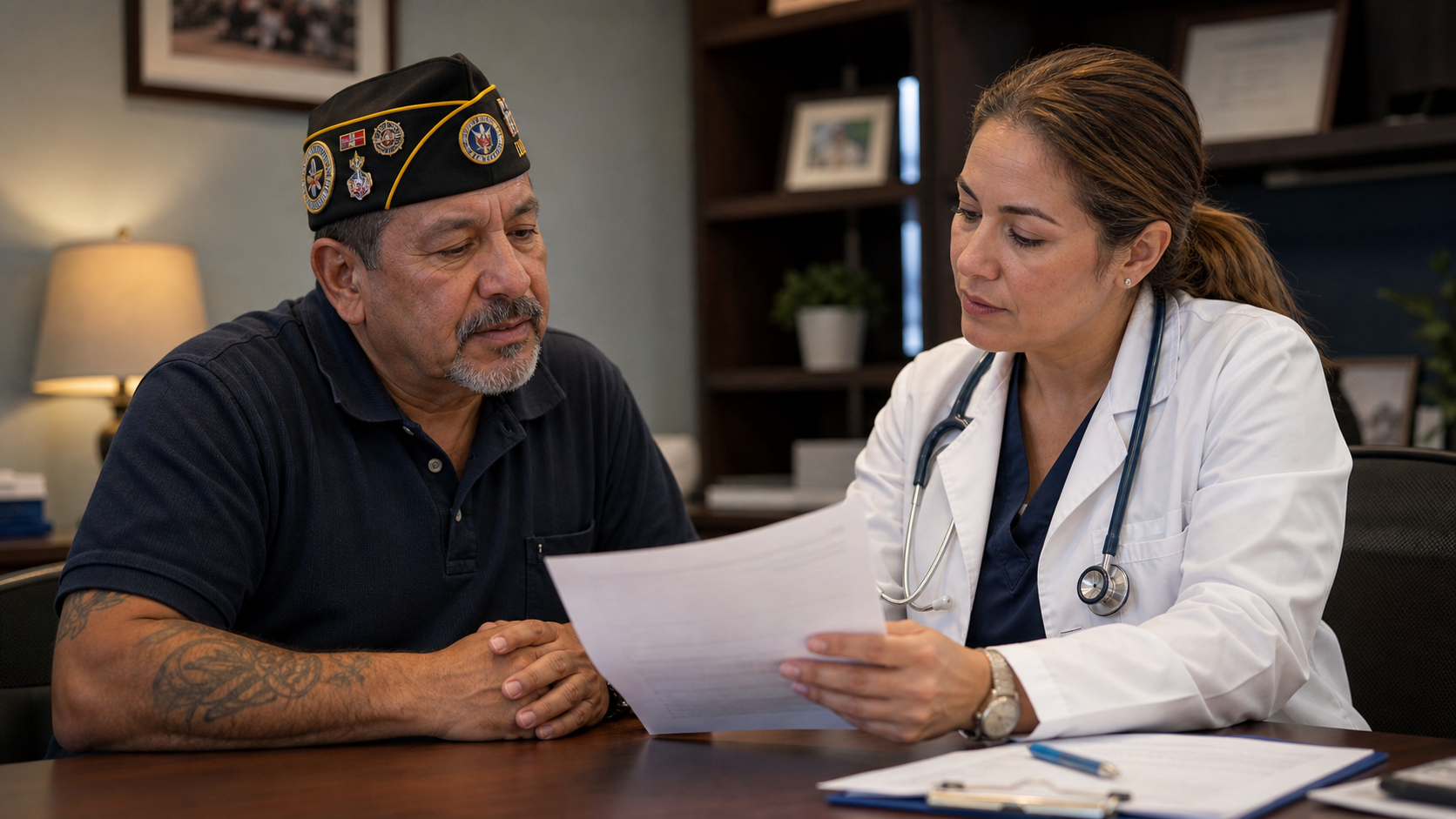



Free information — get a free benefit review
Tell us how to reach you and an accredited team member will help you understand this benefit and claim everything you have earned. No cost, no obligation.
Ready to hire us? Register with us
For veterans who’ve decided they want us on their claim — registering is free too, and it does not make you our client or obligate you to anything. Here is exactly how it works:
- You register. This simply starts the conversation — you are not our client yet, and you owe us nothing.
- You sign and return VA Form 21-22a. It appoints us as your accredited representative and gives us access to your VA file.
- Once we have your signed 21-22a and access to your case, we verify everything is in order.
It involves the registration form and signing VA Form 21-22a — by law we can’t accept your claim, work on it, or contact the VA for you until that power of attorney is signed. You decide whether to move forward.
Answers, in plain language
Common questions about Secondary Service Connection
What is Secondary Service Connection?
A secondary service-connected condition is a health problem that grew out of a disability the VA already pays you for. Because the original condition is service-connected, the new one can be too - even though it did not begin in the military. For aging veterans whose conditions have branched and worsened over decades, this is one of the most common ways to raise a rating that is being left on the table.
Who qualifies for Secondary Service Connection?
This benefit is generally for: Veteran. New conditions caused by an existing service-connected disability Conditions your service-connected disability made worse (aggravation)
How do I apply for Secondary Service Connection?
File it as part of a disability claim on VA Form 21-526EZ and name the secondary condition plainly. The key piece is medical evidence connecting the two - a "nexus" letter from a doctor explaining that your service-connected condition caused or worsened the new one. List every condition you believe is connected; do not assume the VA will spot the link on its own.
What does it cost to get help with Secondary Service Connection, and are you VA-accredited?
The VA will not go looking for these connections for you. Secondary claims live or die on the nexus opinion, and a weak or missing one is the usual reason they are denied. It is worth having someone map out the chain from your service-connected condition to the new problem before you file. It is free to talk with us, and no one may charge you to file a first-time VA claim. The Aging Veteran is led by Albert L. Thombs Jr., a VA-accredited claims agent (accreditation #45147) and disabled veteran; any appeal work is handled on a no-fee-unless-you-win basis. We are an independent accredited practice and are not affiliated with, or endorsed by, the U.S. Department of Veterans Affairs.