
Veteran Benefits
Disability Benefits Questionnaires (DBQs): The VA Forms That Define Your Rating
This guide explains what DBQs are, how they work, which ones cover your condition, why the VA may still schedule a C&P exam even after you submit one, and how combining a DBQ with a nexus letter builds the strongest possible case.

Who this is for
A Disability Benefits Questionnaire is the standardized form the VA uses to document your medical condition. Your private doctor can fill one out, you can review one before your C&P exam, and the specific questions on the form directly shape the rating you receive.
In plain language
What Disability Benefits Questionnaires (DBQs): The VA Forms That Define Your Rating covers
- What a DBQ is and how the VA uses it in the rating process
- How to download the right DBQ for your condition
- Why reviewing a DBQ before your C&P exam gives you an advantage
- When the VA rejects a private DBQ and schedules its own exam
- Combining a DBQ with a nexus letter for maximum impact
- The complete library of downloadable DBQs by body system

The full picture
Everything you need to know
Nothing hidden behind a click, and nothing you have to go looking for on another website. Here is the whole story in plain language - the facts and the figures first - so you can decide what fits your situation.
Key facts & current figures
- DBQs are standardized VA forms tailored to specific medical conditions -- each one captures the diagnosis, medical history, symptoms, severity, and impact on daily life that the VA needs to rate your claim.
- You can download the appropriate DBQ from the VA website and take it to your private healthcare provider to fill out -- the VA does not reimburse the cost of a private DBQ.
- Even when you submit a completed private DBQ, the VA may still require a Compensation & Pension (C&P) exam to verify the findings and gather additional information.
- Reviewing the DBQ for your condition before your C&P exam lets you see the exact questions the examiner will answer -- so you know what symptoms and limitations to report.
- Combining a DBQ with a nexus letter creates the strongest evidence package: the DBQ documents severity and the nexus letter connects the condition to service.
General figures, current as of December 2025 and reviewed each year. Your exact amount depends on your situation - always confirm on va.gov.
What a DBQ is and how the VA uses it
- A Disability Benefits Questionnaire is a standardized form developed by the VA to collect medical information for evaluating disability claims.
- Each DBQ is tailored to a specific condition or body system -- there are separate forms for knees, backs, PTSD, heart conditions, skin diseases, and dozens more.
- The form includes sections for diagnosis, medical history, current symptoms, severity measurements, and functional impact on daily activities and work.
- When a veteran submits a private DBQ, the VA uses it the same way it uses a C&P exam report -- as medical evidence in the rating decision.
- DBQs ensure that all claims for the same condition are evaluated using the same criteria, making the process more consistent and transparent.
Using a DBQ with your private doctor
- Download the DBQ for your specific condition from the VA website. Bring it to your private healthcare provider and ask them to complete it.
- Your doctor will fill in the clinical findings, test results, and functional assessments that the VA needs -- this puts the evidence in VA language the rater can immediately use.
- The VA does not reimburse the cost of having a private provider complete a DBQ. Fees vary by provider and complexity.
- A private DBQ is most effective when your doctor has a long treatment history with you -- it shows the VA that the opinions are based on ongoing care, not a one-time visit.
- If your doctor is unfamiliar with DBQs, show them the form in advance. The instructions are straightforward, and most providers can complete one in a standard appointment.
Why the VA may still schedule a C&P exam
- The VA has the authority to order its own examination even when you submit a completed private DBQ. This is not a rejection of your evidence -- it is the VA verifying the information.
- C&P exams are conducted by VA healthcare professionals trained to assess disabilities using standardized protocols specific to VA benefit evaluations.
- The VA may schedule an exam if the private DBQ is incomplete, if there are discrepancies between the DBQ and your medical records, or if additional testing is needed.
- In some cases, the VA uses the C&P exam to confirm the severity level documented in your private DBQ -- a matching result strengthens your claim significantly.
- Missing a scheduled C&P exam is one of the fastest paths to a denial. If the VA schedules one, attend it regardless of what private evidence you have already submitted.
Combining a DBQ with a nexus letter
- A DBQ documents your current condition and severity. A nexus letter connects that condition to your military service. Together, they cover both requirements the VA needs for a service-connected rating.
- The DBQ gives the rater the clinical facts. The nexus letter gives the rater the medical opinion that ties those facts to service.
- This combination is particularly powerful for conditions that developed years after service -- the nexus letter explains the delay while the DBQ proves the current diagnosis and severity.
- Even with both documents, the VA is the final decision-maker. The C&P examiner may interpret the evidence differently, and the rater weighs all evidence in the file.
- If your private DBQ and nexus letter both come from the same treating physician, the VA gives that package significant weight -- it shows consistent, ongoing care and a credible medical relationship.
Reviewing a DBQ before your C&P exam
- Downloading and reviewing the DBQ for your condition before your exam is one of the smartest preparation steps you can take.
- The C&P examiner will answer the same questions on the DBQ form. By reading it in advance, you know exactly what information the examiner needs from you.
- Pay attention to sections about range of motion, flare-ups, functional limitations, and impact on work -- these directly affect your rating percentage.
- Be cautious interpreting medical terminology on your own. Some DBQ sections are technical and may be confusing without professional training.
- Consider reviewing the DBQ with a VA-accredited claims agent or advocate who can explain which sections matter most for your specific condition and target rating.
The complete DBQ library by body system
- Psychological: Eating Disorders, Mental Disorders (anxiety, depression, bipolar), PTSD Review.
- Musculoskeletal: Amputations, Ankle, Back (Thoracolumbar Spine), Bones, Elbow & Forearm, Foot/Flatfoot, Hand & Finger, Hip & Thigh, Knee & Lower Leg, Muscle Injuries, Neck (Cervical Spine), Osteomyelitis, Shoulder & Arm, TMJ, Wrist.
- ENT (Ear, Nose, Throat): Ear (including Vestibular), Loss of Smell/Taste, Sinusitis/Rhinitis/Larynx/Pharynx.
- Respiratory: General Respiratory Conditions, Sleep Apnea.
- Cardiovascular: Artery & Vein Conditions, Heart Conditions, Hypertension.
- Gastrointestinal: Esophageal, Gallbladder & Pancreas, Hernias, Intestinal (Infectious/Surgical/Other), Liver, Peritoneal Adhesions, Rectum & Anus, Stomach & Duodenum.
- Neurological: ALS, Central Nervous System & Neuromuscular, Cranial Nerve, Diabetic Peripheral Neuropathy, Fibromyalgia, Headaches/Migraines, Multiple Sclerosis, Narcolepsy, Parkinson's, Peripheral Nerves, Seizure Disorders.
- Other Systems: Diabetes Mellitus, Endocrine, Thyroid/Parathyroid, Kidney, Male Reproductive/Prostate, Urinary Tract, Gynecological, Breast, Dental/Oral, Scars, Skin Diseases, Arthritis, Chronic Fatigue Syndrome, Lupus/Autoimmune, HIV-Related, Infectious Diseases, Persian Gulf Infectious Diseases.
Your complete benefit picture
You do not have to sort this out alone
A completed DBQ from your private doctor is helpful, but it is not a guarantee. The VA may still schedule its own exam, and the C&P examiner may reach a different conclusion. The VA is the final decision-maker -- your DBQ is one piece of evidence, not the verdict. That said, a well-documented DBQ combined with consistent medical records and a strong nexus letter gives you the best chance of getting the rating you deserve.
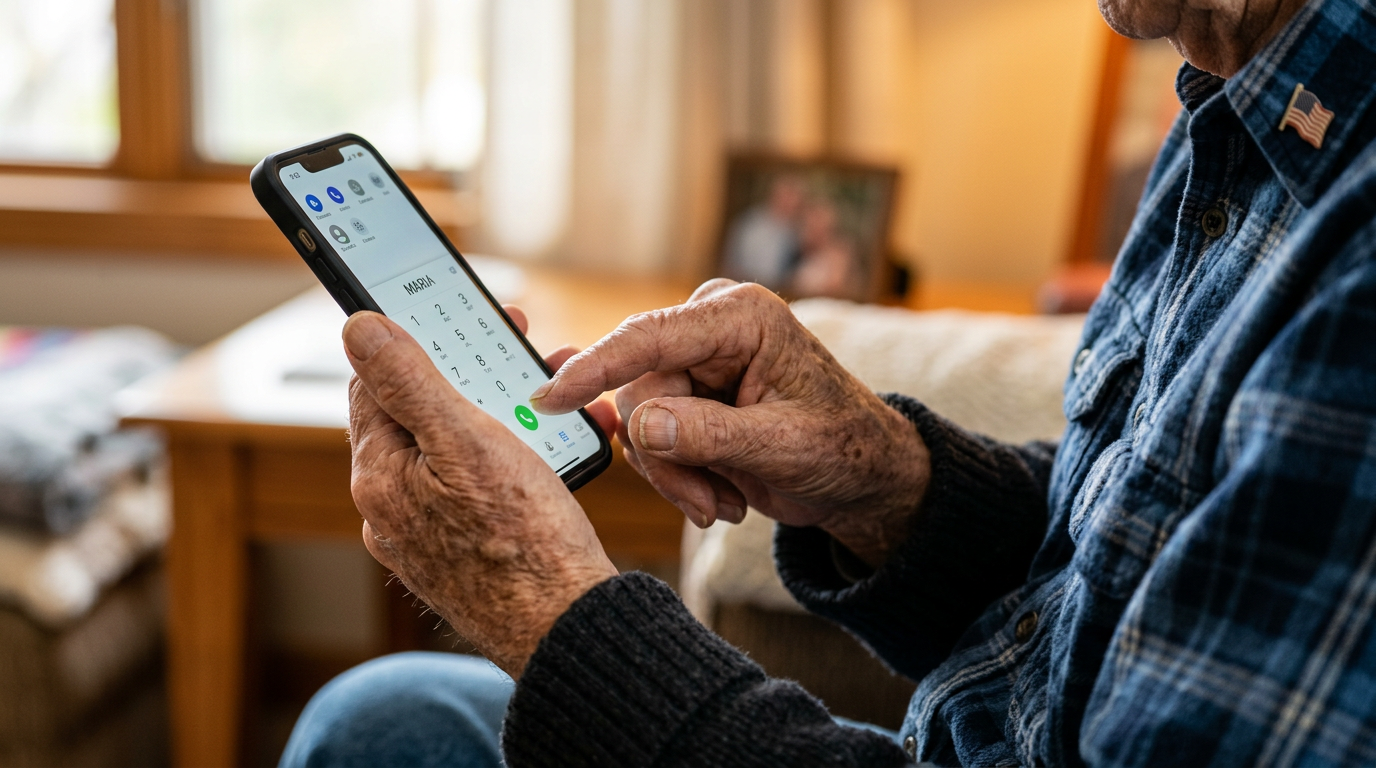
Two ways to move forward — both free
Not sure if this applies to you?
Ask our free assistant a few plain questions and get an honest read on what you and your family may qualify for, at no cost. It takes just a few minutes, and there is no sign-up and no obligation of any kind. You will get a clear, plain-language picture of where you stand and what might be worth filing. And if you would rather talk to a real person, an accredited agent is only a message away.
Have a question? Get free information
Ask a question, learn what you may be owed, or find out where you stand. Confidential, free, and no obligation to go any further.
Ready to hire us? Register
Decided you want us to work your claim? Registering is free — we match you with an accredited advocate and get you started. We cannot begin until you sign VA Form 21-22a, and fees, if any, are always disclosed up front.
Worth knowing
Before you file, keep this in mind
A completed DBQ from your private doctor is helpful, but it is not a guarantee. The VA may still schedule its own exam, and the C&P examiner may reach a different conclusion. The VA is the final decision-maker -- your DBQ is one piece of evidence, not the verdict. That said, a well-documented DBQ combined with consistent medical records and a strong nexus letter gives you the best chance of getting the rating you deserve.
A clear path forward
Your step-by-step action plan
No rush and no pressure - but a little order helps. Applying is always free.
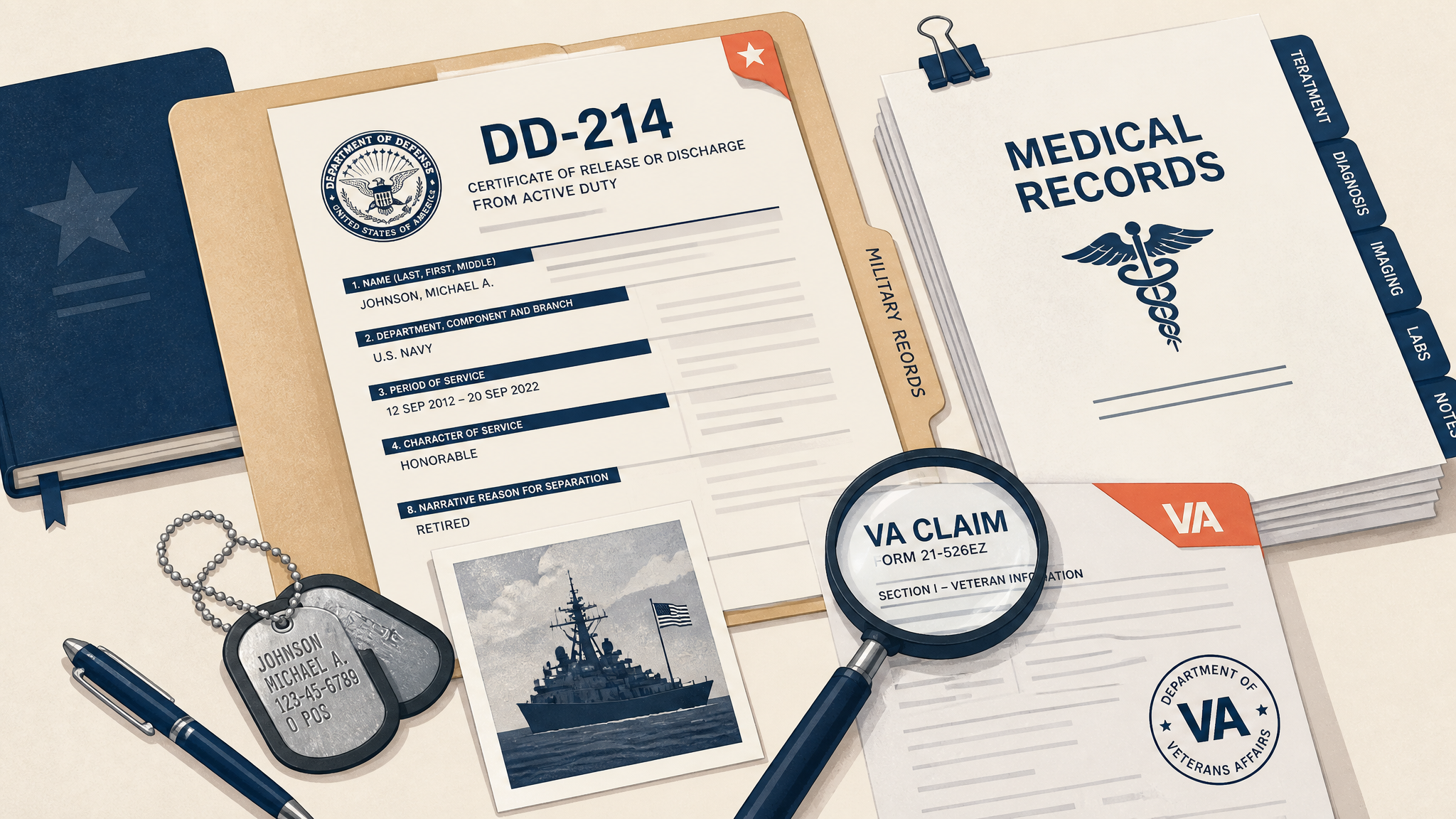
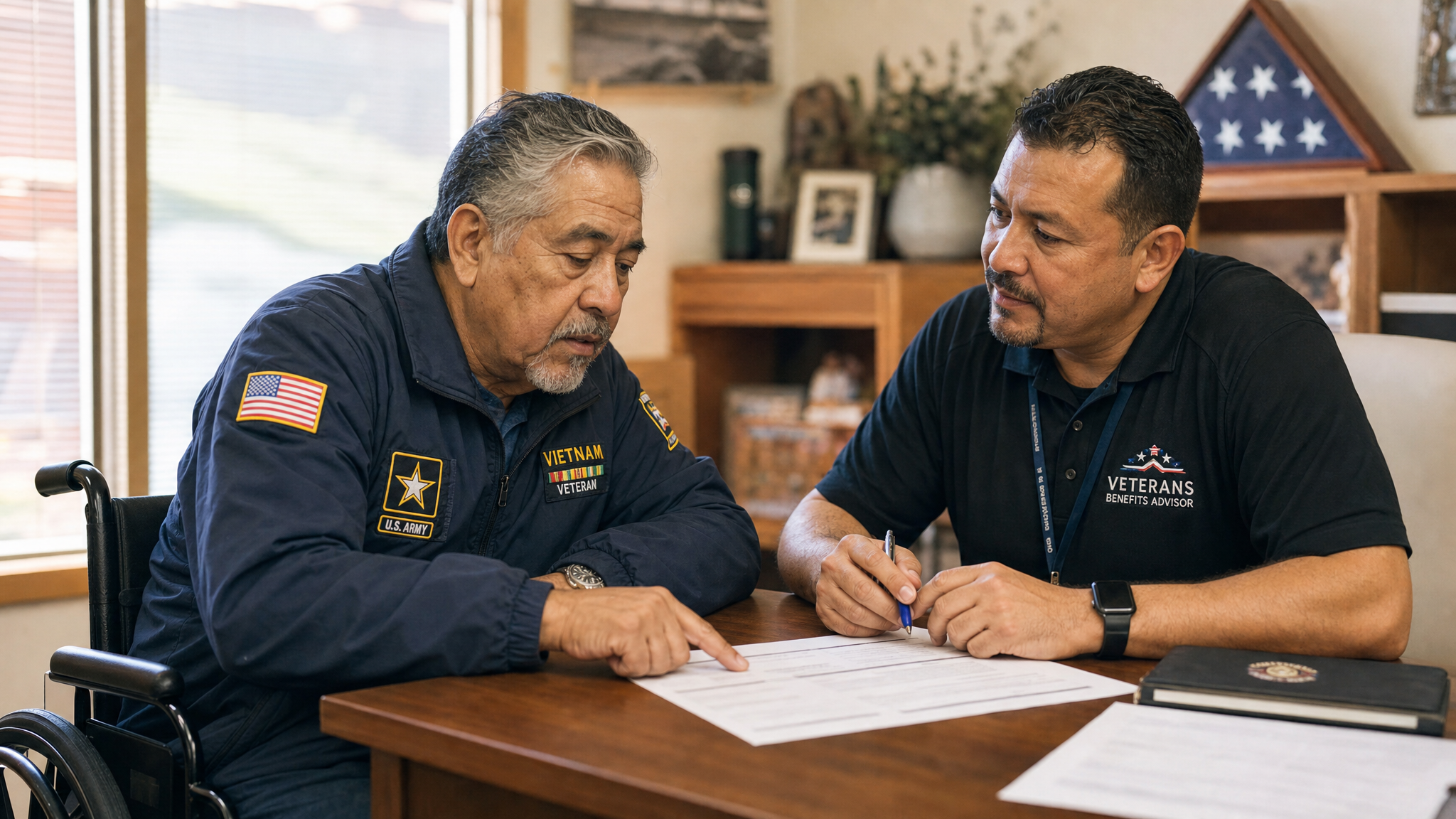
FIG. 01 - Gather your paperwork
First
See what you qualify for
A Disability Benefits Questionnaire is the standardized form the VA uses to document your medical condition. Your private doctor can fill one out, you can review one before your C&P exam, and the specific questions on the form directly shape the rating you receive.
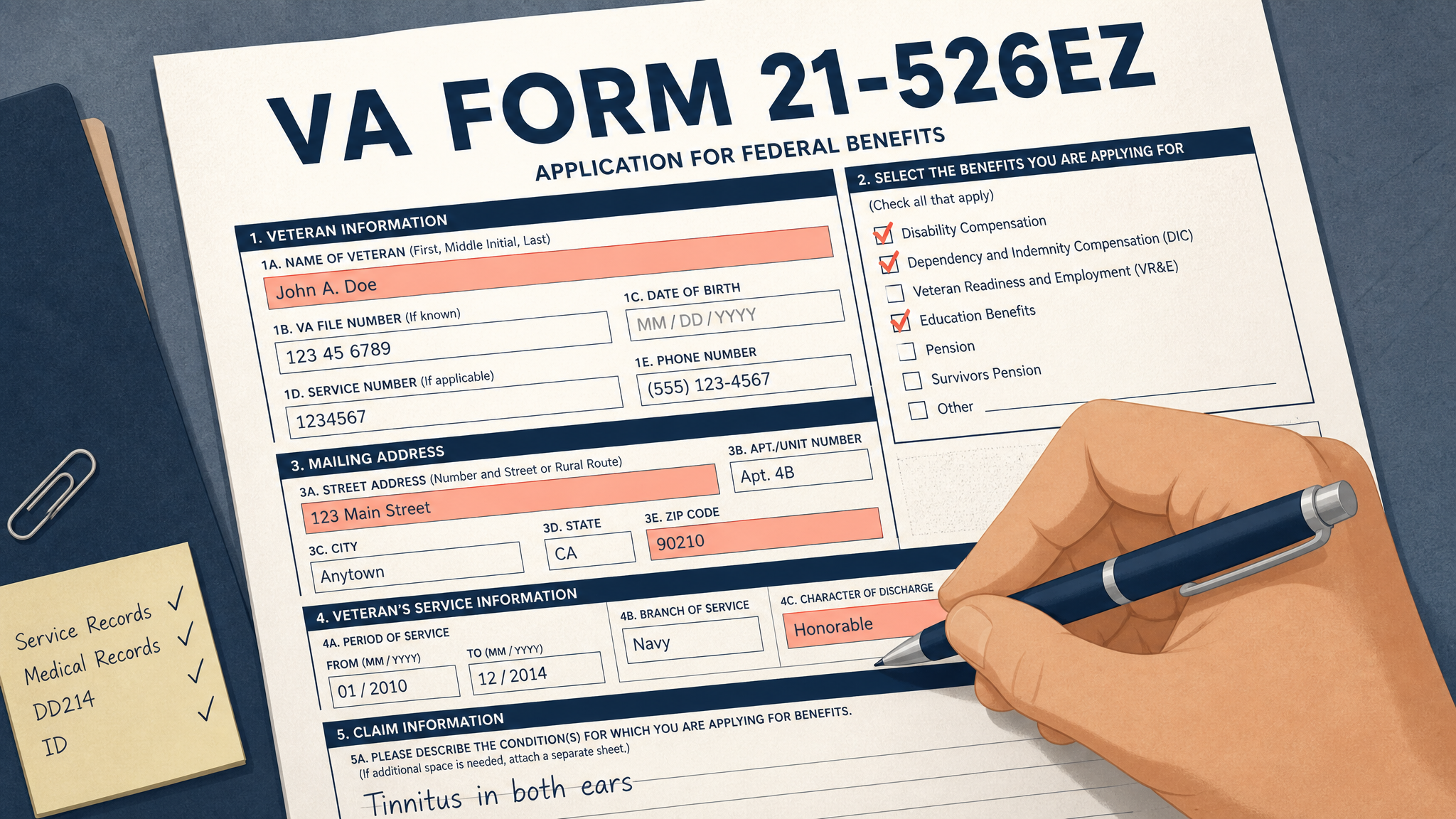
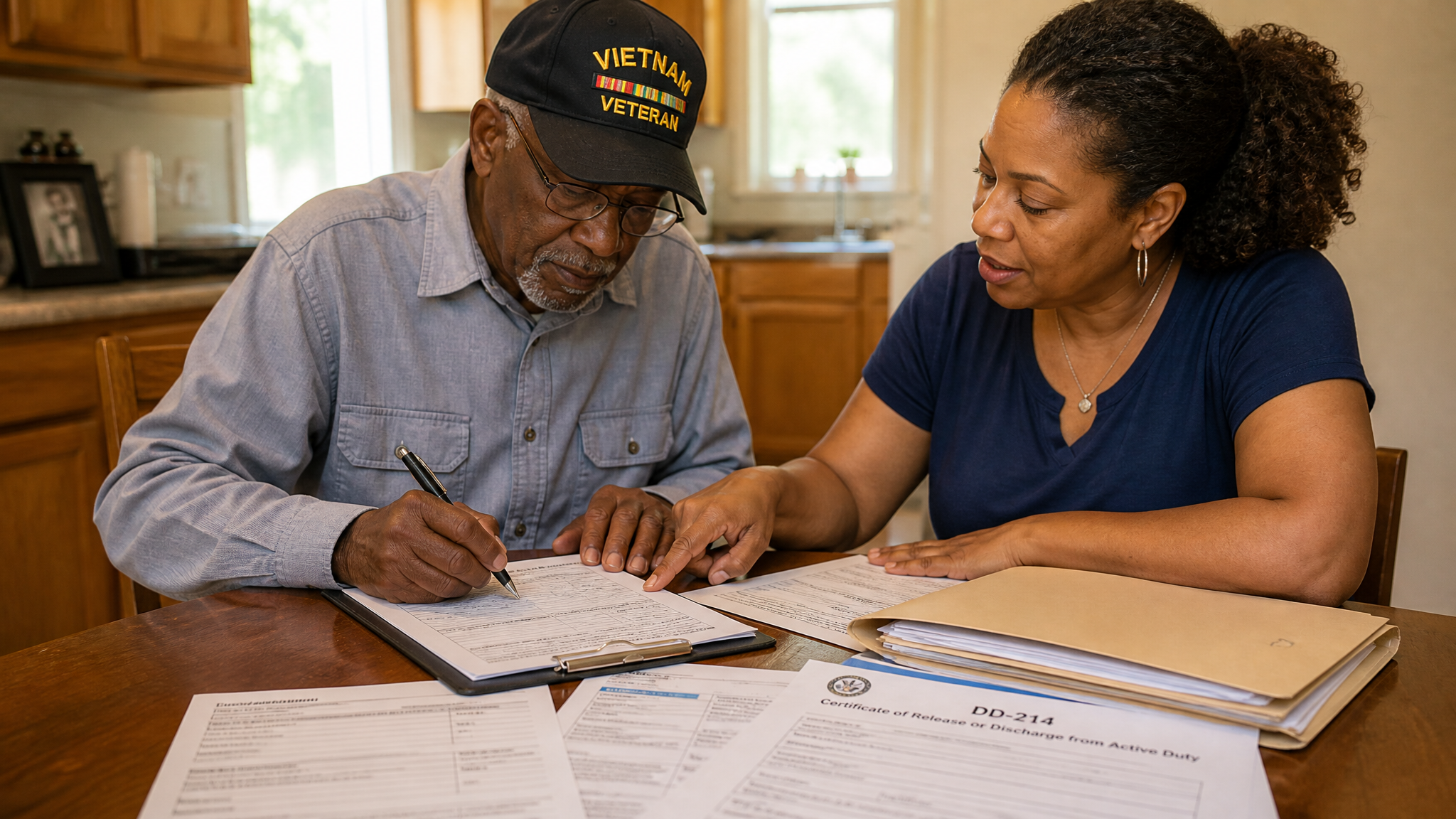
FIG. 02 - Fill out the form
Gather
Collect your documents
Pull your DD-214 and any records that support your claim - we can help you figure out exactly what you need.
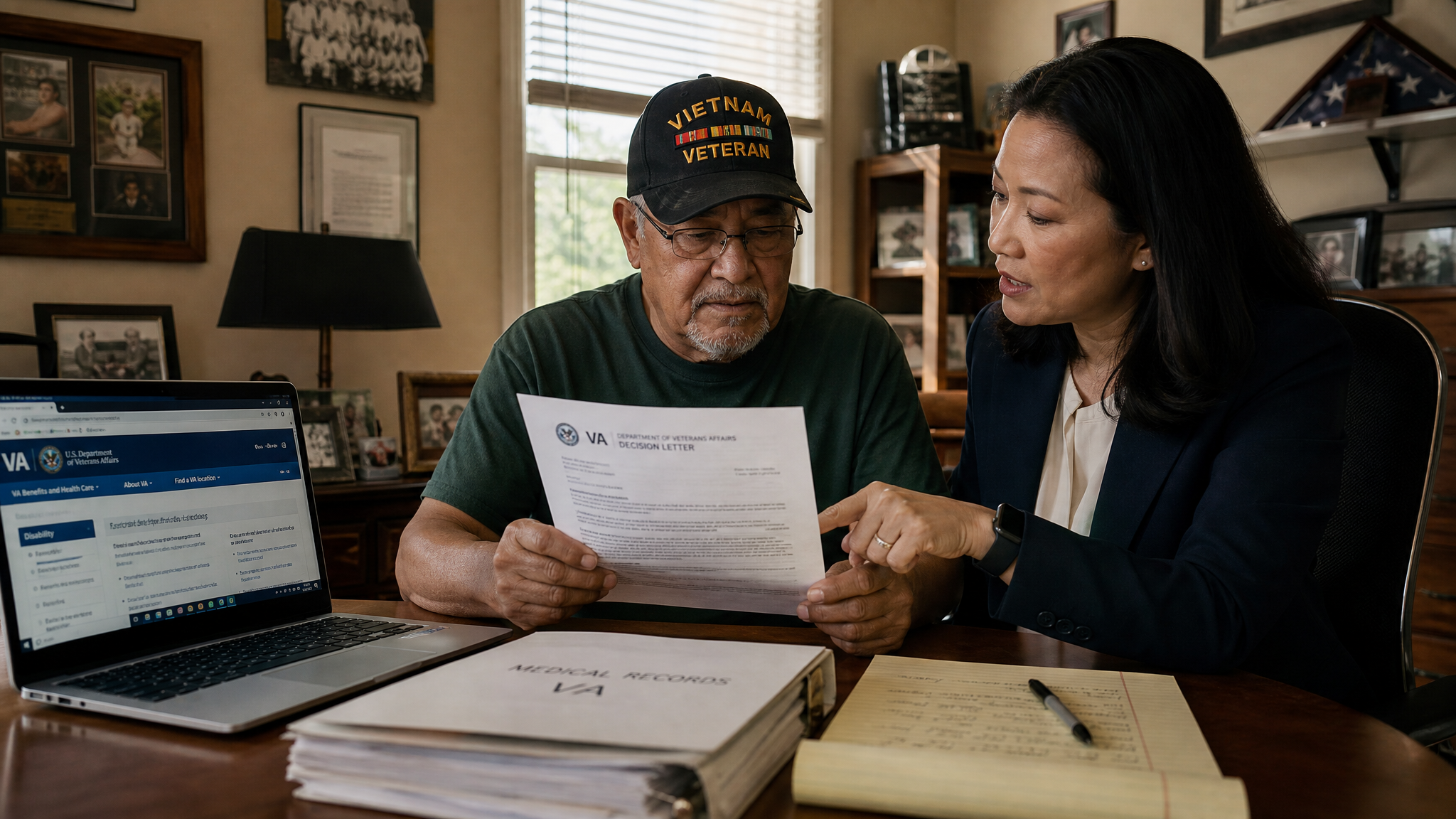
FIG. 03 - File the claim
File it - always free
Apply for the benefit
DBQs are not filed separately -- they are submitted as supporting evidence with your VA disability claim (Form 21-526EZ). Download the DBQ for your condition from va.gov, have your healthcare provider complete it, and include it with your claim package. You can also review the relevant DBQ before your scheduled C&P exam to prepare.
Who to call & where to go
These are free, official VA lines. Have your Social Security number handy when you call.
MyVA411 - Main VA Line
Not sure who to call? Start here. One number for anything VA - they route you to the right office.
VA Benefits Hotline
Compensation, pension, and general claim questions.
Rather have us handle it?
No phone tag, no hold music. Call our office and a real, VA-accredited person walks you through it - start to finish.
702-992-4883Not sure where to start?
DBQs are not filed separately -- they are submitted as supporting evidence with your VA disability claim (Form 21-526EZ). Download the DBQ for your condition from va.gov, have your healthcare provider complete it, and include it with your claim package. You can also review the relevant DBQ before your scheduled C&P exam to prepare.
More benefits for veterans
These often go hand in hand - tap any card to learn more.






























Free information — get a free benefit review
Tell us how to reach you and an accredited team member will help you understand this benefit and claim everything you have earned. No cost, no obligation.
Ready to hire us? Register with us
For veterans who’ve decided they want us on their claim — registering is free too, and it does not make you our client or obligate you to anything. Here is exactly how it works:
- You register. This simply starts the conversation — you are not our client yet, and you owe us nothing.
- You sign and return VA Form 21-22a. It appoints us as your accredited representative and gives us access to your VA file.
- Once we have your signed 21-22a and access to your case, we verify everything is in order.
It involves the registration form and signing VA Form 21-22a — by law we can’t accept your claim, work on it, or contact the VA for you until that power of attorney is signed. You decide whether to move forward.
Official VA links
Answers, in plain language
Common questions about Disability Benefits Questionnaires (DBQs): The VA Forms That Define Your Rating
What is Disability Benefits Questionnaires (DBQs): The VA Forms That Define Your Rating?
This guide explains what DBQs are, how they work, which ones cover your condition, why the VA may still schedule a C&P exam even after you submit one, and how combining a DBQ with a nexus letter builds the strongest possible case.
Who qualifies for Disability Benefits Questionnaires (DBQs): The VA Forms That Define Your Rating?
This benefit is generally for: Veterans preparing to file a disability claim, Veterans who want to review the exam form before their C&P exam, Private physicians willing to complete a DBQ for a veteran, Family members helping a veteran gather medical evidence. What a DBQ is and how the VA uses it in the rating process How to download the right DBQ for your condition
How do I apply for Disability Benefits Questionnaires (DBQs): The VA Forms That Define Your Rating?
DBQs are not filed separately -- they are submitted as supporting evidence with your VA disability claim (Form 21-526EZ). Download the DBQ for your condition from va.gov, have your healthcare provider complete it, and include it with your claim package. You can also review the relevant DBQ before your scheduled C&P exam to prepare.
What does it cost to get help with Disability Benefits Questionnaires (DBQs): The VA Forms That Define Your Rating, and are you VA-accredited?
A completed DBQ from your private doctor is helpful, but it is not a guarantee. The VA may still schedule its own exam, and the C&P examiner may reach a different conclusion. The VA is the final decision-maker -- your DBQ is one piece of evidence, not the verdict. That said, a well-documented DBQ combined with consistent medical records and a strong nexus letter gives you the best chance of getting the rating you deserve. It is free to talk with us, and no one may charge you to file a first-time VA claim. The Aging Veteran is led by Albert L. Thombs Jr., a VA-accredited claims agent (accreditation #45147) and disabled veteran; any appeal work is handled on a no-fee-unless-you-win basis.