
Veteran Benefits
How to Talk to Your Doctor About Your VA Claim
This page explains why talking to your doctor about your VA claim is not optional - it is the foundation of every successful claim. The VA requires a current diagnosis and a documented history of care. Without those two things, your claim will almost certainly be denied, no matter how real your condition is. We cover what to say, what to bring, how to keep a symptom diary, and how to make sure your medical records actually support your case.

Who this is for
The VA does not know what happened to you in service - and neither does your doctor, unless you tell them. Most denied claims fail for the same reason: there is no current diagnosis on file and no documented history of the condition. Your doctor cannot support a claim they do not know about, and the VA cannot rate a condition that does not exist in your medical records. The single most important thing you can do for your claim is walk into your next appointment and say, out loud, exactly what is wrong and how it connects to your service.
In plain language
What How to Talk to Your Doctor About Your VA Claim covers
- Why the VA requires a current diagnosis and documented treatment history
- What to say to your doctor - and how to say it
- How to connect your condition to your military service out loud
- Keeping a symptom diary and why it matters
- What to bring to every medical appointment
- How to ask for referrals, opinions, and formal documentation

The full picture
Everything you need to know
Nothing hidden behind a click, and nothing you have to go looking for on another website. Here is the whole story in plain language - the facts and the figures first - so you can decide what fits your situation.
Key facts & current figures
- Filing a VA claim without a current diagnosis or documented treatment history results in denial roughly ##80%## of the time - the single biggest reason claims fail.
- The VA requires that your condition be chronic - meaning it persists over time. A single mention in old military records is not enough; you need ongoing documentation from a treating physician.
- Your doctor cannot read your mind. If you do not tell them your knee pain started from jumping out of helicopters in 1969, they will chart "knee pain" with no service connection - and the VA will deny it.
- A symptom diary - a simple notebook or phone note logging your symptoms, severity, and flare-ups - is one of the most powerful tools a veteran can bring to a doctor's appointment and a C&P exam.
- You should be seeing your doctor regularly throughout the claims process, not just once before filing. Consistent treatment notes show the VA your condition is real, ongoing, and getting worse.
General figures, current as of December 2025 and reviewed each year. Your exact amount depends on your situation - always confirm on va.gov.
Why the VA needs a current diagnosis - not just your word
- The VA does not rate symptoms - it rates diagnosed conditions. Saying "my back hurts" is not enough. The VA needs a doctor's formal diagnosis: "lumbar degenerative disc disease," "chronic lumbar strain," or whatever the actual condition is.
- Your military service records may show you were treated for something decades ago, but that alone does not prove the condition still exists today. The VA needs a current diagnosis to confirm the condition is present now.
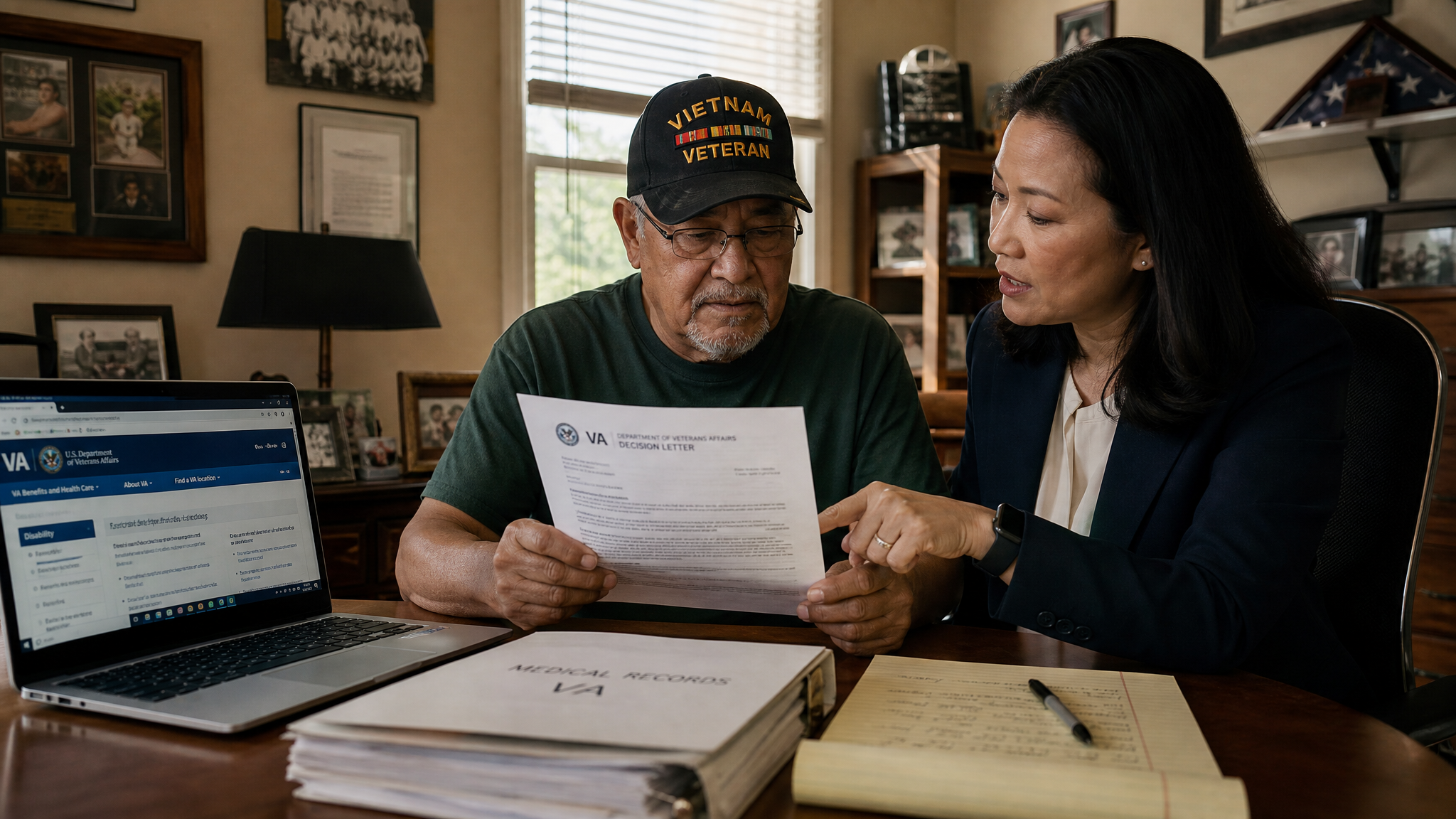
- If your decision letter says "there is no diagnosis of record" or "there is no history of care," it means the VA looked at your medical file and found nothing to rate. The fix is not to argue - it is to go see a doctor and get diagnosed.
- A current diagnosis from any licensed physician counts - it does not have to come from a VA doctor. Private medical records carry the same weight.
What to say at your appointment - be direct and specific
- Name the condition you are claiming. Do not say "I have been feeling bad." Say: "I have had ringing in both ears since I worked on the flight deck in 1972. I believe it is tinnitus."
- Connect it to your service out loud. Tell the doctor: "This started during my service in [location] during [year]. I was exposed to [noise, chemicals, burn pits, combat, etc.]." Ask them to write this in the visit notes.
- Describe the impact on your daily life. Do not minimize. If your knee gives out on stairs, if you cannot sleep because of pain, if anxiety keeps you from grocery stores - say it plainly and ask the doctor to document it.
- Ask for the formal diagnosis by name. At the end of the visit, ask: "What is the diagnosis you are documenting?" and make sure it matches a condition the VA rates. "Knee pain" is a symptom; "degenerative joint disease, right knee" is a ratable diagnosis.
Keeping a symptom diary - the evidence the VA cannot ignore
- A symptom diary is a dated log of your symptoms: what happened, how bad it was (on a 1-10 scale), how long it lasted, and what you could not do because of it.
- You do not need a special form. A notebook, a phone note, or a simple spreadsheet works. The key is consistency - logging entries regularly, not just on the worst days.
- The diary serves two purposes: (1) it gives your doctor a detailed picture of your condition between visits, especially flare-ups they never see in the office, and (2) it provides dated evidence the VA can review at your C&P examination.
- Example entry: "March 12, 2026 - Woke at 0300 with sharp pain in lower back, level 8/10. Could not bend to put on shoes. Took ibuprofen 600mg. Pain dropped to 5/10 by noon. Could not mow the lawn. Third flare this month."
- Bring the diary to every doctor visit and every C&P exam. Hand it to the examiner. It shows the condition is real, chronic, and documented in your own words over time.
What to bring to every medical appointment
- Your symptom diary (current entries).
- A list of all conditions you are claiming or plan to claim, with the dates they started and the service events you connect them to.
- Any prior VA decision letters - especially if a condition was denied for "no current diagnosis" so you can ask the doctor to specifically address that gap.
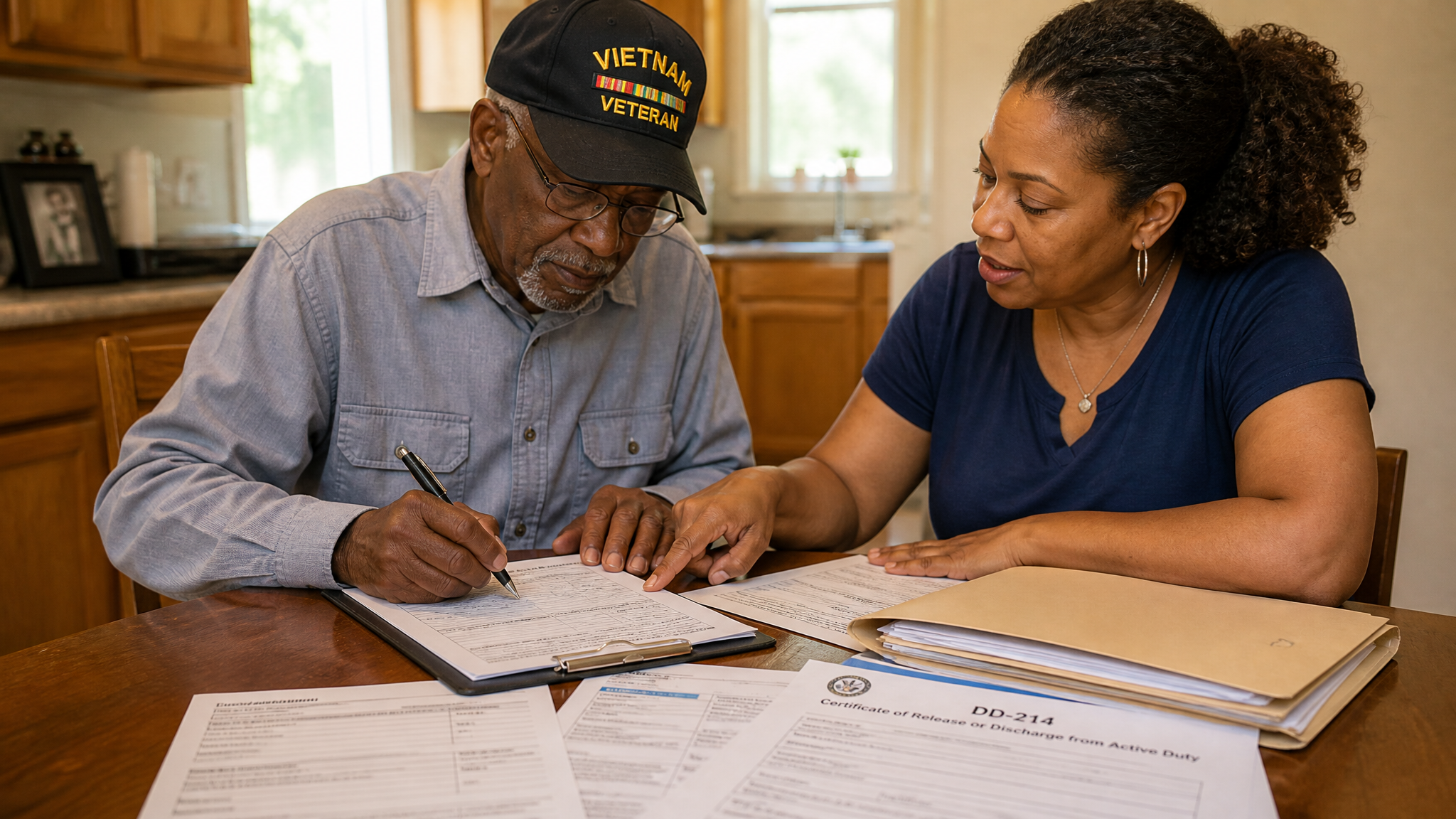
- Your DD-214 or a copy showing your service dates, duty stations, and military occupational specialty (MOS) - this helps the doctor understand what you were exposed to.
- A list of current medications and any recent test results.
- Questions written down. Ask: "Will you document that this condition is connected to my service?" and "Can you provide a medical opinion letter if I need one?"
Ask for referrals and formal opinions when you need them
- If your primary care doctor is not the right specialist for your condition, ask for a referral. A cardiologist's opinion on ischemic heart disease carries more weight than a general note.
- If you need a nexus letter (a medical opinion linking your condition to your service at a level of "at least as likely as not"), ask your treating physician if they are willing to write one. Not all will, but many will if you ask.
- If your doctor declines, ask for a referral to a provider who performs independent medical opinions (IMOs) for VA claims. This is not unusual - it is a routine part of the process.
- Every referral, specialist visit, and formal opinion adds to your medical record and strengthens your claim. The VA weighs evidence by its quality and consistency, not just quantity.
See your doctor regularly - not just once before you file
- The VA looks for a pattern of care, not a single visit. If your file shows you saw a doctor once in 2024 and filed a claim the next week, the VA may question whether the condition is truly chronic.
- Regular visits - even every 3-6 months - create a longitudinal record that demonstrates the condition persists, worsens, and requires ongoing treatment.
- If you have not seen a doctor in over two years, schedule an appointment before you file your claim. Use that visit to establish a current diagnosis and begin a treatment trail.
- Do not stop going to the doctor once your claim is filed. Treatment during the claims process shows the VA your condition is active and being managed - and it gives the C&P examiner more to review.
Your complete benefit picture
You do not have to sort this out alone
I have seen veterans lose claims they should have won because they never told their doctor the full story. They assumed the VA already knew, or they were embarrassed to bring it up, or they figured their military records would speak for themselves. Military records do not speak - you do. And the doctor visit is not a formality you check off before filing. It is the visit that creates the evidence the VA needs to say yes. If you have not been to a doctor about your condition in years, that is the first thing to fix - not the paperwork.

Two ways to move forward — both free
Not sure if this applies to you?
Ask our free assistant a few plain questions and get an honest read on what you and your family may qualify for, at no cost. It takes just a few minutes, and there is no sign-up and no obligation of any kind. You will get a clear, plain-language picture of where you stand and what might be worth filing. And if you would rather talk to a real person, an accredited agent is only a message away.
Have a question? Get free information
Ask a question, learn what you may be owed, or find out where you stand. Confidential, free, and no obligation to go any further.
Ready to hire us? Register
Decided you want us to work your claim? Registering is free — we match you with an accredited advocate and get you started. We cannot begin until you sign VA Form 21-22a, and fees, if any, are always disclosed up front.
Worth knowing
Before you file, keep this in mind
I have seen veterans lose claims they should have won because they never told their doctor the full story. They assumed the VA already knew, or they were embarrassed to bring it up, or they figured their military records would speak for themselves. Military records do not speak - you do. And the doctor visit is not a formality you check off before filing. It is the visit that creates the evidence the VA needs to say yes. If you have not been to a doctor about your condition in years, that is the first thing to fix - not the paperwork.
A clear path forward
Your step-by-step action plan
No rush and no pressure - but a little order helps. Applying is always free.
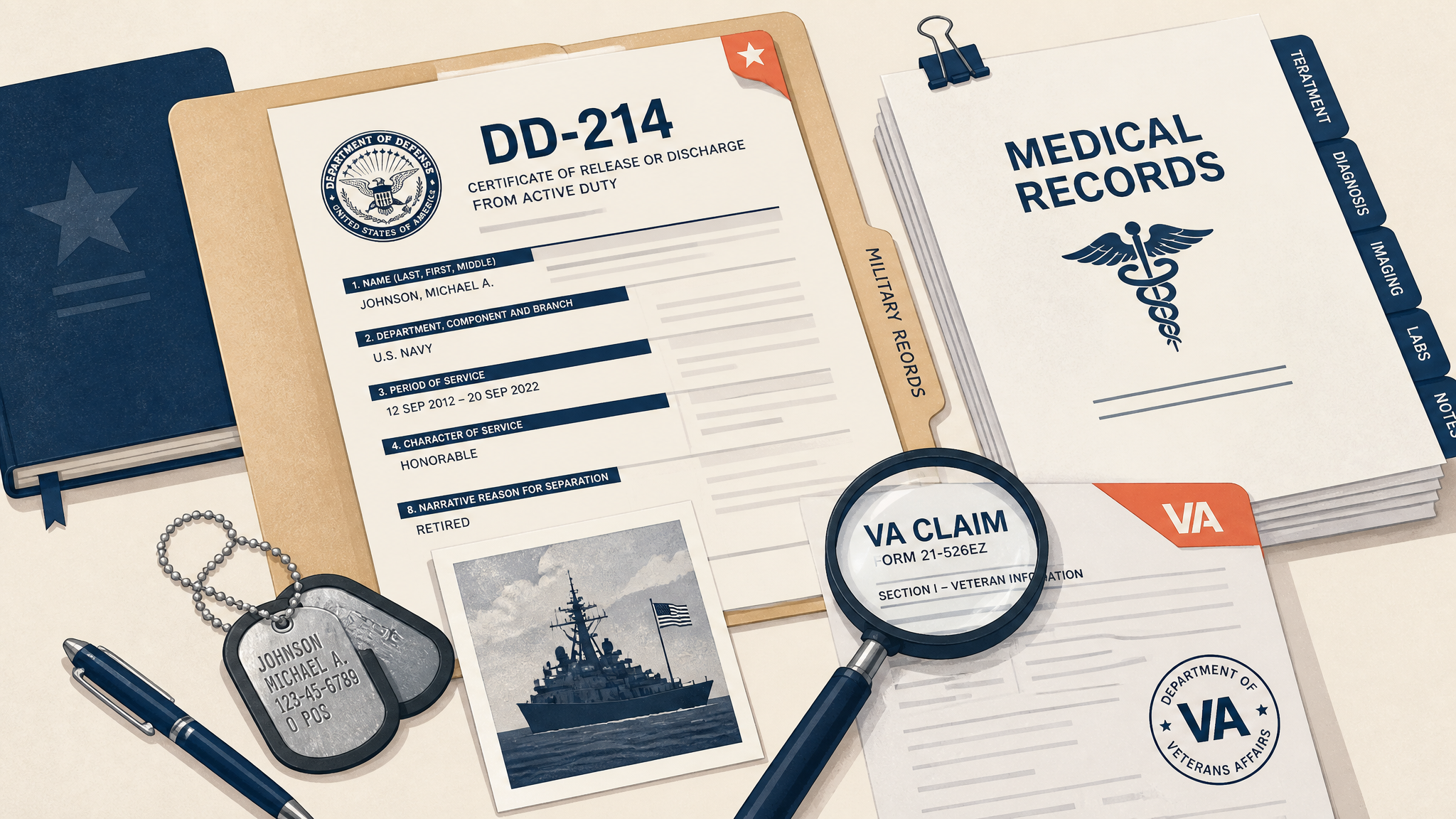
FIG. 01 - Gather your paperwork
First
See what you qualify for
The VA does not know what happened to you in service - and neither does your doctor, unless you tell them. Most denied claims fail for the same reason: there is no current diagnosis on file and no documented history of the condition. Your doctor cannot support a claim they do not know about, and the VA cannot rate a condition that does not exist in your medical records. The single most important thing you can do for your claim is walk into your next appointment and say, out loud, exactly what is wrong and how it connects to your service.
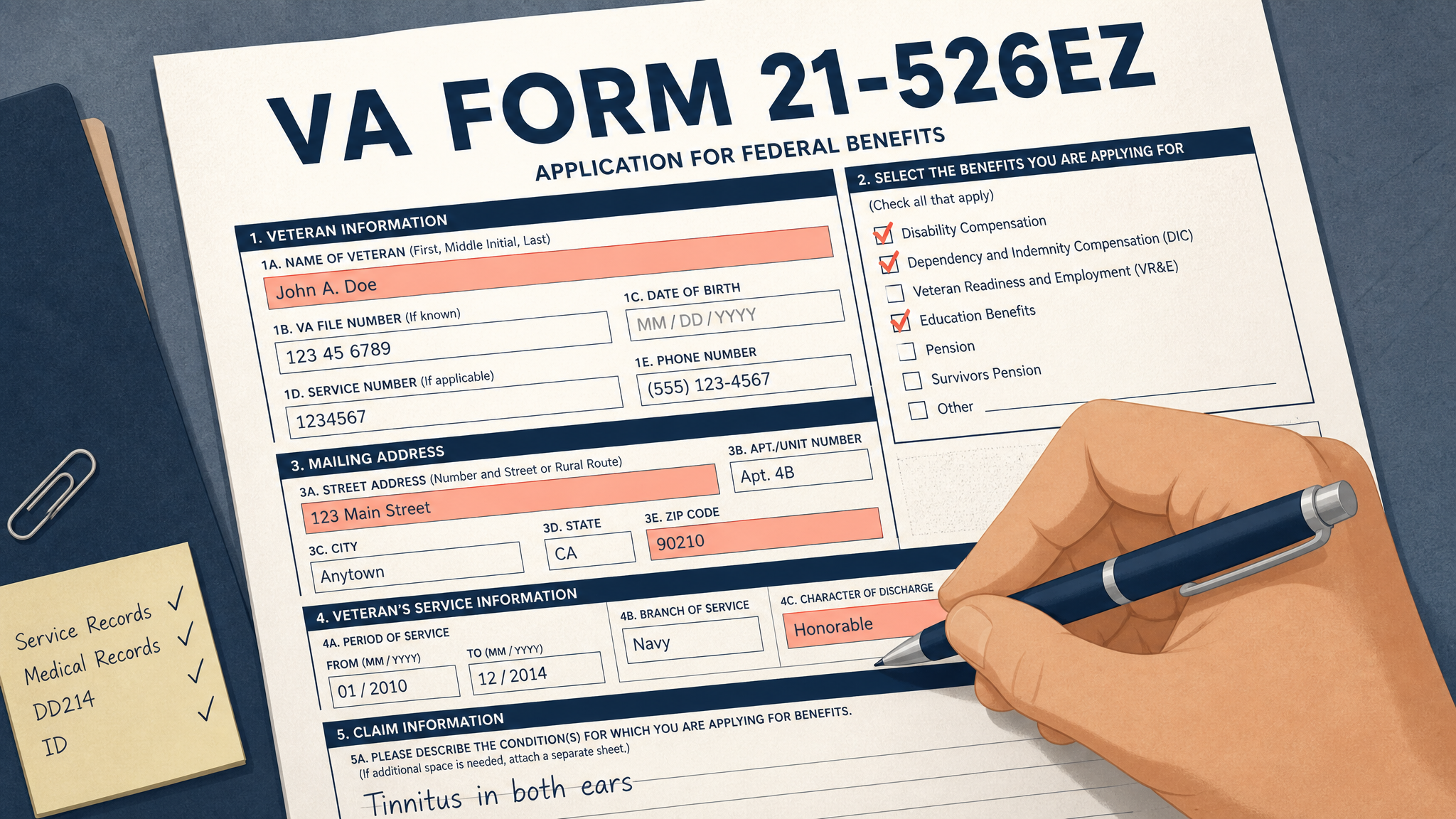
FIG. 02 - Fill out the form
Gather
Collect your documents
Pull your DD-214 and any records that support your claim - we can help you figure out exactly what you need.
FIG. 03 - File the claim
File it - always free
Apply for the benefit
This page is not about filing a form - it is about building the medical evidence that makes your form succeed. Before you file VA Form 21-526EZ, make sure you have: (1) a current diagnosis from a treating physician, (2) documented treatment history showing the condition is chronic, and (3) a medical opinion connecting the condition to your service if it is not presumptive. If you have not seen a doctor in over two years, schedule an appointment before you file. Call the VA Health Benefits Hotline at 877-222-8387 to enroll in VA health care, or see any private doctor - VA health care is not required.
Who to call & where to go
These are free, official VA lines. Have your Social Security number handy when you call.
MyVA411 - Main VA Line
Not sure who to call? Start here. One number for anything VA - they route you to the right office.
VA Benefits Hotline
Compensation, pension, and general claim questions.
Rather have us handle it?
No phone tag, no hold music. Call our office and a real, VA-accredited person walks you through it - start to finish.
702-992-4883Not sure where to start?
This page is not about filing a form - it is about building the medical evidence that makes your form succeed. Before you file VA Form 21-526EZ, make sure you have: (1) a current diagnosis from a treating physician, (2) documented treatment history showing the condition is chronic, and (3) a medical opinion connecting the condition to your service if it is not presumptive. If you have not seen a doctor in over two years, schedule an appointment before you file. Call the VA Health Benefits Hotline at ##877-222-8387## to enroll in VA health care, or see any private doctor - VA health care is not required.
More benefits for veterans
These often go hand in hand - tap any card to learn more.

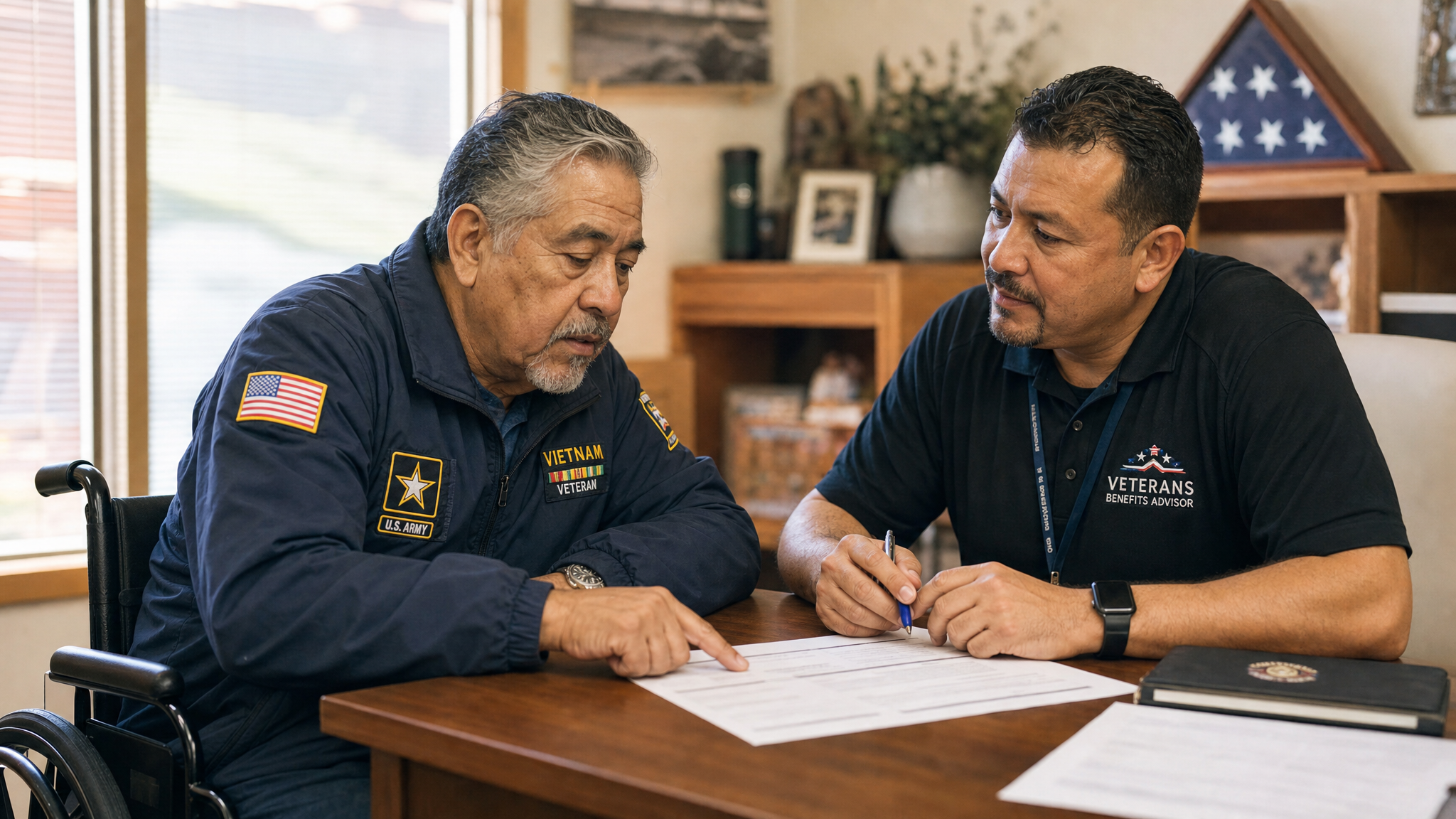




































Free information — get a free benefit review
Tell us how to reach you and an accredited team member will help you understand this benefit and claim everything you have earned. No cost, no obligation.
Ready to hire us? Register with us
For veterans who’ve decided they want us on their claim — registering is free too, and it does not make you our client or obligate you to anything. Here is exactly how it works:
- You register. This simply starts the conversation — you are not our client yet, and you owe us nothing.
- You sign and return VA Form 21-22a. It appoints us as your accredited representative and gives us access to your VA file.
- Once we have your signed 21-22a and access to your case, we verify everything is in order.
It involves the registration form and signing VA Form 21-22a — by law we can’t accept your claim, work on it, or contact the VA for you until that power of attorney is signed. You decide whether to move forward.
Official VA links
Answers, in plain language
Common questions about How to Talk to Your Doctor About Your VA Claim
What is How to Talk to Your Doctor About Your VA Claim?
This page explains why talking to your doctor about your VA claim is not optional - it is the foundation of every successful claim. The VA requires a current diagnosis and a documented history of care. Without those two things, your claim will almost certainly be denied, no matter how real your condition is. We cover what to say, what to bring, how to keep a symptom diary, and how to make sure your medical records actually support your case.
Who qualifies for How to Talk to Your Doctor About Your VA Claim?
This benefit is generally for: Veteran filing a VA disability claim, Veteran who has not seen a doctor in years, Veteran whose claim was denied for lack of diagnosis, Family member helping a veteran prepare for a medical appointment. Why the VA requires a current diagnosis and documented treatment history What to say to your doctor - and how to say it
How do I apply for How to Talk to Your Doctor About Your VA Claim?
This page is not about filing a form - it is about building the medical evidence that makes your form succeed. Before you file VA Form 21-526EZ, make sure you have: (1) a current diagnosis from a treating physician, (2) documented treatment history showing the condition is chronic, and (3) a medical opinion connecting the condition to your service if it is not presumptive. If you have not seen a doctor in over two years, schedule an appointment before you file. Call the VA Health Benefits Hotline at 877-222-8387 to enroll in VA health care, or see any private doctor - VA health care is not required.
What does it cost to get help with How to Talk to Your Doctor About Your VA Claim, and are you VA-accredited?
I have seen veterans lose claims they should have won because they never told their doctor the full story. They assumed the VA already knew, or they were embarrassed to bring it up, or they figured their military records would speak for themselves. Military records do not speak - you do. And the doctor visit is not a formality you check off before filing. It is the visit that creates the evidence the VA needs to say yes. If you have not been to a doctor about your condition in years, that is the first thing to fix - not the paperwork. It is free to talk with us, and no one may charge you to file a first-time VA claim. The Aging Veteran is led by Albert L.