
Veteran Benefits
Concurrent Receipt (CRDP & CRSC)
Concurrent receipt lets eligible military retirees collect their full retired pay and their VA disability compensation at the same time - instead of trading one for the other. There are two programs: CRDP (Concurrent Retirement and Disability Pay) and CRSC (Combat-Related Special Compensation). Many retirees do not realize they qualify - especially for the tax-free CRSC.

Who this is for
If you earned a military retirement and also carry a VA disability rating, you may be leaving real money on the table every month - the law now lets many retirees keep both checks instead of trading one for the other, and one of the two programs is completely tax-free.
In plain language
What Concurrent Receipt (CRDP & CRSC) covers
- Recovering retired pay that was offset dollar-for-dollar by VA disability
- CRDP for retirees with a 50% or higher VA disability rating
- CRSC (tax-free) for combat-related disabilities, applied for through your branch
- The annual "open season" choice between CRDP and CRSC
- Retroactive pay when a program should have started earlier
Concurrent Retirement & Disability Pay (CRDP)Official video - U.S. Dept of Veterans Affairs
5 things most veterans aren't aware of
These apply to nearly every VA claim - and they change how much you get and when.
Your filing date sets your back pay
Benefits are generally paid back to the day you file - not the day you are approved. Filing an intent to file today can protect months, even years, of retroactive pay.
One condition can trigger others (secondary claims)
A service-connected condition that causes another - like sleep apnea from PTSD, or a bad knee from a bad hip - can be rated on its own. Each secondary condition adds to your rating.
A medical nexus is what wins the claim
The VA needs a documented link between your condition and your service. A clear nexus opinion is often the difference between an approval and a denial.
Accredited help is free to file an initial claim
By law, an accredited agent cannot charge a fee to prepare and file your original claim. If someone asks for money up front to file, that is a red flag.
A denial is not the end of the road
You have three appeal lanes - Higher-Level Review, a Supplemental Claim with new evidence, and the Board of Veterans Appeals. Many denials are overturned on review.
50%+
VA rating needed for CRDP to restore your retired pay
Tax-free
CRSC payments for combat-related disabilities
1x a year
You may switch between CRDP and CRSC each open season
The full picture
Everything you need to know
Nothing hidden behind a click, and nothing you have to go looking for on another website. Here is the whole story in plain language - the facts and the figures first - so you can decide what fits your situation.
Key facts & current figures
- For decades, military retirees had to give up a dollar of retired pay for every dollar of VA disability - concurrent receipt (CRDP and CRSC) is what gives that money back.
- CRDP restores retired pay for retirees with a VA rating of 50% or higher. It is taxable, phased in automatically by DFAS, and requires no application.
- CRSC is a separate, tax-free payment for disabilities that are combat-related - and unlike CRDP, you must apply through your branch of service.
- You cannot collect both at once - you receive whichever pays you more, and you can switch once a year during open season.
General figures, current as of December 2025 and reviewed each year. Your exact amount depends on your situation - always confirm on va.gov.
The problem concurrent receipt fixes
- If you served long enough to earn a military retirement and you also receive VA disability compensation, the law used to make you "waive" (give up) part of your retired pay - one dollar of retirement for every dollar of VA compensation.
- That waiver made the VA compensation tax-free, but it meant many retirees saw no real increase in their total monthly income from their disability.
- Concurrent receipt programs undo that offset - letting you keep more of both checks. Over a year that can be thousands of dollars a retiree was entitled to but never received.
CRDP - Concurrent Retirement and Disability Pay
- CRDP restores your retired pay if you are a retiree with a VA rating of 50% or higher (or receiving benefits at the 100% rate through TDIU).
- It is paid automatically by the military pay center - there is no application. It is taxable, like your regular retired pay.
- Generally you need to be a 20-year retiree (length-of-service or a medical/Chapter 61 retiree with at least 20 years) to receive CRDP.
CRSC - Combat-Related Special Compensation
- CRSC is a tax-free payment for disabilities that are combat-related - caused by armed conflict, hazardous duty, an instrumentality of war (like a vehicle or weapon), or simulated war such as training exercises.
- Unlike CRDP, you must apply for CRSC through your branch of service and show how each condition is tied to combat or those duties. A Purple Heart makes the combat link easy to prove for that condition.
- Because it is tax-free, CRSC is often the better choice - but not always. Which one pays more depends on your ratings and which of your disabilities are combat-related.
You choose the one that pays more
- You cannot receive CRDP and CRSC at the same time. The pay center pays you whichever program gives you the larger amount, and you can change your election once a year during the annual open season.
- When a program should have started earlier than it did, you may be owed retroactive pay. It is worth checking the start dates on your account.
- Because two different agencies are involved - the VA for the rating and the Defense Department for the pay - mistakes and missed money are common. This is a good area to have reviewed.
Your complete benefit picture
Both checks
concurrent receipt lets eligible retirees keep their full military retired pay and their VA disability compensation - instead of trading one dollar for the other, as the law once required.

Two ways to move forward — both free
Not sure if this applies to you?
Ask our free assistant a few plain questions and get an honest read on what you and your family may qualify for, at no cost. It takes just a few minutes, and there is no sign-up and no obligation of any kind. You will get a clear, plain-language picture of where you stand and what might be worth filing. And if you would rather talk to a real person, an accredited agent is only a message away.
Have a question? Get free information
Ask a question, learn what you may be owed, or find out where you stand. Confidential, free, and no obligation to go any further.
Ready to hire us? Register
Decided you want us to work your claim? Registering is free — we match you with an accredited advocate and get you started. We cannot begin until you sign VA Form 21-22a, and fees, if any, are always disclosed up front.
A clear path forward
Your step-by-step action plan
No rush and no pressure - but a little order helps. Applying is always free.
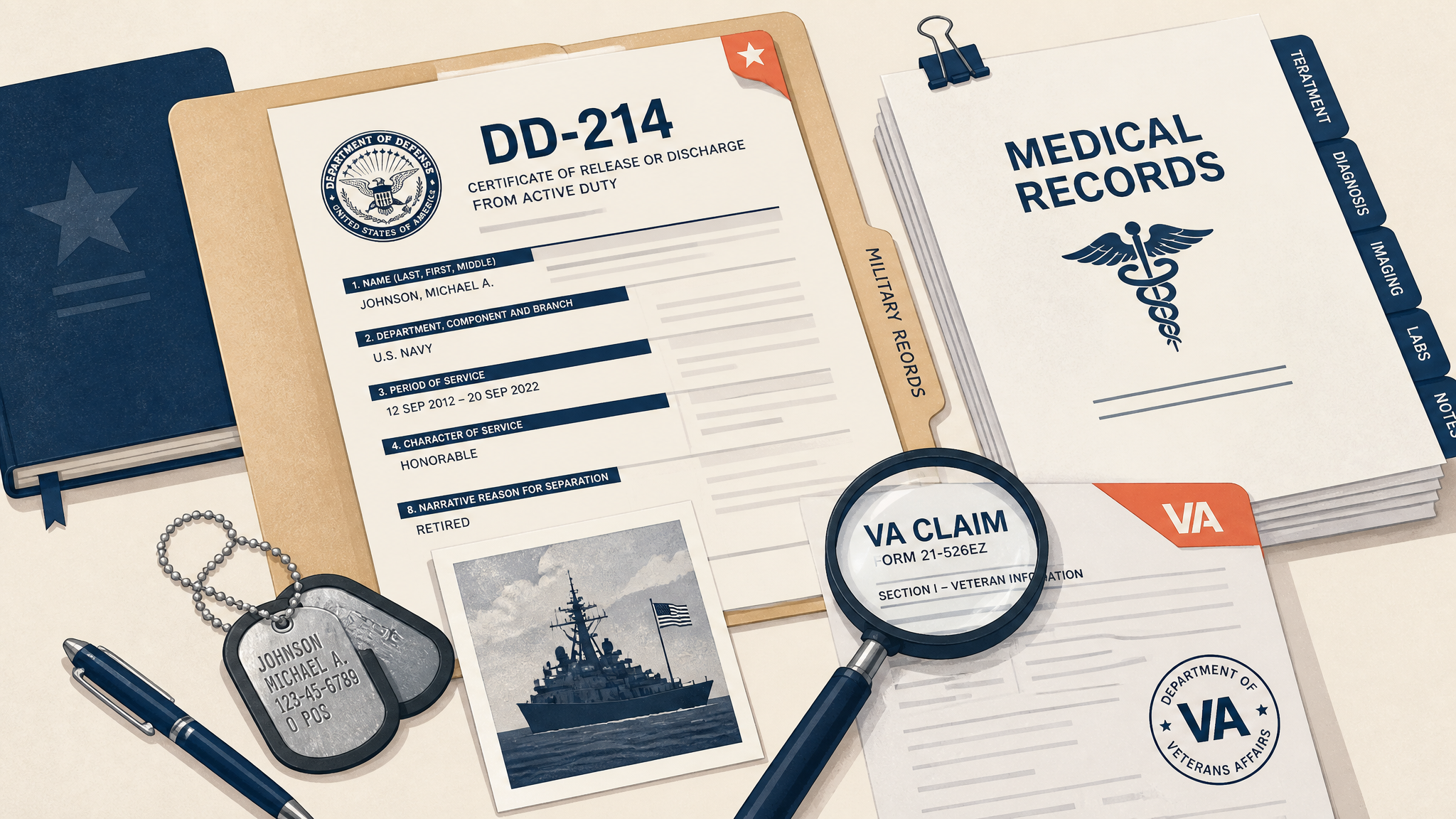
FIG. 01 - Gather your paperwork
First
Confirm you are a retiree
Generally you need a 20-year (or qualifying medical) retirement plus VA disability to be in the concurrent-receipt world.
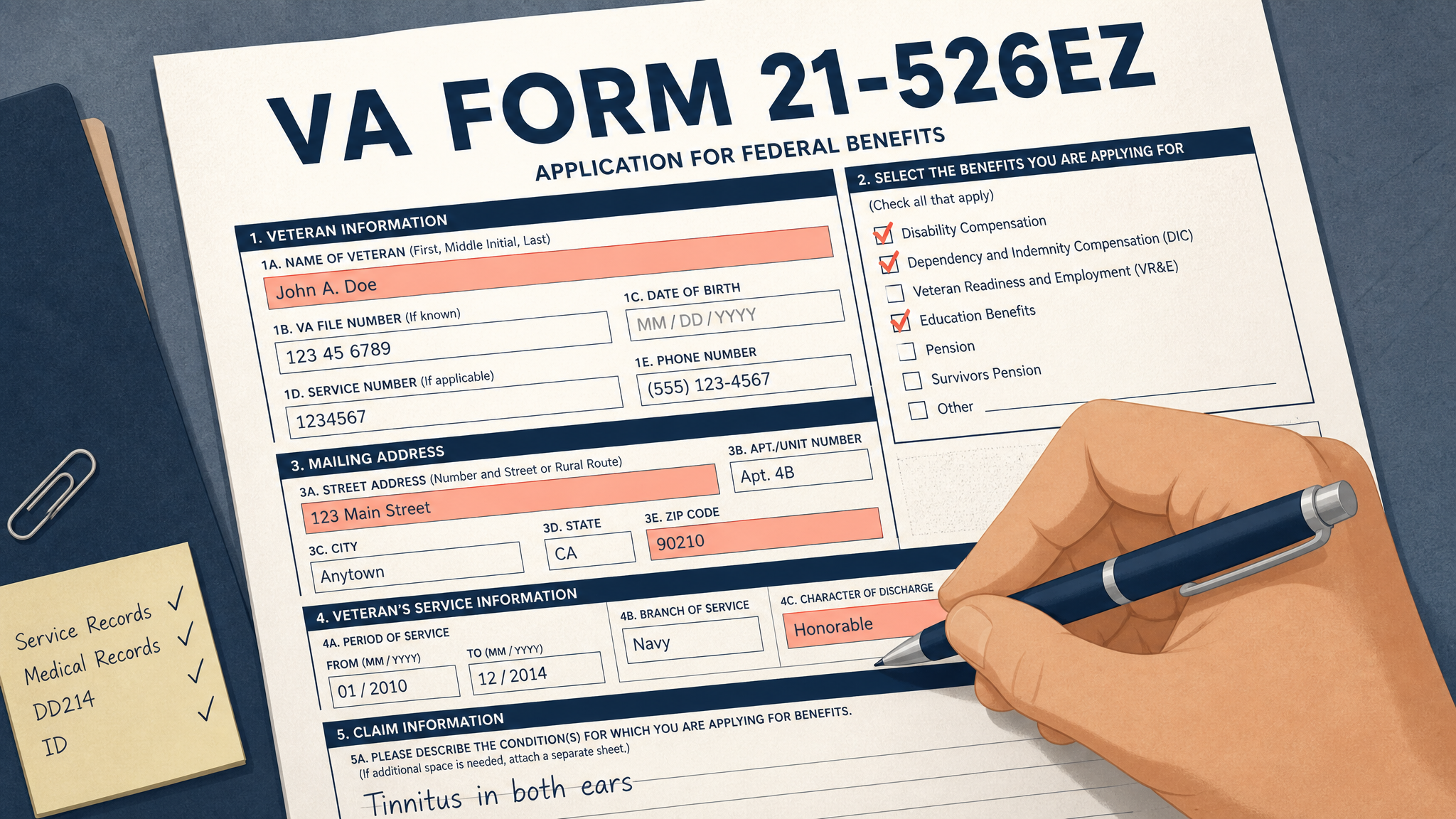
FIG. 02 - Fill out the form
Check CRDP
Verify it is being paid
If your VA rating is 50% or higher, CRDP should be restoring retired pay automatically - check your account statement.

FIG. 03 - File the claim
Apply for CRSC
File with your branch
Submit your branch’s CRSC application with evidence linking your disabilities to combat or hazardous duty.
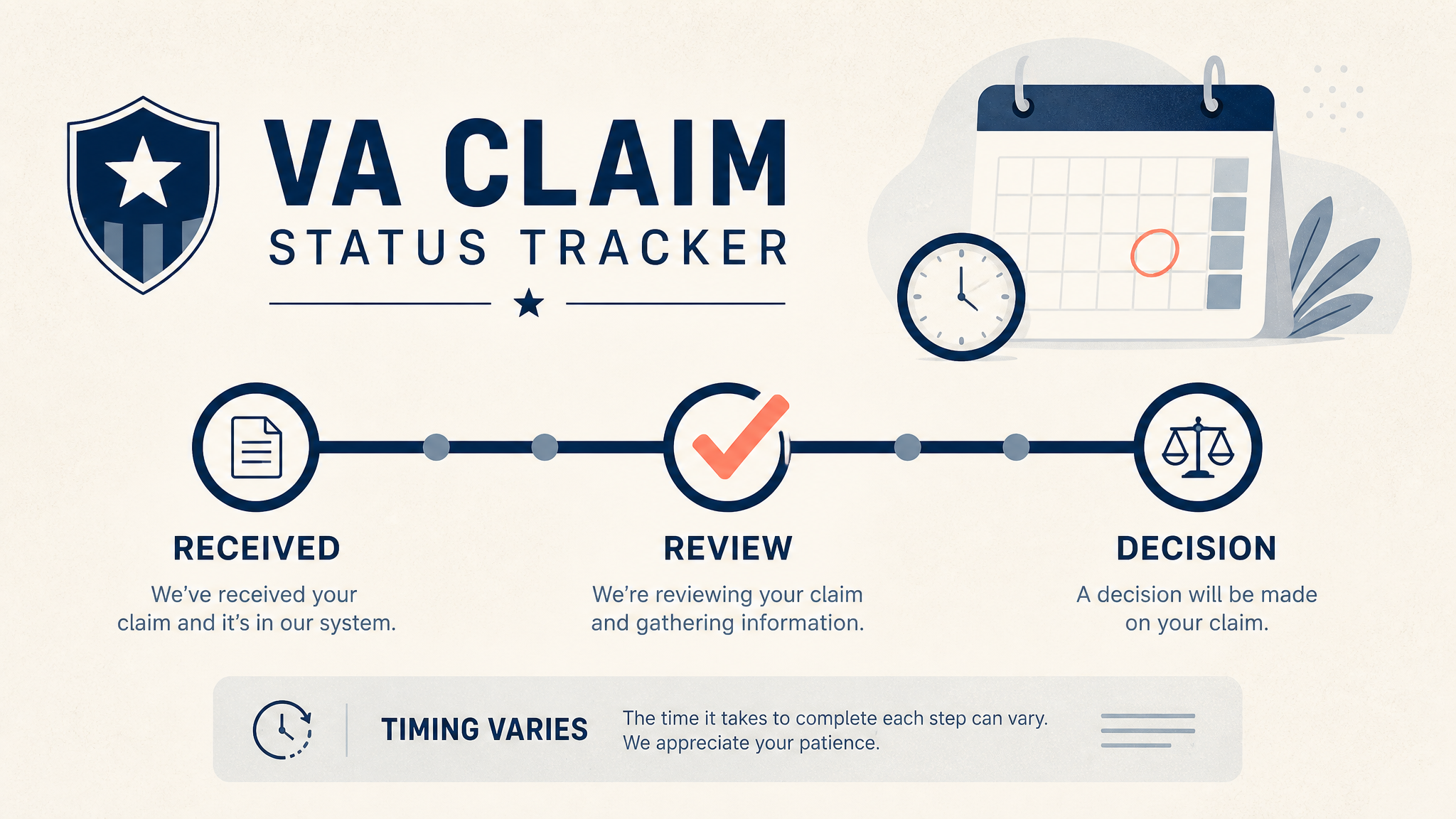
FIG. 04 - After you file
Compare
Take the one that pays more
You cannot receive both at once; the pay center pays the higher amount and you can switch each year.
Who to call & where to go
These are free, official VA lines. Have your Social Security number handy when you call.
VA Benefits Hotline
Compensation, pension, and general claim questions.
MyVA411 - Main VA Line
Not sure who to call? Start here. One number for anything VA - they route you to the right office.
Rather have us handle it?
No phone tag, no hold music. Call our office and a real, VA-accredited person walks you through it - start to finish.
702-992-4883Not sure where to start?
CRDP is automatic - if you qualify, the pay center starts it for you, no form needed. CRSC must be applied for through your branch of service using that branch’s CRSC application, with evidence linking each disability to combat, hazardous duty, an instrumentality of war, or simulated war (training). If you qualify for both, the pay center pays the higher amount and lets you switch during the yearly open season.
More benefits for veterans
These often go hand in hand - tap any card to learn more.

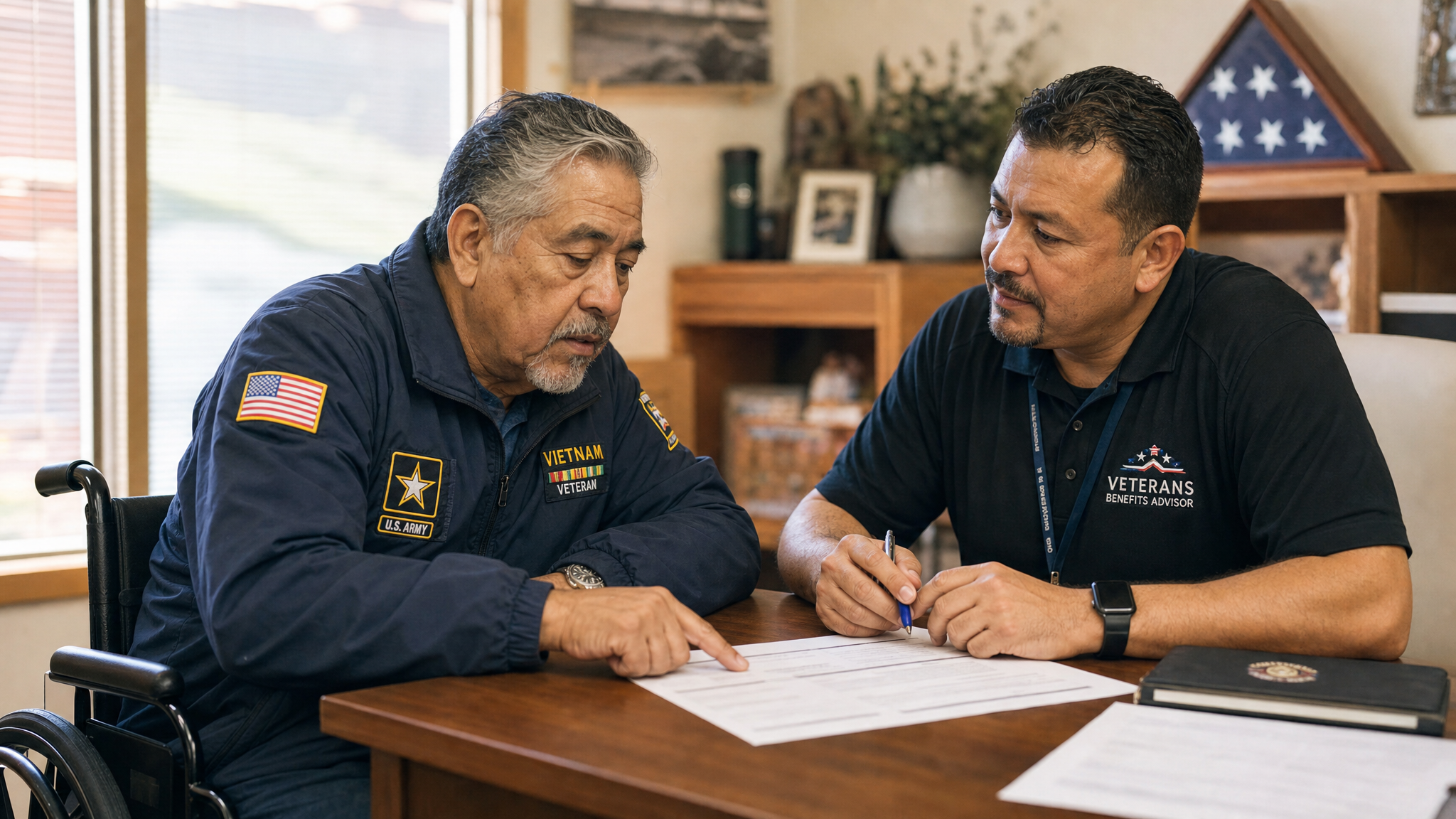
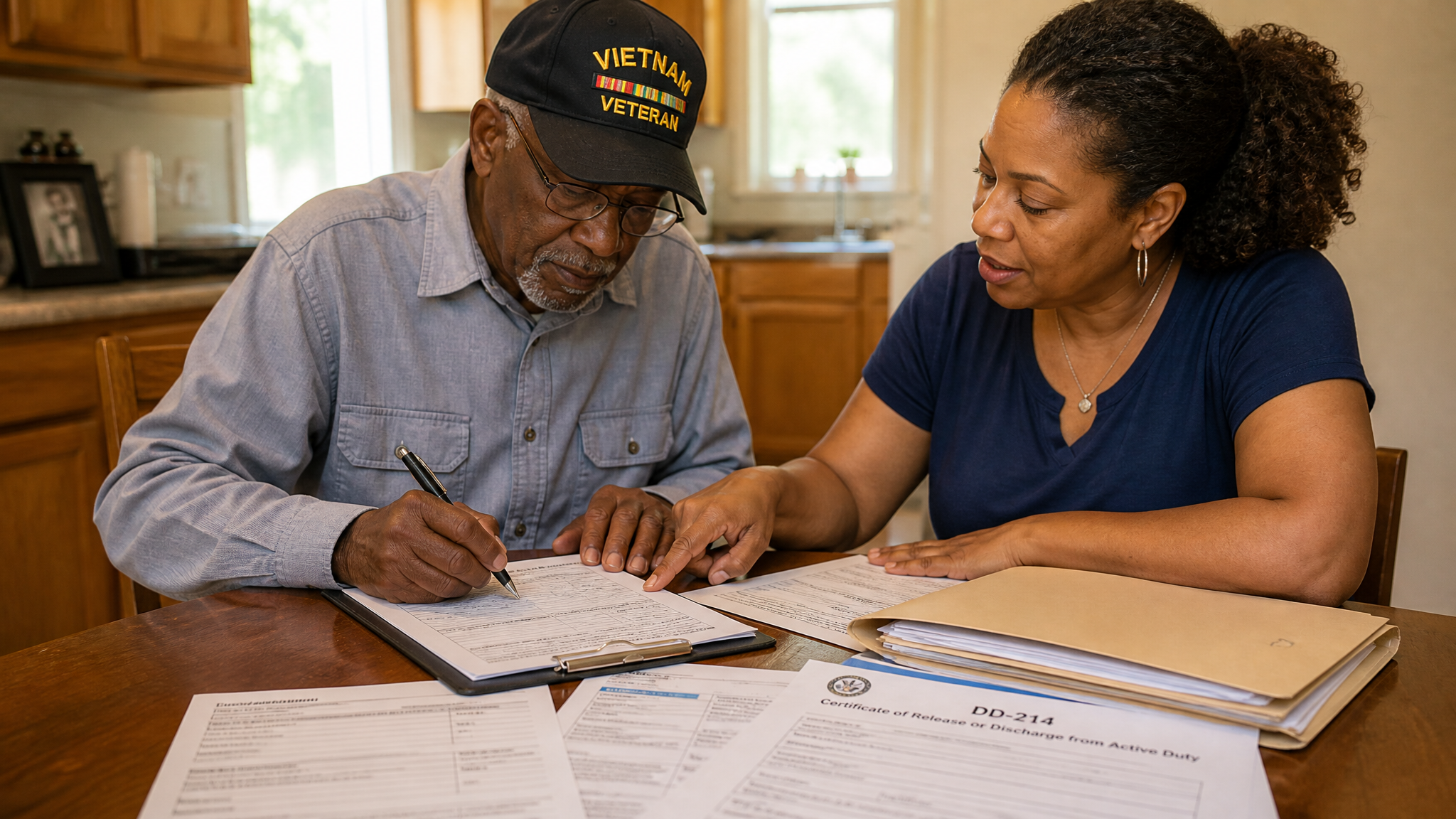


























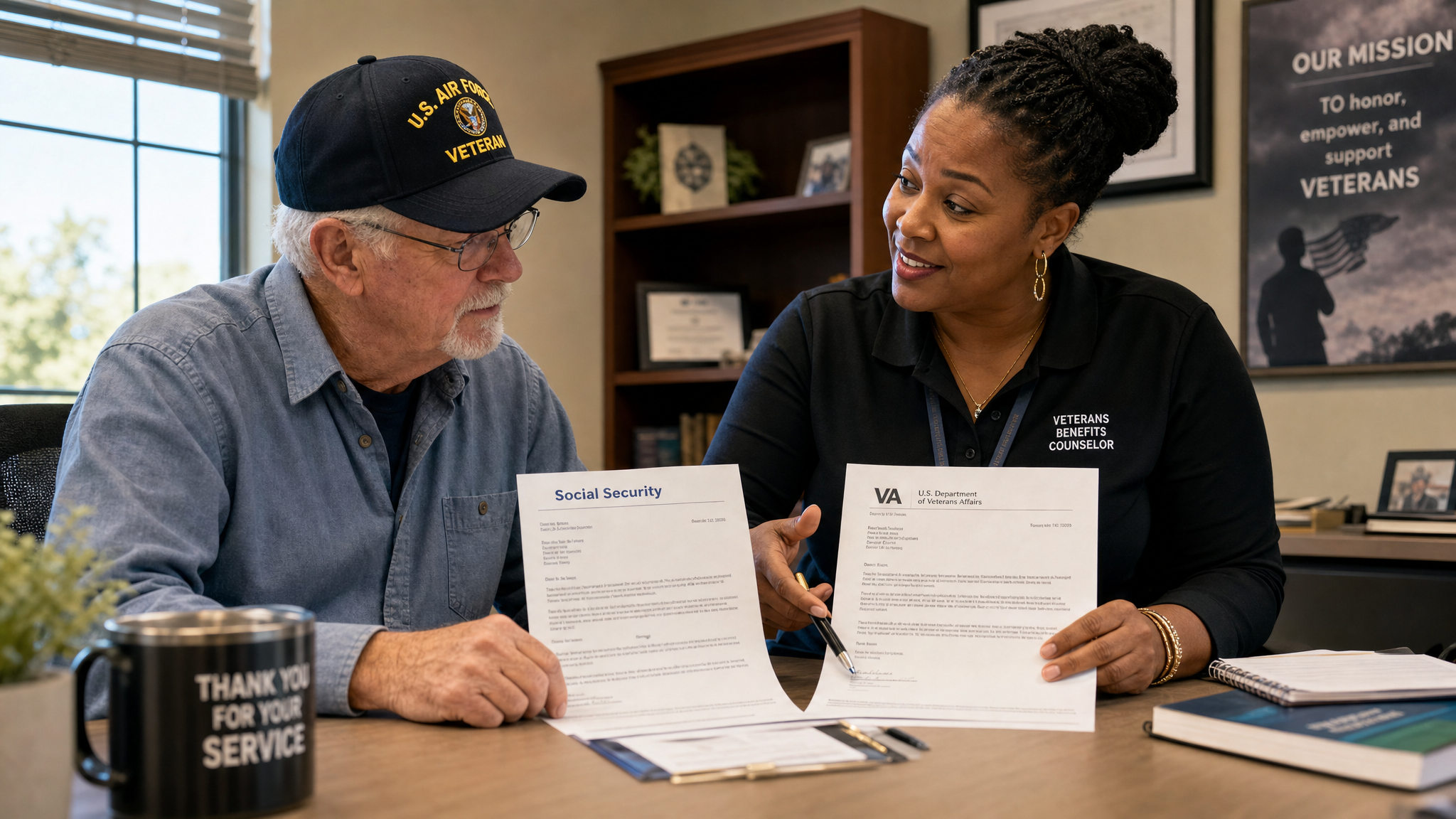







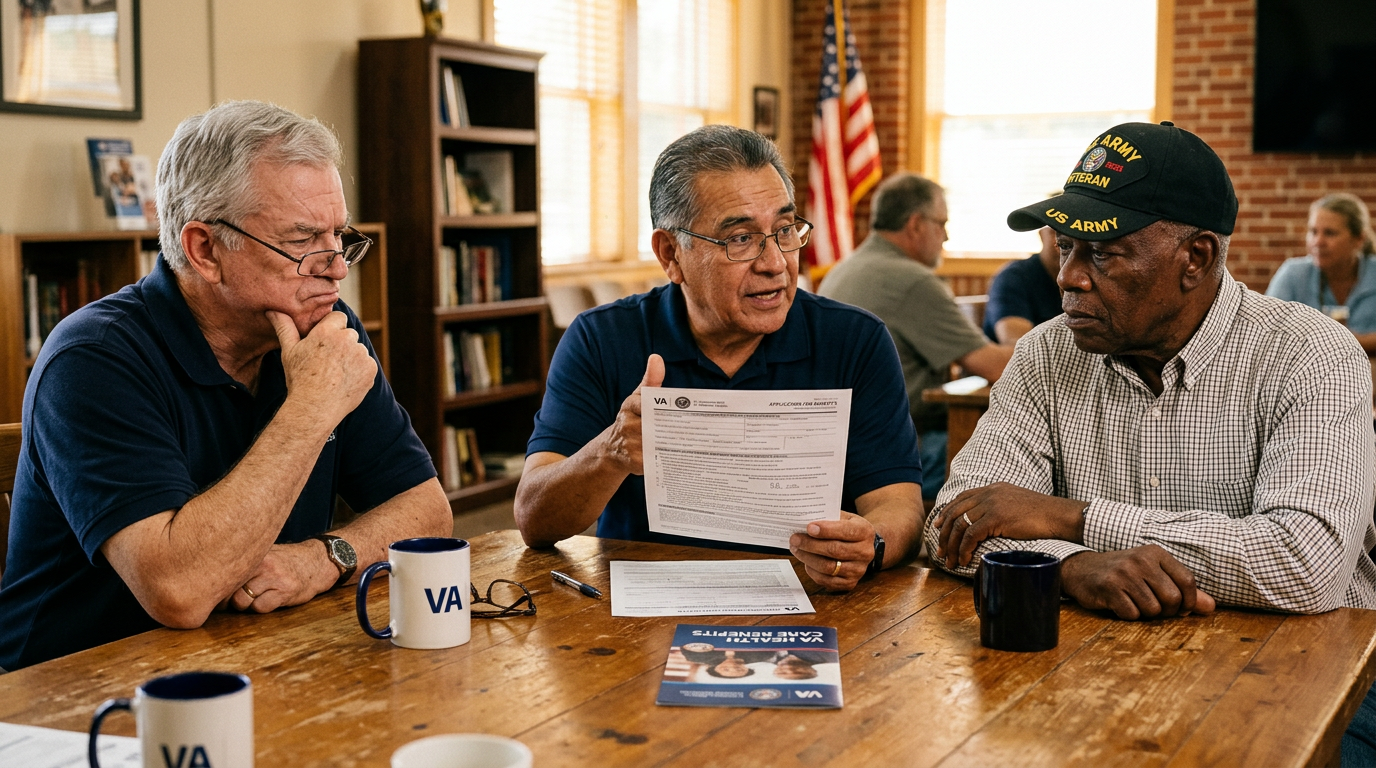







Free information — get a free benefit review
Tell us how to reach you and an accredited team member will help you understand this benefit and claim everything you have earned. No cost, no obligation.
Ready to hire us? Register with us
For veterans who’ve decided they want us on their claim — registering is free too, and it does not make you our client or obligate you to anything. Here is exactly how it works:
- You register. This simply starts the conversation — you are not our client yet, and you owe us nothing.
- You sign and return VA Form 21-22a. It appoints us as your accredited representative and gives us access to your VA file.
- Once we have your signed 21-22a and access to your case, we verify everything is in order.
It involves the registration form and signing VA Form 21-22a — by law we can’t accept your claim, work on it, or contact the VA for you until that power of attorney is signed. You decide whether to move forward.
Official VA links
Answers, in plain language
Common questions about Concurrent Receipt (CRDP & CRSC)
What is Concurrent Receipt (CRDP & CRSC)?
Concurrent receipt lets eligible military retirees collect their full retired pay and their VA disability compensation at the same time - instead of trading one for the other. There are two programs: CRDP (Concurrent Retirement and Disability Pay) and CRSC (Combat-Related Special Compensation). Many retirees do not realize they qualify - especially for the tax-free CRSC.
Who qualifies for Concurrent Receipt (CRDP & CRSC)?
This benefit is generally for: Military retiree, Veteran. Recovering retired pay that was offset dollar-for-dollar by VA disability CRDP for retirees with a 50% or higher VA disability rating
How much does Concurrent Receipt (CRDP & CRSC) pay?
CRDP restores your retired pay if you are a retiree with a VA rating of 50% or higher (or receiving benefits at the 100% rate through TDIU). It is paid automatically by the military pay center - there is no application. It is taxable, like your regular retired pay. Generally you need to be a 20-year retiree (length-of-service or a medical/Chapter 61 retiree with at least 20 years) to receive CRDP.
How do I apply for Concurrent Receipt (CRDP & CRSC)?
CRDP is automatic - if you qualify, the pay center starts it for you, no form needed. CRSC must be applied for through your branch of service using that branch’s CRSC application, with evidence linking each disability to combat, hazardous duty, an instrumentality of war, or simulated war (training). If you qualify for both, the pay center pays the higher amount and lets you switch during the yearly open season.
What does it cost to get help with Concurrent Receipt (CRDP & CRSC), and are you VA-accredited?
This benefit is administered by the Defense Department’s pay center, not the VA, which is exactly why it falls through the cracks - the VA rates your disability, but a different office decides your retired pay. CRSC in particular is easy to miss because you have to apply for it and prove the combat connection. It is free to talk with us, and no one may charge you to file a first-time VA claim. The Aging Veteran is led by Albert L. Thombs Jr., a VA-accredited claims agent (accreditation #45147) and disabled veteran; any appeal work is handled on a no-fee-unless-you-win basis. We are an independent accredited practice and are not affiliated with, or endorsed by, the U.S. Department of Veterans Affairs.