
Veteran Benefits
Nexus Letters: What Makes One Actually Work
This guide explains what a nexus letter is, what the VA actually requires, the exact language that must appear, how to work with your doctor, and common mistakes that sink otherwise solid claims.

Who this is for
A nexus letter is a medical opinion linking your condition to military service. The VA requires specific language, a detailed rationale, and consistency with your records. A weak letter gets ignored. A strong one can change your entire claim.
In plain language
What Nexus Letters: What Makes One Actually Work covers
- What a nexus letter is and why the VA requires it
- The M21-1 manual standard for credible medical opinions
- Key elements: qualification statement, service-connection opinion, detailed rationale
- Working with your private physician vs. nexus letter providers
- How to support your nexus letter with consistent medical records
- Common mistakes that weaken or destroy a nexus letter

The full picture
Everything you need to know
Nothing hidden behind a click, and nothing you have to go looking for on another website. Here is the whole story in plain language - the facts and the figures first - so you can decide what fits your situation.
Key facts & current figures
- The required language is "at least as likely as not" -- meaning a 50% or greater probability that the condition is service-connected.
- The VA's M21-1 Adjudication Procedures Manual defines the standard for what makes a nexus letter credible and persuasive.
- The strongest letters come from specialists in the relevant medical field -- a cardiologist for heart conditions, an orthopedist for joint claims, and so on.
- Every nexus letter must include a detailed rationale citing clinical findings, peer-reviewed research, and the veteran's specific service history.
- The most common fatal flaw: the letter contradicts the veteran's own medical records, giving the VA an easy reason to reject the opinion.
General figures, current as of December 2025 and reviewed each year. Your exact amount depends on your situation - always confirm on va.gov.
What a nexus letter actually is
- A nexus letter is a written medical opinion from a qualified healthcare provider stating that your current condition is connected to your military service.
- The letter must use specific language: "at least as likely as not" -- meaning a 50% or greater probability that the condition is service-connected.
- The VA treats a nexus letter as medical evidence, not as a conclusive determination. It is weighed alongside C&P exams, service records, and treatment history.
- A nexus letter from a specialist in the relevant medical field carries significantly more weight than one from a general practitioner.
- The letter is not a form -- it is a professional medical opinion document. There is no VA template. The quality depends entirely on the provider who writes it.
The M21-1 standard: what the VA requires
- The VA's M21-1 Adjudication Procedures Manual defines what makes a nexus letter credible and persuasive.
- The letter must provide a clear medical opinion on whether the condition is at least as likely as not related to military service.
- It must include a thorough rationale supported by factual data and logical reasoning -- not just a conclusion.
- The provider must address any conflicting evidence in the record and explain why their opinion is still valid despite contradictions.
- A nexus letter without a detailed rationale is given little to no probative weight by VA raters, regardless of the provider's credentials.
- The manual emphasizes that bare conclusions (e.g., "In my opinion, this is service-connected") without supporting explanation are insufficient.
Five key elements of an effective nexus letter
- Qualification statement -- The provider states their credentials, specialty, and experience relevant to your condition.
- Service-connection opinion -- A clear, unambiguous statement using "at least as likely as not" language.
- Detailed rationale -- The medical reasoning: clinical findings, diagnostic test results, peer-reviewed research, and how the provider arrived at their conclusion.
- Consistency with records -- The letter must reference your documented service treatment records, in-service incidents or exposures, and post-service medical history.
- Supporting evidence attached -- Copies of diagnostic tests, imaging, treatment notes, and any relevant studies should accompany the letter.
- Missing any one of these elements gives the VA a reason to assign your letter reduced weight in the rating decision.
Working with your private physician
- If you have a private doctor, the first step is asking whether they are willing to fill out a Disability Benefits Questionnaire (DBQ) for your condition.
- A completed DBQ provides detailed clinical information in a format the VA recognizes and trusts -- it often carries more weight than a standalone nexus letter.
- After the DBQ, ask your physician to write a nexus letter linking your current diagnosis to a specific in-service event, exposure, or pattern of service.
- Your physician must have access to your complete medical history -- partial records lead to opinions the VA can easily dismiss.
- A nexus letter alone does not guarantee approval. The VA requires a current diagnosis and a consistent history of care to support the connection.
- If your physician is unfamiliar with VA claims, provide them with the M21-1 standard and the specific language the VA expects.
Nexus letter providers: what to know
- There are third-party providers who specialize in writing nexus letters for VA claims. Some are legitimate medical professionals; others are document mills.
- A reputable provider will review your full medical record, conduct their own evaluation, and produce an opinion grounded in clinical evidence.
- A document-mill letter -- generic language, no personal evaluation, no reference to your specific records -- will be assigned little or no weight by the VA.
- The VA does not automatically disqualify third-party nexus letters, but it does scrutinize them more closely than letters from treating physicians.
- If you use a nexus provider, ensure they have verifiable credentials, a track record with VA claims, and are willing to defend their opinion if challenged.
- Cost varies widely: $500 to $2,500+ depending on the provider and complexity. A free letter from your treating physician often carries more weight.
Common mistakes that destroy nexus letters
- No rationale -- Stating a conclusion without explaining the medical reasoning. The VA will assign it zero probative weight.
- Contradicting the record -- If the letter says your condition started in service but your records show no complaints until years later, the VA will reject the opinion.
- Wrong standard of proof -- Using "possible" or "could be" instead of "at least as likely as not." The VA requires the 50% threshold.
- No current diagnosis -- A nexus letter linking service to a condition you haven't been formally diagnosed with is worthless.
- Generic template -- A letter that reads like it could apply to anyone, with no reference to your specific service history or medical records.
- Missing supporting documents -- Submitting the letter without the medical records, test results, and service records that support the opinion.
Your complete benefit picture
You do not have to sort this out alone
A nexus letter is not a magic bullet. The VA weighs it against all other evidence in your file. If your medical records show no treatment history, no consistent complaints, and no current diagnosis, even the best-written nexus letter will not save the claim. The letter supports your case -- it does not replace building the case first. Start with documenting your symptoms, getting treatment, and ensuring your records tell the full story.

Two ways to move forward — both free
Not sure if this applies to you?
Ask our free assistant a few plain questions and get an honest read on what you and your family may qualify for, at no cost. It takes just a few minutes, and there is no sign-up and no obligation of any kind. You will get a clear, plain-language picture of where you stand and what might be worth filing. And if you would rather talk to a real person, an accredited agent is only a message away.
Have a question? Get free information
Ask a question, learn what you may be owed, or find out where you stand. Confidential, free, and no obligation to go any further.
Ready to hire us? Register
Decided you want us to work your claim? Registering is free — we match you with an accredited advocate and get you started. We cannot begin until you sign VA Form 21-22a, and fees, if any, are always disclosed up front.
Worth knowing
Before you file, keep this in mind
A nexus letter is not a magic bullet. The VA weighs it against all other evidence in your file. If your medical records show no treatment history, no consistent complaints, and no current diagnosis, even the best-written nexus letter will not save the claim. The letter supports your case -- it does not replace building the case first. Start with documenting your symptoms, getting treatment, and ensuring your records tell the full story.
A clear path forward
Your step-by-step action plan
No rush and no pressure - but a little order helps. Applying is always free.
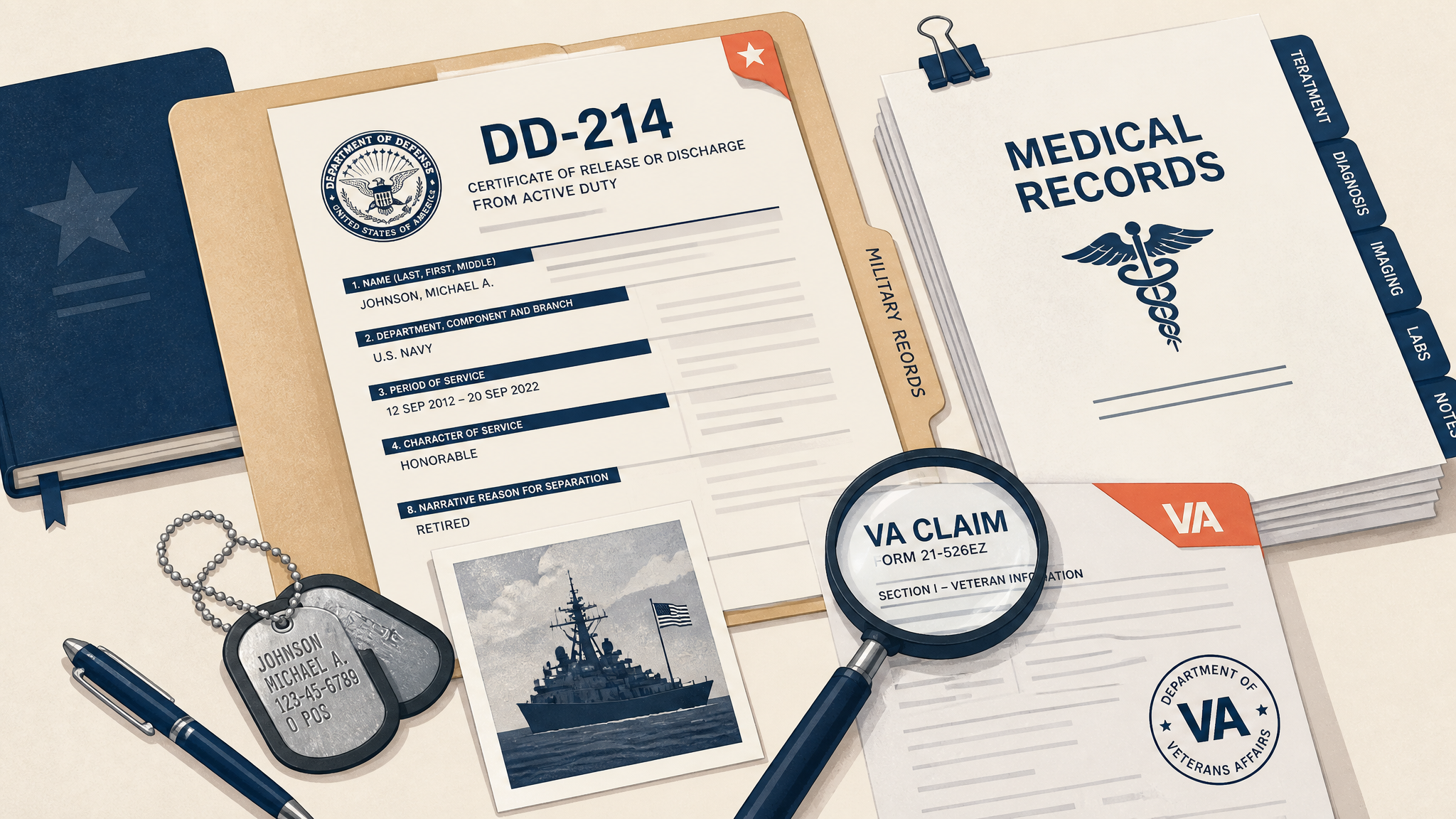
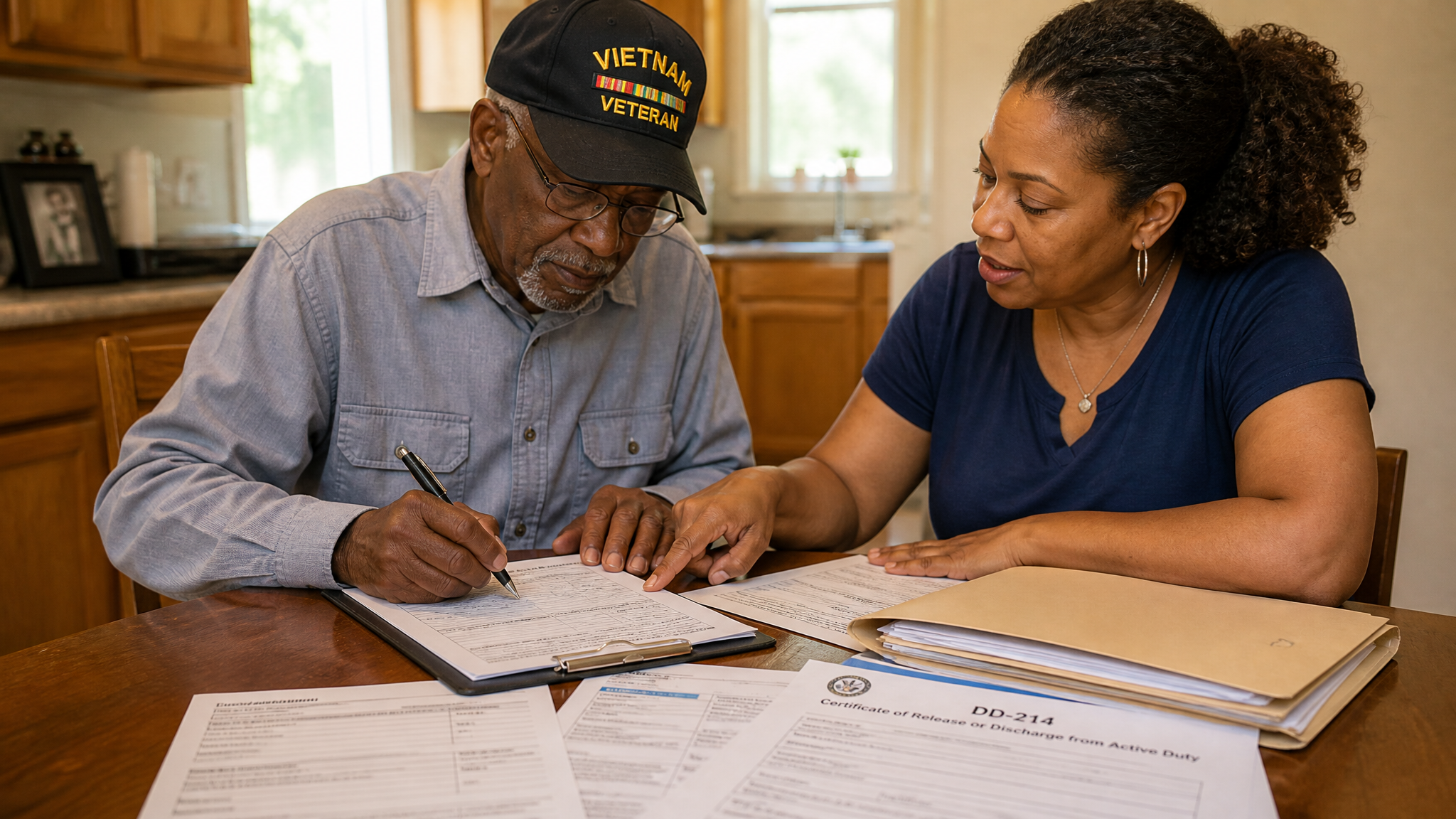
FIG. 01 - Gather your paperwork
First
See what you qualify for
A nexus letter is a medical opinion linking your condition to military service. The VA requires specific language, a detailed rationale, and consistency with your records. A weak letter gets ignored. A strong one can change your entire claim.
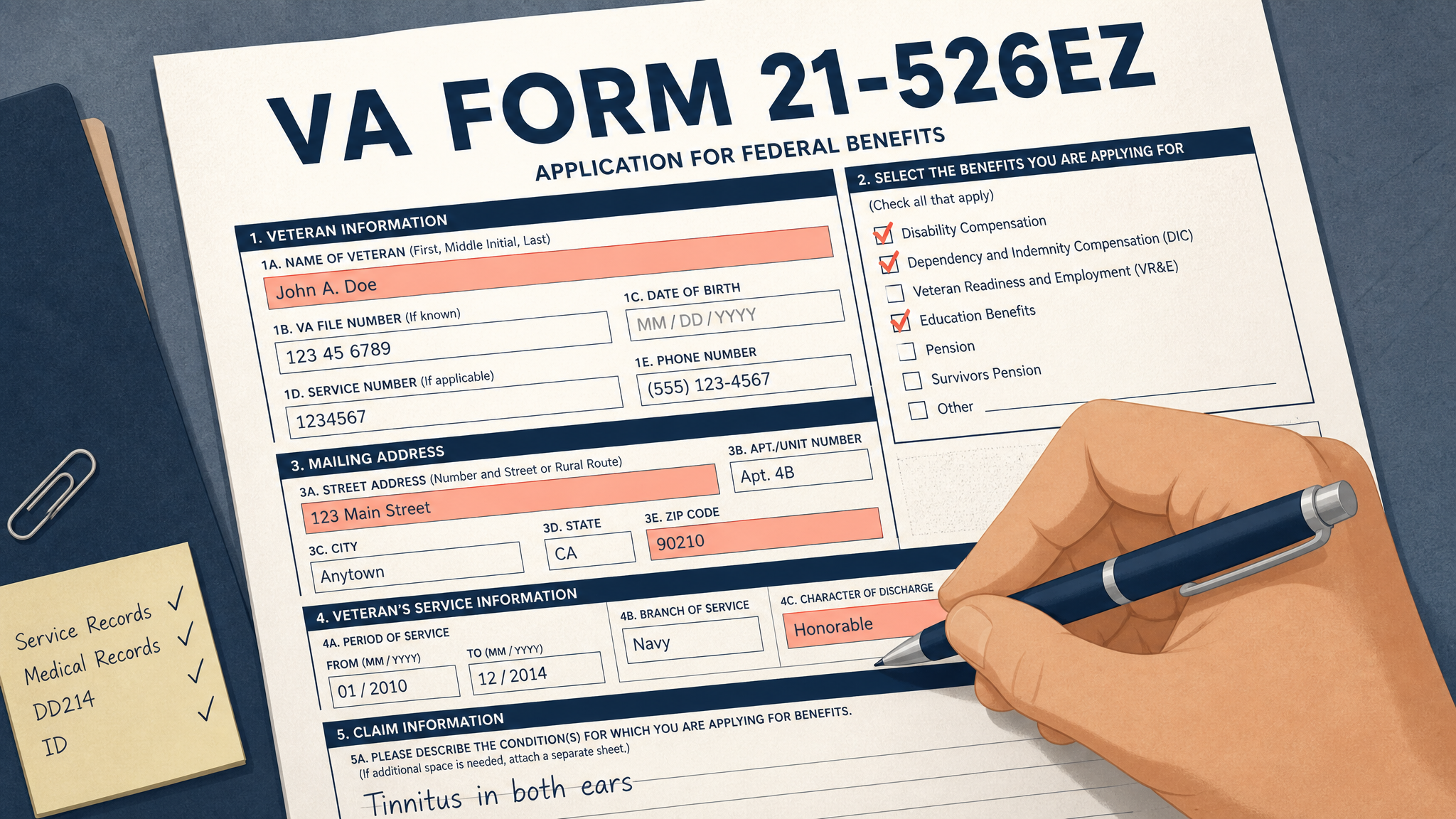
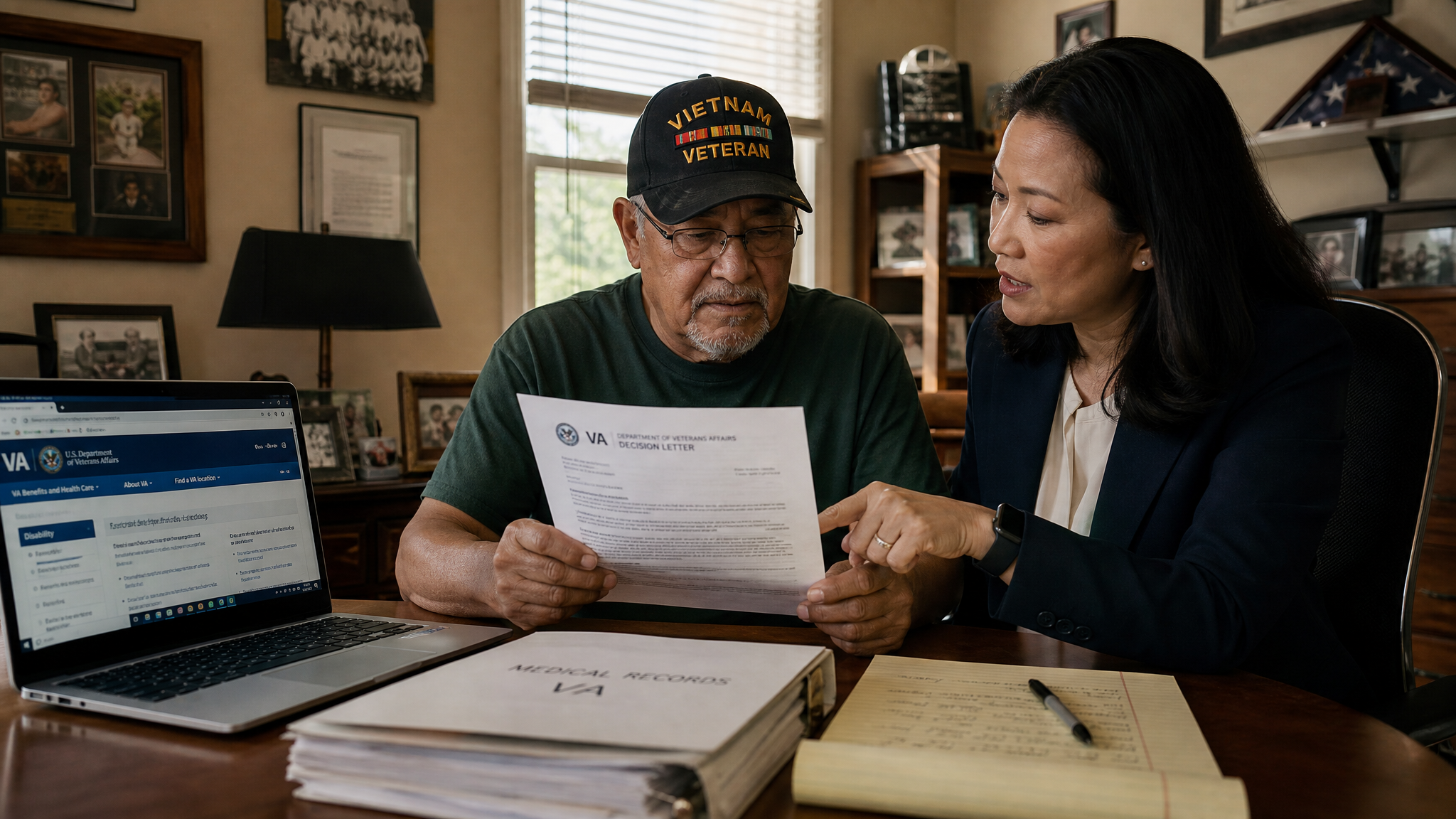
FIG. 02 - Fill out the form
Gather
Collect your documents
Pull your DD-214 and any records that support your claim - we can help you figure out exactly what you need.
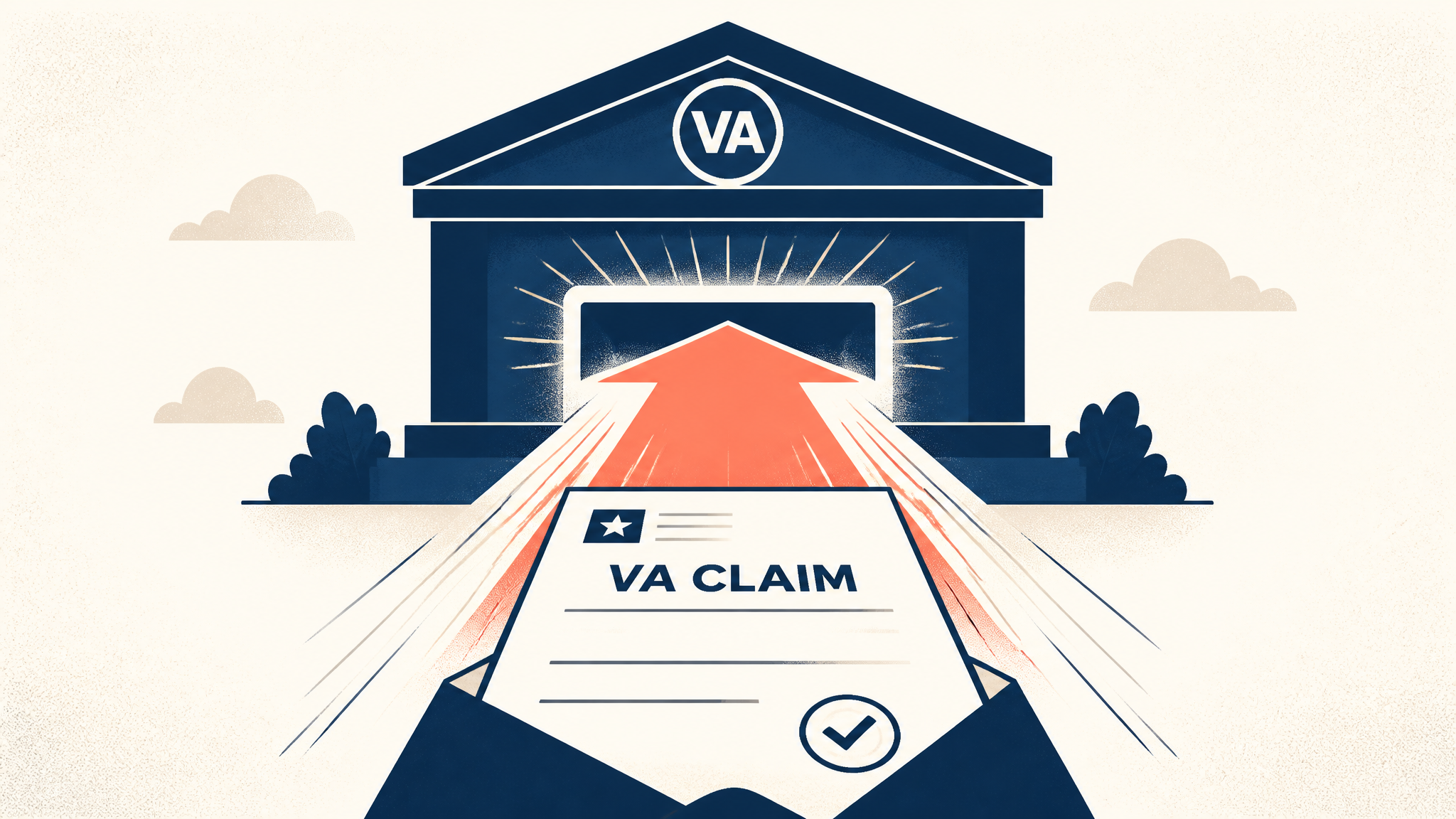
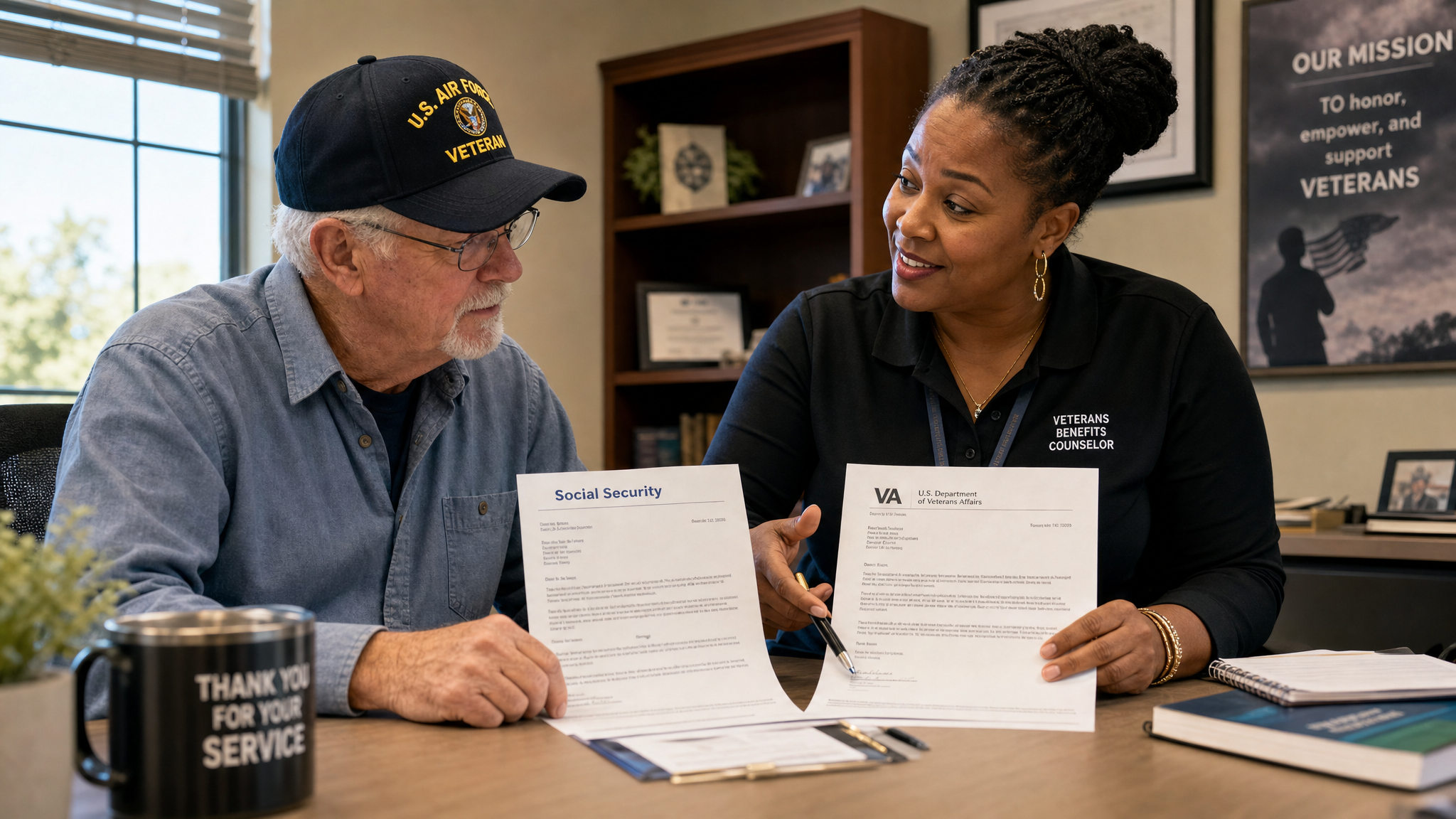
FIG. 03 - File the claim
File it - always free
Apply for the benefit
A nexus letter is submitted as supporting evidence with your VA claim (Form 21-526EZ). Attach it alongside your medical records, service treatment records, and any DBQs. If filing an appeal, submit the nexus letter with your Supplemental Claim (Form 20-0995). There is no separate application for a nexus letter itself.
Who to call & where to go
These are free, official VA lines. Have your Social Security number handy when you call.
MyVA411 - Main VA Line
Not sure who to call? Start here. One number for anything VA - they route you to the right office.
VA Benefits Hotline
Compensation, pension, and general claim questions.
Rather have us handle it?
No phone tag, no hold music. Call our office and a real, VA-accredited person walks you through it - start to finish.
702-992-4883Not sure where to start?
A nexus letter is submitted as supporting evidence with your VA claim (Form 21-526EZ). Attach it alongside your medical records, service treatment records, and any DBQs. If filing an appeal, submit the nexus letter with your Supplemental Claim (Form 20-0995). There is no separate application for a nexus letter itself.
More benefits for veterans
These often go hand in hand - tap any card to learn more.

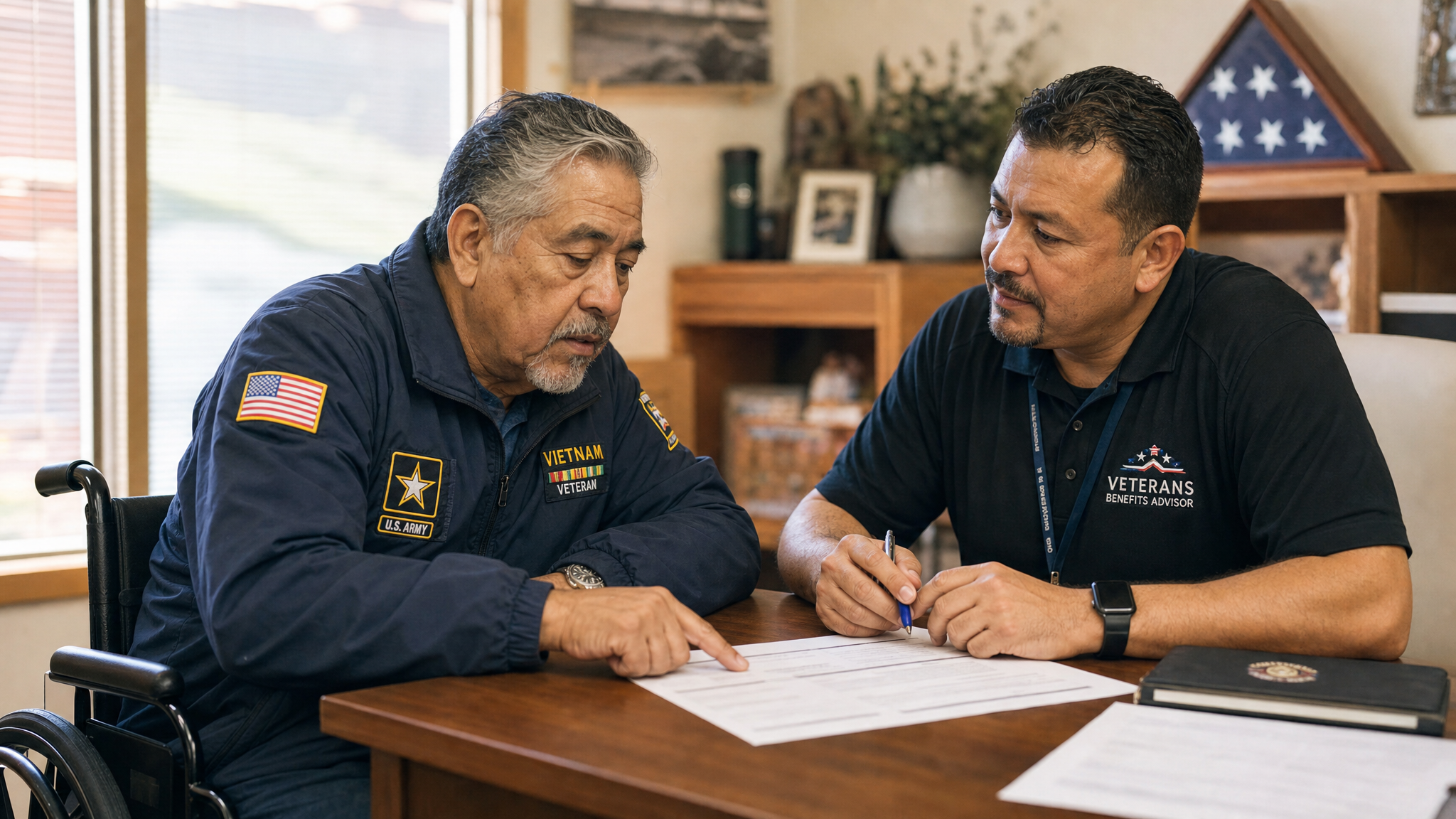








































Free information — get a free benefit review
Tell us how to reach you and an accredited team member will help you understand this benefit and claim everything you have earned. No cost, no obligation.
Ready to hire us? Register with us
For veterans who’ve decided they want us on their claim — registering is free too, and it does not make you our client or obligate you to anything. Here is exactly how it works:
- You register. This simply starts the conversation — you are not our client yet, and you owe us nothing.
- You sign and return VA Form 21-22a. It appoints us as your accredited representative and gives us access to your VA file.
- Once we have your signed 21-22a and access to your case, we verify everything is in order.
It involves the registration form and signing VA Form 21-22a — by law we can’t accept your claim, work on it, or contact the VA for you until that power of attorney is signed. You decide whether to move forward.
Official VA links
Answers, in plain language
Common questions about Nexus Letters: What Makes One Actually Work
What is Nexus Letters: What Makes One Actually Work?
This guide explains what a nexus letter is, what the VA actually requires, the exact language that must appear, how to work with your doctor, and common mistakes that sink otherwise solid claims.
Who qualifies for Nexus Letters: What Makes One Actually Work?
This benefit is generally for: Veterans filing a service-connection claim, Veterans whose claim was denied for lack of medical evidence, Veterans working with a private physician, Families helping a veteran build a stronger case. What a nexus letter is and why the VA requires it The M21-1 manual standard for credible medical opinions
How do I apply for Nexus Letters: What Makes One Actually Work?
A nexus letter is submitted as supporting evidence with your VA claim (Form 21-526EZ). Attach it alongside your medical records, service treatment records, and any DBQs. If filing an appeal, submit the nexus letter with your Supplemental Claim (Form 20-0995). There is no separate application for a nexus letter itself.
What does it cost to get help with Nexus Letters: What Makes One Actually Work, and are you VA-accredited?
A nexus letter is not a magic bullet. The VA weighs it against all other evidence in your file. If your medical records show no treatment history, no consistent complaints, and no current diagnosis, even the best-written nexus letter will not save the claim. The letter supports your case -- it does not replace building the case first. Start with documenting your symptoms, getting treatment, and ensuring your records tell the full story. It is free to talk with us, and no one may charge you to file a first-time VA claim. The Aging Veteran is led by Albert L. Thombs Jr., a VA-accredited claims agent (accreditation #45147) and disabled veteran; any appeal work is handled on a no-fee-unless-you-win basis.