
Veteran Benefits
Mental Health VA Claims - Rating Ladder, C&P Exams & MST
The VA rates mental health conditions - PTSD, major depressive disorder, generalized anxiety, bipolar disorder, and others - on a single scale from 0% to 100% based on how severely your symptoms impair your ability to work and function socially. This page provides the full rating ladder with the exact criteria at each level, explains the C&P examination process specific to mental health, covers military sexual trauma (MST) and personal assault claims and the special evidence rules that apply, and gives practical guidance on how to prepare so the exam captures the truth of your condition.

Who this is for
Mental health claims are the fastest-growing category at the VA - and the most misunderstood. Veterans underreport symptoms because they were trained to push through, and examiners rate what you tell them, not what you feel. This page lays out the exact rating criteria the VA uses for every mental health percentage from 0 to 100, explains how the C&P exam works, and covers the special rules for MST and personal assault claims. Knowing what the VA is looking for before you walk into the exam room is the difference between a 30% rating and the 70% or 100% you actually deserve.
In plain language
What Mental Health VA Claims - Rating Ladder, C&P Exams & MST covers
- The full 0% to 100% mental health rating ladder with exact VA criteria
- What each rating level looks like in daily life
- How the mental health C&P examination works
- Military sexual trauma (MST) and personal assault claims
- Key VA forms for mental health claims
- How to prepare for your mental health exam
- Veterans Crisis Line and MST support resources
The full picture
Everything you need to know
Nothing hidden behind a click, and nothing you have to go looking for on another website. Here is the whole story in plain language - the facts and the figures first - so you can decide what fits your situation.
Key facts & current figures
- The VA rates all mental health conditions on the same General Rating Formula under 38 CFR 4.130 - PTSD, depression, anxiety, bipolar, and more are all measured on the same 0% to 100% scale.
- The rating is based on occupational and social impairment - how your condition affects your ability to work, maintain relationships, and handle daily life - not just a list of symptoms.
- At ##70%##, the VA criteria include suicidal ideation, near-continuous panic or depression, impaired impulse control, and inability to maintain relationships. Many veterans rated 30% or 50% actually meet the 70% criteria and do not know it.
- Military Sexual Trauma (MST) claims have relaxed evidence rules - the VA does not require a contemporaneous report of the assault. Behavioral changes, lay statements, and counseling records can establish the in-service event.
- The Veterans Crisis Line is available 24/7 at ##988## (press 1) or by texting 838255. For MST support, call the Safe Helpline at ##877-995-5247##.
General figures, current as of December 2025 and reviewed each year. Your exact amount depends on your situation - always confirm on va.gov.
0% - Diagnosed but symptoms do not impair functioning
- A mental health condition has been diagnosed and is acknowledged by the VA, but symptoms are not severe enough to interfere with occupational and social functioning or to require continuous medication.
- In daily life: you carry the diagnosis, but it does not noticeably affect your work, your relationships, or your ability to handle routine tasks. This rating does establish service connection - it opens the door for an increase later if symptoms worsen.
10% - Mild symptoms controlled by medication
- Occupational and social impairment due to mild or transient symptoms that decrease work efficiency and the ability to perform occupational tasks only during periods of significant stress, or symptoms controlled by continuous medication.
- In daily life: you generally function well, but stress at work or at home can briefly worsen symptoms. Medication keeps things manageable most of the time.
30% - Occasional decrease in work efficiency
- Occupational and social impairment with occasional decrease in work efficiency and intermittent periods of inability to perform occupational tasks, although generally functioning satisfactorily.
- Criteria include: depressed mood, anxiety, suspiciousness, panic attacks (weekly or less), chronic sleep impairment, and mild memory loss (forgetting names, directions, recent events).
- In daily life: you can hold a job and maintain some relationships, but there are bad stretches - a week where you cannot focus, nights you cannot sleep, moments of irrational suspicion that strain your marriage.
50% - Reduced reliability and productivity
- Occupational and social impairment with reduced reliability and productivity due to symptoms such as: flattened affect, circumstantial or stereotyped speech, panic attacks more than once a week, difficulty understanding complex commands, impairment of short- and long-term memory, impaired judgment, impaired abstract thinking, disturbances of motivation and mood, and difficulty establishing and maintaining effective relationships.
- In daily life: your work performance is noticeably inconsistent. You forget things that matter, you struggle with instructions that used to be easy, your mood swings push people away, and you have stopped doing things you once enjoyed.
70% - Deficiencies in most areas of life
- Occupational and social impairment with deficiencies in most areas - work, school, family relations, judgment, thinking, or mood.
- Criteria include: suicidal ideation, obsessional rituals that interfere with routine activities, speech that is intermittently illogical or irrelevant, near-continuous panic or depression affecting the ability to function independently, impaired impulse control (unprovoked irritability with periods of violence), spatial disorientation, neglect of personal appearance and hygiene, difficulty adapting to stressful circumstances, and inability to establish and maintain effective relationships.
- In daily life: you are struggling in almost every area. You think about ending it. You do not shower for days. You snap at your spouse over nothing. You cannot hold a conversation that makes sense. You have not been to a social event in months. Many veterans rated 30% or 50% actually live at this level and do not realize the criteria match their experience.
100% - Total occupational and social impairment
- Total occupational and social impairment due to symptoms such as: gross impairment in thought processes or communication, persistent delusions or hallucinations, grossly inappropriate behavior, persistent danger of hurting self or others, intermittent inability to perform activities of daily living (including maintenance of minimal personal hygiene), disorientation to time or place, and memory loss for names of close relatives, own occupation, or own name.
- In daily life: you cannot work, you cannot care for yourself without help, you may not know where you are or what day it is, and you are a danger to yourself or others. This is the highest level of impairment the VA recognizes.
The mental health C&P examination - what to expect
- The VA schedules a Compensation and Pension (C&P) exam to evaluate the severity of your condition and its connection to your service. This is typically scheduled 30-60 days after you file.
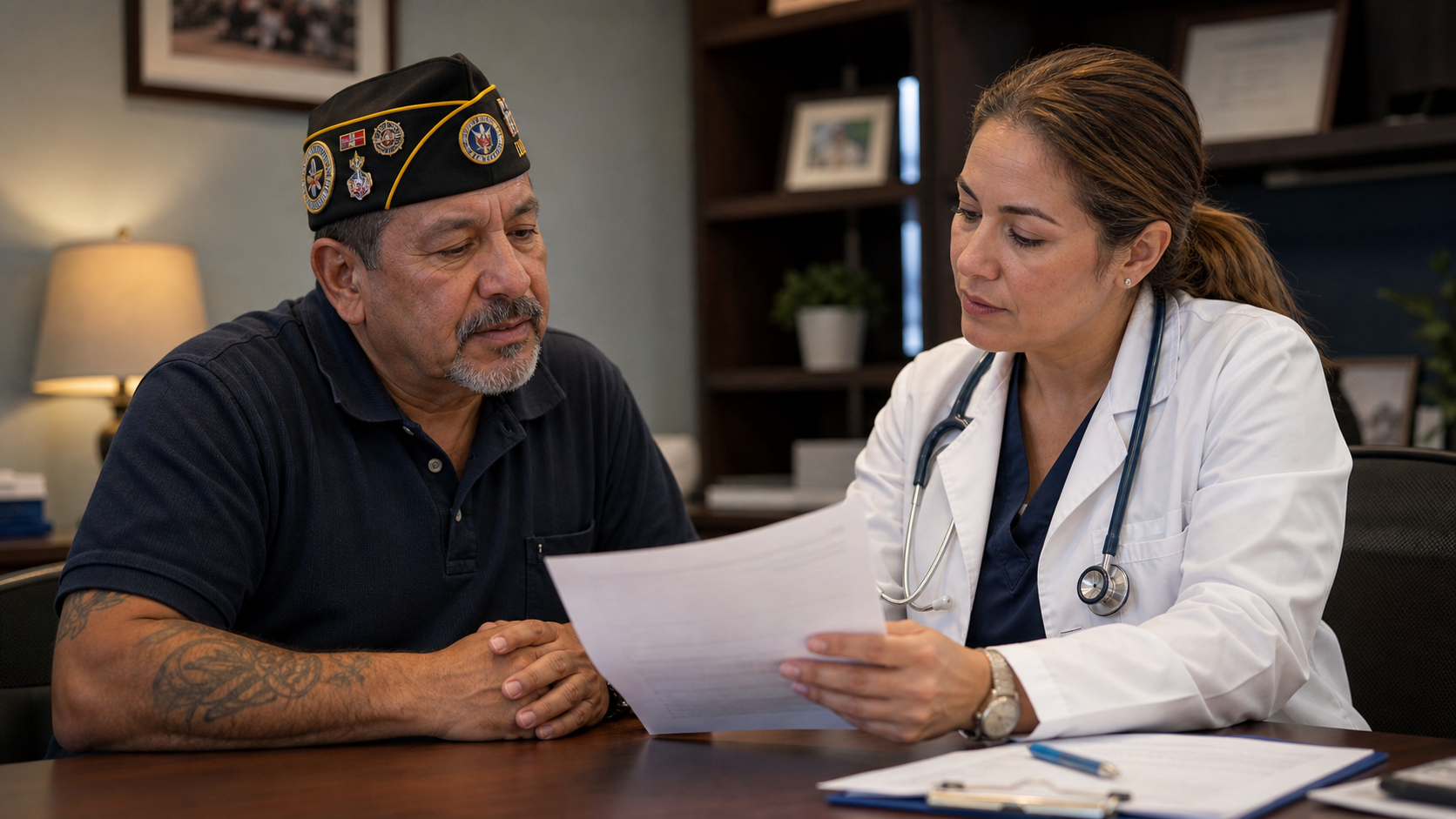
- The examiner - usually a psychologist or psychiatrist - will ask about your symptoms, their frequency and severity, your daily routine, your relationships, your work history, and the in-service event that caused or worsened the condition.
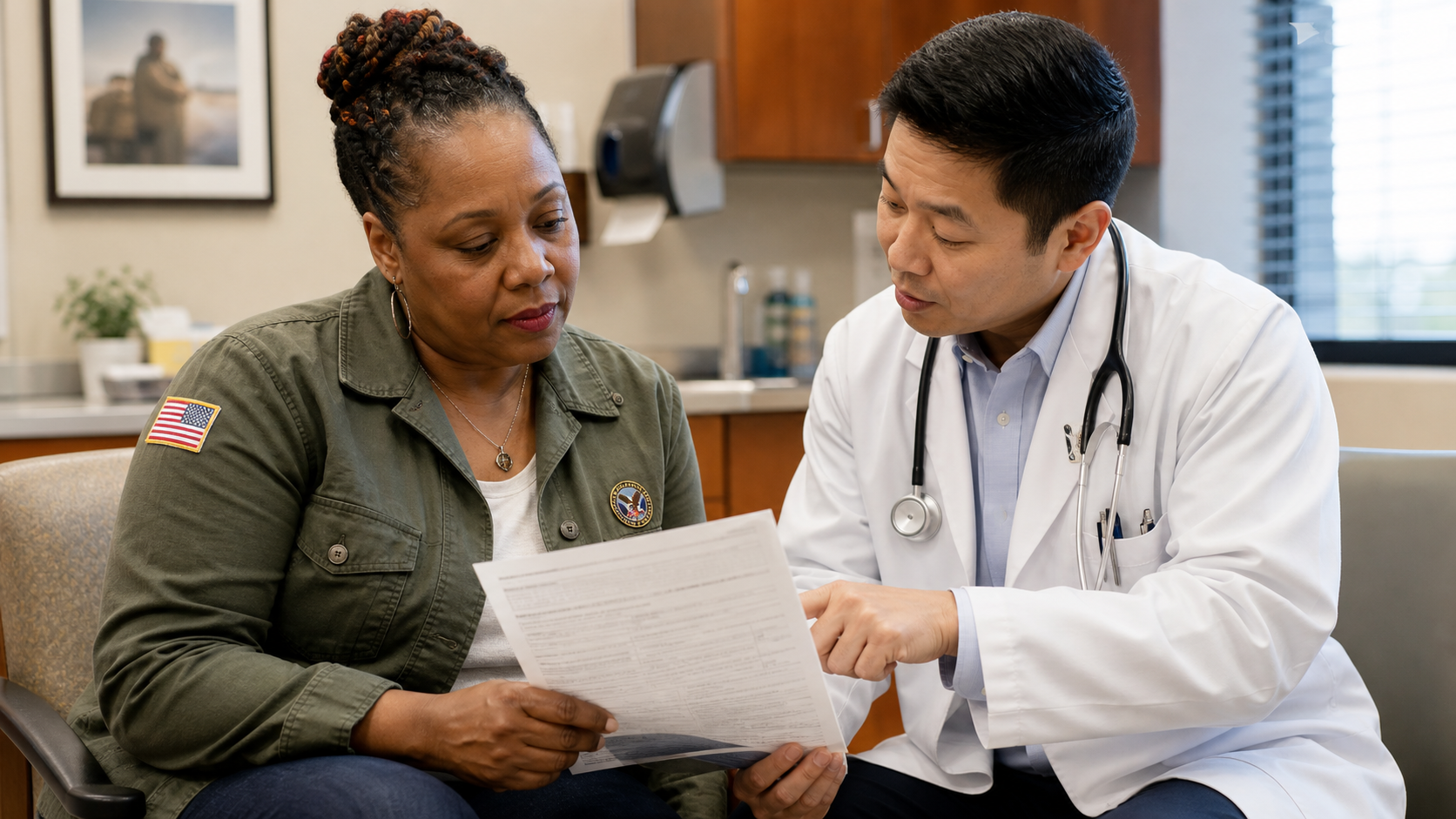
- The examiner will use the Disability Benefits Questionnaire (DBQ) for mental disorders to document findings. The DBQ maps directly to the rating criteria above.
- Be honest and direct. Do not exaggerate, but do not minimize. Describe your worst days, not your best. If you have suicidal thoughts, say so. If you cannot maintain hygiene, say so. The examiner rates what you report.
- You may bring a representative, advocate, or friend for support. You may also submit a written statement summarizing your symptoms if you are worried about forgetting something under pressure.
- After the exam, the report goes to the VA Regional Office for a rating decision. If the report is incomplete or unclear, the VA may send it back for corrections - this can add weeks to the process.
Military sexual trauma (MST) and personal assault claims
- MST is any sexual assault or repeated sexual harassment that occurred during military service. The VA recognizes that MST often goes unreported at the time, so the evidence rules are relaxed.
- You do not need a police report, a contemporaneous complaint, or a military investigation to file an MST claim. The VA can accept behavioral markers as evidence: a request for a transfer, a drop in performance, substance abuse that started after the event, or a diagnosis of depression or PTSD that appeared around the time of the assault.
- File VA Form 21-0781 (Statement in Support of Claim for PTSD) - this form now covers personal assault. Describe the event as specifically as you are able, and describe the behavioral changes that followed.
- Lay witness statements (VA Form 21-10210) from friends, family, or fellow service members who observed changes in your behavior after the event can be powerful supporting evidence.
- Every VA medical center has an MST Coordinator who can connect you with treatment and help you navigate the claims process. Find yours at benefits.va.gov/benefits/mstcoordinators.asp.
- For immediate support: Veterans Crisis Line ##988## (press 1), or the Safe Helpline at ##877-995-5247## (24/7, confidential, specifically for sexual assault in the military community).
Key VA forms for mental health claims
- VA Form 21-526EZ - Application for Disability Compensation (the main claim form for any condition).
- VA Form 21-0781 - Statement in Support of Claim for Service Connection for PTSD, including personal assault and MST.
- VA Form 21-10210 - Lay/Witness Statement. Friends, family, and fellow service members can describe what they observed about your condition and behavioral changes.
- VA Form 21-4138 - Statement in Support of Claim. A general-purpose form for providing your personal narrative, additional details, or clarification at any stage of the process.
Your complete benefit picture
You do not have to sort this out alone
Mental health claims get underrated more than any other category because veterans minimize their symptoms. You were trained to be tough. You were trained to say "I am fine." But the C&P examiner rates what you report, and if you downplay suicidal thoughts, panic attacks, or relationship failures, you will get a 30% rating for a 70% condition. Do not exaggerate - but do not minimize. Tell the examiner the worst day, not the best day. Tell them how it really is, not how you wish it were. That is not weakness - it is the truth, and it is what the rating criteria are designed to capture.
Two ways to move forward — both free
Not sure if this applies to you?
Ask our free assistant a few plain questions and get an honest read on what you and your family may qualify for, at no cost. It takes just a few minutes, and there is no sign-up and no obligation of any kind. You will get a clear, plain-language picture of where you stand and what might be worth filing. And if you would rather talk to a real person, an accredited agent is only a message away.
Have a question? Get free information
Ask a question, learn what you may be owed, or find out where you stand. Confidential, free, and no obligation to go any further.
Ready to hire us? Register
Decided you want us to work your claim? Registering is free — we match you with an accredited advocate and get you started. We cannot begin until you sign VA Form 21-22a, and fees, if any, are always disclosed up front.
Worth knowing
Before you file, keep this in mind
Mental health claims get underrated more than any other category because veterans minimize their symptoms. You were trained to be tough. You were trained to say "I am fine." But the C&P examiner rates what you report, and if you downplay suicidal thoughts, panic attacks, or relationship failures, you will get a 30% rating for a 70% condition. Do not exaggerate - but do not minimize. Tell the examiner the worst day, not the best day. Tell them how it really is, not how you wish it were. That is not weakness - it is the truth, and it is what the rating criteria are designed to capture.
A clear path forward
Your step-by-step action plan
No rush and no pressure - but a little order helps. Applying is always free.
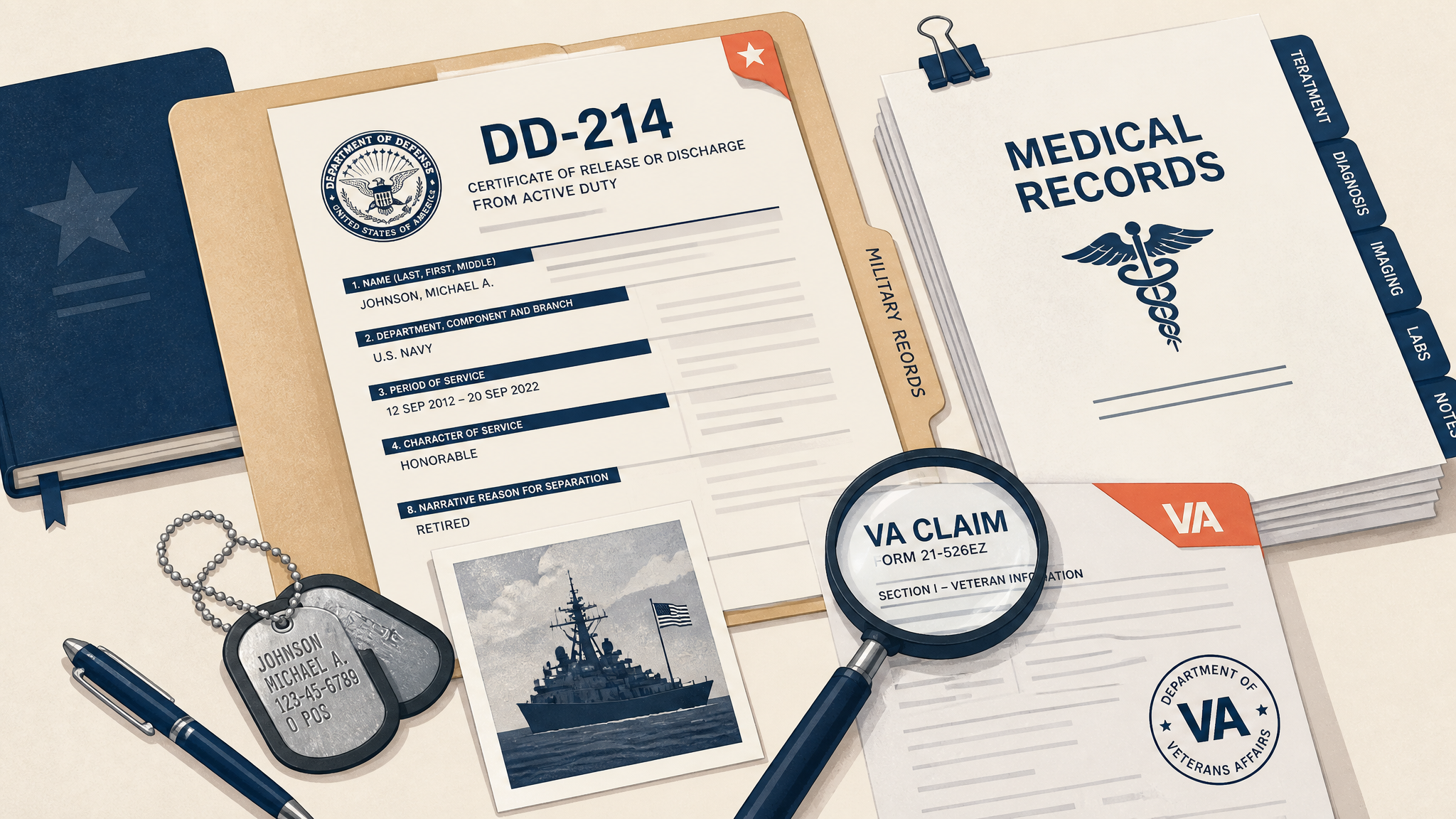
FIG. 01 - Gather your paperwork
First
See what you qualify for
Mental health claims are the fastest-growing category at the VA - and the most misunderstood. Veterans underreport symptoms because they were trained to push through, and examiners rate what you tell them, not what you feel. This page lays out the exact rating criteria the VA uses for every mental health percentage from 0 to 100, explains how the C&P exam works, and covers the special rules for MST and personal assault claims. Knowing what the VA is looking for before you walk into the exam room is the difference between a 30% rating and the 70% or 100% you actually deserve.
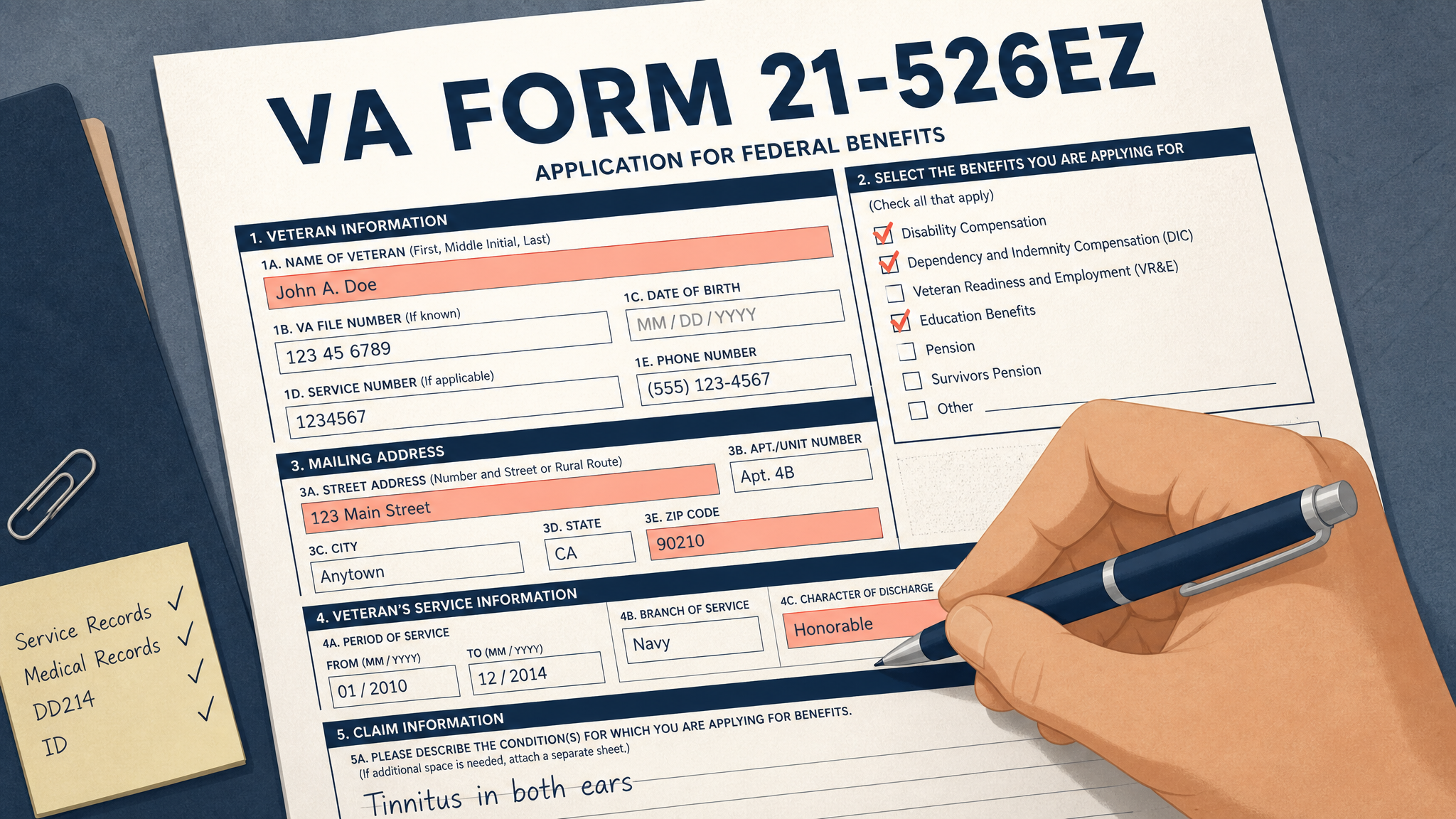
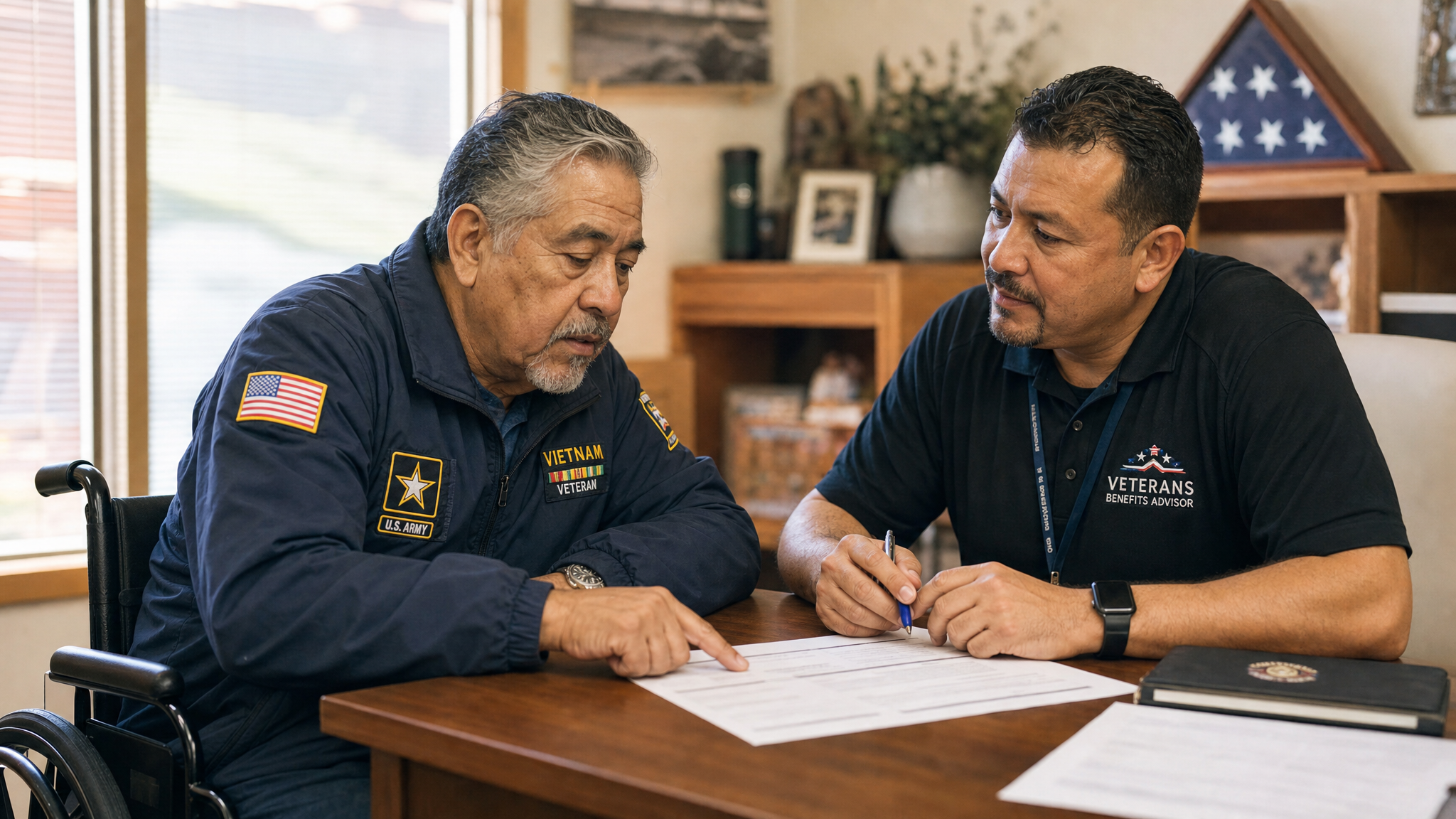
FIG. 02 - Fill out the form
Gather
Collect your documents
Pull your DD-214 and any records that support your claim - we can help you figure out exactly what you need.
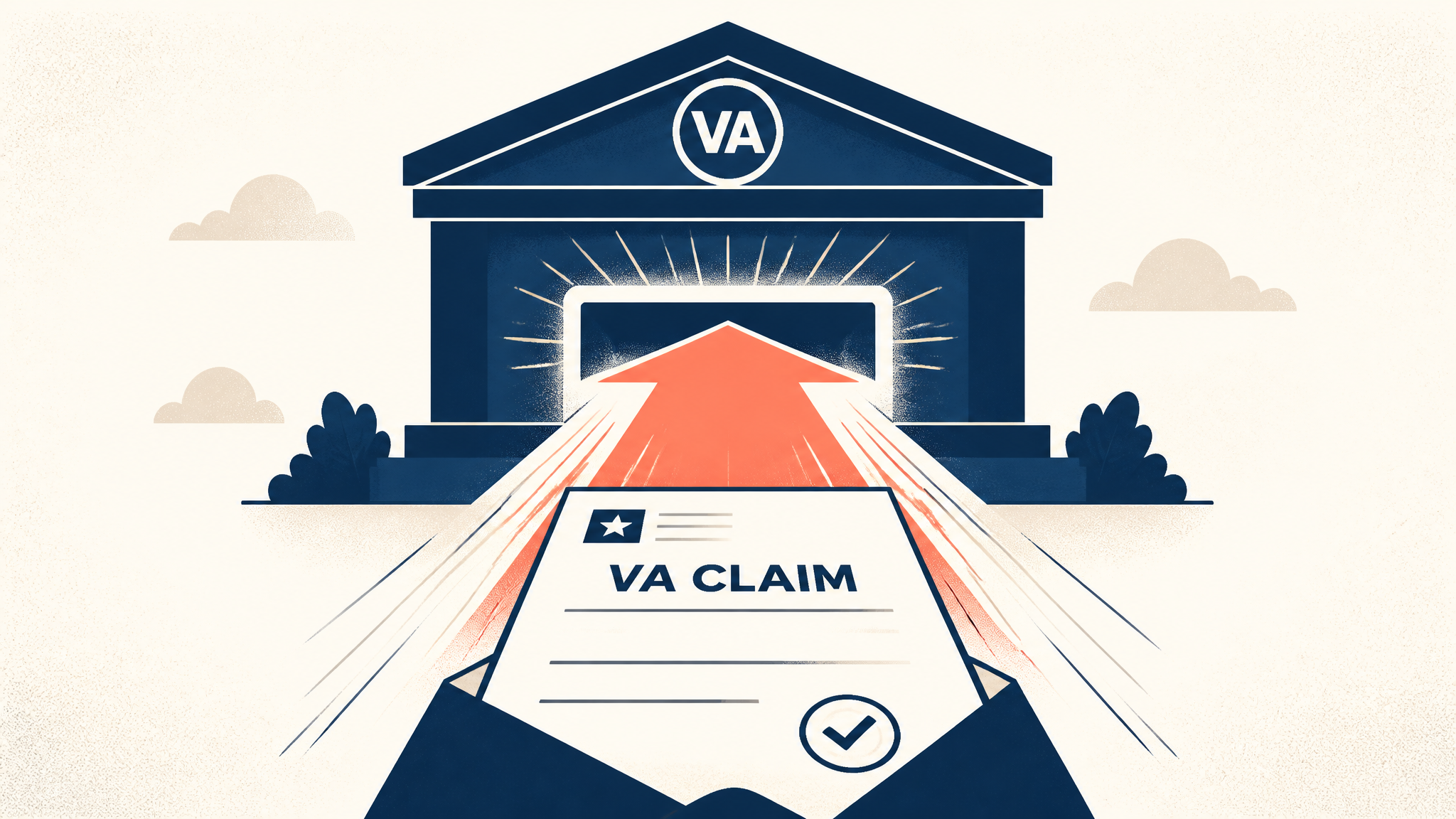
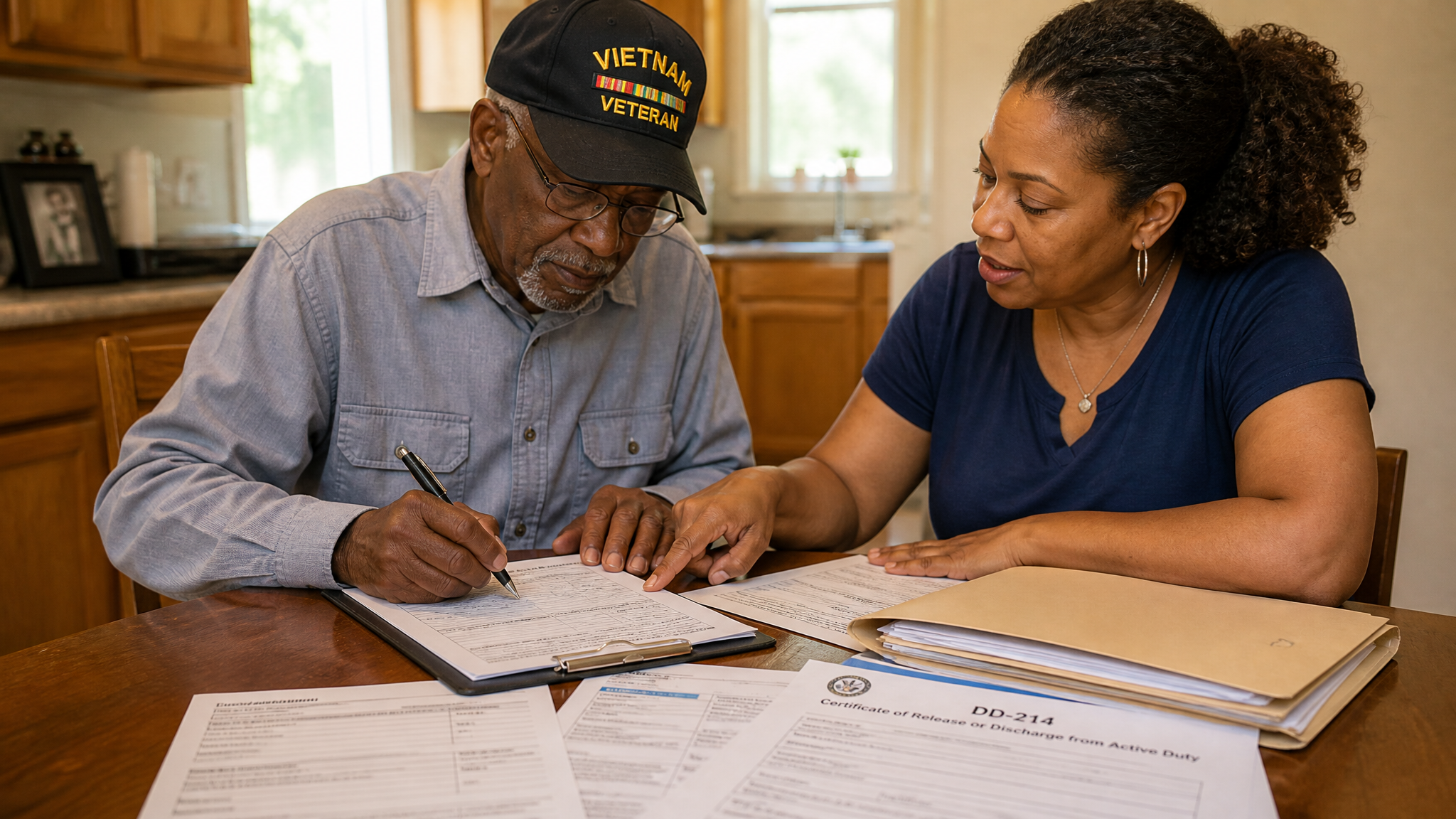
FIG. 03 - File the claim
File it - always free
Apply for the benefit
File VA Form 21-526EZ for the mental health condition. For PTSD, also submit VA Form 21-0781 (Statement in Support of Claim for PTSD). For MST or personal assault PTSD, use VA Form 21-0781 which now covers personal assault (the old 21-0781a was retired). Include your treatment records, any buddy statements from people who witnessed behavioral changes, and your symptom diary. The VA will schedule a C&P mental health exam - typically within 30-60 days of filing. Call the VA Benefits Hotline at 800-827-1000 or work with an accredited representative at no cost.
Who to call & where to go
These are free, official VA lines. Have your Social Security number handy when you call.
MyVA411 - Main VA Line
Not sure who to call? Start here. One number for anything VA - they route you to the right office.
VA Benefits Hotline
Compensation, pension, and general claim questions.
Rather have us handle it?
No phone tag, no hold music. Call our office and a real, VA-accredited person walks you through it - start to finish.
702-992-4883Not sure where to start?
File VA Form 21-526EZ for the mental health condition. For PTSD, also submit VA Form 21-0781 (Statement in Support of Claim for PTSD). For MST or personal assault PTSD, use VA Form 21-0781 which now covers personal assault (the old 21-0781a was retired). Include your treatment records, any buddy statements from people who witnessed behavioral changes, and your symptom diary. The VA will schedule a C&P mental health exam - typically within 30-60 days of filing. Call the VA Benefits Hotline at ##800-827-1000## or work with an accredited representative at no cost.
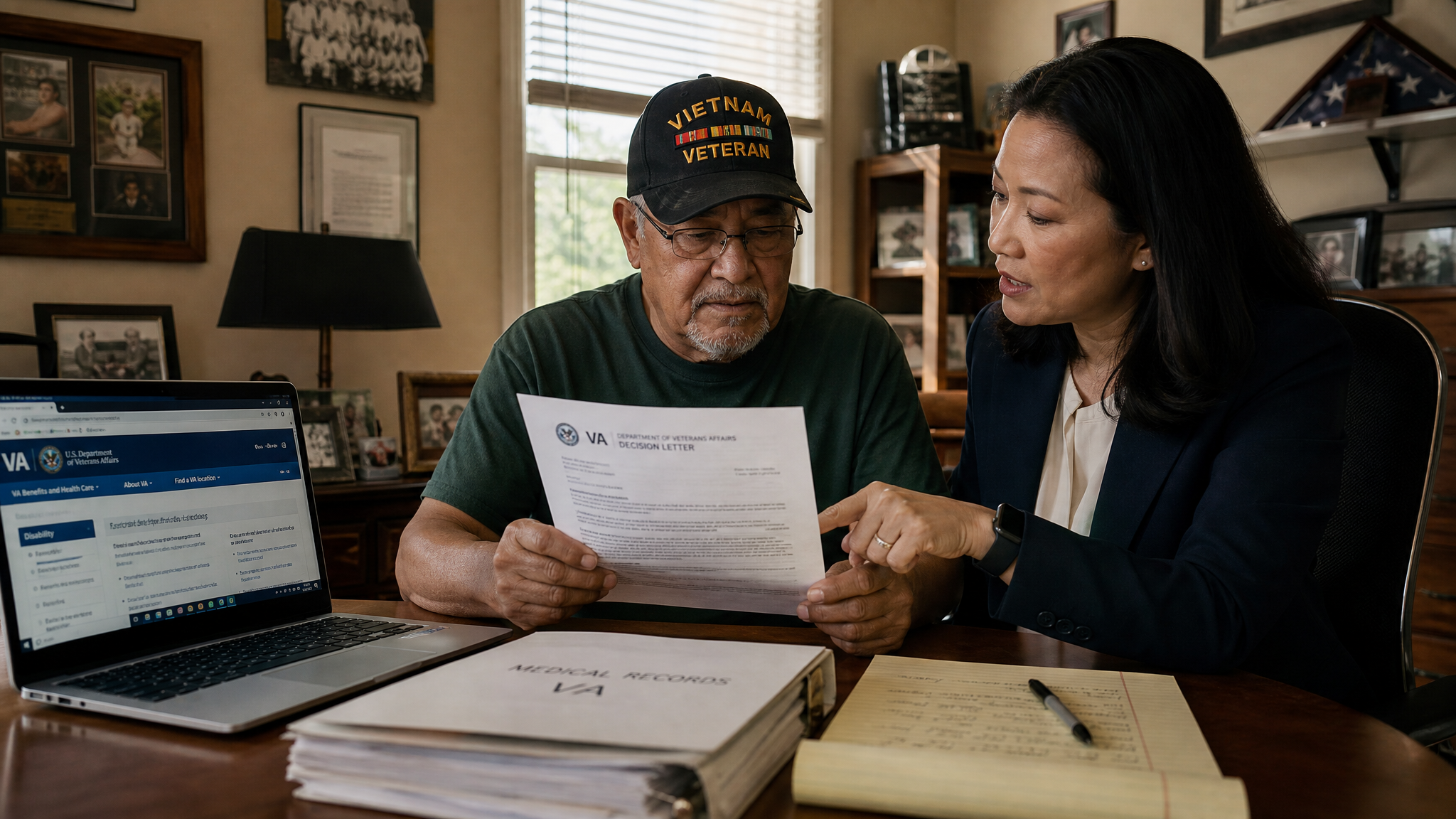
More benefits for veterans
These often go hand in hand - tap any card to learn more.
























Free information — get a free benefit review
Tell us how to reach you and an accredited team member will help you understand this benefit and claim everything you have earned. No cost, no obligation.
Ready to hire us? Register with us
For veterans who’ve decided they want us on their claim — registering is free too, and it does not make you our client or obligate you to anything. Here is exactly how it works:
- You register. This simply starts the conversation — you are not our client yet, and you owe us nothing.
- You sign and return VA Form 21-22a. It appoints us as your accredited representative and gives us access to your VA file.
- Once we have your signed 21-22a and access to your case, we verify everything is in order.
It involves the registration form and signing VA Form 21-22a — by law we can’t accept your claim, work on it, or contact the VA for you until that power of attorney is signed. You decide whether to move forward.
Official VA links
Answers, in plain language
Common questions about Mental Health VA Claims - Rating Ladder, C&P Exams & MST
What is Mental Health VA Claims - Rating Ladder, C&P Exams & MST?
The VA rates mental health conditions - PTSD, major depressive disorder, generalized anxiety, bipolar disorder, and others - on a single scale from 0% to 100% based on how severely your symptoms impair your ability to work and function socially. This page provides the full rating ladder with the exact criteria at each level, explains the C&P examination process specific to mental health, covers military sexual trauma (MST) and personal assault claims and the special evidence rules that apply, and gives practical guidance on how to prepare so the exam captures the truth of your condition.
Who qualifies for Mental Health VA Claims - Rating Ladder, C&P Exams & MST?
This benefit is generally for: Veteran with PTSD, anxiety, depression, or another mental health condition, Veteran preparing for a mental health C&P examination, Survivor of military sexual trauma (MST), Family member supporting a veteran with a mental health claim. The full 0% to 100% mental health rating ladder with exact VA criteria What each rating level looks like in daily life
How do I apply for Mental Health VA Claims - Rating Ladder, C&P Exams & MST?
File VA Form 21-526EZ for the mental health condition. For PTSD, also submit VA Form 21-0781 (Statement in Support of Claim for PTSD). For MST or personal assault PTSD, use VA Form 21-0781 which now covers personal assault (the old 21-0781a was retired). Include your treatment records, any buddy statements from people who witnessed behavioral changes, and your symptom diary. The VA will schedule a C&P mental health exam - typically within 30-60 days of filing. Call the VA Benefits Hotline at 800-827-1000 or work with an accredited representative at no cost.
What does it cost to get help with Mental Health VA Claims - Rating Ladder, C&P Exams & MST, and are you VA-accredited?
Mental health claims get underrated more than any other category because veterans minimize their symptoms. You were trained to be tough. You were trained to say "I am fine." But the C&P examiner rates what you report, and if you downplay suicidal thoughts, panic attacks, or relationship failures, you will get a 30% rating for a 70% condition. Do not exaggerate - but do not minimize. Tell the examiner the worst day, not the best day. Tell them how it really is, not how you wish it were. That is not weakness - it is the truth, and it is what the rating criteria are designed to capture. It is free to talk with us, and no one may charge you to file a first-time VA claim. The Aging Veteran is led by Albert L.