
Veteran Benefits
The VA Appeals Process
What to do when the VA says no. The three review lanes - Supplemental Claim, Higher-Level Review, and a Board Appeal to a Veterans Law Judge - explained plainly, so a denial becomes a starting point instead of a dead end.
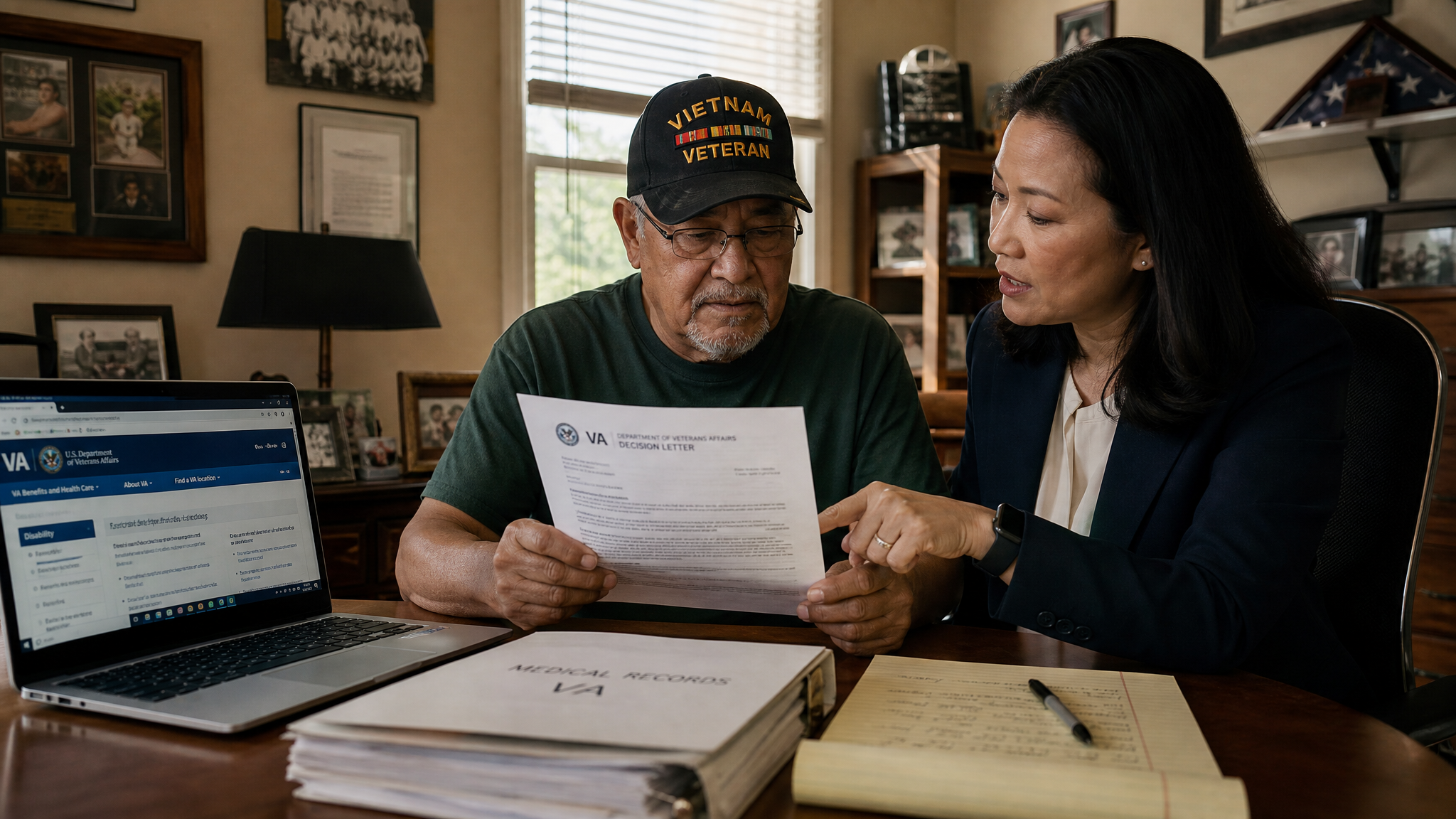
Who this is for
The letter says denied, and it feels final. It is not. The VA has three separate ways to challenge a decision, you have a full year to use them, and the most common reason claims get denied - a missing link between your condition and your service - is exactly the kind of thing an appeal is built to fix.
In plain language
What The VA Appeals Process covers
- The three decision-review lanes and exactly when to use each one
- How to protect your original effective date - and the back pay tied to it
- What "new and relevant evidence" really means for a Supplemental Claim
- The Board of Veterans' Appeals: direct review, evidence, or a hearing
- How long each lane takes, and how to switch lanes if one does not work

VA Appeals Process: Your Options After a DenialOfficial video - U.S. Dept of Veterans Affairs
5 things most veterans aren't aware of
These apply to nearly every VA claim - and they change how much you get and when.
Your filing date sets your back pay
Benefits are generally paid back to the day you file - not the day you are approved. Filing an intent to file today can protect months, even years, of retroactive pay.
One condition can trigger others (secondary claims)
A service-connected condition that causes another - like sleep apnea from PTSD, or a bad knee from a bad hip - can be rated on its own. Each secondary condition adds to your rating.
A medical nexus is what wins the claim
The VA needs a documented link between your condition and your service. A clear nexus opinion is often the difference between an approval and a denial.
Accredited help is free to file an initial claim
By law, an accredited agent cannot charge a fee to prepare and file your original claim. If someone asks for money up front to file, that is a red flag.
A denial is not the end of the road
You have three appeal lanes - Higher-Level Review, a Supplemental Claim with new evidence, and the Board of Veterans Appeals. Many denials are overturned on review.
The full picture
Everything you need to know
Nothing hidden behind a click, and nothing you have to go looking for on another website. Here is the whole story in plain language - the facts and the figures first - so you can decide what fits your situation.
Key facts & current figures
- A denial is not the end. Under the Appeals Modernization Act you have three separate review lanes, and you have one year from the date on your decision letter to act.
- Supplemental Claim (VA Form 20-0995): you add new and relevant evidence the VA has not seen. It goes to a regular reviewer and is often the fastest way to flip a denial.
- Higher-Level Review (VA Form 20-0996): a more senior reviewer takes a completely fresh look at the same evidence - no new evidence allowed, but you can request an informal phone conference to point out the error.
- Board Appeal (VA Form 10182): your case goes to a Veterans Law Judge at the Board of Veterans' Appeals in Washington. You choose direct review, submitting new evidence, or a hearing.
- You can switch lanes. Lose a Higher-Level Review, and you can still file a Supplemental Claim or go to the Board - as long as you keep acting within one year of each decision to preserve your effective date.
General figures, current as of December 2025 and reviewed each year. Your exact amount depends on your situation - always confirm on va.gov.
First, understand what a denial actually is
- A denial or a low rating is a legal decision you are allowed to challenge - not a final judgment on whether you served or whether you are hurting.
- The single most common reason claims are denied is a missing "nexus" - the VA agrees you have the condition, and agrees you served, but says nothing in the file links the two. That is a fixable gap, not a closed door.
- Other frequent reasons: a C&P exam that was inadequate or rushed, records the VA never actually obtained, or symptoms that were downplayed at the exam. Each has a matching fix.
- You have one year from the date on the decision letter to choose a review option. Miss that window and the decision becomes final - so the clock, not the denial, is the real enemy.
Lane 1: Supplemental Claim (VA Form 20-0995)
- Use this when you have new and relevant evidence the VA did not have before - a new doctor's opinion, a nexus letter, buddy statements, or newly located records.
- A regular reviewer looks at the claim again with the new evidence added. Because most denials come down to a missing piece of evidence, this is frequently the most effective lane.
- The VA has a duty to assist in a Supplemental Claim - it will help gather relevant records you identify. There is no limit on how many Supplemental Claims you can file, as long as each brings something new.
- File within one year of your last decision to keep your original effective date and the back pay attached to it.
Lane 2: Higher-Level Review (VA Form 20-0996)
- Use this when you believe the VA got it wrong on the evidence it already had - a misread record, the wrong rating percentage, or a clear error in how the rules were applied.
- A more senior, more experienced reviewer takes an entirely fresh look. You cannot add new evidence in this lane - it is a re-examination of what is already in the file.
- You can request an informal conference - a phone call where you or your representative point directly to the error. Veterans who use that call tend to fare better, because a human being hears the problem explained.
- If the senior reviewer finds a "duty to assist" error, the claim can be sent back to be corrected. Again: file within one year to protect your effective date.
Lane 3: Board Appeal to a Veterans Law Judge (VA Form 10182)
- This sends your case to the Board of Veterans' Appeals in Washington, where a Veterans Law Judge - an attorney who decides only veterans' cases - reviews it.
- You pick one of three dockets. Direct review: the judge decides on the existing record, the fastest Board option. Evidence submission: you get 90 days to send new evidence. Hearing: you speak to the judge directly, by video or in person.
- The Board can grant your claim, deny it, or send it back to the regional office to fix an error. A hearing is your chance to tell your story to the person actually deciding it.
- The Board is slower than the other two lanes - a hearing docket in particular can take a year or more - but it puts your case in front of a judge with the authority to overturn the regional office.
Choosing a lane - and switching when one does not work
- No new evidence, but a clear VA error? Higher-Level Review. New evidence in hand? Supplemental Claim. Want a judge to decide? Board Appeal.
- You are not locked in. Lose a Higher-Level Review and you can still file a Supplemental Claim with new evidence, or take it to the Board. The lanes are designed to flow into one another.
- The one rule that governs all of it: keep acting within one year of each decision. Do that, and your effective date - and your back pay - stay protected no matter how many lanes you use.
- This is the stage where accredited representation earns its keep. An accredited agent or attorney can go into your claims file, find the error that caused the denial, and build the evidence to answer it - and on an appeal, may work on a no-fee-unless-you-win basis.
Your complete benefit picture
You do not have to sort this out alone
The initial claim was free, and so is a Supplemental Claim or Higher-Level Review you file yourself. Once the VA has issued its first decision on the claim, an accredited agent or attorney is permitted to charge a fee for representation from that point forward, most commonly a percentage of past-due back pay recovered, with no fee unless you win. That fee is regulated by federal law and the written fee agreement is filed with the VA.

Two ways to move forward — both free
Not sure if this applies to you?
Ask our free assistant a few plain questions and get an honest read on what you and your family may qualify for, at no cost. It takes just a few minutes, and there is no sign-up and no obligation of any kind. You will get a clear, plain-language picture of where you stand and what might be worth filing. And if you would rather talk to a real person, an accredited agent is only a message away.
Have a question? Get free information
Ask a question, learn what you may be owed, or find out where you stand. Confidential, free, and no obligation to go any further.
Ready to hire us? Register
Decided you want us to work your claim? Registering is free — we match you with an accredited advocate and get you started. We cannot begin until you sign VA Form 21-22a, and fees, if any, are always disclosed up front.
Worth knowing
Before you file, keep this in mind
The initial claim was free, and so is a Supplemental Claim or Higher-Level Review you file yourself. Once the VA has issued its first decision on the claim, an accredited agent or attorney is permitted to charge a fee for representation from that point forward, most commonly a percentage of past-due back pay recovered, with no fee unless you win. That fee is regulated by federal law and the written fee agreement is filed with the VA.
A clear path forward
Your step-by-step action plan
No rush and no pressure - but a little order helps. Applying is always free.
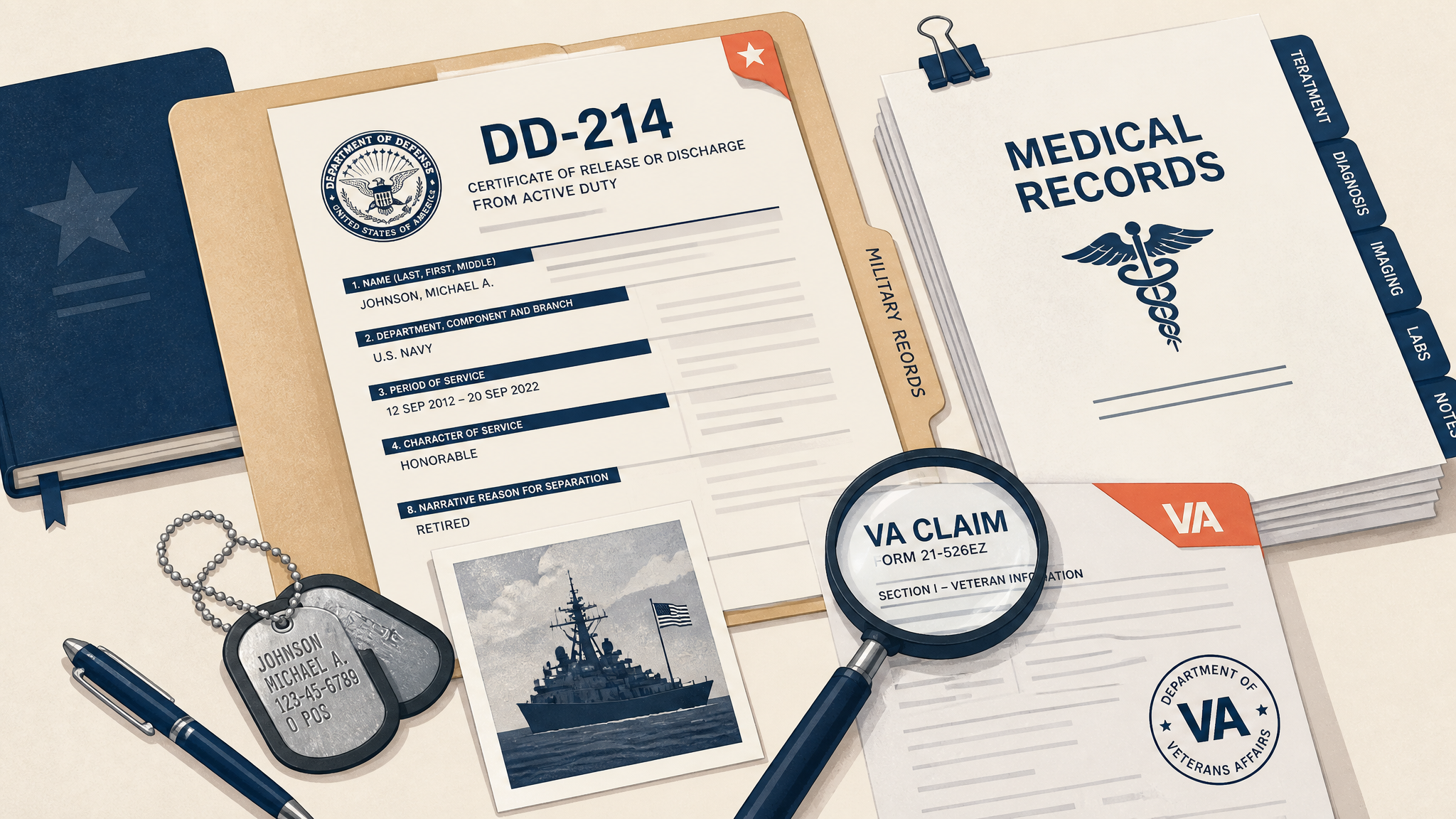
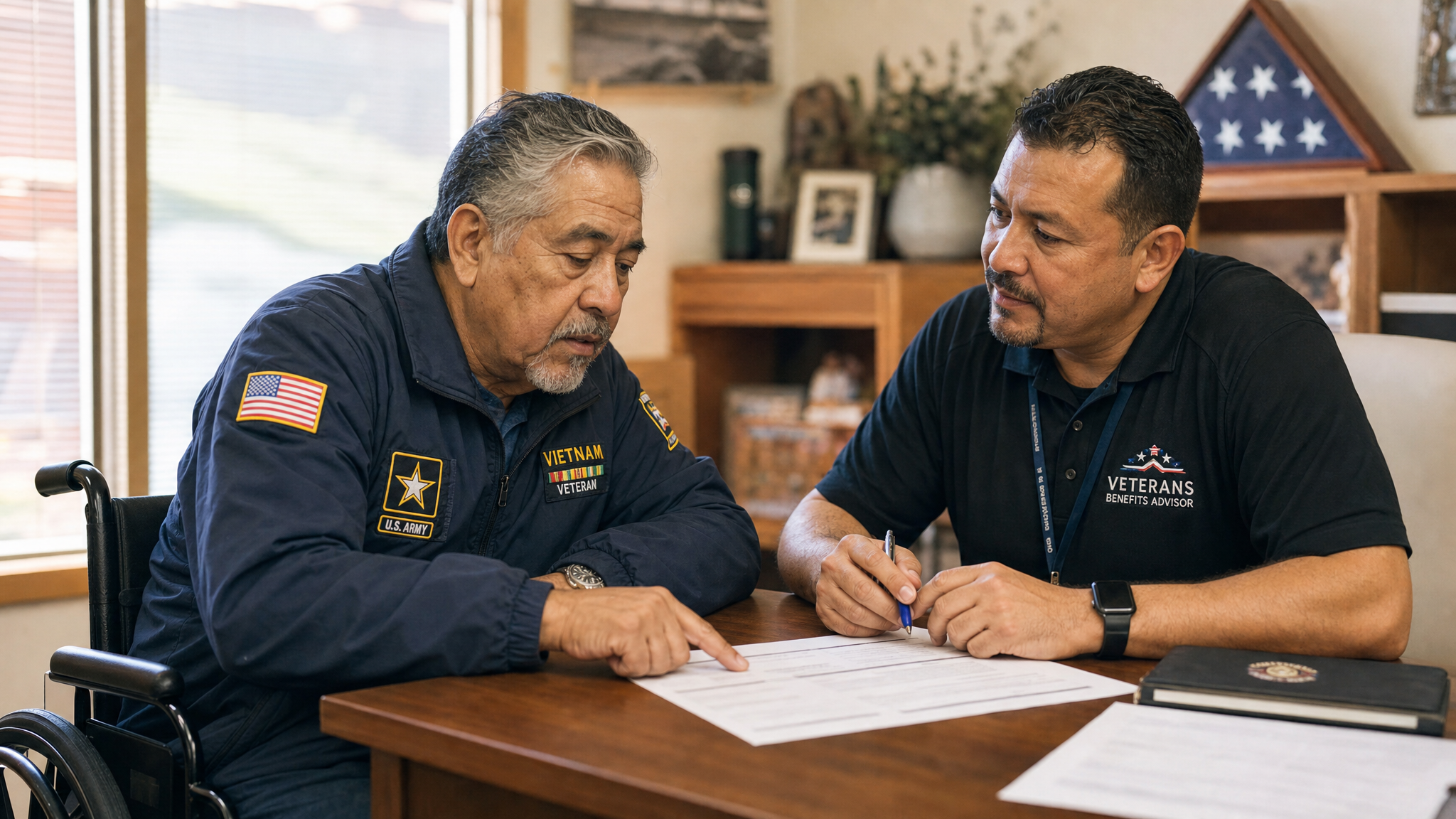
FIG. 01 - Gather your paperwork
First
See what you qualify for
The letter says denied, and it feels final. It is not. The VA has three separate ways to challenge a decision, you have a full year to use them, and the most common reason claims get denied - a missing link between your condition and your service - is exactly the kind of thing an appeal is built to fix.
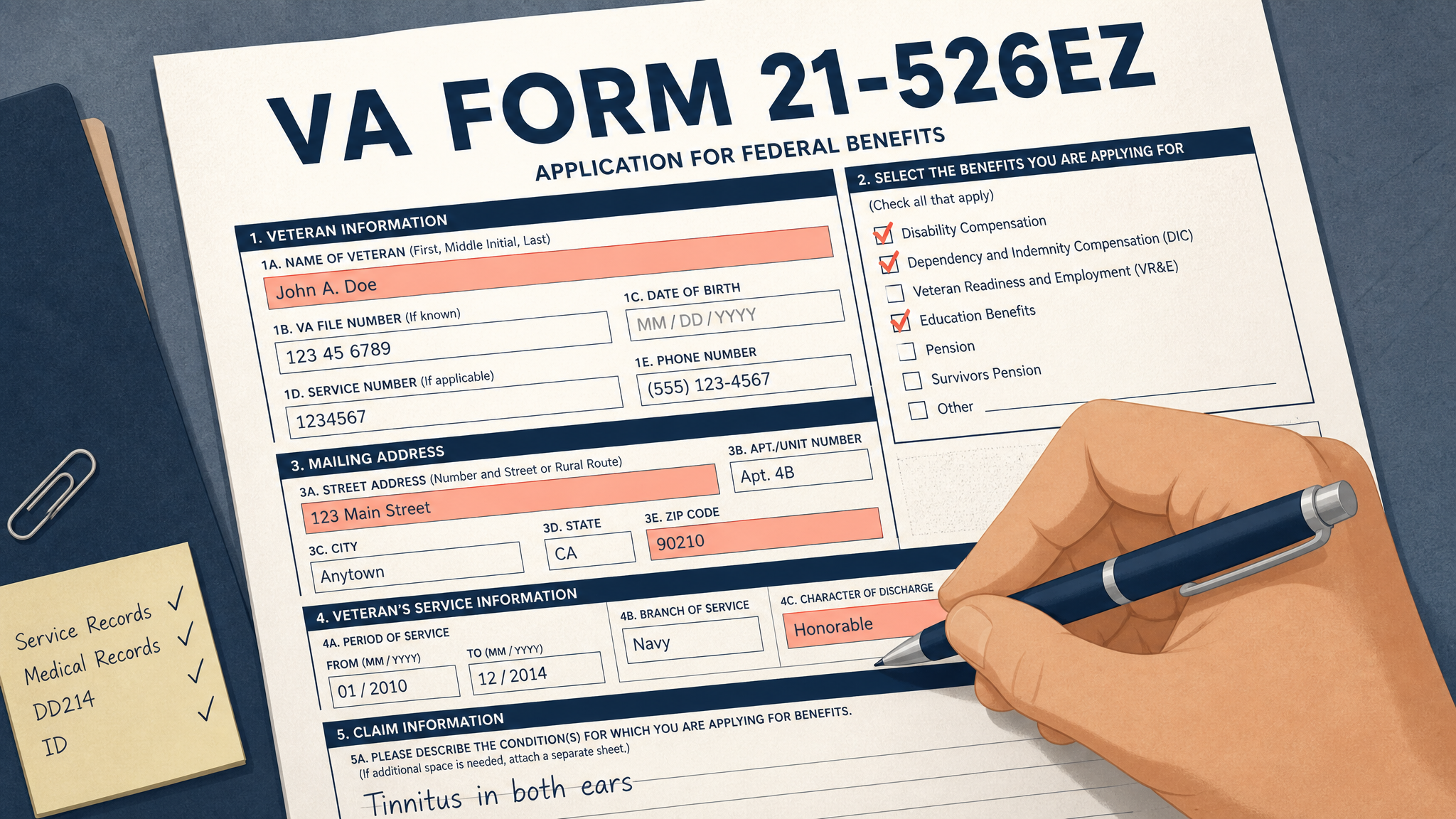
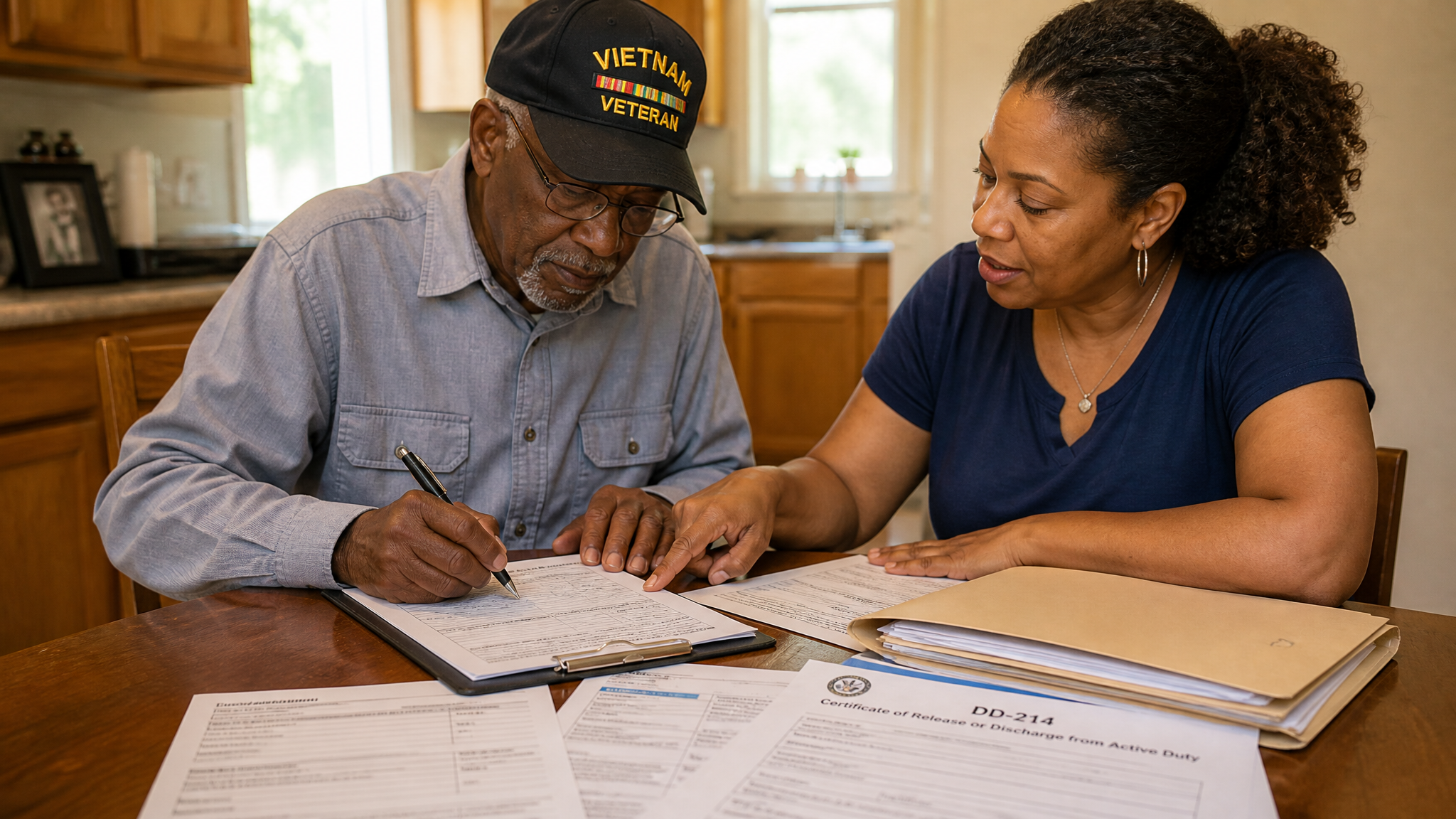
FIG. 02 - Fill out the form
Gather
Collect your documents
Pull your DD-214 and any records that support your claim - we can help you figure out exactly what you need.
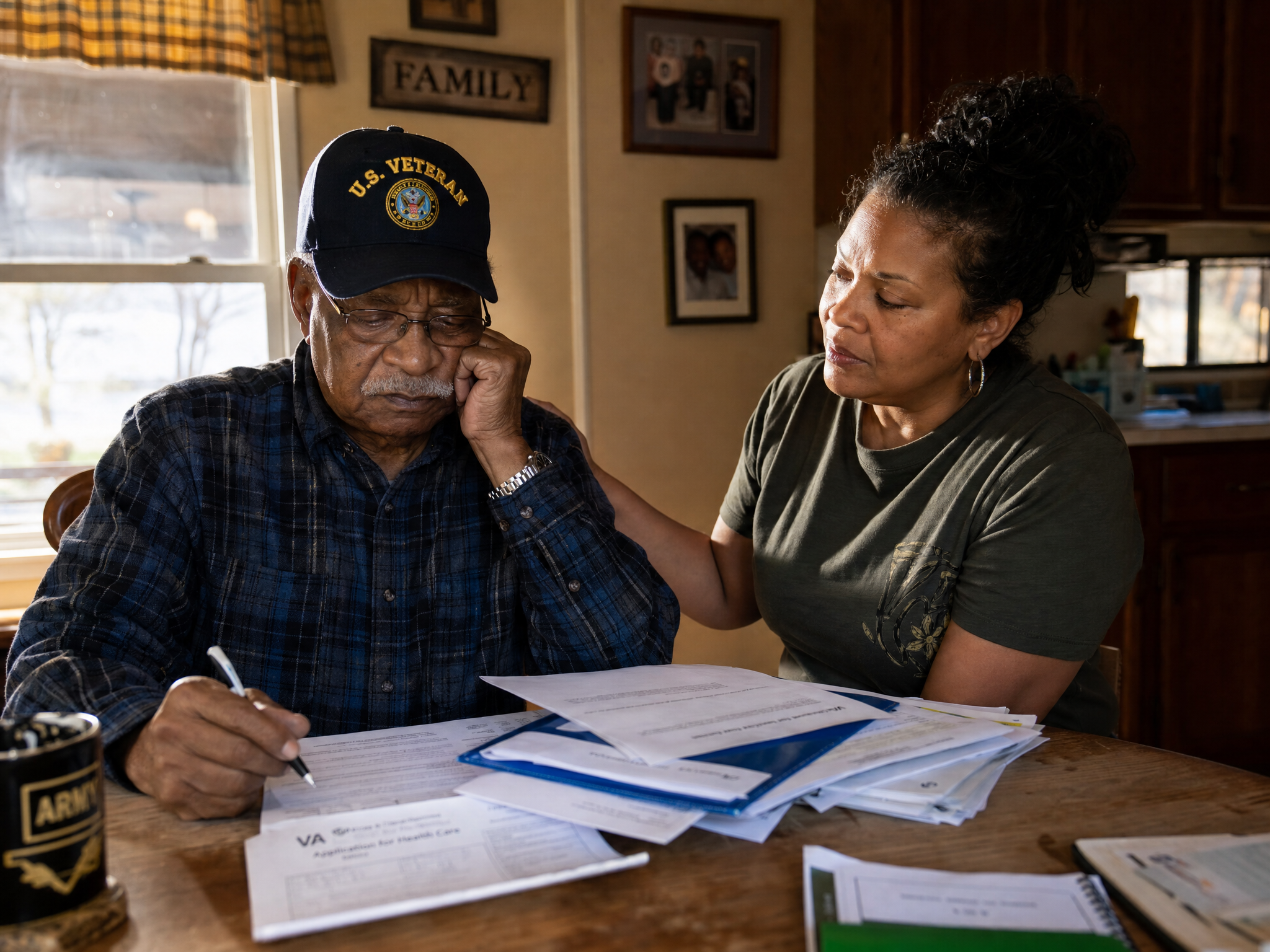
FIG. 03 - File the claim
File it - always free
Apply for the benefit
Pick the lane that fits your situation and file the matching form within one year of your decision letter: 20-0995 for a Supplemental Claim, 20-0996 for a Higher-Level Review, or 10182 for a Board Appeal. Free accredited help is available, and for appeals an accredited agent or attorney may work on a disclosed contingency basis.
Who to call & where to go
These are free, official VA lines. Have your Social Security number handy when you call.
MyVA411 - Main VA Line
Not sure who to call? Start here. One number for anything VA - they route you to the right office.
VA Benefits Hotline
Compensation, pension, and general claim questions.
Rather have us handle it?
No phone tag, no hold music. Call our office and a real, VA-accredited person walks you through it - start to finish.
702-992-4883Not sure where to start?
Pick the lane that fits your situation and file the matching form within one year of your decision letter: 20-0995 for a Supplemental Claim, 20-0996 for a Higher-Level Review, or 10182 for a Board Appeal. Free accredited help is available, and for appeals an accredited agent or attorney may work on a disclosed contingency basis.
More benefits for veterans
These often go hand in hand - tap any card to learn more.





































Free information — get a free benefit review
Tell us how to reach you and an accredited team member will help you understand this benefit and claim everything you have earned. No cost, no obligation.
Ready to hire us? Register with us
For veterans who’ve decided they want us on their claim — registering is free too, and it does not make you our client or obligate you to anything. Here is exactly how it works:
- You register. This simply starts the conversation — you are not our client yet, and you owe us nothing.
- You sign and return VA Form 21-22a. It appoints us as your accredited representative and gives us access to your VA file.
- Once we have your signed 21-22a and access to your case, we verify everything is in order.
It involves the registration form and signing VA Form 21-22a — by law we can’t accept your claim, work on it, or contact the VA for you until that power of attorney is signed. You decide whether to move forward.
Official VA links
Answers, in plain language
Common questions about The VA Appeals Process
What is The VA Appeals Process?
What to do when the VA says no. The three review lanes - Supplemental Claim, Higher-Level Review, and a Board Appeal to a Veterans Law Judge - explained plainly, so a denial becomes a starting point instead of a dead end.
Who qualifies for The VA Appeals Process?
This benefit is generally for: Veteran, Surviving spouse. The three decision-review lanes and exactly when to use each one How to protect your original effective date - and the back pay tied to it
How do I apply for The VA Appeals Process?
Pick the lane that fits your situation and file the matching form within one year of your decision letter: 20-0995 for a Supplemental Claim, 20-0996 for a Higher-Level Review, or 10182 for a Board Appeal. Free accredited help is available, and for appeals an accredited agent or attorney may work on a disclosed contingency basis.
What does it cost to get help with The VA Appeals Process, and are you VA-accredited?
The initial claim was free, and so is a Supplemental Claim or Higher-Level Review you file yourself. Once the VA has issued its first decision on the claim, an accredited agent or attorney is permitted to charge a fee for representation from that point forward, most commonly a percentage of past-due back pay recovered, with no fee unless you win. That fee is regulated by federal law and the written fee agreement is filed with the VA. It is free to talk with us, and no one may charge you to file a first-time VA claim. The Aging Veteran is led by Albert L. Thombs Jr., a VA-accredited claims agent (accreditation #45147) and disabled veteran; any appeal work is handled on a no-fee-unless-you-win basis.