
Veteran Benefits
State & Local Veterans Benefits (Property Tax & More)
Federal VA benefits are only half the picture. Every state - and often your county and town - adds its own benefits for veterans, and for aging and disabled veterans the property-tax exemption alone can be worth thousands of dollars a year. Because these benefits are run locally and are rarely automatic, many veterans miss them simply because no one told them to apply.

Who this is for
The VA is federal, but some of the most valuable benefits for an aging veteran come from your state - starting with a property-tax exemption that can wipe out the tax on your home. The catch: these benefits are run locally, rarely automatic, and you have to know to ask.
In plain language
What State & Local Veterans Benefits (Property Tax & More) covers
- Property-tax exemptions for veterans and disabled veterans
- State tuition waivers, vehicle, and recreation benefits
- State veterans homes for long-term nursing care
- How and where to apply - and what to bring

Property tax
Full or partial home exemptions, often 100 percent for total ratings
Tuition waivers
Programs like Texas Hazlewood and the Illinois Veterans Grant
CVSO help
A free county officer who files your state and federal claims
The full picture
Everything you need to know
Nothing hidden behind a click, and nothing you have to go looking for on another website. Here is the whole story in plain language - the facts and the figures first - so you can decide what fits your situation.
Key facts & current figures
- On top of federal VA benefits, every state offers its own veteran benefits - the biggest is usually a property-tax exemption on your home, often 100% for totally disabled veterans.
- Common state benefits include college tuition waivers, free or reduced vehicle registration and special license plates, discounted hunting and fishing licenses, and admission to state veterans homes for nursing care.
- These benefits are almost never automatic - you must apply, usually at your county tax assessor or state veterans office, and bring your VA disability rating letter and DD-214.
- Rules and amounts vary widely by state and even by county, and a growing number of states also exempt military retirement pay from state income tax.
- Many states extend benefits to surviving spouses and dependents, including tuition (for example, Texas's Hazlewood Act) and continued property-tax relief.
General figures, current as of December 2025 and reviewed each year. Your exact amount depends on your situation - always confirm on va.gov.
Property-tax exemptions - usually the biggest benefit
- Most states reduce or eliminate property tax on a veteran's primary home. Many - including Texas, Florida, and Virginia - grant a full exemption for veterans rated 100% permanent and total.
- Other states use a partial or tiered system based on your rating or a fixed amount of assessed value. Some also offer relief to wartime veterans or seniors regardless of a disability rating.
- You must apply through your county tax assessor, usually with your VA rating letter, and often by an early-year deadline. Surviving spouses can frequently keep the exemption after the veteran dies.
Education, vehicle, and recreation benefits
- Many states offer tuition waivers at public colleges for veterans and sometimes their dependents - for example, Texas's Hazlewood Act and the Illinois Veterans Grant.
- States commonly provide free or reduced vehicle registration, disabled-veteran or veteran license plates, and exemptions from some vehicle taxes.
- Discounted or free hunting and fishing licenses, state-park passes, and similar perks are widely available, often free for disabled veterans.
State veterans homes and local help
- Most states run state veterans homes offering skilled nursing, assisted living, or domiciliary care, often with priority for service-connected veterans and VA per-diem support that lowers the cost.
- Many states fund a network of County Veterans Service Officers (CVSOs) who help you file both state and federal claims for free.
- States may also provide emergency financial assistance, hiring preference for state jobs, and burial in a state veterans cemetery.
Taxes and choosing where to live
- A growing number of states exempt military retirement pay - and often Social Security - from state income tax, which can matter as much as the property-tax break.
- Because benefits differ by state and county, weigh the whole package - property tax, income tax, veterans-home quality, and health-care access - not any single item.
- Always confirm current rules with your state veterans office; laws and dollar amounts change year to year.
Your complete benefit picture
A second layer of benefits
Your state offers a whole second set of benefits on top of what VA provides - property-tax exemptions, tuition waivers, discounted licenses, and state veterans homes. Almost none of it is automatic; you have to apply through your county or state office. Confirm what your state offers on va.gov.

Two ways to move forward — both free
Not sure if this applies to you?
Ask our free assistant a few plain questions and get an honest read on what you and your family may qualify for, at no cost. It takes just a few minutes, and there is no sign-up and no obligation of any kind. You will get a clear, plain-language picture of where you stand and what might be worth filing. And if you would rather talk to a real person, an accredited agent is only a message away.
Have a question? Get free information
Ask a question, learn what you may be owed, or find out where you stand. Confidential, free, and no obligation to go any further.
Ready to hire us? Register
Decided you want us to work your claim? Registering is free — we match you with an accredited advocate and get you started. We cannot begin until you sign VA Form 21-22a, and fees, if any, are always disclosed up front.
Nothing is automatic
The biggest state benefits require you to file for them
Many states waive some or all of the property tax on a disabled veteran's home, with full exemptions common for veterans rated 100 percent permanent and total, but you must apply through your county assessor.
States also waive public-college tuition, offer free or discounted hunting and fishing licenses, issue veteran license plates, and run state veterans homes for long-term care.
Use your CVSO
A County Veterans Service Officer is a free, trained advocate who knows your state's rules and can file both state and federal claims for you.
Retirement pay
A growing number of states fully exempt military retirement pay from income tax, which can be worth thousands a year.
A clear path forward
Your step-by-step action plan
No rush and no pressure - but a little order helps. Applying is always free.
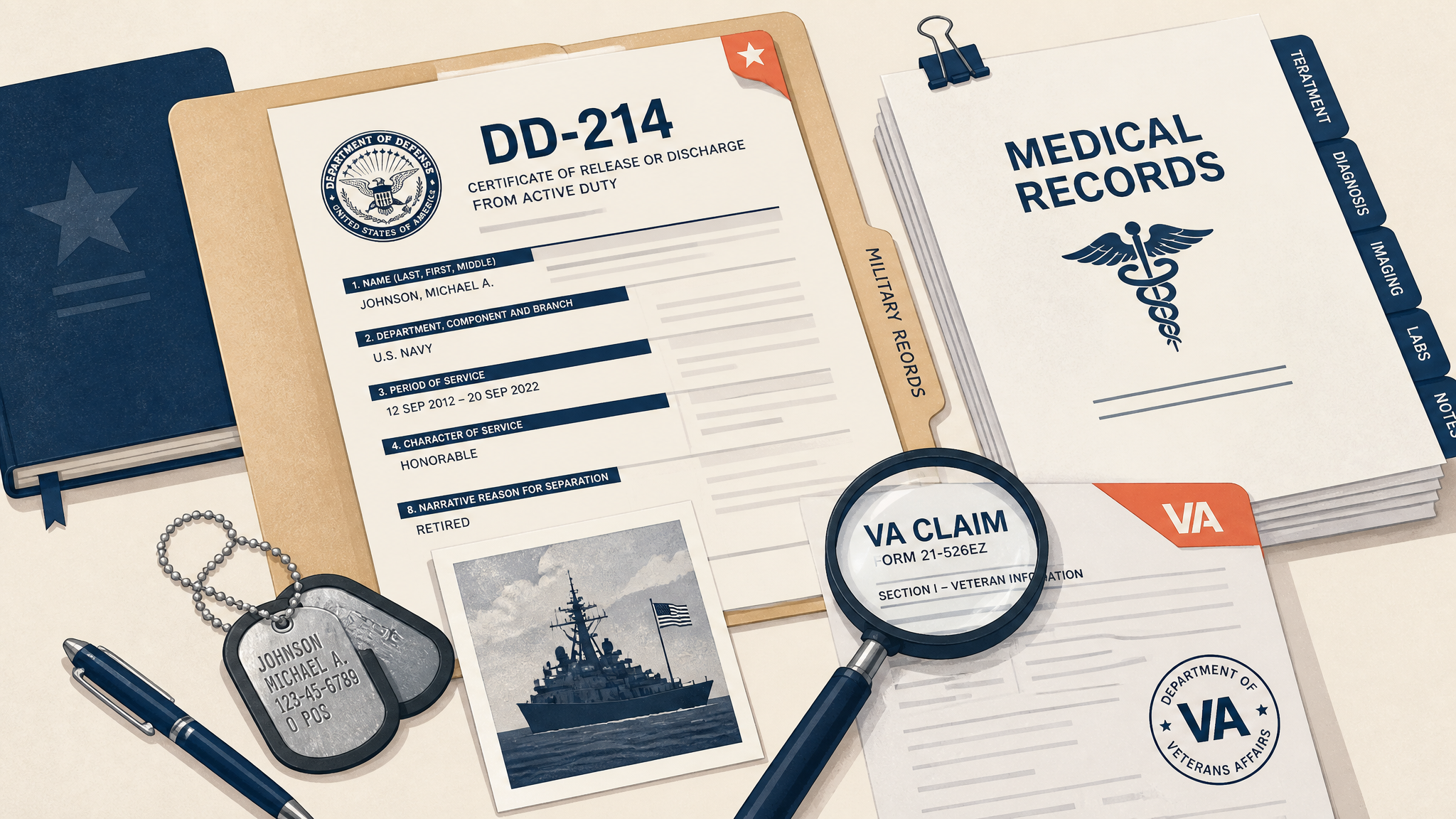
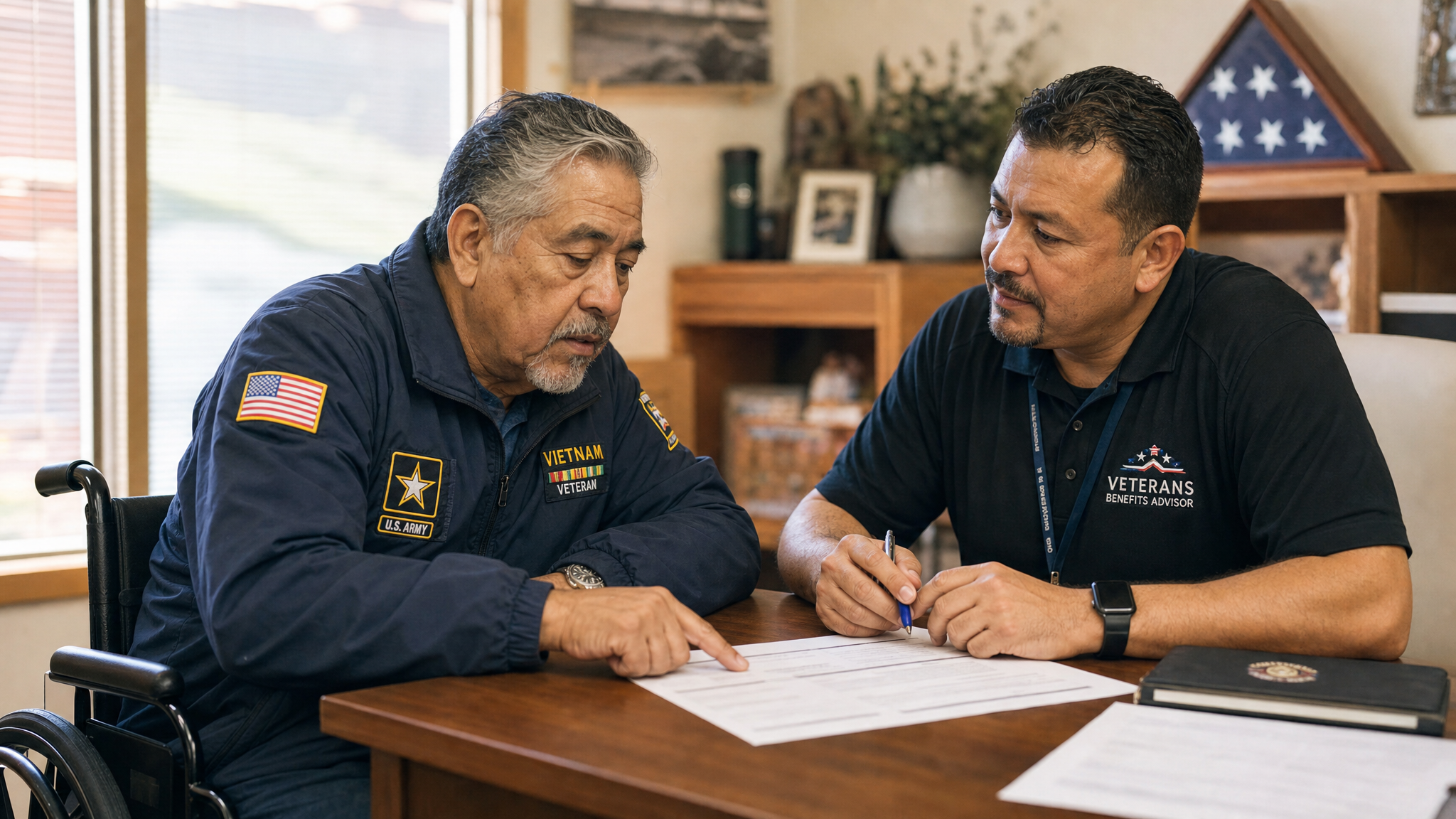
FIG. 01 - Gather your paperwork
First
Find your state office
Locate your State Department of Veterans Affairs and your County Veterans Service Officer to learn exactly what your state offers.
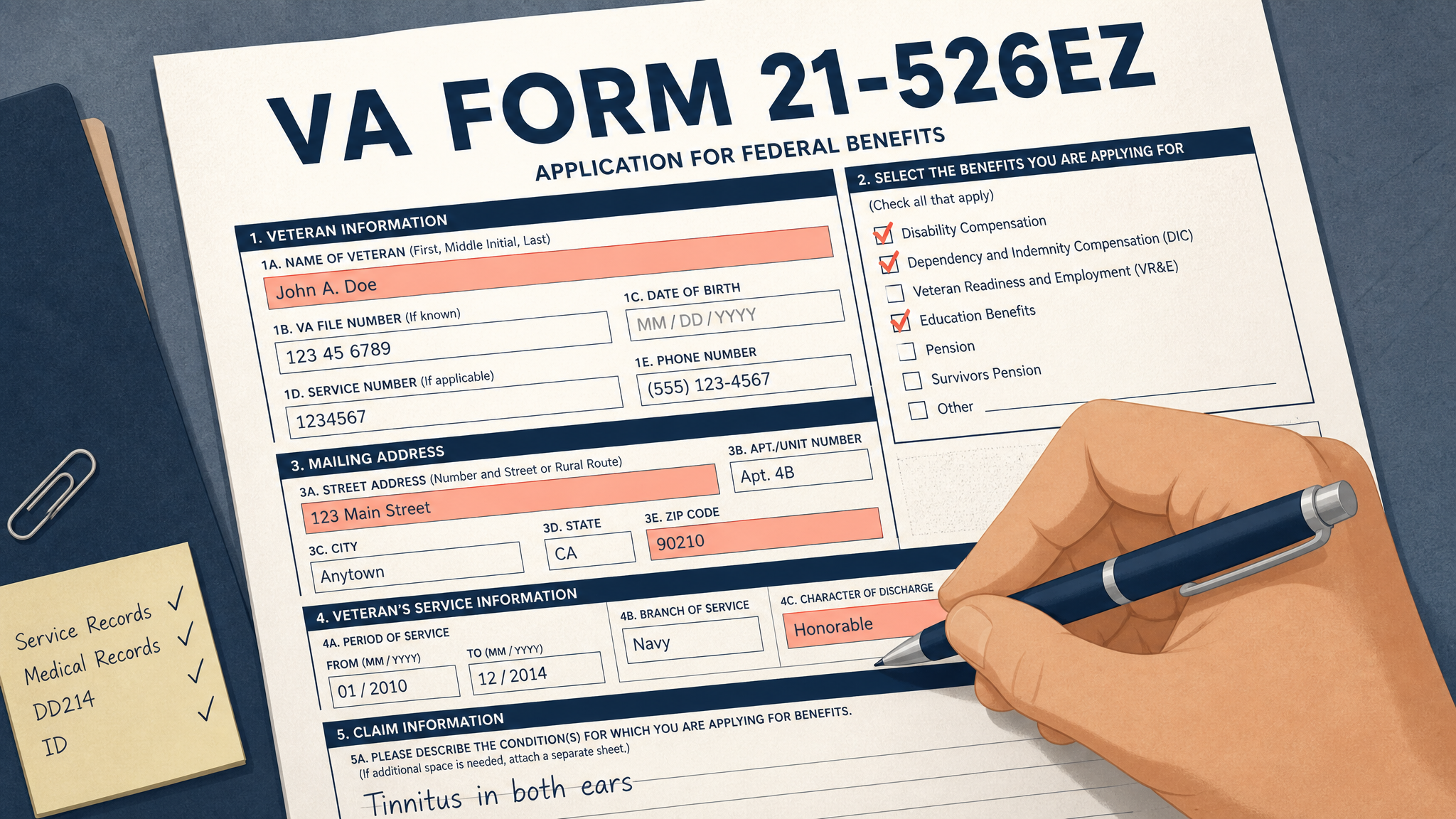
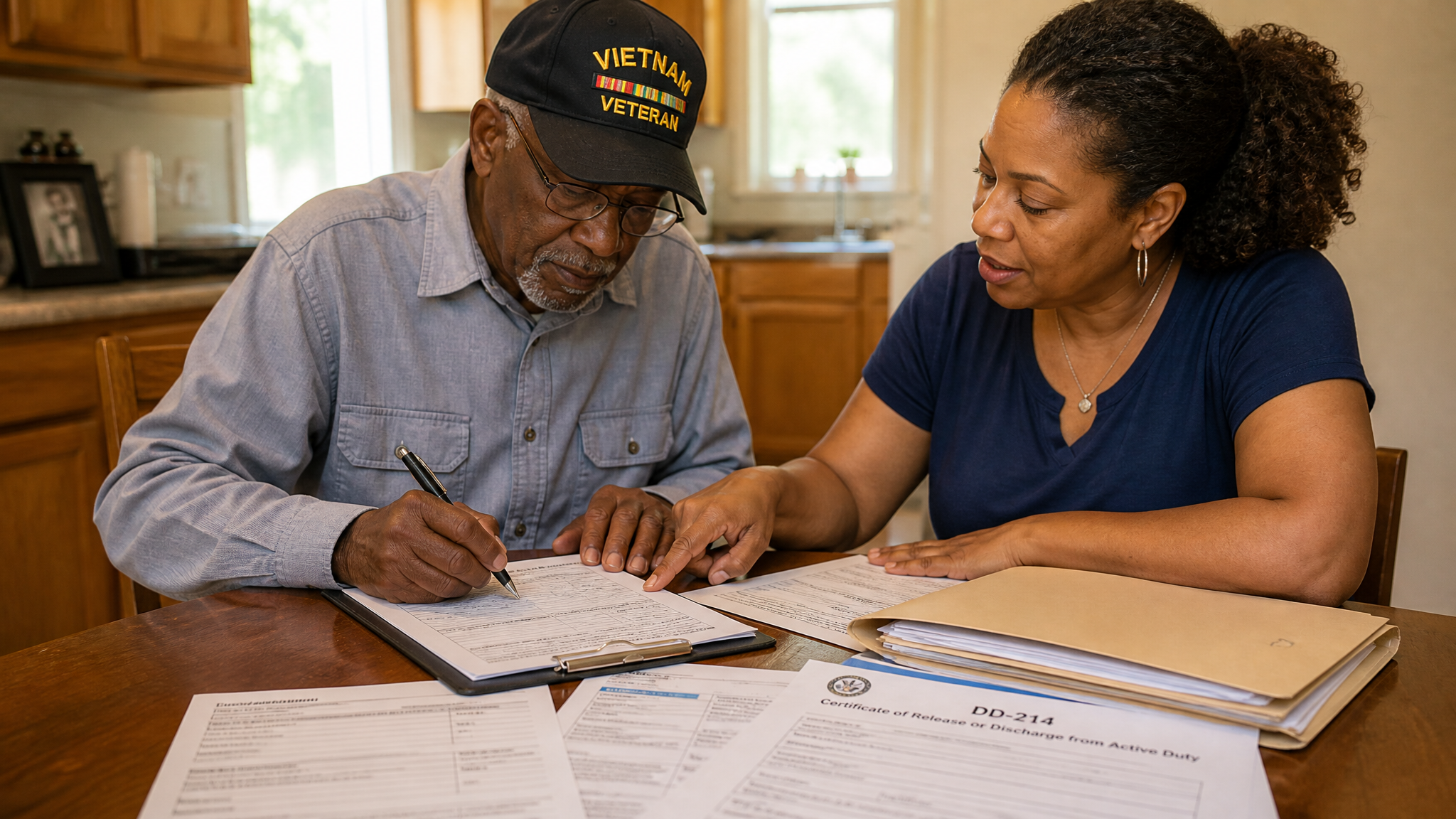
FIG. 02 - Fill out the form
Ask
Check the big three
Ask specifically about property-tax exemptions, tuition waivers, and military retirement-pay tax treatment where you live.
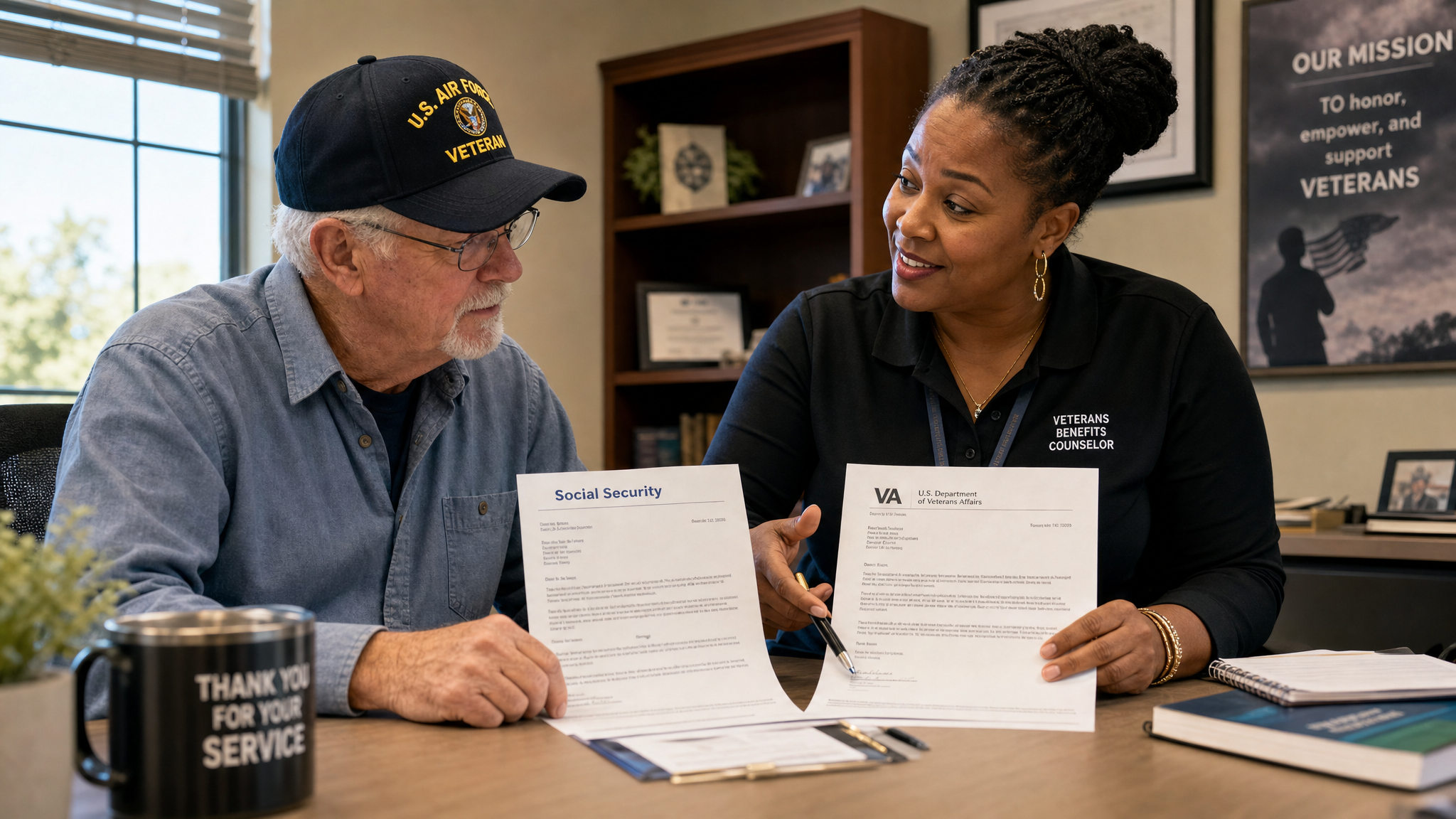
FIG. 03 - File the claim
Apply
File with the county
Submit property-tax exemption paperwork to your county assessor with your VA rating letter, since it will not apply itself.
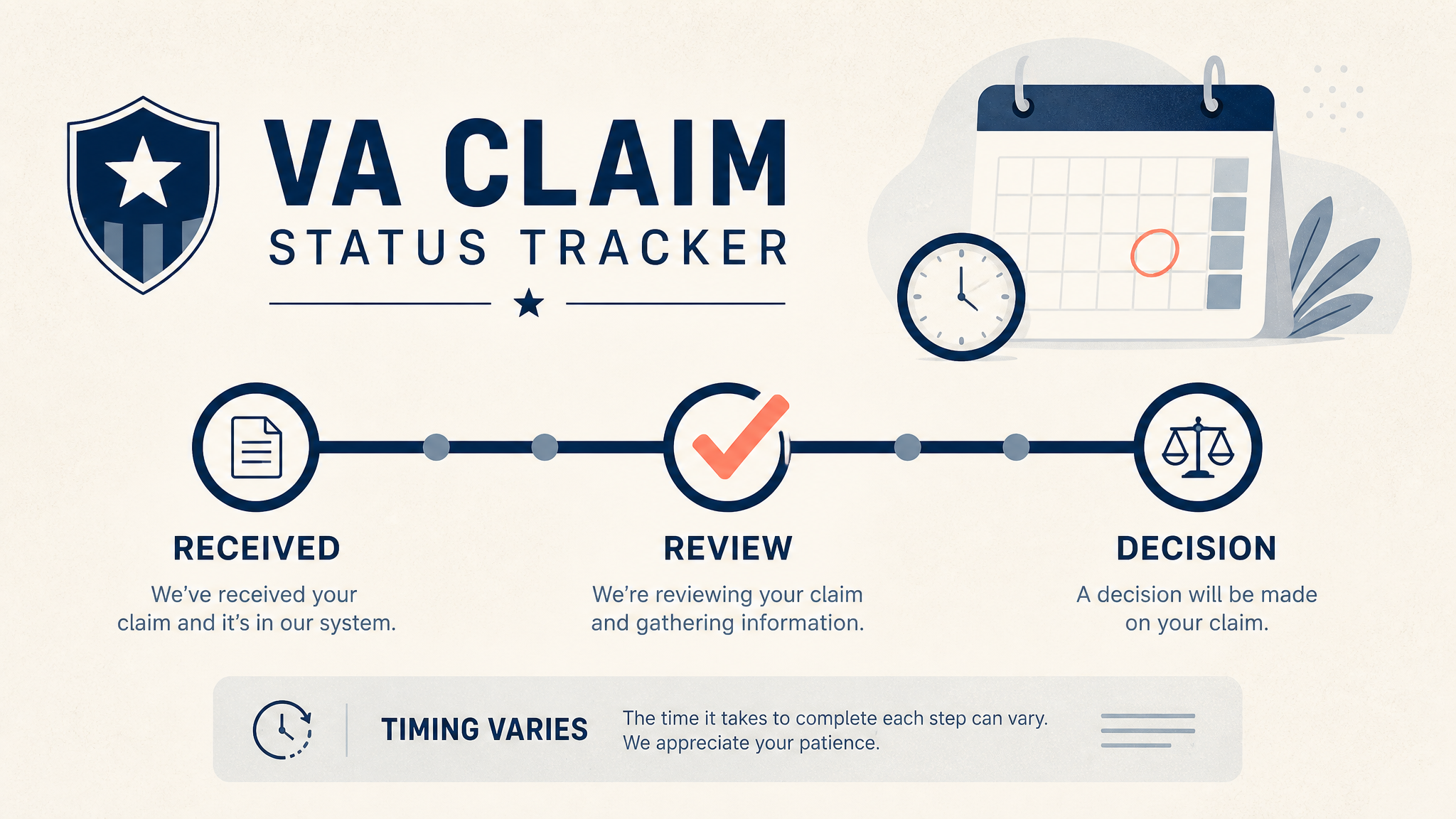
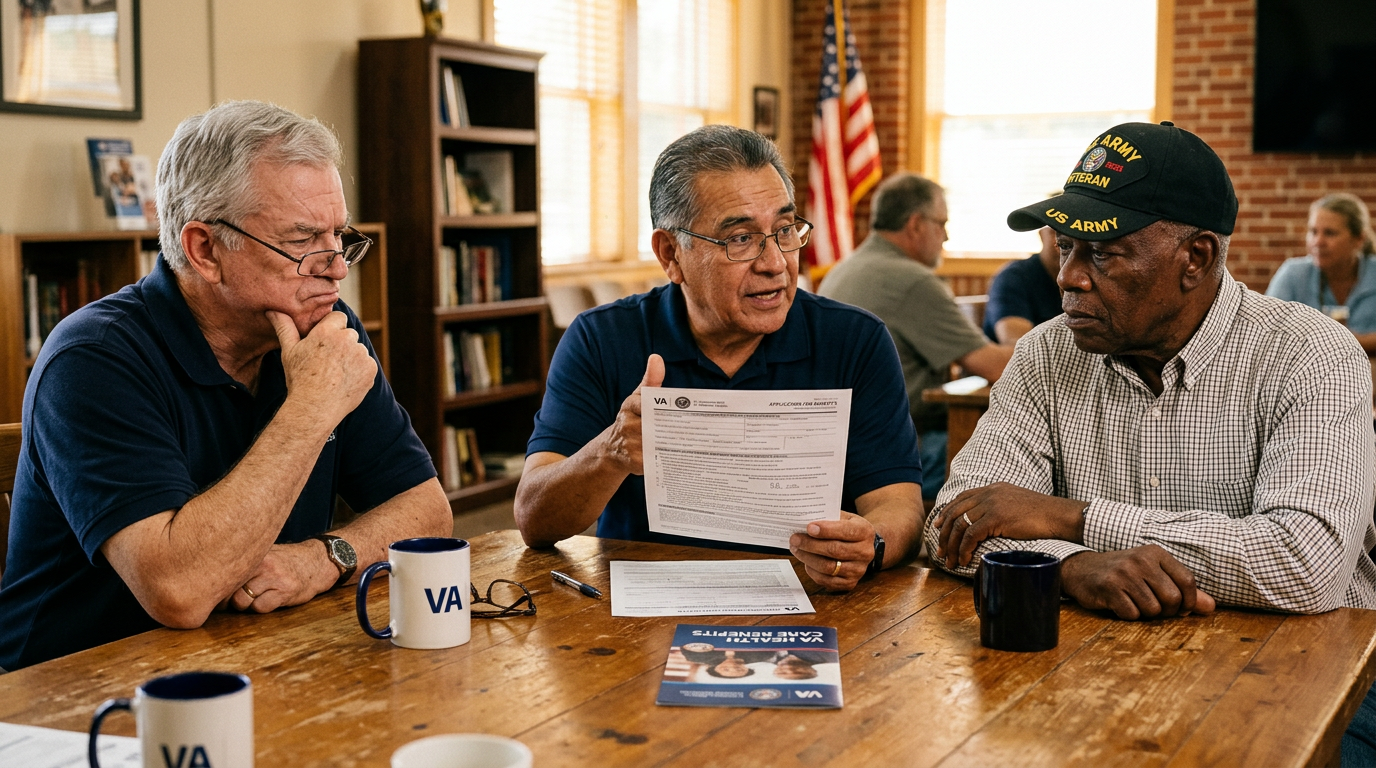
FIG. 04 - After you file
Revisit
Reapply after changes
When your rating increases or you move, recheck the rules, because a higher rating can unlock a larger exemption.
Who to call & where to go
These are free, official VA lines. Have your Social Security number handy when you call.
MyVA411 - Main VA Line
Not sure who to call? Start here. One number for anything VA - they route you to the right office.
VA Benefits Hotline
Compensation, pension, and general claim questions.
Rather have us handle it?
No phone tag, no hold music. Call our office and a real, VA-accredited person walks you through it - start to finish.
702-992-4883Not sure where to start?
Start with your state Department of Veterans Affairs (the VA keeps a directory at va.gov) and your county tax assessor's office. Ask specifically about the veteran and disabled-veteran property-tax exemption, tuition waivers, vehicle registration relief, and state veterans homes. Bring your DD-214 and your VA disability rating decision letter - most exemptions are tied to your rating. File before your local deadline (property-tax exemptions often must be filed early in the year), and re-file if you move or your rating changes.
More benefits for veterans
These often go hand in hand - tap any card to learn more.









































Free information — get a free benefit review
Tell us how to reach you and an accredited team member will help you understand this benefit and claim everything you have earned. No cost, no obligation.
Ready to hire us? Register with us
For veterans who’ve decided they want us on their claim — registering is free too, and it does not make you our client or obligate you to anything. Here is exactly how it works:
- You register. This simply starts the conversation — you are not our client yet, and you owe us nothing.
- You sign and return VA Form 21-22a. It appoints us as your accredited representative and gives us access to your VA file.
- Once we have your signed 21-22a and access to your case, we verify everything is in order.
It involves the registration form and signing VA Form 21-22a — by law we can’t accept your claim, work on it, or contact the VA for you until that power of attorney is signed. You decide whether to move forward.
Official VA links
Answers, in plain language
Common questions about State & Local Veterans Benefits (Property Tax & More)
What is State & Local Veterans Benefits (Property Tax & More)?
Federal VA benefits are only half the picture. Every state - and often your county and town - adds its own benefits for veterans, and for aging and disabled veterans the property-tax exemption alone can be worth thousands of dollars a year. Because these benefits are run locally and are rarely automatic, many veterans miss them simply because no one told them to apply.
Who qualifies for State & Local Veterans Benefits (Property Tax & More)?
This benefit is generally for: Veteran homeowner, Disabled veteran, Surviving spouse or dependent, Veteran choosing where to retire. Property-tax exemptions for veterans and disabled veterans State tuition waivers, vehicle, and recreation benefits
How do I apply for State & Local Veterans Benefits (Property Tax & More)?
Start with your state Department of Veterans Affairs (the VA keeps a directory at va.gov) and your county tax assessor's office. Ask specifically about the veteran and disabled-veteran property-tax exemption, tuition waivers, vehicle registration relief, and state veterans homes. Bring your DD-214 and your VA disability rating decision letter - most exemptions are tied to your rating. File before your local deadline (property-tax exemptions often must be filed early in the year), and re-file if you move or your rating changes.
What does it cost to get help with State & Local Veterans Benefits (Property Tax & More), and are you VA-accredited?
The single most overlooked money for aging veterans is the state property-tax exemption. In many states a 100% permanent-and-total rating means you pay no property tax at all on your primary home - but the county will not apply it unless you file the paperwork and show your rating letter. If you are deciding where to retire, compare states on the full package: property tax, whether military retirement and Social Security are taxed, and the quality of the state veterans homes. A short call to your state veterans office can be worth thousands. It is free to talk with us, and no one may charge you to file a first-time VA claim. The Aging Veteran is led by Albert L.