
Veteran Benefits
How to Write a Statement in Support of Your VA Claim
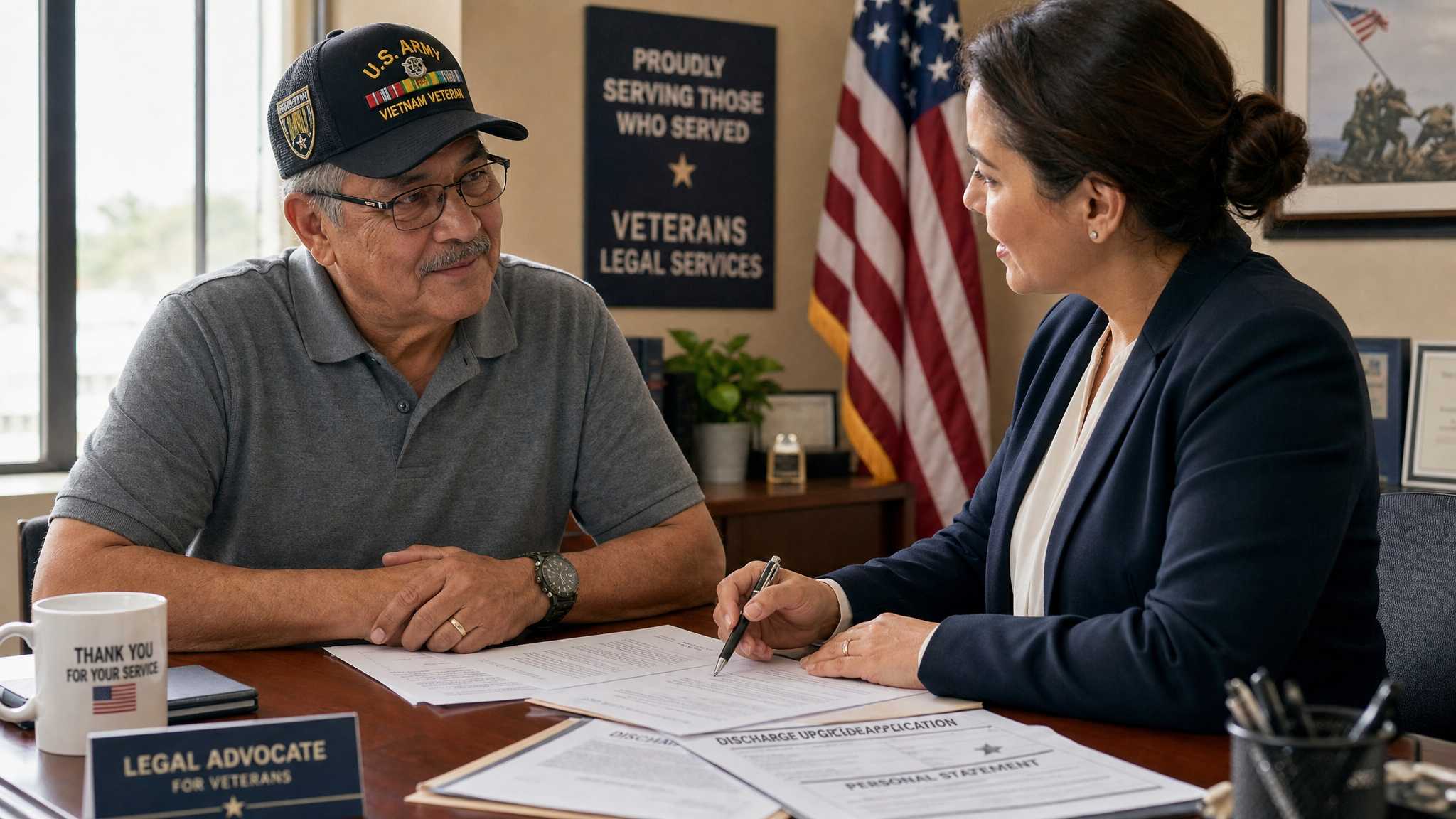
A Statement in Support of Claim is a written document in which you - or a witness who knows your situation - describe in your own words what happened during your service, what condition resulted, and how it affects your daily life. It is one of the most powerful and most overlooked tools in the VA claims process. This page walks you through the structure section by section, explains what to include and what to avoid, provides a real sample letter, and covers the VA forms you will use. Whether you are writing your own personal statement or asking a family member to write a lay witness statement, the goal is the same: give the VA a clear, honest, dated account that connects your service to your condition.

Who this is for
The VA decides your claim based on the evidence in the file - and the most underused piece of evidence is the one only you can write. A personal statement in your own words, describing the event, the injury, the symptoms, and how they changed your life, does something no medical record or form can do: it puts the human being behind the claim number. The VA needs facts, but facts without context get denied. This page shows you exactly how to write a statement that gives the VA what it needs to say yes.
In plain language
What How to Write a Statement in Support of Your VA Claim covers
- Why personal statements matter to the VA
- The structure of a strong statement - section by section
- What to include: service details, the event, symptoms, daily impact
- A full sample statement letter you can use as a template
- Lay witness statements from family, friends, and fellow service members
- Which VA forms to use (21-4138, 21-0781, 21-10210)
- Writing tips for clarity and impact
The full picture
Everything you need to know
Nothing hidden behind a click, and nothing you have to go looking for on another website. Here is the whole story in plain language - the facts and the figures first - so you can decide what fits your situation.
Key facts & current figures
- A personal statement is your evidence - the VA cannot get it from anyone else. It fills gaps that medical records and service records leave open.
- The key VA form for personal statements is VA Form 21-4138 (Statement in Support of Claim). For PTSD and MST claims, use VA Form 21-0781.
- Lay witness statements from family, friends, and fellow service members (VA Form 21-10210) can corroborate your account and describe changes in your behavior, ability, and quality of life.
- The strongest statements are specific, dated, and honest - they describe what happened, when, where, what symptoms resulted, and how those symptoms affect daily life right now.
- A well-written statement does not exaggerate or use medical jargon. It tells the truth plainly and lets the facts make the case.
General figures, current as of December 2025 and reviewed each year. Your exact amount depends on your situation - always confirm on va.gov.
Why your personal statement matters
- Medical records confirm a diagnosis. Service records confirm where you served. But neither one describes the event from your perspective, the full scope of your symptoms, or how the condition changed your life.
- A personal statement fills those gaps. It connects the dots between your service and your condition in plain language the VA rater can follow.
- In claims where documentation is thin - old records lost, no contemporaneous report of an injury, or a condition that developed years later - the personal statement may be the strongest evidence in your file.
- The VA is required to consider lay evidence, including your own statement and statements from people who know you (38 CFR 3.303(a)). This is not a formality - it carries real legal weight.
Structure of a strong statement - section by section
- 1. Introduction and service background: State your name, branch, unit, service dates, duty stations, and MOS. This establishes who you are and where you served.
- 2. The in-service event: Describe what happened - the injury, exposure, assault, or onset of symptoms. Be specific: date (or approximate), location, what you were doing, what happened, and what you did immediately afterward (sought medical attention, continued the mission, etc.).
- 3. Description of your disability and its impact: Explain your symptoms today - physical limitations, emotional effects, sleep problems, relationship strain. Compare your life before service to your life now.
- 4. Medical treatment history: List the treatments you have received, when, and from whom. If there are gaps (you did not seek care for years), explain why honestly - lack of access, stigma, or not knowing you qualified.
- 5. Personal testimony: Share how the condition has affected your sense of self, your daily routine, and your future. This is the section that makes the claim human.
- 6. Conclusion: Summarize the key points and respectfully ask the VA to recognize the service connection. Keep it direct and confident.
Sample statement - lumbar strain from service
- [Your Name] | [Service Number/SSN] | [Address] | [Email] | [Phone]
- Department of Veterans Affairs, Claims Intake Center, PO Box 4444, Janesville, WI 53547-4444
- Subject: Service Connection for Lumbar Strain
- "I am writing to apply for service-connected compensation for a lumbar strain that initially occurred in 1989 while I was stationed at Fort Polk, Louisiana. During a field exercise, I was involved in lifting a generator off a truck, which resulted in immediate back pain. I sought medical attention at sick call, where I was prescribed 800mg of Ibuprofen and placed on a temporary profile."
- "Despite the initial care, I continued to experience lumbar pain throughout my service. However, fearing stigma and potential negative attention from my unit, I refrained from seeking further medical assistance."
- "After my service, my access to medical care was limited, and it was not until 2012 that I was able to seek treatment for my ongoing back pain. Recent X-rays have confirmed Degenerative Disc Disease and bulging discs, conditions that trace directly back to the injury I sustained while in service."
- "The impact has extended into my personal and professional life. I am currently enrolled in a pain management program. My ability to perform at work has been compromised, leading to periods of unemployment. The pain has caused me to miss significant life events and opportunities to spend time with my family."
- "I request that the Department of Veterans Affairs recognize the service connection of my lumbar strain and its subsequent conditions. Thank you for considering my claim."
- This is a template. Replace every detail with your own facts. The structure - event, treatment gap explained, current diagnosis, daily impact, respectful request - is what matters.
Lay witness statements - getting others to back you up
- A lay witness statement is a written account from someone who has observed your condition - a spouse, child, parent, friend, coworker, or fellow service member.
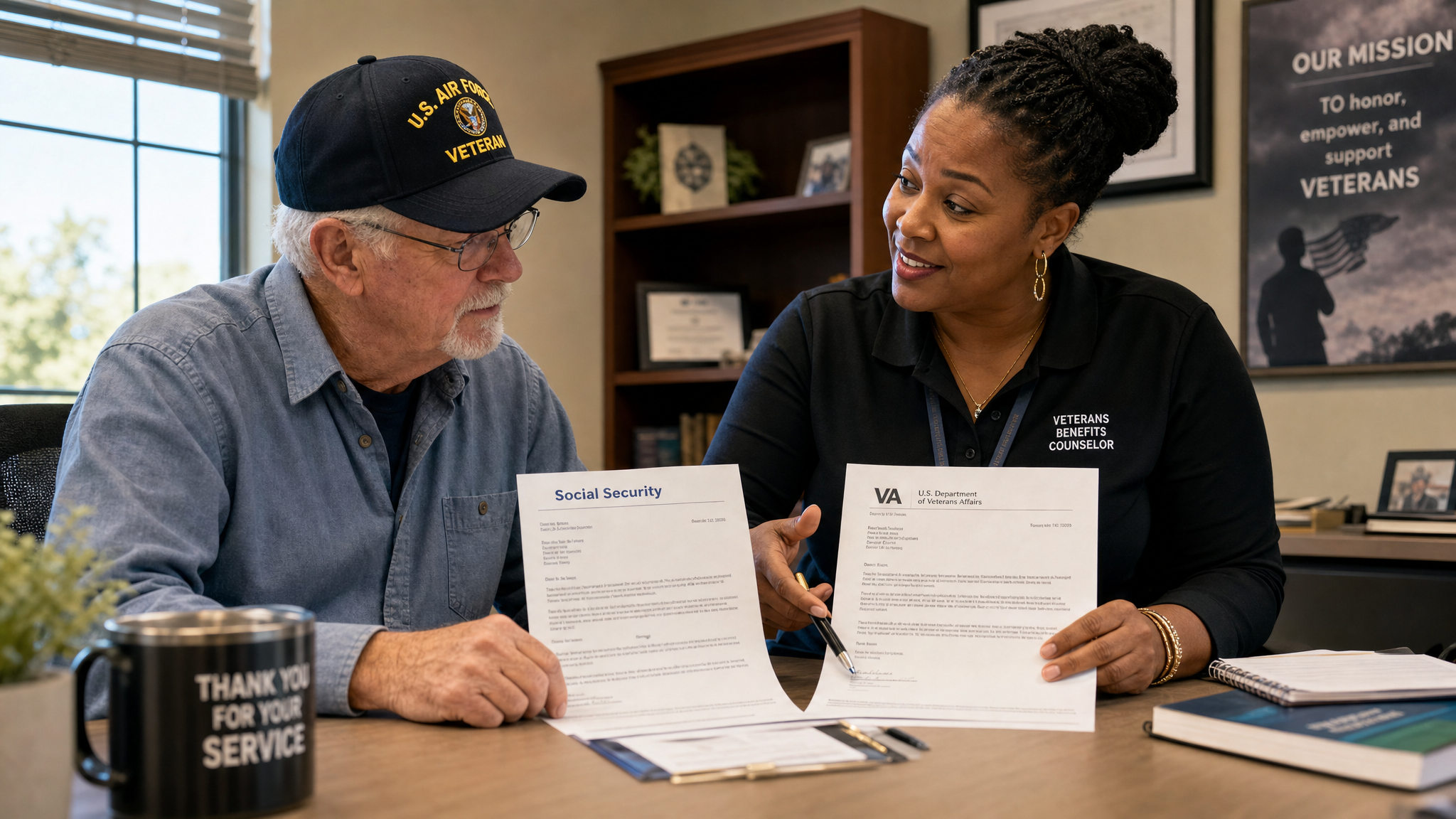
- Use VA Form 21-10210 (Lay/Witness Statement). The witness describes in their own words what they have seen: changes in your behavior, things you can no longer do, symptoms they have observed, or events they were present for.
- These statements are especially powerful for conditions that are hard to document medically - chronic pain, PTSD symptoms, sleep disturbance, mood changes, or the slow decline in activity that happens over years.
- Example: "I have known [Veteran] since we served together at Camp Pendleton in 1991. Since his injury, I have watched him go from someone who could run five miles to someone who struggles to walk to the mailbox. He cancels plans constantly because of pain."
- Multiple statements from different people, each describing the same pattern from a different angle, are far stronger than a single statement. Ask two or three people who know your situation well.
Which VA forms to use
- VA Form 21-4138 (Statement in Support of Claim) - the general-purpose form for any personal statement, additional details, or clarification at any stage of the process.
- VA Form 21-0781 (Statement in Support of Claim for PTSD) - specifically for PTSD claims, including personal assault and MST. Guides you through describing the stressor event.
- VA Form 21-10210 (Lay/Witness Statement) - for friends, family, and fellow service members to describe what they have observed about your condition.
- You can also write a plain letter (no specific form required) addressed to the VA Claims Intake Center. The content matters more than the format - but using the official forms ensures nothing gets lost in processing.
Writing tips for clarity and impact
- Be specific and dated. "My back has hurt since 1989" is weak. "I injured my lower back on or about March 15, 1989, while lifting a generator during a field exercise at Fort Polk" is strong.
- Use plain language. Do not try to write like a doctor or a lawyer. The VA rater needs to understand your story quickly and clearly.
- Be honest. If you did not seek treatment for 20 years, explain why - do not hide the gap. Honesty about the gap is far better than the VA discovering it on their own.
- Describe impact, not just symptoms. "I have knee pain" tells the VA almost nothing. "I can no longer kneel, climb stairs without holding a rail, or play with my grandchildren on the floor" shows the VA how the condition affects your life.
- Proofread. Have someone else read it for clarity. A polished, error-free statement signals that you take your claim seriously.
- Do not exaggerate. Overstating symptoms undermines your credibility. Tell the truth about your worst days and let the facts speak.
Your complete benefit picture
You do not have to sort this out alone
Most veterans skip the personal statement because they think the medical records will speak for themselves. They do not. Medical records show a diagnosis; they do not show the night you could not sleep because your back seized up, or the birthday party you missed because your anxiety would not let you leave the house, or the fact that you have not been able to play catch with your grandson since 2018. The VA rater reading your file is a human being processing hundreds of claims. A clear, honest statement puts a face on yours. Write it. It matters.

Two ways to move forward — both free
Not sure if this applies to you?
Ask our free assistant a few plain questions and get an honest read on what you and your family may qualify for, at no cost. It takes just a few minutes, and there is no sign-up and no obligation of any kind. You will get a clear, plain-language picture of where you stand and what might be worth filing. And if you would rather talk to a real person, an accredited agent is only a message away.
Have a question? Get free information
Ask a question, learn what you may be owed, or find out where you stand. Confidential, free, and no obligation to go any further.
Ready to hire us? Register
Decided you want us to work your claim? Registering is free — we match you with an accredited advocate and get you started. We cannot begin until you sign VA Form 21-22a, and fees, if any, are always disclosed up front.
Worth knowing
Before you file, keep this in mind
Most veterans skip the personal statement because they think the medical records will speak for themselves. They do not. Medical records show a diagnosis; they do not show the night you could not sleep because your back seized up, or the birthday party you missed because your anxiety would not let you leave the house, or the fact that you have not been able to play catch with your grandson since 2018. The VA rater reading your file is a human being processing hundreds of claims. A clear, honest statement puts a face on yours. Write it. It matters.
A clear path forward
Your step-by-step action plan
No rush and no pressure - but a little order helps. Applying is always free.
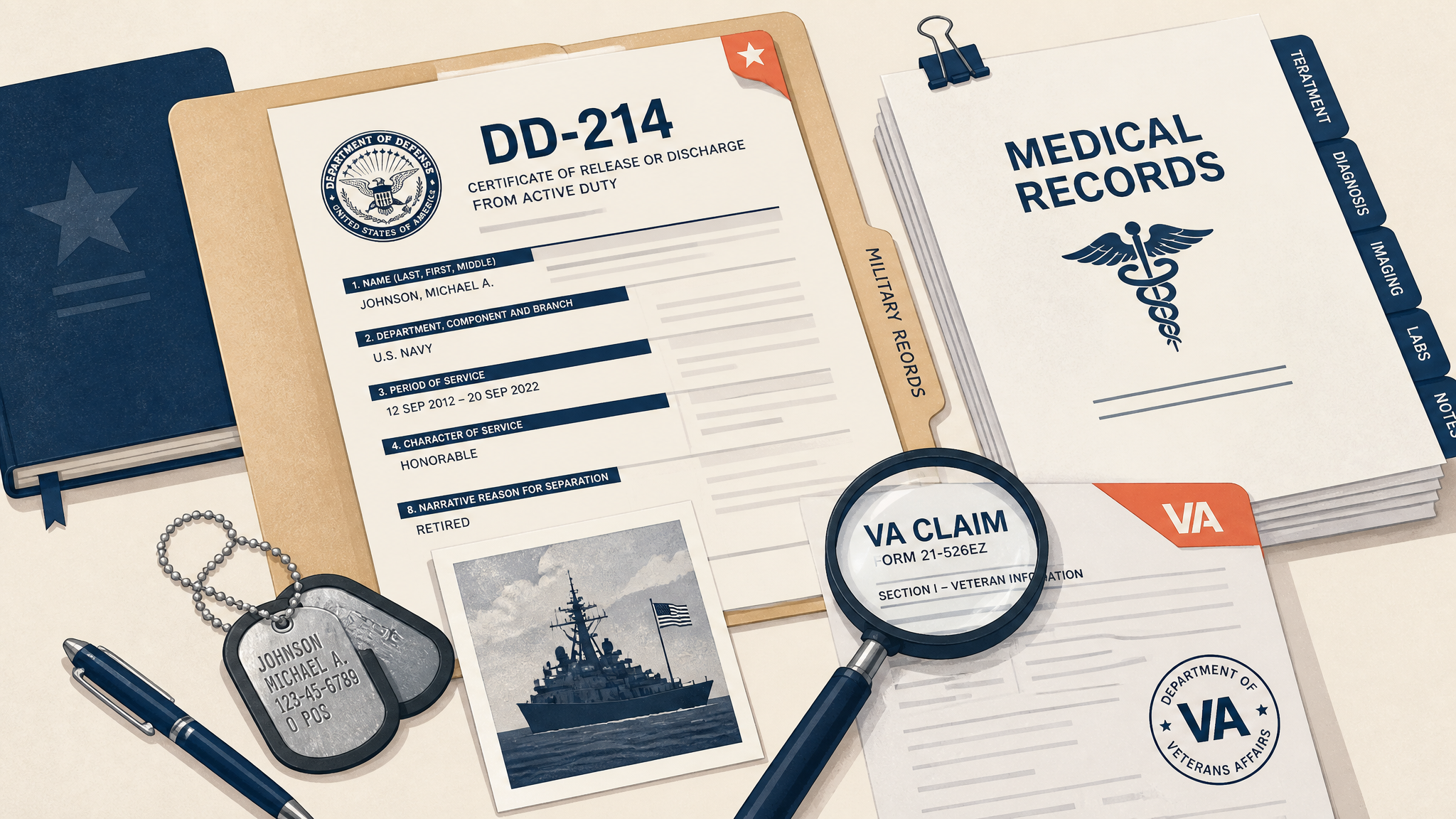
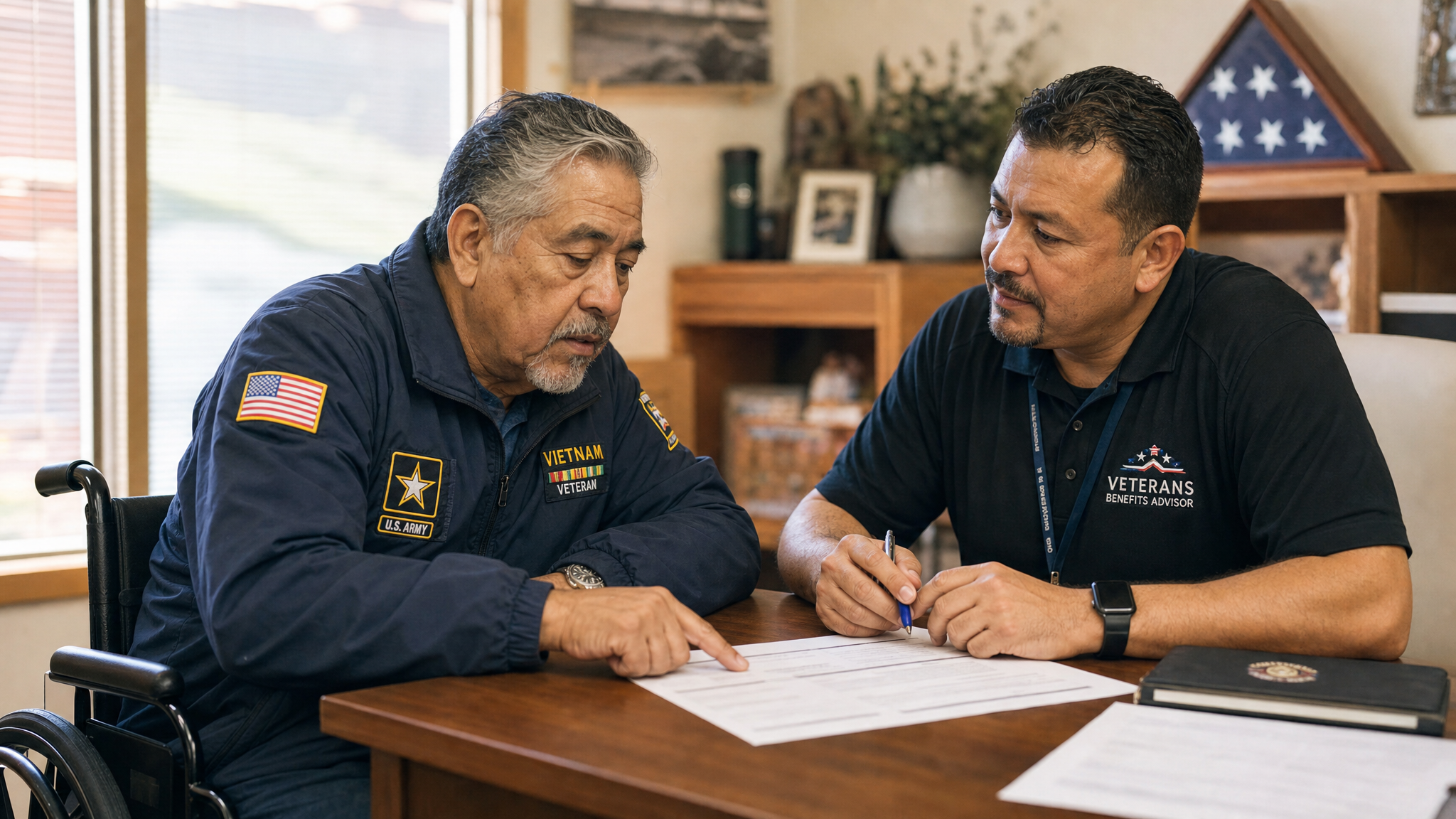
FIG. 01 - Gather your paperwork
First
See what you qualify for
The VA decides your claim based on the evidence in the file - and the most underused piece of evidence is the one only you can write. A personal statement in your own words, describing the event, the injury, the symptoms, and how they changed your life, does something no medical record or form can do: it puts the human being behind the claim number. The VA needs facts, but facts without context get denied. This page shows you exactly how to write a statement that gives the VA what it needs to say yes.
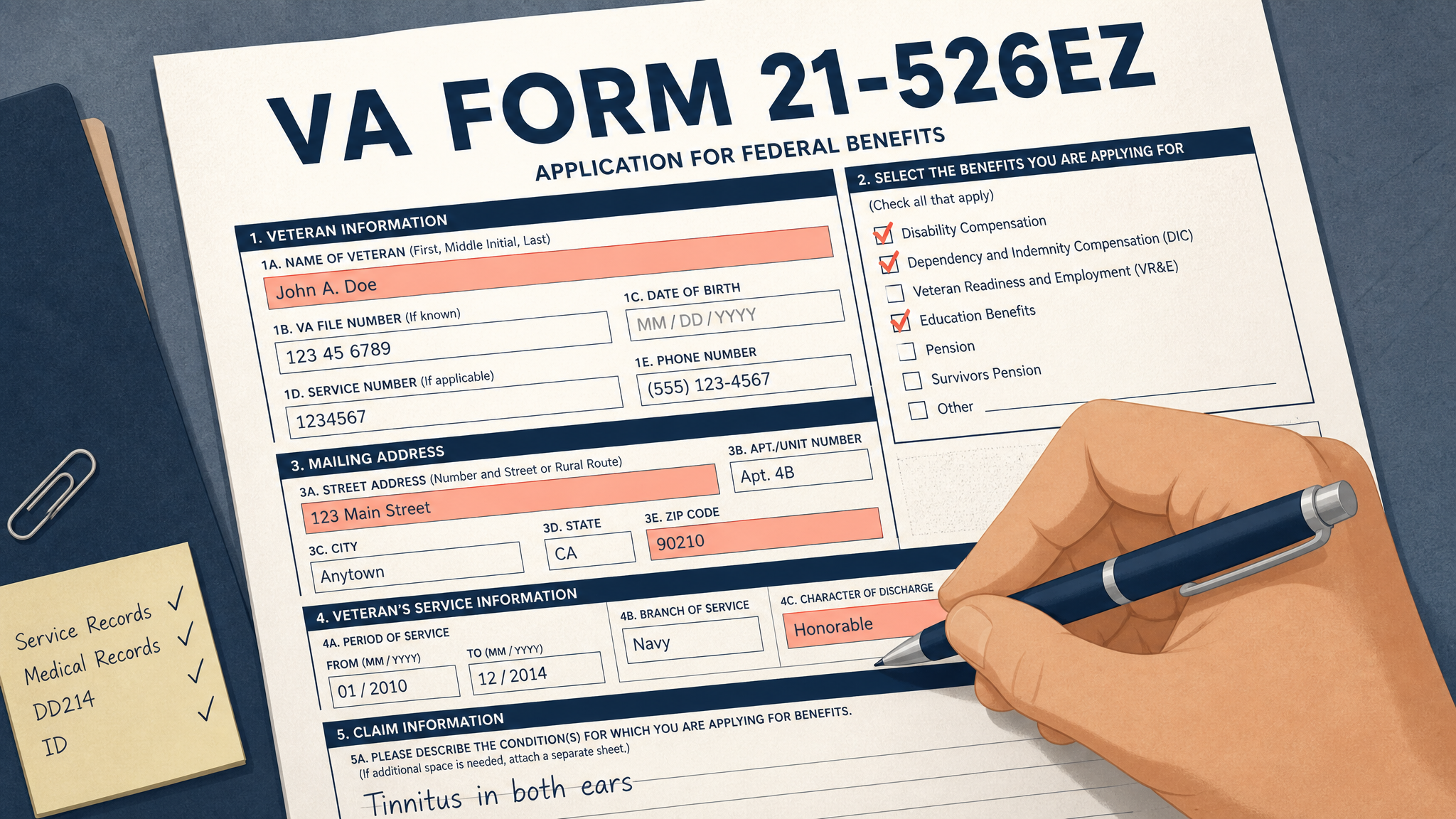
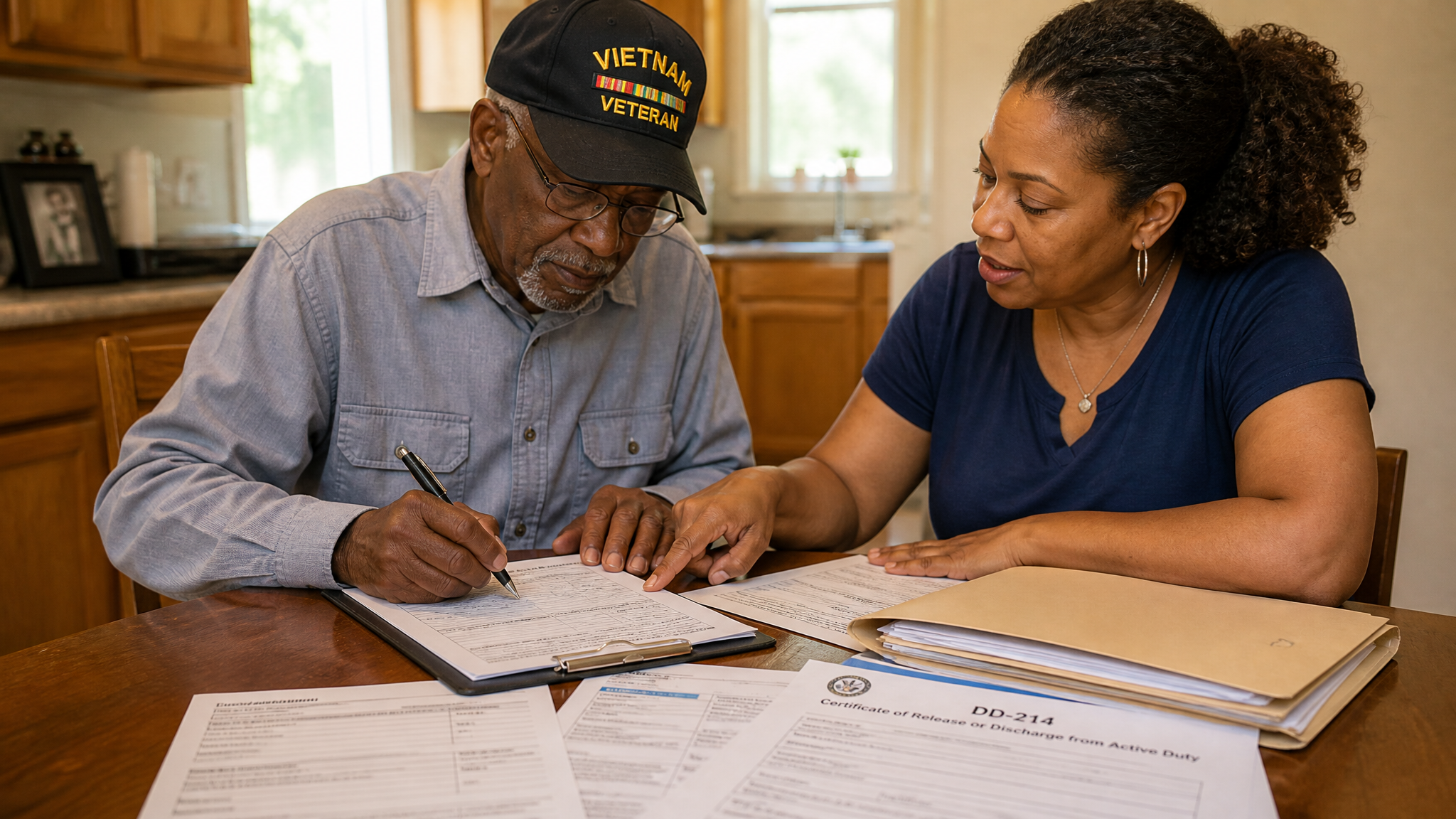
FIG. 02 - Fill out the form
Gather
Collect your documents
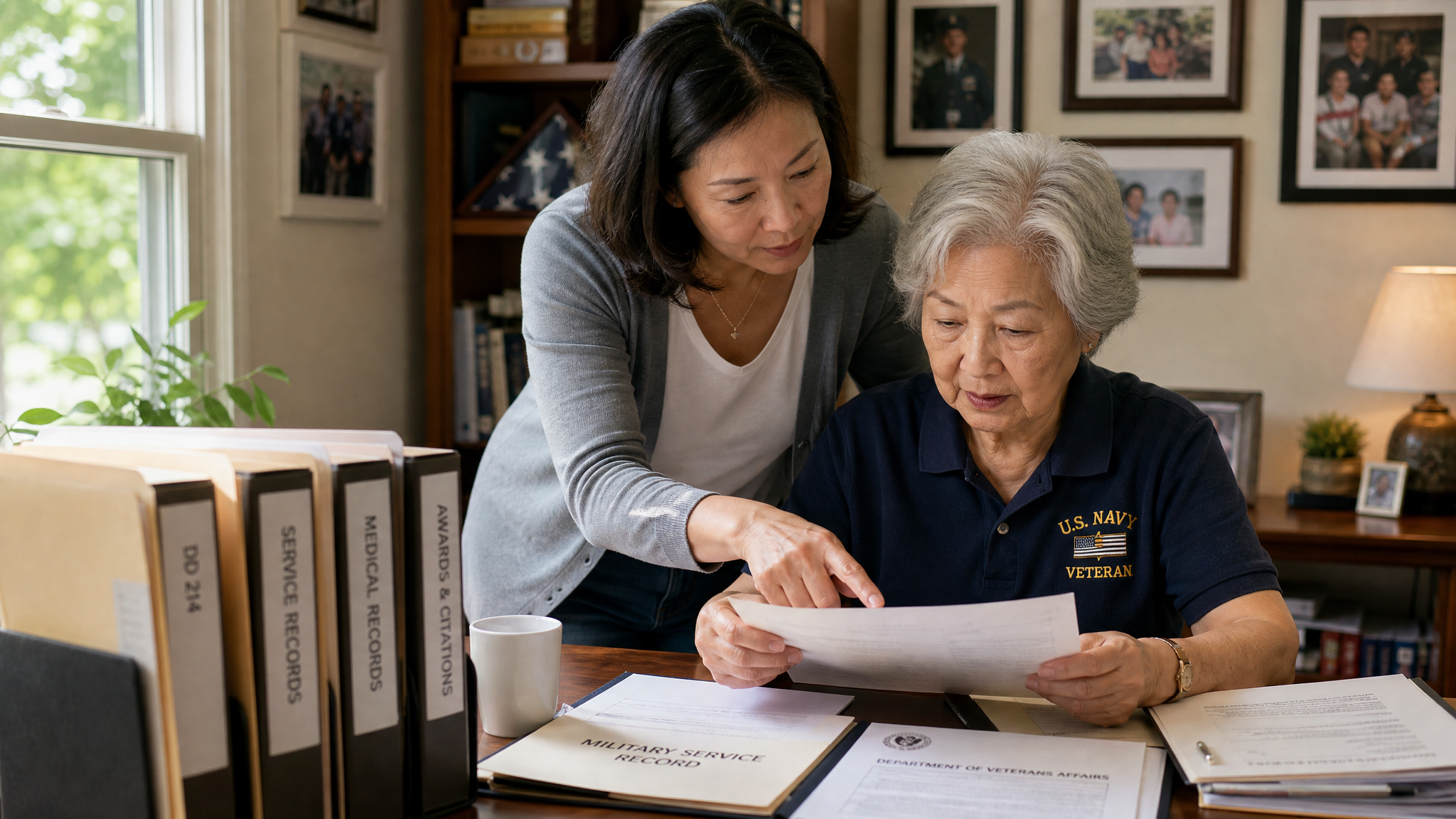
Pull your DD-214 and any records that support your claim - we can help you figure out exactly what you need.
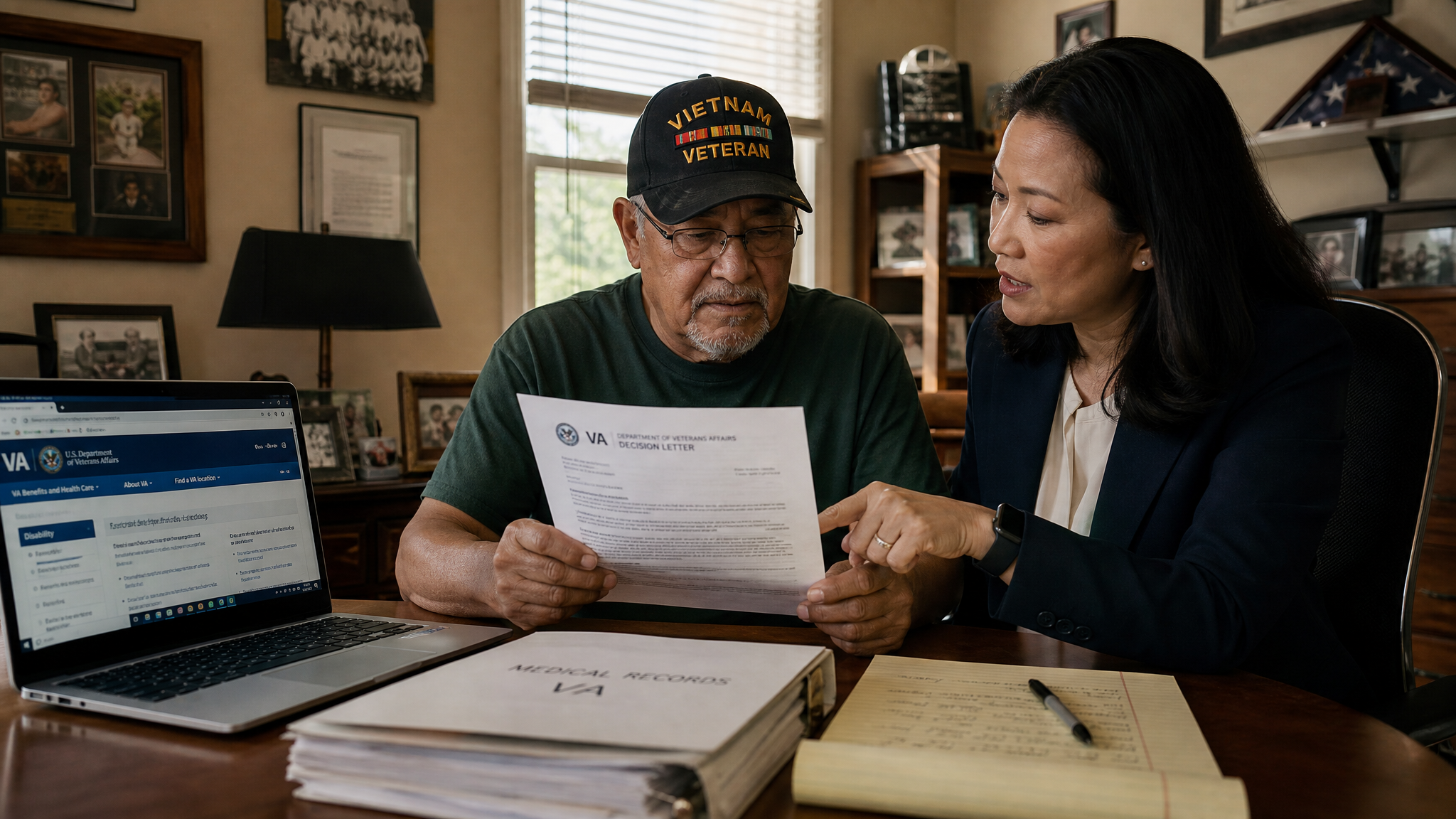
FIG. 03 - File the claim
File it - always free
Apply for the benefit
Your personal statement is submitted with your claim - it is not a separate application. Attach it to VA Form 21-526EZ when you file. Use VA Form 21-4138 for general statements, VA Form 21-0781 for PTSD/MST, or a plain letter addressed to the VA Claims Intake Center (PO Box 4444, Janesville, WI 53547-4444). Ask family and friends to submit VA Form 21-10210 (Lay/Witness Statement) describing what they have observed. Mail, upload online, or hand to your accredited representative. The VA Benefits Hotline is 800-827-1000.
Who to call & where to go
These are free, official VA lines. Have your Social Security number handy when you call.
MyVA411 - Main VA Line
Not sure who to call? Start here. One number for anything VA - they route you to the right office.
VA Benefits Hotline
Compensation, pension, and general claim questions.
Rather have us handle it?
No phone tag, no hold music. Call our office and a real, VA-accredited person walks you through it - start to finish.
702-992-4883Not sure where to start?
Your personal statement is submitted with your claim - it is not a separate application. Attach it to VA Form 21-526EZ when you file. Use VA Form 21-4138 for general statements, VA Form 21-0781 for PTSD/MST, or a plain letter addressed to the VA Claims Intake Center (PO Box 4444, Janesville, WI 53547-4444). Ask family and friends to submit VA Form 21-10210 (Lay/Witness Statement) describing what they have observed. Mail, upload online, or hand to your accredited representative. The VA Benefits Hotline is ##800-827-1000##.
More benefits for veterans
These often go hand in hand - tap any card to learn more.




















Free information — get a free benefit review
Tell us how to reach you and an accredited team member will help you understand this benefit and claim everything you have earned. No cost, no obligation.
Ready to hire us? Register with us
For veterans who’ve decided they want us on their claim — registering is free too, and it does not make you our client or obligate you to anything. Here is exactly how it works:
- You register. This simply starts the conversation — you are not our client yet, and you owe us nothing.
- You sign and return VA Form 21-22a. It appoints us as your accredited representative and gives us access to your VA file.
- Once we have your signed 21-22a and access to your case, we verify everything is in order.
It involves the registration form and signing VA Form 21-22a — by law we can’t accept your claim, work on it, or contact the VA for you until that power of attorney is signed. You decide whether to move forward.
Official VA links
Answers, in plain language
Common questions about How to Write a Statement in Support of Your VA Claim
What is How to Write a Statement in Support of Your VA Claim?
A Statement in Support of Claim is a written document in which you - or a witness who knows your situation - describe in your own words what happened during your service, what condition resulted, and how it affects your daily life. It is one of the most powerful and most overlooked tools in the VA claims process. This page walks you through the structure section by section, explains what to include and what to avoid, provides a real sample letter, and covers the VA forms you will use.
Who qualifies for How to Write a Statement in Support of Your VA Claim?
This benefit is generally for: Veteran filing a VA disability claim, Veteran whose claim was denied for insufficient evidence, Family member or friend asked to write a lay witness statement, Veteran preparing a personal statement for an appeal. Why personal statements matter to the VA The structure of a strong statement - section by section
How do I apply for How to Write a Statement in Support of Your VA Claim?
Your personal statement is submitted with your claim - it is not a separate application. Attach it to VA Form 21-526EZ when you file. Use VA Form 21-4138 for general statements, VA Form 21-0781 for PTSD/MST, or a plain letter addressed to the VA Claims Intake Center (PO Box 4444, Janesville, WI 53547-4444). Ask family and friends to submit VA Form 21-10210 (Lay/Witness Statement) describing what they have observed. Mail, upload online, or hand to your accredited representative. The VA Benefits Hotline is 800-827-1000.
What does it cost to get help with How to Write a Statement in Support of Your VA Claim, and are you VA-accredited?
Most veterans skip the personal statement because they think the medical records will speak for themselves. They do not. Medical records show a diagnosis; they do not show the night you could not sleep because your back seized up, or the birthday party you missed because your anxiety would not let you leave the house, or the fact that you have not been able to play catch with your grandson since 2018. The VA rater reading your file is a human being processing hundreds of claims. A clear, honest statement puts a face on yours. Write it. It matters. It is free to talk with us, and no one may charge you to file a first-time VA claim. The Aging Veteran is led by Albert L.