
Veteran Benefits
Gathering VA Medical Evidence: Build the Case Before You File
This guide covers every type of evidence the VA accepts, how to get each one, the forms involved, and the strategy behind assembling a case file that leaves the rater no room to deny your claim.
Who this is for
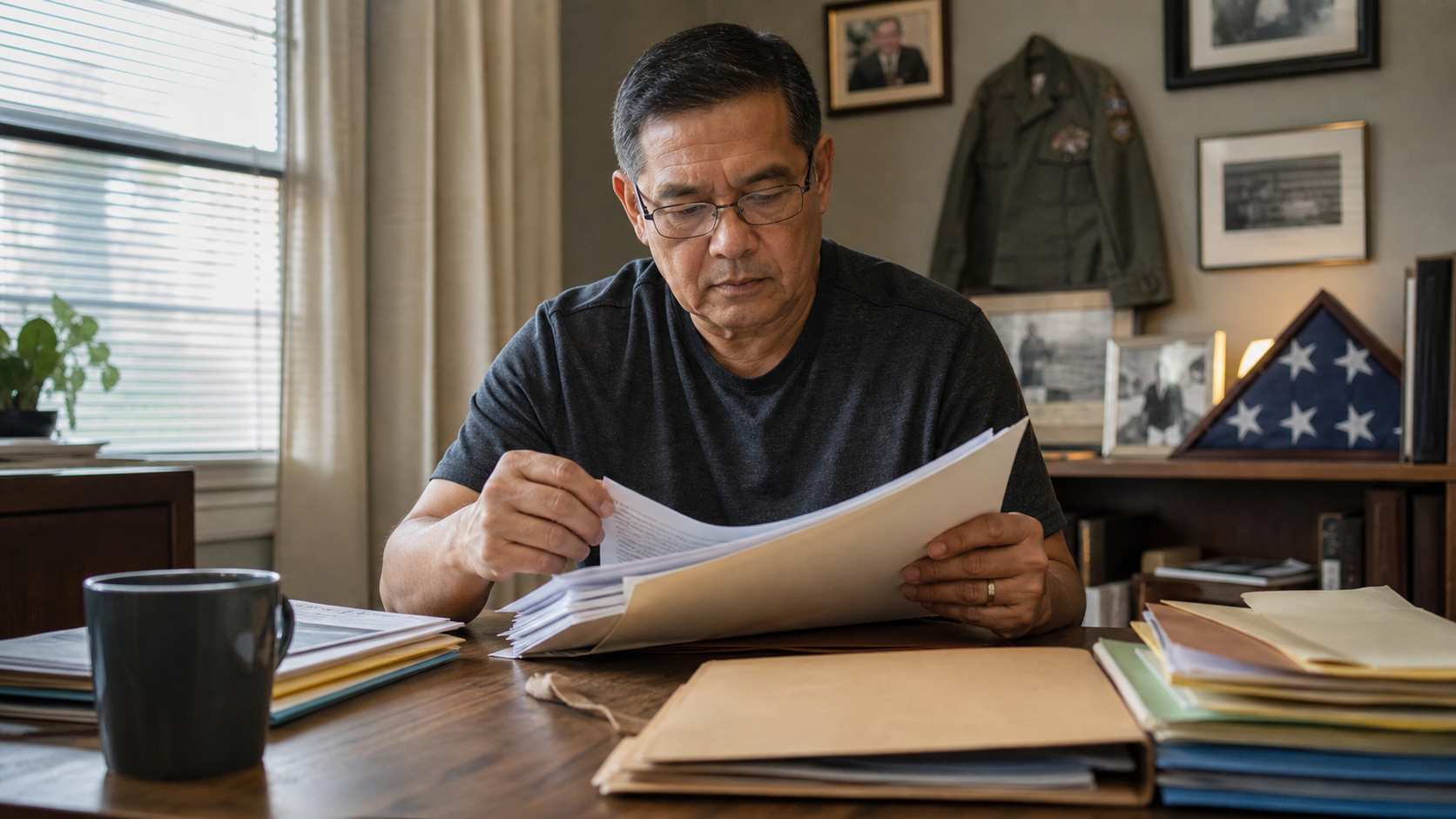
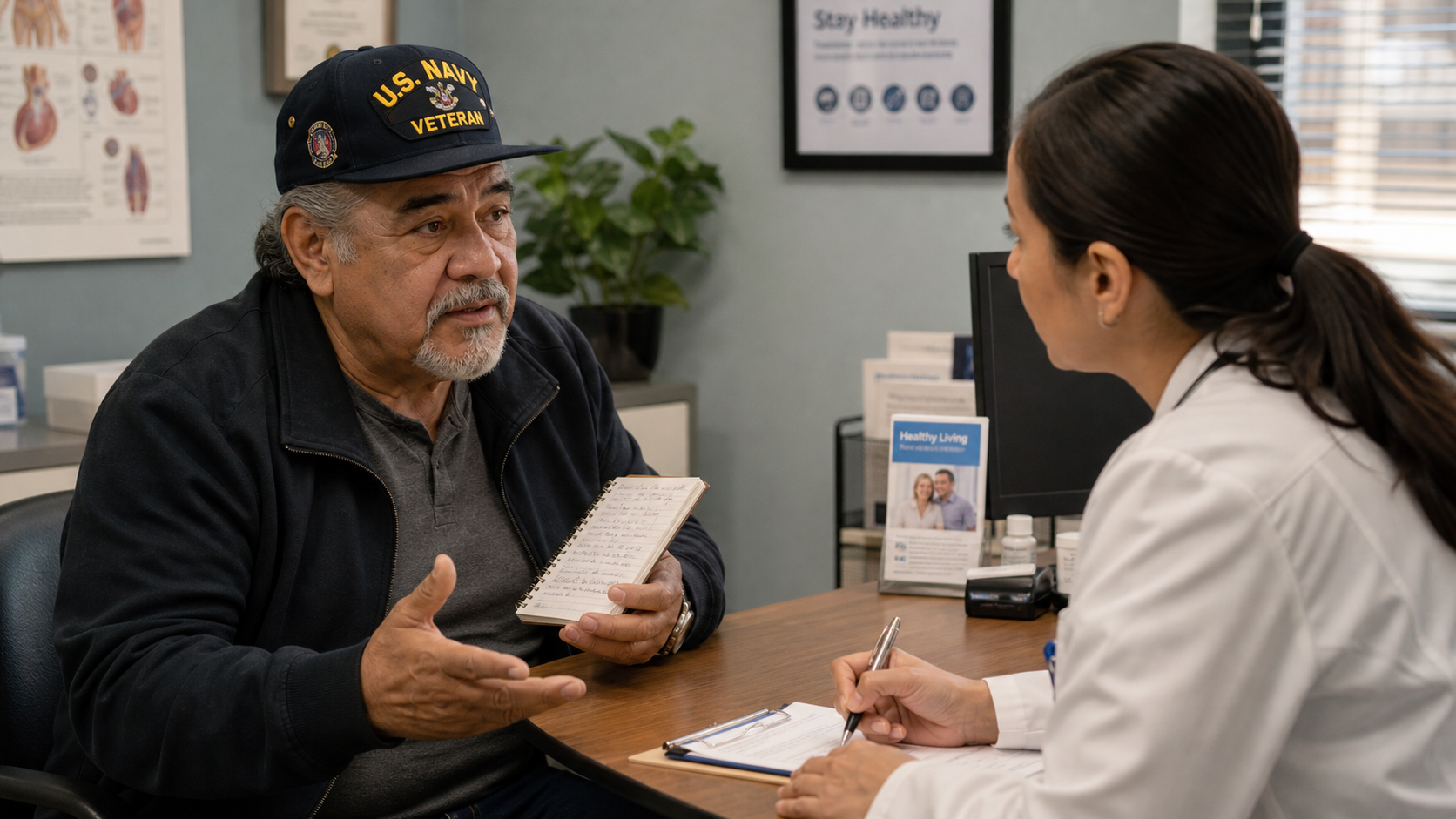
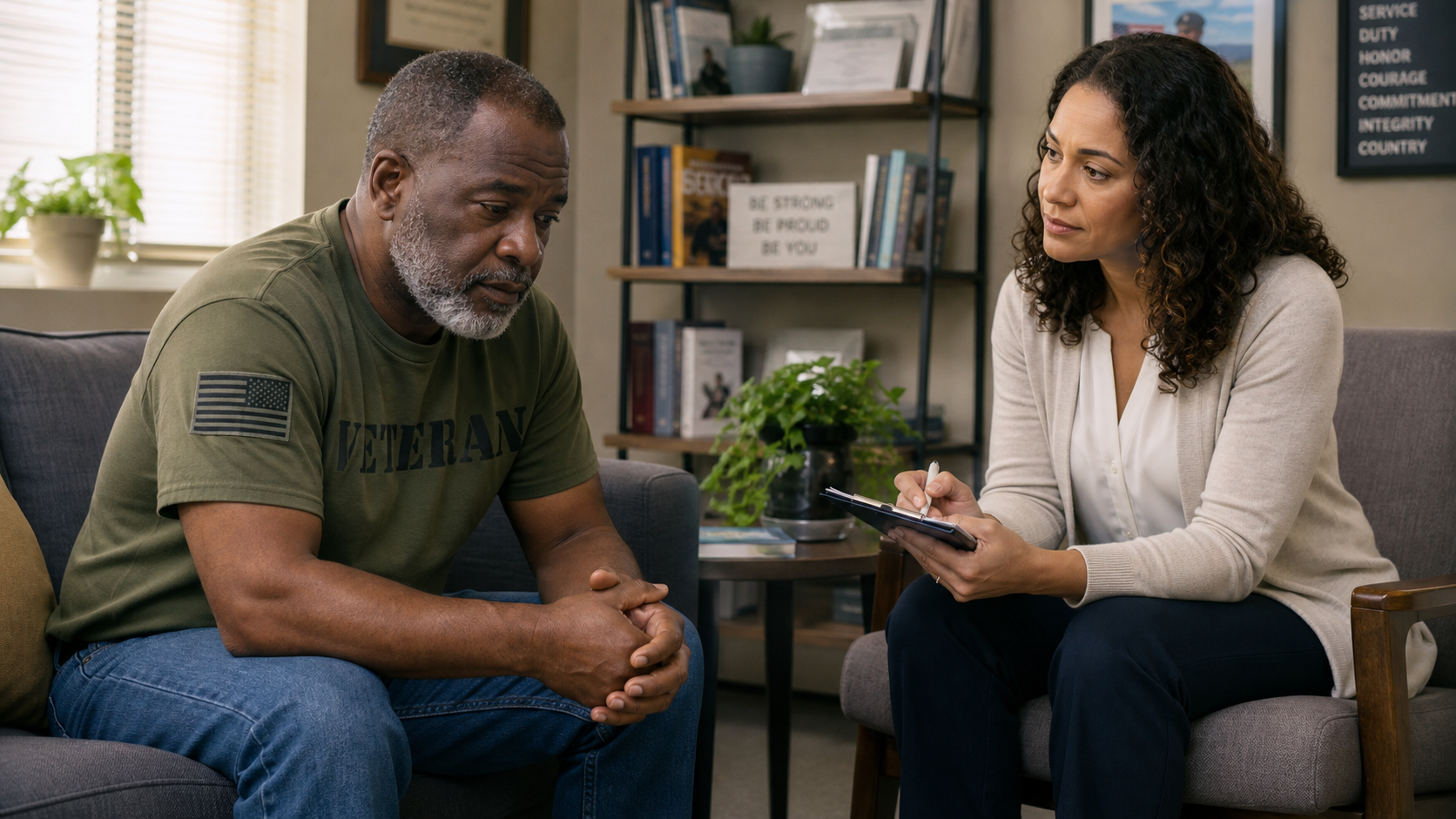
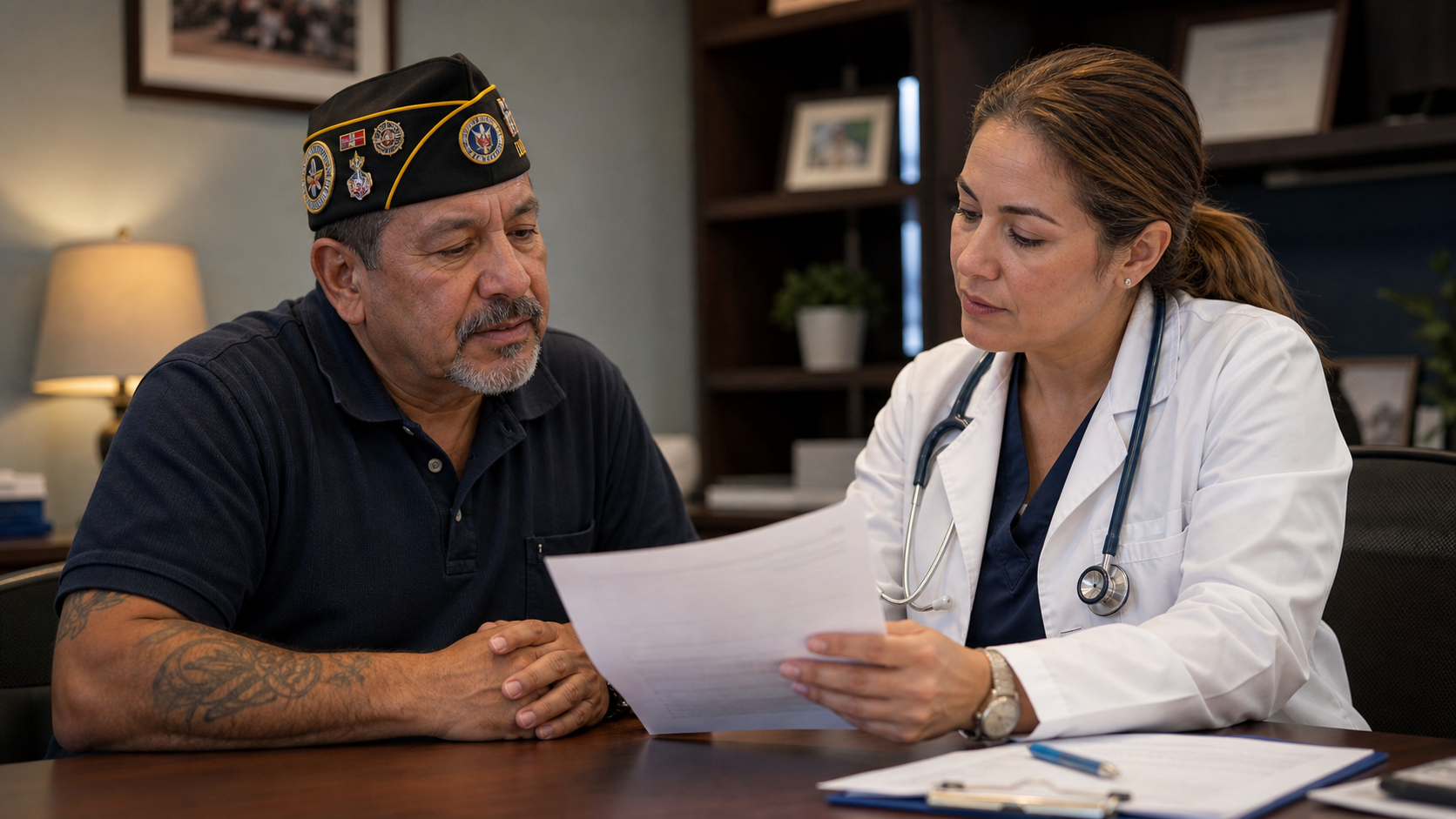
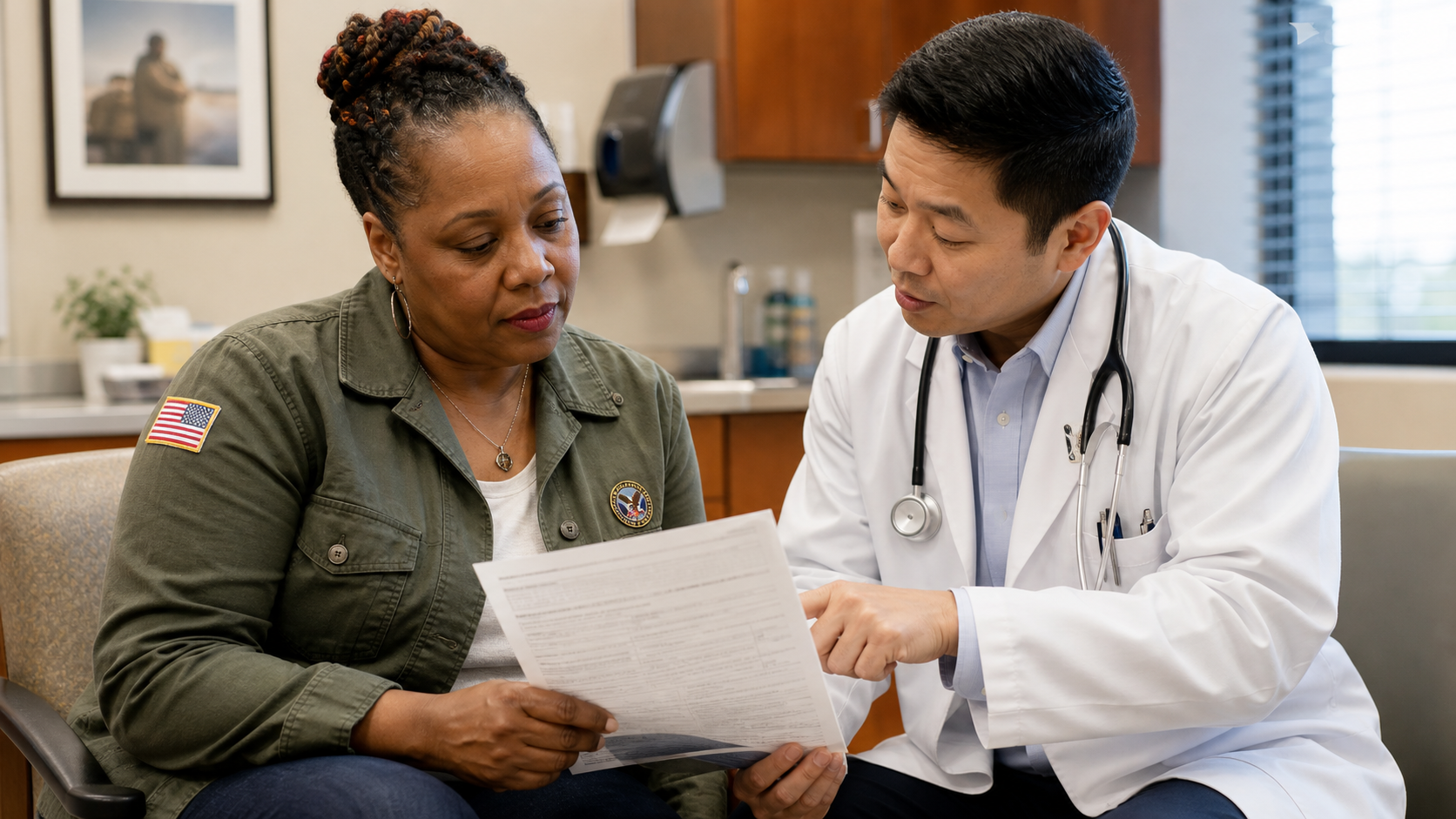
The VA has a duty to help you gather evidence, but relying on them to build your case is a mistake. The strongest claims are built by veterans who take an active role -- collecting every record, statement, and medical opinion before they file.
In plain language
What Gathering VA Medical Evidence: Build the Case Before You File covers
- The five types of evidence the VA accepts for disability claims
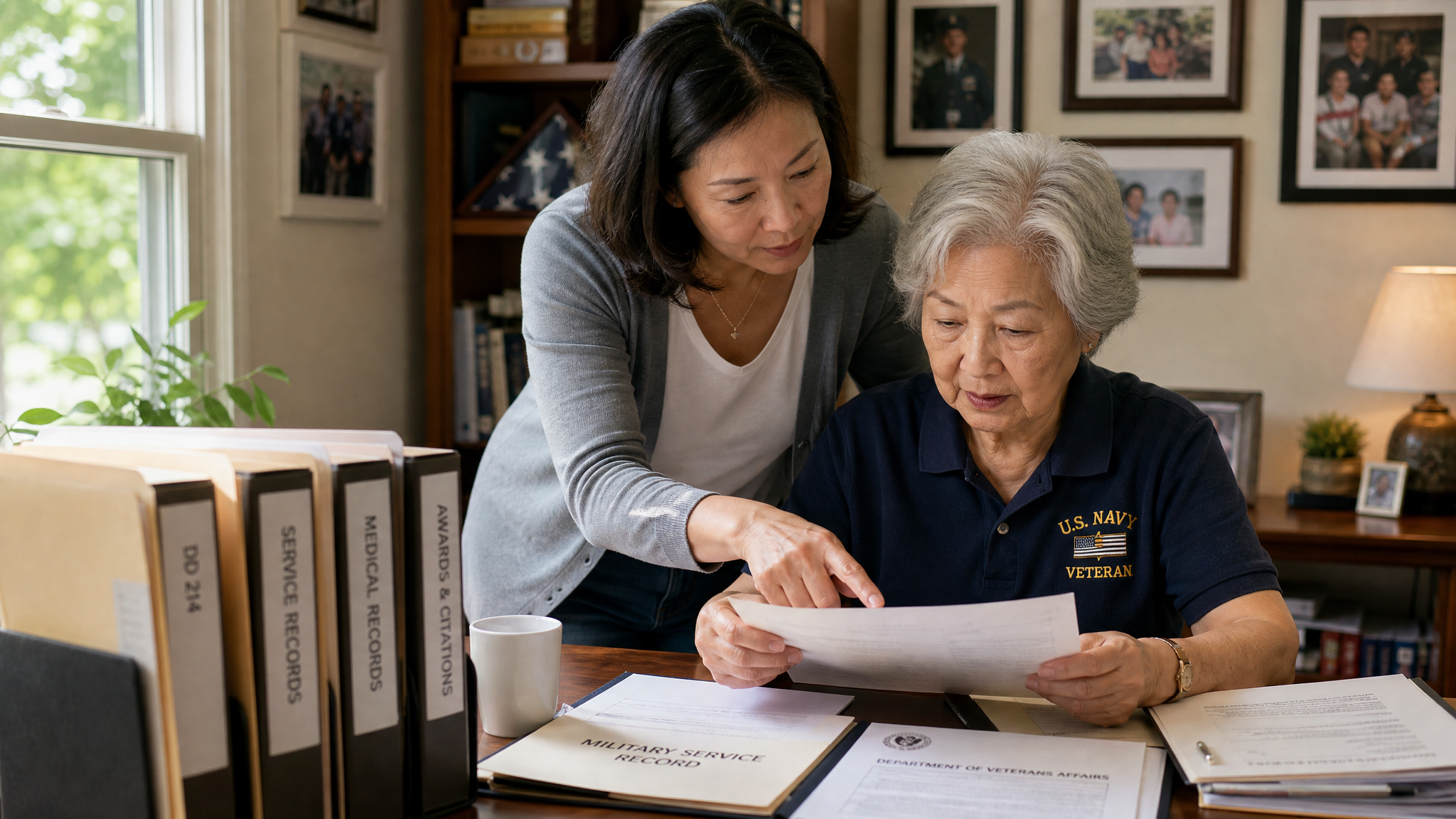
- Service treatment records and military records
- VA and private medical records
- Personal statements, lay witness statements, and buddy statements
- Expert medical opinions (nexus letters)
- The one-year evidence submission window and VA Form 21-4142
The full picture
Everything you need to know
Nothing hidden behind a click, and nothing you have to go looking for on another website. Here is the whole story in plain language - the facts and the figures first - so you can decide what fits your situation.
Key facts & current figures
- The VA accepts five types of evidence: military records, medical records (VA and private), personal/lay statements, buddy statements, and expert medical opinions (nexus letters).
- You have up to one year from the date you file to submit additional evidence. If the VA decides your claim before one year, you can still submit more evidence during the remaining period.
- Service Treatment Records (STRs) are the foundation -- they document conditions, injuries, and treatments that occurred during active duty and establish the direct service link.
- Use VA Form 21-4142 to authorize the VA to obtain your private medical records, or submit them yourself for faster processing.
- Missing military records do not end your claim. The VA is mandated to seek alternative documentation including buddy statements, secondary evaluations, and any records that support the connection.
General figures, current as of December 2025 and reviewed each year. Your exact amount depends on your situation - always confirm on va.gov.
Military records: the foundation of your claim
- Service Treatment Records (STRs) document every medical treatment, injury, complaint, and condition during your active duty. They are the single most important evidence for establishing a service connection.
- Personnel records include duty assignments, deployment orders, MOS documentation, awards, and disciplinary actions -- all of which provide context for your claim.
- Deployment records establish where you served and when, which is critical for claims related to toxic exposures, combat injuries, and environmental hazards.
- Official documentation and military awards demonstrate your duties and responsibilities. A Combat Action Ribbon, for example, supports a PTSD claim by corroborating combat exposure.
- Request your records through the National Personnel Records Center (NPRC) at archives.gov if you do not already have copies. Processing times vary, so start early.
- If records were lost or destroyed (common for Vietnam-era veterans), the VA must pursue alternative documentation -- do not let missing records stop you from filing.
Medical records: VA and private
- Submit all medical records covering your condition's entire history: onset, diagnosis, treatment, and progression. Both VA and private records count.
- VA medical records are already in the system, but do not assume the VA rater will pull every relevant note. Submit specific records you want the rater to see, organized by condition.
- Private medical records from outside the VA network can be submitted directly or you can authorize release using VA Form 21-4142 (Authorization to Disclose Information to the VA).
- Comprehensive medical records should include diagnostic tests, imaging results, lab work, specialist evaluations, treatment plans, and medication histories.
- The records must show continuity of treatment -- regular visits, ongoing complaints, and worsening symptoms over time. A single diagnosis without follow-up care is weaker evidence.
- We strongly recommend submitting evidence within 30 days of filing, though you have up to one year. The sooner your evidence is complete, the faster the decision.
Personal statements and lay evidence
- A personal statement is your own written account of how your condition started, how it has progressed, and how it affects your daily life. The VA accepts these as evidence.
- Lay witness statements from family members, friends, or coworkers who have observed your condition provide a unique perspective the medical records cannot capture.
- These statements should describe specific, observable changes: difficulty walking, trouble sleeping, personality changes, inability to perform tasks you used to handle easily.
- Use VA Form 21-10210 (Lay/Witness Statement) for formal lay evidence. Statements should be detailed, specific, and honest -- vague generalities carry little weight.
- Personal statements are especially critical when your medical records have gaps. They fill in the narrative and explain periods when you could not access care or chose not to seek treatment.
- Write in your own words. Do not use legal language or try to sound clinical. The VA values authenticity and specificity over polished writing.
Buddy statements from fellow service members
- Buddy statements are written testimonies from individuals who served with you. They provide firsthand accounts of events, injuries, or conditions during your service.
- A buddy statement can corroborate your claim when official records are incomplete -- for example, confirming an injury that was never formally documented.
- Use VA Form 21-4138 (Statement in Support of Claim) for buddy statements. The statement should describe what the witness saw, when and where it happened, and their relationship to you.
- Buddy statements are especially powerful for PTSD and MST claims where the traumatic event may not appear in official records.
- Multiple buddy statements from different service members describing the same event or pattern reinforce each other and build a more credible case.
- The witness does not need to be a medical professional. Their value is in confirming facts and circumstances, not diagnosing conditions.
Expert medical opinions (nexus letters)
- A nexus letter is a written opinion from a qualified healthcare provider stating that your condition is at least as likely as not connected to your military service.
- The nexus letter provides the medical bridge between your service records (which show what happened) and your current medical records (which show your condition today).
- The letter must include the provider's qualifications, a clear opinion using "at least as likely as not" language, and a detailed rationale with clinical evidence.
- A nexus letter from your treating physician carries significant weight because the opinion is based on an ongoing medical relationship, not a one-time review.
- Expert opinions are especially important for conditions that developed years or decades after service -- the nexus letter explains why the delay does not break the connection.
- See our dedicated Nexus Letters guide for the full breakdown of what makes one work and the common mistakes that destroy them.
Strategy: building your case like a professional
- Do not wait for the VA to tell you what is missing. By the time they send a development letter, you have already lost months. Submit a complete package upfront.
- Organize your evidence by condition. If you are claiming three conditions, create three separate evidence packages with the relevant records, statements, and opinions for each.
- File an Intent to File (VA Form 21-0966) first to lock in your effective date, then use up to a year to build the strongest case possible before submitting the actual claim.
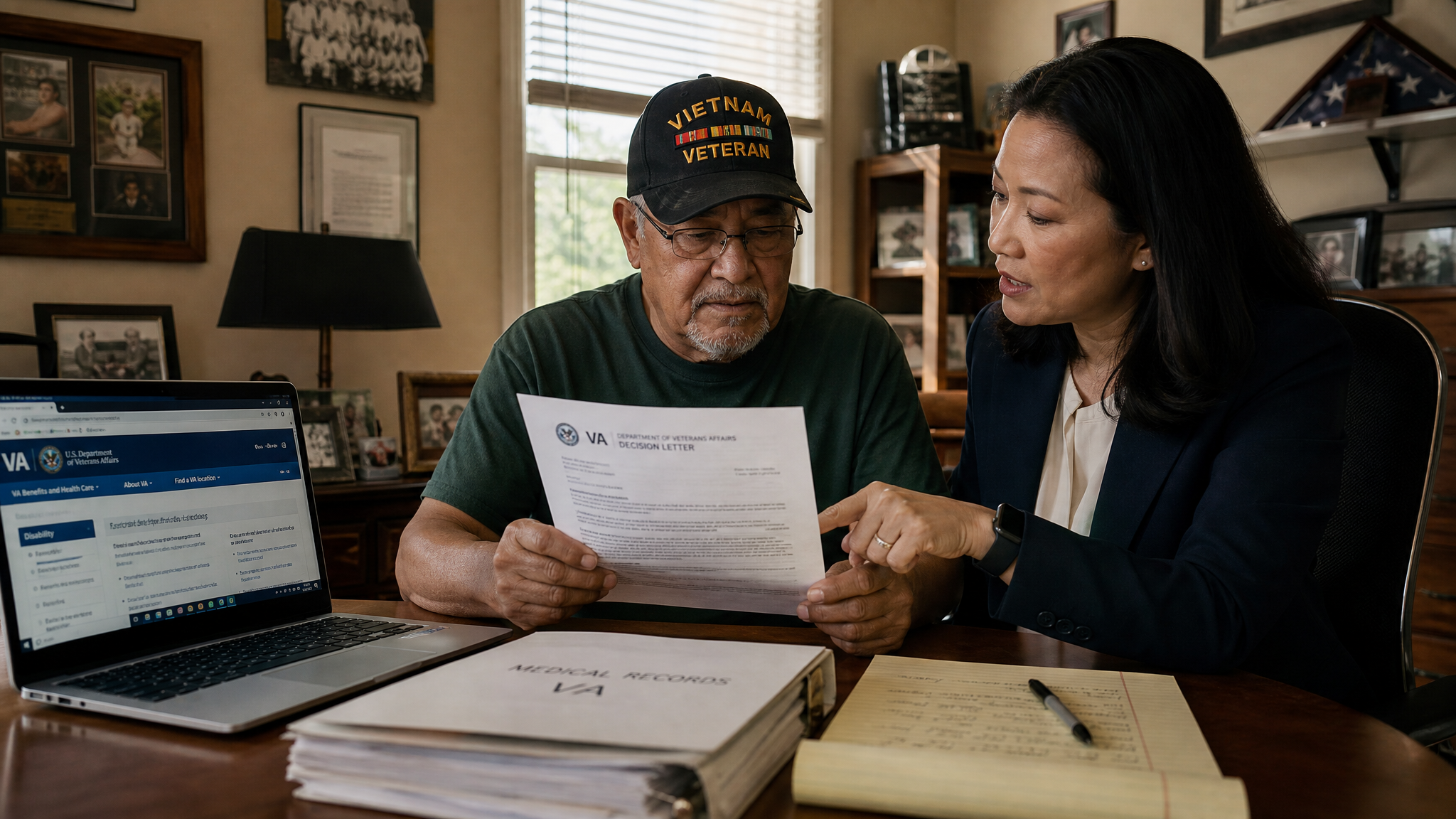
- If your claim was denied, read the denial letter carefully. It tells you exactly what evidence was missing or insufficient. A Supplemental Claim with that specific evidence can reverse the decision.
- Consider working with a VA-accredited claims agent or attorney who can review your evidence package, identify weaknesses, and help you fill the gaps before submission.
- The strength of your claim is not in any single document -- it is in the cumulative weight of consistent, corroborating evidence from multiple sources that all tell the same story.
Your complete benefit picture
You do not have to sort this out alone
The VA has a legal duty to assist, but they will not build your case for you. The veterans who win are the ones who treat this like a job: they collect every record, write detailed statements, get their doctor to provide a nexus opinion, and submit everything organized and complete. Do not wait for the VA to tell you what is missing. Be proactive. Every gap in your evidence is an opportunity for a denial.
Two ways to move forward — both free
Not sure if this applies to you?
Ask our free assistant a few plain questions and get an honest read on what you and your family may qualify for, at no cost. It takes just a few minutes, and there is no sign-up and no obligation of any kind. You will get a clear, plain-language picture of where you stand and what might be worth filing. And if you would rather talk to a real person, an accredited agent is only a message away.
Have a question? Get free information
Ask a question, learn what you may be owed, or find out where you stand. Confidential, free, and no obligation to go any further.
Ready to hire us? Register
Decided you want us to work your claim? Registering is free — we match you with an accredited advocate and get you started. We cannot begin until you sign VA Form 21-22a, and fees, if any, are always disclosed up front.
Worth knowing
Before you file, keep this in mind
The VA has a legal duty to assist, but they will not build your case for you. The veterans who win are the ones who treat this like a job: they collect every record, write detailed statements, get their doctor to provide a nexus opinion, and submit everything organized and complete. Do not wait for the VA to tell you what is missing. Be proactive. Every gap in your evidence is an opportunity for a denial.
A clear path forward
Your step-by-step action plan
No rush and no pressure - but a little order helps. Applying is always free.
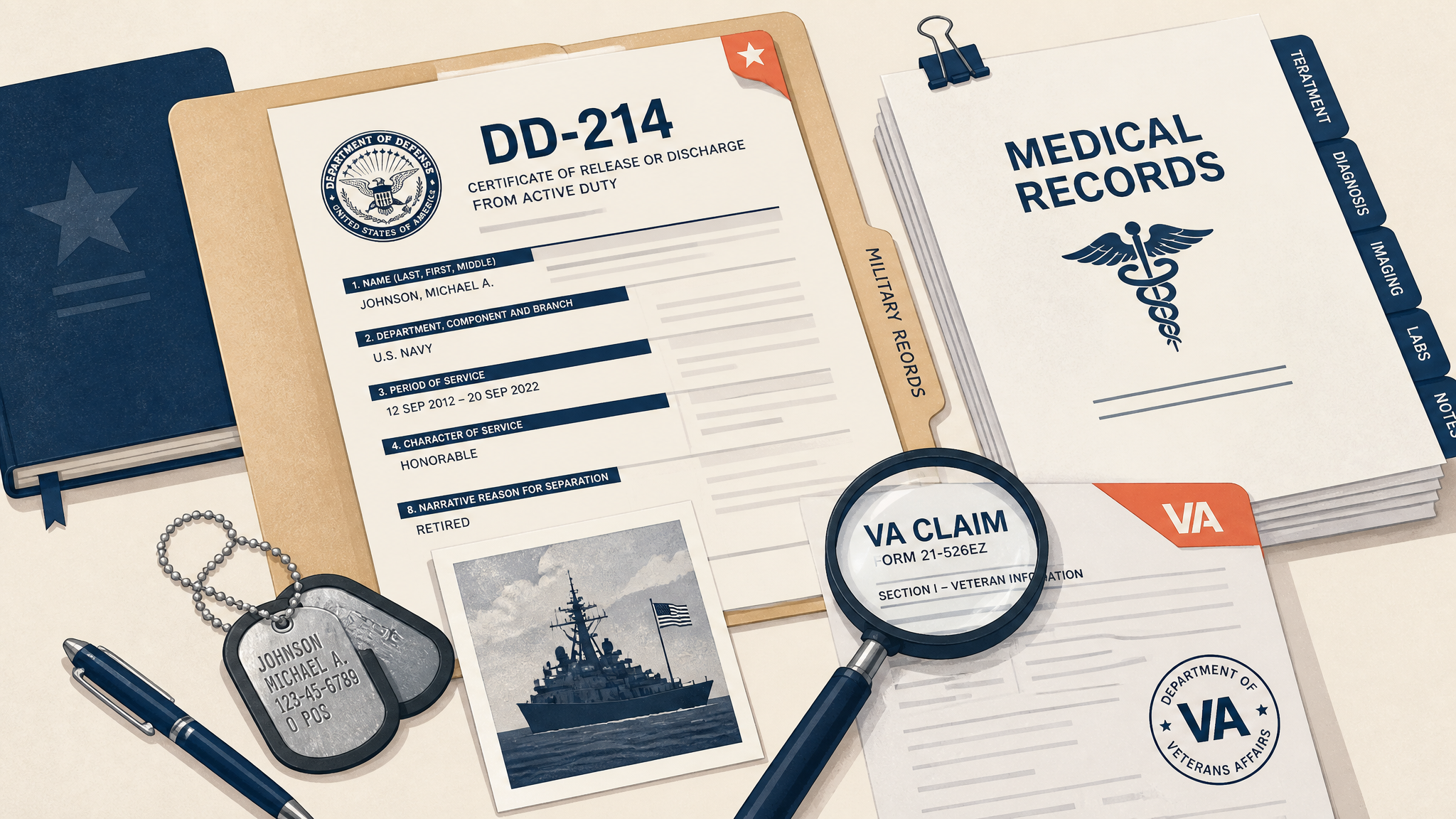
FIG. 01 - Gather your paperwork
First
See what you qualify for
The VA has a duty to help you gather evidence, but relying on them to build your case is a mistake. The strongest claims are built by veterans who take an active role -- collecting every record, statement, and medical opinion before they file.
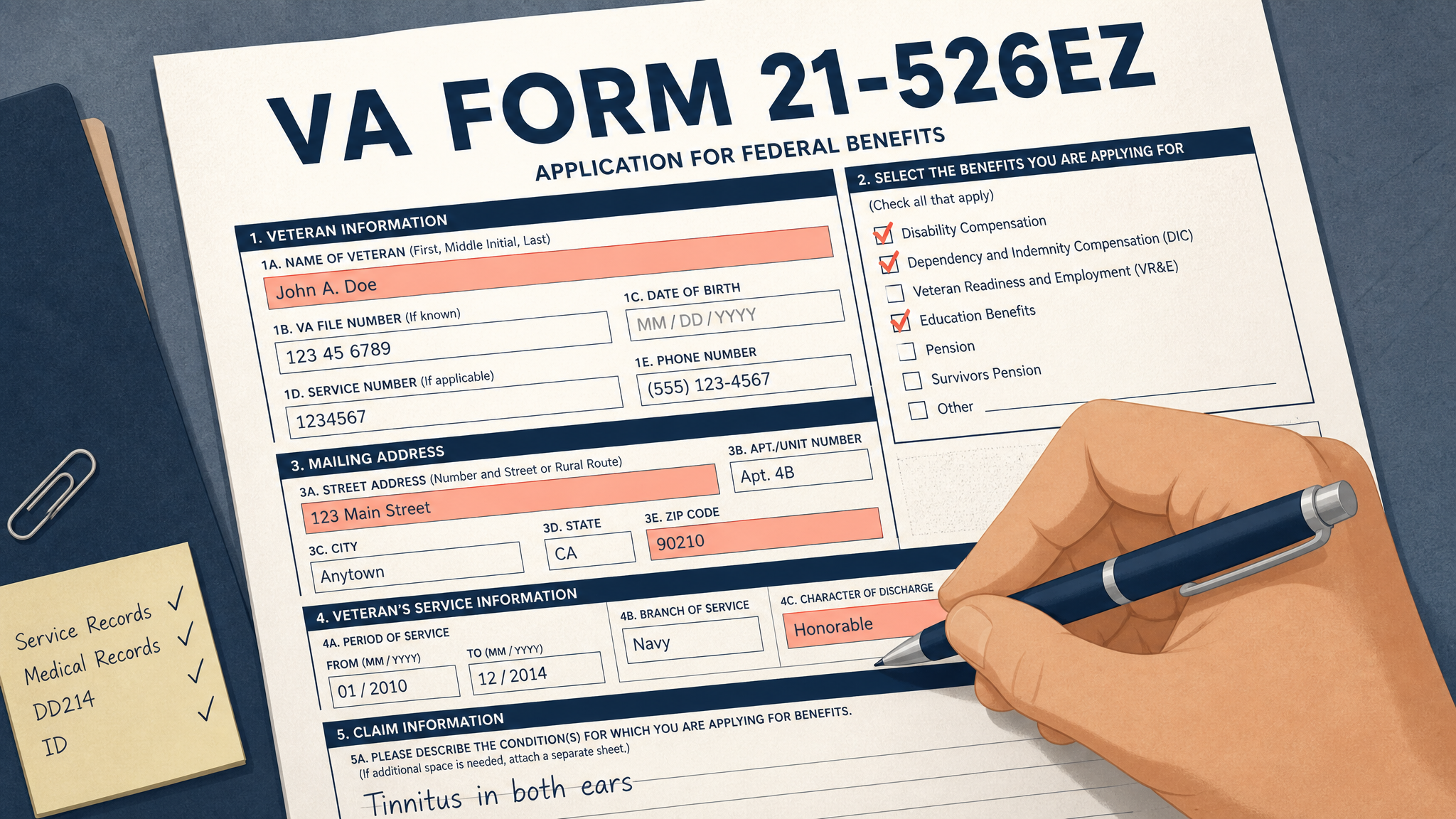
FIG. 02 - Fill out the form
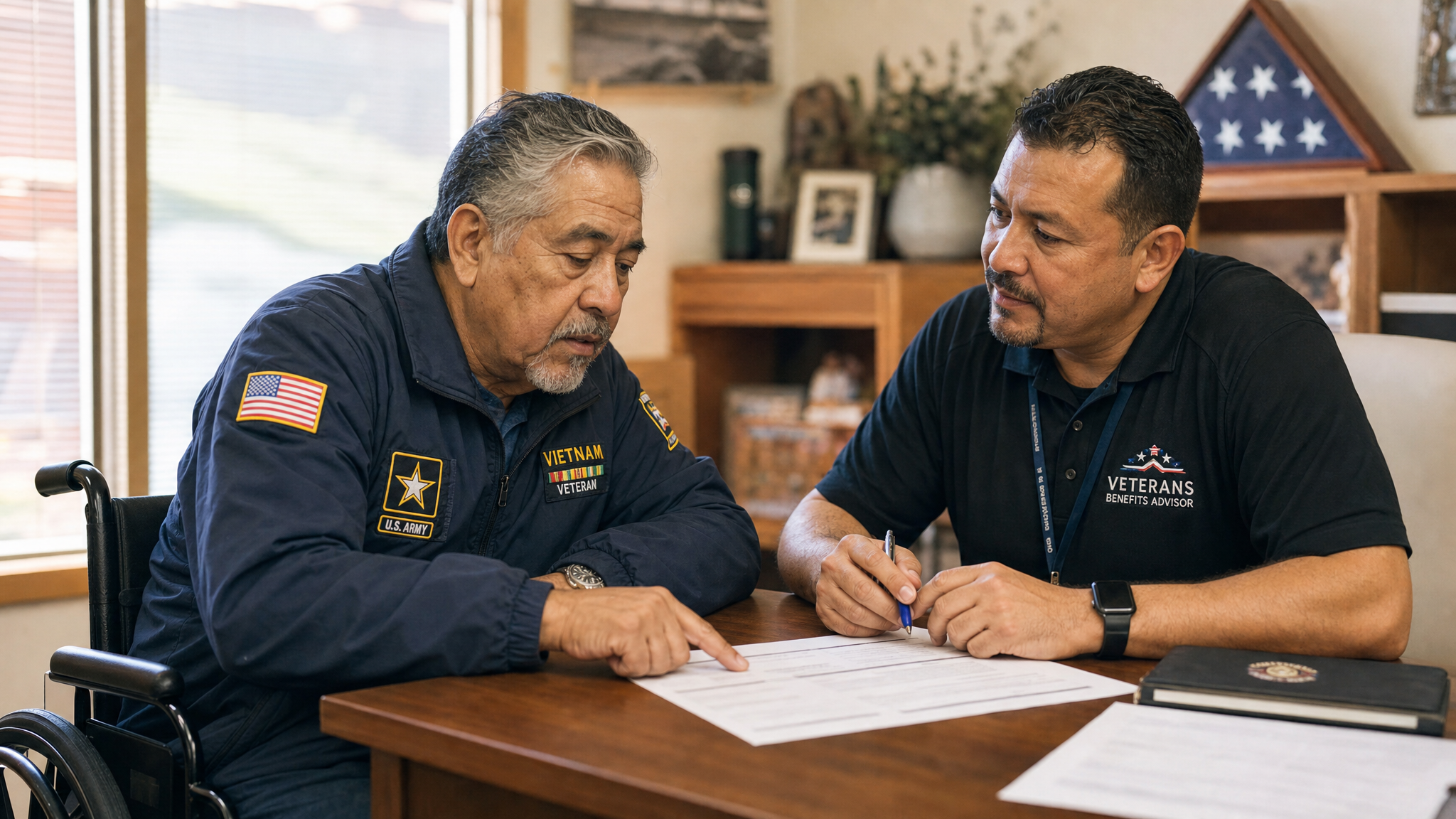
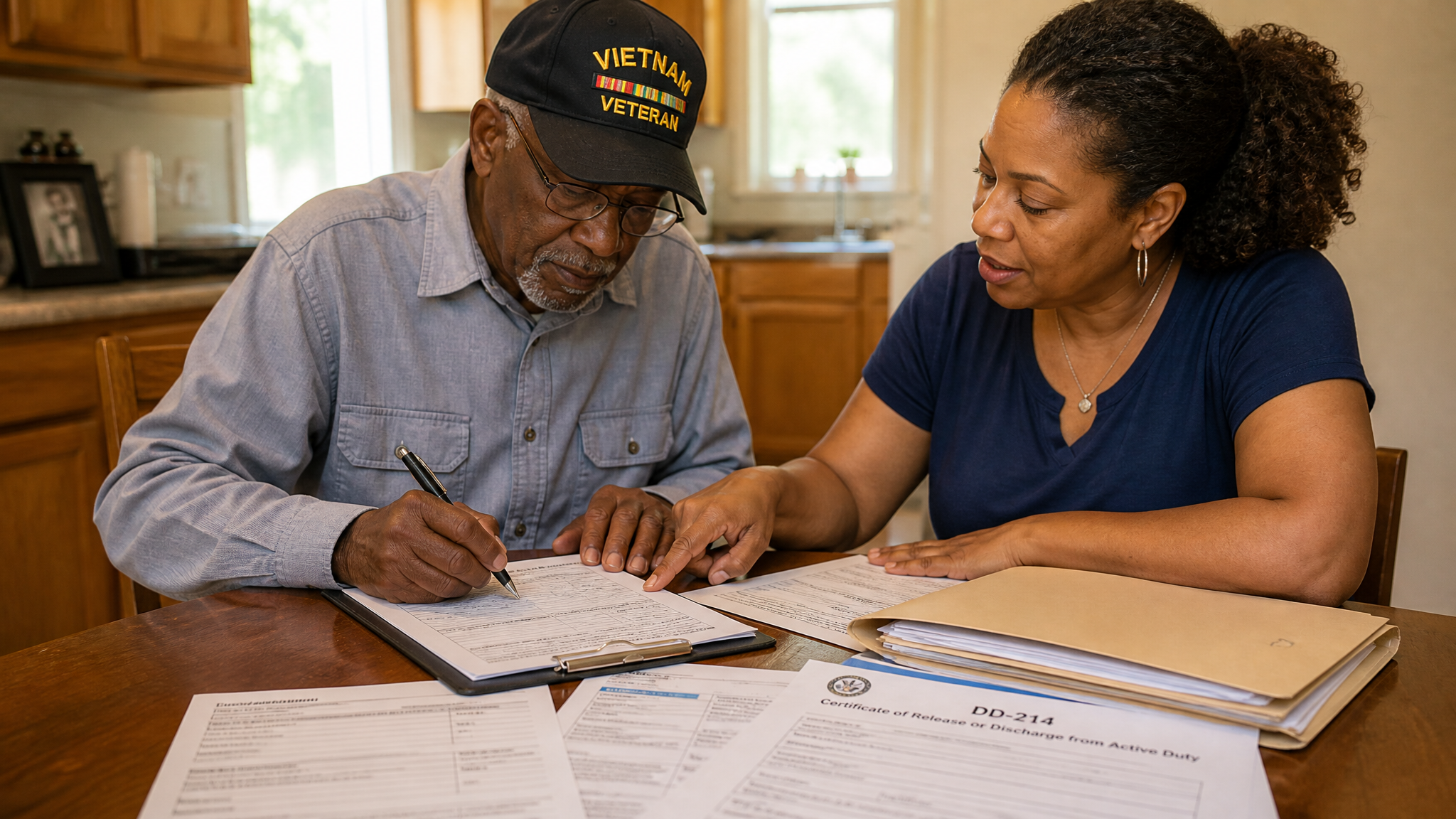
Gather
Collect your documents
Pull your DD-214 and any records that support your claim - we can help you figure out exactly what you need.
FIG. 03 - File the claim
File it - always free
Apply for the benefit
Evidence is submitted as part of your disability claim (VA Form 21-526EZ). Gather your records before filing. Attach service treatment records, medical records, personal statements, buddy statements, and nexus letters to your claim package. If you need the VA to obtain private medical records, submit VA Form 21-4142 (Authorization to Disclose Information). For a Supplemental Claim, submit new evidence with VA Form 20-0995.
Who to call & where to go
These are free, official VA lines. Have your Social Security number handy when you call.
MyVA411 - Main VA Line
Not sure who to call? Start here. One number for anything VA - they route you to the right office.
VA Benefits Hotline
Compensation, pension, and general claim questions.
Rather have us handle it?
No phone tag, no hold music. Call our office and a real, VA-accredited person walks you through it - start to finish.
702-992-4883Not sure where to start?
Evidence is submitted as part of your disability claim (VA Form 21-526EZ). Gather your records before filing. Attach service treatment records, medical records, personal statements, buddy statements, and nexus letters to your claim package. If you need the VA to obtain private medical records, submit VA Form 21-4142 (Authorization to Disclose Information). For a Supplemental Claim, submit new evidence with VA Form 20-0995.
More benefits for veterans
These often go hand in hand - tap any card to learn more.















Free information — get a free benefit review
Tell us how to reach you and an accredited team member will help you understand this benefit and claim everything you have earned. No cost, no obligation.
Ready to hire us? Register with us
For veterans who’ve decided they want us on their claim — registering is free too, and it does not make you our client or obligate you to anything. Here is exactly how it works:
- You register. This simply starts the conversation — you are not our client yet, and you owe us nothing.
- You sign and return VA Form 21-22a. It appoints us as your accredited representative and gives us access to your VA file.
- Once we have your signed 21-22a and access to your case, we verify everything is in order.
It involves the registration form and signing VA Form 21-22a — by law we can’t accept your claim, work on it, or contact the VA for you until that power of attorney is signed. You decide whether to move forward.
Official VA links
Answers, in plain language
Common questions about Gathering VA Medical Evidence: Build the Case Before You File
What is Gathering VA Medical Evidence: Build the Case Before You File?
This guide covers every type of evidence the VA accepts, how to get each one, the forms involved, and the strategy behind assembling a case file that leaves the rater no room to deny your claim.
Who qualifies for Gathering VA Medical Evidence: Build the Case Before You File?
This benefit is generally for: Veterans preparing to file a disability claim, Veterans whose claim was denied for insufficient evidence, Family members helping a veteran collect records, Veterans filing a Supplemental Claim with new evidence. The five types of evidence the VA accepts for disability claims Service treatment records and military records
How much does Gathering VA Medical Evidence: Build the Case Before You File pay?
Do not wait for the VA to tell you what is missing. By the time they send a development letter, you have already lost months. Submit a complete package upfront. Organize your evidence by condition. If you are claiming three conditions, create three separate evidence packages with the relevant records, statements, and opinions for each. File an Intent to File (VA Form 21-0966) first to lock in your effective date, then use up to a year to build the strongest case possible before submitting the actual claim.
How do I apply for Gathering VA Medical Evidence: Build the Case Before You File?
Evidence is submitted as part of your disability claim (VA Form 21-526EZ). Gather your records before filing. Attach service treatment records, medical records, personal statements, buddy statements, and nexus letters to your claim package. If you need the VA to obtain private medical records, submit VA Form 21-4142 (Authorization to Disclose Information). For a Supplemental Claim, submit new evidence with VA Form 20-0995.
What does it cost to get help with Gathering VA Medical Evidence: Build the Case Before You File, and are you VA-accredited?
The VA has a legal duty to assist, but they will not build your case for you. The veterans who win are the ones who treat this like a job: they collect every record, write detailed statements, get their doctor to provide a nexus opinion, and submit everything organized and complete. Do not wait for the VA to tell you what is missing. Be proactive. Every gap in your evidence is an opportunity for a denial. It is free to talk with us, and no one may charge you to file a first-time VA claim. The Aging Veteran is led by Albert L. Thombs Jr., a VA-accredited claims agent (accreditation #45147) and disabled veteran; any appeal work is handled on a no-fee-unless-you-win basis.