
Veteran Benefits
Hearing Aids & Medical Devices
Enrolled veterans can receive hearing aids, eyeglasses, prosthetics and home medical equipment at no cost - batteries, repairs and replacements included. The exam is open to everyone enrolled; the devices follow a specific eligibility rule, and a 0 percent hearing rating is enough to satisfy it.
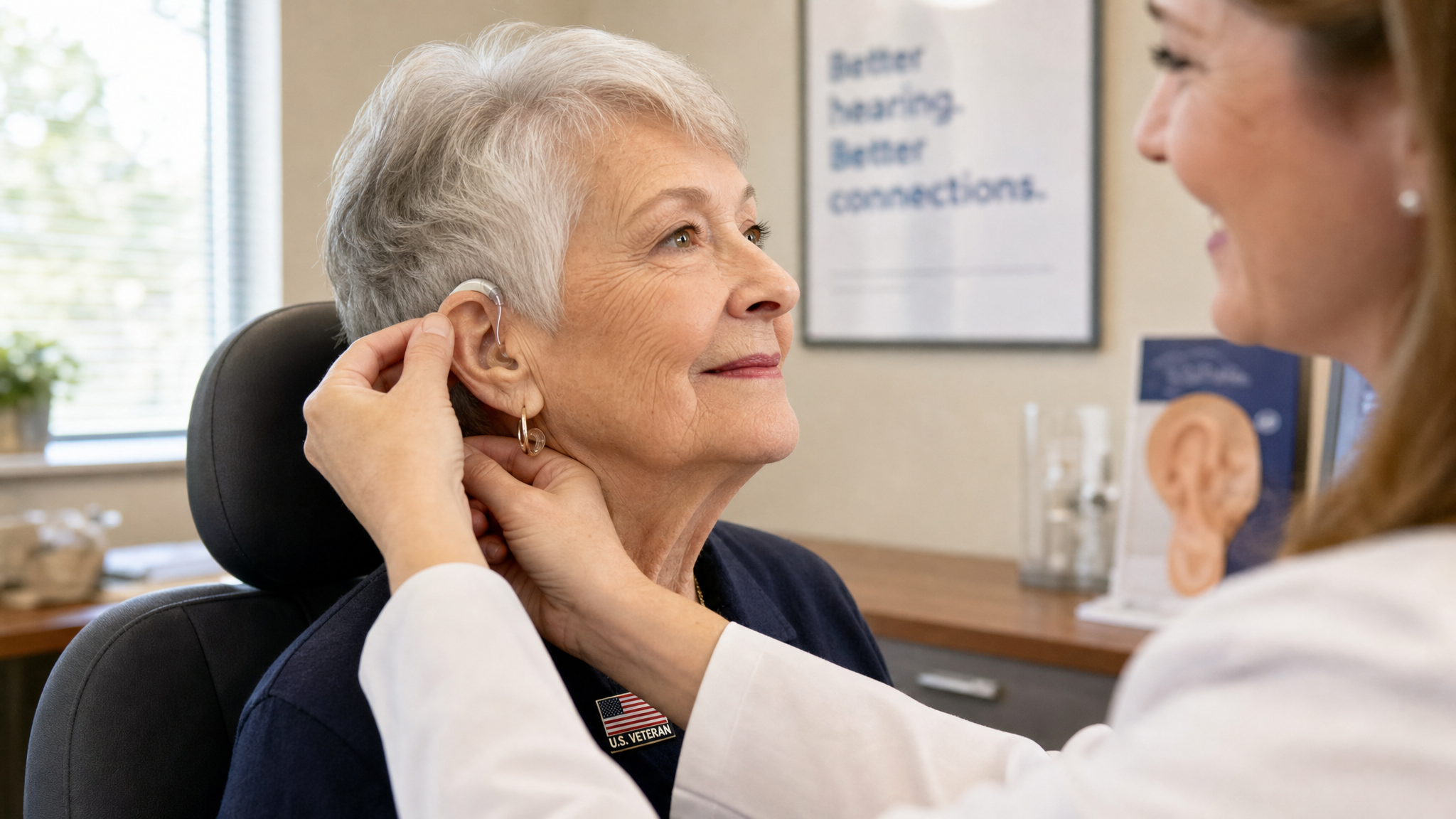
Who this is for
If you are turning the television up, asking people to repeat themselves, squinting to read, or getting by on equipment you bought yourself, stop paying. Enrolled veterans can receive hearing aids, glasses and mobility equipment at no cost - batteries and repairs included - and a hearing rating of even zero percent is enough to unlock them for life.
In plain language
What Hearing Aids & Medical Devices covers
- A free audiology exam and a free eye exam for every enrolled veteran
- Hearing aids at no cost once you meet an eligibility category - including a 0 percent service-connected hearing loss
- Free batteries, wax guards, domes, cleaning supplies and lifetime repairs, shipped to your door
- Eyeglasses and contact lenses under the same eligibility rule
- Prosthetic limbs, wheelchairs, walkers, scooters, canes, hospital beds and home medical equipment
- Cochlear implants and assistive listening devices when your audiologist prescribes them
VA Hearing Aids: How to Get Them and What They CostOfficial video - U.S. Department of Veterans Affairs - theSITREP
5 things most veterans aren't aware of
These apply to nearly every VA claim - and they change how much you get and when.
Your filing date sets your back pay
Benefits are generally paid back to the day you file - not the day you are approved. Filing an intent to file today can protect months, even years, of retroactive pay.
One condition can trigger others (secondary claims)
A service-connected condition that causes another - like sleep apnea from PTSD, or a bad knee from a bad hip - can be rated on its own. Each secondary condition adds to your rating.
A medical nexus is what wins the claim
The VA needs a documented link between your condition and your service. A clear nexus opinion is often the difference between an approval and a denial.
Accredited help is free to file an initial claim
By law, an accredited agent cannot charge a fee to prepare and file your original claim. If someone asks for money up front to file, that is a red flag.
A denial is not the end of the road
You have three appeal lanes - Higher-Level Review, a Supplemental Claim with new evidence, and the Board of Veterans Appeals. Many denials are overturned on review.
0%
The smallest rating that still unlocks VA hearing aids
Free
Batteries, wax guards, domes and repairs, for as long as you need them
10% flat
The capped rating for tinnitus under DC 6260
The full picture
Everything you need to know
Nothing hidden behind a click, and nothing you have to go looking for on another website. Here is the whole story in plain language - the facts and the figures first - so you can decide what fits your situation.
Key facts & current figures
- Every enrolled veteran can get a free hearing test and a free eye exam. The devices are a separate rule - hearing aids and eyeglasses are furnished under 38 CFR 17.149, and you have to land in one of its eligibility categories.
- The widest door in is the smallest rating: a service-connected hearing loss rated at 0 percent qualifies you for VA hearing aids. Zero percent pays you nothing in cash and still unlocks the devices.
- Batteries, wax guards, domes, cleaning supplies and repairs are free for as long as you need them through the VA Denver Logistics Center - reorder by phone at 877-677-8710, and each shipment is about a 6-month supply.
- A VA hearing exam only counts if a state-licensed audiologist runs both a Maryland CNC speech discrimination test and puretone audiometry - and runs them with your hearing aids out. Anything less is an inadequate exam.
- Tinnitus is capped at 10 percent whether it rings in one ear or both. What tinnitus causes - broken sleep, headaches, anxiety, depression - is not capped at all.
General figures, current as of December 2025 and reviewed each year. Your exact amount depends on your situation - always confirm on va.gov.
Everyone enrolled gets the exam. Not everyone gets the device.
- Under 38 CFR 17.38, diagnostic and preventive audiology and eye care are part of the standard medical benefits package - if you are enrolled, the test itself is yours, at no cost, no rating required.
- The hardware is governed by a different rule. 38 CFR 17.149 lists who the VA furnishes hearing aids, eyeglasses and contact lenses to, and you have to fit one of those categories: a compensable service-connected disability; former prisoner of war; Purple Heart recipient; a veteran receiving benefits under 38 USC 1151 for an additional disability caused by VA care; a veteran drawing an increased pension for being housebound or in need of regular aid and attendance; a veteran whose hearing or vision loss came from a condition the VA is treating or from that treatment itself - stroke, diabetes, multiple sclerosis, TBI, cataract surgery; a veteran with significant functional or cognitive impairment shown in the activities of daily living; or a veteran whose loss is severe enough that the device is necessary for them to take part in their own medical treatment.
- Read that list again and notice what is missing. Ordinary age-related hearing and vision loss is specifically excluded. That single omission is why so many older veterans walk out of a VA audiology clinic with a diagnosis and no hearing aids, and never understand why.
The 0 percent door - the widest way in
- 38 CFR 17.149(c) is the paragraph worth knowing by heart. The VA furnishes hearing aids to a veteran with a service-connected hearing disability rated at 0 percent as long as there is an organic conductive, mixed or sensory impairment causing a loss of puretone sensitivity - low, mid or high frequency - that costs you communication ability.
- Sit with what that means. A 0 percent rating pays you nothing each month. It is the rating veterans are told is "not worth it," the one people decline to appeal. It also permanently places you inside the device rule.
- So the practical move is almost always the same: file for your hearing loss and your tinnitus. If the VA grants 10 percent for tinnitus, that is compensable and you are in. If it grants 0 percent for hearing loss, you are still in. The only way to lose is not to file.
- A rating also travels. Once your hearing is service-connected, the aids, the batteries, the repairs and the replacements follow you for life - and so does a secondary claim for anything the hearing loss causes downstream.
Batteries, repairs and replacements - how you actually reorder
- Supplies do not come from your local clinic. They ship from the VA Denver Logistics Center, and once you are set up you can reorder without an appointment or a doctor.
- By phone, call 877-677-8710, Monday through Friday. Press option 1 for the automated battery reorder line - it will ask for your Social Security number and your zip code and nothing else. Press option 2 if you also need accessories such as wax guards, domes, cleaning supplies or desiccant, and a person will take the order.
- By mail, use VA Form 2346a, the Request for Batteries and Accessories - a copy usually rides along in the box with your last shipment. Send it to the VA Denver Logistics Center, PO Box 25166, Denver, CO 80225-0166. You can also email an order to [email protected].
- Each order is roughly a 6-month supply and typically arrives in 7 to 10 days, so reorder while you still have about 30 days of batteries left. Online reordering is available, but only if you have ordered these supplies from the VA within the last 2 years.
- If the aid itself breaks, do not buy a new one. Call your VA audiology clinic or the Denver center and they will send you a shipping box and VA Form 1107, the repair request. Repairs are covered, and so is replacement when a device is ineffective, beyond repair, or lost or destroyed through no fault of yours.
How the VA measures your hearing - and the two tests that make the exam legal
- 38 CFR 4.85 does not leave the exam to the examiner’s judgment. It requires that the test be given by a state-licensed audiologist and that it include both a controlled speech discrimination test - specifically the Maryland CNC - and a puretone audiometry test.
- It also requires the test be conducted without your hearing aids in. If someone tested you while you were wearing them, that result cannot lawfully be used to rate you.
- Your puretone threshold average is the arithmetic the whole rating rests on: the thresholds at 1000, 2000, 3000 and 4000 Hertz, added together and divided by 4. That average and your Maryland CNC speech score feed Table VI, which converts them into a Roman numeral for each ear, and Table VII then turns the two numerals into your percentage.
- There is one lawful shortcut. If the examiner certifies in writing that speech discrimination testing is not appropriate - language difficulty, or scores that will not hold still - the VA may rate from Table VIa, which uses the puretone average alone. That certification has to actually be in the record. An examiner who simply skipped the speech test without certifying why has handed you an inadequate examination, and an inadequate exam is grounds to demand a new one.
The exceptional-pattern rule that gets skipped (38 CFR 4.86)
- Some hearing losses do not behave like the tables assume, so the regulation carves out two exceptional patterns - and each ear is judged on its own.
- Pattern one. If your puretone threshold is 55 decibels or more at every one of 1000, 2000, 3000 and 4000 Hertz, the rater must look at both Table VI and Table VIa and use whichever produces the higher Roman numeral. Not the one that comes up first. The higher one.
- Pattern two. If your threshold is 30 decibels or less at 1000 Hertz and 70 decibels or more at 2000 Hertz, the rater again takes the higher numeral from the two tables - and then must elevate it one more Roman numeral. That second step is real, it is mandatory, and it is quietly one of the most-missed instructions in the whole hearing section.
- This is exactly the kind of arithmetic nobody double-checks. If you have your audiogram in hand, the decibel numbers at those four frequencies are printed right on it. Compare them to the two patterns above before you accept a rating decision - and if either pattern fits and the decision does not mention 4.86, that is a specific, nameable error worth appealing.
Tinnitus stops at 10 percent. What it opens does not.
- Tinnitus is rated under diagnostic code 6260, and it is a flat 10 percent and no higher - one ear, both ears, mild ring or a freight train, it does not matter. Chasing a higher tinnitus rating is a dead end, and honest advocates say so.
- The value is elsewhere. That 10 percent is compensable, which means it satisfies 38 CFR 17.149 and settles your hearing-aid eligibility permanently.
- And tinnitus rarely arrives alone. Constant ringing that keeps you from sleeping, sets off headaches, or grinds you into anxiety or depression can support a secondary service-connected claim for the condition it caused - and those conditions are not capped at ten percent. This is where the real compensation lives, and it is the piece most veterans are never told about.
- If you served around gunfire, aircraft, armor, artillery, flight lines, engine rooms or heavy machinery, the exposure is a matter of record for your job and your unit. You do not need a hearing test from 1968 to make that case.
Eyeglasses are not automatic - and when the VA replaces a device
- Eyeglasses and contact lenses run through the same 38 CFR 17.149 categories as hearing aids. The eye exam comes with enrollment; the glasses do not, unless you fit a category. Reading glasses for ordinary aging eyes are the classic denial.
- Where glasses are most often granted is the medical route: if your vision changed because of a condition the VA is treating - diabetes, a stroke, multiple sclerosis, TBI, or cataract surgery the VA performed - you are inside the rule.
- Replacement follows its own logic, and it is worth knowing before you ask. The VA replaces a device when it is no longer effective, cannot be repaired, or was lost or destroyed through no fault of your own, or when your medical condition has changed enough that the old device no longer fits your needs.
- What the VA will not do is swap a working device for cosmetic reasons, or simply because newer technology exists - unless that newer technology would significantly benefit you. If it genuinely would, say so plainly to your audiologist and get the reason into your chart, because that sentence in the record is what authorizes the upgrade.
Prosthetics and the equipment that keeps you in your own home
- The Prosthetic and Sensory Aids Service (PSAS) is the office behind all of this, and its catalog is far wider than most veterans imagine: artificial limbs, wheelchairs and power chairs, scooters, walkers, canes, hospital beds, oxygen equipment, lifts, braces, orthotics, and cochlear implants.
- Every item runs the same path - your VA care team prescribes it, PSAS orders it, and the VA then delivers, maintains and repairs it at no cost when you qualify. You never pay a repair bill on VA-issued equipment.
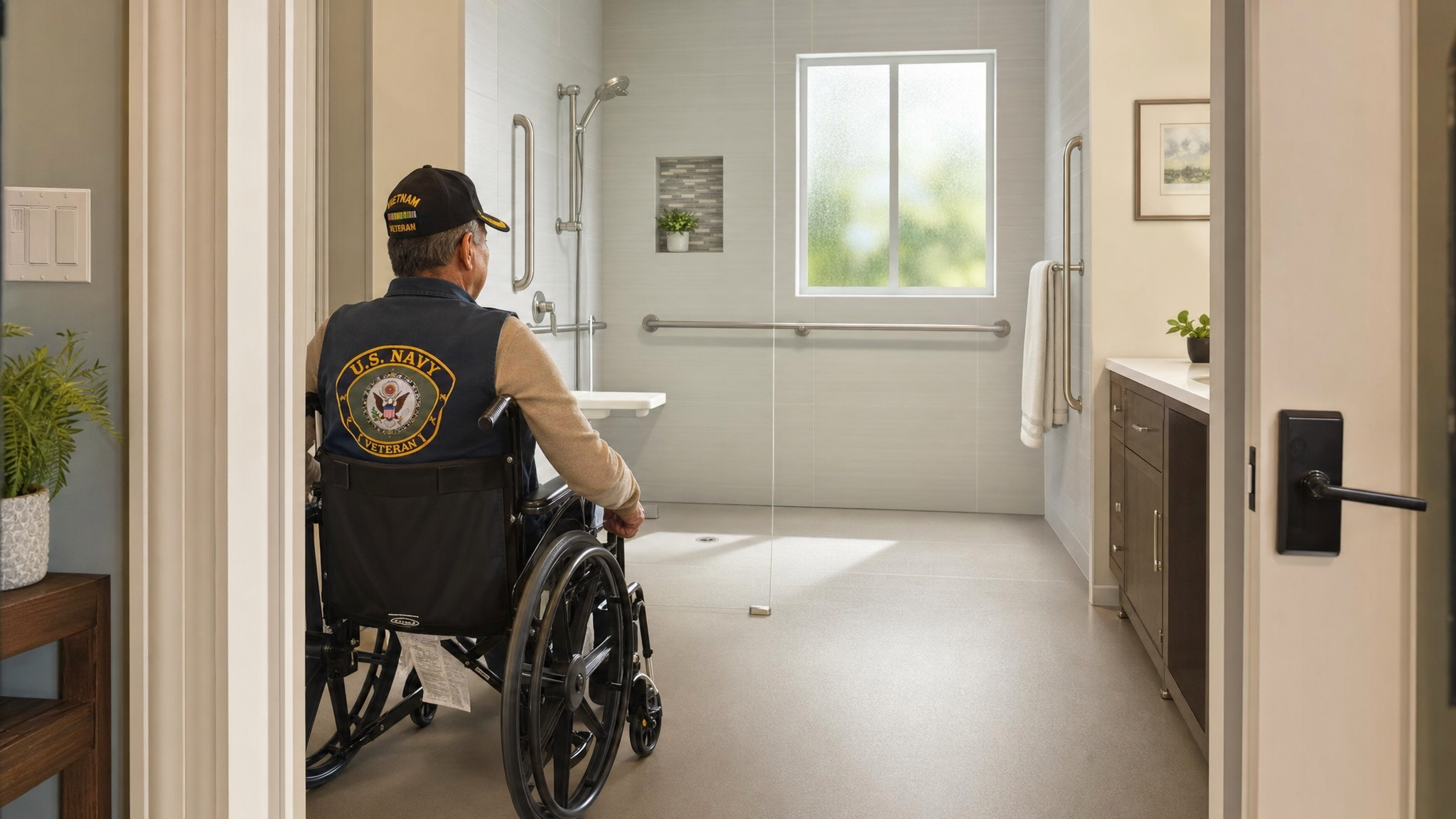
- PSAS also administers the Home Improvements and Structural Alterations (HISA) grant, the money for a ramp, grab bars, a roll-in shower or a widened doorway - up to $6,800 where a service-connected condition is involved, up to $2,000 otherwise. It is requested through your VA medical center with a prescription from your VA provider on VA Form 10-0103, not through the regional office.
- Ask your local PSAS office to tell you how much of your HISA lifetime amount you have left before you plan a project. People routinely spend their own money on a bathroom the VA would have paid for, simply because nobody told them the account existed.
Your complete benefit picture
$6,800
the HISA grant for a ramp, grab bars or a roll-in shower when a service-connected condition is involved - requested through your VA medical center on VA Form 10-0103, not through the regional office.
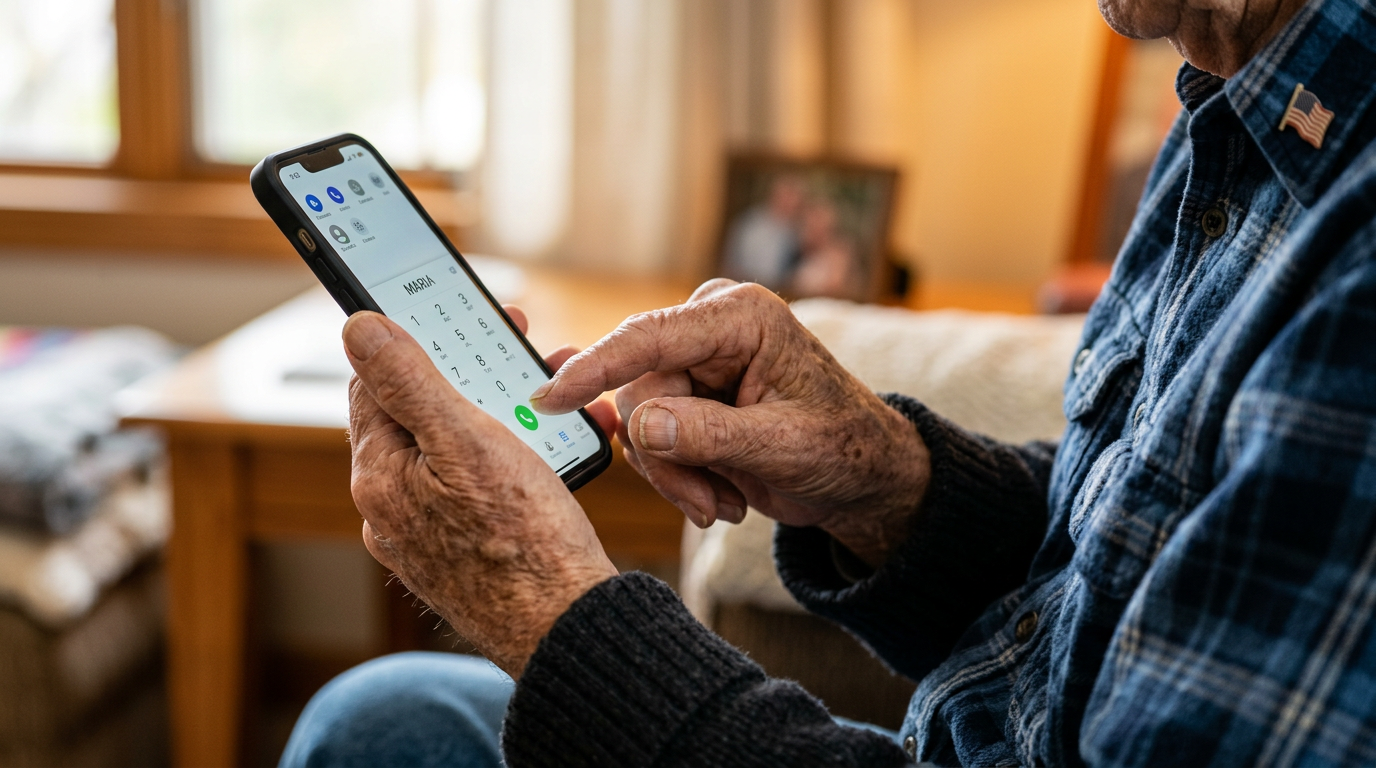
Two ways to move forward — both free
Not sure if this applies to you?
Ask our free assistant a few plain questions and get an honest read on what you and your family may qualify for, at no cost. It takes just a few minutes, and there is no sign-up and no obligation of any kind. You will get a clear, plain-language picture of where you stand and what might be worth filing. And if you would rather talk to a real person, an accredited agent is only a message away.
Have a question? Get free information
Ask a question, learn what you may be owed, or find out where you stand. Confidential, free, and no obligation to go any further.
Ready to hire us? Register
Decided you want us to work your claim? Registering is free — we match you with an accredited advocate and get you started. We cannot begin until you sign VA Form 21-22a, and fees, if any, are always disclosed up front.
The widest door
38 CFR 17.149(c) - hearing aids at a 0 percent rating
The devices are not part of general enrollment. They go to specific categories, and one of them is a service-connected hearing disability rated at 0 percent with organic impairment that costs you communication ability.
That is the rating veterans are told is not worth appealing. It pays nothing each month, and it permanently places you inside the device rule. Never decline or ignore a 0 percent hearing decision.
Age-related loss is expressly excluded
Ordinary presbycusis with no service connection and no other qualifying category does not get devices. The exam itself is still free to every enrolled veteran.
Order batteries by phone
Denver Logistics Center, 877-677-8710, option 1. Each order is about a six-month supply and arrives in seven to ten days.
A clear path forward
Your step-by-step action plan
No rush and no pressure - but a little order helps. Applying is always free.
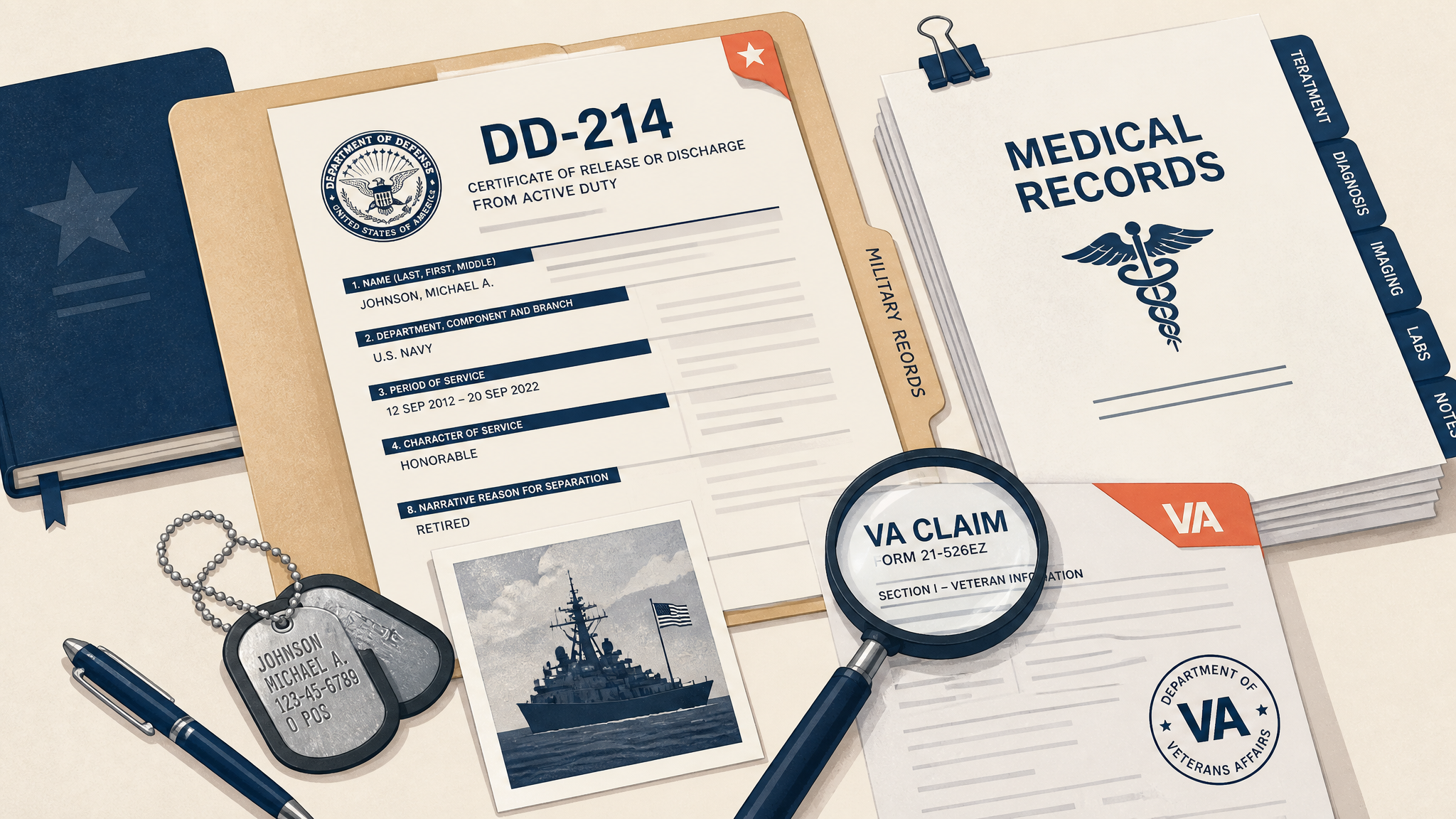
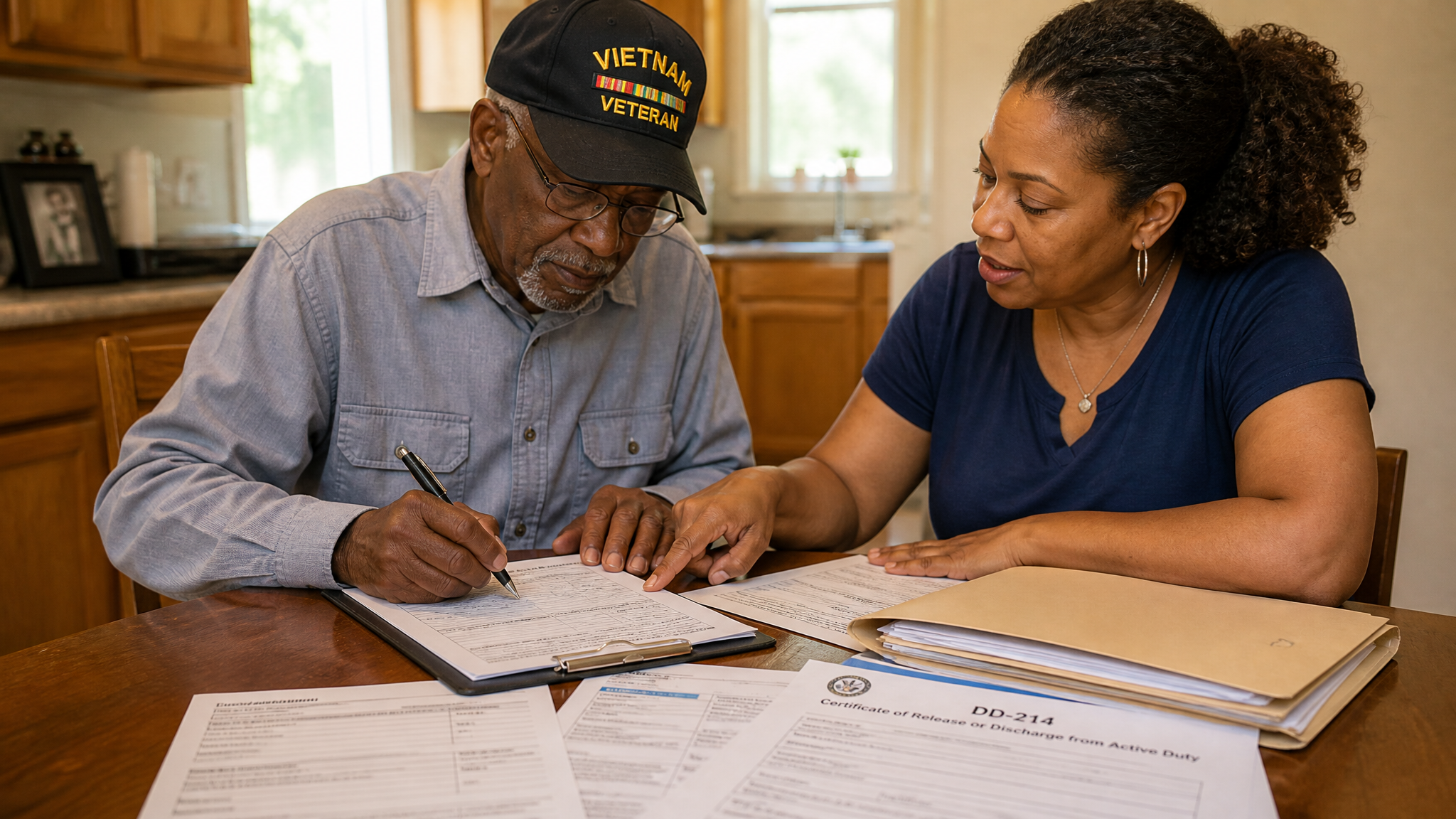
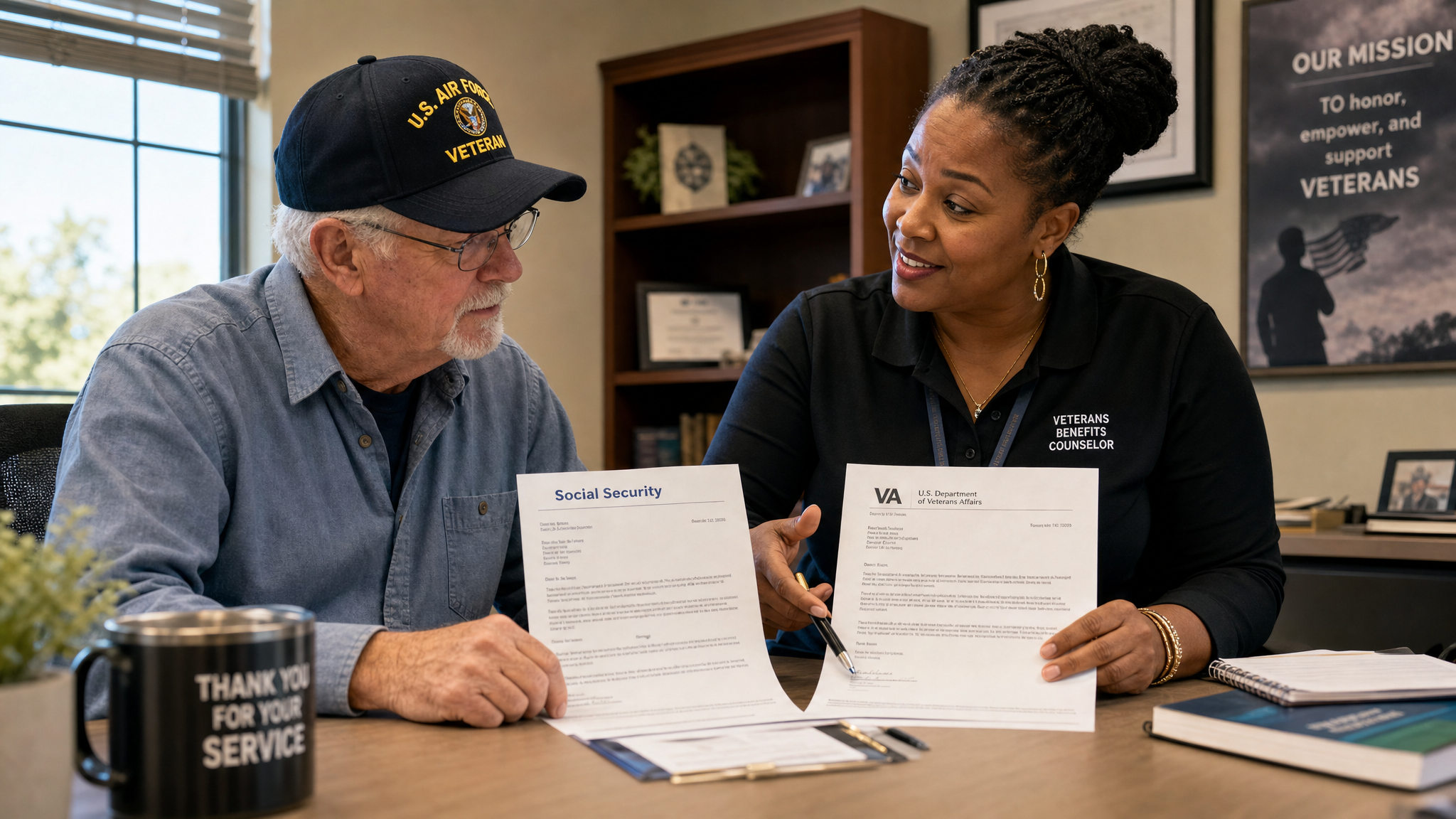
FIG. 01 - Gather your paperwork
First
Get the free exam on the record
Diagnostic audiology sits in the standard medical benefits package under 38 CFR 17.38 for every enrolled veteran. Ask for an audiology appointment even if you expect no rating from it.
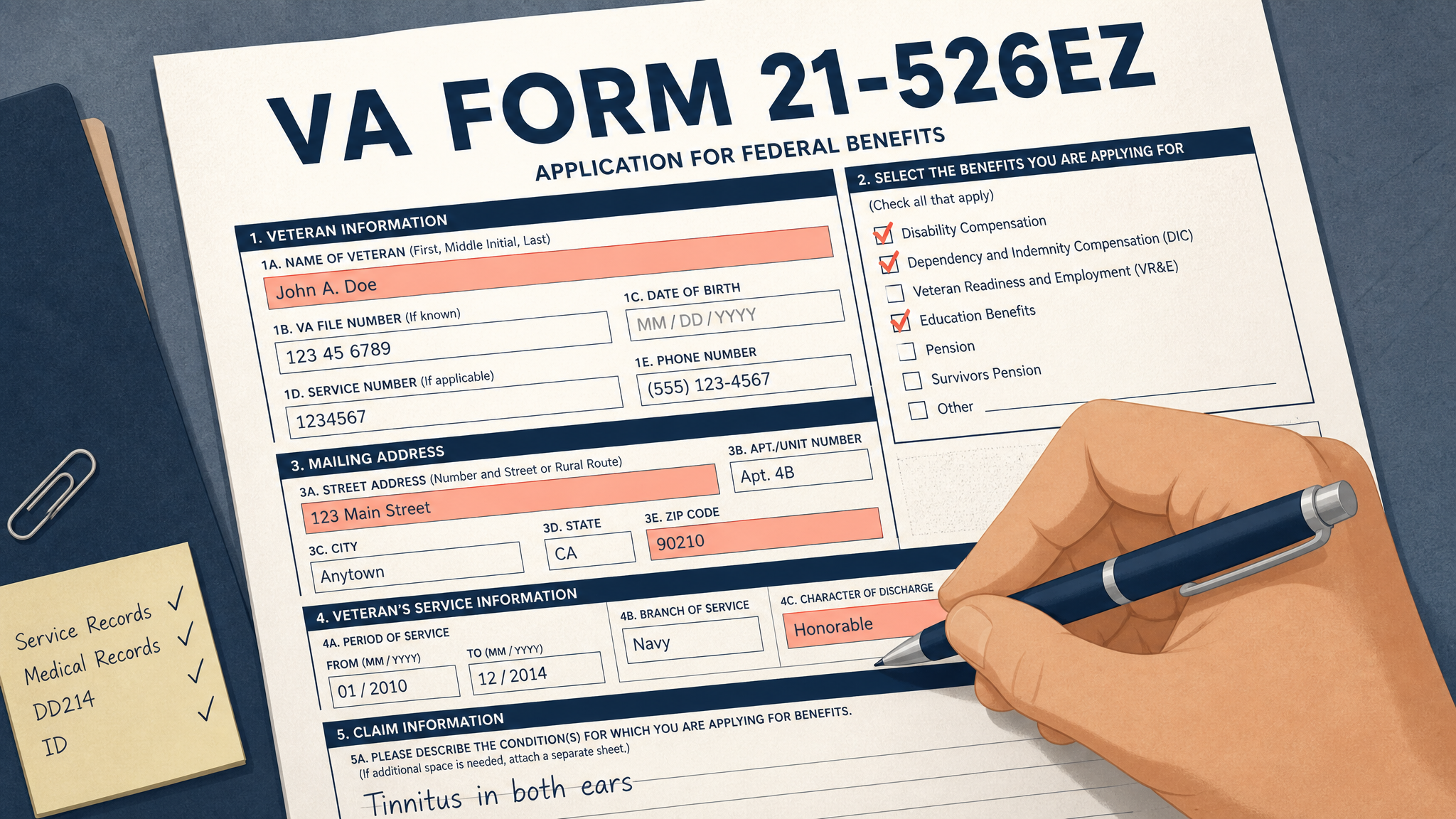
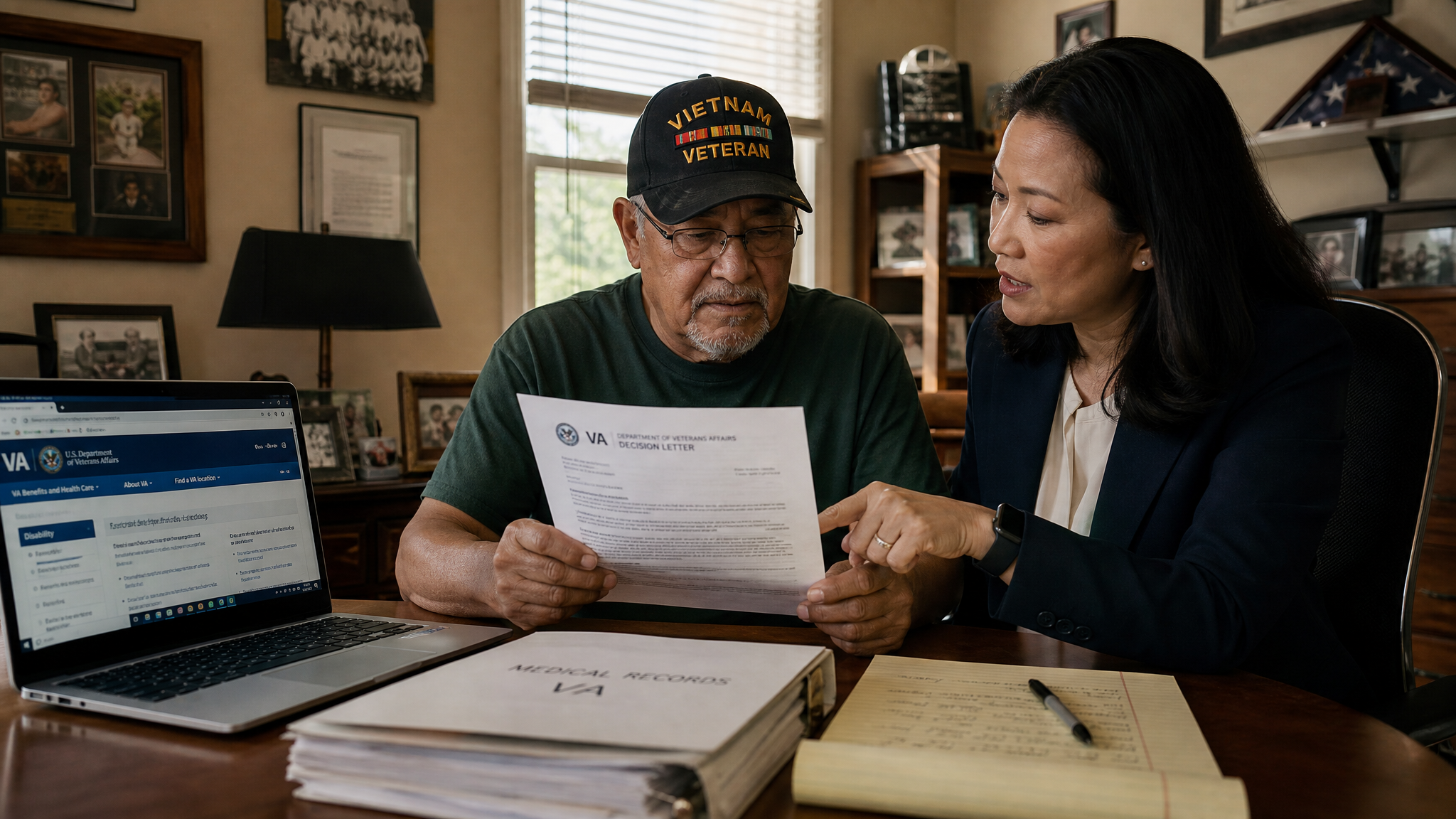
FIG. 02 - Fill out the form
Check the exam
Confirm it was done the way the regulation requires
Under 38 CFR 4.85 it must be a state-licensed audiologist, it must include both the Maryland CNC speech discrimination test and puretone audiometry, and it must be run with your hearing aids out. Anything less is an inadequate exam.
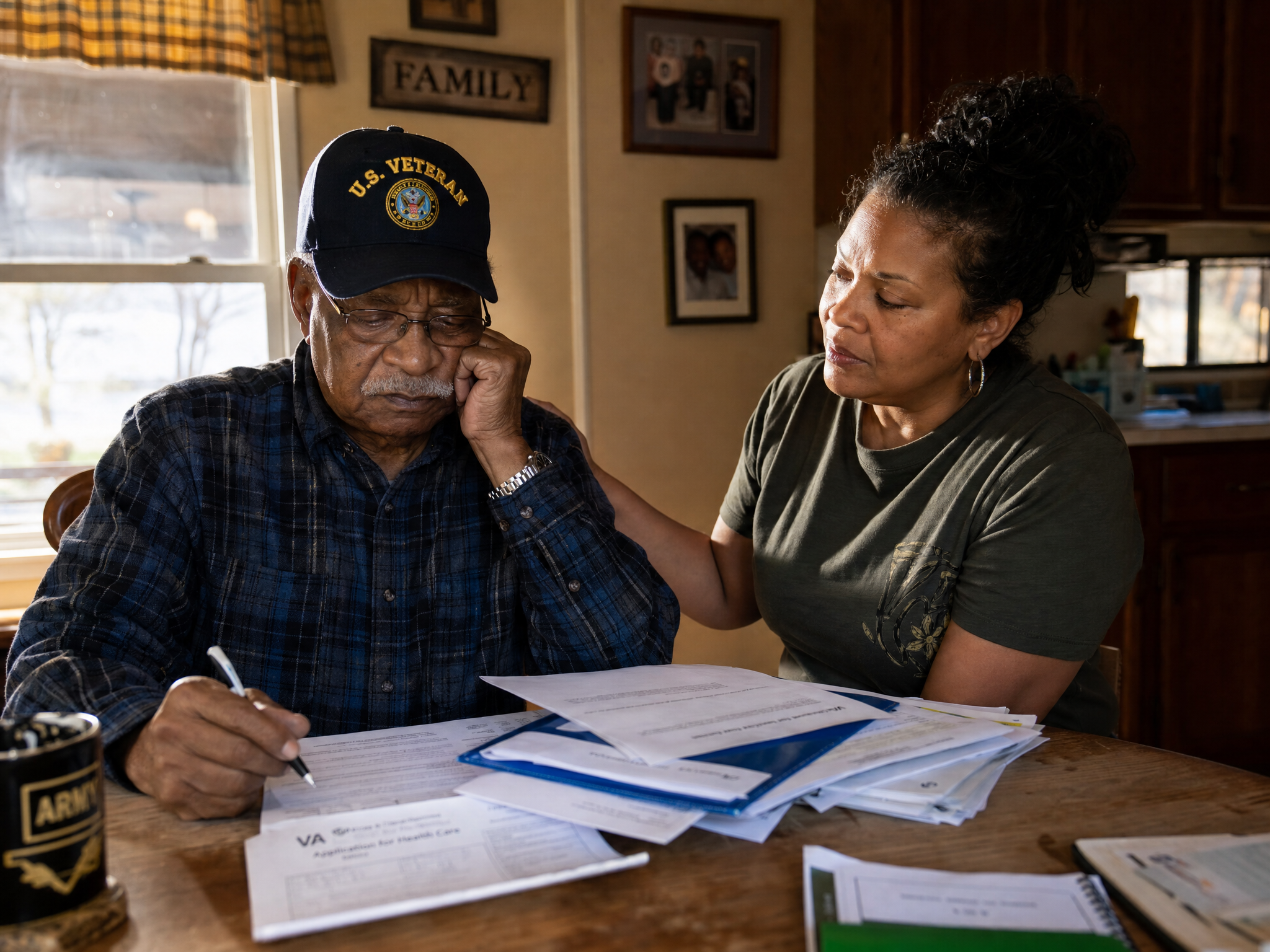
FIG. 03 - File the claim
Read the numbers
Look for an exceptional pattern
Thresholds of 55 dB or more at 1000, 2000, 3000 and 4000 Hertz, or 30 dB or less at 1000 Hertz paired with 70 dB or more at 2000 Hertz, trigger 38 CFR 4.86 - and the second pattern requires the rater to elevate your Roman numeral one more step.
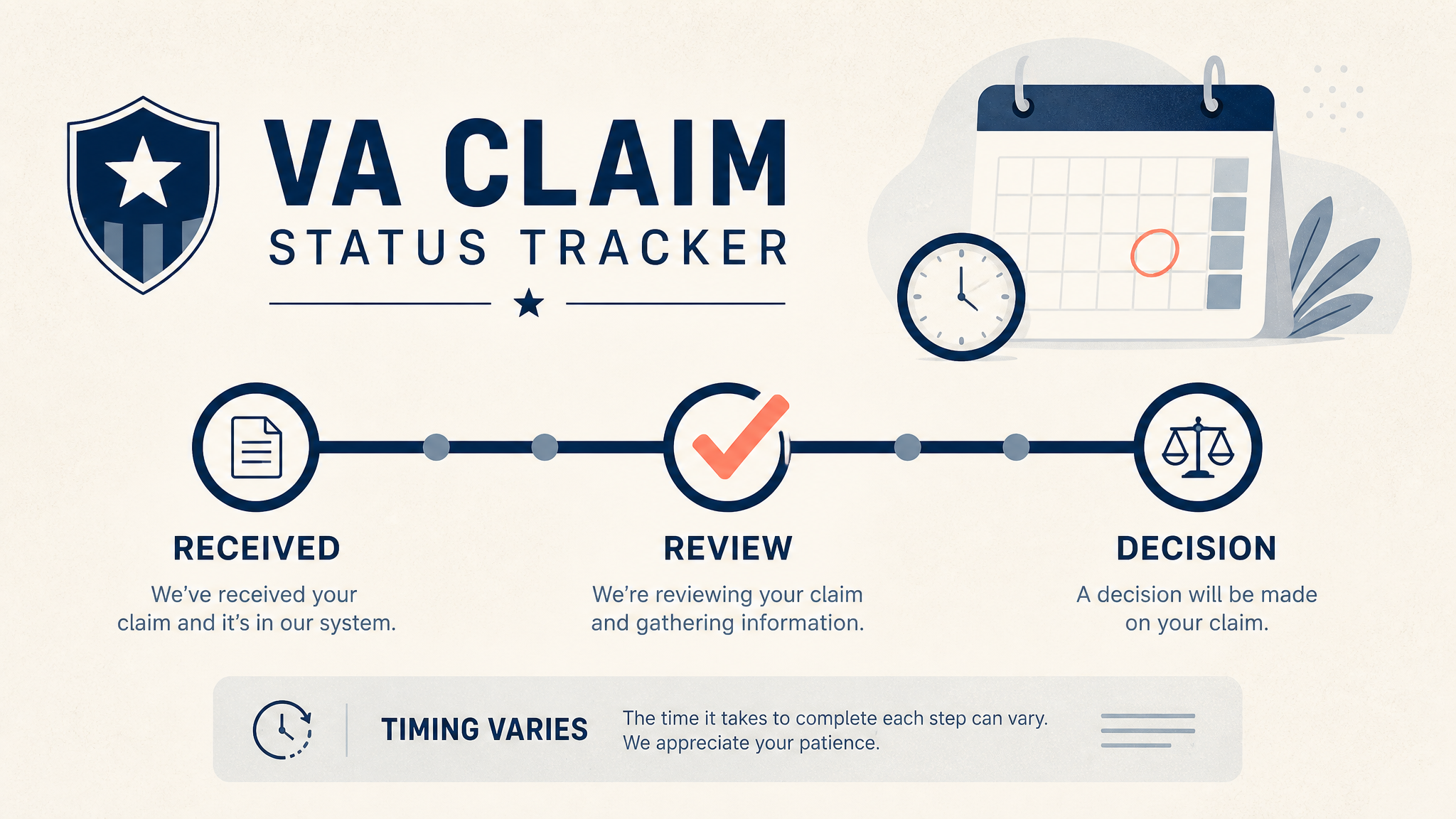
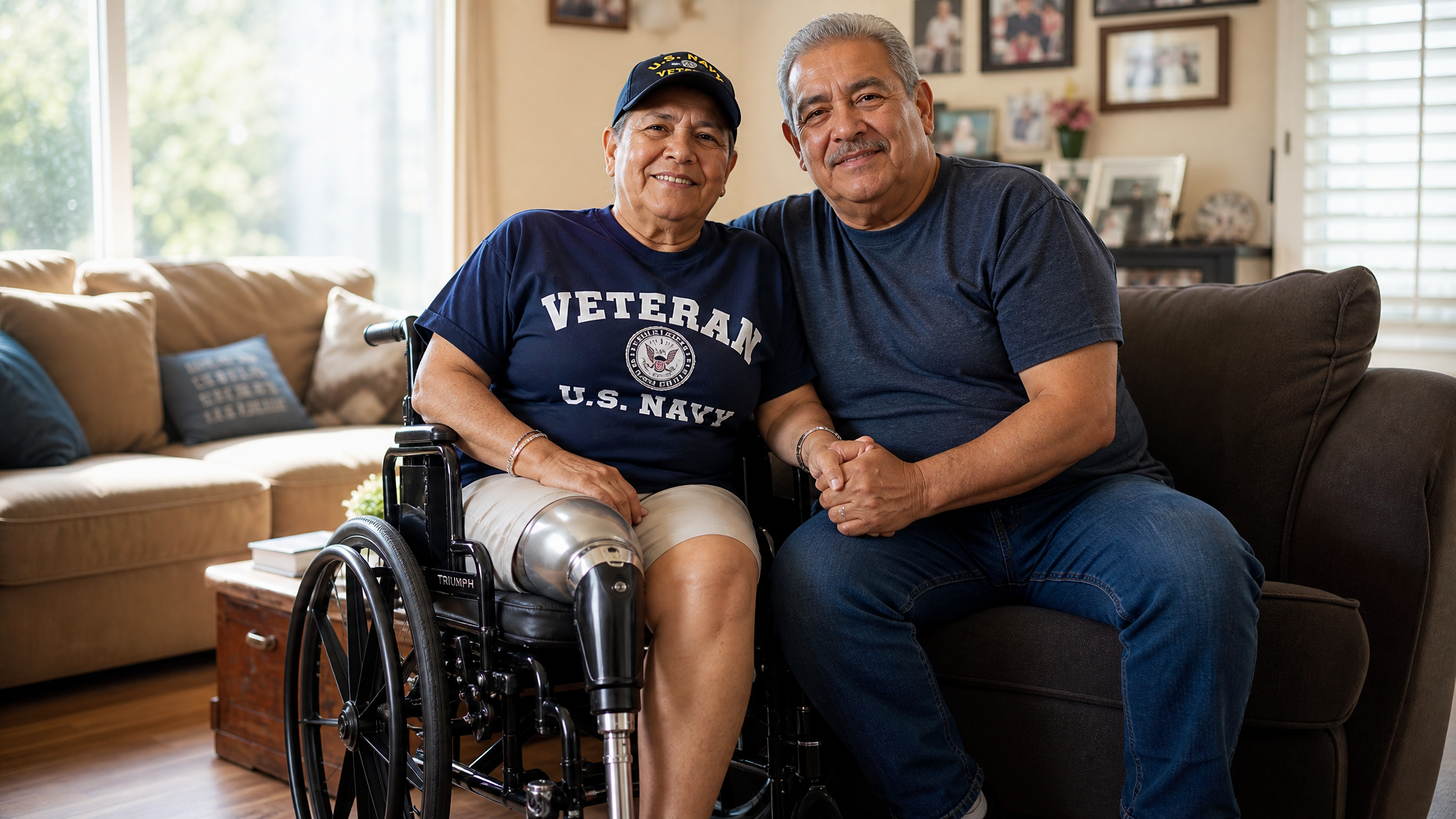
FIG. 04 - After you file
Then
Ask PSAS what else you qualify for
The same office that issues hearing aids issues wheelchairs, walkers, oxygen equipment, braces and cochlear implants - and administers the HISA grant on VA Form 10-0103.
Who to call & where to go
These are free, official VA lines. Have your Social Security number handy when you call.
MyVA411 - Main VA Line
Not sure who to call? Start here. One number for anything VA - they route you to the right office.
Rather have us handle it?
No phone tag, no hold music. Call our office and a real, VA-accredited person walks you through it - start to finish.
702-992-4883Not sure where to start?
Enroll in VA health care, then ask for an audiology appointment - most VA medical centers let you schedule audiology directly, without going through primary care first. If you have never filed for your hearing, file the claim too on VA Form 21-526EZ: hearing loss and tinnitus are the two most-granted conditions in the entire VA system, and a compensable rating settles your device eligibility permanently. When the VA schedules your compensation exam, confirm before you walk in that the examiner is a state-licensed audiologist and that the Maryland CNC test is on the order.
More benefits for veterans
These often go hand in hand - tap any card to learn more.

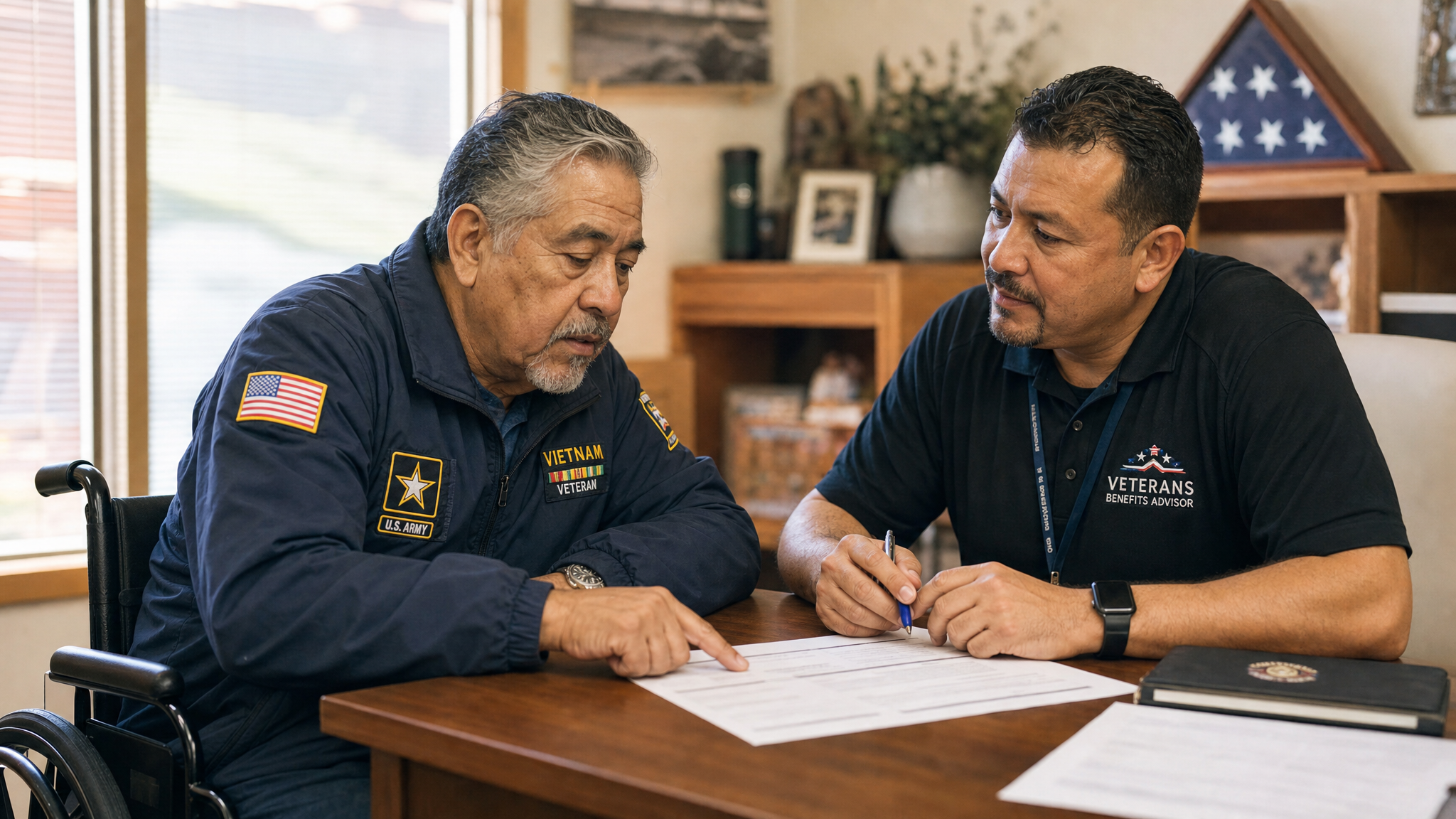

























Free information — get a free benefit review
Tell us how to reach you and an accredited team member will help you understand this benefit and claim everything you have earned. No cost, no obligation.
Ready to hire us? Register with us
For veterans who’ve decided they want us on their claim — registering is free too, and it does not make you our client or obligate you to anything. Here is exactly how it works:
- You register. This simply starts the conversation — you are not our client yet, and you owe us nothing.
- You sign and return VA Form 21-22a. It appoints us as your accredited representative and gives us access to your VA file.
- Once we have your signed 21-22a and access to your case, we verify everything is in order.
It involves the registration form and signing VA Form 21-22a — by law we can’t accept your claim, work on it, or contact the VA for you until that power of attorney is signed. You decide whether to move forward.
Official VA links
Answers, in plain language
Common questions about Hearing Aids & Medical Devices
What is Hearing Aids & Medical Devices?
Enrolled veterans can receive hearing aids, eyeglasses, prosthetics and home medical equipment at no cost - batteries, repairs and replacements included. The exam is open to everyone enrolled; the devices follow a specific eligibility rule, and a 0 percent hearing rating is enough to satisfy it.
Who qualifies for Hearing Aids & Medical Devices?
This benefit is generally for: Veteran. A free audiology exam and a free eye exam for every enrolled veteran Hearing aids at no cost once you meet an eligibility category - including a 0 percent service-connected hearing loss
How do I apply for Hearing Aids & Medical Devices?
Enroll in VA health care, then ask for an audiology appointment - most VA medical centers let you schedule audiology directly, without going through primary care first. If you have never filed for your hearing, file the claim too on VA Form 21-526EZ: hearing loss and tinnitus are the two most-granted conditions in the entire VA system, and a compensable rating settles your device eligibility permanently. When the VA schedules your compensation exam, confirm before you walk in that the examiner is a state-licensed audiologist and that the Maryland CNC test is on the order.
What does it cost to get help with Hearing Aids & Medical Devices, and are you VA-accredited?
Here is the part that trips people up. Enrollment gets you the exam, not automatically the hardware. Under 38 CFR 17.149 the VA furnishes hearing aids and eyeglasses to veterans in specific categories - and plain age-related hearing or vision loss, on its own, is expressly not one of them. That is not a reason to give up; it is a reason to get your hearing service-connected, because a rating of even 0 percent puts you inside the rule for good. Do not let anyone talk you out of filing because "it is only ten percent." It is free to talk with us, and no one may charge you to file a first-time VA claim. The Aging Veteran is led by Albert L.