
Caregivers
Health Coverage & Counseling for Caregivers
Health coverage in the caregiver’s own name through CHAMPVA, plus counseling, mental-health care, travel reimbursement, and a confidential support line staffed by licensed clinicians - for the person holding the whole thing together.

Who this is for
The thing that usually ends a home caregiving arrangement is not the veteran's health. It is the caregiver's. The VA covers a primary caregiver's own health care through CHAMPVA, pays for her counseling, and staffs a support line with licensed clinicians - and almost nobody tells families this exists until somebody is already in trouble.
In plain language
What Health Coverage & Counseling for Caregivers covers
- CHAMPVA health coverage for a PCAFC primary caregiver with no other insurance
- Counseling and mental-health services for the caregiver herself
- A free, confidential support line staffed by licensed professionals
- Travel, lodging, and per diem when traveling with the veteran for his care
- Caregiver training, self-care education, and peer mentoring
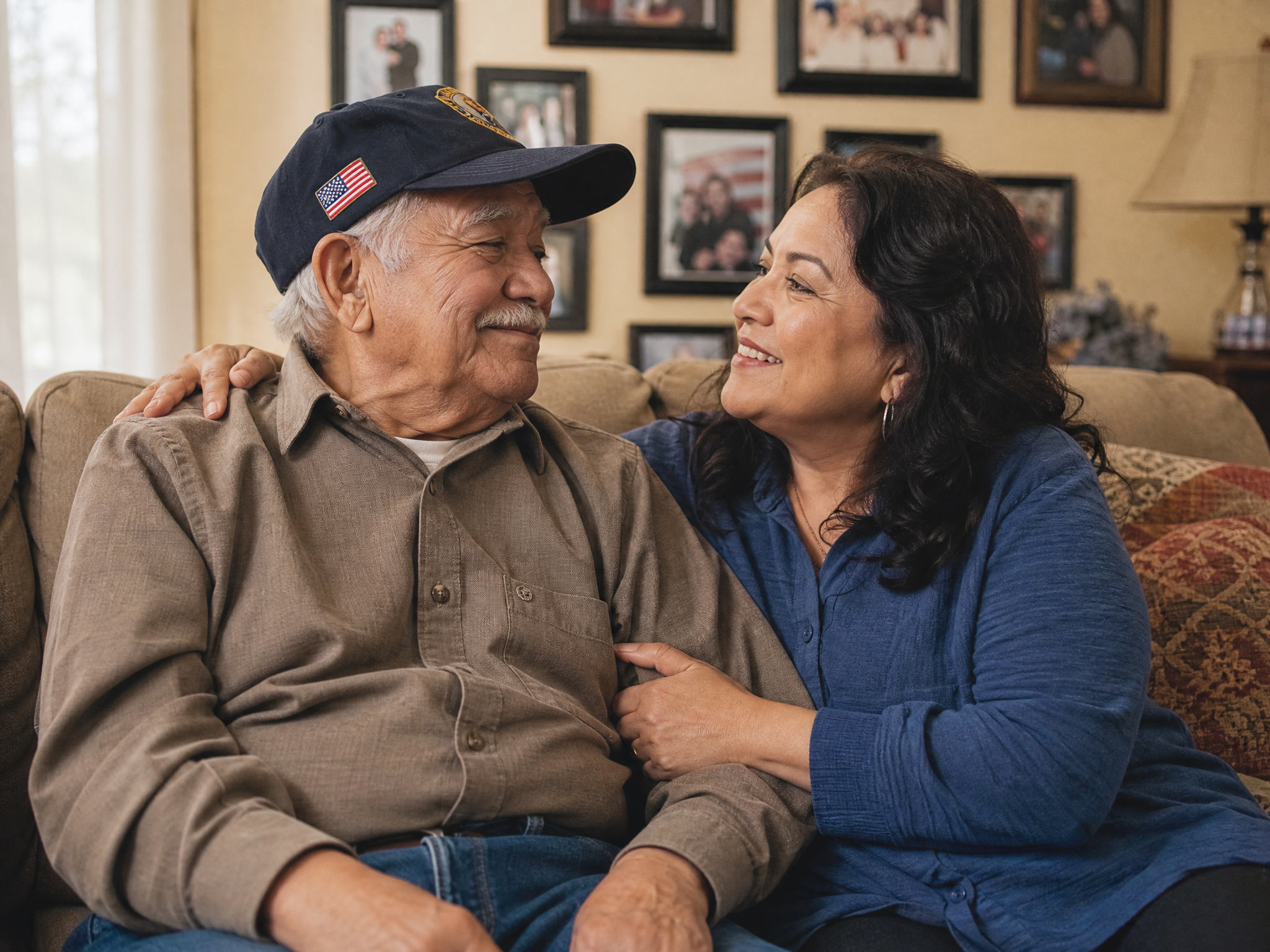
VA Caregiver Support Program (PGCSS & PCAFC)Official video - U.S. Department of Veterans Affairs - theSITREP
5 things most veterans aren't aware of
These apply to nearly every VA claim - and they change how much you get and when.
Your filing date sets your back pay
Benefits are generally paid back to the day you file - not the day you are approved. Filing an intent to file today can protect months, even years, of retroactive pay.
One condition can trigger others (secondary claims)
A service-connected condition that causes another - like sleep apnea from PTSD, or a bad knee from a bad hip - can be rated on its own. Each secondary condition adds to your rating.
A medical nexus is what wins the claim
The VA needs a documented link between your condition and your service. A clear nexus opinion is often the difference between an approval and a denial.
Accredited help is free to file an initial claim
By law, an accredited agent cannot charge a fee to prepare and file your original claim. If someone asks for money up front to file, that is a red flag.
A denial is not the end of the road
You have three appeal lanes - Higher-Level Review, a Supplemental Claim with new evidence, and the Board of Veterans Appeals. Many denials are overturned on review.
CHAMPVA
Health coverage in the caregiver's own name, through PCAFC approval
$50 / $100
CHAMPVA annual deductible - per person, capped per family
$3,000
Yearly catastrophic cap, after which CHAMPVA pays 100%
The full picture
Everything you need to know
Nothing hidden behind a click, and nothing you have to go looking for on another website. Here is the whole story in plain language - the facts and the figures first - so you can decide what fits your situation.
Key facts & current figures
- A primary family caregiver approved under PCAFC who has no other health insurance can receive CHAMPVA coverage in her own name.
- You do not file a separate CHAMPVA application for this. Eligibility runs through PCAFC approval on VA Form 10-10CG - not through Form 10-10d, which is for spouses and children.
- CHAMPVA's annual deductible is $50 per person, capped at $100 per family; after that it pays 75% of the allowable amount, with a $3,000 yearly catastrophic cap.
- Counseling and mental-health services for the caregiver are part of PCAFC - not an add-on you have to fight for.
- The Caregiver Support Line, 1-855-260-3274, is free, confidential, and staffed by licensed professionals Monday through Friday, 8:00 a.m. to 8:00 p.m. Eastern.
- Under PCAFC, the caregiver can also be reimbursed for travel, lodging, and per diem when accompanying the veteran for his care.
General figures, current as of December 2025 and reviewed each year. Your exact amount depends on your situation - always confirm on va.gov.
CHAMPVA in the caregiver's own name
- A primary family caregiver approved under PCAFC who has no other health insurance can be covered by CHAMPVA. This is coverage for her, not for the veteran.
- It covers the ordinary things caregivers skip: doctor visits, prescriptions, lab work, imaging, mental-health care, and hospital care.
- It is cost-sharing coverage, not free care. The annual deductible is $50 per person, $100 per family; after that CHAMPVA pays 75% of the allowable amount and you pay the rest, with your out-of-pocket capped at a $3,000 catastrophic limit per family, per calendar year.
- If she already has employer coverage, Medicare, or a marketplace plan, she is not eligible on this route - CHAMPVA is for the caregiver with nothing.
Do not file the wrong CHAMPVA form
- VA Form 10-10d is not your form. That is the CHAMPVA application for the spouse or children of a permanently and totally disabled veteran. Caregivers who file it as caregivers get denied.
- The caregiver route is VA Form 10-10CG - the PCAFC application, signed by the veteran and the caregiver together.
- If PCAFC approves you and you meet the CHAMPVA requirements, the VA handles the enrollment from there. You are not supposed to have to chase a second application.
- If nothing arrives, call the Caregiver Support Coordinator at his VA medical center and ask specifically about the caregiver's CHAMPVA enrollment. Ask by name, or it gets treated as a general question and goes nowhere.
Counseling and mental-health care for the caregiver
- Counseling and mental-health services for the caregiver are part of PCAFC - built in, not something you have to argue for.
- Outside PCAFC, General Caregiver Support Services offers counseling, support groups, and peer mentoring with no rating requirement and no application.
- Peer mentoring matches you with a caregiver who has already lived through this stage. For most families it does more good than any pamphlet.
- The VA treats caregiver burnout as a clinical problem, because it is one. Depression, anxiety, and exhaustion in a caregiver are medical findings, not character flaws.
The Caregiver Support Line - what it actually is
- 1-855-260-3274. Free, confidential, and staffed by licensed professionals - social workers and nurses, not a call center reading from a script.
- Hours are Monday through Friday, 8:00 a.m. to 8:00 p.m. Eastern. There is no application to complete before you call.
- They will tell you which programs the veteran may qualify for, connect you to the Caregiver Support Coordinator at his medical center, and walk you through respite options.
- They will also just talk you through it if that is what the call turns into. That is a legitimate reason to call, and plenty of people do.
Travel, lodging, and per diem
- Under PCAFC, an approved caregiver can be reimbursed for travel, lodging, and per diem when accompanying the veteran to his VA care.
- That matters most for rural families driving three hours each way to a VA medical center, and for specialty care that only exists at a regional facility.
- Ask before you travel, not after. The travel office at the medical center can tell you what is covered and what documentation you need.
- Keep receipts and the appointment paperwork. Reimbursement is a paperwork process, and paperwork you did not keep is money you do not get.
The warning signs nobody names out loud
- You stopped going to your own doctor. Postponed mammograms, skipped cardiology follow-ups, a prescription you have not refilled in months.
- You are not sleeping, or you are sleeping in a chair beside him. Chronic sleep loss is not toughness; it is a measurable health risk.
- You have gotten angry at him for something he cannot control, and then felt sick about it. That is exhaustion talking, and it is the most common thing caregivers refuse to say out loud.
- You have no one covering for you. If there is no second name on the plan, one bad week ends the arrangement. Name a secondary caregiver, take the respite, and make the call.
The bigger picture for your family
CHAMPVA
health coverage in the caregiver's own name - not the veteran's - for a primary family caregiver approved under PCAFC who has no other insurance. Doctor visits, prescriptions, labs, mental-health care, hospital care. Most families never learn it exists.
Two ways to move forward — both free
Not sure if this applies to you?
Ask our free assistant a few plain questions and get an honest read on what you and your family may qualify for, at no cost. It takes just a few minutes, and there is no sign-up and no obligation of any kind. You will get a clear, plain-language picture of where you stand and what might be worth filing. And if you would rather talk to a real person, an accredited agent is only a message away.
Have a question? Get free information
Ask a question, learn what you may be owed, or find out where you stand. Confidential, free, and no obligation to go any further.
Ready to hire us? Register
Decided you want us to work your claim? Registering is free — we match you with an accredited advocate and get you started. We cannot begin until you sign VA Form 21-22a, and fees, if any, are always disclosed up front.
Do not miss this
Caregivers get denied because they file the wrong CHAMPVA form
VA Form 10-10d is not the caregiver form. That is the CHAMPVA application for the spouse or children of a permanently and totally disabled veteran. A caregiver who files it as a caregiver gets denied, and usually concludes the coverage was never real.
The caregiver route is VA Form 10-10CG - the PCAFC application, signed by the veteran and the caregiver together. If PCAFC approves you and you meet the CHAMPVA requirements, the VA handles the enrollment from there. You should not have to chase a second application.
No other insurance
If she already has employer coverage, Medicare, or a marketplace plan, she is not eligible on this route. It is for the caregiver with nothing.
If nothing arrives
Call the Caregiver Support Coordinator and ask specifically about the caregiver's CHAMPVA enrollment. Ask by name or it gets handled as a general question.
A clear path forward
Your step-by-step action plan
No rush and no pressure - but a little order helps. Applying is always free.
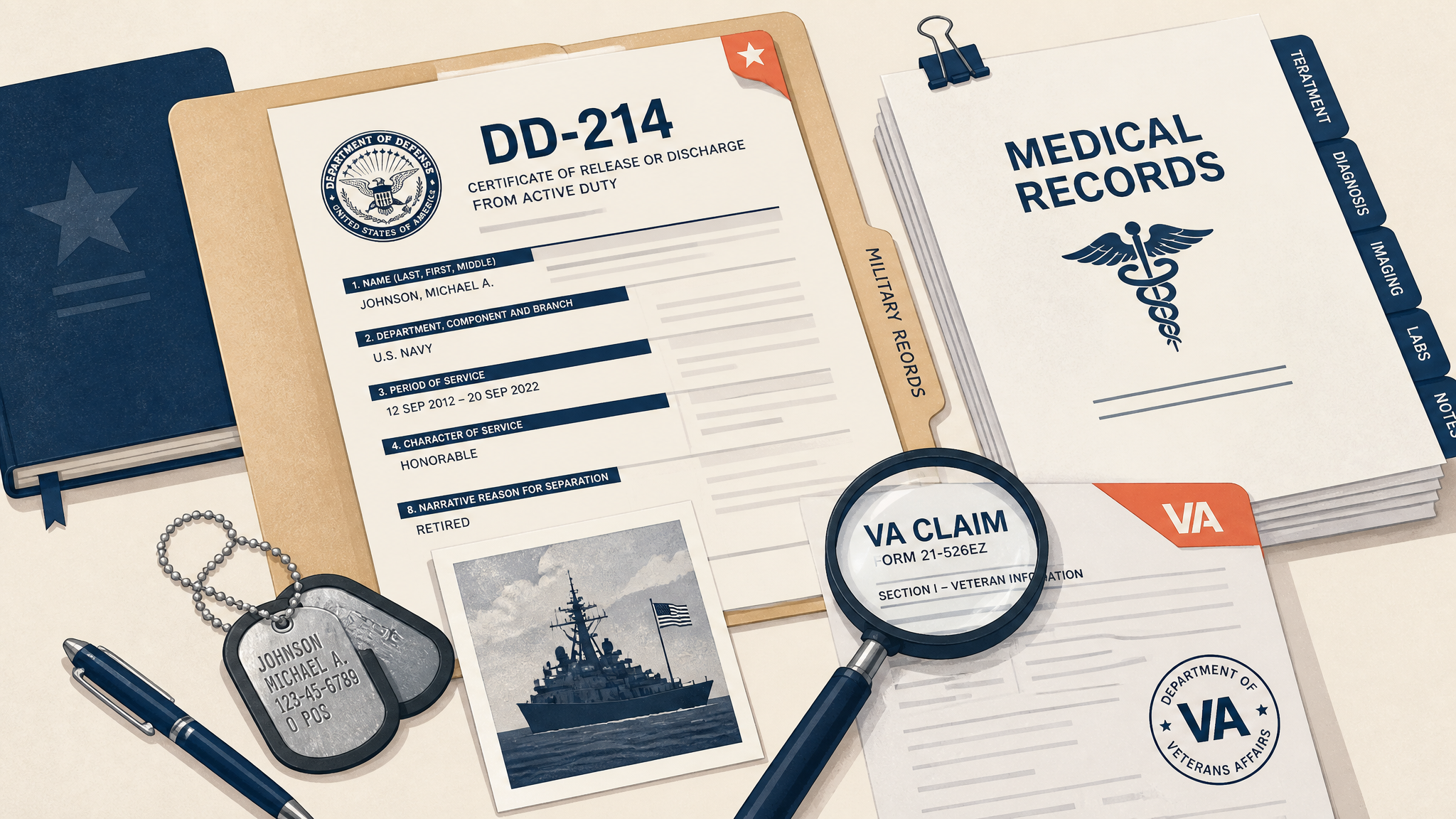
FIG. 01 - Gather your paperwork
First
Apply for PCAFC on Form 10-10CG
Everything on this page - the coverage, the travel pay, the built-in counseling - runs through PCAFC approval. The veteran and caregiver sign the same form together.
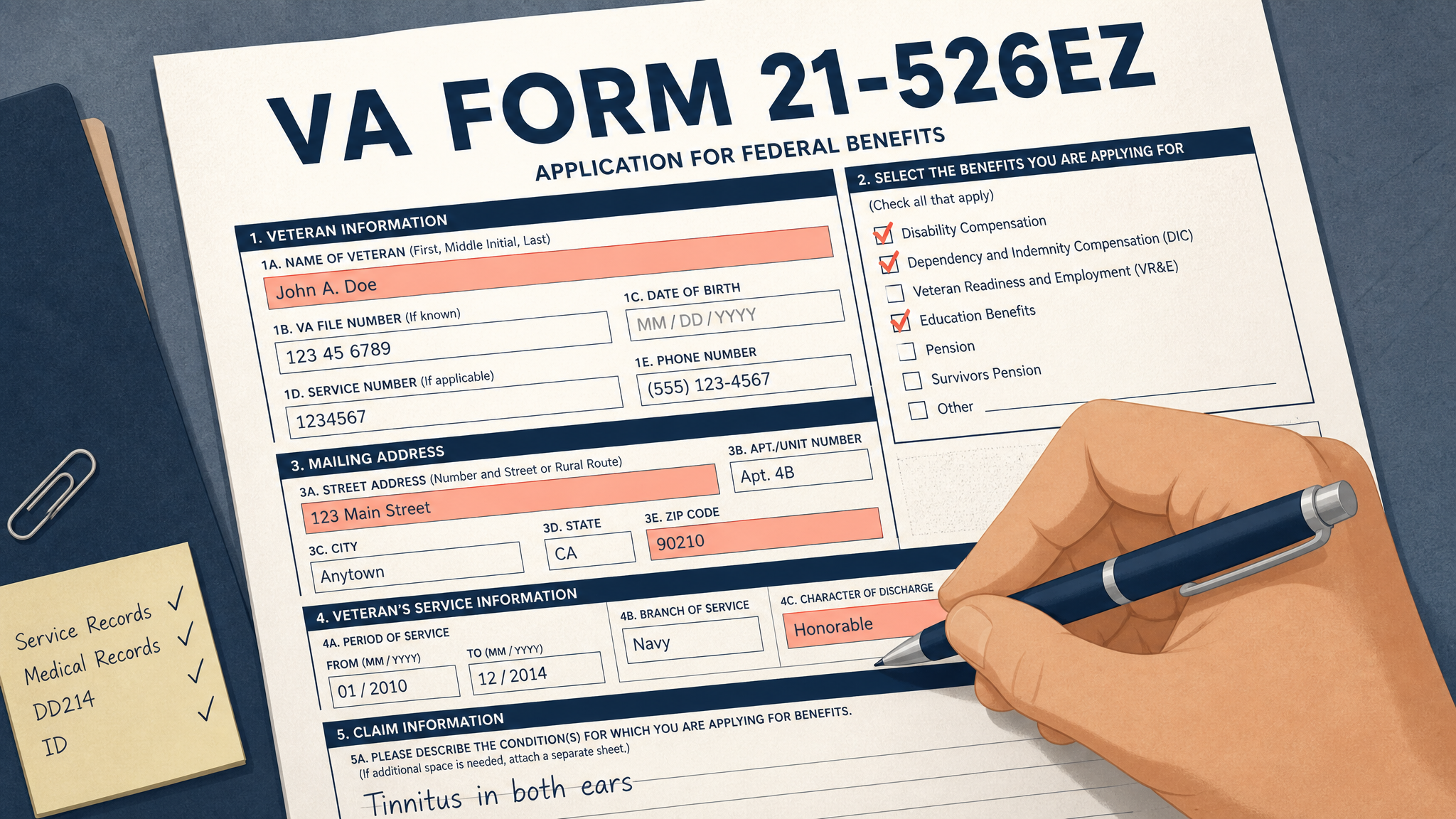
FIG. 02 - Fill out the form
Right now
Call 1-855-260-3274
The Caregiver Support Line needs no application and no approval. Licensed professionals, free and confidential, Monday through Friday, 8:00 a.m. to 8:00 p.m. Eastern.
FIG. 03 - File the claim
Do not wait
Book your own appointment
The postponed mammogram, the cardiology follow-up, the prescription you have not refilled. Ask for respite to cover the day so there is no excuse left.
FIG. 04 - After you file
Every trip
Claim travel, lodging, and per diem
Under PCAFC these are reimbursable when you travel with him for his care. Ask the travel office what is covered before you go, and keep every receipt.
Who to call & where to go
These are free, official VA lines. Have your Social Security number handy when you call.
Rather have us handle it?
No phone tag, no hold music. Call our office and a real, VA-accredited person walks you through it - start to finish.
702-992-4883Not sure where to start?
It runs through PCAFC approval on VA Form 10-10CG - the veteran and caregiver apply together, and eligible caregivers are enrolled in CHAMPVA from there. Counseling and the support line need no application at all: call 1-855-260-3274.
More support for caregivers
These often go hand in hand - tap any card to learn more.


Free information — get a free benefit review
Tell us how to reach you and an accredited team member will help you understand this benefit and claim everything you have earned. No cost, no obligation.
Ready to hire us? Register with us
For veterans who’ve decided they want us on their claim — registering is free too, and it does not make you our client or obligate you to anything. Here is exactly how it works:
- You register. This simply starts the conversation — you are not our client yet, and you owe us nothing.
- You sign and return VA Form 21-22a. It appoints us as your accredited representative and gives us access to your VA file.
- Once we have your signed 21-22a and access to your case, we verify everything is in order.
It involves the registration form and signing VA Form 21-22a — by law we can’t accept your claim, work on it, or contact the VA for you until that power of attorney is signed. You decide whether to move forward.
Answers, in plain language
Common questions about Health Coverage & Counseling for Caregivers
What is Health Coverage & Counseling for Caregivers?
Health coverage in the caregiver’s own name through CHAMPVA, plus counseling, mental-health care, travel reimbursement, and a confidential support line staffed by licensed clinicians - for the person holding the whole thing together.
Who qualifies for Health Coverage & Counseling for Caregivers?
This benefit is generally for: Primary family caregiver. CHAMPVA health coverage for a PCAFC primary caregiver with no other insurance Counseling and mental-health services for the caregiver herself
How do I apply for Health Coverage & Counseling for Caregivers?
It runs through PCAFC approval on VA Form 10-10CG - the veteran and caregiver apply together, and eligible caregivers are enrolled in CHAMPVA from there. Counseling and the support line need no application at all: call 1-855-260-3274.
What does it cost to get help with Health Coverage & Counseling for Caregivers, and are you VA-accredited?
You are allowed to need care too. A caregiver who never sees a doctor is not being strong - she is building the exact emergency that puts him in a nursing home. It is free to talk with us, and no one may charge you to file a first-time VA claim. The Aging Veteran is led by Albert L. Thombs Jr., a VA-accredited claims agent (accreditation #45147) and disabled veteran; any appeal work is handled on a no-fee-unless-you-win basis. We are an independent accredited practice and are not affiliated with, or endorsed by, the U.S. Department of Veterans Affairs.