
Caregivers
Respite Care
Short-term care that gives a family caregiver a real break - in the home, at a VA or community facility, or through an adult day program. Caregivers approved under PCAFC get at least 30 days a year.

Who this is for
Respite care is the VA arranging for somebody else to cover, so you can sleep through the night, keep your own doctor's appointment, or leave the house for two days without it turning into a crisis. It comes in three different forms - and nobody at the VA is going to offer it to you. You have to ask.
In plain language
What Respite Care covers
- Temporary relief so you can rest, travel, or handle your own health
- In-home respite, where a trained aide comes to you
- A short inpatient or nursing-home stay at a VA or community facility
- Adult day health care - a supervised program he attends during the day
- At least 30 days a year for caregivers approved under PCAFC
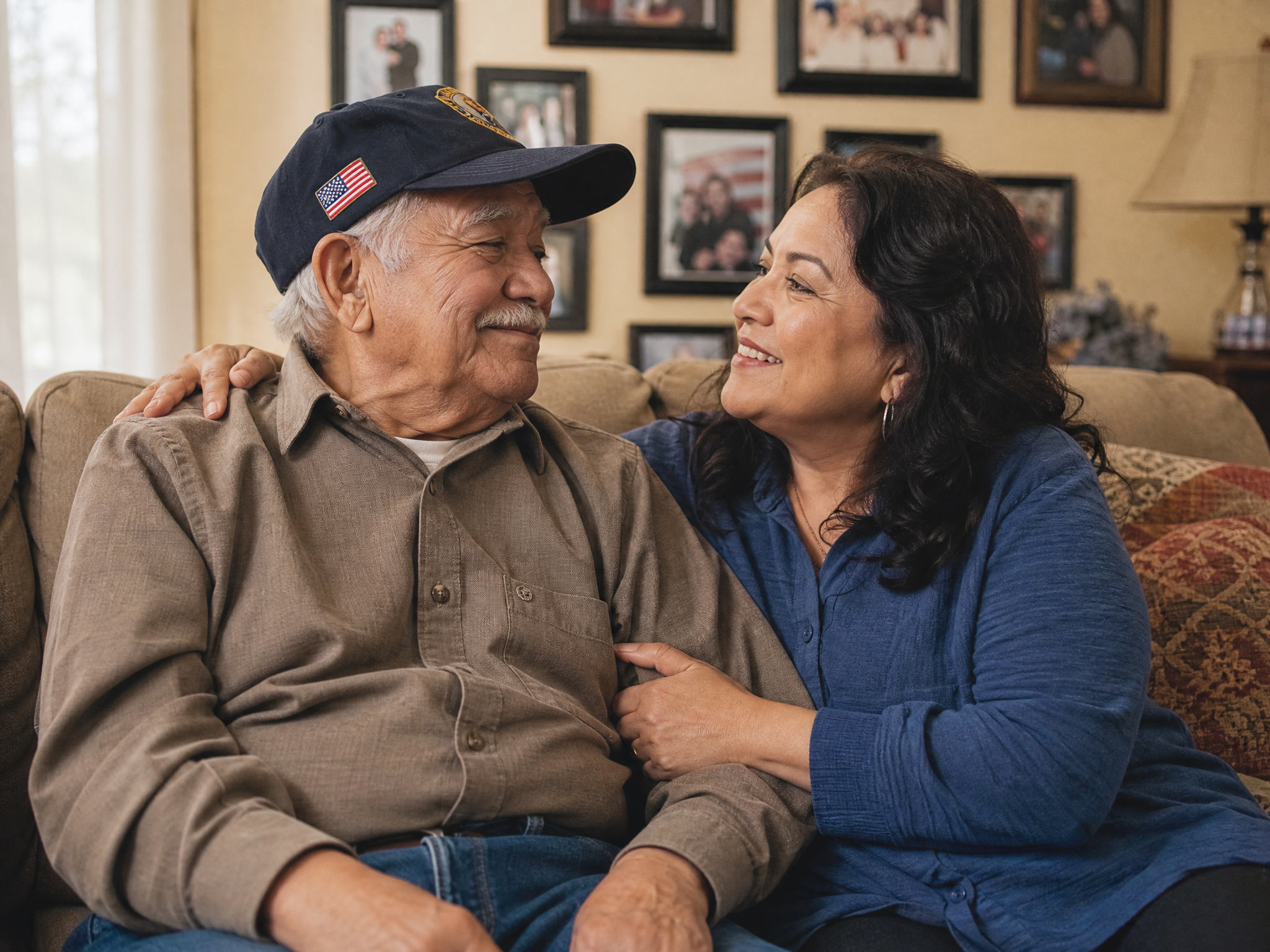
VA Caregiver Support Program (PGCSS & PCAFC)Official video - U.S. Department of Veterans Affairs - theSITREP
5 things most veterans aren't aware of
These apply to nearly every VA claim - and they change how much you get and when.
Your filing date sets your back pay
Benefits are generally paid back to the day you file - not the day you are approved. Filing an intent to file today can protect months, even years, of retroactive pay.
One condition can trigger others (secondary claims)
A service-connected condition that causes another - like sleep apnea from PTSD, or a bad knee from a bad hip - can be rated on its own. Each secondary condition adds to your rating.
A medical nexus is what wins the claim
The VA needs a documented link between your condition and your service. A clear nexus opinion is often the difference between an approval and a denial.
Accredited help is free to file an initial claim
By law, an accredited agent cannot charge a fee to prepare and file your original claim. If someone asks for money up front to file, that is a red flag.
A denial is not the end of the road
You have three appeal lanes - Higher-Level Review, a Supplemental Claim with new evidence, and the Board of Veterans Appeals. Many denials are overturned on review.
30 days
The minimum a PCAFC-approved caregiver gets each year
3 settings
In your home, a short facility stay, or adult day health care
No rating
Respite runs through VA health care - enrollment is what matters
The full picture
Everything you need to know
Nothing hidden behind a click, and nothing you have to go looking for on another website. Here is the whole story in plain language - the facts and the figures first - so you can decide what fits your situation.
Key facts & current figures
- A caregiver approved under PCAFC gets at least 30 days of respite care a year for the veteran.
- It can happen in your own home, as a short stay at a VA or community facility, or through an adult day health care program.
- Respite runs through VA health care, so what matters is that the veteran is enrolled - not what his rating is.
- The standard VA health-care copay may apply to the veteran's days of care, depending on his priority group.
- Arrange it through the veteran's VA care team or your Caregiver Support Coordinator, or start with the Caregiver Support Line at 1-855-260-3274.
General figures, current as of December 2025 and reviewed each year. Your exact amount depends on your situation - always confirm on va.gov.
The three forms respite care takes
- In-home respite. A trained aide comes to the house for a block of hours so you can sleep, run errands, or sit down. For most families this is the easiest one to start with.
- A short facility stay. The veteran stays a few days or a couple of weeks at a VA community living center or a contracted community nursing home. This is what makes a funeral, a surgery, or a grandchild's wedding possible.
- Adult day health care. A supervised daytime program with meals, activities, and nursing oversight. He gets out of the house and around other veterans; you get your days back.
- You are not locked into one. Many families run adult day care during the week and save facility respite for emergencies.
How much you actually get
- A primary family caregiver approved under PCAFC is entitled to at least 30 days of respite care per year for the veteran.
- Outside PCAFC, respite is still available to caregivers of veterans enrolled in VA health care - the amount is set by the veteran's clinical need and what his VA medical center has available.
- Thirty days does not have to be taken in one block. It can be a day here, a weekend there, and a full week when you need it.
- Unused days generally do not roll over. If you do not use it, you lose it - and most caregivers use none of it.
Who can get it, and what it costs
- The veteran must be enrolled in VA health care. His disability rating is not the deciding factor for respite.
- Standard VA health-care copays may apply to the veteran's days of respite, depending on his priority group and income - many veterans owe nothing.
- Ask directly: *"What will his copay be for these days?"* before you schedule. Get the answer before the stay, not on a bill afterward.
- If the copay is a real barrier, ask about a hardship determination and about his priority group - both can change what he owes.
What families actually use it for
- Sleep. Not a vacation - sleep. Caregivers who are up three times a night for two years are running a medical risk of their own.
- Their own appointments. Caregivers postpone mammograms, colonoscopies, and cardiology follow-ups for years because there is nobody to sit with him.
- Their own surgery or recovery. This is the one nobody plans for, and the one that ends home care overnight when there is no backup.
- Funerals, weddings, and grandchildren. A life that does not stop entirely is part of what keeps a caregiver able to keep going.
Set it up before you need it
- Ask for it while things are calm. Trying to arrange a first-time facility respite stay during a crisis is how families end up with no option but the emergency room.
- Ask the care team to document the need in his record now. A documented need is faster to act on later.
- Ask what is actually available near you - in-home agencies, adult day programs, and contracted nursing homes vary a great deal from one VA medical center to the next.
- Take a trial run: one short stay while nothing is wrong. It tells you whether the setting works for him, and it makes the next one routine instead of traumatic.
How to arrange it
- Start with the veteran's VA primary care team or the Caregiver Support Coordinator at his medical center - every VA medical center has one.
- The Caregiver Support Line at 1-855-260-3274 can tell you what exists in your area and connect you to the right coordinator.
- Ask for a social work consult. Social workers are the ones who actually assemble respite, adult day care, and home health into a workable plan.
- If the answer is vague, ask again in writing through the veteran's secure message account. A written request creates a record and usually gets a faster answer.
The bigger picture for your family
30 days
a year, at minimum, for a caregiver approved under PCAFC - and it does not have to be taken in one block. A day here, a weekend there, a full week when you need it. Most caregivers use none of it.
Two ways to move forward — both free
Not sure if this applies to you?
Ask our free assistant a few plain questions and get an honest read on what you and your family may qualify for, at no cost. It takes just a few minutes, and there is no sign-up and no obligation of any kind. You will get a clear, plain-language picture of where you stand and what might be worth filing. And if you would rather talk to a real person, an accredited agent is only a message away.
Have a question? Get free information
Ask a question, learn what you may be owed, or find out where you stand. Confidential, free, and no obligation to go any further.
Ready to hire us? Register
Decided you want us to work your claim? Registering is free — we match you with an accredited advocate and get you started. We cannot begin until you sign VA Form 21-22a, and fees, if any, are always disclosed up front.
Do not miss this
Nobody is going to offer you respite. You have to ask for it.
Respite is not a reward and it is not a luxury. A caregiver who collapses is the most common reason a veteran ends up in a facility permanently - which is the exact outcome this benefit exists to prevent.
Set it up while things are calm. Trying to arrange a first-time facility stay in the middle of a crisis is how families end up in an emergency room with no options. Do one short trial stay while nothing is wrong, and the next one is routine instead of traumatic.
Ask about the copay first
Standard VA health-care copays may apply to his days of care. Get the number before the stay, not on a bill afterward.
It does not roll over
Unused respite days generally do not carry into next year. If you do not use them, they are simply gone.
A clear path forward
Your step-by-step action plan
No rush and no pressure - but a little order helps. Applying is always free.
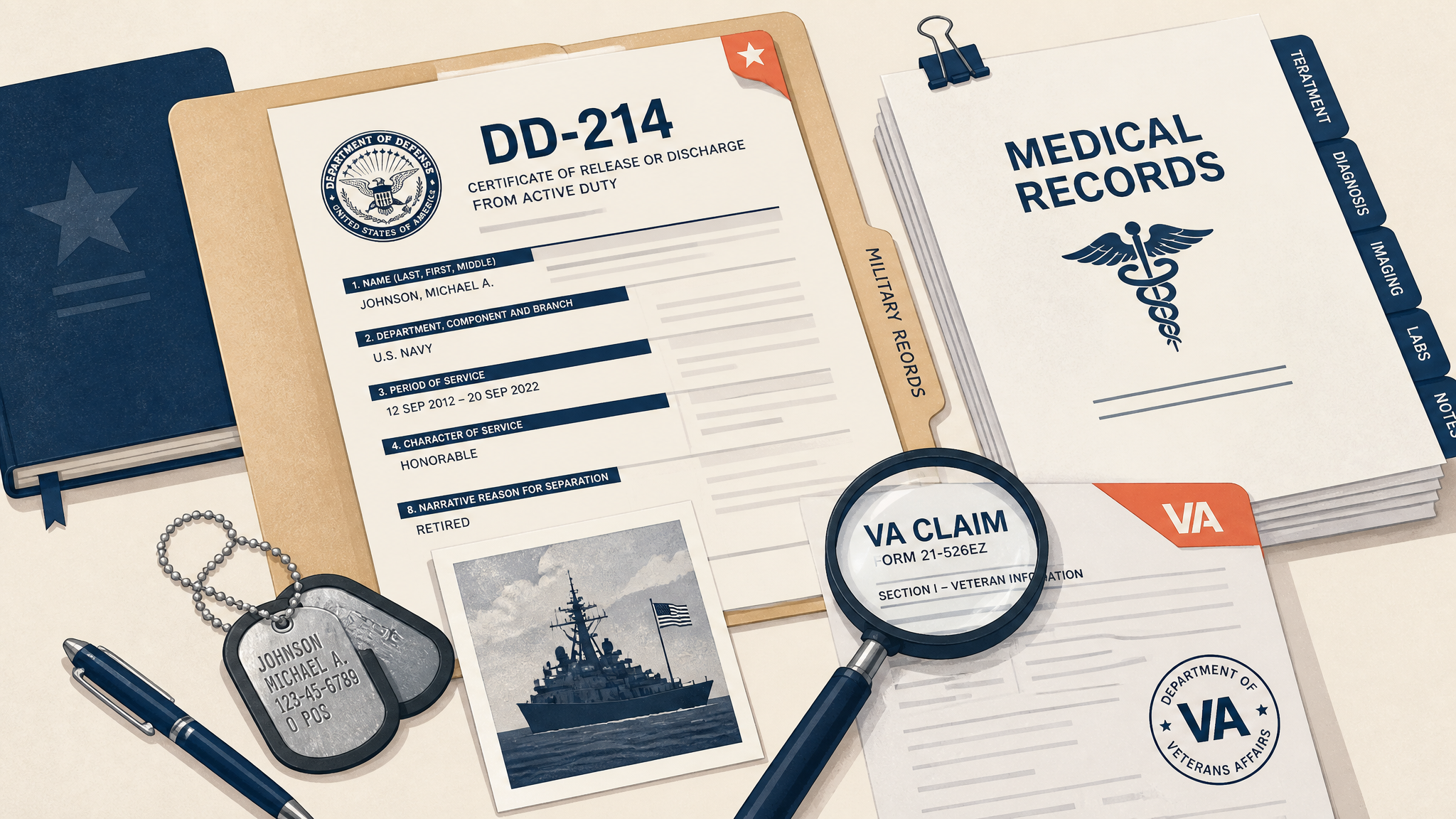
FIG. 01 - Gather your paperwork
First
Decide which form fits
In-home respite for a block of hours, a short facility stay for days or weeks, or adult day health care during the week. Many families use more than one.
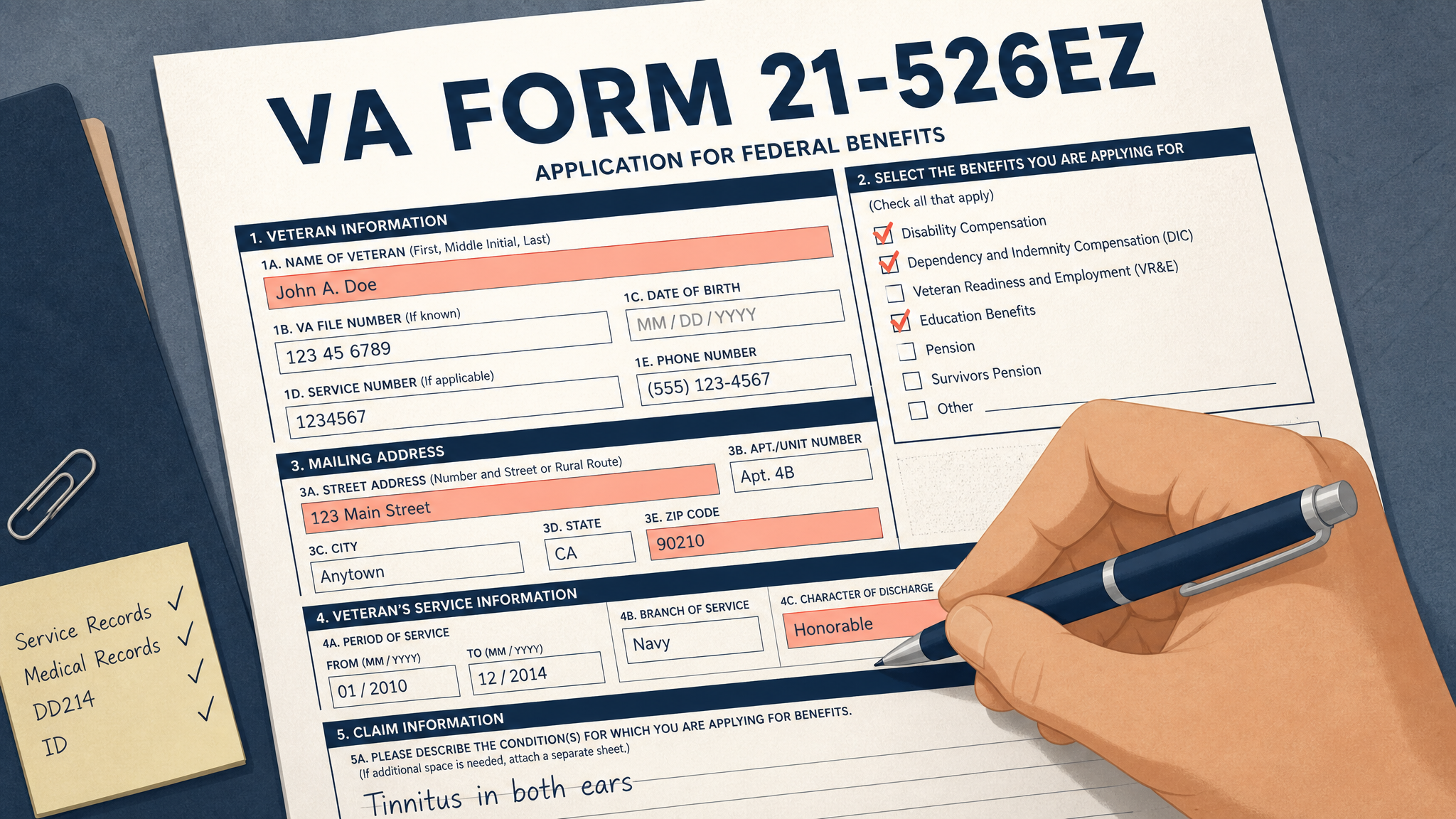
FIG. 02 - Fill out the form
Ask
Call the care team or your coordinator
Ask the VA primary care team or the Caregiver Support Coordinator to arrange it, and ask for a social work consult - social workers are the ones who actually assemble the plan.
FIG. 03 - File the claim
Get it on paper
Have the need documented in his record
A documented clinical need is far faster to act on later. If you get a vague answer, send the request again through his secure message account so there is a written record.
FIG. 04 - After you file
Do it now
Schedule a trial stay
Book one short respite while nothing is wrong. It tells you whether the setting works for him and makes the emergency version possible later.
Who to call & where to go
These are free, official VA lines. Have your Social Security number handy when you call.
Rather have us handle it?
No phone tag, no hold music. Call our office and a real, VA-accredited person walks you through it - start to finish.
702-992-4883Not sure where to start?
Ask the veteran's VA care team or your Caregiver Support Coordinator to set it up, or call the Caregiver Support Line at 1-855-260-3274. Ask early - the good in-home and adult day slots fill up.
More support for caregivers
These often go hand in hand - tap any card to learn more.


Free information — get a free benefit review
Tell us how to reach you and an accredited team member will help you understand this benefit and claim everything you have earned. No cost, no obligation.
Ready to hire us? Register with us
For veterans who’ve decided they want us on their claim — registering is free too, and it does not make you our client or obligate you to anything. Here is exactly how it works:
- You register. This simply starts the conversation — you are not our client yet, and you owe us nothing.
- You sign and return VA Form 21-22a. It appoints us as your accredited representative and gives us access to your VA file.
- Once we have your signed 21-22a and access to your case, we verify everything is in order.
It involves the registration form and signing VA Form 21-22a — by law we can’t accept your claim, work on it, or contact the VA for you until that power of attorney is signed. You decide whether to move forward.
Official VA links
Answers, in plain language
Common questions about Respite Care
What is Respite Care?
Short-term care that gives a family caregiver a real break - in the home, at a VA or community facility, or through an adult day program. Caregivers approved under PCAFC get at least 30 days a year.
Who qualifies for Respite Care?
The veteran must be enrolled in VA health care. His disability rating is not the deciding factor for respite. Standard VA health-care copays may apply to the veteran's days of respite, depending on his priority group and income - many veterans owe nothing. Ask directly: *"What will his copay be for these days?"* before you schedule. Get the answer before the stay, not on a bill afterward.
How much does Respite Care pay?
The veteran must be enrolled in VA health care. His disability rating is not the deciding factor for respite. Standard VA health-care copays may apply to the veteran's days of respite, depending on his priority group and income - many veterans owe nothing. Ask directly: *"What will his copay be for these days?"* before you schedule. Get the answer before the stay, not on a bill afterward.
How do I apply for Respite Care?
Ask the veteran's VA care team or your Caregiver Support Coordinator to set it up, or call the Caregiver Support Line at 1-855-260-3274. Ask early - the good in-home and adult day slots fill up.
What does it cost to get help with Respite Care, and are you VA-accredited?
Respite is not a luxury and it is not a failure. A caregiver who collapses is the single most common reason a veteran ends up in a facility permanently - which is the outcome this benefit exists to prevent. It is free to talk with us, and no one may charge you to file a first-time VA claim. The Aging Veteran is led by Albert L. Thombs Jr., a VA-accredited claims agent (accreditation #45147) and disabled veteran; any appeal work is handled on a no-fee-unless-you-win basis. We are an independent accredited practice and are not affiliated with, or endorsed by, the U.S. Department of Veterans Affairs.