
Caregivers
General Caregiver Support Services (PGCSS)
Free training, counseling, peer mentoring, and help arranging respite for anyone caring for a veteran enrolled in VA health care - no rating required, no service era requirement, and no application to fill out.

Who this is for
You do not need a rating, a service era, or an approval letter to get help. If the veteran is enrolled in VA health care, General Caregiver Support Services is open to whoever is doing the caring - and it costs nothing. This is where families land when PCAFC says no, and it is the fastest thing on this page to start.
In plain language
What General Caregiver Support Services (PGCSS) covers
- Skills training and self-care education built for family caregivers
- Individual counseling and caregiver support groups
- Peer mentoring - matched with a caregiver who has already been through it
- Help arranging respite care and connecting to community resources
- Open to caregivers of veterans from any service era, with or without a rating
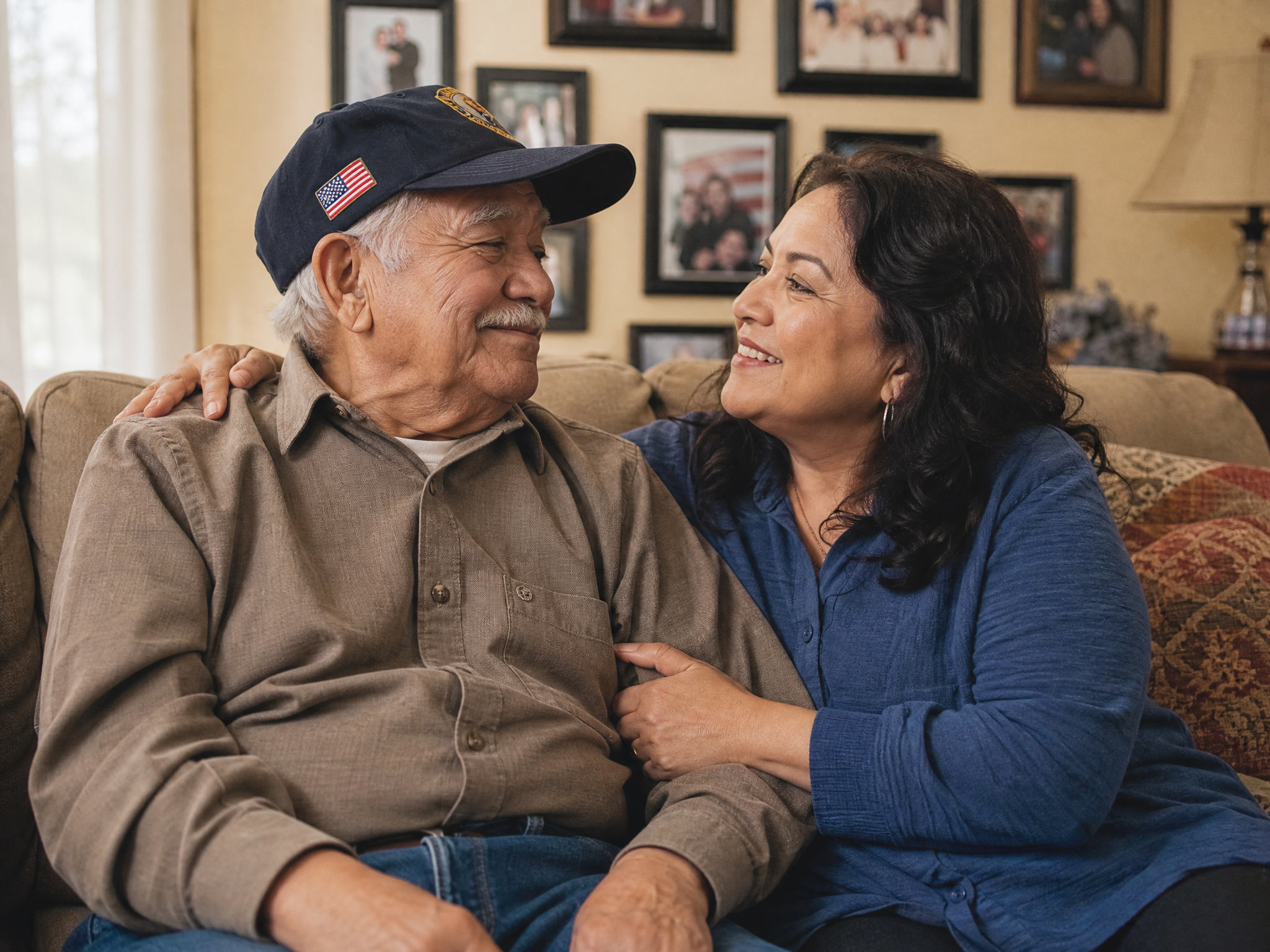
VA Caregiver Support Program (PGCSS & PCAFC)Official video - U.S. Department of Veterans Affairs - theSITREP
5 things most veterans aren't aware of
These apply to nearly every VA claim - and they change how much you get and when.
Your filing date sets your back pay
Benefits are generally paid back to the day you file - not the day you are approved. Filing an intent to file today can protect months, even years, of retroactive pay.
One condition can trigger others (secondary claims)
A service-connected condition that causes another - like sleep apnea from PTSD, or a bad knee from a bad hip - can be rated on its own. Each secondary condition adds to your rating.
A medical nexus is what wins the claim
The VA needs a documented link between your condition and your service. A clear nexus opinion is often the difference between an approval and a denial.
Accredited help is free to file an initial claim
By law, an accredited agent cannot charge a fee to prepare and file your original claim. If someone asks for money up front to file, that is a red flag.
A denial is not the end of the road
You have three appeal lanes - Higher-Level Review, a Supplemental Claim with new evidence, and the Board of Veterans Appeals. Many denials are overturned on review.
No rating
PGCSS has no disability-rating requirement at all
Any era
Korea, Vietnam, Gulf, post-9/11 - service era does not matter
$0
What the training, counseling, and peer mentoring cost you
The full picture
Everything you need to know
Nothing hidden behind a click, and nothing you have to go looking for on another website. Here is the whole story in plain language - the facts and the figures first - so you can decide what fits your situation.
Key facts & current figures
- No disability rating requirement. The veteran only has to be enrolled in VA health care.
- Any service era - Korea, Vietnam, Gulf, post-9/11. And the caregiver does not have to be family; a friend or neighbor doing the work counts.
- Skills training, self-care education, individual counseling, support groups, and peer mentoring from caregivers who have already done it.
- There is no stipend under PGCSS - that is the trade-off for how few requirements there are.
- There is no long application. Call the Caregiver Support Line at 1-855-260-3274 or ask for the Caregiver Support Coordinator at the veteran's VA medical center.
General figures, current as of December 2025 and reviewed each year. Your exact amount depends on your situation - always confirm on va.gov.
Who qualifies - and how short the list is
- The veteran must be enrolled in VA health care. That is very nearly the entire requirement.
- No disability rating is needed. No 70%, no combined rating math, no six-month care standard.
- Any service era qualifies, including veterans who never deployed and veterans whose service ended sixty years ago.
- The caregiver does not have to be a spouse or a blood relative. A friend, a neighbor, or a church member doing the work counts.
What the training actually teaches
- The practical mechanics nobody shows you: safe transfers from bed to chair, managing a medication schedule, wound and skin care, and how to handle a fall without hurting yourself.
- How to handle behavior that comes from dementia or PTSD - the repetition, the sundowning, the anger that is not really aimed at you.
- Self-care that is not a slogan: sleep, your own appointments, and how to say no to family members who help by telephone only.
- Training is delivered online, over the phone, and in person, so you do not have to leave him alone to attend it.
Counseling and peer support
- Individual counseling with someone who understands the VA system and the specific weight of caring for a veteran.
- Support groups, in person and by phone, where nobody needs the background explained to them.
- Peer mentoring - the VA matches you with a caregiver who is further down the same road. For most families this turns out to be the part that keeps them going.
- All of it is free and confidential, and none of it touches the veteran's benefits or his record.
What PGCSS does not include
- No monthly stipend. If you need to be paid for the care, the routes are PCAFC, Veteran-Directed Care, or Aid & Attendance - not PGCSS.
- No CHAMPVA coverage for the caregiver. That comes only through approval in PCAFC.
- No travel pay for the caregiver. Those benefits ride with PCAFC.
- What it does include is the help you can get this week, with no decision letter standing between you and it.
PGCSS or PCAFC - how to tell which one you are looking at
- PCAFC is the stipend program: 70% or higher rating, six continuous months of in-person care, a formal assessment, and money paid to the caregiver.
- PGCSS is the support program: enrolled in VA health care, and that is essentially it. Training, counseling, respite, and peer support - no money.
- They are not mutually exclusive. Plenty of families use PGCSS while a PCAFC application is pending, and keep using it after.
- If you were denied PCAFC, the denial letter frequently never mentions PGCSS. That is not your fault, and it does not close the door.
How to start in one phone call
- Call the Caregiver Support Line at 1-855-260-3274, Monday through Friday, 8:00 a.m. to 8:00 p.m. Eastern. It is staffed by licensed professionals, not a script-reading call center.
- Have ready: the veteran's full name, his date of birth, whether he is enrolled in VA health care, and which VA medical center he uses.
- Ask by name for the Caregiver Support Coordinator at his medical center. Every VA medical center has one, and that person becomes your way back in.
- On the same call, ask about respite care. Most families do not know they can ask, so nobody offers it.
The bigger picture for your family
One call
is the entire application. There is no form and no decision letter for General Caregiver Support Services - if the veteran is enrolled in VA health care, the training, counseling, and peer mentoring are already open to whoever is doing the caring.
Two ways to move forward — both free
Not sure if this applies to you?
Ask our free assistant a few plain questions and get an honest read on what you and your family may qualify for, at no cost. It takes just a few minutes, and there is no sign-up and no obligation of any kind. You will get a clear, plain-language picture of where you stand and what might be worth filing. And if you would rather talk to a real person, an accredited agent is only a message away.
Have a question? Get free information
Ask a question, learn what you may be owed, or find out where you stand. Confidential, free, and no obligation to go any further.
Ready to hire us? Register
Decided you want us to work your claim? Registering is free — we match you with an accredited advocate and get you started. We cannot begin until you sign VA Form 21-22a, and fees, if any, are always disclosed up front.
Do not miss this
A PCAFC denial letter almost never mentions this program
PCAFC is strict, and plenty of families do not clear the 70% bar. The denial arrives, the family assumes the VA has nothing else, and the letter frequently says nothing at all about General Caregiver Support Services - which has almost no requirements and is open to them right now.
You can also use both. Families routinely use PGCSS while a PCAFC application is pending, and keep using it afterward. There is no penalty and no conflict between the two.
Friends count
The caregiver does not have to be a spouse or a relative. A neighbor or a church member doing the work qualifies.
Ask about respite
On the same call, ask what respite is available near you. Almost nobody knows to ask, so almost nobody is offered it.
A clear path forward
Your step-by-step action plan
No rush and no pressure - but a little order helps. Applying is always free.
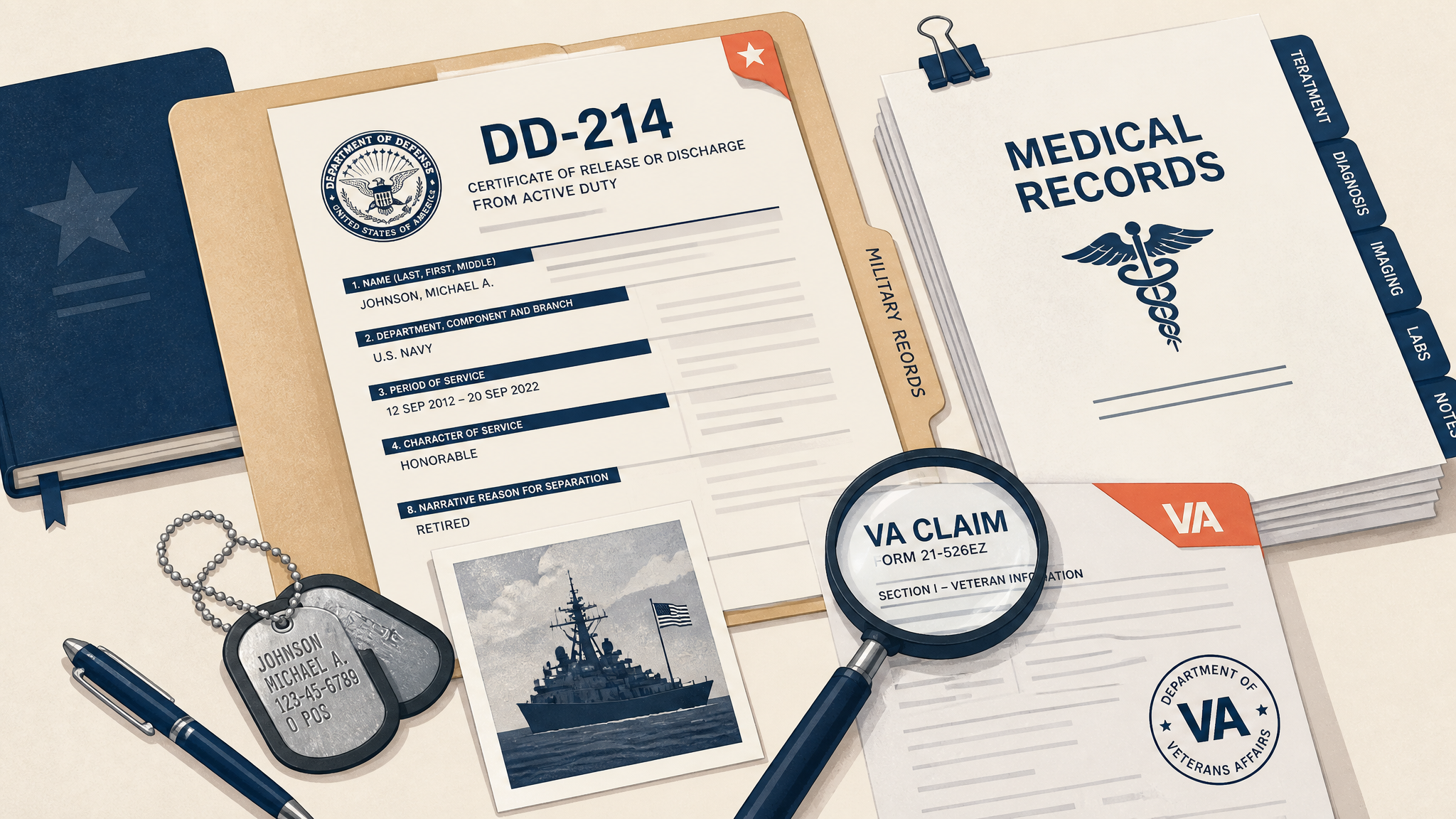
FIG. 01 - Gather your paperwork
First
Confirm he is enrolled in VA health care
That is essentially the whole eligibility test. If he is not enrolled, start there with VA Form 10-10EZ - enrollment opens this and a great deal more.
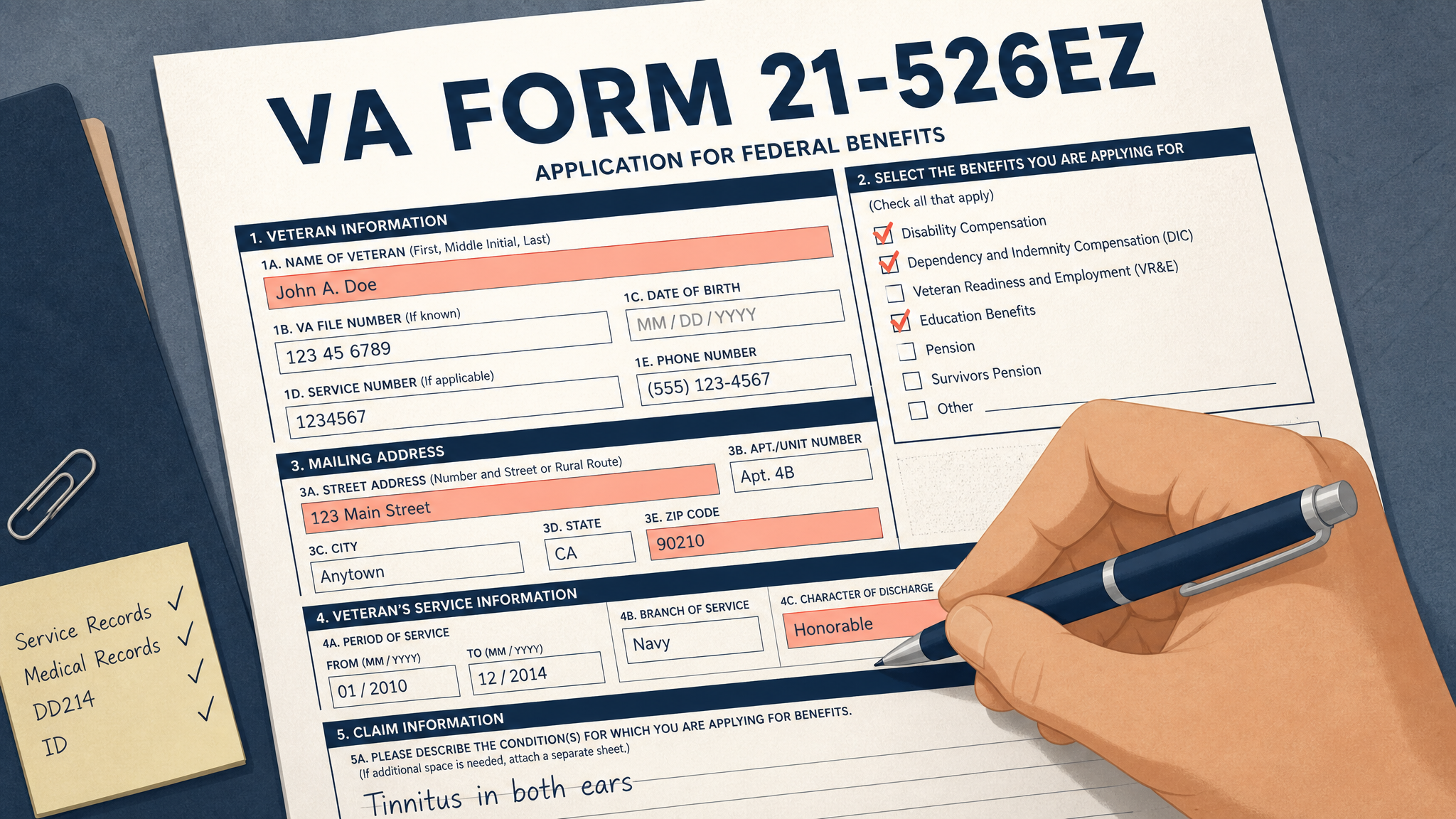
FIG. 02 - Fill out the form
Then
Call 1-855-260-3274
The Caregiver Support Line is staffed Monday through Friday, 8:00 a.m. to 8:00 p.m. Eastern by licensed professionals. Have his name, date of birth, and VA medical center ready.
FIG. 03 - File the claim
Ask by name
Get the Caregiver Support Coordinator
Every VA medical center has one. Ask for that person specifically - they become your way back into the system every time something changes.
FIG. 04 - After you file
Keep going
Sign up for training and a peer mentor
Take the skills training, join a group, and ask to be matched with a peer mentor. For most families the mentor is the part that actually keeps them going.
Who to call & where to go
These are free, official VA lines. Have your Social Security number handy when you call.
MyVA411 - Main VA Line
Not sure who to call? Start here. One number for anything VA - they route you to the right office.
Rather have us handle it?
No phone tag, no hold music. Call our office and a real, VA-accredited person walks you through it - start to finish.
702-992-4883Not sure where to start?
One phone call. Call the VA Caregiver Support Line at 1-855-260-3274, or ask for the Caregiver Support Coordinator at the veteran’s VA medical center. There is no form and no waiting on a decision letter.
More support for caregivers
These often go hand in hand - tap any card to learn more.


Free information — get a free benefit review
Tell us how to reach you and an accredited team member will help you understand this benefit and claim everything you have earned. No cost, no obligation.
Ready to hire us? Register with us
For veterans who’ve decided they want us on their claim — registering is free too, and it does not make you our client or obligate you to anything. Here is exactly how it works:
- You register. This simply starts the conversation — you are not our client yet, and you owe us nothing.
- You sign and return VA Form 21-22a. It appoints us as your accredited representative and gives us access to your VA file.
- Once we have your signed 21-22a and access to your case, we verify everything is in order.
It involves the registration form and signing VA Form 21-22a — by law we can’t accept your claim, work on it, or contact the VA for you until that power of attorney is signed. You decide whether to move forward.
Official VA links
Answers, in plain language
Common questions about General Caregiver Support Services (PGCSS)
What is General Caregiver Support Services (PGCSS)?
Free training, counseling, peer mentoring, and help arranging respite for anyone caring for a veteran enrolled in VA health care - no rating required, no service era requirement, and no application to fill out.
Who qualifies for General Caregiver Support Services (PGCSS)?
The veteran must be enrolled in VA health care. That is very nearly the entire requirement. No disability rating is needed. No 70%, no combined rating math, no six-month care standard. Any service era qualifies, including veterans who never deployed and veterans whose service ended sixty years ago.
How do I apply for General Caregiver Support Services (PGCSS)?
One phone call. Call the VA Caregiver Support Line at 1-855-260-3274, or ask for the Caregiver Support Coordinator at the veteran’s VA medical center. There is no form and no waiting on a decision letter.
What does it cost to get help with General Caregiver Support Services (PGCSS), and are you VA-accredited?
PGCSS will not pay you. What it will do is train you, give you somebody to call, and get you a break - starting this week instead of six months from now. It is free to talk with us, and no one may charge you to file a first-time VA claim. The Aging Veteran is led by Albert L. Thombs Jr., a VA-accredited claims agent (accreditation #45147) and disabled veteran; any appeal work is handled on a no-fee-unless-you-win basis. We are an independent accredited practice and are not affiliated with, or endorsed by, the U.S. Department of Veterans Affairs.