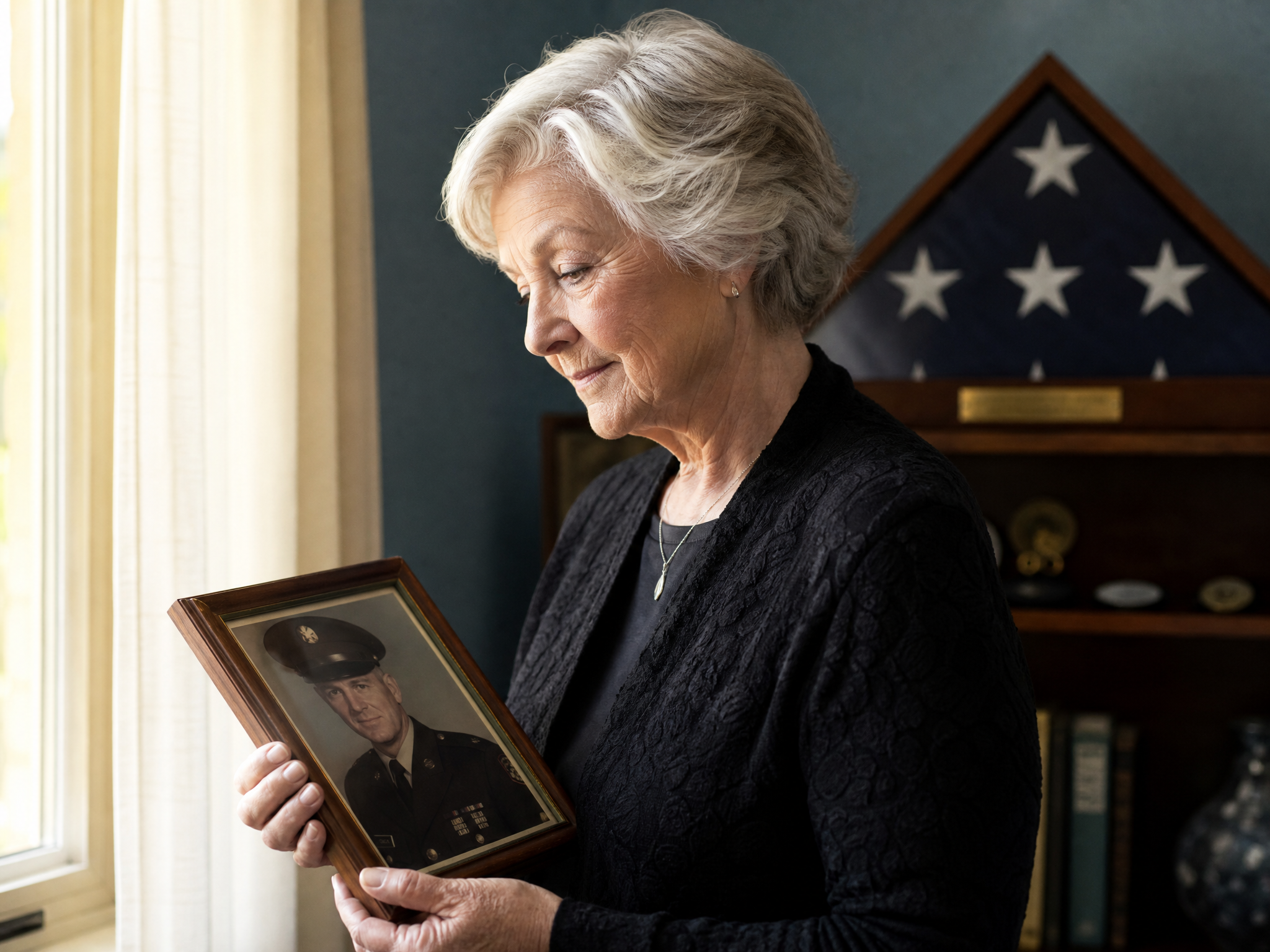
Survivors
Accrued Benefits & Substitution
Benefits the veteran had earned but had not yet received at the time of their death, which an eligible survivor may claim - and the right to step into the veteran’s unfinished claim.

Who this is for
When a veteran dies with a claim still sitting at the VA, that claim does not have to die with him. A surviving spouse or child can step into it, keep the original filing date, and collect what the VA already owed - sometimes years of back pay. But the door closes one year after the death, and nobody from the VA is going to write and tell you it is open.
In plain language
What Accrued Benefits & Substitution covers
- Covers money the VA owed the veteran from an existing or pending claim
- Substitution keeps the veteran's original effective date, which is usually where the back pay is
- Usually claimed by the surviving spouse, then children, then dependent parents
- Can reimburse whoever paid the last illness and burial expenses when no eligible survivor remains
- Often filed together with a DIC or Survivors Pension claim on the same form
- There is a hard one-year limit, so it is worth asking immediately

Accrued Benefits for SurvivorsOfficial video - U.S. Dept of Veterans Affairs
5 things most veterans aren't aware of
These apply to nearly every VA claim - and they change how much you get and when.
Your filing date sets your back pay
Benefits are generally paid back to the day you file - not the day you are approved. Filing an intent to file today can protect months, even years, of retroactive pay.
One condition can trigger others (secondary claims)
A service-connected condition that causes another - like sleep apnea from PTSD, or a bad knee from a bad hip - can be rated on its own. Each secondary condition adds to your rating.
A medical nexus is what wins the claim
The VA needs a documented link between your condition and your service. A clear nexus opinion is often the difference between an approval and a denial.
Accredited help is free to file an initial claim
By law, an accredited agent cannot charge a fee to prepare and file your original claim. If someone asks for money up front to file, that is a red flag.
A denial is not the end of the road
You have three appeal lanes - Higher-Level Review, a Supplemental Claim with new evidence, and the Board of Veterans Appeals. Many denials are overturned on review.
1 year
Deadline to file after the veteran’s death - no extensions
Substitution
For deaths on or after Oct 10, 2008, you can step into the claim
Last expenses
Whoever paid the final illness or burial can be reimbursed
The full picture
Everything you need to know
Nothing hidden behind a click, and nothing you have to go looking for on another website. Here is the whole story in plain language - the facts and the figures first - so you can decide what fits your situation.
Key facts & current figures
- Covers money the VA already owed the veteran on a pending or existing claim at the time of death.
- Substitution (deaths on or after Oct 10, 2008): an eligible survivor steps into the veteran's pending claim or appeal and continues it, keeping the veteran's original effective date.
- Both substitution and an accrued-benefits claim have a strict 1-year filing deadline from the date of death.
- Priority order: surviving spouse, then children in equal shares, then dependent parents - and if no eligible survivor exists, whoever paid the last illness and burial expenses can be reimbursed.
- Forms: 21P-534EZ (spouse or child, with DIC), 21P-535 (parents), 21P-601 (accrued benefits or last-expense reimbursement), 21P-0847 (request for substitution).
- An accrued claim is limited to evidence already in the VA's hands at the date of death; substitution lets you add new evidence. That difference is worth real money.
General figures, current as of December 2025 and reviewed each year. Your exact amount depends on your situation - always confirm on va.gov.
Substitution vs. accrued benefits - the difference that matters
- Substitution lets an eligible survivor take the veteran's place in a claim or appeal that was still pending at death, so the case continues with the veteran's original effective date - which is usually where a large retroactive payment lives.
- An accrued-benefits claim pays out benefits the VA had already awarded, or could have awarded, based on evidence already in the file at the date of death. It does not let you build the case further.
- That is the whole distinction: substitution lets you develop new evidence, an accrued claim does not. If the veteran died before a needed exam or a private opinion came in, substitution is the route that can still win.
- Substitution applies to deaths on or after Oct 10, 2008. When in doubt, a survivor can request both - substitution on VA Form 21P-0847 and accrued benefits on 21P-534EZ or 21P-601 - to protect every right at once.
Who gets paid, and in what order
- The line of succession is set by law, and the VA pays the first living person on the list, not everyone on it.
- First, the surviving spouse - who receives the full amount.
- Then the veteran's children, in equal shares. That includes children between 18 and 23 who are attending school, and a helpless child of any age.
- Then dependent parents, in equal shares if both were dependent at the time of death. If no eligible survivor exists at all, the VA can reimburse the person who paid for - or is legally responsible for - the veteran's last illness and burial expenses, which is a route funeral-paying adult children almost never hear about.
The forms, and which one fits your situation
- VA Form 21P-534EZ - a surviving spouse or child applying for DIC, Survivors Pension, and accrued benefits on one form. This is the usual starting point.
- VA Form 21P-0847 - the specific request to be substituted as the claimant in a pending claim or appeal. If a case was open at death, this is the form that keeps it alive.
- VA Form 21P-601 - a standalone accrued-benefits claim, or a claim for reimbursement of last illness and burial expenses.
- VA Form 21P-535 - a surviving parent applying for DIC and accrued benefits. Filing the wrong form is recoverable; filing nothing inside the year usually is not.
What "evidence already in the file" really means
- For an accrued claim, the VA looks at the record as it existed on the date of death - service records, VA treatment records, exams already completed, and anything the veteran had submitted.
- Records the VA had constructive possession of - VA medical center records it could have obtained - generally count, even if they were not physically in the claims folder.
- A private opinion obtained after the death does not count toward an accrued claim. That is exactly the gap substitution is designed to close.
- This is why the practical answer is almost always file for substitution first and accrued benefits as a backstop - you keep the stronger route and lose nothing.
The deadlines, and the one exception
- A claim for accrued benefits must be filed within one year of the date of death, or within one year of the VA notifying a potential beneficiary of eligibility.
- A substitution request must also be filed within one year of the claimant's death. If a substitute later dies, the next substitute gets their own one-year window.
- There is one narrow exception: for a lump sum of pension withheld from a competent veteran during hospital, institutional, or domiciliary care, the window is five years from the date of death.
- Nothing about these deadlines is generous, and none of them are advertised. The week you find an open VA claim in the paperwork is the week to act on it.
What to do in the first month after the death
- Log into VA.gov with the veteran's credentials if you have them, or request the claims file (C-file), and find out whether anything was pending.
- Look specifically for a pending claim, an open supplemental claim, a Higher-Level Review, or a Board appeal - any of those four can be substituted into.
- File 21P-534EZ for DIC and accrued benefits, and 21P-0847 for substitution, at the same time. There is no penalty for filing both.
- Get free help from a VA-accredited representative rather than guessing. This is one of the few areas where the difference between the right form on time and the wrong form late is measured in tens of thousands of dollars.
Your family’s complete benefit picture
38 U.S.C. 5121A
The substitution statute - the difference between collecting a frozen back-award and continuing the fight to win it

Two ways to move forward — both free
Not sure if this applies to you?
Ask our free assistant a few plain questions and get an honest read on what you and your family may qualify for, at no cost. It takes just a few minutes, and there is no sign-up and no obligation of any kind. You will get a clear, plain-language picture of where you stand and what might be worth filing. And if you would rather talk to a real person, an accredited agent is only a message away.
Have a question? Get free information
Ask a question, learn what you may be owed, or find out where you stand. Confidential, free, and no obligation to go any further.
Ready to hire us? Register
Decided you want us to work your claim? Registering is free — we match you with an accredited advocate and get you started. We cannot begin until you sign VA Form 21-22a, and fees, if any, are always disclosed up front.
Do not miss this
Accrued benefits and substitution are not the same thing - and the choice matters
An accrued benefits claim pays whatever the veteran had already earned and proven before death, using only the evidence in the file. A substitution claim under 38 U.S.C. 5121A lets you step into the veteran’s shoes and keep developing the case - new exams, new opinions, new evidence.
Substitution is almost always worth more, because a pending claim that was never fully developed is worth far more once the evidence is finished. File VA Form 21P-0847 to request substitution - and file it within that same one-year window.
Records you never sent still count
VA medical records are treated as constructively in the file even if nobody physically added them - they count as evidence for an accrued claim.
A 5-year exception exists
Lump-sum pension withheld while the veteran was hospitalized or institutionalized can reach back 5 years, not one.
A clear path forward
Your step-by-step action plan
No rush and no pressure - but a little order helps. Applying is always free.
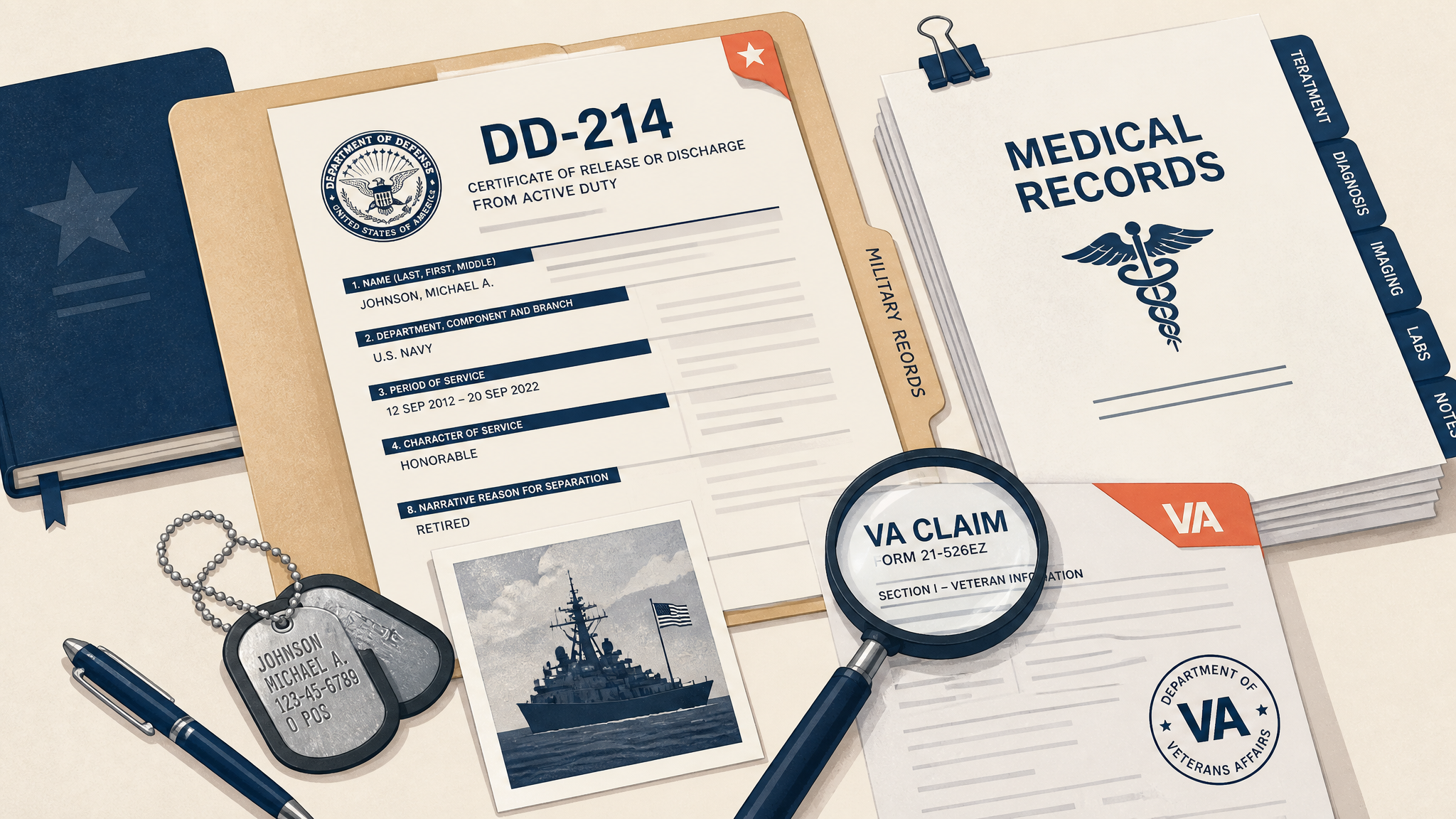
FIG. 01 - Gather your paperwork
Immediately
Find out what was pending
Get the claims file and identify every open claim or appeal at the date of death. That pending case is the asset - do not let it close.
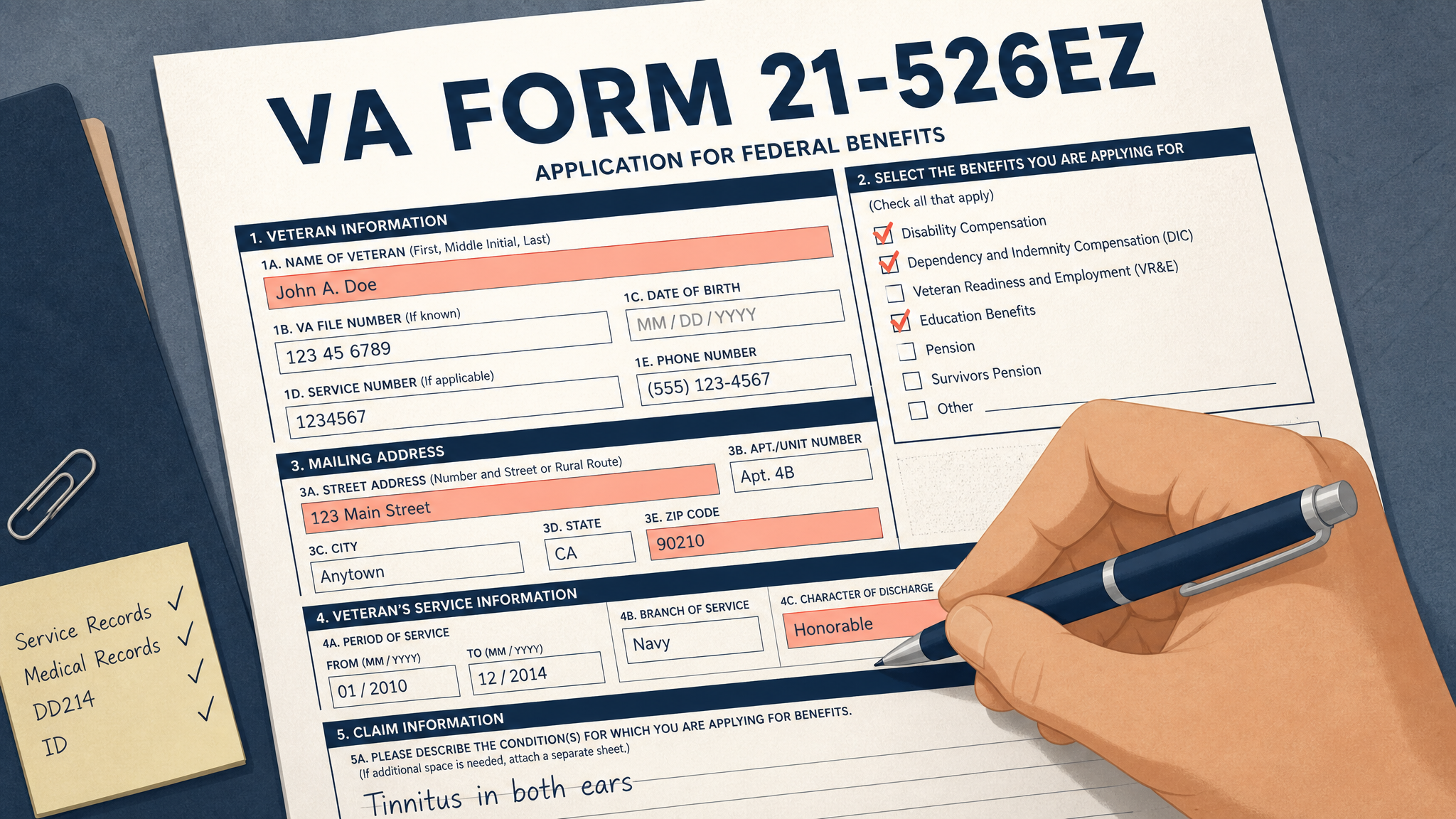
FIG. 02 - Fill out the form
Within one year
File the right form for who you are
A spouse or child files VA Form 21P-534EZ, a parent files 21P-535, and anyone claiming reimbursement of last illness or burial expenses files 21P-601.

FIG. 03 - File the claim
Same filing
Request substitution with VA Form 21P-0847
For deaths on or after October 10, 2008, substitution lets you continue building the case instead of settling for what was already proven.
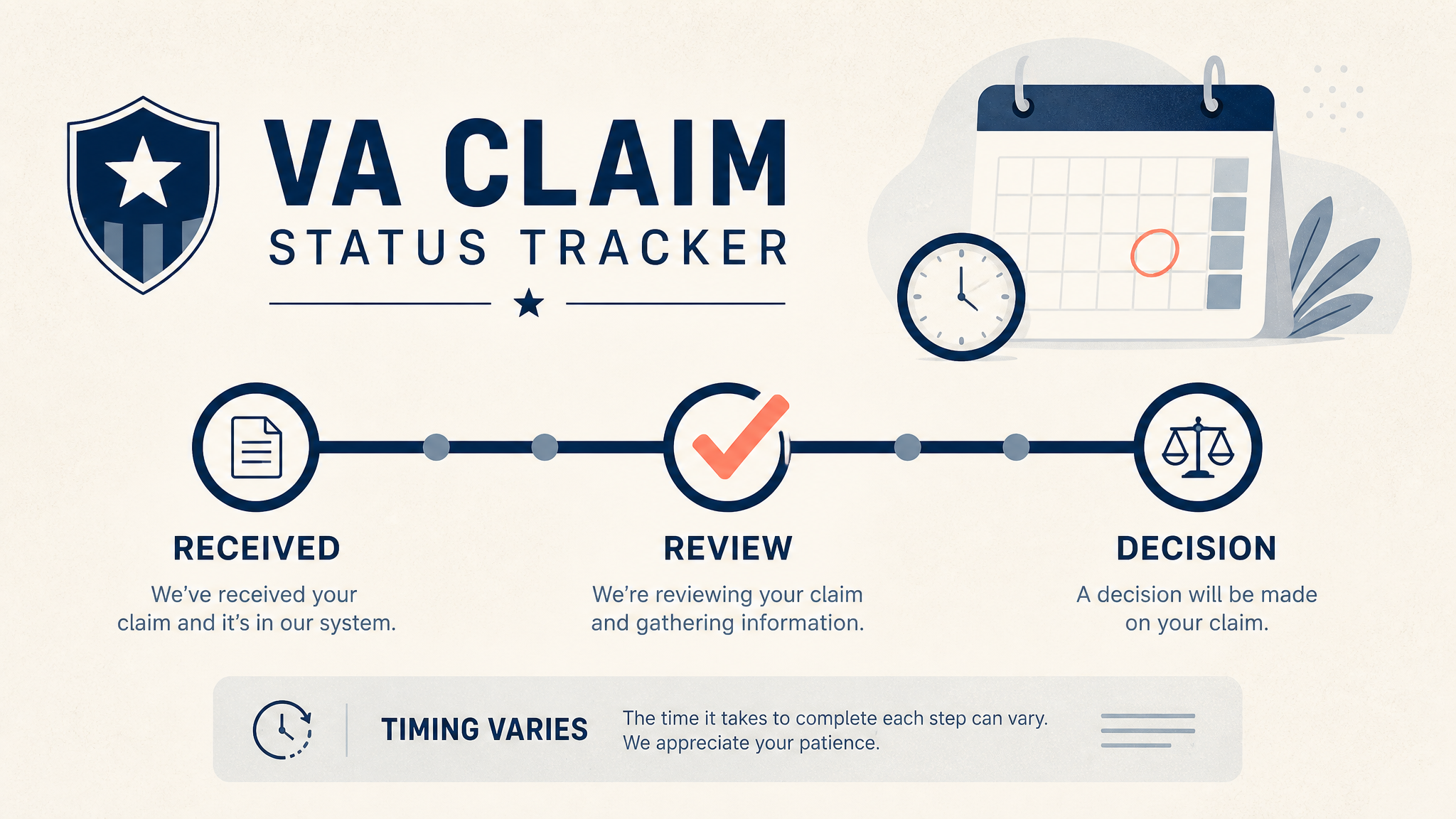
FIG. 04 - After you file
Know the order
Confirm you are the right claimant
Priority runs spouse, then children in equal shares, then dependent parents, then whoever paid the last illness or burial expenses. Filing out of order wastes the clock.
Who to call & where to go
These are free, official VA lines. Have your Social Security number handy when you call.
VA Benefits Hotline
Compensation, pension, and general claim questions.
MyVA411 - Main VA Line
Not sure who to call? Start here. One number for anything VA - they route you to the right office.
Rather have us handle it?
No phone tag, no hold music. Call our office and a real, VA-accredited person walks you through it - start to finish.
702-992-4883Not sure where to start?
File VA Form 21P-534EZ if you are also claiming DIC, and VA Form 21P-0847 to request substitution into a pending claim or appeal. A separate accrued-benefits or last-expense claim goes on VA Form 21P-601. A surviving parent uses VA Form 21P-535.
More support for survivors & family
These often go hand in hand - tap any card to learn more.
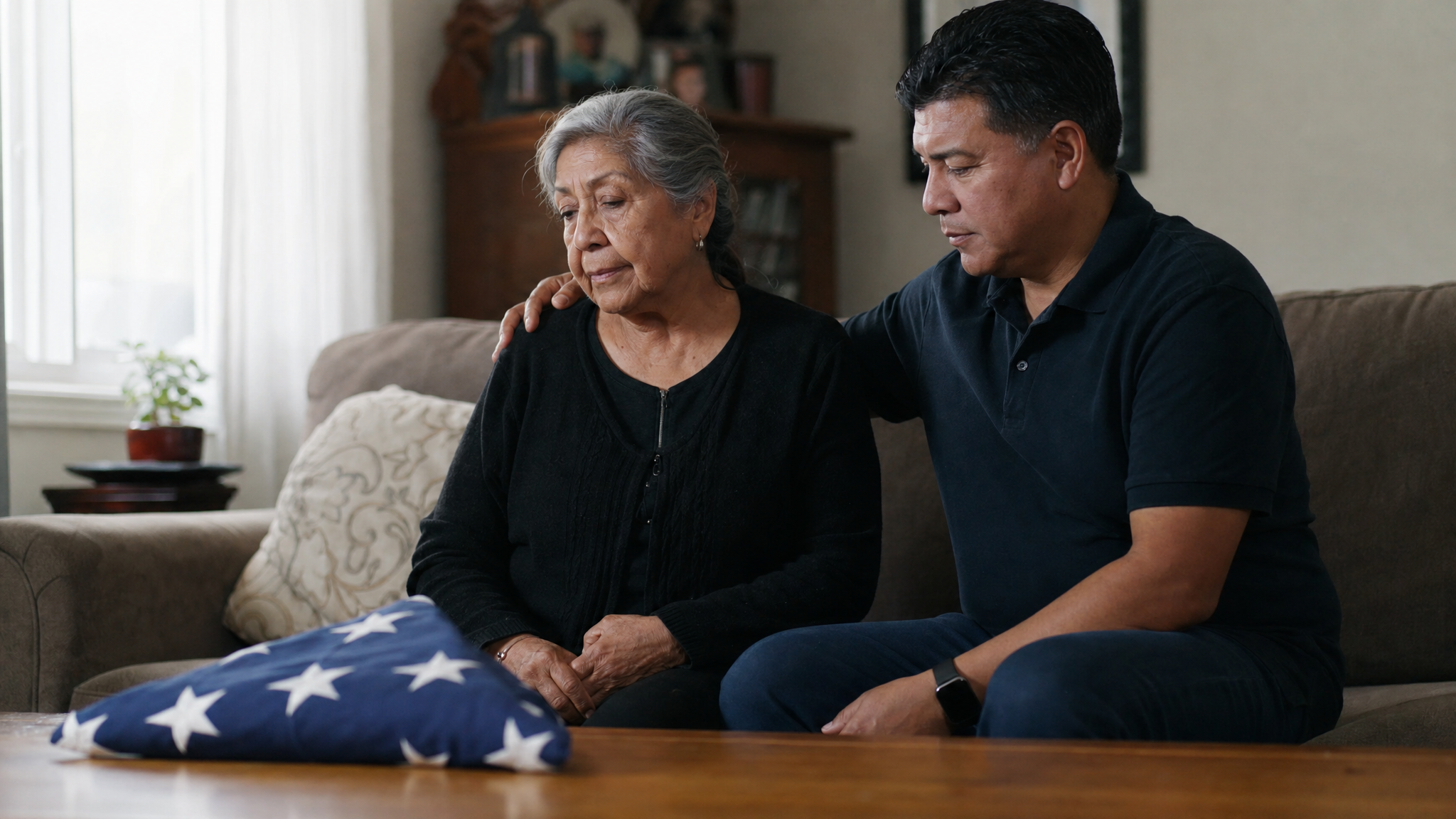






Free information — get a free benefit review
Tell us how to reach you and an accredited team member will help you understand this benefit and claim everything you have earned. No cost, no obligation.
Ready to hire us? Register with us
For veterans who’ve decided they want us on their claim — registering is free too, and it does not make you our client or obligate you to anything. Here is exactly how it works:
- You register. This simply starts the conversation — you are not our client yet, and you owe us nothing.
- You sign and return VA Form 21-22a. It appoints us as your accredited representative and gives us access to your VA file.
- Once we have your signed 21-22a and access to your case, we verify everything is in order.
It involves the registration form and signing VA Form 21-22a — by law we can’t accept your claim, work on it, or contact the VA for you until that power of attorney is signed. You decide whether to move forward.
Answers, in plain language
Common questions about Accrued Benefits & Substitution
What is Accrued Benefits & Substitution?
Benefits the veteran had earned but had not yet received at the time of their death, which an eligible survivor may claim - and the right to step into the veteran’s unfinished claim.
Who qualifies for Accrued Benefits & Substitution?
The line of succession is set by law, and the VA pays the first living person on the list, not everyone on it. First, the surviving spouse - who receives the full amount. Then the veteran's children, in equal shares. That includes children between 18 and 23 who are attending school, and a helpless child of any age.
How do I apply for Accrued Benefits & Substitution?
File VA Form 21P-534EZ if you are also claiming DIC, and VA Form 21P-0847 to request substitution into a pending claim or appeal. A separate accrued-benefits or last-expense claim goes on VA Form 21P-601. A surviving parent uses VA Form 21P-535.
What does it cost to get help with Accrued Benefits & Substitution, and are you VA-accredited?
The VA does not always tell families this benefit exists, and the 1-year deadline can pass quietly. If the veteran had any claim, appeal, or supplemental claim open when they died, ask about substitution and accrued benefits right away - before you deal with anything else on the VA side. It is free to talk with us, and no one may charge you to file a first-time VA claim. The Aging Veteran is led by Albert L. Thombs Jr., a VA-accredited claims agent (accreditation #45147) and disabled veteran; any appeal work is handled on a no-fee-unless-you-win basis. We are an independent accredited practice and are not affiliated with, or endorsed by, the U.S. Department of Veterans Affairs.