Survivors
Burial & Memorial Benefits
Help with burial in a VA national cemetery, funeral costs, headstones and markers, memorial items, and bereavement counseling.
There’s a free calculator on this page - estimate the VA burial reimbursement. No sign-up, no cost.
Who this is for
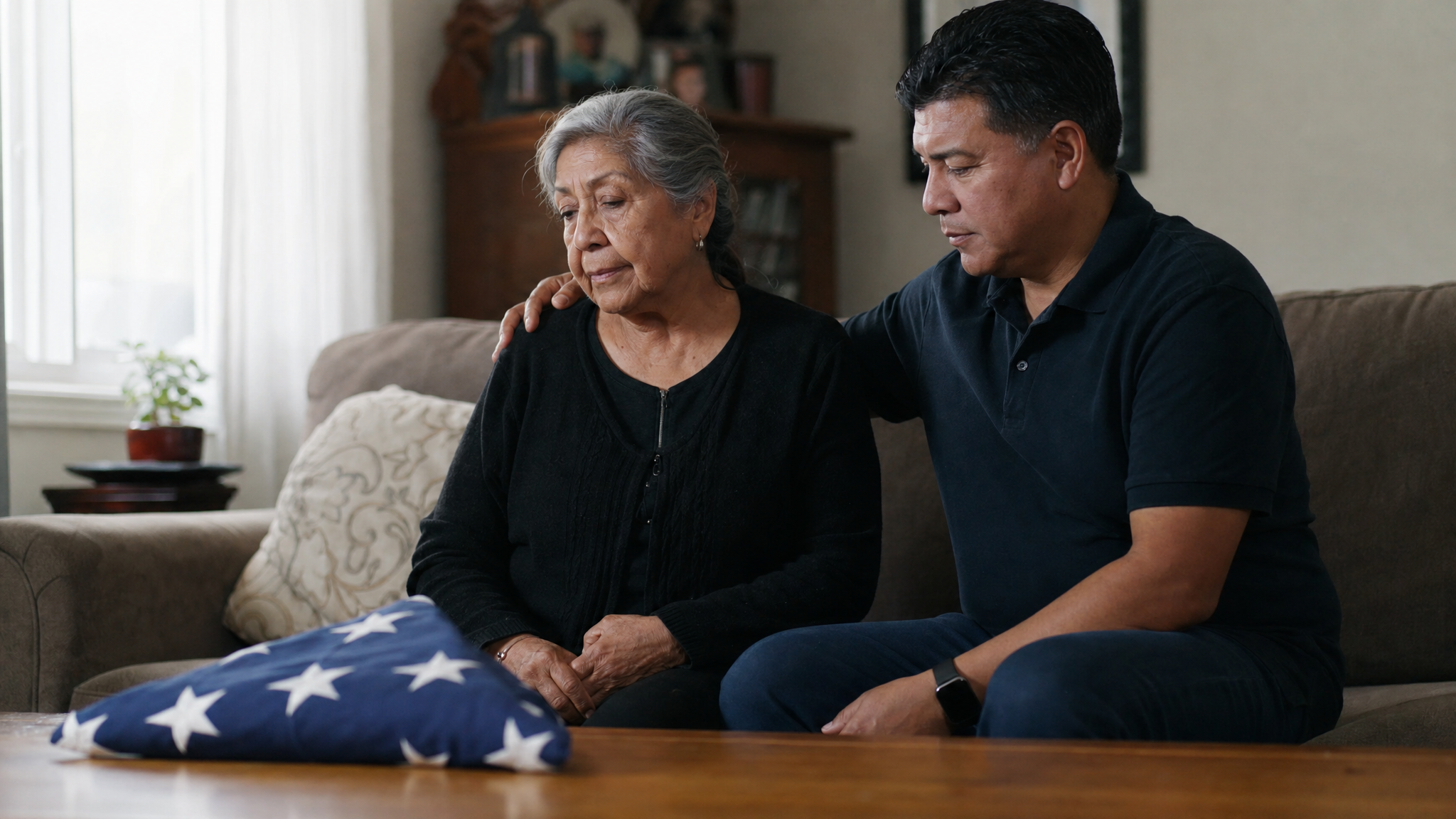
When a veteran passes, the last thing a grieving family should have to wrestle with is a funeral bill. The VA quietly stands behind that moment - a free gravesite and government headstone, a burial flag, and money back toward the cost of the funeral. This page shows exactly what your family can claim, and the one rule that trips people up: you pay first, then get reimbursed.
In plain language
What Burial & Memorial Benefits covers
- Eligibility for burial in a VA national cemetery for the veteran and, in many cases, a spouse and dependent children
- A government-furnished headstone, marker, or medallion
- A burial allowance to help with funeral and burial costs
- Memorial items (such as a burial flag and Presidential Memorial Certificate) and bereavement counseling

Overview of VA Memorial Benefits and How to ApplyOfficial video - U.S. Department of Veterans Affairs
5 things most veterans aren't aware of
These apply to nearly every VA claim - and they change how much you get and when.
Your filing date sets your back pay
Benefits are generally paid back to the day you file - not the day you are approved. Filing an intent to file today can protect months, even years, of retroactive pay.
One condition can trigger others (secondary claims)
A service-connected condition that causes another - like sleep apnea from PTSD, or a bad knee from a bad hip - can be rated on its own. Each secondary condition adds to your rating.
A medical nexus is what wins the claim
The VA needs a documented link between your condition and your service. A clear nexus opinion is often the difference between an approval and a denial.
Accredited help is free to file an initial claim
By law, an accredited agent cannot charge a fee to prepare and file your original claim. If someone asks for money up front to file, that is a red flag.
A denial is not the end of the road
You have three appeal lanes - Higher-Level Review, a Supplemental Claim with new evidence, and the Board of Veterans Appeals. Many denials are overturned on review.
$2,000
Burial allowance for a service-connected death - no deadline
$1,002 + $1,002
Non-service-connected burial + plot allowance (on/after Oct 1, 2025)
$0
Gravesite, headstone, and burial flag at a VA national cemetery
The full picture
Everything you need to know
Nothing hidden behind a click, and nothing you have to go looking for on another website. Here is the whole story in plain language - the facts and the figures first - so you can decide what fits your situation.
Key facts & current figures
- Service-connected death burial allowance: $2,000, with no time limit to file.
- Non-service-connected death: $1,002 burial allowance plus a $1,002 plot allowance (deaths on or after Oct 1, 2025); file within 2 years of burial.
- If the VA does not furnish a headstone or marker, the reimbursement allowance is $441 (deaths on or after Oct 1, 2025).
- Burial in a VA national cemetery, including the gravesite, opening/closing, a government headstone, and a burial flag, is provided at no cost to the family.
- A surviving spouse already on the veteran's records often does not need to file; the VA pays automatically.
General figures, current as of December 2025 and reviewed each year. Your exact amount depends on your situation - always confirm on va.gov.
Burial allowances - the actual dollar amounts
- Service-connected death: a $2,000 allowance, with no deadline to file.
- Non-service-connected death: a $1,002 burial allowance, plus a $1,002 plot allowance in many cases, for deaths on or after Oct 1, 2025. File within 2 years of the burial. These figures adjust every year with the COLA - confirm the current amounts on va.gov.
- If the VA does not furnish a headstone or marker, there is a reimbursement allowance of $441 for deaths on or after Oct 1, 2025.
What a VA national cemetery provides at no cost
- The gravesite, opening and closing of the grave, a government headstone or marker, a burial flag, and perpetual care are all provided free to the family.
- In many cases a spouse and dependent children can be buried there as well.
Memorial items, and when you may not need to file
- The family can request a burial flag, a Presidential Memorial Certificate, and a government headstone, marker, or medallion.
- If a surviving spouse is already on the veteran's VA records, the VA often pays the burial allowance automatically, with no separate claim needed.
- Bereavement counseling is available to grieving family members at no cost.
What burial costs can the VA reimburse?
VA burial allowance estimator
Most families never realize the VA helps with funeral and burial costs - or that the amount depends on whether the death was service-connected, where the veteran is buried, and whether you buy a private marker. Answer three questions to see your estimated reimbursement, then remember the key rule: you pay first and claim it back on VA Form 21P-530EZ.
Was the death service-connected?
Where will the veteran be buried?
Did the family buy a private headstone or marker?
The VA will place a government headstone or marker at no charge. This allowance only applies when the family chooses to buy a private one instead.
Answer one question to see your estimate
Start with Step 1 above. Your itemized burial reimbursement appears here as you answer.
FY2026 amounts for deaths on or after Oct 1, 2025. Reimbursement only - file VA Form 21P-530EZ, within 2 years of burial for a non-service-connected death.
This calculator is free. No sign-up, no catch.
Most people in this business hide tools like this behind a paywall or a sign-up form. We don’t. Use it as much as you need. And if you want a real accredited agent to look at your actual claim, we’re one call away — it’s free to talk, and free to file your claim.
Albert L. Thombs Jr. — VA-accredited claims agent (#45147), a disabled veteran with a team of advocates who do this every day.
The decisions families actually face
National or private, and what to ask for
Beyond the reimbursement above, two questions decide how much a family spends and what honors the veteran receives: where the burial happens, and which memorial benefits you remember to request.
VA national cemetery
Most of the big costs are $0
Provided at no cost to the family:
- The gravesite itself$0
- Opening and closing of the grave$0
- A government headstone or marker$0
- A burial flag and perpetual care$0
- Military funeral honors$0
The family typically pays only for the funeral-home services they choose - viewing, casket, and transportation. A spouse and dependent children can usually be buried there too.
Private cemetery
Family pays, VA reimburses part
The family pays out of pocket for:
- The plot / gravesite (often $1,000-$4,000+)
- Opening and closing of the grave
- A privately purchased headstone or marker
The VA reimburses toward it:
- Plot / interment allowance$1,002.00
- Burial & funeral allowance (non-SC)$1,002.00
- Private headstone / marker allowance$441.00
Even with the government headstone furnished free, a private plot usually leaves the family with real out-of-pocket cost. That trade-off is worth weighing early.
Honors and memorial items to request
These are free, and families miss them constantly in the rush of arrangements. Ask for every one the veteran earned.
Burial flag
A United States flag to drape the casket, then kept by the family. Request it through the funeral director or with VA Form 27-2008.
Military funeral honors
At least two uniformed service members, the folding and presentation of the flag, and the playing of Taps. Any eligible veteran can request them.
Presidential Memorial Certificate
An engraved certificate honoring the veteran’s service, signed by the President and mailed to the family at no cost.
Headstone, marker, or medallion
Furnished free for an eligible veteran’s grave, even in a private cemetery. A bronze medallion (VA Form 40-1330M) can attach to a headstone the family already bought.
The order of steps - and the clock
Burial benefits are a reimbursement, so the sequence matters. Here is the whole process in order.
- 1
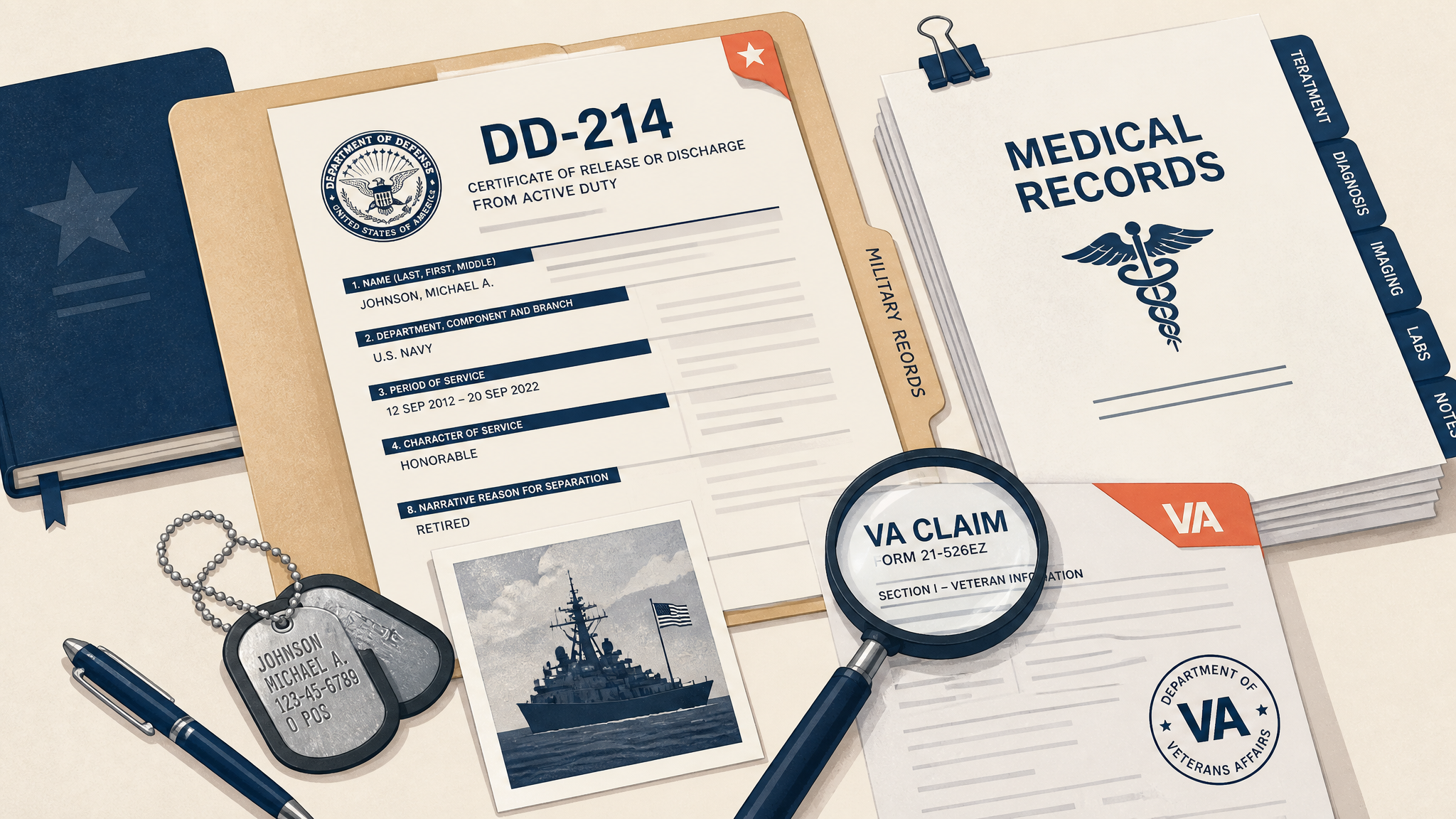
FIG. 01 - Gather your paperwork
Right away: call to schedule
For burial in a VA national cemetery, call the National Cemetery Scheduling Office at 1-800-535-1117 to arrange the gravesite and military honors.
- 2
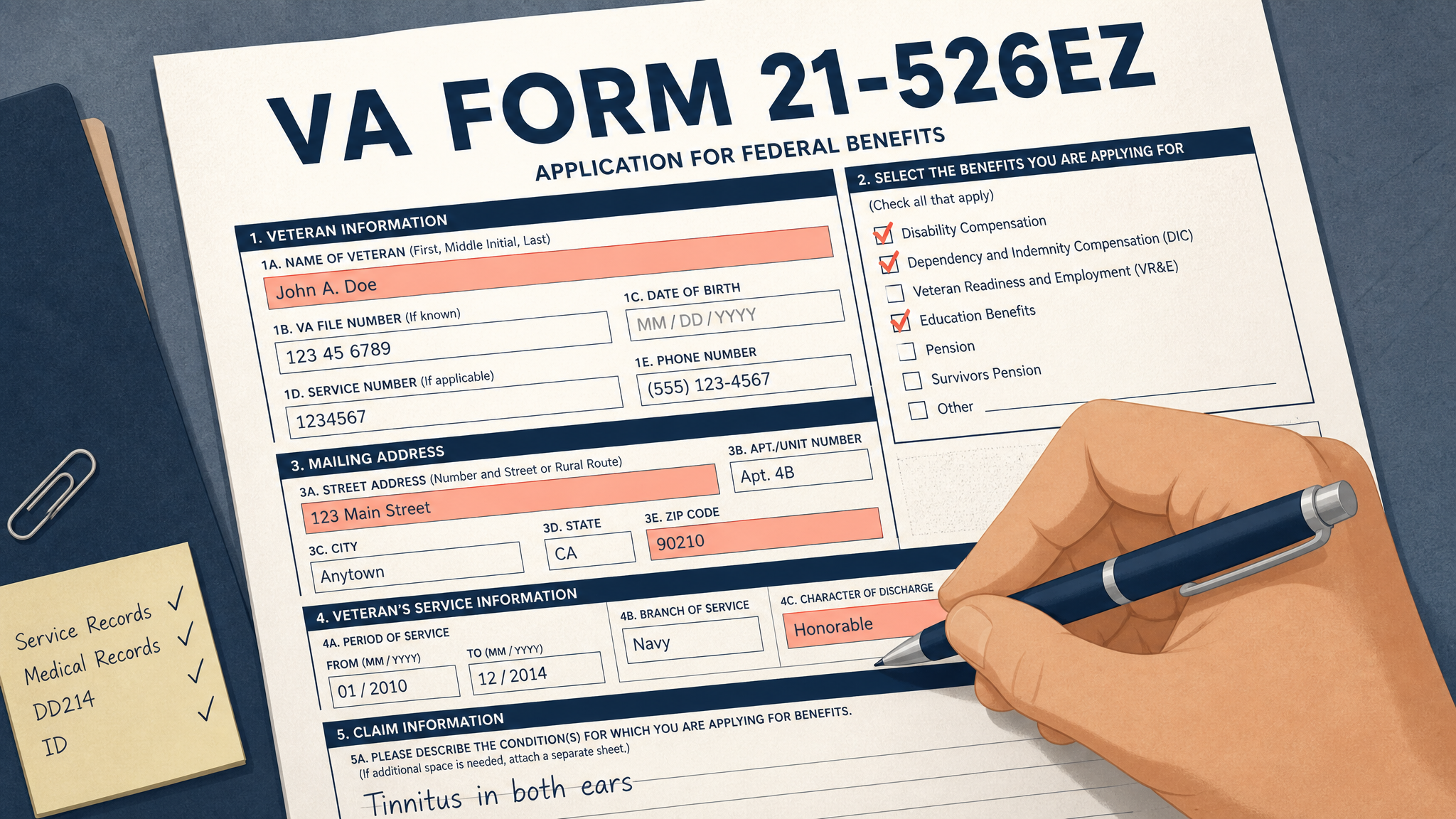
FIG. 02 - Fill out the form
Keep every receipt
The family generally pays first and is reimbursed. Save the funeral home, burial, and transportation invoices - you will claim them back.
- 3
FIG. 03 - File the claim
File VA Form 21P-530EZ
This claims the burial allowance. For a non-service-connected death, file within 2 years of the burial. For a service-connected death, there is no deadline.
- 4
FIG. 04 - After you file
Request a headstone or medallion
Use VA Form 40-1330 for a government headstone or marker, or VA Form 40-1330M for a bronze medallion on a privately purchased marker.
You may not need to file at all: if a surviving spouse is already on the veteran's VA records, the VA often pays the burial allowance automatically - no separate claim required.
Your family’s complete benefit picture
$2,000
the burial allowance for a service-connected death, with no time limit to file - on top of a free gravesite, headstone, and burial flag at a national cemetery.

Two ways to move forward — both free
Not sure if this applies to you?
Ask our free assistant a few plain questions and get an honest read on what you and your family may qualify for, at no cost. It takes just a few minutes, and there is no sign-up and no obligation of any kind. You will get a clear, plain-language picture of where you stand and what might be worth filing. And if you would rather talk to a real person, an accredited agent is only a message away.
Have a question? Get free information
Ask a question, learn what you may be owed, or find out where you stand. Confidential, free, and no obligation to go any further.
Ready to hire us? Register
Decided you want us to work your claim? Registering is free — we match you with an accredited advocate and get you started. We cannot begin until you sign VA Form 21-22a, and fees, if any, are always disclosed up front.
Do not miss the deadline
Some claims have a 2-year window
For a non-service-connected death, file within 2 years of the burial to claim the burial and plot allowances. For a service-connected death, there is no deadline.
Remember the key rule: the family usually pays first and claims the money back on VA Form 21P-530EZ.
You may not need to file
If a surviving spouse is already on the veteran’s VA records, the VA often pays the burial allowance automatically.
Free at a national cemetery
The gravesite, opening and closing, a government headstone, a burial flag, and perpetual care cost the family nothing.
A clear path forward
Your step-by-step action plan
No rush and no pressure - but a little order helps. Applying is always free.
FIG. 01 - Gather your paperwork
Right away
Contact the national cemetery
Call the VA National Cemetery Scheduling Office at 1-800-535-1117 to arrange burial and honors.
FIG. 02 - Fill out the form
Keep receipts
Save every funeral and burial cost
You will claim these back - the family generally pays first and is reimbursed.
FIG. 03 - File the claim
File the form
Submit VA Form 21P-530EZ
Claim the burial allowance; use VA Form 40-1330 to request a headstone or marker.
Who to call & where to go
These are free, official VA lines. Have your Social Security number handy when you call.
National Cemetery Scheduling Office
Schedule a burial in a VA national cemetery.
MyVA411 - Main VA Line
Not sure who to call? Start here. One number for anything VA - they route you to the right office.
Rather have us handle it?
No phone tag, no hold music. Call our office and a real, VA-accredited person walks you through it - start to finish.
702-992-4883Not sure where to start?
For burial costs, file VA Form 21P-530EZ. For a headstone or marker, use VA Form 40-1330. We can help you plan and gather what you need.
More support for survivors & family
These often go hand in hand - tap any card to learn more.






Free information — get a free benefit review
Tell us how to reach you and an accredited team member will help you understand this benefit and claim everything you have earned. No cost, no obligation.
Ready to hire us? Register with us
For veterans who’ve decided they want us on their claim — registering is free too, and it does not make you our client or obligate you to anything. Here is exactly how it works:
- You register. This simply starts the conversation — you are not our client yet, and you owe us nothing.
- You sign and return VA Form 21-22a. It appoints us as your accredited representative and gives us access to your VA file.
- Once we have your signed 21-22a and access to your case, we verify everything is in order.
It involves the registration form and signing VA Form 21-22a — by law we can’t accept your claim, work on it, or contact the VA for you until that power of attorney is signed. You decide whether to move forward.
Answers, in plain language
Common questions about Burial & Memorial Benefits
What is Burial & Memorial Benefits?
Help with burial in a VA national cemetery, funeral costs, headstones and markers, memorial items, and bereavement counseling. When a veteran passes, the last thing a grieving family should have to wrestle with is a funeral bill. The VA quietly stands behind that moment - a free gravesite and government headstone, a burial flag, and money back toward the cost of the funeral. This page shows exactly what your family can claim, and the one rule that trips people up: you pay first, then get reimbursed.
Who qualifies for Burial & Memorial Benefits?
This benefit is generally for: Surviving spouse, Dependent child, Surviving parent. Eligibility for burial in a VA national cemetery for the veteran and, in many cases, a spouse and dependent children A government-furnished headstone, marker, or medallion
How much does Burial & Memorial Benefits pay?
Service-connected death: a $2,000 allowance, with no deadline to file. Non-service-connected death: a $1,002 burial allowance, plus a $1,002 plot allowance in many cases, for deaths on or after Oct 1, 2025. File within 2 years of the burial. These figures adjust every year with the COLA - confirm the current amounts on va.gov. If the VA does not furnish a headstone or marker, there is a reimbursement allowance of $441 for deaths on or after Oct 1, 2025.
How do I apply for Burial & Memorial Benefits?
For burial costs, file VA Form 21P-530EZ. For a headstone or marker, use VA Form 40-1330. We can help you plan and gather what you need.
What does it cost to get help with Burial & Memorial Benefits, and are you VA-accredited?
It is free to talk with us, and no one may charge you to file a first-time VA claim. The Aging Veteran is led by Albert L. Thombs Jr., a VA-accredited claims agent (accreditation #45147) and disabled veteran; any appeal work is handled on a no-fee-unless-you-win basis. We are an independent accredited practice and are not affiliated with, or endorsed by, the U.S. Department of Veterans Affairs.