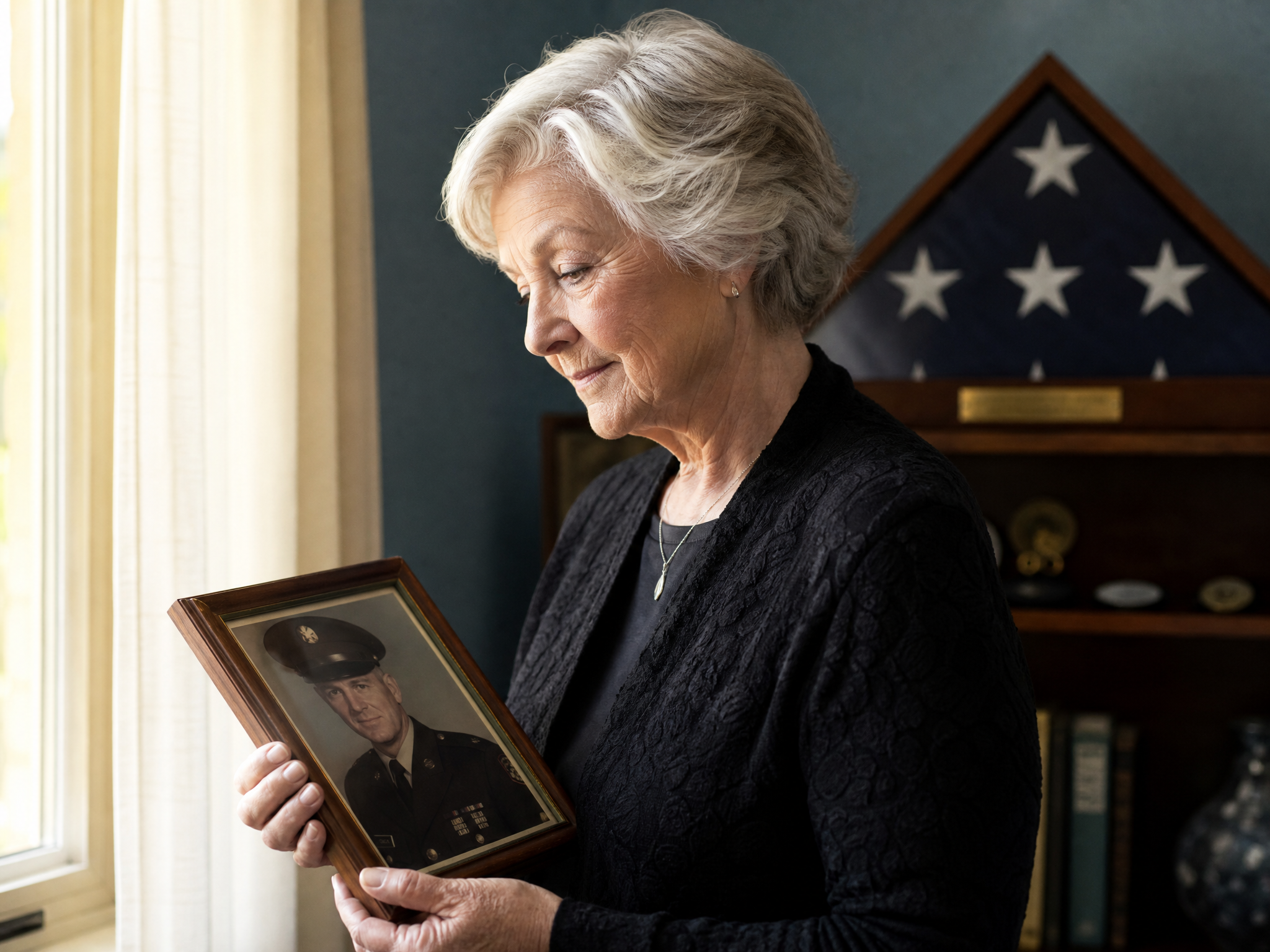
Survivors
Life Insurance for Family Members
Family Servicemembers' Group Life Insurance (FSGLI) covers a service member's spouse and children while the member serves, and every VA life insurance beneficiary is entitled to free professional financial counseling and free will preparation after a death.

Who this is for
Life insurance is the one benefit a family only thinks about on the worst day of their life - and by then, the window to fix a gap has usually closed. While the veteran is still serving, a spouse can carry up to $100,000 of government life insurance at rates a private insurer will not touch, and every dependent child is covered for $10,000 automatically, for free, whether the family signs up or not. After a death, the beneficiary gets something almost nobody claims: a professional financial planner and a legal will, both paid for by the VA.
In plain language
What Life Insurance for Family Members covers
- Spouse coverage up to $100,000 in $10,000 increments, capped at the member's own SGLI amount
- Automatic $10,000 coverage for every dependent child, free of charge - it cannot be declined
- Age-based spouse premiums with no medical underwriting while the member is serving
- A 120-day conversion window to an individual policy after separation or divorce, with no health questions
- Free Beneficiary Financial Counseling Service and free online will preparation for two years after a claim settles
- The full family of VA programs that may apply: SGLI, VGLI, VALife, VMLI, and pre-1967 government policies

Family SGLI & VGLI for SurvivorsOfficial video - U.S. Dept of Veterans Affairs
5 things most veterans aren't aware of
These apply to nearly every VA claim - and they change how much you get and when.
Your filing date sets your back pay
Benefits are generally paid back to the day you file - not the day you are approved. Filing an intent to file today can protect months, even years, of retroactive pay.
One condition can trigger others (secondary claims)
A service-connected condition that causes another - like sleep apnea from PTSD, or a bad knee from a bad hip - can be rated on its own. Each secondary condition adds to your rating.
A medical nexus is what wins the claim
The VA needs a documented link between your condition and your service. A clear nexus opinion is often the difference between an approval and a denial.
Accredited help is free to file an initial claim
By law, an accredited agent cannot charge a fee to prepare and file your original claim. If someone asks for money up front to file, that is a red flag.
A denial is not the end of the road
You have three appeal lanes - Higher-Level Review, a Supplemental Claim with new evidence, and the Board of Veterans Appeals. Many denials are overturned on review.
$100,000
Maximum FSGLI spouse coverage, in $10,000 increments
Free
Every dependent child is insured for $10,000 at no cost
120 days
Window to convert spouse coverage with no health questions
The full picture
Everything you need to know
Nothing hidden behind a click, and nothing you have to go looking for on another website. Here is the whole story in plain language - the facts and the figures first - so you can decide what fits your situation.
Key facts & current figures
- FSGLI covers the spouse for up to $100,000 in $10,000 increments - but never more than the service member's own SGLI amount.
- Every dependent child is insured for $10,000 at no cost. You cannot decline it, reduce it, or be charged for it.
- Spouse premiums are set by the spouse's age, not health: $0.40 per $10,000 per month under 35, rising to $4.00 per $10,000 at age 60 and over.
- You have a 120-day window after separation, divorce, or the end of SGLI to convert spouse coverage to an individual policy with no proof of good health required.
- Beneficiaries get free financial counseling and a free online will through the Beneficiary Financial Counseling Service - available for two years after the claim is settled, at no cost, with no sales pitch.
- A death on active duty also triggers a separate one-time, tax-free $100,000 death gratuity from the military - and it is still payable if the death happens within 120 days of discharge.
- Claim any SGLI, VGLI, FSGLI, or TSGLI benefit on SGLV 8283; claim older VA policies (NSLI, S-DVI) on VA Form 29-4125.
General figures, current as of December 2025 and reviewed each year. Your exact amount depends on your situation - always confirm on va.gov.
FSGLI spouse coverage: what it costs and what it caps at
- A spouse can be insured for up to $100,000, chosen in $10,000 increments, but the spouse's amount can never exceed the service member's own SGLI coverage. If the member drops to $200,000, the spouse cap does not change; if the member drops below $100,000, the spouse amount comes down with it.
- Premiums are set purely by the spouse's age band, per $10,000 of coverage per month: under 35 = $0.40 · 35-39 = $0.47 · 40-44 = $0.62 · 45-49 = $0.85 · 50-54 = $1.35 · 55-59 = $2.30 · 60 and over = $4.00.
- Run the math before you assume it is expensive: a 42-year-old spouse carrying the full $100,000 pays $6.20 a month - ten times the $10,000 rate of $0.62. There is no medical exam and no health questionnaire while the member is serving.
- Premiums come out of the service member's pay, so a lapse is almost always an enrollment problem, not a payment problem. Check the coverage line on the LES at least once a year.
Child coverage is free, automatic, and cannot be refused
- Every dependent child of a service member is insured for $10,000 at no cost. There is no premium, no application, and no underwriting.
- You cannot decline it, reduce it, or convert it, and no one can be talked into "upgrading" it. If someone offers to sell you a better version of this, they are selling you a commercial product.
- Coverage applies to the member's dependent children as defined by the program - including stepchildren and adopted children who are dependents of the member.
- Because it is automatic, families routinely forget it exists. If a dependent child dies while the member is serving, file the claim - this $10,000 goes unclaimed more often than any other family benefit.
Enrollment: DEERS, SOES, and the mil-to-mil gap
- A civilian spouse is generally enrolled automatically once the marriage is recorded in DEERS at the maximum amount allowed, with premiums starting from the pay account.
- Coverage is managed online through the Servicemembers' Group Life Insurance Online Enrollment System (SOES) on milConnect - that is where you raise, lower, or cancel spouse coverage.
- Military-to-military marriages are the trap. Since January 2, 2013, a member married to another service member is eligible for spouse coverage, but it is not automatic - it has to be elected in SOES. Families discover this after a death.
- Check the election after every marriage, divorce, birth, PCS, or change in the member's own SGLI amount. The system does not verify itself.
The 120-day conversion window nobody uses
- When SGLI ends - separation, retirement, or the member's coverage terminating - spouse FSGLI coverage can be converted to an individual commercial policy within 120 days.
- The conversion requires no proof of good health. That is the entire value: a spouse with diabetes, cancer history, or a cardiac event can move to a permanent policy that a private underwriter would decline or price out of reach.
- Divorce triggers the same window. A former spouse losing FSGLI has the same 120 days to convert, and this is frequently the only insurable moment they will get.
- Miss the window and it is gone - there is no reinstatement and no good-cause exception. Put the date on a calendar the day the separation orders or the divorce decree is signed.
Filing a claim after a death - the exact forms
- For SGLI, VGLI, FSGLI, or TSGLI, file SGLV 8283 (Claim for Death Benefits) with a certified copy of the death certificate. Mail it to the VA Insurance Center, P.O. Box 7208, Philadelphia, PA 19101, or fax 877-832-4943. Questions go to OSGLI at 800-419-1473 or [email protected].
- For older VA-administered policies - NSLI, S-DVI, and the pre-1967 programs - use VA Form 29-4125 (Claim for One Sum Payment) and call the VA Insurance Center at 800-669-8477.
- A death on active duty also triggers a separate military payment: the Death Gratuity, a one-time, tax-free $100,000 to the designated beneficiaries. It is also payable when the death occurs within 120 days of release or discharge, and it is paid in addition to any insurance.
- File every policy separately. Insurance proceeds are not coordinated with DIC, burial benefits, or the death gratuity - claiming one does not claim the others, and one does not reduce another.
The free benefit almost no beneficiary claims
- Every beneficiary of an SGLI, VGLI, FSGLI, or TSGLI claim is entitled to the Beneficiary Financial Counseling Service (BFCS), delivered through FinancialPoint at no cost - and the counselors cannot sell you anything.
- There are two levels: Level 1 puts you on the phone with a professional counselor around the clock for questions about taxes, debt, and what to do with a lump sum. Level 2 produces a full written financial plan built around your actual situation.
- The service also includes free online will preparation through EstateGuidance® - a real, valid will at no charge, which matters because a surviving spouse's own estate plan is usually out of date the moment the veteran dies.
- It stays available for two years after the claim is settled. Register with Organization Web ID BFCSVA and your claim number, or call 888-243-7351 (SGLI/FSGLI/VGLI), 800-428-3416 (TSGLI), or email [email protected]. Do not pay an advisor for what is already paid for.
Your family’s complete benefit picture
$6.20/mo
What a 42-year-old spouse pays for the full $100,000 of FSGLI - no medical exam, no health questionnaire

Two ways to move forward — both free
Not sure if this applies to you?
Ask our free assistant a few plain questions and get an honest read on what you and your family may qualify for, at no cost. It takes just a few minutes, and there is no sign-up and no obligation of any kind. You will get a clear, plain-language picture of where you stand and what might be worth filing. And if you would rather talk to a real person, an accredited agent is only a message away.
Have a question? Get free information
Ask a question, learn what you may be owed, or find out where you stand. Confidential, free, and no obligation to go any further.
Ready to hire us? Register
Decided you want us to work your claim? Registering is free — we match you with an accredited advocate and get you started. We cannot begin until you sign VA Form 21-22a, and fees, if any, are always disclosed up front.
Do not miss this
Every beneficiary gets a financial planner and a will - already paid for
Anyone who receives an SGLI, VGLI, FSGLI, or TSGLI death benefit is entitled to the Beneficiary Financial Counseling Service through FinancialPoint at no cost, and the counselors cannot sell you anything. Level 1 puts a professional on the phone around the clock; Level 2 produces a full written financial plan.
It also includes free online will preparation through EstateGuidance®, and it stays open for two years after the claim settles. Register with Organization Web ID BFCSVA and your claim number, or call 888-243-7351.
Military-to-military is not automatic
A member married to another service member has to elect spouse coverage in SOES. Families find this out after a death.
The death gratuity is separate
A death on active duty triggers a one-time tax-free $100,000 payment on top of any insurance - and it still applies within 120 days of discharge.
A clear path forward
Your step-by-step action plan
No rush and no pressure - but a little order helps. Applying is always free.
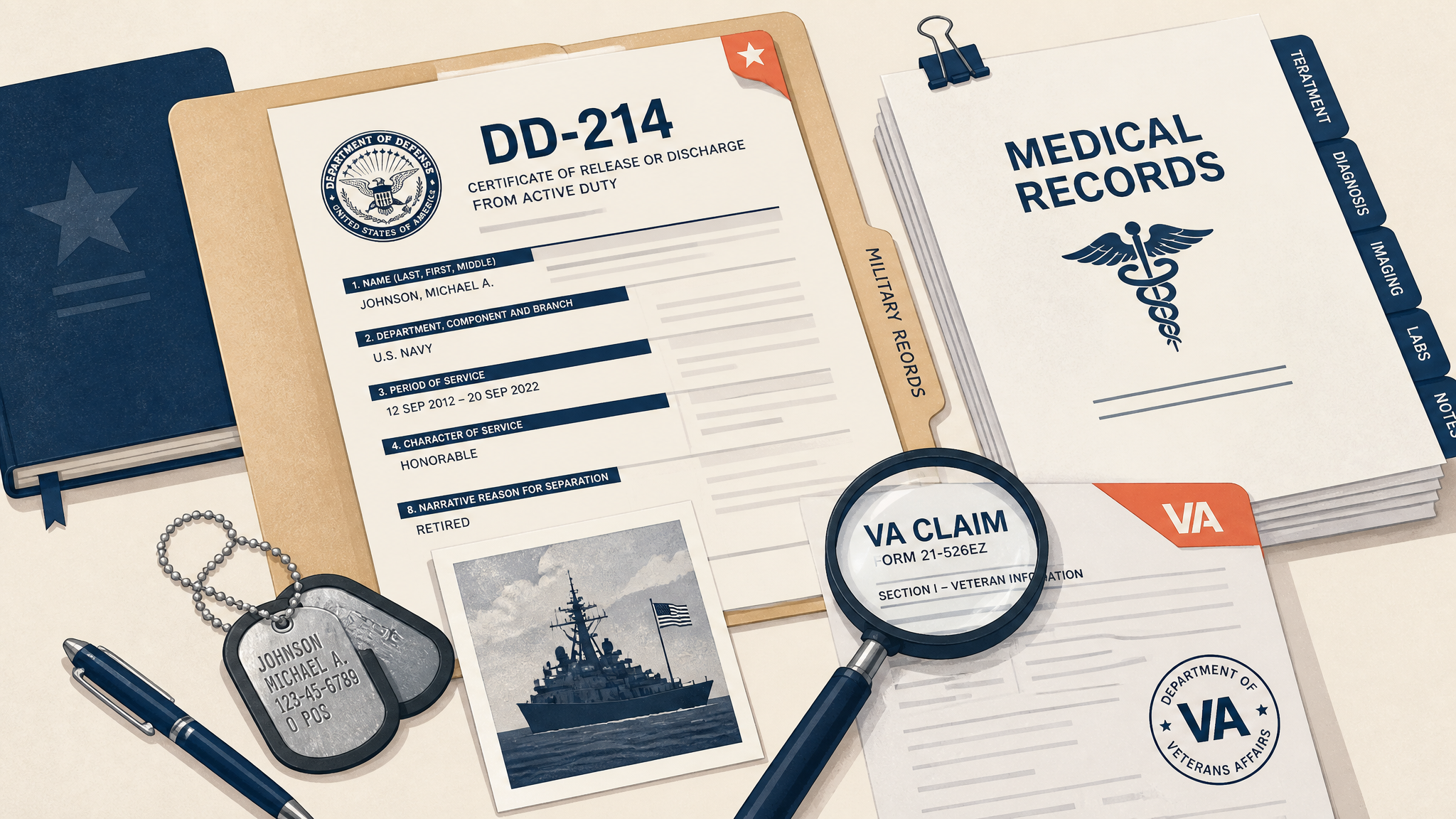
FIG. 01 - Gather your paperwork
While serving
Verify the election in SOES
Log into milConnect and confirm the spouse amount and every dependent child. Check it again after any marriage, divorce, birth, or change to the member’s own SGLI.
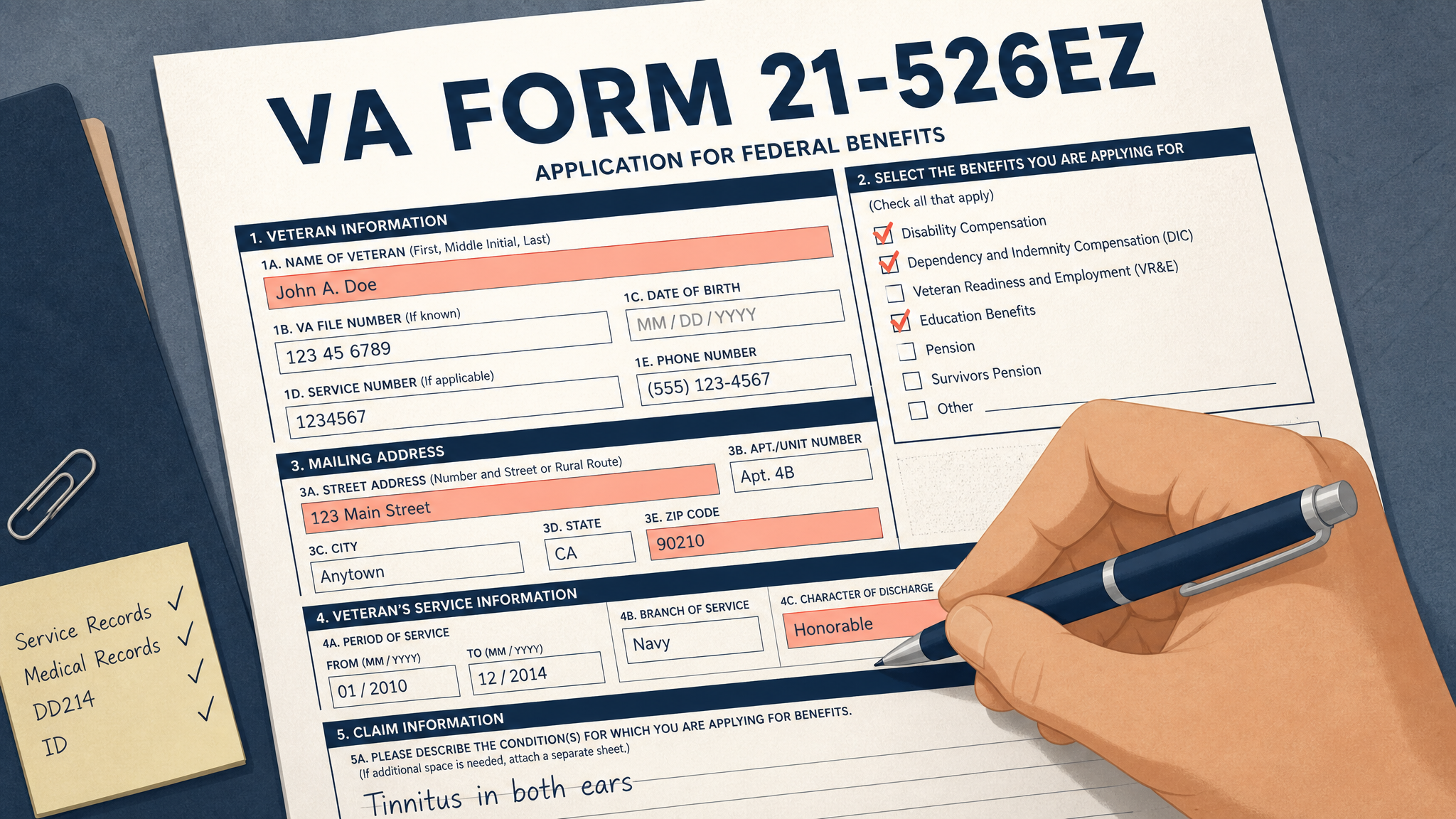
FIG. 02 - Fill out the form
At separation or divorce
Use the 120-day conversion window
Spouse coverage converts to an individual policy with no proof of good health. Miss the 120 days and there is no reinstatement and no good-cause exception.
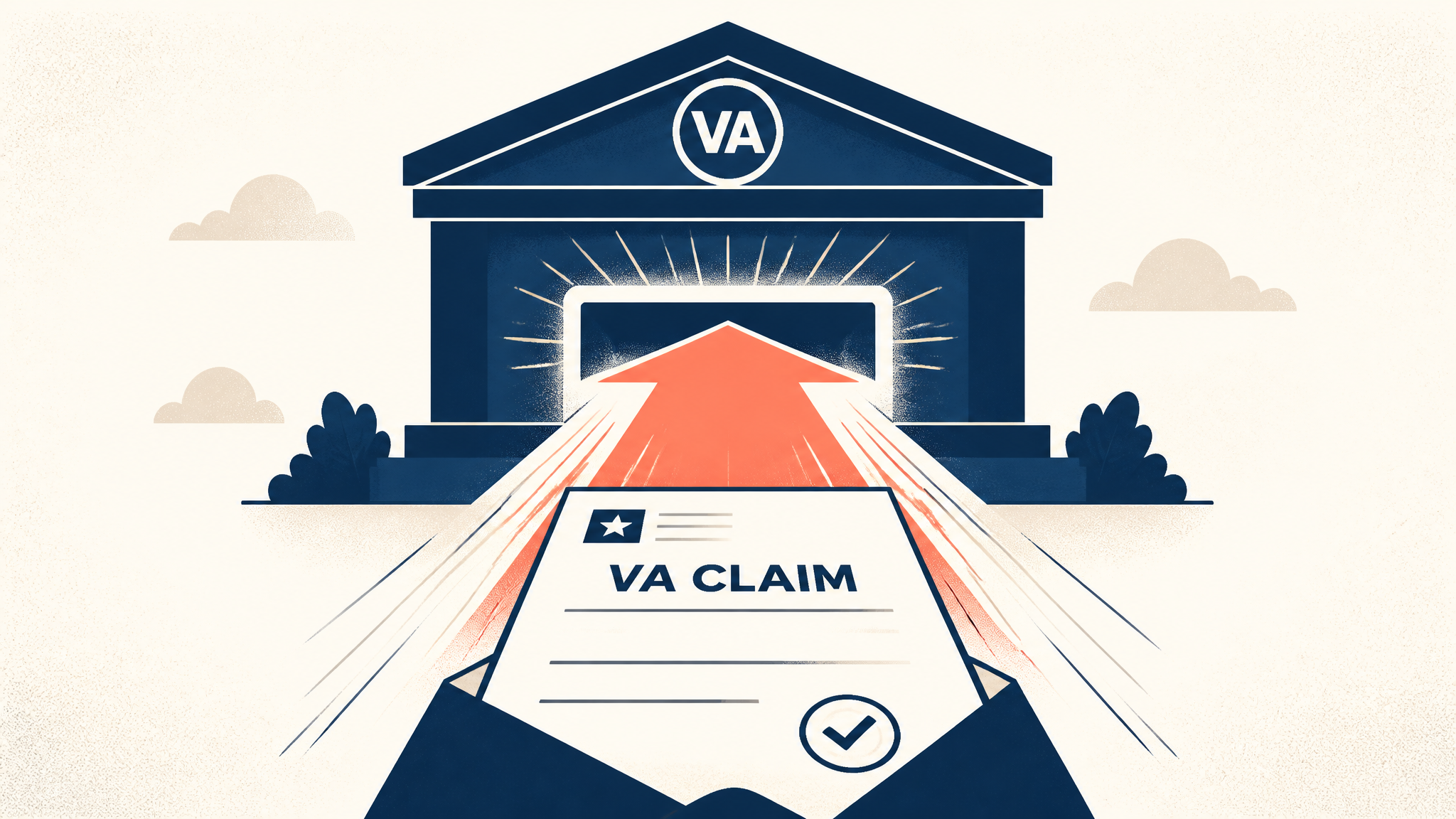
FIG. 03 - File the claim
After a death
File SGLV 8283 with a certified death certificate
That form covers SGLI, VGLI, FSGLI, and TSGLI. Older VA policies like NSLI and S-DVI use VA Form 29-4125 - call the VA Insurance Center at 800-669-8477.
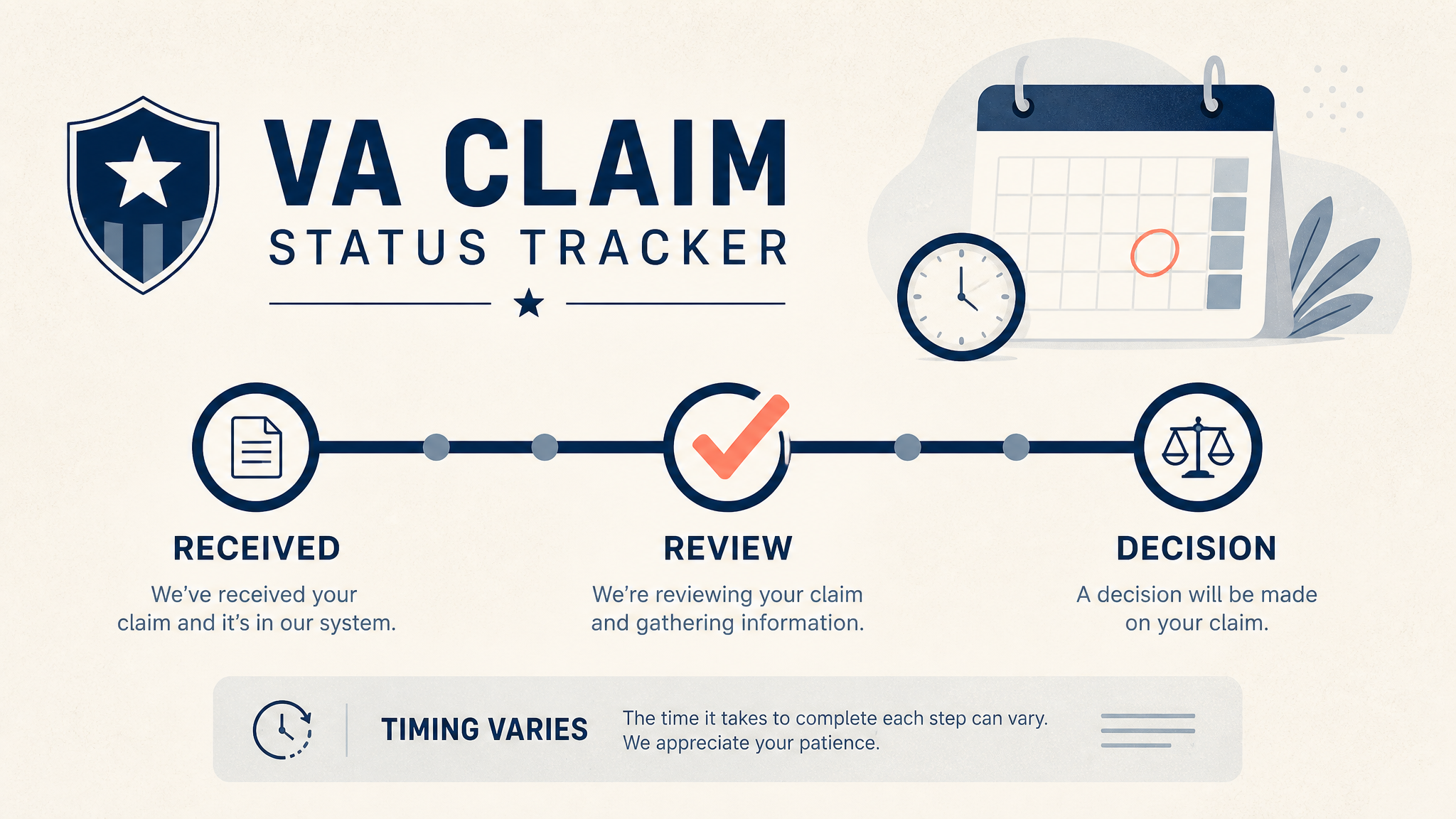
FIG. 04 - After you file
Before hiring anyone
Claim the free counseling and will
Register with FinancialPoint using Web ID BFCSVA, or call 888-243-7351. Do not pay a private advisor for a plan the VA already covers.
Who to call & where to go
These are free, official VA lines. Have your Social Security number handy when you call.
VA Insurance Center
VGLI, S-DVI/VALife, and VMLI life-insurance questions.
MyVA411 - Main VA Line
Not sure who to call? Start here. One number for anything VA - they route you to the right office.
Rather have us handle it?
No phone tag, no hold music. Call our office and a real, VA-accredited person walks you through it - start to finish.
702-992-4883Not sure where to start?
While the member is serving, manage spouse coverage through SOES on milConnect - civilian spouses are usually auto-enrolled from DEERS, but a military-to-military spouse must be enrolled manually. After a death, file SGLV 8283 with a certified death certificate for SGLI, VGLI, FSGLI, or TSGLI (VA Insurance Center, P.O. Box 7208, Philadelphia, PA 19101, or fax 877-832-4943; questions to OSGLI at 800-419-1473). For older VA policies use VA Form 29-4125 and call the VA Insurance Center at 800-669-8477. To use the free counseling and will service, register with FinancialPoint using Organization Web ID BFCSVA and your claim number, or call 888-243-7351.
More support for survivors & family
These often go hand in hand - tap any card to learn more.





Free information — get a free benefit review
Tell us how to reach you and an accredited team member will help you understand this benefit and claim everything you have earned. No cost, no obligation.
Ready to hire us? Register with us
For veterans who’ve decided they want us on their claim — registering is free too, and it does not make you our client or obligate you to anything. Here is exactly how it works:
- You register. This simply starts the conversation — you are not our client yet, and you owe us nothing.
- You sign and return VA Form 21-22a. It appoints us as your accredited representative and gives us access to your VA file.
- Once we have your signed 21-22a and access to your case, we verify everything is in order.
It involves the registration form and signing VA Form 21-22a — by law we can’t accept your claim, work on it, or contact the VA for you until that power of attorney is signed. You decide whether to move forward.
Official VA links
Answers, in plain language
Common questions about Life Insurance for Family Members
What is Life Insurance for Family Members?
Family Servicemembers' Group Life Insurance (FSGLI) covers a service member's spouse and children while the member serves, and every VA life insurance beneficiary is entitled to free professional financial counseling and free will preparation after a death.
Who qualifies for Life Insurance for Family Members?
This benefit is generally for: Spouse, Dependent child, Surviving spouse, Surviving child. Spouse coverage up to $100,000 in $10,000 increments, capped at the member's own SGLI amount Automatic $10,000 coverage for every dependent child, free of charge - it cannot be declined
How much does Life Insurance for Family Members pay?
A spouse can be insured for up to $100,000, chosen in $10,000 increments, but the spouse's amount can never exceed the service member's own SGLI coverage. If the member drops to $200,000, the spouse cap does not change; if the member drops below $100,000, the spouse amount comes down with it. Premiums are set purely by the spouse's age band, per $10,000 of coverage per month: under 35 = $0.40 · 35-39 = $0.47 · 40-44 = $0.62 · 45-49 = $0.85 · 50-54 = $1.35 · 55-59 = $2.30 · 60 and over = $4.00.
How do I apply for Life Insurance for Family Members?
While the member is serving, manage spouse coverage through SOES on milConnect - civilian spouses are usually auto-enrolled from DEERS, but a military-to-military spouse must be enrolled manually. After a death, file SGLV 8283 with a certified death certificate for SGLI, VGLI, FSGLI, or TSGLI (VA Insurance Center, P.O. Box 7208, Philadelphia, PA 19101, or fax 877-832-4943; questions to OSGLI at 800-419-1473). For older VA policies use VA Form 29-4125 and call the VA Insurance Center at 800-669-8477.
What does it cost to get help with Life Insurance for Family Members, and are you VA-accredited?
The two mistakes we see most often are both about timing. A spouse leaves the military and lets the 120-day conversion window expire, then tries to buy private coverage after a diagnosis and finds out it is either unaffordable or unavailable. And a surviving spouse settles the insurance claim, never registers for the free financial counseling, and pays a private advisor thousands of dollars for a plan the VA would have written for nothing. It is free to talk with us, and no one may charge you to file a first-time VA claim. The Aging Veteran is led by Albert L. Thombs Jr., a VA-accredited claims agent (accreditation #45147) and disabled veteran; any appeal work is handled on a no-fee-unless-you-win basis.