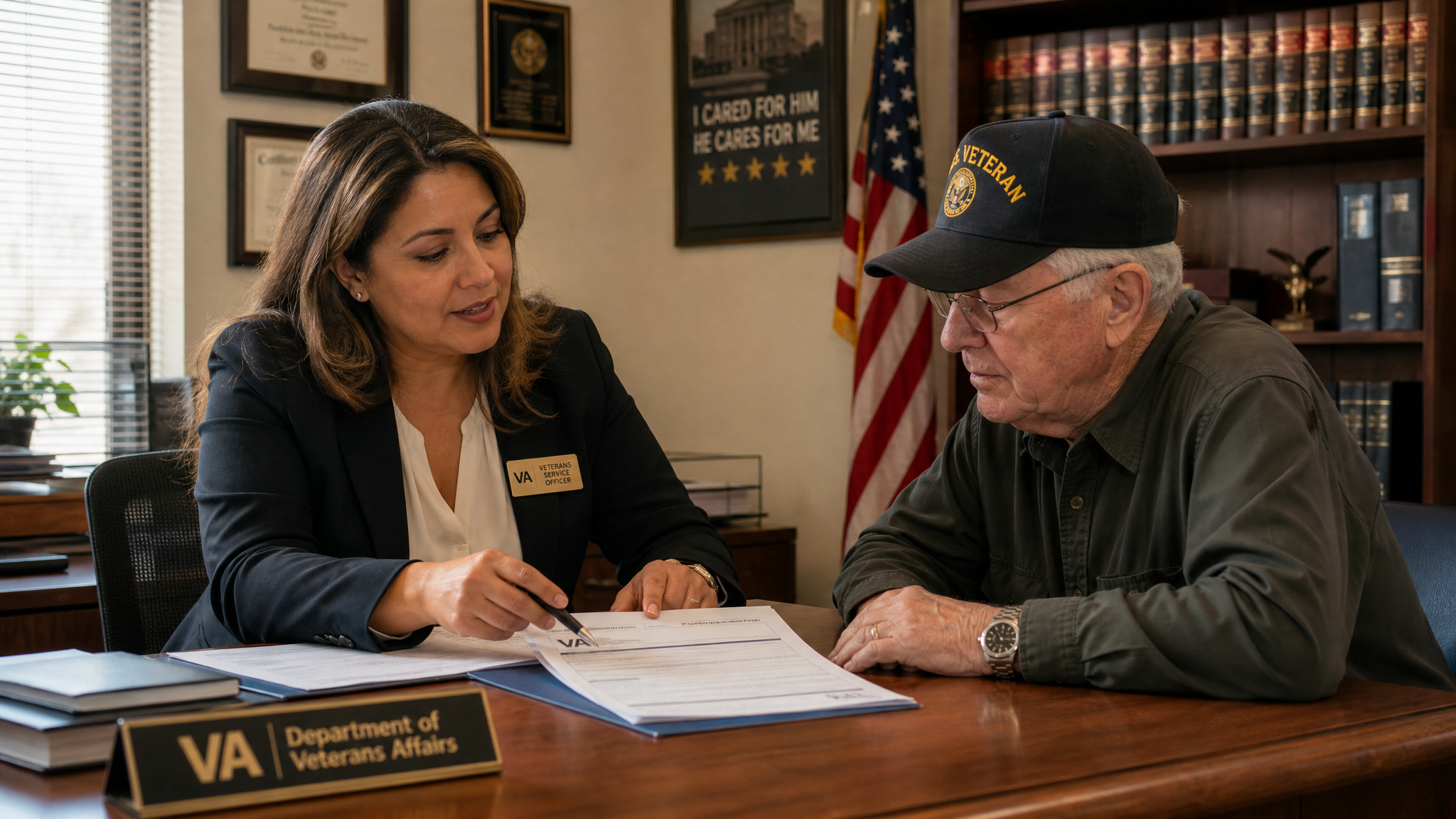
A less-than-honorable discharge may not be the end of VA benefits. Even years later, you may still pursue an upgrade or ask VA for a Character of Discharge review.
If you have carried a less-than-honorable discharge for years, you are not alone. Many veterans in their fifties, sixties, and beyond were told nothing, assumed it was over, or decided they had waited too long. It is not too late to look at what you may still qualify for.
A discharge that is not Honorable can block VA benefits you earned, but it is not always the final word. No age limit applies to asking questions, starting a first claim, or exploring whether your service can still count for benefits.
Why “bad paper” may not be the end
A bad discharge is not always final. In many cases, a veteran can ask the military to upgrade the character of discharge or correct the record. And even without an upgrade, the VA can make its own separate Character of Discharge review.
That matters because many veterans talk themselves out of help before they ever ask. The biggest mistake is never applying, especially when the VA may still decide your service qualifies you for health care or compensation, depending on your situation and the VA’s final decision.
Upgrade request vs. VA Character of Discharge review
These are two separate paths. A discharge upgrade asks your military branch to change the record. A VA Character of Discharge decision asks the VA whether your service can still qualify you for benefits even if the discharge itself does not change.
You do not always have to wait for one before looking at the other. Ask the VA while an upgrade is pending, because a Character of Discharge determination may unlock health care and disability compensation sooner, depending on the facts of your case and the VA’s decision.
- A discharge upgrade goes through a military review board.
- A Character of Discharge review goes through the VA.
- Either path may help, and some veterans pursue both.
Which board to use and which form applies
The right board depends on time and circumstances. If it has been less than 15 years since discharge, and you were not separated by a general court-martial, you generally apply to your branch’s Discharge Review Board on DD Form 293.
If it has been more than 15 years, if a general court-martial caused the discharge, or if the DRB already denied your request, you generally apply to the Board for Correction of Military Records or Board for Correction of Naval Records on DD Form 149.
- DRB + DD Form 293: usually for discharges under 15 years old.
- BCMR/BCNR + DD Form 149: usually for cases over 15 years, after a general court-martial, or after a DRB denial.
- No filing fee: there is no cost to apply.
If you are unsure where to begin, start with the free discharge-upgrade tool at va.gov. It asks a few questions and points you to the right board and form.
Old discharge? You still may have a path
Old cases are rarely too old to challenge. Many veterans assume they missed their chance because decades have passed. That belief stops people from benefits they may still be able to pursue today.
For the correction board, the usual three-year filing deadline can be waived in the interest of justice. In plain English, that means an older discharge does not automatically shut the door.
Waiting years does not end everything. There is no fee to apply, and there is no age cutoff for asking the VA to review whether your service still qualifies for benefits.
PTSD, TBI, and MST now get special consideration
Trauma-related conduct must be weighed carefully. Special liberal consideration rules require review boards to consider whether PTSD, TBI, or military sexual trauma helped explain the conduct behind a discharge.
These protections are often linked to the Hagel and Kurta memos, and our site also notes the Wilkie memo in this area. The point is simple: boards are required to give real weight to trauma-related evidence, and thousands of upgrades have been granted on those grounds.
If you have lived for years with guilt, shame, or the belief that your record speaks for itself, this is important. The conduct is not the whole story when service-connected trauma may have been driving it.
What helps build a stronger application
Evidence that connects the dots matters. The goal is to show what happened, what condition may have been present, and how that condition relates to the conduct behind the discharge.
- Your DD-214
- A personal statement in your own words
- Service records
- VA and medical records
- Buddy statements from people who knew what happened
- Doctor statements linking PTSD, TBI, or MST to the conduct
Keep your statement clear and honest. Tell the before-and-after story: what you were like before the event or symptoms, what changed during service, and how that change affected your behavior and discharge.
How to get started without feeling overwhelmed
Start with one simple step. Go to the free tool at va.gov to identify the right path. Then gather the basic records you already have and add more as you can.
- Use the va.gov discharge-upgrade tool.
- Choose the right board: DRB or BCMR/BCNR.
- File the correct form: DD Form 293 or DD Form 149.
- Add your DD-214, statement, and supporting records.
- Ask the VA for a Character of Discharge review even if the upgrade is still pending.
You may also be able to get help from a Veterans Service Organization or a veterans law attorney at no upfront cost. No one can charge a veteran to file an initial claim.
Why this matters now
Knowing your options protects your future. For an aging veteran, this is not just about paperwork. It is about possible access to health care, possible disability compensation, and taking steps that may help protect your family, depending on your situation and the VA’s final decision.
Please do not talk yourself out of it because you are older, because nobody explained it years ago, or because you think the record can never change. You are not out of the game.
This article is general educational information only. We are not the VA, The Aging Veteran is not part of the federal government, and this is not legal, medical, or financial advice. For the full detail on this benefit, visit our discharge upgrades page.
When you are ready, free help is available from Albert L. Thombs Jr., a VA-accredited claims agent with accreditation #45147, and his team. You can call 702-992-4883 with no pressure and no obligation.
A quick, honest note
This article is general information, not legal advice, and every rate or example is an estimate. Your own claim depends on your records and the facts the VA finds. Albert L. Thombs Jr. is a VA-accredited claims agent (accreditation #45147). If you would like a real person to look at your situation, you are always welcome to reach out - there is no cost to ask.