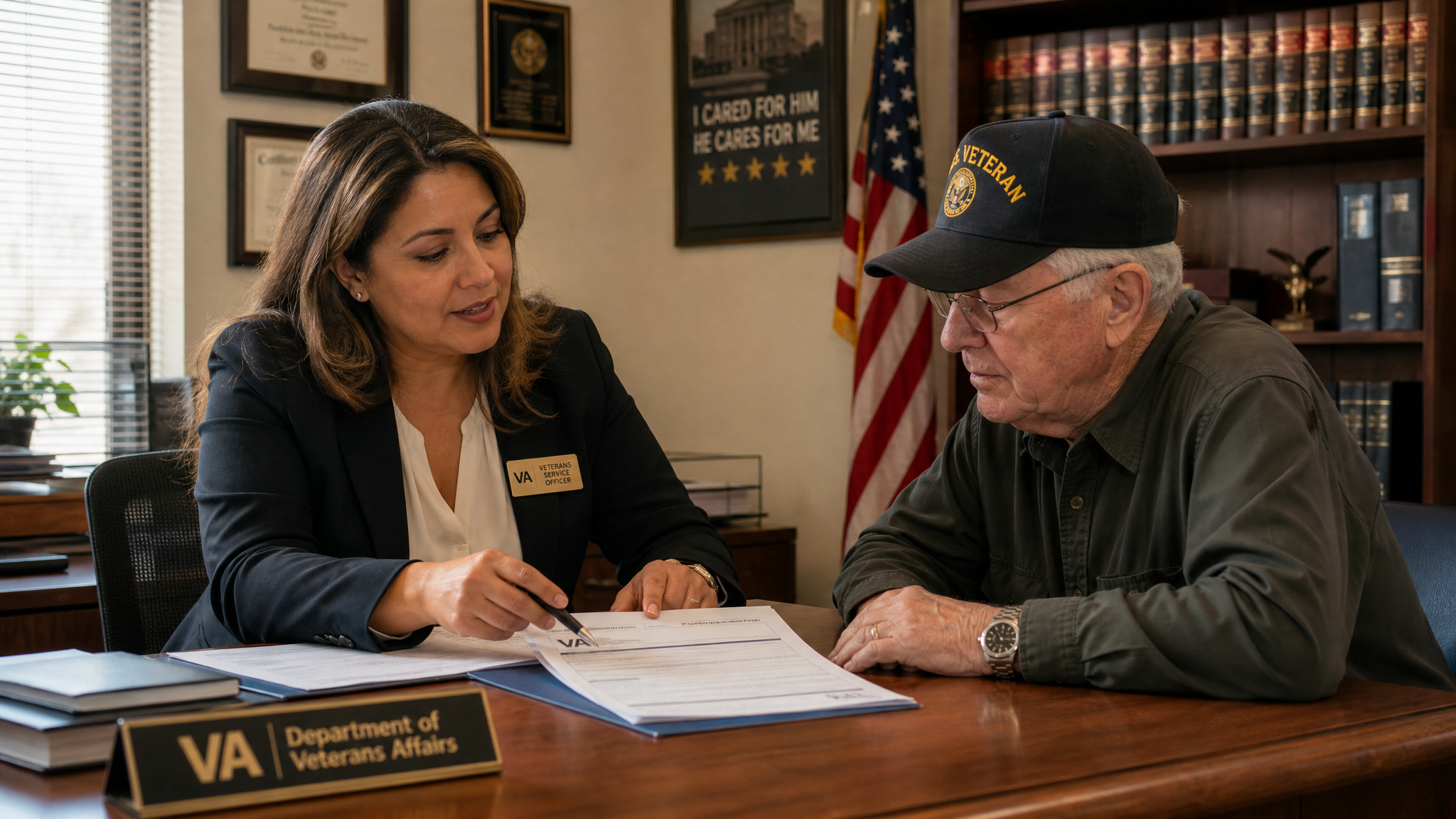

If you are 45 or older and think you missed your chance, do not count yourself out. DEA and Fry benefits may still help protect your family’s future.
If you are in your forties, fifties, sixties, or beyond, it is easy to assume the window closed years ago. It is not too late to learn what may help your family, and knowing what you are entitled to now can help you protect your health, your family, and your benefits.
Many veterans were never told about these programs. Others waited, got discouraged, or assumed they were out of the game. If that sounds familiar, do not talk yourself out of looking again.
What these education benefits may do for your family
DEA and Fry may help pay for school or training for eligible spouses and children. These programs are for family members, not the veteran using the benefit for himself.
Dependents' Educational Assistance, also called Chapter 35, helps certain spouses and children of permanently disabled or deceased veterans pay for education and training. The Fry Scholarship supports children and spouses of service members who died in the line of duty on or after Sept 11, 2001.
- Degree programs
- Certificate programs
- Apprenticeships
- On-the-job training
- Educational counseling
- Special restorative and vocational training for some survivors with a physical or mental disability
If your family may qualify, this is worth understanding today. Benefits like these can affect school choices, household budgets, and long-term stability.
Why older veterans should still pay attention
Being older does not mean you missed everything. Many veterans believe, "I'm too old," "I waited too long," or "nobody told me, so I must have missed my chance." Those beliefs stop families from using benefits they may still have earned.
For this specific benefit, one of the biggest changes is that the expiration date is gone for many families. If the qualifying event, the beneficiary turning 18, or finishing high school happened on or after Aug 1, 2023, there is no time limit to use DEA.
That matters for aging veterans because many families put this off while life happens. Learning about it now may still open a door for a spouse or child, even after years of assuming the opportunity was gone.
DEA vs. Fry: the difference can be huge
Fry often pays more, but not always. The right choice depends on the school, the training program, and the student's situation.
DEA pays a flat monthly stipend directly to the student. For full-time study in 2026, that amount may be around $1,574.00 per month, depending on the student's actual enrollment and the VA's final determination.
Fry pays at the Post-9/11 GI Bill level. That may include tuition and fees paid to the school, a monthly housing allowance, and a books stipend, depending on the student's situation and the VA's decision.
For many students, Fry is worth far more than DEA. At a state university with in-state tuition, Fry often pays two to three times what DEA pays once the housing allowance is counted. But for a low-cost online program with no housing allowance, DEA can come out ahead.
Run the actual numbers first. The irreversible choice between Fry and DEA is where families may lose money if they guess wrong.
Important rules families should know before choosing
If you qualify for both, you must choose one. That choice cannot be changed, so it is worth slowing down and comparing the real value of each option before signing anything.
DEA entitlement is 36 months if the student first used it on or after Aug 1, 2018. It may be 45 months if use started before that date.
There are also key differences for surviving spouses. A surviving spouse loses DEA on remarriage, but keeps the Fry Scholarship and can keep collecting Dependency and Indemnity Compensation while using Fry.
Another point families often miss: a veteran may transfer unused Post-9/11 GI Bill benefits to a spouse or child, but only while still serving. If service has already ended, that transfer option is generally not available.
How to apply and avoid payment problems
Start with VA Form 22-5490. You can use it to apply for DEA or the Fry Scholarship, and filing online at va.gov is usually the fastest route.
If the student has already started school or training, ask the school certifying official to submit VA Form 22-1999 for enrollment certification. That step helps the VA process the student's attendance correctly.
There is also a new ongoing requirement to watch closely. As of January 2026, DEA students must verify enrollment every month or payments are held.
- Confirm whether the family member may qualify for Chapter 35, Fry, or both.
- Compare the actual school costs and likely payment structure.
- File VA Form 22-5490.
- If already enrolled, have the school send VA Form 22-1999.
- Keep up with any required monthly enrollment verification.
Do not let old assumptions cost your family real help
Knowing your options now protects your family. Even if you waited years, were never told, or assumed you were out of the game, this is still worth reviewing.
This article is general educational information only. The Aging Veteran is not the VA, is not part of the federal government, and this is not legal, medical, or financial advice.
For the full details, visit our complete guide at /survivors/education-dea-fry. If you want help understanding what may apply in your family's situation, free help is available when you are ready from Albert L. Thombs Jr., a VA-accredited claims agent with accreditation #45147, at 702-992-4883. There is no pressure, and no one can charge a veteran to file an initial claim.
A quick, honest note
This article is general information, not legal advice, and every rate or example is an estimate. Your own claim depends on your records and the facts the VA finds. Albert L. Thombs Jr. is a VA-accredited claims agent (accreditation #45147). If you would like a real person to look at your situation, you are always welcome to reach out - there is no cost to ask.