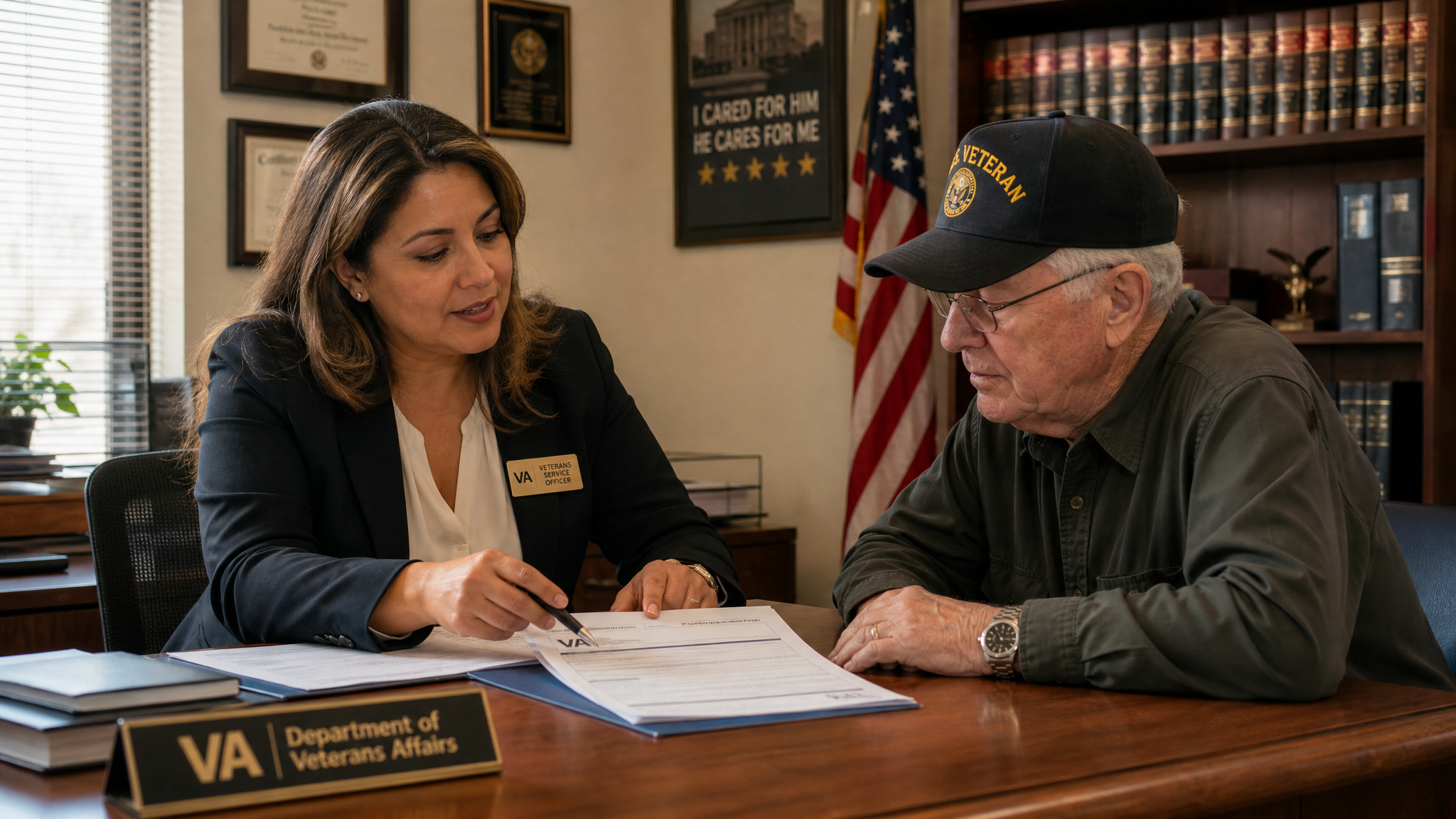
There is no age limit and no deadline on a first VA disability claim. Here is the plain, start-to-finish process, so you can file it right and protect what you earned.
If you are in your 50s, 60s, 70s, or older and thinking, "I waited too long," take a breath. There is no age limit on filing a VA disability claim, and there is no deadline on a first claim.
Nobody at the VA is going to call and tell you that. That does not mean you missed your chance. It means you need the real rules, in plain English, so you can protect your health, your family, and the benefits you earned.
Start here, not later: lock in your date first
The smartest first move is simple. File an Intent to File first, even if you are not ready to submit the whole claim today.
The form is VA Form 21-0966. It can protect your effective date for up to a year, which means any back pay the VA later grants may reach back to the day you filed that form, depending on your situation and the VA's final decision.
This matters because waiting around while you "get organized" can cost you. Not because you age out, you do not, but because time can affect your records, your memory, and the amount of back pay you may preserve.
The actual claim form, and what you need with it
Once your Intent to File is in, the next step is the real application. The claim itself is VA Form 21-526EZ.
To give the claim a fair shot, you need the same basic building blocks every time:
- A current diagnosis
- An in-service event, injury, or exposure
- A nexus, meaning evidence linking the two
- Chronicity, a history showing the problem did not just appear out of thin air
In regular human language, that means this: what is wrong with you now, what happened in service, and what ties those two together on paper. Anger at the VA is understandable. Evidence wins claims.
Before you file, gather what you can, including your DD-214 and your medical evidence. If you have private records, VA records, test results, diagnoses, or a solid personal statement, get them together now while you still can.
Want it faster? Send the evidence up front
If you send your evidence with the claim, that is generally treated as a Fully Developed Claim. In plain English, it usually moves faster than a standard claim because the VA does not have to spend as much time chasing records.
A standard claim is still an option, and the VA has a Duty to Assist under 38 U.S.C. 5103A and 38 CFR 3.159. But if you already have the records, handing them over up front can save time and confusion.
This is one of those places where personal responsibility matters. No doctor's visit, no evidence, no strong record. Use your medical care and build the file like it matters, because it does.
The C&P exam: free, important, and not optional
You will almost always be scheduled for a C&P exam, short for Compensation and Pension exam. Missing it is the fastest way to a denial.
Is it fun? No. Is it a trap? Also no. It is a required part of the process in many claims, and it is your chance to get your condition evaluated for service connection and severity.
A few plain rules help:
- Show up, on time, every time
- Be honest, clear, and specific about your symptoms
- Talk about your worst days, if that is what your condition really looks like
- Do not minimize your limits out of pride
- Do not exaggerate either, just tell the truth
Here is the hard truth Albert teaches all the time. The examiner may seem nice in the room, but the exam only counts on paper. Read the result, not the room.
What the timeline usually looks like
Most veterans want to know one thing, how long this takes. A typical decision may take around 4 to 5 months, but that is only an estimate, and your timeline could be faster or slower depending on the evidence and the complexity of the claim.
A cleaner, well-documented claim can move quicker. A more complex claim, or one where records are missing, can take longer. That is normal. Do not confuse slow with dead.
- File VA Form 21-0966
- Gather your DD-214 and medical evidence
- Submit VA Form 21-526EZ
- Attend the C&P exam
- Wait for the decision letter
After the decision letter arrives, read it carefully. If the VA grants the claim, the letter explains the decision and any payment estimate the VA awards, depending on your situation. If the VA denies or underrates it, that is not always the end of the road, but this article is about filing the first claim correctly so you start from strength.
If you want the deeper version of this same topic, with more detail in one place, see our full page here: How to File a VA Claim.
What filing costs, and who can charge what
Let me say this plainly because a lot of veterans were never told. Filing an initial claim costs nothing.
By law, no one may charge you a fee to file an initial claim. If somebody wants money just to file your first VA disability claim, that is a giant red flag. They are breaking the law.
You can file the initial claim yourself, online at va.gov, by mail, or with a free accredited representative. If fees ever come up later in the process, that is a separate issue after the VA has issued its first decision on the claim. For the first filing, keep your wallet in your pocket.
If you do nothing, nothing gets protected
This is the part a lot of older veterans do not want to hear. Waiting does not strengthen a claim.
Records get harder to find. Memories get thinner around the edges. Health gets worse. And too many veterans leave a spouse or family behind with no plan, no paperwork, and no idea what benefits might have been available.
You are not too old. You did not age out of anything. There is no VA benefit you age out of, not one. The VA looks at service connection, not the candles on your birthday cake.
Your claim, your responsibility, your next step
Here is the blunt version. File the Intent to File, gather the records, submit the claim. That is how you stop guessing and start protecting what you earned.
This is general educational information, not legal, medical, or financial advice. The Aging Veteran is not the U.S. Department of Veterans Affairs and is not part of the federal government.
If you want free, no-pressure help when you are ready, Albert L. Thombs Jr., VA-accredited claims agent #45147, and his team are here to help. Call 702-992-4883. You can ask a question for free, and your privacy matters here.
A quick, honest note
This article is general information, not legal advice, and every rate or example is an estimate. Your own claim depends on your records and the facts the VA finds. Albert L. Thombs Jr. is a VA-accredited claims agent (accreditation #45147). If you would like a real person to look at your situation, you are always welcome to reach out - there is no cost to ask.