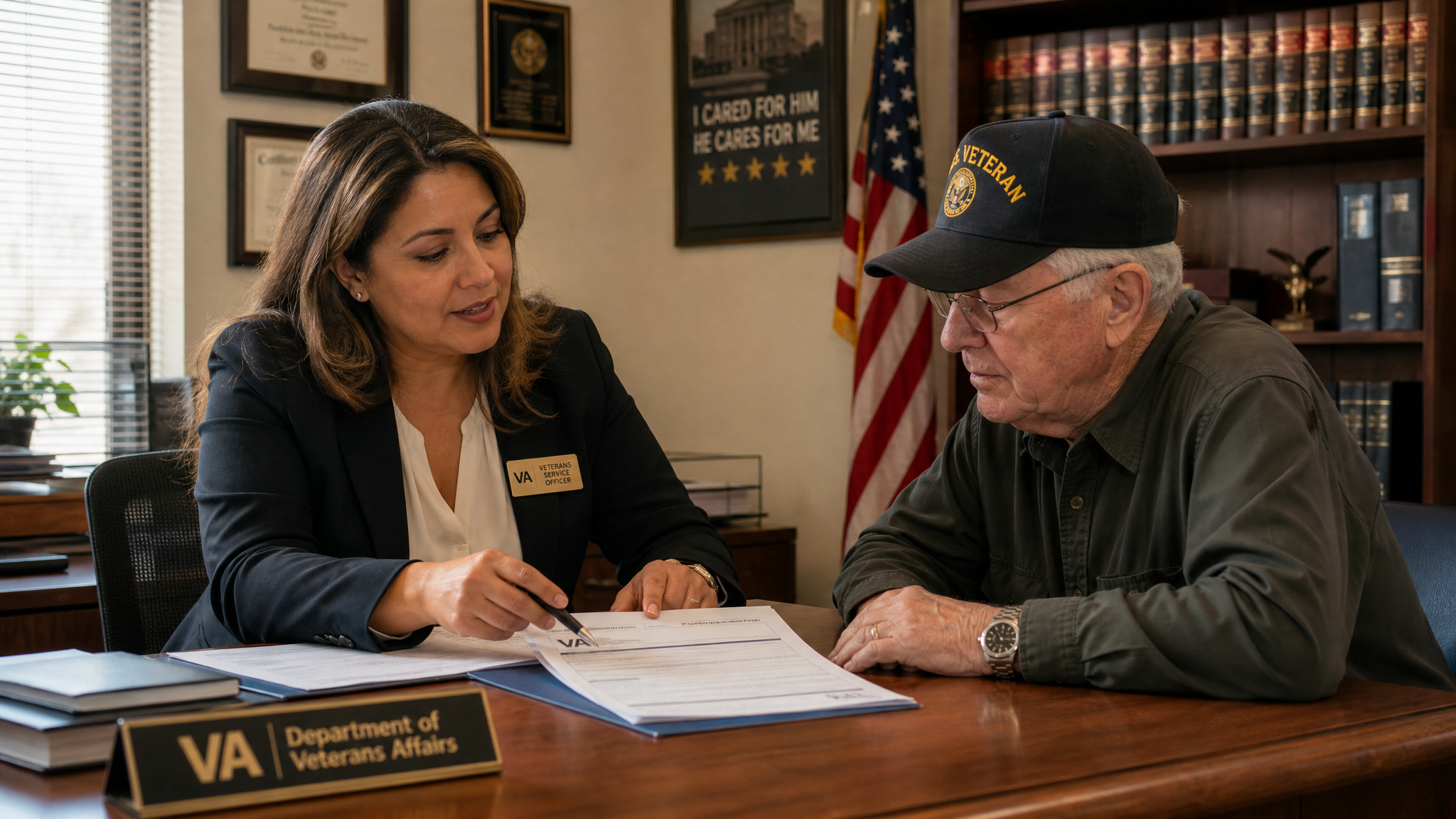
Too many older veterans miss family pay, direct deposit, VALife, and debt options. There is no age limit on checking what you earned and protecting your family now.
You are not too old, and you did not miss your chance. A lot of veterans hit their 50s, 60s, or 70s thinking the VA ship sailed without them, when the truth is simpler, and a lot less dramatic.
There is no VA benefit you age out of. Not one. If nobody ever told you about family pay, direct deposit, life insurance, or debt options, that does not mean you were not entitled to look into them.
Adding Dependents Can Raise Your Monthly VA Pay
Ratings at 30% or higher may qualify for additional monthly compensation for a spouse, children, and dependent parents, depending on your situation and the VA's final decision. This is one of the most common things veterans forget to do, and yes, that means some folks leave money sitting on the table for years.
The form to add dependents is VA Form 21-686c. You can submit it through VA.gov, by mail, or at a VA regional office, with proof of relationship like a marriage certificate or birth certificates.
- Spouse
- Children
- Dependent parents
Hard truth. The VA is not going to call you up and say, "Sir, you seem to be missing family money." That would be too helpful.
If your rating is below 30%, this particular extra compensation may not apply. If you are at or above that level, it is worth checking, because your monthly payment could be higher than what you are receiving now.
Back Pay on Dependents Is Real, But Timing Matters
Late filing can cost you months of money. If you add dependents late, you may be owed back pay based on the date your rating increased or the date you filed the dependency claim, whichever is later.
Here is the part veterans do not love hearing. File within one year of a rating increase if you want the best shot at preserving the earliest possible payment date for dependent benefits. Wait longer, and every month you delay may be money you do not get back.
That is not scare talk. That is just how effective dates work. Awareness matters now because protecting your family sometimes starts with boring paperwork nobody explained to you the first time.
Direct Deposit Protects Your Benefits From Avoidable Delays
Set up direct deposit through VA.gov if you have not already. You can also update it by calling the VA benefits hotline at 800-827-1000 or by visiting a VA regional office.
This is not glamorous, but it is important. Old bank information, closed accounts, and paper-check confusion can turn a simple payment into a headache you did not need.
Use your VA.gov account and verify that your banking information is current. If your spouse or caregiver helps with bills, this is a good time to make sure somebody besides you knows where to find that information.
Your benefits do no good lost in the mail. Protect the payment path, not just the claim.
VALife Gives Some Veterans a Straight Path to Coverage
VALife offers up to $40,000 in guaranteed acceptance whole life coverage for veterans with service-connected disabilities. It is available in increments up to that amount, and no medical exam is required.
That matters for older veterans who assume life insurance is out of reach, too expensive, or off the table because of health issues. Sometimes the answer is not "too late." Sometimes the answer is "nobody bothered to tell you this existed."
There is an honest caveat. Full coverage starts after two years from enrollment, so read the details carefully before assuming how the policy works for your family. You can apply online through the VA insurance webpage.
If protecting a spouse or helping with final expenses is on your mind, this benefit is worth a serious look. For deeper detail on these family and money issues, see our full page here: /benefits/family-direct-deposit.
Do Not Ignore a VA Debt Letter
The Debt Management Center handles repayment, waivers, and appeals. If the VA says you were overpaid, contact the VA Debt Management Center at 800-827-0648 and deal with it directly.
Do not toss the letter in a drawer and hope it dies quietly. It will not. Usually, your options are better when you engage early, because you may be able to set up a repayment plan, request a waiver, or appeal, depending on the situation.
This is one of those moments where pride can cost you. A debt notice is not a character judgment. It is an administrative problem, and administrative problems get fixed by answering them, on paper, with records.
State Benefits Matter Too, Especially for Older Veterans
Federal VA benefits are not the whole picture. Depending on where you live, there may be state-specific veteran benefits tied to disability status, survivors, property taxes, licenses, education, or other support.
That is another reason not to talk yourself out of filing a claim just because you waited a long time. A service-connected rating can affect more than one monthly payment. It can ripple outward and help protect your household in ways nobody explained when you got out.
What To Do Next, Without Making It Complicated
Check what you have, then fix what is missing. You do not need a five-ring binder and a panic attack to start.
- Confirm whether your rating is 30% or higher.
- If it is, review whether your spouse, children, or dependent parents have been added.
- File VA Form 21-686c if needed, with proof of relationship.
- Log into VA.gov account and verify direct deposit.
- Review whether VALife fits your family situation.
- If you have a debt notice, call 800-827-0648 and ask about your options.
- Check your state-level veteran benefits too.
And one more thing. This is your claim and your responsibility. The system has weak links, the examiner may not help you, and the VA may not explain a thing unless you force the issue, but you still have to show up for your own life.
This article is general educational information only, not legal, medical, or financial advice. The Aging Veteran is not the U.S. Department of Veterans Affairs and is not part of the federal government.
If You Want Free Help, It Is Here When You Are Ready
Free help is available, no pressure. Albert L. Thombs Jr., VA-accredited claims agent #45147, and his team help veterans and families understand what may be available and what steps make sense next.
If you want to talk it through, call 702-992-4883. Your privacy matters, and nobody here is going to shove you into a hard sell. The whole point is plain-English help, when you are ready.
A quick, honest note
This article is general information, not legal advice, and every rate or example is an estimate. Your own claim depends on your records and the facts the VA finds. Albert L. Thombs Jr. is a VA-accredited claims agent (accreditation #45147). If you would like a real person to look at your situation, you are always welcome to reach out - there is no cost to ask.