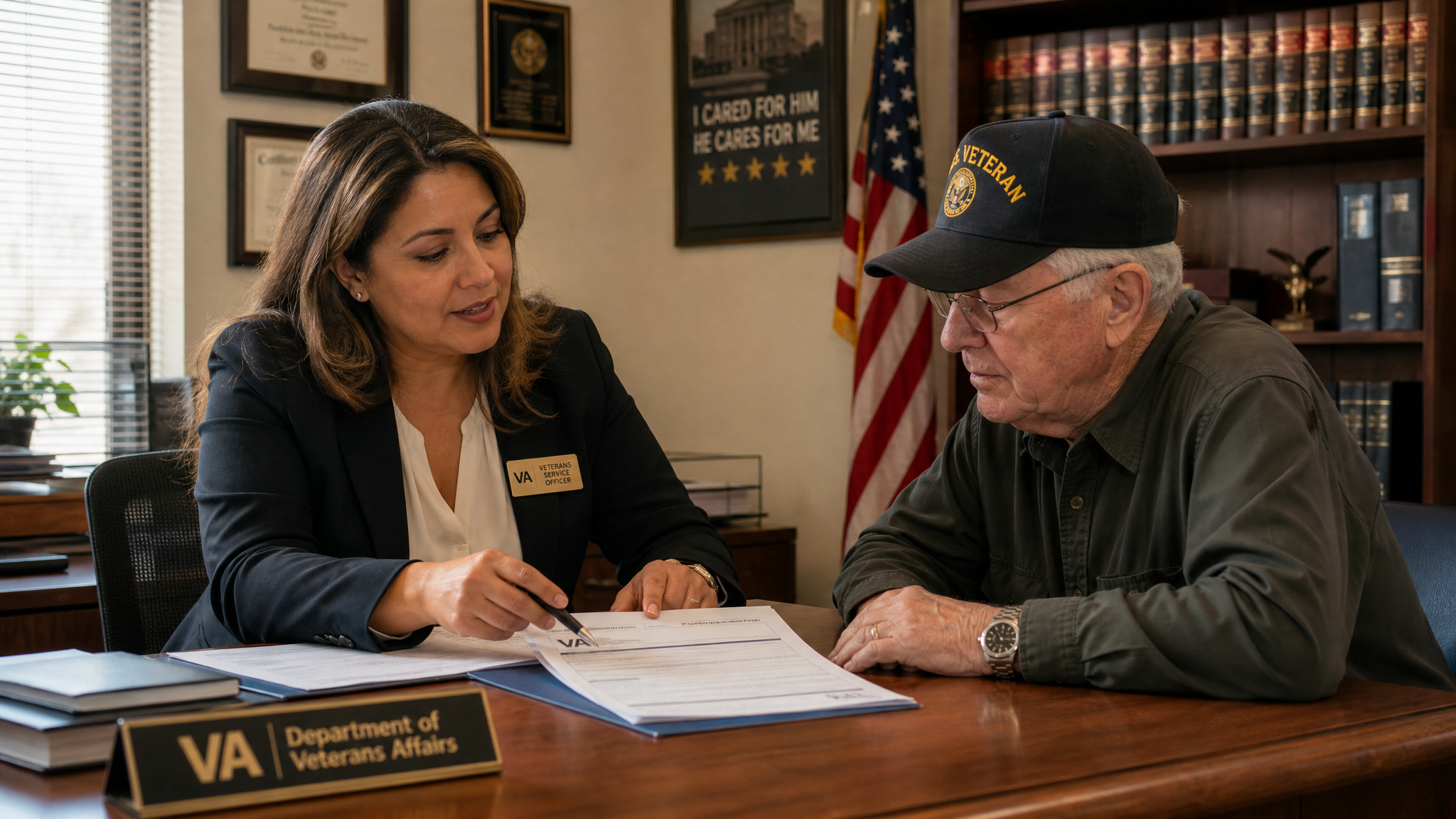

If a veteran died with a VA claim still open, a survivor may be able to claim money the VA already owed and continue the unfinished claim. The deadline is one year from death.
If you are reading this later in life, you are not out of the game. Many veterans and families were never told these survivor benefits existed, and many only learn about them after a death, when everything already feels heavy.
Just as there is no age limit on filing a first VA claim, there are also survivor rules that can protect what the veteran already earned. Families can lose owed benefits quietly if no one asks the right question in time.
What accrued benefits and substitution really mean
These benefits cover money already owed to the veteran on a pending or existing claim at the time of death. This is not about starting over from scratch. It is about benefits the veteran had already earned but had not yet received.
There are two related ideas here. An accrued-benefits claim asks for the unpaid benefits the VA already owed, while substitution lets a survivor continue the veteran’s unfinished claim or appeal.
That distinction matters because an accrued claim is limited to evidence already in VA’s hands at the date of death. With substitution, an eligible survivor may add new evidence and keep moving the claim forward.
Why substitution matters so much
Substitution may preserve back pay because it keeps the veteran’s original effective date. That original effective date is usually where the unpaid amount comes from, depending on the veteran’s situation and the VA’s final decision.
Substitution applies for deaths on or after Oct. 10, 2008. If the veteran died with a pending claim or appeal, this can be one of the most important questions a family asks on the VA side.
The practical difference is simple:
- Accrued benefits are based on the file as it stood at death.
- Substitution allows the survivor to keep the claim alive and submit more evidence.
- That difference can affect how much the VA may eventually award, depending on the case.
This is why families should not assume the VA will sort it out automatically. Ask about substitution first if any claim, appeal, or supplemental claim was still open when the veteran died.
Who can claim these benefits
There is a priority order for who may receive accrued benefits or request substitution. In general, the VA looks first to the surviving spouse, then children in equal shares, then dependent parents.
- Surviving spouse first
- Children in equal shares
- Dependent parents next
If there is no eligible survivor in that order, someone who paid the veteran’s last illness and burial expenses may be able to seek reimbursement of those expenses. That does not mean every situation will qualify, but it is important not to overlook it.
These claims are often filed together with a Dependency and Indemnity Compensation (DIC) or Survivors Pension claim on the same form. For complete details, see our full page at /survivors/accrued-benefits.
The deadline is strict
The filing limit is one year from the date of the veteran’s death. That same 1-year deadline applies to both an accrued-benefits claim and a request for substitution.
This is one of those rules families miss because the VA does not always tell them the benefit exists. The deadline can pass quietly while people are grieving, handling funeral matters, and trying to make sense of paperwork.
If the veteran had any claim, appeal, or supplemental claim open when they died, ask right away about substitution and accrued benefits before dealing with anything else on the VA side. That is not pressure. It is simply how you protect the veteran’s benefits and your family’s options.
Which VA forms are used
The right form depends on the survivor and on what you are claiming. Filing the right paperwork helps the VA understand whether you are asking for DIC, accrued benefits, substitution, last-expense reimbursement, or some combination.
- VA Form 21P-534EZ for a spouse or child, including when also claiming DIC
- VA Form 21P-535 for a surviving parent
- VA Form 21P-601 for accrued benefits or last-expense reimbursement
- VA Form 21P-0847 to request substitution into a pending claim or appeal
Many families use 21P-534EZ and 21P-0847 together when a surviving spouse or child is also asking to step into an unfinished claim. A separate accrued-benefits or last-expense claim goes on 21P-601.
What this means for older veterans and their families
It is not too late to protect your family. Many older veterans tell themselves they waited too long, or that if nobody told them years ago, they must have missed their chance. That is exactly how earned benefits get left on the table.
There is no age limit on a first claim, and the VA does not decide service connection based on age. If you are a veteran in your fifties, sixties, seventies, or beyond, becoming aware of your benefits now can help protect your health, your household, and the people who may have to handle things later.
If a claim is filed while you are able to gather records and respond to the VA, that can make life easier for your family if something happens down the road. And if a death occurs while a claim is still open, your survivor may have options they should know about immediately.
Final word: do not talk yourself out of asking
Free help is available when you are ready. If you are a veteran, spouse, adult child, or caregiver trying to sort this out, you do not have to guess your way through it.
The Aging Veteran is a free educational resource, and this information is not legal, medical, or financial advice. We are not the U.S. Department of Veterans Affairs and not part of the federal government.
For no-pressure help, you can reach Albert L. Thombs Jr., VA-accredited claims agent #45147, at 702-992-4883. If you think the veteran had any VA claim or appeal open at death, ask about accrued benefits and substitution when you are ready, and you can also read our full page at /survivors/accrued-benefits.
A quick, honest note
This article is general information, not legal advice, and every rate or example is an estimate. Your own claim depends on your records and the facts the VA finds. Albert L. Thombs Jr. is a VA-accredited claims agent (accreditation #45147). If you would like a real person to look at your situation, you are always welcome to reach out - there is no cost to ask.