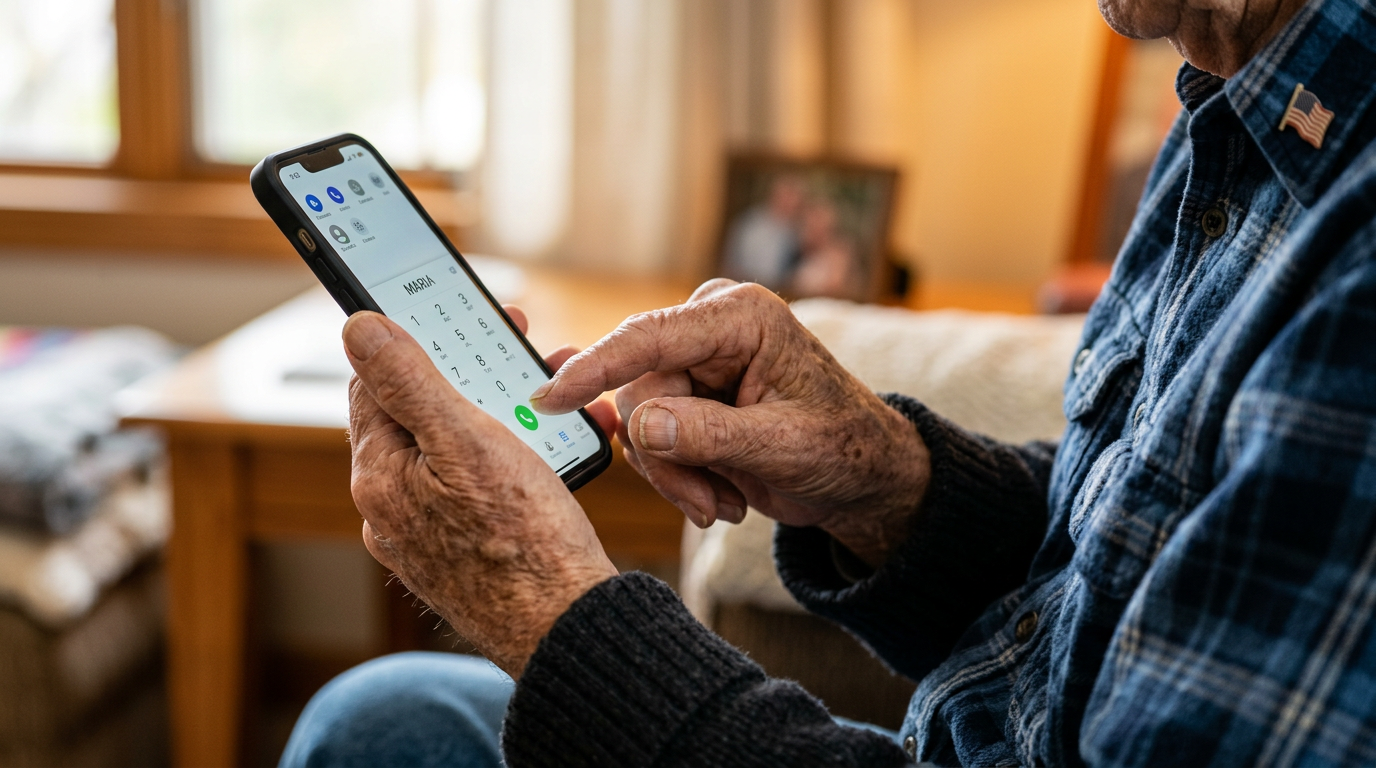
If getting around your home is harder than it used to be, VA adaptive housing grants may help pay for safer access. These grants are separate from the VA home loan and do not have to be repaid.
If you have started to wonder whether your home still fits your body, you are not alone. Many veterans do not hear about these benefits until later in life, and many quietly assume they waited too long or are now too old to qualify.
No age limit on a first claim is the part too many veterans never get told. What matters is whether the disability is connected to service and whether the home changes are needed, not whether you are in your forties, sixties, seventies, or beyond.
What these grants are really for
These are grants, not loans. They are meant to help a disabled veteran live more safely and independently at home by paying for accessibility changes that may otherwise be out of reach.
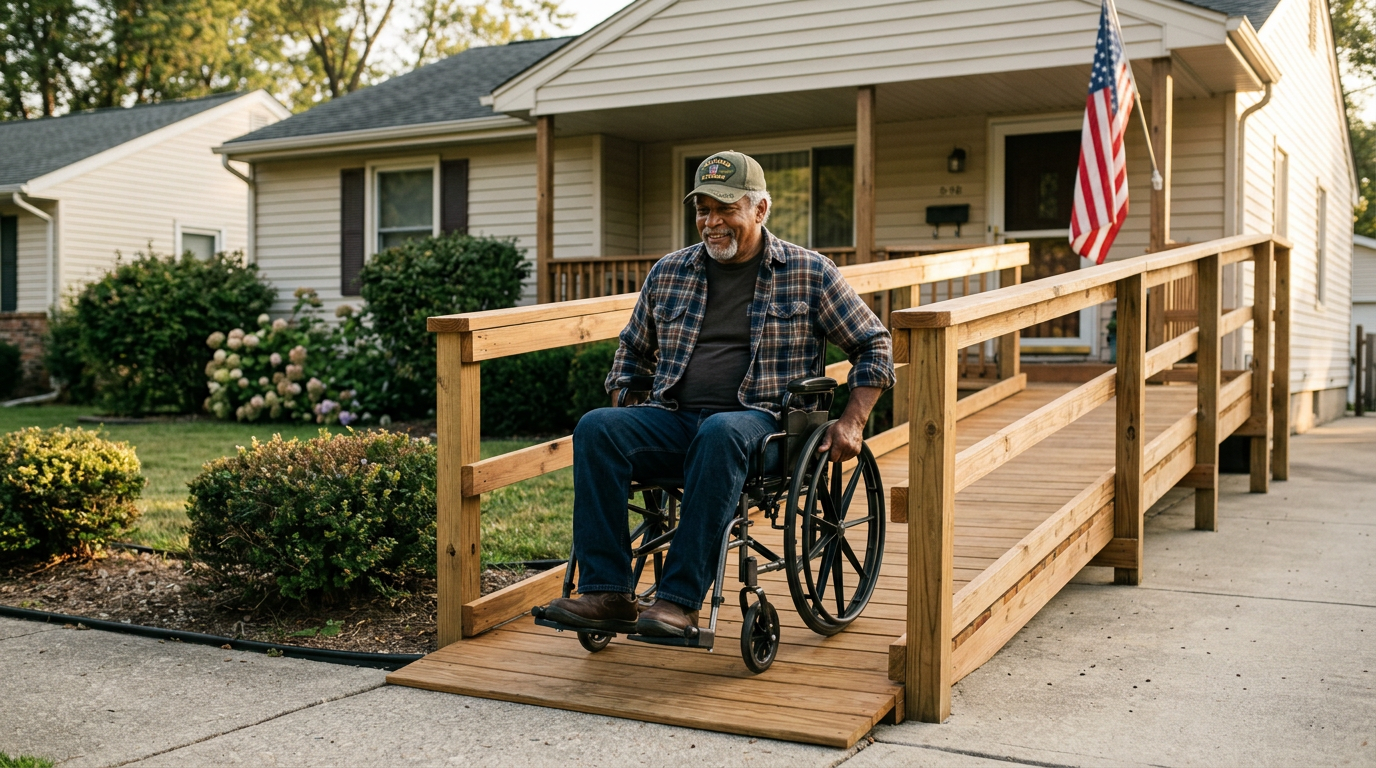
This can include changes like roll-in showers, ramps, and widened doorways. Lowered counters, grab bars, and other practical modifications may also help a veteran stay in their own home instead of moving before they are ready.
For an aging veteran, that matters now. Being aware of what you may be entitled to today can help you protect your health and independence while also making life safer for the spouse, family member, or caregiver who helps you day to day.
These benefits are separate from the VA home loan
Adaptive housing grants are separate from the VA home loan benefit. Veterans often hear “housing help” and assume it means borrowing money, but this is a different program.
The VA home loan is a loan that is repaid. These adaptive housing benefits are money you do not repay, and a veteran may be able to use both programs because they are entirely separate.
That difference is important, especially for veterans who talked themselves out of asking because they did not want more debt. This benefit is about making a home usable, not taking on another payment.
The three programs to know: SAH, SHA, and HISA
There is more than one grant, and each serves a different level of need. The right fit depends on your situation and the VA’s decision.
- Specially Adapted Housing (SAH): the largest grant, for the most serious service-connected disabilities. Our site notes it may be up to about $126,526 for fiscal year 2026, depending on the veteran’s situation and the current VA cap.
- Special Home Adaptation (SHA): for certain conditions such as blindness or the loss of use of both hands. Our site notes it may be up to about $25,350 for fiscal year 2026, depending on the veteran’s situation and the VA’s decision.
- HISA grant: for smaller home-improvement changes, available more broadly. For service-connected veterans, our site notes it may be up to $6,800, depending on eligibility and approval.
One point many veterans miss is this: HISA may still be available even if you do not qualify for SAH or SHA. If your needs are smaller or more focused, that can still be meaningful help.
What these grants may help pay for
The goal is safe daily living. These programs are designed to make the home easier and safer to use, especially when walking, bathing, entering, or moving from room to room has become a struggle.
- Building, buying, or remodeling a home for accessibility
- Roll-in showers and bathroom changes
- Grab bars and safer entry points
- Widened doorways for easier movement
- Ramps and changes to reduce fall risk
- Lowered counters and other accessibility improvements
There is also Temporary Residence Adaptation (TRA) for a veteran who is living in a family member’s home. That can matter when health changes force a move, even if only for a period of time.
You may be able to use the benefit over time
You can often use a grant in stages. A veteran may also be able to use it across more than one home over a lifetime, up to the program limits.
That matters for older veterans because needs often change. What starts as a ramp or safer bathroom today may later become wider access, better bathing support, or other changes that help you remain at home longer.
In plain English, this is not only about your house. It is about staying safer as you age and reducing strain on the people who love and help you.
How to get started
Start with the right application path. SAH and SHA begin one way, while HISA usually starts through your VA medical care team.
- Apply for SAH or SHA with VA Form 26-4555.
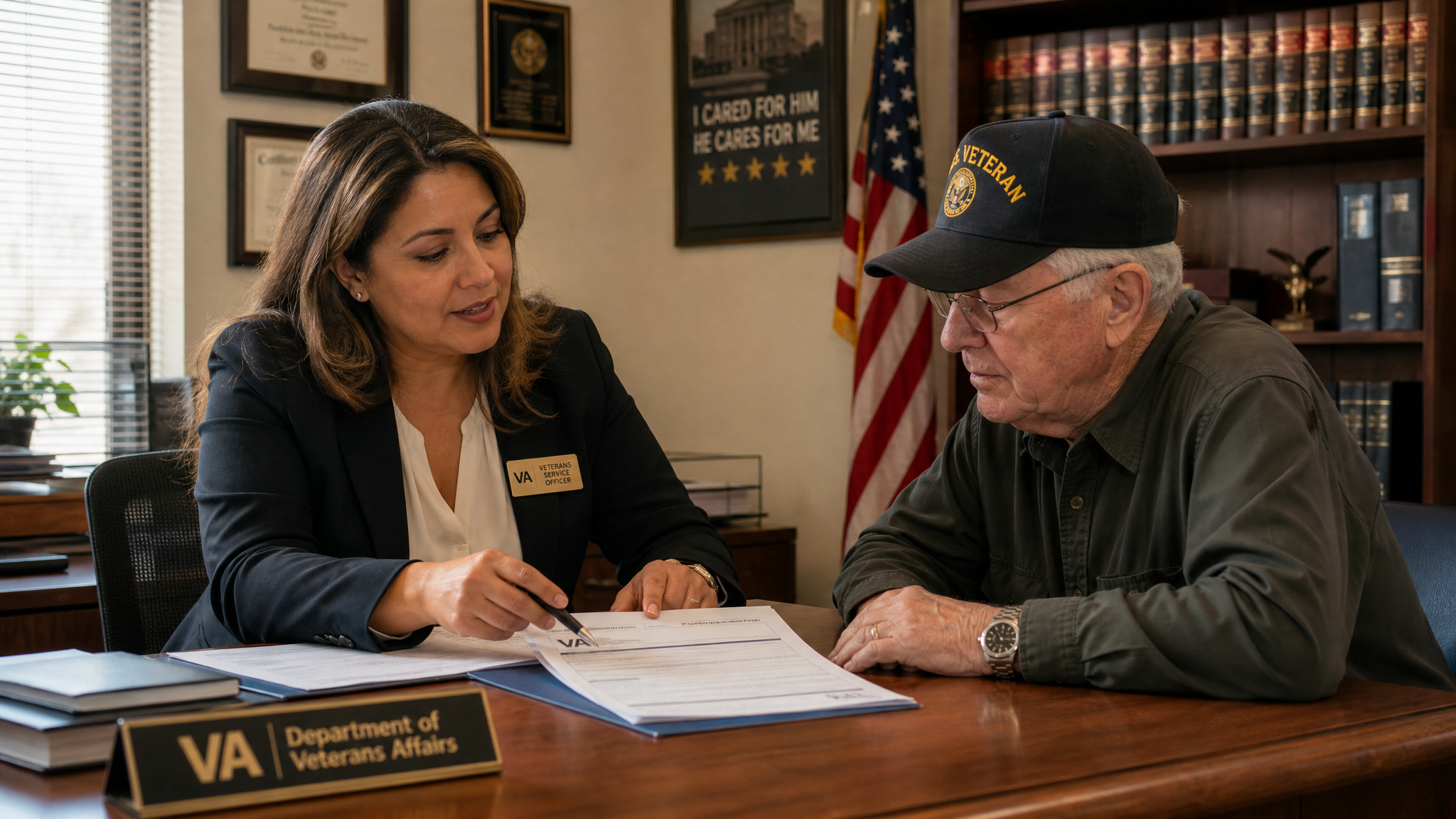
- You may apply online at va.gov, by mail, or with free accredited help.
- For HISA, the request is made through your VA medical center with a prescription from your VA provider.
If you are not sure which program fits, that is normal. The important thing is not to let confusion become another reason to give up on a benefit that may help you live more safely now.
For the full detail, see our complete page at /benefits/adaptive-housing-grants.
If you thought you missed your chance, read this part
You are not out of the game. Veterans often say, “I’m too old,” “I waited too long,” or “Nobody ever told me, so I must have missed it.” Those beliefs stop good people from seeking benefits they may still deserve.
There is no deadline on a first claim, and there is no age cutoff simply because you are older now. The VA looks at service connection and eligibility rules, not whether you learned about the program late.
It can actually help to look into this while you are still able to gather records, talk with providers, and attend appointments if needed. That is not pressure. It is just a practical way to protect your benefits and family while you can still do the legwork with less stress.
Free help is available when you are ready
Free, no-pressure help is available. The Aging Veteran is a free educational resource, and this article is general information only, not legal, medical, or financial advice. We are not the U.S. Department of Veterans Affairs and are not part of the federal government.
If you want help understanding the next step, you can reach out when you are ready to Albert L. Thombs Jr., a VA-accredited claims agent with accreditation #45147, at 702-992-4883. No one can charge a veteran to file an initial claim, and our goal is plain-English guidance so you can understand what may be available to you.
A quick, honest note
This article is general information, not legal advice, and every rate or example is an estimate. Your own claim depends on your records and the facts the VA finds. Albert L. Thombs Jr. is a VA-accredited claims agent (accreditation #45147). If you would like a real person to look at your situation, you are always welcome to reach out - there is no cost to ask.