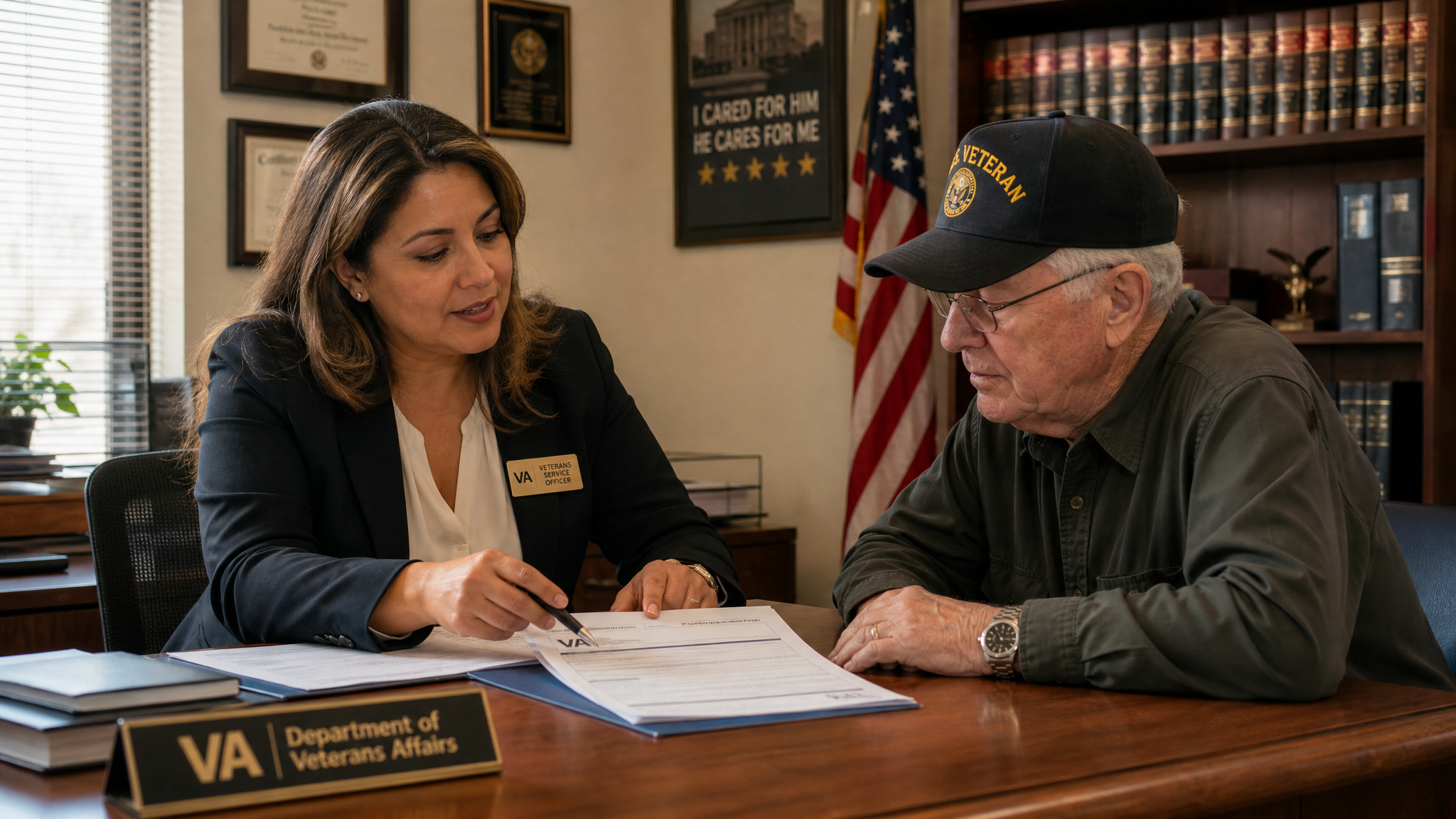
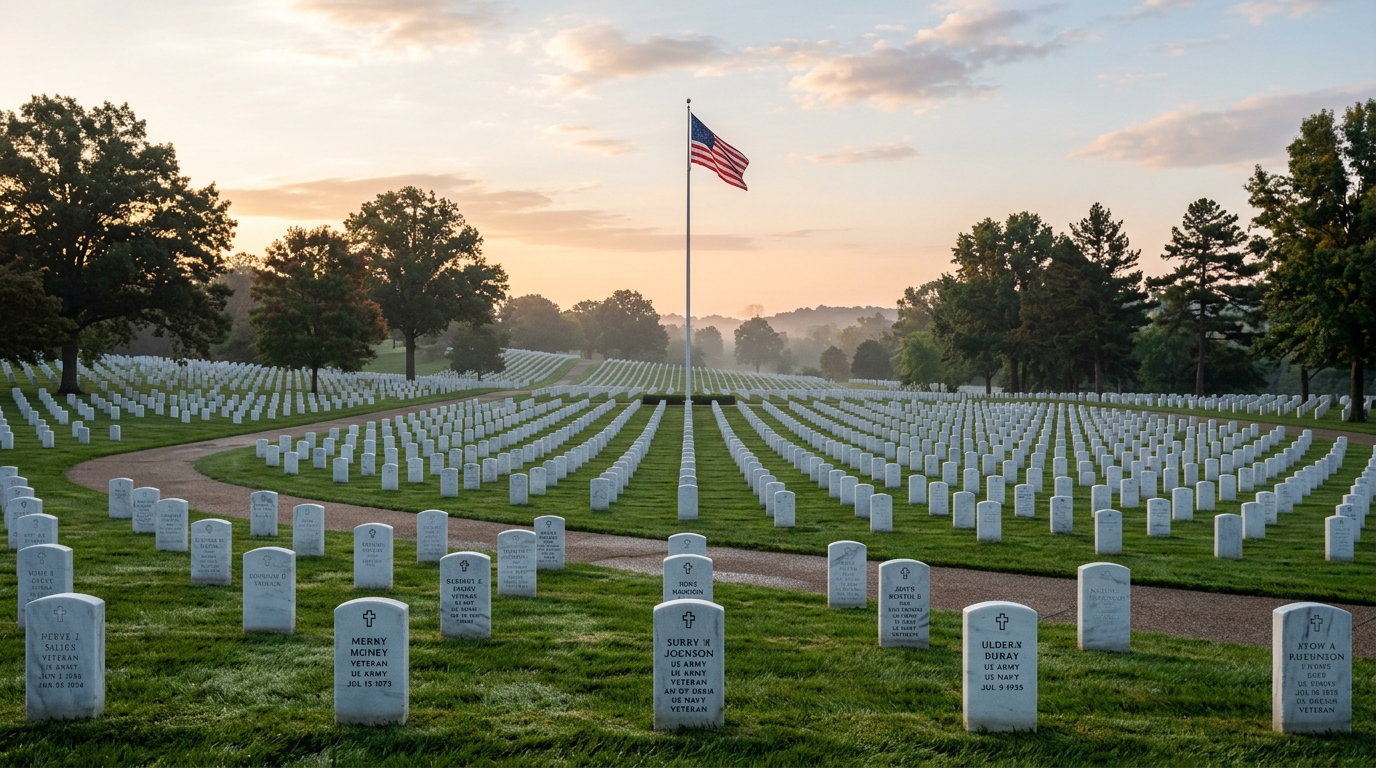
You are not too old and it is not too late to learn what VA burial and memorial benefits may protect your family. Some benefits have no filing limit, while others do.
If you are in your 40s, 50s, 60s, 70s, or beyond, it is easy to assume burial and memorial benefits are something to deal with later. Many veterans were never told what they may be entitled to, and many quietly decide they waited too long. It is not too late to learn this now.
Knowing these benefits ahead of time can help you protect your family, your wishes, and your records. And if you are a surviving spouse or family member, understanding the basics now can make a hard time a little less confusing.
Why this matters even if you filed nothing before
No age limit for a first claim is one of the most important things an aging veteran can hear. If you have told yourself, “I am too old,” “I waited too long,” or “nobody ever told me,” do not talk yourself out of learning what may be available.
That matters here because some burial-related benefits may still be available later, and some planning steps are easier when you can still gather records and talk things through. Being aware now helps protect your family, especially if they may need to handle forms and decisions during a stressful time.
Just as important, not every burial benefit works the same way. Some filing rules depend on the type of benefit, so it helps to understand the basics before your family needs them.
What VA burial and memorial benefits may include
Several burial and memorial benefits may be available, depending on the veteran’s situation and the VA’s final decision. These benefits can include help with burial in a VA national cemetery, certain funeral and burial costs, memorial items, and bereavement support.
- Eligibility for burial in a VA national cemetery for the veteran and, in many cases, a spouse and dependent children
- A government-furnished headstone, marker, or medallion
- A burial allowance that may help with funeral and burial costs
- Memorial items such as a burial flag and a Presidential Memorial Certificate
- Bereavement counseling
If burial takes place in a VA national cemetery, the gravesite, opening and closing of the grave, a government headstone, and a burial flag are provided at no cost to the family. That can be a major relief for surviving family members.
Burial in a VA national cemetery can ease the family’s burden
Burial in a VA national cemetery may cost the family nothing. For many families, that is the single most important fact to understand early.
According to our published benefit page, burial in a VA national cemetery includes the gravesite, opening and closing of the grave, a government headstone, and a burial flag. These are provided at no cost when the veteran is eligible.
In many cases, a spouse and dependent children may also be eligible for burial in a VA national cemetery. Spouses and dependent children may also qualify, which is one more reason not to assume you are out of the game just because no one explained this before.
Burial allowances: what families may be able to claim
Some burial allowances may help with costs, depending on the type of death, the veteran’s situation, and the VA’s final decision. These amounts are best understood as estimates of what may be payable if the VA approves the claim.
For a service-connected death, the burial allowance may be around $2,000. Our page also states there is no time limit to file for this benefit.
For a non-service-connected death, the burial allowance may be around $1,002, plus a plot allowance around $1,002 for deaths on or after Oct. 1, 2025. For that non-service-connected burial benefit, families generally must file within 2 years of burial.
If the VA does not furnish a headstone or marker, the reimbursement allowance may be around $441 for deaths on or after Oct. 1, 2025. As always, the actual outcome depends on the individual case and the VA’s decision.
Some surviving spouses may not need to file at all
The VA may pay automatically in some cases. That is an important detail families often do not know.
If a surviving spouse is already on the veteran’s records, our page explains that the spouse often does not need to file. A spouse already on the veteran’s records may receive payment automatically instead of having to start the process from scratch.
That is another reason to get informed before a crisis. Good records can spare your family extra work at a time when even one less form can matter.
Forms that may be used to get started
The right form depends on the benefit. Knowing the names now can make things easier later.
- For burial costs, use VA Form 21P-530EZ
- For a headstone or marker, use VA Form 40-1330
You do not have to memorize everything today. But knowing that these forms exist, and what they are for, can help you or your family avoid confusion when the time comes.
What to do now if you thought you missed your chance
You have not missed your chance to get informed. If you are an older veteran who assumed this subject was too late, too complicated, or only for someone else, this is exactly the kind of benefit worth understanding now.
- Read the full benefit page at /survivors/burial-memorial for the complete detail
- Make sure your family knows these benefits may exist
- Gather and keep your records where a spouse or loved one can find them
- Write down questions about burial in a national cemetery, allowances, forms, and eligibility
Learning now can protect your family later. That is not pressure. It is simply one more way an aging veteran can protect the people he loves.
Free help is available when you are ready
Free, no-pressure help is available if you want someone to walk you through the basics. The Aging Veteran can help you plan and gather what you may need.
This guidance comes from Albert L. Thombs Jr., a VA-accredited claims agent with accreditation #45147. You can reach the team at 702-992-4883 when you are ready.
This is general educational information, not legal, medical, or financial advice. The Aging Veteran is not the U.S. Department of Veterans Affairs and is not part of the federal government.
If you want the full detail on this benefit, visit /survivors/burial-memorial. And remember: you are not out of the game.
A quick, honest note
This article is general information, not legal advice, and every rate or example is an estimate. Your own claim depends on your records and the facts the VA finds. Albert L. Thombs Jr. is a VA-accredited claims agent (accreditation #45147). If you would like a real person to look at your situation, you are always welcome to reach out - there is no cost to ask.