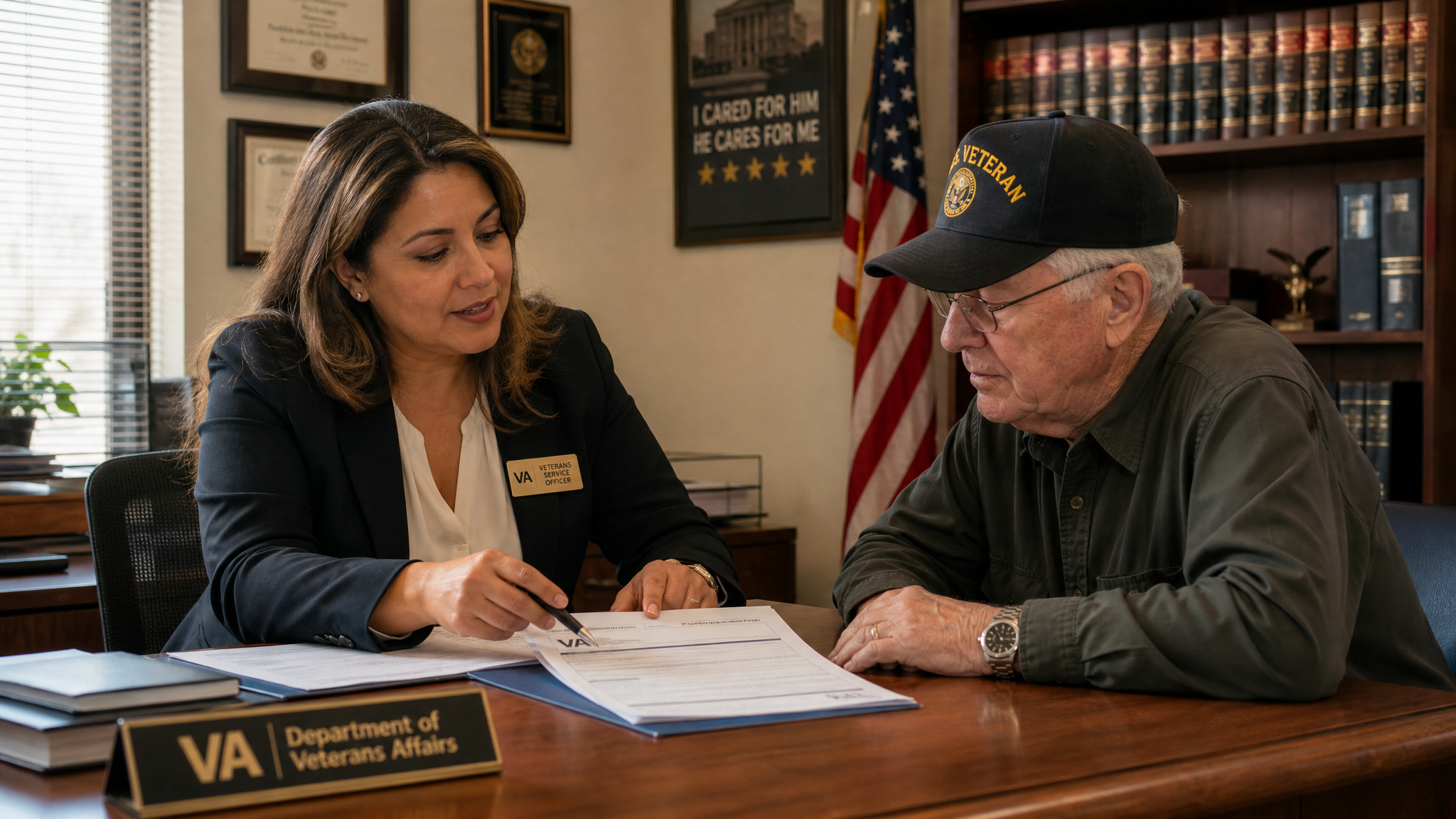

If you are a military retiree with VA disability, concurrent receipt may let you receive both. Many older veterans never knew they could qualify.
If you are a retired veteran and feel like you waited too long, you are not alone. Many veterans in their 50s, 60s, 70s, and beyond were never told about concurrent receipt, and it is not too late to understand what you may be entitled to now.
That matters because knowing your benefits today can help you protect your health, family, and income. This article is general educational information only, not legal, medical, or financial advice, and The Aging Veteran is not the VA and is not part of the federal government.
What concurrent receipt means
For many years, military retirees had to give up retired pay dollar-for-dollar for the VA disability compensation they received. Concurrent receipt is the name for the programs that may give that money back.
Full retired pay and VA pay together is the basic idea. If you qualify, concurrent receipt may allow you to receive your full military retired pay and your VA disability compensation at the same time, depending on your situation and the final decisions made by the proper agencies.
There are two programs under concurrent receipt:
- CRDP - Concurrent Retirement and Disability Pay
- CRSC - Combat-Related Special Compensation
Many retirees do not realize they may qualify, especially if no one ever explained that the VA disability side and the retired pay side are handled by different offices. That is one reason this benefit can fall through the cracks.
CRDP: automatic for some retirees
CRDP restores retired pay for certain military retirees who have a VA disability rating of 50% or higher. If you qualify, it is generally phased in automatically by the Defense Finance and Accounting Service, often called DFAS.
The key point many veterans miss is that CRDP requires no application. There is no special form to start it through the retiree, because the pay center handles it when the retiree meets the requirements.
CRDP is taxable. The amount may vary depending on the veteran's individual retired pay, VA rating, and how the pay center applies the rules in that case.
If you are just now filing a first VA claim, remember this: no age limit on a first claim. The VA does not deny service connection just because a veteran is older. If your condition is service-connected and your rating reaches the needed level, CRDP may become relevant.
CRSC: tax-free, but you must apply
CRSC is separate and tax-free. It is for disabilities that are combat-related, which is different from standard service connection.
Unlike CRDP, CRSC is not automatic. You must apply through your branch of service using that branch's CRSC application process.
To support a CRSC claim, you generally need evidence linking each disability to one of these combat-related categories:
- Combat-related disabilities
- Hazardous duty
- Instrumentality of war
- Simulated war such as training
This is a major reason older retirees miss out. The VA may rate the disability, but a different office decides retired pay, and CRSC in particular can be overlooked because the retiree has to apply and prove the combat connection.
You cannot receive both at once
You cannot collect both together at the same time. If you qualify for both CRDP and CRSC, the pay center pays whichever program results in the higher amount for that period, based on your situation.
There is also a yearly open season switch. During that annual open season, you may choose to switch between CRDP and CRSC if the other option would be better for you.
That matters because CRSC is tax-free, while CRDP is taxable. Depending on your retired pay, disability rating, tax picture, and the final calculations made in your case, one option may be worth more than the other.
Retroactive pay may be possible
Earlier start dates can matter. If CRDP or CRSC should have started earlier, retroactive pay may be available depending on the facts of the case and the pay center's final determination.
This is another reason not to talk yourself out of filing or asking questions. Many veterans assume they missed their chance because they are older, but being older does not end eligibility.
If anything, acting while you can still gather records and respond to requests is often an advantage. You are not out of the game, and learning what applies to you now may help protect both your current income and your family later.
How to get started without getting overwhelmed
Start with the basics. You do not have to solve everything in one day.
- Find out whether you already have a VA disability rating, or whether you may need to file a first claim.
- If you are a retiree with a rating of 50% or higher, check whether CRDP should be automatic.
- If any disability may be combat-related, look into CRSC through your branch.
- Gather records that help show the disability and, for CRSC, the combat-related link.
- Read our full benefit page at /benefits/concurrent-receipt for the complete detail.
The most important thing is not to disqualify yourself in your own mind. No deadline on a first claim and no age limit means many veterans still have options, even after years of silence, confusion, or old denials.
If no one told you before, hear it now
Many retirees were never informed about concurrent receipt, especially CRSC. That is not your fault, and it does not mean you missed your chance to at least find out where you stand.
Whether a condition is service-connected is one question. Service connection and rating are separate, and concurrent receipt then depends on the retired-pay rules that apply after that.
This area can be confusing because it involves both the VA disability system and the Defense Department pay system. But confusing does not mean hopeless, and you still deserve clear answers.
Free help is available when you are ready
You do not have to figure it out alone. The Aging Veteran is a free resource, and if you want help understanding what may apply in your situation, you can reach out when you are ready.
Albert L. Thombs Jr. is a VA-accredited claims agent with accreditation #45147, and free help is available at 702-992-4883. This article is general educational information only, not legal, medical, or financial advice, and The Aging Veteran is not the U.S. Department of Veterans Affairs.
There is no pressure. And if this is the first time anyone has explained concurrent receipt to you plainly, let it be the moment you stop assuming you are too old or too late to ask what you earned.
A quick, honest note
This article is general information, not legal advice, and every rate or example is an estimate. Your own claim depends on your records and the facts the VA finds. Albert L. Thombs Jr. is a VA-accredited claims agent (accreditation #45147). If you would like a real person to look at your situation, you are always welcome to reach out - there is no cost to ask.