If your family caregiver helps you every day, PCAFC may offer a tax-free monthly stipend and support. There is no age limit, and veterans from every era may qualify.
If you have been telling yourself you are too old, waited too long, or somehow missed your chance, you are not alone. Many veterans do not hear about this program until later in life, but you are not out of the game.
The Program of Comprehensive Assistance for Family Caregivers, often called PCAFC, may help when a seriously disabled veteran needs hands-on care or close supervision at home. There is no age limit on filing a first claim, and knowing what may be available now can help protect your health, your family, and your benefits.
What PCAFC may provide your family
PCAFC supports the family caregiver of a seriously disabled veteran. This is a federal VA program that may provide practical help to the person who is caring for you day after day.
The best-known part is a monthly, tax-free stipend paid directly to the primary family caregiver. That payment goes to the caregiver, not to the veteran, and the exact amount is an estimate that depends on your area and the VA's final decision.
- A monthly stipend paid directly to the caregiver
- CHAMPVA health coverage for a primary caregiver who has no other health insurance
- At least 30 days of respite care each year
- Caregiver training, counseling, and a Caregiver Support Coordinator
- Mental-health services for the caregiver
- Travel, lodging, and per diem when the caregiver travels with the veteran for care
- Up to two secondary caregivers approved as backup
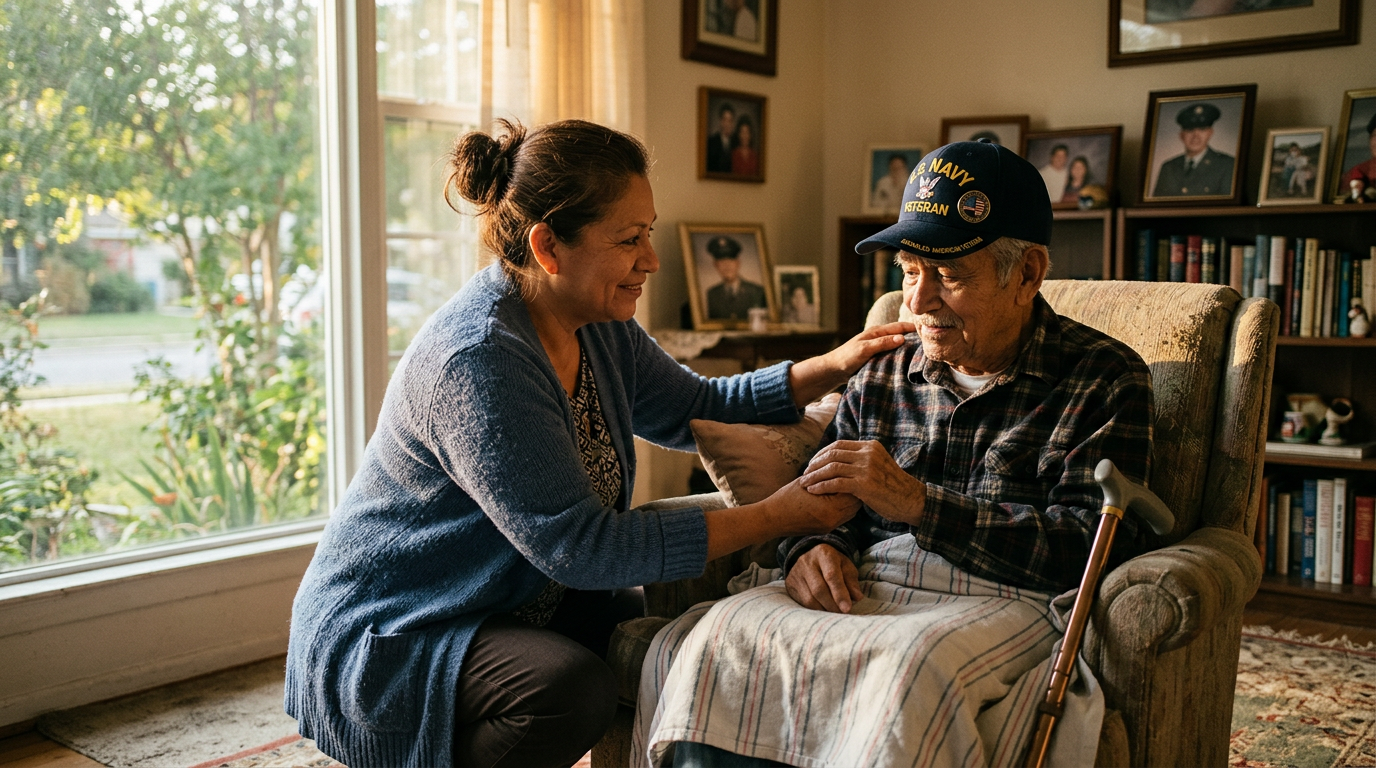
For many older veterans, this matters because a spouse, adult child, or other loved one may already be doing the work. PCAFC may recognize that care and offer support around it.
Who may qualify
The basic rating threshold is 70% or higher. The veteran must have a single service-connected disability rated at 70 percent, or a combined service-connected rating that adds up to that level, depending on the veteran's situation and the VA's decision.
The veteran also must need in-person personal care for at least six continuous months. That can mean hands-on help with daily activities, or supervision and protection because of a cognitive or mental-health condition.
- One condition rated at 70%, or several service-connected conditions that combine to that level
- A need for hands-on help with daily personal care
- Or a need for supervision and protection due to a cognitive or mental-health condition
- The need for care must last six continuous months or more
This is where many veterans talk themselves out of applying. They assume age is the issue, when the real question is whether the VA finds the veteran's care needs and service-connected conditions meet the program rules.
Older veterans can still apply
Every service era is included now. Since October 1, 2022, PCAFC has been open to caregivers of veterans from every service era.
If your family was told years ago that you were too old for this program, that answer expired. What matters now is whether you meet the current requirements, not whether someone failed to tell you about it before.
This is one of the biggest reasons older veterans miss out. They think, “Nobody mentioned it, so I must have missed my chance,” but that is simply not true here.
How the caregiver stipend is estimated
There is no single national amount for PCAFC. The stipend is estimated using the home health aide wage in the veteran's own area, then multiplied by 40 hours a week and 4.35 weeks in a month.
From there, the VA may pay 62.5% at Level 1 or 100% at Level 2, depending on the veteran's assessed needs and the VA's final decision. The assessment helps set the level, and the level helps set the stipend.
The important point is not chasing a universal number. It is understanding that the payment may vary by location and level, and that it is not counted as taxable income.
How to apply without overcomplicating it
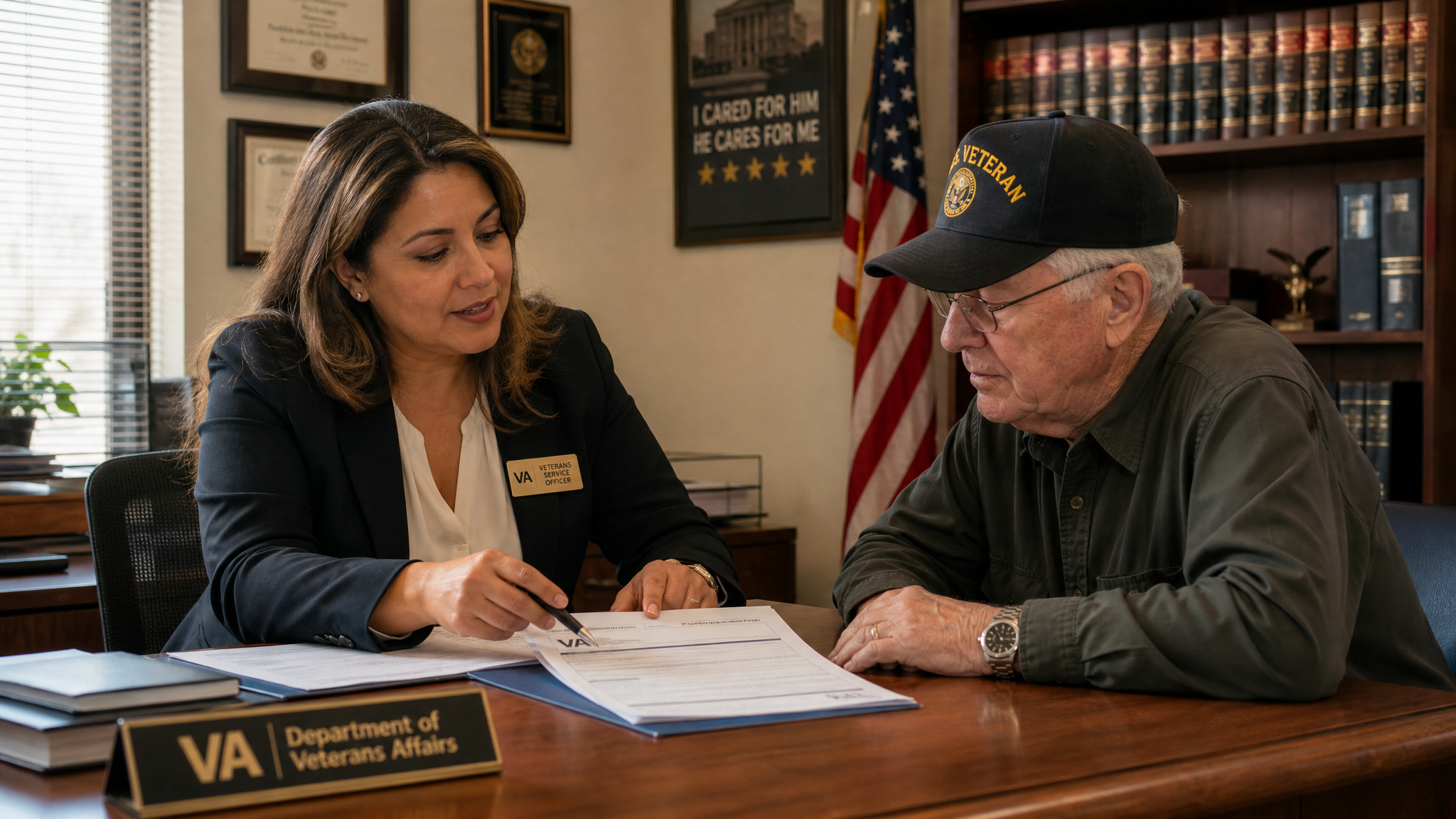
Apply together on VA Form 10-10CG. The veteran and the caregiver file the application together.
You may file it online at va.gov, mail it to the Evidence Intake Center, or hand it to the caregiver support team at the veteran's VA medical center. Do not attach medical records to this application.
- Complete VA Form 10-10CG together
- Submit it online, by mail, or at the VA medical center
- Wait for the VA team to contact you
- Take part in the assessment of the veteran's needs and the care the caregiver actually provides
- The VA sets the caregiver level, which helps determine the stipend estimate
That process can feel formal, and this program is strict. Still, many older veterans are better off applying while they can clearly describe their needs, attend appointments, and show the care their family is already giving.
Why this matters now for aging veterans
Knowing now helps protect your family. If someone in your home is already helping you bathe, dress, stay safe, remember tasks, or get through the day, this program may matter more than you think.
Too many veterans wait until a health crisis forces the issue. You do not need to scare yourself into action, but you also do not need to keep assuming you are too old, too late, or not worth the trouble.
Service connection is one question. The amount of support, if approved, is another. For an aging veteran, becoming aware of what you may be entitled to today can help protect your care at home and reduce strain on the people who love you.
For the full details, visit our complete PCAFC page at /caregivers/pcafc.
Free help is available when you are ready
No one can charge for an initial claim, and The Aging Veteran helps families understand and prepare this application at no cost. This is general educational information only, not legal, medical, or financial advice, and The Aging Veteran is not the VA and is not part of the federal government.
If you want help understanding whether PCAFC may fit your situation, you can reach out when you are ready to Albert L. Thombs Jr., a VA-accredited claims agent, accreditation #45147, at 702-992-4883. There is no pressure — just plain-English, free help for veterans and the families caring for them.
A quick, honest note
This article is general information, not legal advice, and every rate or example is an estimate. Your own claim depends on your records and the facts the VA finds. Albert L. Thombs Jr. is a VA-accredited claims agent (accreditation #45147). If you would like a real person to look at your situation, you are always welcome to reach out - there is no cost to ask.