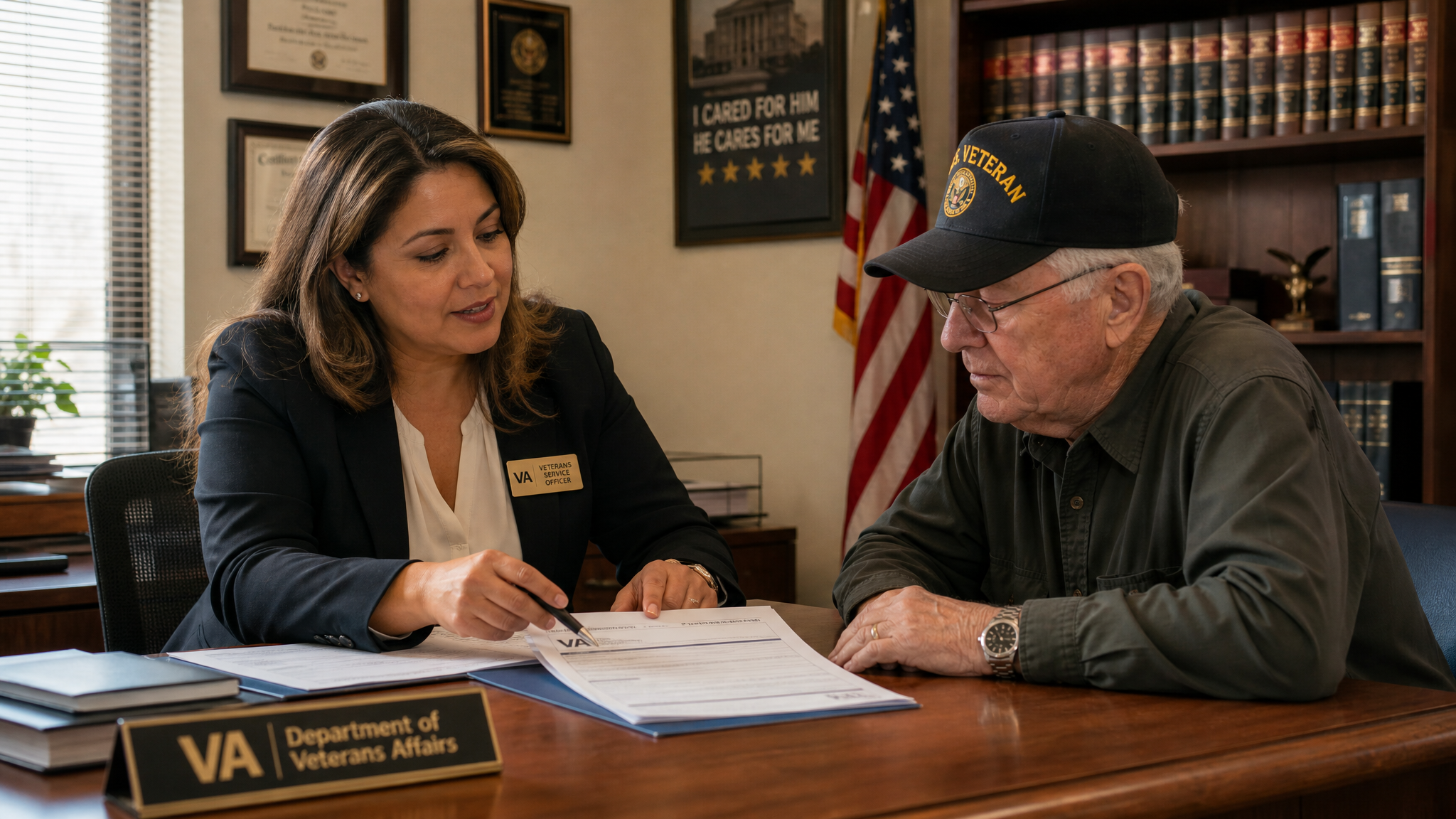
A lot of veterans think they missed their shot. They did not. Here is how VA family life insurance works, where the deadlines really are, and what to check now.
If you are over 45 and thinking, "If this mattered, somebody would have told me by now," you are not the only one. A whole lot of veterans and families were never given the plain-English version, and then talked themselves out of asking.
So here it is straight. There is no VA benefit you age out of, and being older does not cancel your right to learn what may protect your family now. On life insurance, the trick is not your age. The trick is knowing which program applies, and not missing the timing rules that actually matter.
Family coverage exists, and most people were never really told
FSGLI protects spouses and children while the service member is serving. That stands for Family Servicemembers' Group Life Insurance, and it is part of the same family of coverage that includes SGLI, VGLI, VALife, and VMLI, plus some older government policies for certain veterans.
For families, the big overlooked facts are simple. Spouse coverage may be up to $100,000, in $10,000 increments, but it can never be more than the service member's own SGLI amount. And every dependent child gets $10,000 free, with no premium, no opt-out, and no reduction.
- Spouse coverage up to $100,000, capped by the member's SGLI
- Each dependent child insured for $10,000 at no cost
- No health questions while serving for spouse coverage under FSGLI
- Military-to-military spouses must enroll manually, even when civilian spouses are often auto-enrolled from DEERS
That last point matters because a lot of families assume coverage just magically happened. Sometimes it did. Sometimes it did not. Assumptions are expensive.
Your age is not the problem, but timing can be
The real trap is the 120-day window. After separation, divorce, or the end of SGLI, a spouse generally has 120 days to convert that FSGLI coverage to an individual policy, and the key protection is this, no proof of good health is required.
That is a big deal. Wait too long, get a diagnosis, then try to buy private coverage, and the market suddenly acts like it never heard of you. That is one of the most common mistakes we see.
Spouse premiums under FSGLI are based on age, not health. The published examples run from $0.40 per $10,000 per month under 35 up to $4.00 per $10,000 at age 60 and over. Those are the current published amounts for this program, but always verify current rates before making decisions.
And no, being older does not mean you are disqualified from learning whether this coverage applies to your family. Older veterans still need to protect the people behind them. This is not just about you.
After a death, families may get more help than they realize
Beneficiaries get free counseling and a free online will after a covered life insurance claim is settled. Through the Beneficiary Financial Counseling Service, a beneficiary may use free professional financial counseling and free online will preparation for two years, with no cost and no sales pitch.
That matters more than people think. One of the other common mistakes is a surviving spouse settles the claim, never signs up for the free service, then pays a private advisor thousands for guidance that may have been available at no cost.
There is also a separate military benefit many families do not know about. A death on active duty may trigger a tax-free $100,000 death gratuity, and it can still be payable if the death happens within 120 days of discharge.
Different benefit, different purpose. Same theme. You may have been owed this and never told.
What to do now, depending on where your family is
Start by matching the situation to the right form. Do not just call three offices and hope one of them explains it right. That is not a system. That is a scavenger hunt.
If the service member is still serving
- Check spouse coverage through SOES on milConnect
- Confirm the family information in DEERS is correct
- If the spouse is also in the military, confirm manual enrollment was completed
If there has been a death and you are filing a claim
- Use SGLV 8283 for SGLI, VGLI, FSGLI, or TSGLI
- Include a certified death certificate
- Questions may go to OSGLI at 800-419-1473
If the policy is an older VA life insurance policy
- Use VA Form 29-4125 for older policies such as NSLI or S-DVI
- The VA Insurance Center number is 800-669-8477
If you want the free counseling and will service
- Register with FinancialPoint using Organization Web ID BFCSVA
- Have your claim number ready
- You may also call 888-243-7351
If you want the full walkthrough, including the exact places to file, see our full page here: /survivors/family-life-insurance.
What happens if you ignore this
Missed timing can cost families real protection. Not because you got too old, and not because the VA decided you aged out. Because nobody explained the rule, and then life got busy, somebody got sick, or a surviving spouse got left holding paperwork she never even knew existed.
This is why I keep saying do not wait until the family is already in crisis. Get organized while you can still find the records, confirm the coverage, and tell your spouse what exists. A benefit hidden from your family might as well not exist.
And while this article is about insurance, the bigger message still stands. There is no age limit on filing a first VA claim, and no age where you become "too late" to protect your health and your family. Service connection is still the gateway to a lot of benefits, and your rating may unlock more than monthly compensation, depending on your situation and the VA's decision.
Your job is awareness, records, and follow-through
Your family cannot use benefits they do not know about. Write down what coverage exists. Keep claim papers where your spouse or children can find them. If you are dealing with disability claims too, remember the same rule that governs every other VA fight, evidence wins.
For compensation claims, that means a current diagnosis, an in-service event, a nexus, and chronicity. For insurance and survivor benefits, it means the right form, the right records, and not sleeping through the deadlines that actually apply.
This is general educational information only. We are not the VA, and The Aging Veteran is not part of the federal government. But if you want free, no-pressure help understanding what may apply to you or your family, Albert L. Thombs Jr., VA-accredited claims agent #45147, and his team are here when you are ready. Call 702-992-4883. Your privacy matters, and nobody here is going to push you around.
A quick, honest note
This article is general information, not legal advice, and every rate or example is an estimate. Your own claim depends on your records and the facts the VA finds. Albert L. Thombs Jr. is a VA-accredited claims agent (accreditation #45147). If you would like a real person to look at your situation, you are always welcome to reach out - there is no cost to ask.