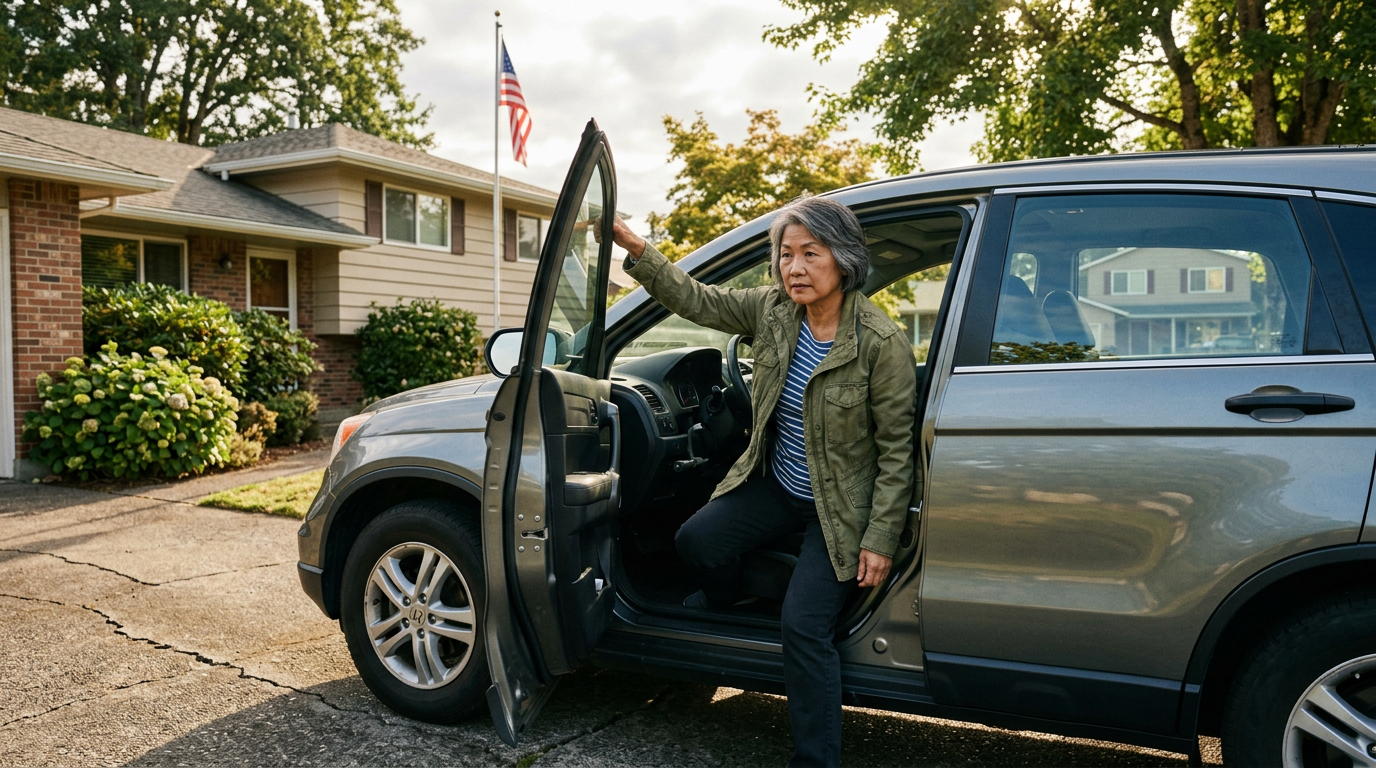
If a service-connected disability makes a normal vehicle impossible to drive, VA may help with the car and the equipment. There is no age limit on a first claim.
If getting in and out of the house has started to depend on whether someone else can drive you, you are not alone. Many veterans do not hear about this benefit until later in life, but it is not too late to learn what may be available now.
If a service-connected disability makes it impossible to drive a normal vehicle, the VA may help with the vehicle itself and with the equipment that makes it usable. For many older veterans, this can protect independence, health, and day-to-day family life.
How this benefit can help you stay mobile
VA may help you get back on the road if a service-connected disability keeps you from driving a standard vehicle. This is not just about convenience. It can mean getting to medical appointments, picking up groceries, seeing family, and avoiding the isolation that comes with being stuck at home.
Many veterans quietly talk themselves out of applying because they think, “I am too old,” or “I waited too long.” But there is no age limit on filing a first VA claim, and the issue is not your age. The real question is whether your condition is service-connected and meets the rules for this benefit.
If no one ever explained this to you, that does not mean you missed your chance. Becoming aware of what you may be entitled to today as an aging veteran is one way to protect your health, your family, and your benefits.
There are two separate parts to this benefit
Car money and equipment money are separate. That distinction matters because one part is generally one-time, while the other can be used again as your needs change.
- A one-time automobile allowance of up to $27,074.99, effective Oct. 1, 2025, may help you buy a vehicle if a service-connected disability keeps you from driving a standard one. This figure is an estimate based on current published information, and you should confirm the current amount on va.gov.
- A separate adaptive-equipment grant may pay for the modifications that make the vehicle drivable or usable for you.
- The automobile allowance is paid straight to the seller, not to you, and it is tax-free.
- In most cases, the automobile allowance is once in a lifetime.
- The adaptive-equipment benefit is more flexible and may be used again as your condition changes.
The legal authority published on our site for the automobile allowance is 38 CFR 3.808. General educational information like this can help you understand the benefit, but The Aging Veteran is not the VA and this is not legal, medical, or financial advice.
What the adaptive-equipment grant may cover
Adaptive equipment can be renewed as your needs change. That can matter a great deal as you get older, especially if mobility, strength, or balance has changed over time.
Depending on your situation and the VA's decision, the adaptive-equipment grant may help with:
- Hand controls
- Wheelchair lifts
- Power steering
- Special seating
- Installation, repair, and replacement of covered equipment
- Training to use the equipment safely
For some veterans, these changes are what make driving possible again. For others, they make it safer to ride in and use a vehicle without depending completely on someone else.
Who may qualify
Eligibility depends on specific service-connected conditions. This benefit is not based on age, and it is not based on how long you have been out of service.
Qualifying conditions published on our site include:
- Loss or loss of use of a hand or foot
- Permanent vision loss
- Severe burns
- ALS
This is where many older veterans get discouraged too early. They assume that because they have lived with a serious condition for years, or because they were never told about this benefit, they are out of the game. You are not out of the game. If the condition is service-connected and meets the rules, age alone does not disqualify you.
Your medical evidence matters here. Doctor documentation is central because the VA needs clear evidence of the disability tied to the benefit requirements.
How to apply without tripping over timing
Get approval before you buy the vehicle. This is the biggest practical point to understand because timing matters with the automobile allowance.
- Apply for the automobile allowance using VA Form 21-4502.
- Wait for approval before purchase of the vehicle.
- Apply for the equipment itself using VA Form 10-1394.
- Gather strong medical support, because the doctor's documentation is a central part of the claim.
The honest caveat is simple: because the automobile allowance is generally a one-time benefit, it is worth getting the paperwork right the first time. The adaptive-equipment part is usually more flexible, but the vehicle purchase piece has less room for error.
If you want the full breakdown, visit our complete page on this benefit at /benefits/automobile-adaptive-equipment.
If you are older and still deciding, this is why it matters now
Do not talk yourself out of it just because the years passed. Veterans in their fifties, sixties, seventies, and beyond still file first claims every day. The VA looks at service connection and eligibility rules, not whether you found out late.
There is also a practical side to filing while you can. Filing while you can gather records and attend exams may make the process easier on you and your family than waiting until your health declines further.
This benefit may be the difference between depending on others for every ride and having a safer, more workable vehicle setup. Being aware of what you may be entitled to helps protect your family as much as it helps protect your own independence.
Free help is available when you are ready
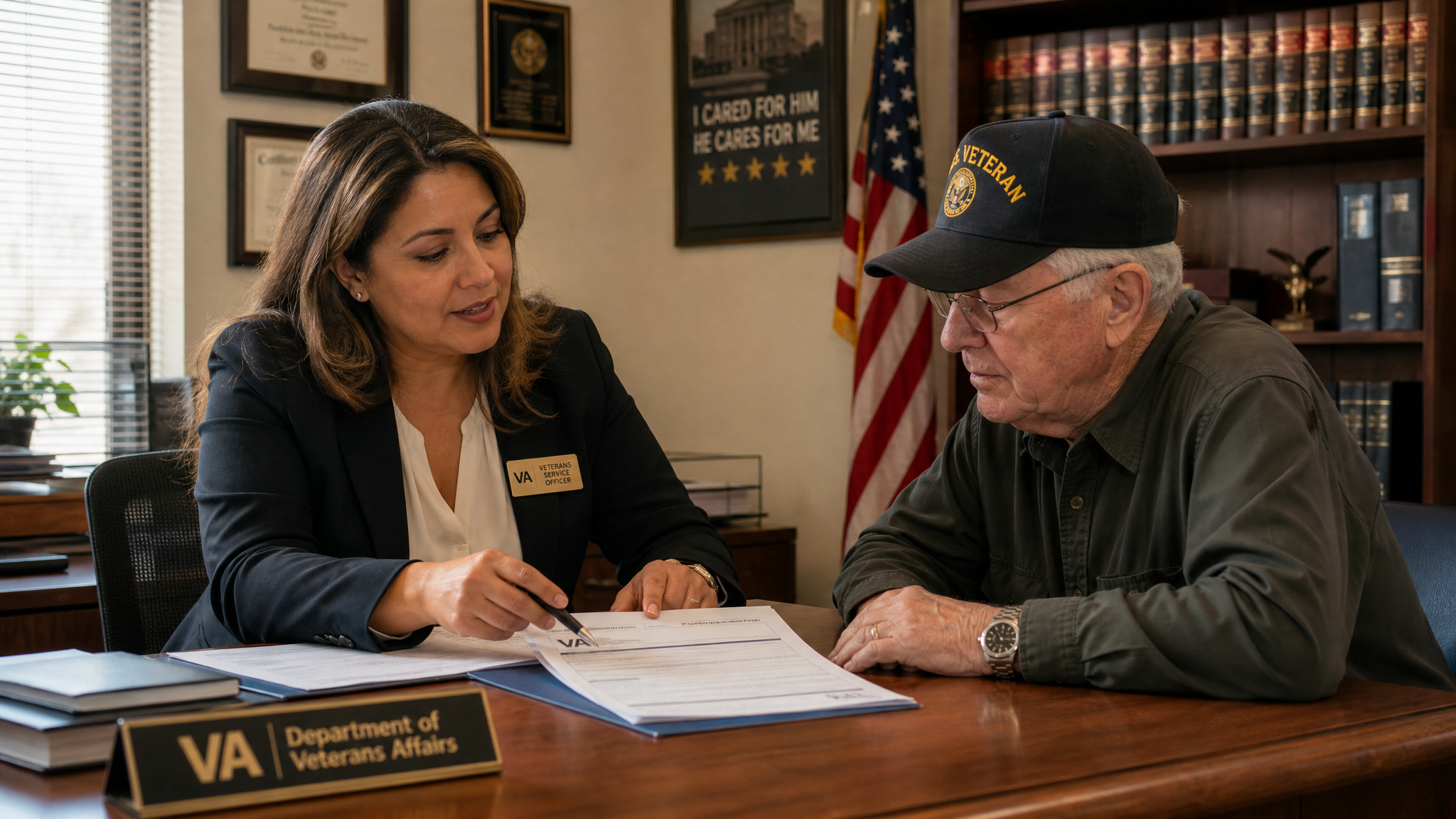
Free help is available if you want someone to walk you through the claim in plain English. The Aging Veteran is a free educational resource, and this guidance comes from Albert L. Thombs Jr., a VA-accredited claims agent with accreditation #45147.
If you would like help when you are ready, you can contact Albert and his team at 702-992-4883. There is no pressure, and no one can charge a veteran to file an initial claim. Again, The Aging Veteran is not part of the federal government, and this article is general educational information, not legal, medical, or financial advice.
A quick, honest note
This article is general information, not legal advice, and every rate or example is an estimate. Your own claim depends on your records and the facts the VA finds. Albert L. Thombs Jr. is a VA-accredited claims agent (accreditation #45147). If you would like a real person to look at your situation, you are always welcome to reach out - there is no cost to ask.