
The short version
- Your VA enrollment works at VA facilities anywhere in the country.
- In an emergency, go to the nearest ER first - then have someone notify the VA quickly.
- Ask about Community Care and travel reimbursement before a trip or a move.
- Traveling far for care? Free family lodging like Fisher House may be available.
01Your VA health care follows you
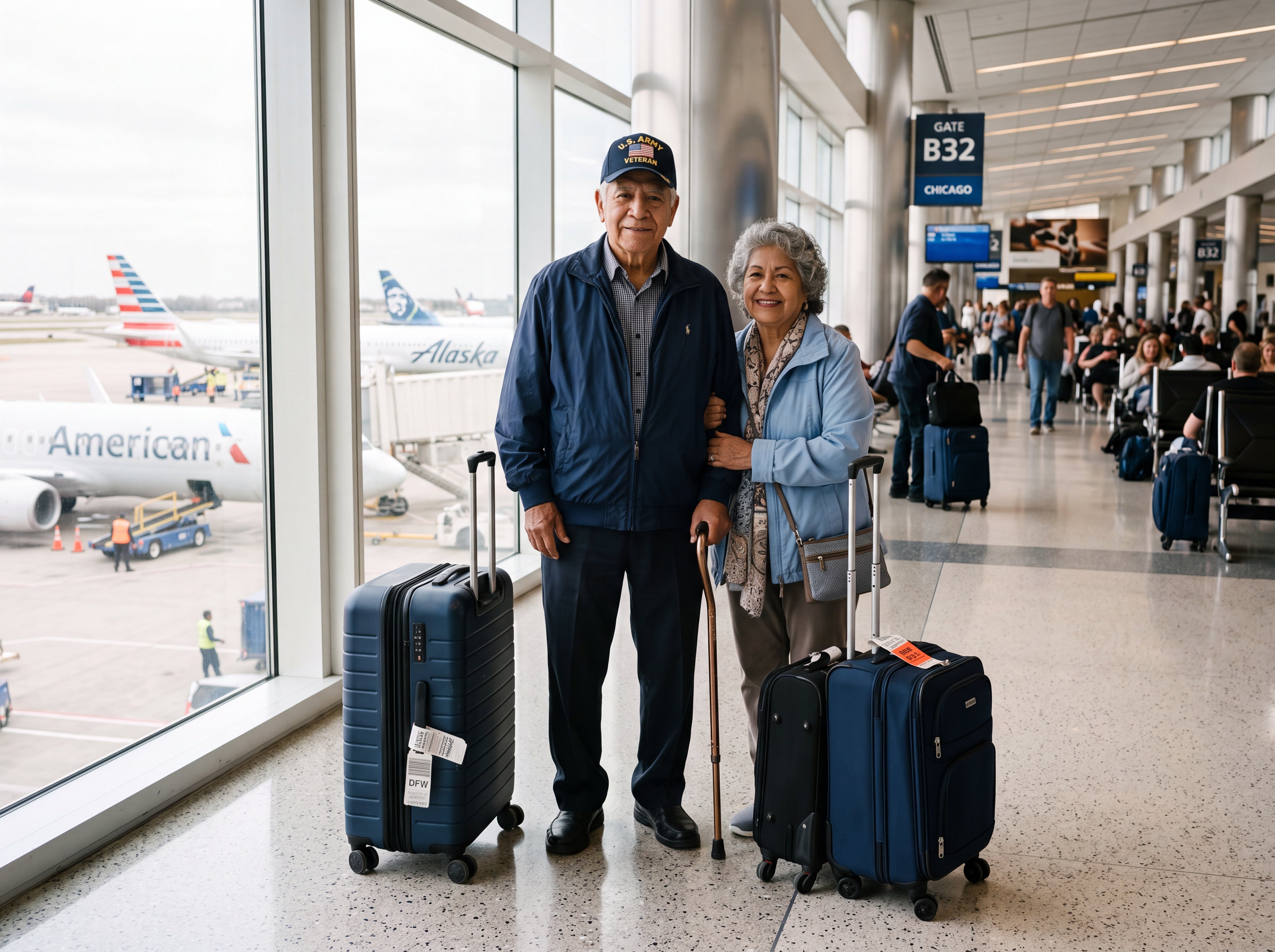
The VA is one national system, not a single local clinic. If you are enrolled in VA health care, you can be seen at any VA medical center in the country, not just your home one. That matters when you spend winters in another state or visit the grandkids for a month.
Before a long trip, call your primary care team. They can refill prescriptions early, set up a video visit, and note in your record that you may need to be seen elsewhere so another VA facility can help you smoothly.
02Getting care in the community (VA Community Care)
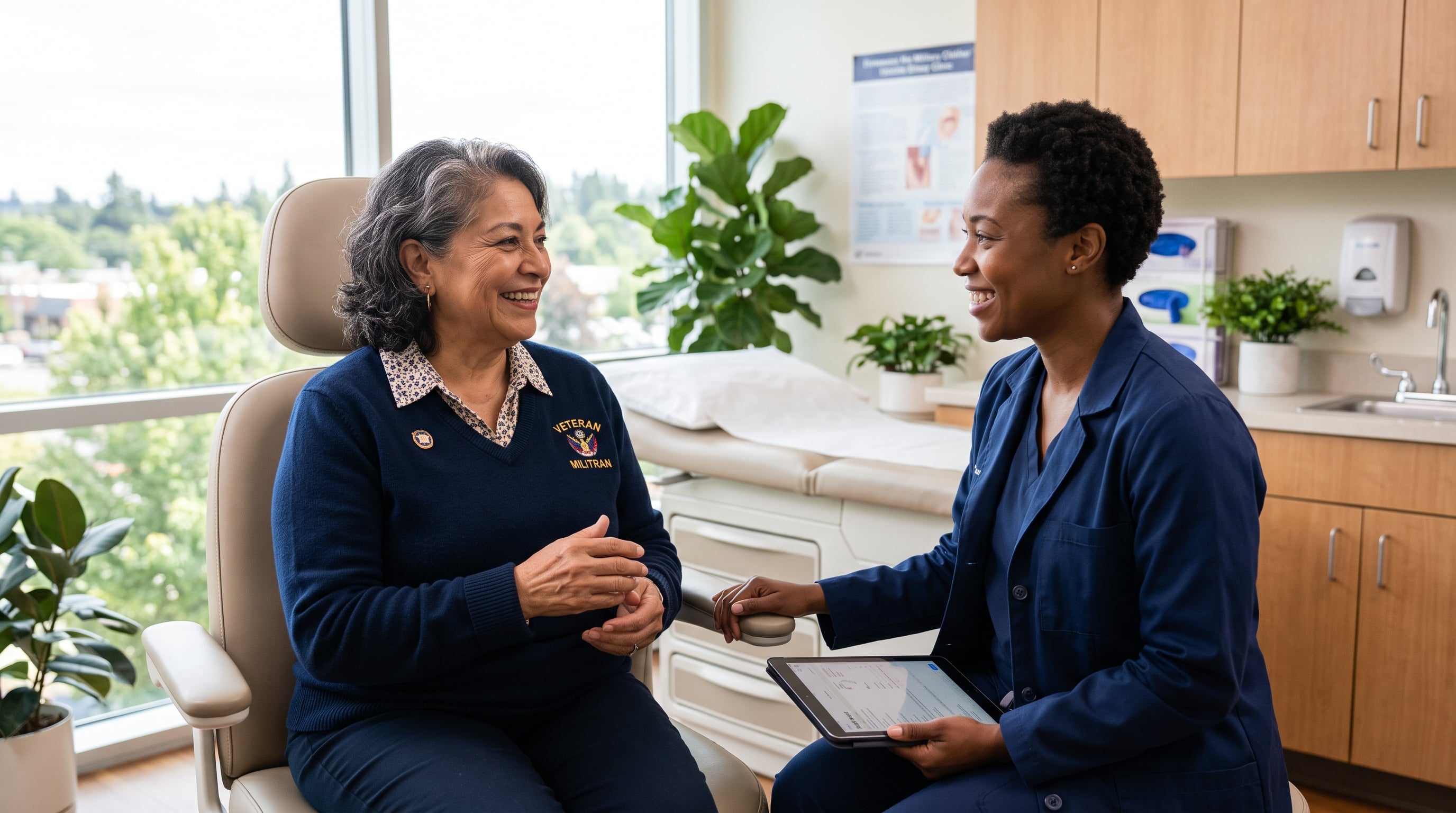
Sometimes the nearest VA is too far or cannot see you soon enough. In those cases the VA may pay for you to see a local, non-VA provider through a program called Community Care. The key rule for planned visits: it usually must be approved by the VA in advance.
If you know you will be away for a while and may need routine care, ask your VA team about a Community Care referral before you leave. Getting the approval first is what protects you from a surprise bill.
For information purposes only - this is not legal, financial, or medical advice. The Aging Veteran is a private service and is not part of, or endorsed by, the U.S. Department of Veterans Affairs. Benefits are subject to VA eligibility rules. Always confirm your specifics on va.gov or with a qualified professional.
03Emergencies far from home
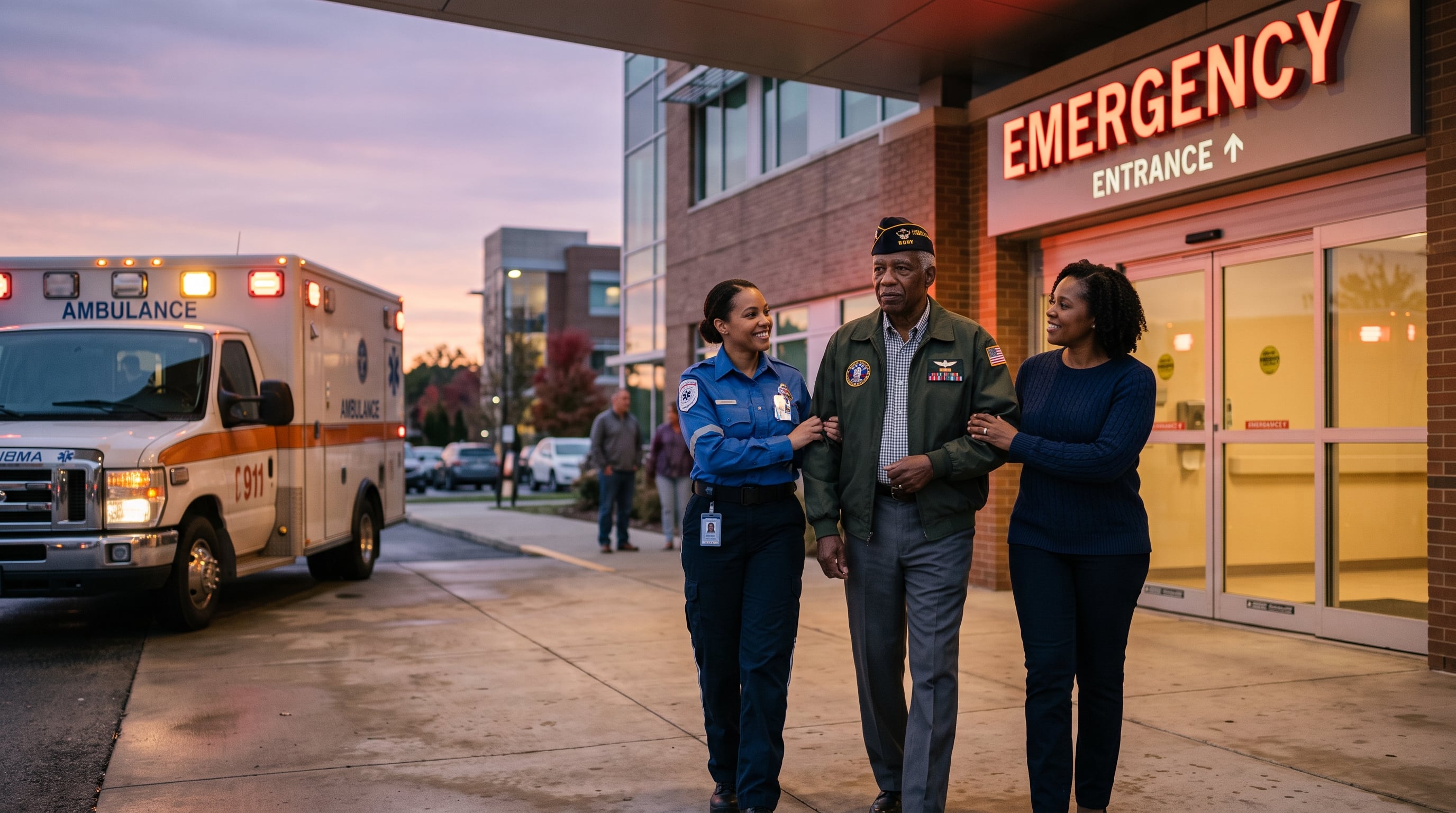
An emergency is different. If you have chest pain, signs of a stroke, or another true emergency, go to the nearest emergency room or call 911 - do not drive past it to find a VA hospital.
The VA may cover emergency care at a non-VA hospital, but there is a catch worth remembering: someone should notify the VA within 72 hours of the emergency. A family member can make that call for you, and it helps protect your coverage.
04Where to stay when care is far away
If you have to travel to a distant VA medical center - or your spouse needs to be nearby while you are admitted - you should not have to sleep in a waiting room or pay for a hotel you cannot afford. Ask the VA social worker or patient advocate about lodging before you go.
Many major VA and military medical centers have a Fisher House nearby - a comfortable guest home where veterans and their families can stay free of charge while receiving care. Where a Fisher House is full or unavailable, the VA can sometimes authorize other lodging or a discounted rate at a partner hotel.

- Ask early - Fisher House rooms are limited and fill up fast.
- The patient advocate or social worker at the treating facility books it, not you.
- Bring a few nights of medication and a list of your prescriptions.
- Keep receipts for any lodging or meals in case they can be reimbursed.
05Help with travel costs
For approved appointments, some veterans qualify for the Beneficiary Travel program, which can reimburse mileage and certain travel costs to and from VA care. Eligibility is generally based on your disability rating or income.
It is worth asking your VA facility whether you qualify - many veterans who are eligible never claim it simply because no one told them it existed.

06Travel smart and travel safe
A little planning turns a nervous trip into an easy one. The goal is simple: if something happens while you are away, you and whoever is with you already know exactly what to do.
- Carry a printed list of your medications, doses, allergies, and conditions.
- Keep your VA card, an ID, and an emergency contact card in your wallet.
- Save the VA facility locator and your primary care number in your phone.
- Pack medications in your carry-on, never in checked luggage.
- Tell a family member your itinerary and where you are staying each night.
07Moving to a new state
If you are relocating, you do not lose anything - your enrollment moves with you. Call the VA to transfer your care to a facility near your new home so your records and prescriptions are ready when you arrive.

- Tell your current VA team your new address and move date.
- Ask which VA facility will be your new home clinic.
- Set up telehealth so there is no gap in care during the move.
- Refill essential prescriptions before you go.
Keep reading