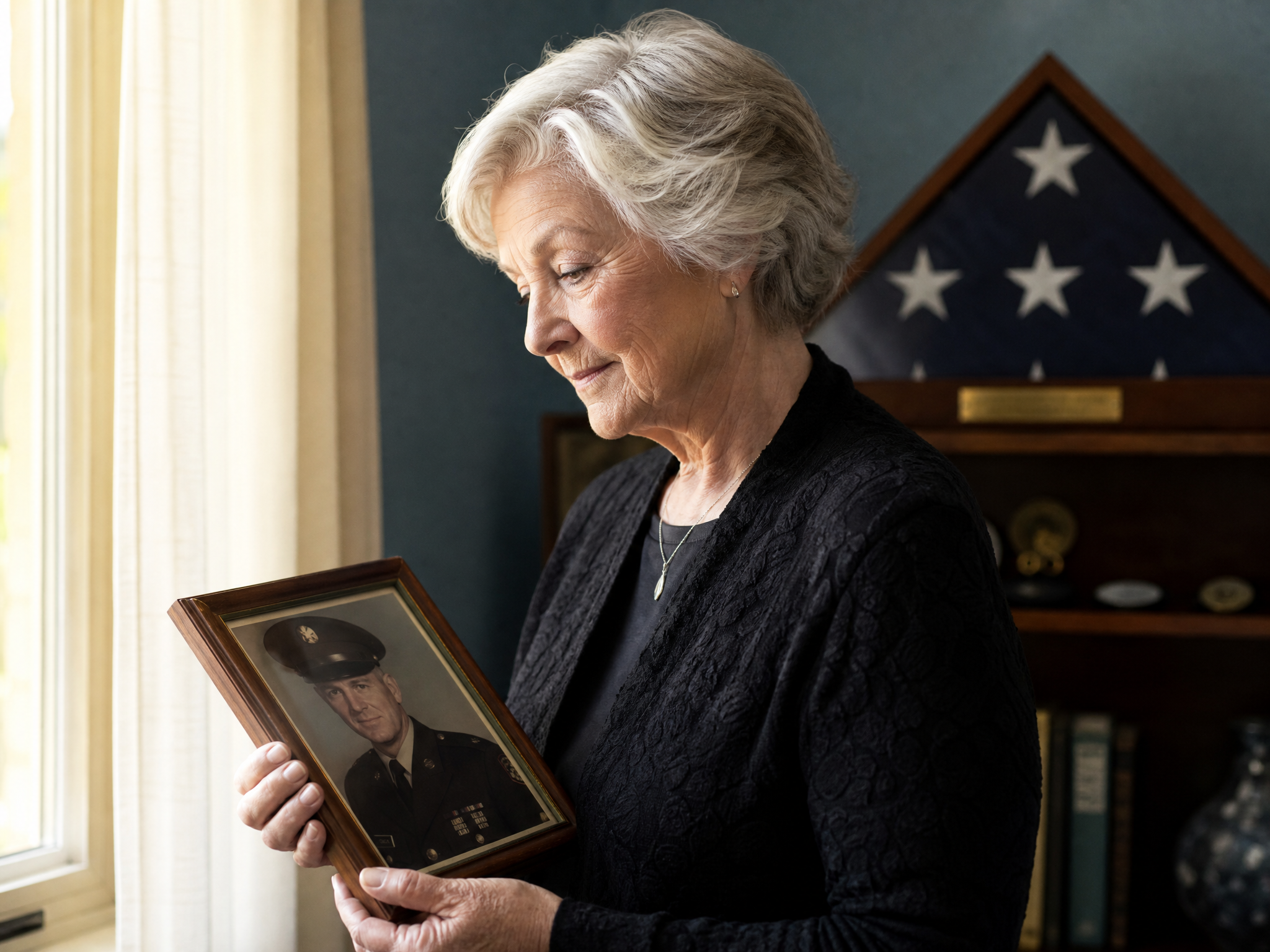
Survivors
The Survivor's Benefit Manual
Every benefit your family may be owed, the exact form to file, and the number to call, all gathered into one calm, printable guide so you never have to go searching. You can read it on the screen or print the whole thing and keep it by the phone. Take it one step at a time, in whatever order feels manageable, because none of this has a deadline you have to meet today. If a section raises a question, our free assistant and our team are here to walk through it with you.

The Survivor's Benefit Manual
Brought to you free by The Aging Veteran · Albert L. Thombs Jr., VA-accredited claims agent #45147 · 702-992-4883
The Survivor's Benefit Manual
Every benefit your family may be owed, the exact form to file, the number to call, and the official VA page to confirm it - gathered into one calm reference so you never have to go hunting. Read it here, print it, or save it as a PDF and keep it by the phone. There is no rush; take it one step at a time.
Tip: choose “Save as PDF” in the print window to keep the whole manual as one file.
This is our plain-language companion to the VA's official Survivor Benefits and Services guide (February 2026), published by the VA Office of Survivors Assistance. The amounts here are effective December 1, 2025 (burial allowances October 1, 2025); the VA adjusts them each year, so every figure links to the live VA page where you can confirm today's number.
Start here - the first few days
There is no rush on benefits yet. These first steps simply protect your options while you focus on family.
- Order at least 10 certified copies of the death certificate. Almost every agency and insurer asks for an original.
- Find the veteran's discharge papers (the DD-214). This one document unlocks nearly every VA survivor benefit.
- Tell the funeral director your loved one served - they can arrange military honors and often help start the burial paperwork.
- Do not spend any VA payment for the month of death or later until you know what you keep.
- When you are ready, call us. A review is always free to a survivor.
The benefits, one by one
You do not have to understand every one today. Skim the list, mark what fits your family, and we will help you with the rest.
Dependency & Indemnity Compensation (DIC)
A tax-free monthly check for eligible survivors when the veteran died from a service-connected condition - or was rated totally disabled for long enough before death.
Who it is for: Surviving spouse, dependent children, and in some cases dependent parents.
- 2026 base rate for a surviving spouse: $1,699.36 a month, tax-free (it rises each year with the cost-of-living increase).
- Add-ons: +$421/mo per dependent child under 18; +$421/mo if you need Aid & Attendance; +$197.22/mo if you are housebound. (The per-child and Aid & Attendance add-ons are both $421.00 for 2026 - that is not a typo; the VA lists the two separate line items at the same amount this year.)
- The 8-year provision: add $360.85/mo if the veteran was rated totally disabled for the 8 years right before death and you were married the whole 8 years. A separate 2-year bump of $359/mo can be added while you have a child under 18 at home.
- The 10-year rule most families never hear: if the veteran was rated 100% (totally disabled) for the 10 years right before death - or for 5 years from discharge, or 1 year for a former POW - a surviving spouse may receive DIC even if the death itself was NOT service-connected.
- PACT Act: if a DIC claim was denied in the past, you can ask the VA to look again under the newer toxic-exposure laws, and a new grant may be backdated.
- Remarriage does not end DIC if you remarry at 57 or older (55 or older for remarriages on or after Jan 5, 2021).
A surviving parent uses income-based Form 21P-535. Form 21-674 keeps DIC going for a child aged 18-23 who stays in school.
Official VA page: va.gov/family-and-caregiver-benefits/survivor-compensation/dependency-indemnity-compensation/survivor-rates
Read the full plain-language guide
Survivors Pension
A tax-free monthly benefit that fills the gap between a low income and a guaranteed minimum, for the unmarried surviving spouse or child of a wartime veteran.
Who it is for: Unmarried surviving spouse or dependent child of a veteran who had 90+ days of active service (or 24 months if the veteran entered service on or after September 8, 1980) with at least one day during a wartime period, with limited income and assets.
- Net-worth limit (Dec 1, 2025 - Nov 30, 2026): $163,699 (this counts assets plus income - not your home or car).
- Maximum yearly amounts (Dec 1, 2025): surviving spouse $11,699; with a child $15,311; if housebound $14,298 ($17,902 with a child); if you need Aid & Attendance $18,697 ($22,304 with a child). Each additional child adds $2,984.
- It is a "fill-the-gap" benefit - the VA pays the difference between your countable income and the limit, so what you spend on your own care and medical bills can be subtracted and often raises the check.
The same single form covers DIC, Survivors Pension, and Accrued Benefits together.
Official VA page: va.gov/family-and-caregiver-benefits/survivor-compensation/survivors-pension/rates
Read the full plain-language guide
Accrued Benefits & Substitution
Money the VA already owed the veteran but had not paid yet at the time of death - for example, a claim that was still being decided. A survivor can claim it, or step in to finish the pending claim.
Who it is for: Surviving spouse, then children, then a dependent parent - or whoever paid the final expenses.
- Claimed on the same form as DIC and Survivors Pension - do not leave it off.
- "Substitution" lets you take the veteran's place in a claim that was open when they passed, so the work already done is not lost.
Official VA page: va.gov/family-member-benefits
Read the full plain-language guide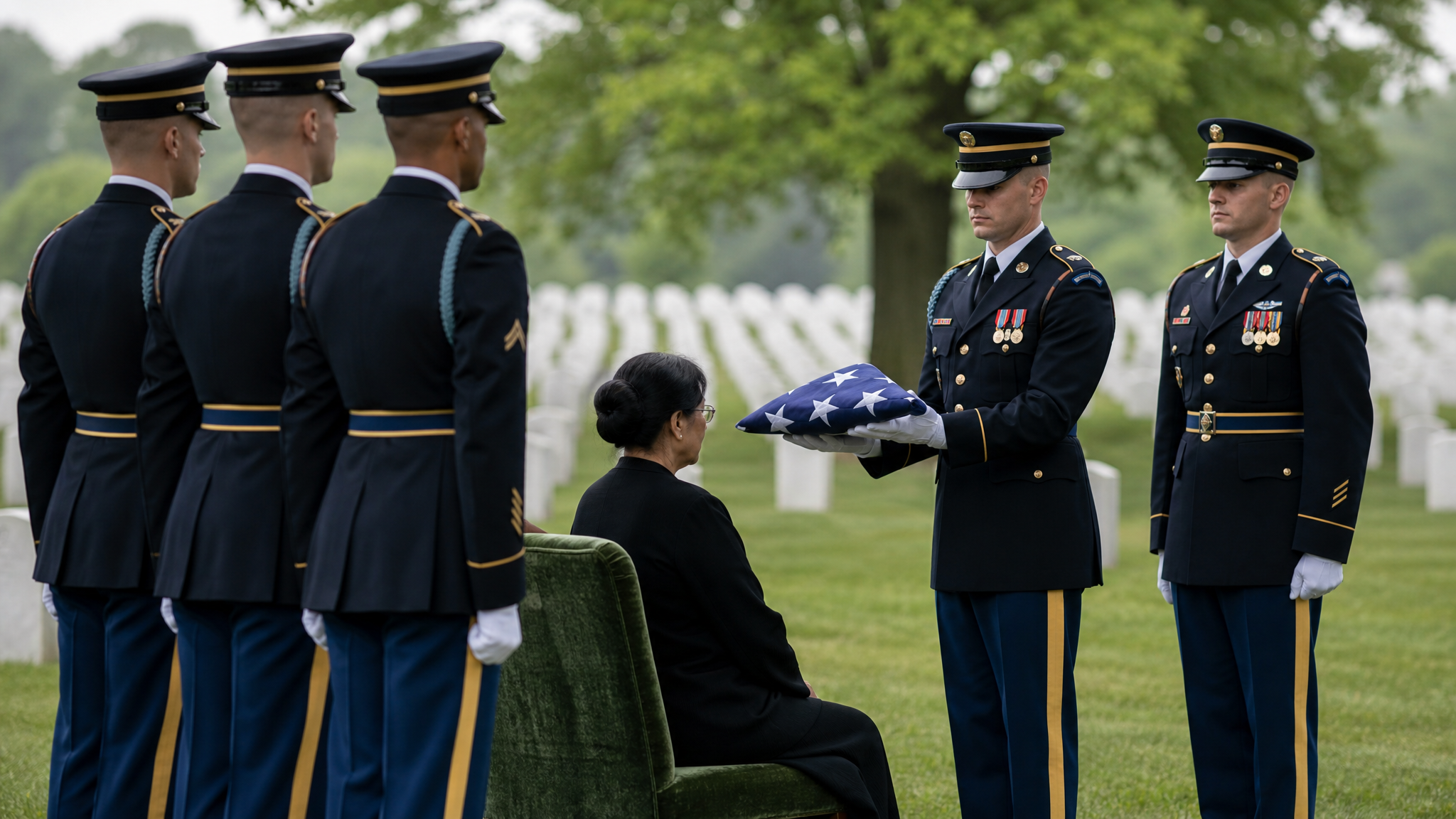
Burial, Memorial & Military Honors
Help with the cost of burial, a resting place, a lasting marker, and the military honors your veteran earned.
Who it is for: The person who arranged or paid for the burial, and the veteran's family.
- Burial in a VA national cemetery is free for the veteran - and often the spouse and dependent children too: the gravesite, opening and closing, a headstone or marker, and perpetual care.
- Burial allowance (deaths on or after Oct 1, 2025): up to $2,000 if the death was service-connected; $1,002 if not (plus a $1,002 plot allowance, and $1,002 if the veteran was in VA care). The eligible surviving spouse is usually paid automatically.
- A free government headstone, grave marker, or bronze medallion - even for a grave in a private cemetery (Form 40-1330, or 40-1330M for a medallion).
- A free U.S. burial flag (Form 27-2008 - bring it to a funeral director, VA regional office, or post office) and military funeral honors: the flag folding, its presentation, and the playing of "Taps." Tell your funeral director you want them.
- A Presidential Memorial Certificate signed in the veteran's honor (Form 40-0247).
- Plan ahead: anyone can apply now for a pre-need eligibility decision (Form 40-10007) so a place in a national cemetery is settled before it is needed.
Official VA page: va.gov/burials-memorials
Read the full plain-language guide
Health Care (CHAMPVA)
A health-coverage program that shares the cost of your care - doctor visits, hospital stays, prescriptions, mental health, skilled nursing, and more - for the family of a veteran who died of a service-connected condition or was rated permanently and totally disabled.
Who it is for: An eligible surviving spouse and dependent children who are not eligible for TRICARE.
- Annual deductible is modest ($50 per person / $100 per family) with a 25% cost-share and a yearly out-of-pocket cap.
- Includes a Meds by Mail pharmacy option and access to dental and vision plans (VADIP).
- If you have Medicare, CHAMPVA pays second (after Medicare) - keeping both usually lowers your out-of-pocket cost.
- Remarriage before 55 ends CHAMPVA (you can get it back if that marriage later ends); remarriage at 55 or older does not end it.
- Mail: CHAMPVA, PO Box 469028, Denver, CO 80246-9028.
Official VA page: va.gov/health-care/family-caregiver-benefits/champva
Read the full plain-language guide
Education & Career Benefits
Money for college, trade school, apprenticeships, or job training for a surviving spouse and children - a lasting way the veteran's service keeps giving to the family.
Who it is for: Surviving spouse and children of a veteran who died in service or from a service-connected condition, or was permanently and totally disabled.
- The Fry Scholarship pays Post-9/11 GI Bill rates (tuition, a housing allowance, and a books stipend) for children and spouses of those who died in the line of duty on or after Sept 11, 2001. A spouse can keep DIC and use the Fry Scholarship at the same time.
- Chapter 35 (DEA) pays $1,574 a month for full-time study, for up to 45 months, for other eligible survivors.
- Good news on deadlines: if the qualifying event happened on or after Aug 1, 2023, there is no time limit. Children generally use it between ages 18 and 26; Fry children who turned 18 after Jan 1, 2013 can use it at any age.
- Use the free GI Bill Comparison Tool to check a school before you enroll.
Already in school? Your school's certifying official files Form 22-1999 to certify your enrollment.
Official VA page: va.gov/family-and-caregiver-benefits/education-and-careers
Read the full plain-language guide
Home Loan for Surviving Spouses
Many surviving spouses can use the VA home loan benefit - to buy or refinance a home with no down payment and no monthly mortgage insurance.
Who it is for: A surviving spouse of a veteran who died of a service-connected condition (and some others, including MIA/POW cases).
- No down payment and no private mortgage insurance - a real monthly saving.
- The VA funding fee is usually waived for surviving spouses.
- You first request a Certificate of Eligibility (COE). If you receive DIC, file VA Form 26-1817 with the veteran's DD-214 - we can help.
- Most keep the benefit unless they remarry before age 57 (remarry at 57 or older and you may still qualify).
Official VA page: va.gov/housing-assistance/home-loans/how-to-request-coe
Read the full plain-language guide
Life Insurance & Death Gratuity
If the veteran carried government life insurance (SGLI while serving, or VGLI after), the named beneficiary files a claim to receive the payout. Family coverage (FSGLI) may also apply.
Who it is for: The named beneficiary on the policy - and, for active-duty deaths, the designated death-gratuity beneficiary.
- Not sure what coverage existed? Call the insurance office at 1-800-419-1473 (email [email protected]). For older VA policies from before 1967, call 1-800-669-8477.
- A separate one-time, tax-free $100,000 death gratuity is paid by the military (Department of Defense) when a service member dies on active duty - or within 120 days of discharge in certain cases.
- Call to start the claim - do not assume someone else has. Have the death certificate and the veteran's information ready.
Official VA page: benefits.va.gov/insurance
Read the full plain-language guide
Survivor Benefit Plan (SBP) annuity
A monthly annuity from the military retirement system (not the VA) if the veteran was a military retiree who elected SBP coverage. It is paid by DFAS.
Who it is for: The spouse or child named as the SBP beneficiary.
- The "Widow's Tax" is gone: as of 2023 you can receive the full SBP annuity AND full VA DIC - the old dollar-for-dollar offset was eliminated.
- Report the death to DFAS to start the annuity.

Social Security Survivor Benefits
Social Security is separate from the VA. A surviving spouse and children may qualify for monthly survivor benefits and a one-time death payment - and taking VA benefits does not reduce them.
Who it is for: Surviving spouse, dependent children, and sometimes dependent parents.
- A one-time lump-sum death payment of $255 may be available to an eligible spouse or child.
- Report the death and ask about survivor benefits by phone - you generally cannot apply for survivor benefits online.
- Your VA DIC and Social Security survivor benefits can be received at the same time.
Official VA page: www.ssa.gov/benefits/survivors
The forms, at a glance
You will hear these numbers over and over. Here is what each one is for and where to get it - and remember, we can fill any of them out with you.
| Form | What it does | Where to get it |
|---|---|---|
| DD-214Discharge papers | The one document that unlocks nearly every VA survivor benefit. Lost it? We can help you request a copy. | va.gov/records/get-military-service-records |
| 21P-534EZSurvivor benefits application | The big one - covers DIC, Survivors Pension, and Accrued Benefits for a spouse or child, all at once. | va.gov/forms/21p-534ez |
| 21P-535Parents' DIC | DIC for a surviving, dependent parent (this one is income-based). | va.gov/forms/21p-535 |
| 21-674School attendance | Keeps DIC going for a child aged 18-23 who stays in an approved school. | va.gov/forms/21-674 |
| 21P-530EZBurial allowance | Ask the VA to help pay back part of the funeral and burial costs. | va.gov/forms/21p-530ez |
| 40-1330Headstone or marker | Request a free government headstone or grave marker. | va.gov/vaforms/va/pdf/VA40-1330.pdf |
| 40-1330MGrave medallion | Request a bronze medallion for a grave already marked with a private headstone. | va.gov/vaforms/va/pdf/VA40-1330m.pdf |
| 40-0247Presidential Memorial Certificate | Request a certificate signed in the veteran's honor. | va.gov/vaforms/va/pdf/VA40-0247.pdf |
| 27-2008Burial flag | Request a U.S. flag to drape the casket or urn. | va.gov/burials-memorials/memorial-items/burial-flags |
| 40-10007Pre-need eligibility | Find out ahead of time if a national-cemetery burial is available. | va.gov/burials-memorials/pre-need-eligibility |
| 10-10dCHAMPVA application | Apply for CHAMPVA health coverage for an eligible spouse or child. | va.gov/forms/10-10d |
| 22-5490Survivor education | Apply for the Fry Scholarship or Chapter 35 (DEA) education benefits. | va.gov/forms/22-5490 |
| 26-1817Home-loan eligibility | A surviving spouse requests a Certificate of Eligibility for a VA home loan. | va.gov/forms/26-1817 |
If the VA says no - your right to a review
A denial is not the end of the road. You usually have one year from the date on the decision letter to ask for a review. There are three ways to do it:
Supplemental Claim
Add new and relevant evidence the VA had not seen. A reviewer takes a fresh look with the new information.
Higher-Level Review
Ask a more senior reviewer to look again at the same evidence, with no new documents added.
Board Appeal
Take it to a Veterans Law Judge at the Board of Veterans' Appeals in Washington - by direct review, by adding evidence, or by requesting a hearing.
Where to send it: VA Claims Intake Center, PO Box 4444, Janesville, WI 53547-4444 (for compensation such as DIC), or PO Box 5365, Janesville, WI 53547-5192 (for pension/survivor reviews). Faster still, upload online.
Learn more at va.gov/decision-reviews and check where things stand any time at va.gov/claim-or-appeal-status.
Before you accept a “no,” let us read the decision with you. A review is free to a survivor.
Someone to talk to
Grief is not a line on any form, and a case worker trained to process paperwork often cannot give you what you really need - which is someone who understands this particular loss. You deserve to talk to people who do. Start with the free VA programs below, then reach out to the national organizations built by and for military survivors.
Free VA programs to try first
Vet Center Bereavement Counseling
Always free.What they offer: Free, confidential grief counseling - one-on-one or in a group - from counselors who work only with the military community and understand this kind of loss. You can be seen at a community Vet Center, by phone or video, or somewhere you feel comfortable.
Who it helps & how to reach them: For the surviving spouse, child, parent, or sibling of a service member who died on duty - including families who lost a loved one to suicide. You do NOT need to be enrolled in VA health care. Call the 24/7 line and ask for bereavement counseling.
Veterans Crisis Line
Always free.What they offer: Immediate, confidential support from trained responders - many of them veterans - for anyone in emotional crisis. It is for family members and survivors too, not only veterans.
Who it helps & how to reach them: Call any time, day or night, then press 1. You can also text 838255 or chat online. No enrollment, no paperwork.
Reputable national organizations
When the VA does not offer what your family needs, these nonprofits do - each one checked for what it actually provides and who it serves.
TAPS - Tragedy Assistance Program for Survivors
All services are free to survivors.What they offer: A 24/7 helpline, one-to-one peer mentors who have survived the same kind of loss, referrals to private grief counseling, weekend seminars and retreats, and Good Grief Camps built for grieving children and teens. Casework staff also help sort out military benefits and records.
Who it helps & how to reach them: Open to ANYONE grieving the death of a military or veteran loved one - spouse, child, parent, sibling, or battle buddy - no matter how or when they died. Call the helpline and they will connect you to the right program.
Gold Star Wives of America
Free peer support; modest membership dues.What they offer: A national community of surviving spouses who mentor one another, plus advocates who go before Congress to protect and expand survivor benefits like DIC. It is peer support from people who have walked exactly this road.
Who it helps & how to reach them: For the surviving spouse of a service member who died on active duty or from a service-connected condition. Call or join online to connect with other survivors and a local chapter.
Wounded Warrior Project
Free.What they offer: WWP Talk offers weekly, non-clinical phone support with a trained listener, and the WWP Resource Center connects families to vetted help for mental health, benefits, housing, and jobs.
Who it helps & how to reach them: For veterans and their families, including survivors. Call the Resource Center Monday through Friday to get connected. This is not a crisis line - for emergencies use 988, then press 1.
GriefShare
Free to low cost (often up to $25 for the workbook).What they offer: Local grief-support groups that meet weekly for a 13-week cycle - a short video, honest small-group conversation, and a personal workbook you keep. Groups meet in person at churches nationwide and online.
Who it helps & how to reach them: Faith-based but open to everyone, of any faith or none. Enter your ZIP code on their site to find a nearby or online group, and join any week - you do not have to start at week one.
Numbers to keep by the phone
Other agencies that help survivors
The VA is not the only door. These agencies offer their own help to survivors.
Social Security Administration
What it offers: Monthly Social Security survivor benefits built on your veteran's work record, plus a one-time $255 death payment. Because these come from Social Security and not the VA, you can receive them at the same time as VA DIC - one does not reduce the other.
How to use it: Report the death and apply by phone; you generally cannot file for survivor benefits online. Have the death certificate and your marriage and birth records ready, and ask specifically for the surviving-spouse benefit and the $255 payment.
Office of Personnel Management - Veterans' Preference
What it offers: The Veterans' preference a service member earned can pass to a surviving spouse of a service-connected or active-duty death, giving you extra points or priority when you apply for a federal job - a real head start on rebuilding household income.
How to use it: When you apply for a federal position on USAJOBS, claim the derived (10-point) preference and attach Form SF-15 with your supporting documents. The federal HR office applies the preference for you.
Internal Revenue Service
What it offers: Most VA survivor benefits - DIC, Survivors Pension, and education payments - are completely tax-free. You do not report them as income, which can also keep your taxable income lower for other programs.
How to use it: Simply leave VA survivor payments off your income when you file. If a preparer tries to tax your DIC, they are mistaken - IRS Publication 525 lists VA benefits as excluded from income.
Your State Veterans Office
What it offers: Many states stack their own survivor benefits on top of the VA's - property-tax exemptions on your home, free or reduced in-state tuition for spouses and children, and burial in a state veterans cemetery.
How to use it: These vary a great deal by state, so contact YOUR state's veterans office. Use the national directory to find yours, then ask exactly which surviving-spouse benefits your state offers and how to apply.
American Battle Monuments Commission
What it offers: If your veteran is buried or memorialized at an American military cemetery overseas, ABMC can confirm the grave in writing - which lets close family apply for a no-fee U.S. passport to visit, and can provide photographs of the grave if you cannot travel.
How to use it: Call ABMC to request the burial-confirmation letter, then include it when you apply for the no-fee passport. Ask about grave or memorial photos at the same time.
A few things families miss
The PACT Act can reopen a DIC claim that was already denied.
If a survivor's DIC claim was turned down before the toxic-exposure laws changed, you can ask the VA to reevaluate it - and a new grant can carry a retroactive (backdated) effective date. Most families are never told this door reopened.
The 10-year rule can pay DIC even for a non-service-connected death.
If the veteran was rated totally disabled for the 10 years right before passing, a surviving spouse may receive DIC even when the cause of death was not itself service-connected.
The Widow's Tax is gone - claim both.
Since 2023 you can receive the full military SBP annuity AND full VA DIC. If your SBP was reduced in past years because of DIC, ask about it.
One form covers the big three.
DIC, Survivors Pension, and Accrued Benefits are all claimed on VA Form 21P-534EZ. File it once and let the VA sort out which you qualify for.
Do not spend the month-of-death VA payment.
Some VA payments for the month of death and after have to be returned. If you are eligible for DIC it is sorted out for you - simply set that money aside until the VA confirms what you keep.
Keep every letter, and watch the deadlines.
VA appeal windows are usually one year from the decision letter. If a decision looks wrong, do not wait - ask us to look at it. There is never a fee to a survivor for us to review your file.
Official sources
Everything in this manual comes from official U.S. Department of Veterans Affairs material. Bookmark these to confirm the latest rates and rules for yourself.
Adapted from the VA's Survivor Benefits and Services guide (February 2026 edition), a product of the VA Office of Survivors Assistance. General questions for that office: va.gov/survivors · [email protected].
You do not have to do this alone
We will sit with you, make sure nothing was missed, and file the paperwork with you - at your pace. There is never a fee to a survivor for us to review your file. When you are ready, reach out.
Albert L. Thombs Jr. - VA-accredited claims agent #45147. This manual is a plain-language summary to help you get started; the VA makes the final decision on every benefit. No one may charge you a fee to file an initial VA claim.
Information only - not legal advice
For information purposes only - this is not legal, financial, or medical advice. The Aging Veteran is a private service and is not part of, or endorsed by, the U.S. Department of Veterans Affairs. Benefits are subject to VA eligibility rules. Always confirm your specifics on va.gov or with a qualified professional.

Two ways to move forward — both free
We will take this one step at a time
There is no rush and no pressure. Talk with our free assistant whenever you feel ready, or call us to speak with someone who understands survivor benefits. You can print this guide, set it down, and come back to it days or weeks from now. Whenever you are ready, we will still be here, and it will not cost you anything to ask.
Have a question? Get free information
Ask a question, learn what you may be owed, or find out where you stand. Confidential, free, and no obligation to go any further.
Ready to hire us? Register
Decided you want us to work your claim? Registering is free — we match you with an accredited advocate and get you started. We cannot begin until you sign VA Form 21-22a, and fees, if any, are always disclosed up front.